
Bill Jensen's Blog, page 3
January 4, 2016
Leaders Must Ask: How Can I Make Your Life Better?
John Baldoni, Future Strong Hero, tells us how

 John Baldoni, Future Strong Hero
Chair of Leadership Development Practice, N2Growth
Author, Moxie
John is an internationally-recognized leadership consultant, coach,
and author
Future Strong Hero Series: Insights from top leaders, change
makers and thought leaders who are creating better, bolder tomorrows.
• • • • • • • • • • •
How do you stay Future Strong? I’m pretty old school. I don’t keep up.
I’m not a voracious leader of management literature. Most of it bores the
heck out of me. So I’m probably a traitor to my own class as they said
about Franklin Roosevelt. I do pick and choose. Jeffrey Pfeffer’s new book,
Leadership BS, is essential for anyone in the people development field.
I take my ideas from everyday situations. I did a column in Forbes, on
a bull rider, Gary Leffew. He’s a zen meditator and he uses that as a
foundation for his profession. I also learn a lot from the leaders
I coach. The advice I have for all leaders: Accentuate the positive.
What do leaders need to do to build Future Strong companies?
What keeps CEOs up at night is not what they know, it’s what they don’t
know. Every leader must develop coping mechanisms for the unexpected.
Always expect the curveball. I counsel leaders to always keep their
antenna up. Network in your own field. Look at trends outside of your
field. Yet, our values will always be the same: love, truth, honesty,
ethics.
Leaders need to ask: Is there a lifespan for a business? How do I
deal with that? Maybe you need to completely shift product focus
or even industries. Once upon a time, Nokia was a timber and mining
company. One of their biggest creditors was a telephone company and
went backrupt, so they bought it. That’s how they got involved in
telecom.
There are two tough choices. Both of them are correct. Usually,
the difficult choice involves “who’s going to get hurt?” Leaders
have to make those tough choices. How do we serve one another?
How can I make your life better, easier?
Baldoni Strongisms
• Look to everyday situations and needs for your best ideas
• Ask yourself: What’s the lifespan of this idea? Or this business?
• Ask others: How can I make your life better?
The post Leaders Must Ask: How Can I Make Your Life Better? appeared first on Simpler Work.


Continuously Reinvent Yourself
Faisal Hoque, Future Strong Hero, tells us how
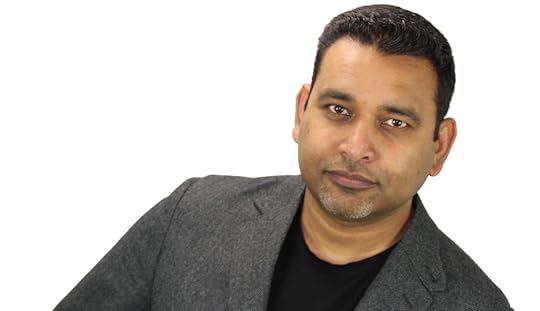
Faisal Hoque, Future Strong Hero
Founder, Shadoka
Author, Survive to Thrive
Faisal is a serial entrepreneur who helps leaders create
more amazing futures
Future Strong Hero Series: Insights from top leaders, change
makers and thought leaders who are creating better, bolder tomorrows.
• • • • • • • • • • •
How do you stay Future Strong? One overwhelming dimension of being
future strong is how we invest in ourselves. You need to repeatedly invest in
yourself, reinvent yourself and push yourself where you are not comfortable.
So what I’ve been doing since I was 17 years old, when I first became an
entrepreneur, is to continually reinvent my own skillsets and explore new
markets, and create new products and new opportunities. I’ve been hustling
since I left Bangladesh, and as I fail, I reinvent myself. Whether it’s an
outside force or it’s you that’s driving the change, the most important
question is: Have you learned enough to discipline yourself to embrace change
and build new skillsets? And have the attitude to embrace your next chapter
in life? That’s what makes the difference.
You have to find what drives you. It’s your authenticity behind your passion,
when you’re working from your heart. You still need to listen to the outside
world though — it’s the inward and outward connectivity. This is also where
reinvention and future strong come into place. You have to constantly push
yourself to do better than yourself — it’s not a competition with others…
it’s about: can you make a better version of yourself? Authenticity comes
from being extremely devoted to your craft on a daily basis whether you
feel like it or not.
What do leaders need to do to build Future Strong companies?
You have to have a vision, obviously. That must be backed by excellent
execution. You can be a motivational prophet kind of leader, but if you
can’t execute effectively, continuously, then you’ll fail. Execution is
about the ability to focus, the ability to say no — which many
inspirational leaders have a tough time with. There’s also transparency
— which boils down to open, honest and complete communication. In that
communication, you have to be honest with yourself, and you have to be
honest with your organization in terms of: what’s possible; how everyone
can make a difference; and what’s not possible — you can’t do everything.
You have to be realistic….brutally honest and direct. That helps people
be more accountable and productive.
The last critical dimension is avoiding burnout and ensuring people can
recharge. Relaxed people produce far more than people who are hyper and
working crazy hours and trying to do too much. More doesn’t mean more.
Usually, less means more. This is a fundamentally necessary leadership
mindset. That focus manifests itself into execution.
The writing is already on the wall: The companies that will succeed
in the long-term are those that are not traditionally structured.
The talent pool every company wants and the younger generation are
more entrepreneurial, even if they are employees and not building a new
company. If you don’t structure your company to take advantage of
that, you won’t be successful.
I believe people are multi-dimensional, when company cultures and
strucutures force us to be single-dimensional — thinking the way
the company wants us to think — we hold back our greatness. When
we allow our multi-faceted selves to emerge, with focused efforts,
we can produce more with less…and be happy.
Hoque Strongisms
• Reinvest in yourself, reinvent yourself: Continuously
• Vision must be backed by excellent execution; the ability to say No
• Recharge yourself, continuously
The post Continuously Reinvent Yourself appeared first on Simpler Work.
December 7, 2015
2016: Pick Your Best Hardships
You should NOT be taking on many of the hardships shoved at you!

Adapted from my new book, Future Strong.
MOST hardships shoved at MOST employees are designed to benefit
the company, NOT you. If you wish to be Future Strong throughout the
coming year, you will need to consciously, intentionally, choose which
hardships you will endure. Start examining which hardships and sacrifices
will help you because they will lead you toward your best future and
which ones will steal your future from you and should be avoided.
Most often, it’s a situational balancing act. Sometimes you’ll choose
a certain hardship — like working two or more jobs so your kid can go
to college — and other times the exact same hardship is just too much.
Like becoming totally stressed out because you must endure a pain-in-
the-ass boss at one of those jobs.
Here’s a simple exercise:
Two columns on a sheet of paper.
On one side, list all your current hardships and sacrifices which were
thrust upon you by your company or by the marketplace. (e.g., Dozens
of specific hardships that could fall under the heading “Do more with
less.”) Then, in the other column, list all those that YOU have chosen
to take on because it’s in your own best long-term interest. Like working
that second job for your kid’s college, or going back to college yourself
for further education. Compare the two columns. The ideal mix
for most people is in the neighborhood of 50/50: Half thrust-upon
hardships —(let’s be realistic; that’s going to continue to happen)—
and half that you choose on your own, for your own future. If it’s
out of balance (like 65/35 in the company’s favor) you are either
Future Passive or Future Shackled — not a good position to be in!
The key is to be intentional: Choose the best hardships for
your best future.
Intentionally choose the best hardships…
That means there’s a difference between the hardships and sacrifices
that will help you on your journey to be Future Strong and those
that are Trojan horses — positioned as good for you and good for the
organization, but in reality are not.
If the Hardships are out of balance?
a) Negotiate with your manager about changing your project mix
b) If that’s not working (after at least three attempts), maybe it’s
time to move to a different company, or…
c) Start your own part-time business that balances out those
sacrifices, or…
d) Start your own firm completely
No matter what you choose, staying Future Passive or Future
Shackled is NOT an option!
The post 2016: Pick Your Best Hardships appeared first on Simpler Work.
December 3, 2015
Get to Know Yourself… Truly
Achim Nowak, Future Strong Hero, tells us why

Achim Nowak, Future Strong Hero
Founder and President, Influens
Author, The Moment: A Practical Guide to Creating a Mindful Life
in a Distracted World
Achim helps successful executives show up as their true selves
Future Strong Hero Series: Insights from top leaders, change
makers and thought leaders who are creating better, bolder tomorrows.
• • • • • • • • • • •
How do you stay Future Strong? I no longer give a shit about what people
think I should be doing. The beauty of getting older is doing the work we
really want to do, not anybody else’s idea of what we should do. If we can
get clear on how we can best be of service, not trying to do everything,
then we can follow a path when we are living our right life, and being of
service in a way that’s meaningful. Getting older, I have less I need to
prove to myself. I know I can this and that… so what do I really want
to do? That’s my invitation to all of us.
How can we get there, too? Start by not pretending that you know yourself.
That’s a lie. Most of us, by our twenties, we’re running on survival
behavior. And we think that’s who we are. The people who do best on this
continue on some sort of spiritual journey. Because in that moment we get
to a place of humility and we realize that there are larger forces at play.
That’s incredibly liberating, and once we experience that we can be truly
powerful.
In the late ‘80s, I went to a retreat center in Sedona, Arizona. The woman
who ran the place did some intense processes. At one point she looked at
all of us and said, “You’re the most stubborn group of people I’ve ever
met!” She put me on my bed. Blindfolded me. She made me go inside myself —
I couldn’t leave the bed. If I had to go to the bathroom, I’d raise my hand
and someone would take me. Three times a day, someone would bring me food.
Lots started going through my mind, resulting in two very powerful visions.
One was a message that I should write, and that’s how I became an author.
The other… I kept seeing an image of a white house on a tropical island,
on a mountain slope, overlooking the ocean. Six months later, I left
my life in New York, a good faculty job at NYU, and I moved into a little
white house on the small island of Tobago. I didn’t know what the heck
I was going to do there. That was my leap of faith. Whatever the message
was, I didn’t have to know what’s next.
All of us get those messages all the time, but they’re diluted because nobody
blindfolded us!
What do leaders need to do to build Future Strong companies? Leaders
must get comfortable with thinking small again. Everything doesn’t haven’t
to be standardized everywhere. Some processes should be standardized, but
please allow people to experiment. Allow people to surprise you.
The fear is always around the things you can’t control. I’m a believer in
forecasting and the necessity for it. But at the same time, the savior
for most everyone I coach is the ability to more deeply play with everyone
you work with, so you’re on a collective journey. You are not alone.
The paradox is that when you do that, you have a much better chance of
meeting targets. If we can collectively let go of this obsession with having
to know, better answers will show up.
I’m hired to help very senior executives become more human. Of course,
they’re already fully human, they’re just hiding that part of themselves.
When times get rougher, big companies want to put more and more processes
in place to control the roughness. Good process sets us free, but really pay
attention. Don’t try to control the uncontrollable.
Nowak Strongisms
• Let’s dance and play with each other, as we truly are
• Create a mindful life — you’ll be glad you did!
• Let go of the need to “know” — instead, explore and just be
The post Get to Know Yourself… Truly appeared first on Simpler Work.
Help Others Be the Best Version of Themselves
Josh Allan Dykstra, Future Strong Hero, tells us why
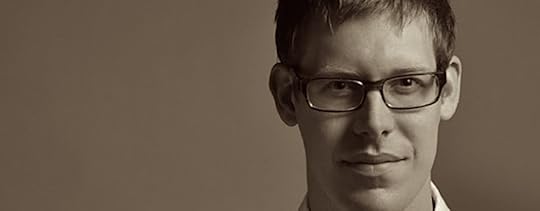
Josh Allan Dykstra, Future Strong Hero
Co-CEO, Forte
Author, Igniting the Invisible Tribe
Josh is a work revolutionary who helps companies get un-sucky
Future Strong Hero Series: Insights from top leaders, change
makers and thought leaders who are creating better, bolder tomorrows.
• • • • • • • • • • •
How do you stay Future Strong? Surrounding myself with great people — people who are actively paying attention to these things, who are personally
trying to be better human beings… We become friends… We put ourselves in
situations where we become the best versions of ourselves. The great part
of being in this space is that we’re constantly meeting people who care
deeply about these issues and have done that self-reflection necessary
to change what needs changing.
How did you get there? For as long as I can remember, I’ve always wanted
to make some dent in the universe — make my mark in some positive way.
For a long time, I thought it would be through music. After a number
of years — after getting fired from a couple jobs! — I figured out that the
lifestyle of being a touring/performing musician just didn’t jibe with my
personality. Around that time I discovered the StrengthsFinder. I realized that
if I could help make workplaces just a little less sucky, that would be a
pretty big dent to leave in the universe!
What do leaders need to do to build Future Strong companies?
The way the world is changing, things that used to feel very safe are now some
of the most dangerous things to do. What if the path that used to feel risky
is now the path to pursue?
So much rises and falls based on leadership — the people who are willing to
stand up and lead, and do something that other people say, “That’s worth
following. I want to go there.”
What those leaders do is they first get to be really good friends with the mirror.
The first place to look whenever something is going on, is always at themselves.
They ask “What the heck did I do? Was I not clear? What’s my part to play in
this?” If you want the world to be different, then you have to be different
yourself.
Successful organizations of the future will be the ones that believe it is a
container for people to become the best versions of themselves. That attract
people by living “We want you to do your best work here! And we exist to
enable that. We’re going to rally around a compelling set of values that
people can align with, so they know what we stand for, they know what’s
expected of them. We’re going to make that inspiring, and not just have a
picture of an eagle on the wall with the word Integrity on it. We’re going
to think differently about our vacation policies, and the hours that we work,
and where people want to work.” All of these things come to be questioned
when we flip our thinking about how we enable people to do their best work.
What’s the role of millennials in all this? They desperately want to do
something meaningful with their lives. The problem is not them, the problem
is so many organizations do not have good enough answers to the questions
they’re asking. Most of our organizations can’t say “Come over here, and we
will help you achieve your dreams. Come over here and I’ll help you be the
best version of you. Come over here and I’ll help you do something great in
the world.” For me, that’s the problem. I view Milliennials not as a
separate category, but as early adopters of the whole shift that’s occurring.
They’re picking up on the necessary changes first.
Dykstra Strongisms
• Strive to be the best version of yourself
• Don’t wait for leaders to “get it.” Hang with people who do
• Millennials are the early adopters of necessary changes
The post Help Others Be the Best Version of Themselves appeared first on Simpler Work.
September 21, 2015
Your Biggest, Toughest, Hundreds-of-Times-a-Day Choice
Do you know what it is? Do you know how to choose wisely?

1999: from the first draft of my first book, Simplicity… The hardest work is
figuring out what to do in a world of infinite choices. What is the cost of
confusion and the value of clarity? (Back then I estimated the cost to the
U.S. economy to be about 1.3 trillion dollars.) Before you worry about anything that can be captured on balance sheets, please consider this: Are there enough people out there who can cut through clutter and crap, and who can think their way out of overload and lack of clarity?
2015: It’s worse.
Your biggest, toughest, hundreds-of-times-a-day choice is how to kick your daily EarEyeMind Candy Addiction.
The toughest competitive challenge you face every day is the competition for your time and attention…both of which are limited, both of which are becoming more valuable every day.
Recent research from Microsoft found that, due to smart phones, mobile tech and all apps, we now have the attention span of a goldfish! We all have ADD!
From my research and tool box…
The Cost Remains Too High: You lose anywhere between 2 to 4 hrs per day due to unclear communication from others made worse by your addiction to EarEyeMind Candy.
The Solution Isn’t What You Think It Is: While your tech and apps keep
getting better and should be fully leveraged, those should NOT be your primary solution. They’re ALSO part of the problem. The more you use technological
solutions, the more you’re sucked into CandyWorld.
Your Best Solution Begins with Your One Thing: Your deepest passion,
how you make a difference in the world, the one (or two or three) thing(s) that matter most to you. The people who are best at skipping CandyWorld and
staying focused on a daily basis are those who are constantly focused on how they’ll make a difference that day, and on what truly matters.
Shift Your Mind and the Solution Appears: Again, it’s NOT tech!
The 80/20 Rule for doubling your productivity:
80% is about the choices you make and how you think and prioritize, 20% is about using the best/right tools. So yes, use tools and filters effectively, but the bigger ROI is in changing your mindset and habits.
Once You Choose a Mindshift: Some everyday tips…
1. Schedule Candy Time. Nobody’s saying give up all your fun apps and social media connections. Just schedule a block of time for them and stick to it.
2. Push Back On or Ignore Work Vampires. The kind that constantly try to suck your time and attention dry. (Emailers, meeting inviters, compulsive cc:ers.) Either ignore them, auto-file them into deadzone folders, or define your own rules of engagement…and stick to them!
3. Segment Your Friends and Teammates. Platinum get your immediate
attention. Gold and Silver, sometime within the day. Bronze: DeadZone.
4. Every Quarter, Prune Your Channels. Less is more. Constantly prune your social media channels and connections.
5. Surf Less, Be Present More. Your connections, the real ones, really matter! Whenever you are connected with them, be fully present.
Reminder: The biggest competition in the future will be for your time and
attention. Every day you will make hundreds of choices about who and what
gets them. Choose wisely.
The post Your Biggest, Toughest, Hundreds-of-Times-a-Day Choice appeared first on Simpler Work.
Choose Diversity of Thought to Innovate
Three wildly different views helped drive a revolution
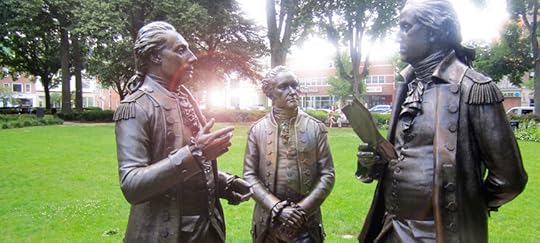
I live in Morristown, New Jersey. This is a story about three men who disliked each other when they met here, but still found a way to work together for
something bigger than themselves.
Washington really did sleep here. His headquarters are just around the block from me. The preserved Revolutionary War barracks are a couple miles away. Morristown was an important staging area for the war.
Pictured is a statue in our town square commemorating the meeting of General George Washington (right), Colonel Alexander Hamilton (middle) and the Marquis de Lafayette in Morristown on May 10, 1780, when Lafayette informed the
Americans that the French were coming to support the revolution.
What unites us is more important than our differences. These men, as do many of us, had to overcome great differences in order to win a common cause.
While Lafayette is considered key to America’s victory, and served under
Washington as a major-general in the Continental Army, he and Washington went at each other all the time. The two were sometimes observed working against each other in secret, each to his own ends.
Hamilton served as Washington’s aide-de-camp and also worked with Washington on the framing of the Constitution. He served as the nation’s first Secretary of the Treasury, which eventually landed him on the face of our ten-dollar bill. (Soon to be changed? Stay tuned.) Yet Washington was known to treat him so badly that several times he asked to be reassigned.
Hamilton also helped Thomas Jefferson when he and Aaron Burr were tied in the electoral college for the presidency. Hamilton helped to defeat Burr, even though he and Jefferson differed on many issues and were known to spend much of their time bad-mouthing each other. (Tabloid-level cat-fights, masked with 18th and 19th century civility.)
The point is: The three men in the statue had great personal differences with each other. Sometimes outright disdain. Yet they are understood, and acted upon, and pledged their lives to, that what united them was more important than their differences. And that’s how we remember them.
How are you getting past your differences with others?
And then are you leveraging those differences?
Are you embracing diversity of thought to create your next big
innovation? Not just politically correct polite diversity. Are you encouraging
real differences to emerge, be wrestled with, and resolved… All for a greater cause?
A personal, daily challenge for each of us:
Remembering to live a life in which what unites us is more important than our differences. And having our daily choices reflect that.
(Update of a 2012 post)
The post Choose Diversity of Thought to Innovate appeared first on Simpler Work.
Be an Infectious Optimist, Choose Change
Ted Coiné, Future Strong Hero, tells us how

Ted Coiné, Future Strong Hero
Chief Marketing Officer, Meddle
Coauthor, A World Gone Social
Contributing Editor, OPENforBusiness
Future Strong Hero Series: Insights from top leaders, change
makers and thought leaders who are creating better, bolder tomorrows.
• • • • • • • • • • •
How do you stay Future Strong? Optimism. Without infectious optimism,
few will follow you. Because there are times when… no matter how professionally experienced and skilled people are… we all need a pick-me-up. Leaders also need a pick-me-up. That’s why you have to feed yourself with positivity too.
How do you stay optimistic? I don’t use one single mentor. I pick many. Some people don’t even know that they’re my mentor. Richard Branson (founder, Virgin Group) has been my mentor for life. I love the guy but he has no idea who I am. Others are professionals who have agreed to help me.
Surround yourself with people whose wisdom, positivity and experience you can draw upon when you need it. Also, make sure you have someone close to you who will tell you when you’re just wrong.
Take risks, but make them small. If you take a lot of small risks, you learn faster and when something fails, it’s not the end of the world.
What do leaders need to do to build Future Strong companies? The way many companies are run right now, there are many reasons to fear failure in the future.
In the Industrial Age, command and control used to work. No longer. You need to know where to look for the new best practices.
There were always Industrial Age companies that didn’t follow command and control practices, however they were kind of odd and others didn’t need to
consider them seriously. Today leaders really need to pay attention to companies that do things differently.
Future Strong companies are those where leaders enable the staff to use their entire brains, not just a part. Where talented people are enabled and encouraged to use their talents, to explore their own genius. Doing that without controlling them. For those who want to be the boss, this change is tough. Rank doesn’t have privileges, rank has responsibilities.
Modern leaders don’t need command and control. Even W. Edwards Deming, a statistician and the father of the LEAN movement, said the most important things are unmeasured and immeasurable. We are in the age of creativity, and we need to allow our people to be creative.
Coiné Strongisms
• Be an infectious optimist
• Get yourself optimistic mentor who will also kick you in the ass
• Dear Leaders: Join the Creative Age
The post Be an Infectious Optimist, Choose Change appeared first on Simpler Work.
May 9, 2015
We’re everywhere…
The post We’re everywhere… appeared first on Simpler Work.
Hacking Corporate Stupidity
What I’m Learning from the Lunacy

As you may know, we’ve been running our HCL Project, Hack Corporate
Lunacy, for several weeks, in which people submit actual quotes by
actual leaders that fall under the banner of “You can’t make this s**t up!”
• Awesomely Stupid Quotes 1-5
• Awesomely Stupid Quotes 6-10
• Awesomely Stupid Quotes 11-15
• Awesomely Stupid Quotes 16-20
• Awesomely Stupid Quotes 21-25
(Prizes awarded for the best/worst quote! Submit here.)
Here’s what I’ve learned so far…
• There is no shortage of people saying awesomely stupid stuff!
If we chose to, we could run this project forever.
• Sometimes we can be horrific in how we treat our fellow humans. e.g.,
“What difference will that make? Where’s the report you owe me?”—
manager to an employee, after the employee asked to leave early to be
with his terminally-ill father, who was likely to pass away in the
next day or so.
• I’m saddened by how far we still need to go on many crucial topics, like
diversity and gender-equality: “Is she a leader or a mom?” That, from a
corporate HR recruiter(!) speaking to a line manager.
• I’m amazed at how smart and good people suddenly get stupid and
start behaving badly within corporate bureaucracies.
However, there is a way out of this stupidity.
I’m reminded how perfectly Robert Fulgrum nailed it in his 1989 book,
All I Really Need to Know I Learned in Kindergarten. Moms and
kindergarten teachers (my mom was both) taught us so many things that
we STILL need to recall and practice.
As Fulghum reminded us, we already learned everything we need to know
to prevent this kind of stupidity:
• Share everything
• Play fair
• Don’t hit people
• Put things back where you found them
• Clean up your own mess
• Don’t take things that aren’t yours
• Say you’re sorry when you hurt someone
My mom taught me all that, and more. I’m sure yours did too.
Since many of us just celebrated Mother’s Day, maybe we should all do a
little thinking about what Mom taught us before our next team meeting?
That sure would take the corporate stupidity down a notch or two.
The post Hacking Corporate Stupidity appeared first on Simpler Work.


