
It’s Time to Redesign Everything
David Houle, Future Strong Hero, tells us how
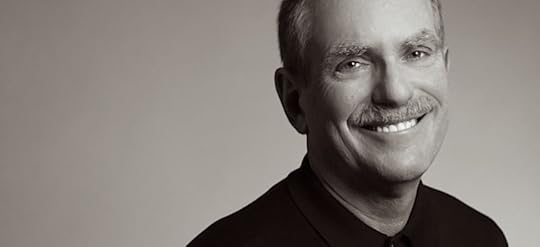
 David Houle, Future Strong Hero
David Houle is a futurist, thinker and keynote speaker.
He is often called the “CEOs’ futurist”
Coauthor, Brand Shift: The Future of Brands and Marketing
Future Strong Hero Series: Insights from top leaders,
change makers and thought leaders who are creating better,
bolder tomorrows.
• • • • • • • • • • •
How do you stay Future Strong? I live slightly ahead of the curve. I’ve
always done things that people said I shouldn’t do or wouldn’t work. “Oh,
it’s stupid to backpack around the world. You should save your money and
buy a house.” Or, “You shouldn’t leave CBS to take a 50% paycut at
Nickelodeon.” Or, in the ‘90s: “Online courses will never work.” After
taking many of these kinds of risks, I gained an intuitive sense that
I was right about a lot of big things. When you learn how to trust
something you’re good at, you become even better.
In 2005, I realized the Information Age got its name in the 1970s, so I
came up with Shift Age, because I saw that we’d be going through a
shift of just about everything.
Most people in our culture and developing countries view specialists
as good. The problem with being a specialist is they get too stuck in
vertical silos. I have the luxury of being the most superficial
intellectual grazer you ever want to meet. Don’t give me a list of ten best
practices or examples — three is enough. I never read a book fully.
I scan dozens of publications and over 300 sources every week. I scan for
patterns and the larger dynamic.
My father was a professor at the University of Chicago, who coined the phrase
lifelong learning. He’s regarded as the father of adult education. One of his
most popular books is the Inquiring Mind, and that resonated with me as a
lifelong goal — to have an inquiring mind. When I went to college I majored
in art history. What I learned: If you ever want to get to the essence of
a culture, study its art. If you want to see the future, look at art. For example:
Cubism, Futurism, Expressionism and Dadaism of one hundred years ago
foretold the dissonance of the early 20th century. Andy Warhol in the ‘60s
forecasted the celebrity and brand culture we live in now.
The Three Future-Focused Forces: One way to look at everything in the
future: How it moves towards globalization. Second: The flow to the individual.
Individuals will continue to have more power than they’ve ever had, because
of the explosion of choice. Finally, the driver of all of it: The accelerating
electronic connectedness of the planet.
Those are the prevailing forces. What I have found to be the best metaphor
in corporate settings is looking at 2010 to 2020 as The Transformation Decade.
The dictionary defines transformation as: a change in nature, shape, character
and form. That became “Mr/Ms CEO, if you’re not completely changing the
nature, shape, character and form of your business during this decade, you
probably won’t have a business to change.”
We have entered the golden age of design. Everything on the planet, relative
to humanity, either has to be redesigned or designed. We have to redesign
cities, we have to redesign transportation, we have to redesign everything
handed to us from the 20th century. The 20th century was the left-brain
century — the century of science. The 21st century is the right-brain
century — when intuition, creativity, humanity will catch up and fully
integrate science into a more livable way of life.
Finding the Future: How I forecast is I look where resistance is. When a
culture is really resisting something, that means the status quo of thinking
is resisting something that is change-driven. That’s why I wrote books on
education and healthcare, because I saw so much resistance to inevitable changes.
When you look around and see resistance, you can find the inevitability of
what is being resisted. My newest book is This Spaceship Earth because
climate change is an overwhelming reality that a lot of people are still
resisting.
What do leaders need to do to build Future Strong companies?
2010 to 2020 is the collapse of legacy thinking. If you’re older than 30,
that means you spent the majority of your life in the 20th century where
your thoughts were formed. So if you haven’t double-checked your truisms
relative to the reality of 2016, you won’t see what’s coming. The biggest
questions leaders need to ask themselves: Are we trying to solve this
problem using legacy thinking? Or new thinking?
The first question a leader must be able to answer is: What is the vision
of this company for 2023? (Seven to eight years from now.) And then work
backward from that vision because in order to get to that vision, you need
to take certain steps in 2016, 2017, and so on. (What Google calls moonshot
thinking, akin to Kennedy’s vision of putting a man on the moon by the
end of the 1960s.)
Finally, if you are ready to make change, it must be collaborative and
ongoing within the organization. It cannot be autocratic. Sustainable
change can only be successful if everybody has co-authorship in it.
Houle Strongisms
• Embrace that you are living in the Shift Age and Transformation Decade
• Make it a lifelong goal to be an inquiring mind
• The biggest cries of resistance point to the biggest needs of redesigns
The post It’s Time to Redesign Everything appeared first on Simpler Work.


