David Gessner's Blog, page 32
June 22, 2014
Anxious Bode in the House of God
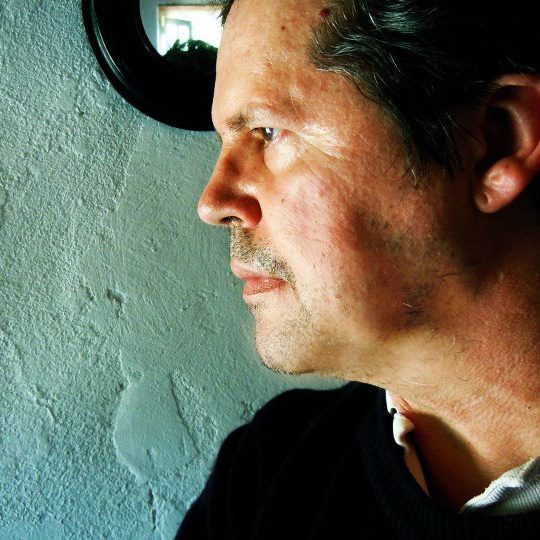
Anxious Bode
Back when Anxious Bode was still just Thierry, we were trying to blend in, my folks and I, and we were observing and copying what the crowd did on this Sunday morning in Saint Michael. I was living in Lincoln Park, near North Chicago. My parents were visiting from France for Christmas. There was snow on the ground, and a sharp wind as we walked the cobbled streets leading to church. It should have been easy—we were all Catholics, even if some of us were foreign—and in a sense it was. Until the offertory. The silence that fell on the congregation as members prepared their donations impressed us with the necessity to be ready when our time would come. We were quick to notice that the man who collected the donations, did so with the help of a basket attached to a pole. He would push the basket through the pews, serving the farthest away first, and retreating toward the aisle. My father-Anxious Senior—was not entirely ready when our turn came. He could not find decent bills to put in the basket. He gathered all the coins that he had accumulated in every American store he’d gone to. When the deacon stopped at our pew and vigorously pushed the basket in front of us, my father, worried he’d miss his chance, lunged.
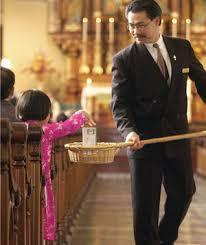 The collision was swift and decisive. An avalanche of coins fell on the marble floor, coins bouncing and rolling under the pews. The shocks reverberated and spread to the entire church. God knows, and in this case almost literally, how many coins there were. The coins kept rolling. The offertory stopped.
Parishioners went down on all four across three rows of seats. My mother and I were getting cramps, trying not to laugh. At the other end of the aisle, the priest was looking at us. We were torn between intense mortification, and the need to run outside and laugh until we could catch our breath. But eventually the coins were collected, and mass could resume.
Afterwards, the priest loomed at the exit, saying a few words to each parishioner. He saw us and his face lit up. “You are new to our congregation?”
I mumbled something to the effect that we were here for a short while.
And the priest said, “I do hope you will stay.”
[Anxious Bode is Thierry Kauffmann, who lives in Grenoble, France, where he studies sleep, and fights Parkinson's, all while keeping his chops on the piano.]


June 21, 2014
Getting Outside Saturday: Over Six Feet by Solstice (a photo haiku)

Ostrich Fern

Orchard Grass

Cow Parsnip
June 19, 2014
“Big Bend” is Back and Better than Ever!
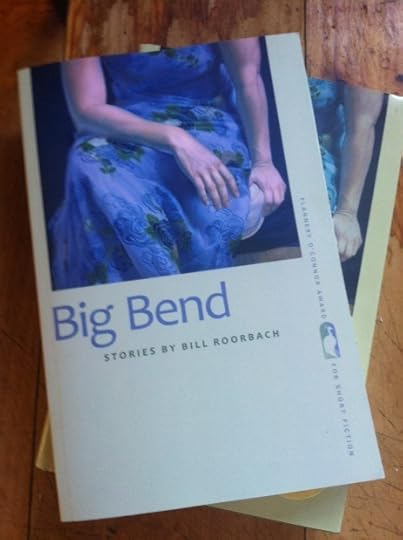
The University of Georgia Press recently re-issued my book of stories, Big Bend, in a new paperback edition, and, for the first time, as an e-book. So bug your local bookstore, and load up your e-reader!
These stories were written late in the last century, many of them during an amazingly productive residency at the MacDowell Colony in March of 1997, but at least one of them, the lead-off story, “Thanksgiving,” as early as 1986, which was before I went back to school for my MFA at Columbia.
In 1998, I was editor of the Sandstone Prize as part of my work in the MFA writing program at Ohio State University. It was a new short story prize, and the award was publication by the OSU Press. Students and I worked on the mountain of manuscripts, choosing finalists, which went out to a distinguished outside judge, usually a writer. It was very hard work, but fun in its way, and a great way for aspiring writers to learn about one kind of publishing process.
I had enough stories for a collection, and so I put one together and sent it to four of the top contests, just to see how they did things, and to learn what we might do better. My students and I studied the response letters I got, the submission fees, the pace of the process, really pretty useful information. And we kept at our work till a winner for the year was found and anointed.
Then I went back to Maine for the summer, 1999. And one fine August day, the phone rang. A man with a courtly phone style and good southern accent asked if I was me. I was. He said, “Your collection has won the Flannery O’Connor Award in Short Fiction.”
And I said, “Ha, ha, ha, ha, ha.” Because I was sure it was one of my students razzing me.
But it was true.
People often ask me which of my books is my favorite. And I often say, Big Bend. I feel so fond of these stories, and of the former me they reflect and represent.
June 18, 2014
Up Shit Creek (Or, Dawson’s Creek is Full of Shit, the Actual Creek, not the Show)
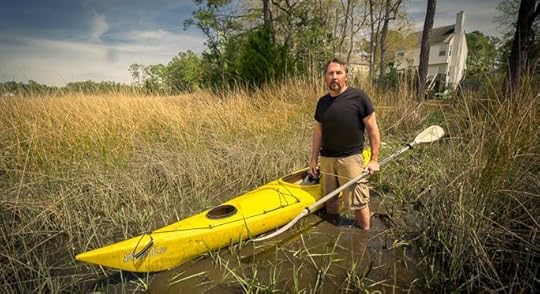
Photo: Clark Vandergrist +
Here is my essay from the last print issue of OnEarth magazine:
To get to the island I push off from my own backyard. I did not become a homeowner until I was 49 years old, and perhaps the greatest pleasure of this property in coastal North Carolina is that water laps its edges. In this way, and by the liquid tendril of a salt marsh, I am connected to so many other places in the watery world, and given enough energy, time, supplies, and fair weather, I could paddle to the end of my creek, bang a left, and end up back on the beaches of Cape Cod, the place I moved here from. My journey today is more modest: I am paddling my kayak downstream to a neighbor’s dock, where I will ready it for tomorrow’s three-mile trip east to Masonboro, one of the few undeveloped barrier islands left in this region, where my friend Hones and I will camp for four days.

Summer 2014
“Not in my backyard.” This phrase is sometimes used as a club to beat environmentalists who are seen as overly concerned with their home turfs while ignoring the rest of the messy world. But so much of environmental activism, and environmental literature, springs from knowing one’s place. The writers I admire, from Henry David Thoreau to Wendell Berry, have fallen in love with their own backyards and, in Berry’s case at least, have taken the metaphor further, talking of marrying their home lands. I, by contrast, have long seen myself as a polygamist of place, launching continuing and overlapping love affairs with Cape Cod, Colorado, and now Carolina. My life has had a vagabond flavor, and there are two implicit ironies in the fact that I have finally found a home in this place where I never expected to be. READ THE REST HERE.
June 10, 2014
Bad Advice Wednesday: Let’s Write Some Fiction

Let’s write some fiction. First, we need a character, a time, and a place, everything as usual.
Jack arrived at the shoe store at nine Monday morning as usual, tidied as usual, unlocked the door as usual at ten to the quiet mall.
Status quo. Now we need to make something happen. Anything, really. Just so long as it interrupts life as usual. So:
He heard a crashing, then saw the dinosaur. At first he thought it was another wild Macy’s promotion, but the creature held Fred the security guard dead in its mouth.
Now we have to spend x number of pages getting Jack and the mall back to usual. Let Jack be a hero, let Jack be a coward, let Jack be the guy who cloned the dinosaur, whatever. In the end we want to see order restored.
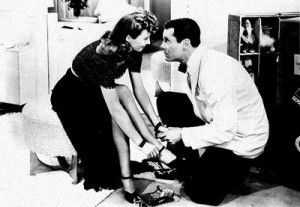 Jack tidied shoeboxes. This was going to take a while. The rubble of the mall was everywhere around him, and the shoes from his store were strewn over miles of what once was his town. Ah, Nike size 10 right, Nike size 10 left. Nike box. Prop up a shelf, place the box. Repeat.
Or something. Doesn’t matter what happens. Doesn’t matter how it disrupts status quo. Doesn’t matter how we get back to normal, or if normal is now impossible. What matters is the telling. So include a sentence of description for every for or five other sentences.
Jack arrived at the shoe store at nine Monday morning as usual, tidied as usual, unlocked the door as usual at ten to the quiet mall. The woman came in so quietly he didn’t know she was there. Her feet looked strong, turned slightly outward, the toes biting hard into her ten-cent flip-flops like claws, veins popping in her ankles, nails polished green, tattoo of an indeterminate fruit on each toe.
And keep trying till you get something that takes off.
Jack arrived at the shoe store at nine Monday morning as usual, tidied as usual, unlocked the door as usual at ten to the quiet mall. Martin, his boss, arrived as always, at eleven. “Jack,” he said. “I’m sorry, but we’re going to have to let you go.”
Jack arrived at the shoe store at nine Monday morning as usual, tidied as usual, unlocked the door as usual at ten to the quiet mall. He knew instinctively it would be one of those days without a single sale. Rent was due at the end of the day.
Jacqueline arrived at the shoe store at nine Monday morning as usual, tidied as usual, unlocked the door as usual at ten to the quiet mall. In her bra was the combination to the safe, and in the safe were the proceeds of the holiday weekend, enough to get her to Seattle.
Jack arrived at the shoe store at nine Monday morning as usual, tidied as usual, unlocked the door as usual at ten to the quiet mall. I can’t do this anymore, he thought. And leaving everything as it was, he hiked back to the employee parking area, climbed in his Taurus, and drove away.
Jack arrived at the shoe store at nine Monday morning as usual, tidied as usual, unlocked the door as usual at ten to the quiet mall. He felt a rumbling, heard a roaring, then the crashing of glass, and screams.
Jack arrived at the shoe store at nine Monday morning as usual, tidied as usual, unlocked the door as usual at ten to the quiet mall. He took his position at the cash register, and waited, full of the pleasure of anticipation.
Jack arrived at the shoe store at nine Monday morning as usual, tidied as usual, unlocked the door as usual at ten to the quiet mall.
When you’re done, throw it all away. Hit delete.
Repeat thousands of times.
There—you’re a fiction writer!
June 8, 2014
Serial Sunday: “Tough Island,” by Crash Barry (episode 25)
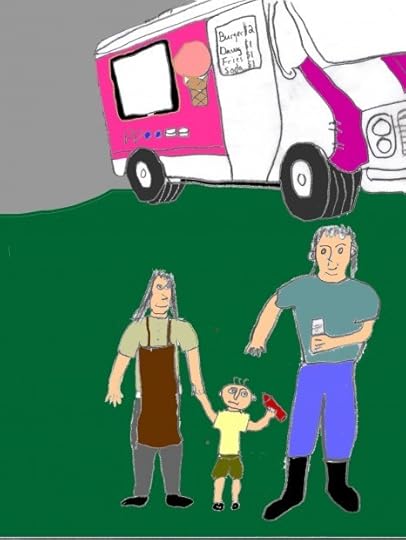
Lunch wagon
My pal Tommy loved Claire, who worked the lunch wagon, the island’s only restaurant. Problem was, Claire was married to Todd, Tommy’s captain. A complicated triangle.
Tommy and Claire never consummated their romance, though I witnessed their playful flirtation at the lunch wagon all summer long. She smiled at him and batted her eyelashes. He blushed back. For the island, she was cute. And Tommy, as a bachelor sternman, welcomed almost any sort of female attention. So they’d stare longingly at each other while Claire’s three-year-old, a blond hellion with a bowl cut, slurped on the ketchup bottle like it was his mother’s teat.
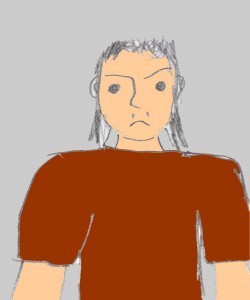
Anger
The lunch wagon was disgusting. An ice cream truck in a former life, the vehicle had no engine, brakes or steering wheel. It had been towed and set up in someone’s dooryard, just above the row of fishhouses. No captain would eat there, because they had wives at home to feed them. Every surface in the lunch wagon was coated with thick grease and grime. Claire worked the grill, griddle, and small deep-fat fryer from 11 a.m. to 1 p.m. Then she’d re-open around five to serve supper, staying until she fed everyone who was hungry. Burgers were two bucks. Dogs, fries and ice-cold sodas were a buck.
I never ate the meat, but occasionally, after a long day of hauling traps, I’d order fries. The other fellas mowed down multiple sliders before heading to Benny and Paul’s fishhouse for an herbal happy hour where we’d blast tunes, play ping pong and smoke tons of weed.
Although we were a band of merry jokesters, nobody teased Tommy about Claire. Maybe because we realized their flirting was something different. Dangerous and sad. So the topic was off limits.
Tommy was a nice dude, a shaggy 20-year-old stoner from Portland. Everyone hated Todd. Even his wife hated him, according to Tommy, who confided his feelings to me after a long night of beer, whiskey and weed. Claire also hated the island, he said. She felt isolated. Twenty miles off shore, away from her family and friends in Rockland. She wasn’t even legally married, Tommy said, but Todd made her tell people they were husband and wife. The little boy was Todd’s, so she didn’t have many options.
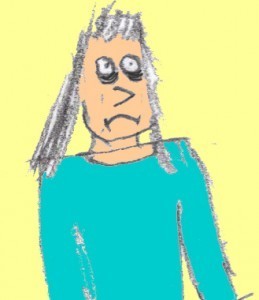
Sad Gal
Todd was a lousy lobsterman, so they were having money troubles, barely making ends meet. That’s why she was working the lunch cart. Thirty bucks cash a day turned into a couple hundred a week. Eight hundred a month. No bad for an island part-time job.
Todd was a know-it-all loudmouth who barely knew his stem from his stern. His boat didn’t get off the mooring until eight. Todd was always losing gear or getting tangled in someone else’s, or setting traps in too-deep water. Tommy complained about the many hours wasted driving back and forth, looking for strings of traps Todd had misplaced.
As the sternman, Tommy had to pay the price financially. We all earned 15 percent of the catch, before bait and fuel costs were deducted. Paul and I were pulling in six or seven hundred a week. Tommy barely made half as much. And he was wondering if Todd was ripping him off. Claire had warned him that was possible.
One Sunday morning late that summer, Claire came down to shore, looking for Tommy. To say goodbye. Both of her eyes were blackened and swelled. Tommy wanted to kill Todd, but Claire calmed him down. “It’s good that he did it,” she said, hugging him. “Gives me a reason
to leave. To go home.”
Todd left the island the following week and started tending his traps from the mainland. Tommy lucked out, because he found another sternman job for a better captain and stayed on the island for another year.
The lunch cart never opened again.

Crash Barry’s rant for the trees and against industrial wind power is now available via The Bollard. Click here to read a Bangor Daily News interview with Crash Barry about his writing influences and more. Visit marijuanavalley.com to buy signed copies of Crash’s books about the seamy side of Maine life.
To read all the previous episodes of Tough Island, click here.
June 7, 2014
Getting Outside Saturday: Na Pali Sea Cave Sojourn (a Hawaiian photo haiku)

Bottom of a 1200 foot waterfall ending in a sea cave, wow.

Na Pali coast.

Collapsed cave from inside…

Let’s get outta here…

Our fearless captain, Sam, with game face, backing out. Elysia left, Juliet right.

Blue, blue waters…
June 5, 2014
Lundgren’s Lounge: “The Painter,” by Peter Heller

Here’s a book to add to the summer reading list: The Painter by Peter Heller. Though highly recommended, I began this story with guarded expectations and then was slowly and inexorably seduced by the voice and ethos of the novel’s narrator, Jim Stegner.
Stegner is the painter in question and while the narrative develops around a series of violent incidents with Stegner at their center, there is a constant sense of unease on the part of our protagonist: he seems, even as he finds himself the prime suspect in two murders, to be constantly asking himself ‘how the hell did I end up here?’ That the murder victims are clearly very bad people does not exonerate the act of murder. Just as Dostoyevsky refuses to excuse Raskolnikov’s killing of the evil pawnbroker, Heller masterfully offers the victims’ backstory (they are brothers), in a way that muddies the moral waters, raising the conundrum of who exactly is qualified to be judge and executioner.
 But beyond the story that propels this beguiling novel forward lie the ruminations of an artist. Stegner is an ‘outsider’ artist, celebrated for his iconoclastic view of the world. That his sudden notoriety as a murder suspect drives the prices of his works ever upward is deeply troubling to him. Heller paints Stegner as a serious, reflective man, one who feels a responsibility to his art and the most moving passages of this book revolve around those meditations on the creative process. For instance, as Stegner reflects, after rather quickly producing a painting he considers his best work:
“Nobody, not even artists, understand art. What speed has to do with it. How much work it takes, year after year, building the skills, the trust in the process, more work probably than any Olympic athlete ever puts in because it is twenty-four hours a day, even in dreams, and then when the skills and the trust are in place, the best work usually takes the least effort. Usually. It comes fast, it comes without thought, it comes like a horse running you over in the night. But. Even if people understand this, they don’t understand that sometimes it is not like that at all. Because the process has always been: craft, years and years; then faith; then letting go. But now, sometimes the best work is agony. Pieces put together, torn apart, rebuilt. Doubt in everything that has been learned, terrible crisis of faith, the faith that allowed it all to work. Oh God. And even then, through this, if you survive the halting pace, and the fever, sometimes you make the best work you have ever made. That is the part none of us understand.”
And of course it doesn’t hurt that during his downtime Stegner recharges by heading to the nearest trout stream, fly rod in hand. Author Heller is clearly a devoted angler and the three distinct threads of this lovely novel, the cat and mouse morality tale, the reflections on art and the time spent astream, work seamlessly together to create an engrossing, lyrical narrative that will entertain and provoke and perhaps, entice one to the nearest flowing waters to wet a line or simply do some ruminating of one’s own.

[Bill Lundgren is a writer and blogger, also a bookseller at Longfellow Books in Portland, Maine (“A Fiercely Independent Community Bookstore”). He keeps a bird named Ruby, and teaches at Southern Maine Community College.]
June 4, 2014
Bad Advice Wednesday: Try This Little Exercise in Empathy
 The other day I was re-reading Robert Richardson’s Splendor of Heart, a short and wonderful memoir of his (and my) teacher, Walter Jackson Bate. The second half of the book consists of an interview with Bate, conducted by John Paul Russo, in which Bate compares the temperaments of Samuel Johnson and John Keats, both of whom he had written biographies of.
“Johnson is so psychologically snarled up in ways and had a much rougher life than Keats,” Bate said. “Keats had a tragic, early death, but Johnson was by far the unhappier person.”
Of course I loved the phrase “psychologically snarled up” and underlined it. But later I got to thinking about the idea of comparing what it felt like to be in two different writer’s, two different people’s, minds—that is what it felt like to inhabit their inner worlds. And I started to play a little game. I thought of five of my friends and began to kind of rank them from whose mind would be least pleasant to inhabit, on a minute by minute level, to whose would be more pleasant, or healthier.
Obviously this sort of listing is superficial. But what came along with it was less so. I found I was actually imagining how one of my friends dealt with anxiety, how she sometimes gave into it and sometimes kept it at bay, the courage required as well as the failures of nerve. In other words what started as a game led to a deeper imagining of what it felt to be inside someone’s skin, something that, I think you’ll agree, is good for a writer (and human).
So that’s today’s bad advice. Try a little exercise in empathy. Take five people you know and rank them in any order you like. Perhaps from how comfortable to uncomfortable in their skins they are. This will requiring some imagining of course as you try to go inside them and see them through their own eyes.
May 29, 2014
The Downstream Dog
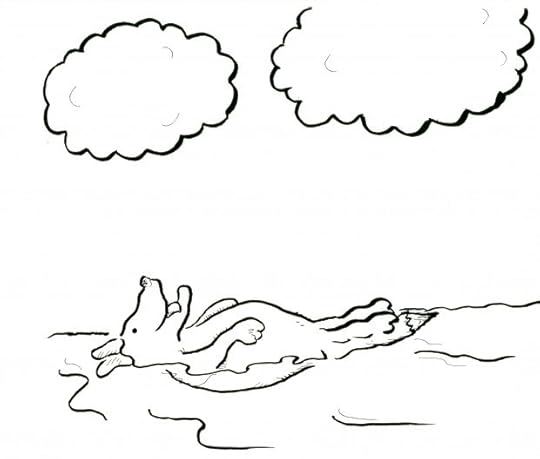
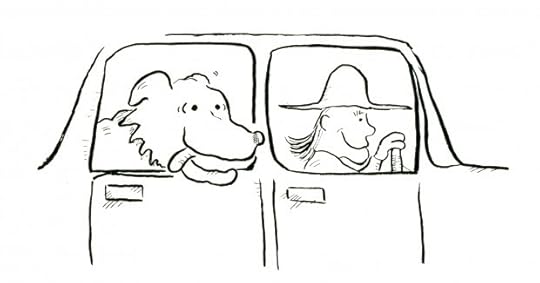
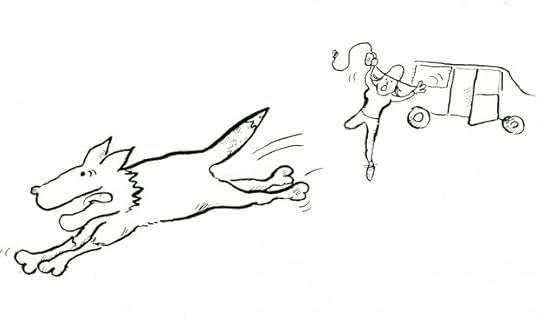
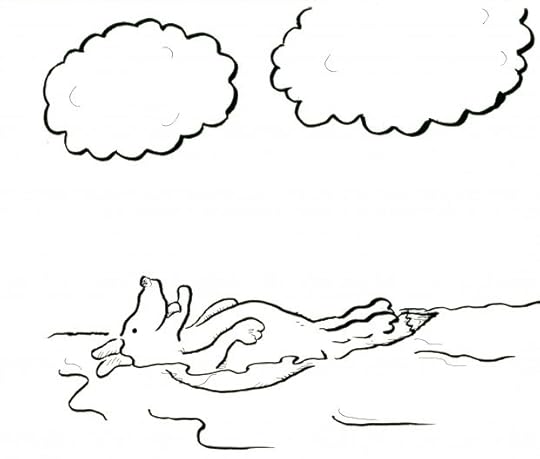
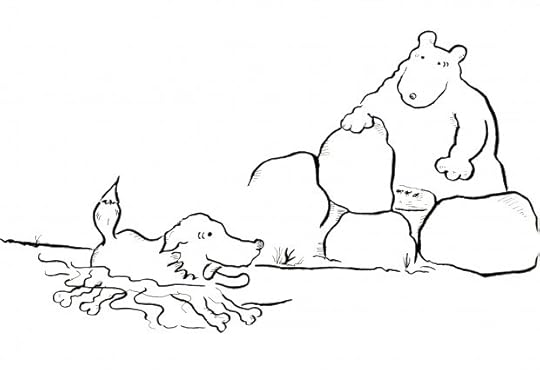
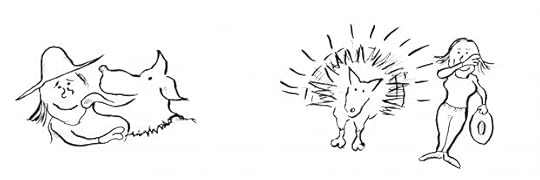
When Nina and I first met, over twenty years ago, she had a dog named Zeke. Zeke was part collie, part Saint Bernard, and while fiercely loyal to Nina (and eventually me), he tended to be pretty ornery to others. In those days Nina and Zeke were always together, and it was only natural that when she set out to write a children’s book her subject was Zeke. I just cleaned out the garbage and found that old book, though she won’t let me re-print it here. But I will re-print the drawings I did to accompany the story of the day Zeke floated downstream.