Gretchen Rubin's Blog, page 11
January 19, 2023
Author Interview: Katherine Schafler
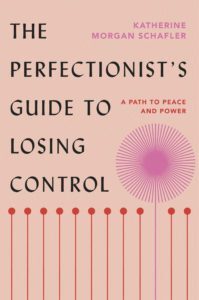
Katherine Schafler is a psychotherapist with a private practice in NYC, formerly an on-site therapist at Google. In addition to her blog, she’s a contributing writer at TIME and Business Insider, as well as an editor-at-large for Arianna Huffington’s Thrive Global. Her book, The Perfectionist’s Guide to Losing Control: A Path to Peace and Power (Amazon, Bookshop) just hit shelves.
I couldn’t wait to talk to Katherine about happiness, habits, and mental health.
Gretchen: What’s a simple activity or habit that consistently makes you happier, healthier, more productive, or more creative?
Katherine: Every single morning, I wake up early and drink guayusa tea in solitude while I write, work, read, do anything that restores me really. I used to drink so much coffee and I never intended on switching to tea, but one day I was running late for work (literally running to my office in an NYC heat wave) and I got so hot that I popped into a bodega to get a cold drink. I grabbed the first drink I saw with caffeine in it (iced guayusa, which I’d never tried or heard of before) and went to work. An hour or so later, I started to feel this clean, almost high. It was like I had coffee but without the tweaky-ness that sometimes accompanies coffee for me. I felt totally alert, but also still.
I continued to drink coffee after that, but I also started ordering loose leaf guayusa. I learned guayusa comes from a plant in the Amazon rainforest. It has three times the antioxidants as regular green tea, is known to promote mood and regulate blood sugar, and doesn’t have that ‘earthy’ taste that green tea typically has (which I don’t like). Eventually I stopped drinking coffee and switched over to guayusa entirely, which was effortless.
What’s something you know now about happiness that you didn’t know when you were 18 years old?
That joy is more important than happiness. I need both to get by in life, but if I stay connected to joy, I can handle a lot of ups and downs in the happiness department without it bothering me too much. There’s a spiritual teaching that goes something like, “Joy is happiness for no reason.” If you think of a small child, they’re naturally joyful. They’re curious, open, they play a lot, they take their imagination seriously – all those traits arise from joy. Small kids can have tantrums and become very unhappy in moments, but they get over it quickly because they stay connected to joy.
Have you ever managed to gain a challenging healthy habit – or to break an unhealthy habit? If so, how did you do it?
Yes, I used to be a walking bad habit! I’ve kicked many bad habits! One example of positive habit change that I showcase in my book: I carry a little Tupperware thing of chia seeds in my bag and sprinkle them on everything. Eggs, yogurt, smoothies, ice cream, pizza, everything. I also keep a pretty glass jar on my kitchen counter filled with chia seeds for the same reason I keep salt and pepper readily available instead of storing them in the pantry; I make the habit as convenient and as appealing to me as possible.
Because I got in the habit of putting chia seeds on everything, it helped strengthen my identity as someone who makes healthy choices every day. (Hello, rebel tendency!) It’s a little habit but it was a springboard for me to gain the habit of eating more nourishing, healthy foods. It’s worked alongside other tiny but positive habits which, cumulatively, help me lead an enjoyable, healthy lifestyle.
Would you describe yourself as an Upholder, a Questioner, a Rebel, or an Obliger?
I’m a rebel. I used to be more of an obliger, but I experienced obliger-rebellion over the pandemic.
Does anything tend to interfere with your ability to keep your healthy habits or your happiness? (e.g. travel, parties, email)
I like going to sleep early and waking up early, so even something as simple as going to a late dinner with friends and not going to sleep when I normally go to sleep, then not waking up when I normally wake up. That can lead to a negative ripple effect for like, a solid week. Sometimes longer.
I’m a superlark and I need my morning time. Hence why I schedule dinners with friends at 5:30pm like I’m in my eighties, and why I will leave most events—no matter how cool or fun they are—by 8:30pm. If an event or dinner doesn’t start until 9pm, I won’t go for the same reason that most people wouldn’t schedule breakfast with their friends at 5am.
Have you ever been hit by a lightning bolt, where you made a major change very suddenly, as a consequence of reading a book, a conversation with a friend, a milestone birthday, a health scare, etc.?
Never. Change for me has always been an entirely unceremonious affair. It’s little by little, day by day, invisible ‘til it’s not. I swear by incrementalism.
Is there a particular motto or saying that you’ve found very helpful? (e.g., I remind myself to “Be Gretchen.”) Or a quotation that has struck you as particularly insightful?
When I was writing my book, Seth Godin’s book, The Practice: Shipping Creative Work (Amazon, Bookshop) came out. In that book, Godin addresses the anxiety that can arise when you share your work with the world. He says, “It’s never going to be good enough for everyone, but it’s already good enough for someone.” That line really kept me moving in a moment when I would have otherwise become stuck.
Has a book ever changed your life – if so, which one and why?
Absolutely. Over and over. Every book I read changes me in some way. When I was a teenager, my older brother gave me a copy of Jean Kilbourne’s, Can’t Buy My Love: How Advertising Changes the Way We Think and Feel (Amazon, Bookshop). I never saw advertising the same way again.
I became obsessed with that book. I was like, “Why isn’t everyone talking about this book?!” I petitioned the dean of my college to let me teach a class based directly on that book, which ended up becoming a popular course. Kilbourne’s book shielded me from the way women are told that their bodies/looks/thinness are their greatest currency. It also shielded me against the idea that buying things will fix your problems.
In your field, is there a common misconception that you’d like to correct?
I’m a psychotherapist, and there are more mental health myths than I could address in a single question. I talk about a lot of mental health myths in my book, “The Perfectionist’s Guide to Losing Control: a path to peace and power.” One huge misconception is, “What doesn’t kill you makes you stronger.” That’s not true.
What doesn’t kill you might traumatize you to the point of disintegrating your memory recall. What doesn’t kill you might push you into addiction. What doesn’t kill you might make you suicidal or parasuicidal. What doesn’t kill you might lead you to physically or emotionally abuse your children because you don’t know how to handle the overwhelming nature of your struggle.
Struggle does not guarantee resilience. A more accurate expression would be “What doesn’t kill you forces you into a position where you have to choose between connection or isolation, and choosing connection makes you stronger.” It’s not as like, ‘slogan-ready’ per se, but accurate, nonetheless.
I wish people understood that it’s never the terrible things that happened to you that make you stronger; it’s the resiliency-building skills you engage to process the terrible things. What doesn’t kill you can make you stronger, but only if you feel your feelings, process your experience (i.e., figure out what the experience means to you), and engage the protective factors around you—mainly, the power of connection. Support is not just an exchange of information or aid; support is an exchange of connection.
I couldn’t wait to talk to Katherine about happiness, habits, and mental health.
Gretchen: What’s a simple activity or habit that consistently makes you happier, healthier, more productive, or more creative?
Katherine: Every single morning, I wake up early and drink guayusa tea in solitude while I write, work, read, do anything that restores me really. I used to drink so much coffee and I never intended on switching to tea, but one day I was running late for work (literally running to my office in an NYC heat wave) and I got so hot that I popped into a bodega to get a cold drink. I grabbed the first drink I saw with caffeine in it (iced guayusa, which I’d never tried or heard of before) and went to work. An hour or so later, I started to feel this clean, almost high. It was like I had coffee but without the tweaky-ness that sometimes accompanies coffee for me. I felt totally alert, but also still.
I continued to drink coffee after that, but I also started ordering loose leaf guayusa. I learned guayusa comes from a plant in the Amazon rainforest. It has three times the antioxidants as regular green tea, is known to promote mood and regulate blood sugar, and doesn’t have that ‘earthy’ taste that green tea typically has (which I don’t like). Eventually I stopped drinking coffee and switched over to guayusa entirely, which was effortless.
What’s something you know now about happiness that you didn’t know when you were 18 years old?
That joy is more important than happiness. I need both to get by in life, but if I stay connected to joy, I can handle a lot of ups and downs in the happiness department without it bothering me too much. There’s a spiritual teaching that goes something like, “Joy is happiness for no reason.” If you think of a small child, they’re naturally joyful. They’re curious, open, they play a lot, they take their imagination seriously – all those traits arise from joy. Small kids can have tantrums and become very unhappy in moments, but they get over it quickly because they stay connected to joy.
Have you ever managed to gain a challenging healthy habit – or to break an unhealthy habit? If so, how did you do it?
Yes, I used to be a walking bad habit! I’ve kicked many bad habits! One example of positive habit change that I showcase in my book: I carry a little Tupperware thing of chia seeds in my bag and sprinkle them on everything. Eggs, yogurt, smoothies, ice cream, pizza, everything. I also keep a pretty glass jar on my kitchen counter filled with chia seeds for the same reason I keep salt and pepper readily available instead of storing them in the pantry; I make the habit as convenient and as appealing to me as possible.
Because I got in the habit of putting chia seeds on everything, it helped strengthen my identity as someone who makes healthy choices every day. (Hello, rebel tendency!) It’s a little habit but it was a springboard for me to gain the habit of eating more nourishing, healthy foods. It’s worked alongside other tiny but positive habits which, cumulatively, help me lead an enjoyable, healthy lifestyle.
Would you describe yourself as an Upholder, a Questioner, a Rebel, or an Obliger?
I’m a rebel. I used to be more of an obliger, but I experienced obliger-rebellion over the pandemic.
Does anything tend to interfere with your ability to keep your healthy habits or your happiness? (e.g. travel, parties, email)
I like going to sleep early and waking up early, so even something as simple as going to a late dinner with friends and not going to sleep when I normally go to sleep, then not waking up when I normally wake up. That can lead to a negative ripple effect for like, a solid week. Sometimes longer.
I’m a superlark and I need my morning time. Hence why I schedule dinners with friends at 5:30pm like I’m in my eighties, and why I will leave most events—no matter how cool or fun they are—by 8:30pm. If an event or dinner doesn’t start until 9pm, I won’t go for the same reason that most people wouldn’t schedule breakfast with their friends at 5am.
Have you ever been hit by a lightning bolt, where you made a major change very suddenly, as a consequence of reading a book, a conversation with a friend, a milestone birthday, a health scare, etc.?
Never. Change for me has always been an entirely unceremonious affair. It’s little by little, day by day, invisible ‘til it’s not. I swear by incrementalism.
Is there a particular motto or saying that you’ve found very helpful? (e.g., I remind myself to “Be Gretchen.”) Or a quotation that has struck you as particularly insightful?
When I was writing my book, Seth Godin’s book, The Practice: Shipping Creative Work (Amazon, Bookshop) came out. In that book, Godin addresses the anxiety that can arise when you share your work with the world. He says, “It’s never going to be good enough for everyone, but it’s already good enough for someone.” That line really kept me moving in a moment when I would have otherwise become stuck.
Has a book ever changed your life – if so, which one and why?
Absolutely. Over and over. Every book I read changes me in some way. When I was a teenager, my older brother gave me a copy of Jean Kilbourne’s, Can’t Buy My Love: How Advertising Changes the Way We Think and Feel (Amazon, Bookshop). I never saw advertising the same way again.
I became obsessed with that book. I was like, “Why isn’t everyone talking about this book?!” I petitioned the dean of my college to let me teach a class based directly on that book, which ended up becoming a popular course. Kilbourne’s book shielded me from the way women are told that their bodies/looks/thinness are their greatest currency. It also shielded me against the idea that buying things will fix your problems.
In your field, is there a common misconception that you’d like to correct?
I’m a psychotherapist, and there are more mental health myths than I could address in a single question. I talk about a lot of mental health myths in my book, “The Perfectionist’s Guide to Losing Control: a path to peace and power.” One huge misconception is, “What doesn’t kill you makes you stronger.” That’s not true.
What doesn’t kill you might traumatize you to the point of disintegrating your memory recall. What doesn’t kill you might push you into addiction. What doesn’t kill you might make you suicidal or parasuicidal. What doesn’t kill you might lead you to physically or emotionally abuse your children because you don’t know how to handle the overwhelming nature of your struggle.
Struggle does not guarantee resilience. A more accurate expression would be “What doesn’t kill you forces you into a position where you have to choose between connection or isolation, and choosing connection makes you stronger.” It’s not as like, ‘slogan-ready’ per se, but accurate, nonetheless.
I wish people understood that it’s never the terrible things that happened to you that make you stronger; it’s the resiliency-building skills you engage to process the terrible things. What doesn’t kill you can make you stronger, but only if you feel your feelings, process your experience (i.e., figure out what the experience means to you), and engage the protective factors around you—mainly, the power of connection. Support is not just an exchange of information or aid; support is an exchange of connection.
The post Author Interview: Katherine Schafler appeared first on Gretchen Rubin.


January 17, 2023
50 Tips to Get Out of Your Head Using Your Five Senses—Right Now
A few years ago, I had an epiphany. I realized that I was spending so much time stuck in my head that I’d drifted away from my body.
As I rushed through my days, I was feeling disconnected from the world and other people, and also from myself.
I didn’t want the moments of my life to slip away, unnoticed.
When I looked for a way to get out of my head and into the world, for me, the answer was obvious: through my five senses. I could shake off my foggy preoccupation by rediscovering the world by seeing, hearing, smelling, tasting, and touching.
By being more mindful of the sensations I encountered, I could elevate the familiar experiences that were already part of my daily routines.
I did so many things to connect with my senses! In fact, I wrote a whole book about it: Life in Five Senses.
If you’re feeling stuck in your head, here are some practical, manageable suggestions of activities to try, right now.
How to get out of your head using your sense of sightWear something in a bright colorLook closely at the room you’re in—in a mirrorSpot the three-dimensional image hiding in a “magic eye” autosterogramCopy out a short poem or passage by using different colors for different wordsVisit a grocery store or drug store, and look closely at the packaging. What logos are most imaginative? Do certain colors dominate for particular items—pain relievers, dental products, organic?Search for a particular color: your favorite color, the Pantone “Color of the Year,” an unusual hueLook around with the eyes of a journalist — journalists notice things in a different wayLook around with the eyes of a touristWalk around your house with the thought, “Guests are visiting for the weekend”Look through an art book and decide which object is your favoriteTurn your phone to grayscaleReturn to a familiar place you haven’t visited in a long time—your former neighborhood, school, grocery storeLook at some favorite photos from your childhood and try to figure out what year they were takenChange your smartphone’s home-screen so it displays someone or something that makes you happyFind a colored marker or crayon and draw a quick sketchLook online to find photos of places you’ve lived or worked in the pastHow to get out of your head using your sense of smellSmell some vanillaReflect: what was the smell of your grandparents’ kitchen?Identify the source of a bad smell in your surroundings, and eliminate itGo to your spice rack, open a jar without checking the label, and take a big sniff. Can you identify it?Smell something with a strong odor with one nostril, then the other, to compare how each nostril registers a slightly different smellTake a deep whiff of five items in your fridge
How to get out of your head using your sense of hearingBlow a tune on a harmonica or kazooChoose a new ringtone or alarm tone for your smartphoneVisit the “The Nostalgia Machine” website and listen to some of the top songs from a significant yearWhistle a tuneChoose a favorite song, sit down, close your eyes, and listen without distractionGo outside and count how many different types of noises you hearPlay an instrument—whether that’s a piano, guitar, whistle, wind chimes, xylophone, music boxListen to the mysterious Shepard tone
How to get out of your head using your sense of tasteSample some ketchup and note all five tastes: sweet, sour, bitter, salty, umamiHave a “shower orange” – eat a cold orange in a hot showerIdentify one of your favorite foods from childhood and make a plan to eat it againBrush your teeth and pay close attention to the feel of the toothbrush and the taste of the toothpasteAdd a pinch of salt to a bitter-tasting food or beverage to note how salt reduces the bitterness
How to get out of your head using your sense of touchWalk barefoot on a stone or tile floor Register the heat of your coffee or tea radiating through the mugHold an ice cube in your mouthRub your fingers against velvet Open your fridge’s freezer and feel the cold air hit your faceTouch a plant with an interesting texture: cactus, African violet, aloe, lamb’s ear, moss, jade plantFrom your clothes, identify one uncomfortable item—something that’s too scratchy, too tight, too loose, or too stiff, and decide whether you want to keep itLight a matchPet a cat or dogRub corn starch between your fingers for the squeaky feelingHug a friend or family memberMake a paper airplane, fortune-teller or origami figureRun your hands across tree barkDo one thing to make the environment of your car more pleasantCrumple, smooth, and shape a piece of tin foil
Why we should get out of our head and into the world
Exploring our five senses allows us to connect more deeply with the world, with other people, and ourselves.
If you’d like to learn more about the five senses and how they work together, read “Making Sense of the World, Several Senses at a Time.”
Through our five senses, we can knit body and mind together for a greater sense of energy, playfulness, and connection—more vitality.
The present feels more vivid, because we experience each moment with more intensity and mindfulnessWe also feel more deeply connected to our past and to our memoriesWe deepen relationships; sharing an experience of the body is a great way to connectCreativity gets sparked as we reach out to connect with the worldWe feel both calmer and more energetic We have more moments of fun, play, and delight With our five senses, we give ourselves healthy treats, in contrast to the numbing of food, TV, or social media
Our physical experience always colors our mental and emotional experience. By connecting with our outer life, through our five senses we revitalize our inner life.
The post 50 Tips to Get Out of Your Head Using Your Five Senses—Right Now appeared first on Gretchen Rubin.
January 5, 2023
Author Interview: Elissa Epel
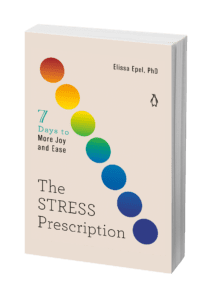
Elissa Epel, Ph.D. is a psychologist and professor in the Department of Psychiatry at the University of California, San Francisco. She is a bestselling author and an international expert on stress, well-being, and optimal aging. Her new book, The Stress Prescription: Seven Days to More Joy and Ease (Amazon, Bookshop), just hit shelves.
I couldn’t wait to talk to Elissa about happiness, habits, and managing stress.
Gretchen: Why did you write The Stress Prescription?
Elissa: After 30 years of being a stress and health researcher, I felt the need to download some important conclusions, to show what is useful to people in daily life. It’s getting ridiculous how stressed we all are, as a society. A recent American Psychological survey found 27% of all adults feel so stressed they can’t function. 62% of young women feel completely overwhelmed by stress. That’s a toxic level of stress. Chronic stress creates health problems and we need to take stress as seriously as medical issues. Thus, “The Stress Prescription.” We don’t have to live that way. We can lift the dark veil of daily stress and see the small miracles of the day in front of us. That’s why I wrote this book.
My book agent gave me a crazy challenge – share 7 tips, in 7 days, and I took the challenge. Applying scientific knowledge to our daily life can be clumsy and wordy. As a researcher, we learn from specific experiments in certain conditions, and we are extremely precise in describing and qualifying our findings. So writing science for the public was excruciating at first. But in the end, the book appears to have helped the people who have read it.
I am no stranger to chronic stress, I have lived years of my life in that state and have made lots of changes since then. But managing stress, even for mental health experts, is ongoing work. The book helped me too because part of the practice is remembering, and for me, understanding the science behind each practice is motivating (Yes, I am a questioner!).
One more thing –In that survey, the good news is only 4% of people over 65 felt that extreme level of stress. But we don’t want to wait to benefit from the wisdom of aging. Older people have lots of strategies that come with age. One of them is a shortened sense of time. We can all step back and realize how short life really is. And that alone helps us focus on what really matters. Thus, Chapter 2 leads us to better align how our values to how we spend our time. And not try to control the things we don’t really have control over.
What’s a simple activity or habit that consistently makes you happier, healthier, more productive, or more creative?
Nature immersion! Being near the water elevates my mood that is, when I am not stuck in my thoughts. The Stress Prescription leads us through steps to experience nature with all of our senses. It’s hard to feel wonder and awe, and also neurotic stress, at the same time. Being in nature or in a beautiful place changes shapes my thought processes to be more creative, to see more interconnections. I love working with a view or outside – my writing flows and poetic words I rarely use emerge. I am writing this from my San Francisco office desk. Sorry.
Have you ever been hit by a lightning bolt , where you made a major change very suddenly, as a consequence of reading a book, a conversation with a friend, a milestone birthday, a health scare, etc.?
It wasn’t exactly a lightning bolt – it was wildfire smoke. This was not a glamorous insight on top of a mountain. I had been thinking about what I could do to help mitigate climate change. And then the wildfires, smoke, and heatwaves of 2020 came to California, to my own lungs, and I crossed over. I transformed from a climate worrier to warrior. I knew the crisis was crossing certain tipping points, and indeed we are now seeing the disasters all over the world, and even at home. I vowed during that one day we woke up on Mars, when the smoke blocked the sun and the sky turned orange, to devote part of my work to the climate area and have been making that transition. Balancing time is always hard, it’s not my day job. But when I am working on climate projects, I feel alive, I am resonating with my North Star, adding a greater purpose to my life.
Would you describe yourself as an Upholder, a Questioner, a Rebel, or an Obliger?
You can guess by my career choice, research, I am a Questioner! And I am a magnet for questioners, being a science nerd. I also value silence as much as science, and have become a contemplative health psychologist in my work. My ideal vacation is a silent retreat, or… a spa!
Is there a particular motto that you’ve found very helpful? (e.g., I remind myself to “Be Gretchen.”) Or a quotation that has struck you as particularly insightful?
I am a bit obsessed with stress, not just out of scientific curiosity but for personal reasons as well. There are metaphors that I love, that get me out of a stressful striving state, when I am trying to problem solve situations that are not very changeable. Here are some:
Drop the rope (the rope is attached to a brick wall).
Drop the baggage (the baggage contains stress leftovers, whatever you are carrying around needlessly, even unconsciously).
Drop down (Ahh…let your mind drop down, into your body, let yourself breath fully)
And here is a favorite quote, by Pema Chodron, from When Things Fall Apart:
“Things don’t really get solved. They come together and they fall apart. Then they come together again and fall apart again. It’s just like that. The healing comes from letting there be room for all of this to happen: room for grief, for relief, for misery, for joy.”
The post Author Interview: Elissa Epel appeared first on Gretchen Rubin.
January 4, 2023
How to Write Your “23 for 2023” List
During the tasks of everyday life, we can get so busy that it can be difficult to take the energy and time to pause and reflect.
For this reason, I’m a big fan of any exercise that helps us to step back and think about changes we might make to become happier, healthier, more productive, or more creative.
Often, that catalyst is a date, such as January 1—if you want more ideas of dates to use, take a look at the Calendar of Catalysts.
Questioners may protest that the date of January 1 is arbitrary, but it does mark a milestone in time, and is a cultural moment that reminds us to think big and broad.
On the Happier with Gretchen Rubin podcast, we discuss different approaches to making change. For 2023, we’ve talked about joining the yearly challenge (#Outside23in23), identifying a one-word theme for 2023, and making a “23 for 2023” list.
Research shows that when we set specific aims for ourselves, no surprise, we’re more likely to achieve them. So taking the time to make this list can make a big difference to our happiness.
Over the years, we’ve seen the creative ways that people approach these lists.
How to make your 23 for 2023 list:Use the number 23 in a creative way, such as “Try 23 new recipes” or as Elizabeth notes, “Read 23 novels”Divide the list into categories, such as “Family,” “Career,” “Adventure” “Fun”Build the entire list around a single important aim, such as “Move” or “Switch careers”Build the entire list your one-word theme—for instance, “Earn” or “Fewer”It’s helpful to be concrete, and frame items as actions, not outcomes—not “Learn Italian” but “Memorize 5 new words every day” or “Use Duolingo every day”Consider whether you’re an Upholder, Questioner, Obliger, or Rebel—take the free “Four Tendencies” personality quizCreate a compelling visual display of your listReview your list frequently—I aim to review my list on the 23rd of every monthConsider making a list of only enjoyable items! Especially you Obligers!Share a list with someone else, to work on aims togetherPay attention to vocabulary—the same activity can be much more appealing, or not, depending on how we frame it, the vocabulary we use.
Don’t worry about whether you’ll be able to cross off all 23 items. Neither Elizabeth nor I has ever managed to complete an entire list! But making this list help us to be happier.
Want to make list of your “23 for 2023?” Download the free PDF here. We love to see people’s lists—it’s fascinating to see what people do with their list—so if you’re so inclined, post it to #23for23 on social media. We can all learn from each other.
Elizabeth’s 23 for 2023 list:One-word theme is SCALE.
Hike Fryman Canyon 50 times—she’s going to track in the Happier™ appFloss every nightGet back in her wedding ringsHike in Ojai with SarahTake a trip with friends from high schoolGet the perfect small cross-body bagUse her packing cubesRead 23 novels (this includes audiobooks)During the potential writers’ strike, outline a novelTry pickleballGet her mah jong group going againAlways carry KleenexGet two body scansWalk to MalibuFinish her will with AdamGo outside 23 minutes a day—of course!Host a family partyBuild up Daisy’s and Nacho’s stamina so they can go on hikesUpgrade her home officeThrow out gross t-shirts—both hard and easy to doGet a new robeGo away for a night with friendsDo Season Three of Fantasy Island—an outcome, but she’s going to manifest itGretchen’s 23 for 2023 list:
One-word theme is WAVE.
Visit the Met every dayGo outside 23 in 23Catch up on my photo albums30 straight days of cultureTackle one difficult email per dayMake standing haircut appointmentsBuy new underwearHave a summer of re-readingBe more systematic about connecting with friends and colleaguesBuy airplane jeansHelp Eleanor get a driver’s license and Elizabeth to make a willFigure out the direction for my next writing projectEnjoy 23 seconds of sensory delight each dayWear make-up every dayWork on my Muse MachineCreate a time capsule for 2023—we talked about this idea in episode 401Ask people for the names of journalists who might be interested in my book Life in Five Senses Start a new groupOnce a month, pick a New York City place I’ve never visited, and go thereEmbrace this year of family transitionReview this list on the 23rd of each monthAdd a “My Thirty Minutes” to my calendar each workday (and figure out a catchy name for this time)Watch a great TV show
Elizabeth and I have made these lists for several years, and each year, we’re so happy we did it. It’s a very clarifying and creative exercise.
Also, it’s a fun exercise to do with other people. Elizabeth and I have a great time talking about our lists together; sharing lists is a great way to spark conversation about interests, values, and aims. Try doing it with friends, family, or co-workers. You may find items that you’d like to tackle together.
Have you found any fresh ways to articulate and work towards your aims? Making a New Year’s resolution isn’t the only way!
The post How to Write Your “23 for 2023” List appeared first on Gretchen Rubin.
January 3, 2023
Trying Dry January? Turn Deprivation into Indulgence
Often, when we try to change a habit, we’re asking something demanding of ourselves.
Sometimes, we want to push ourselves—to go to sleep earlier, go for a daily walk, cook more, read to our kids every night.
Sometimes, we want to deprive ourselves—to give up fast food, to stop watching TV after 9 pm, to stop drinking caffeine.
As I explore in Better Than Before, my book about habit change, we really, really don’t like to deprive ourselves.
Here’s one simple way to make deprivation easier: Turn deprivation into indulgence.
If you’ve decided to deprive yourself of something because you know that you’ll be happier and healthier without it, you’ve made a very helpful choice.
So, if you can afford it, you might throw a little money at the problem, to make it easier to follow through.
For instance, last year, a friend was planning to do Dry January, and she knew it would be tough for her. And not only that—she was actually hoping that Dry January would help her to drink less in the future. She didn’t want to give up alcohol altogether, but she wanted to cut back.
So she decided to use Dry January as an occasion of pleasure, interest, beauty, and ritual.
First, she did a lot of enjoyable research, to figure out what she wanted to try.
Then she divided her bar into Mocktails and Cocktails. She bought new, specialized glassware, like coupe glasses, margarita glasses, and martini glasses.
She got lots of interesting mixers along with items like ginger and lemon, fancy salts—anything she could find to elevate the mocktail.
She invited friends to join her in rounds of taste tests to evaluate different alcohol-free brands and mocktail combinations.
If you’re interested, here are some of her recommendations:
Lyre’s White Cane Spirits, Aperitif Rosso, American MaltBelvoir Farm’s Elderflower and Rose LemonadePentire’s AdriftRitualAthletic Brewing Company
By turning Dry January into a fun project that involved collecting, tasting, and spending time with friends, she was able to build an indulgent, delightful atmosphere around something that she knew would be taxing.
“It felt more life-affirming,” she told me, “so it was easier to stick to it.”
She was able to elevate her experience in many ways:
she made her consumption more intentional and mindfulwith her husband, she created a nightly ritual of fixing a mocktail that they both enjoyedshe had fun with her friends as they compared concoctionsshe used her creativity to fashion her own specialty drinks
So, while she did make many purchases, she wasn’t just buying stuff—she elevated experience with her mindful attention, by engaging with other people, and by learning and creating.
She turned deprivation into indulgence for Dry January, but this approach could work for many aims.
Want to give up coffee? A friend said, “I had to give up coffee, even though I love it, because it made me jittery. Now I let myself buy any herbal teas, cups, or tea-making paraphernalia that I want, and I drink tea whenever I want. I keep everything nicely organized in a special cupboard, and my tea-drinking feels very elevated.”
Want to stop eating out so much? Splurge on expensive or unusual ingredients, fine tools, gorgeous cookbooks.
Want to “Go Outside 23 in 23?” and spend 23 minutes outside every day in 2023? Perhaps this aim seems like it will be demanding—if, say, you’ll be depriving yourself of some comfy TV-watching time.
If so, identify ways to make it feel indulgent. Maybe you buy a wonderful coat or scarf that you love to wear. Maybe you buy a membership to the local botanical garden so you can visit every day for free. Maybe you buy an outdoor chair so you can sit in comfort while you drink your coffee outside, as well as a new set of binoculars so you can watch the birds.
Whatever the deprivation, when you’re thinking, “I can’t have this,” you can answer, “but I get to have that.”
While this approach might seem self-indulgent, if we’re taking steps to create a habit that will add greatly to our happiness, that’s a good place to spend money. And, of course, it’s not enough just to buy the stuff; we must put it to good use. Real enjoyment is not passive or idle.
Another way to think about indulgence and deprivation is to ask yourself, “Am I a ‘no’ resolver or a ‘yes’ resolver?”
Some people respond well to “no.” I actually do better with “no” resolutions; this may be related to the abstainer vs. moderator split—I’m such an abstainer, myself.
Some people, however, resent negative resolutions and want to say “yes” to themselves. They dislike hearing “don’t” or “stop.” If you’re a “yes” resolver, you might find it especially useful to turn deprivation into indulgence; it’s a way to re-frame a “no” as a “yes.”
There’s no one right way to make a resolution, but it’s important to know what works for you. As always, the secret is to know your own nature. (Here are more know-yourself-better questions to help you keep a habit.)
Habits are the invisible architecture of everyday life, so it’s worth the effort to cultivate habits that make us happier, healthier, more productive, and more creative.
The post Trying Dry January? Turn Deprivation into Indulgence appeared first on Gretchen Rubin.
December 29, 2022
Jump-Start Your Habit of Keeping a Journal
I love to talk to people about their habits.
I always enjoy hearing about which habits people want to make or break, and I’m particularly interested in those habits that many people seek to make.
For instance, for our annual challenge for 2021, Elizabeth and I chose “Read 21 in 21” — i.e., read for 21 minutes a day in 2021. We chose that challenge because we’d heard from so many people who wanted to read more.
Another habit that many people want to cultivate? The habit of keeping a journal.
For both mental and physical health, there are many good reasons to keep a journal. Research shows that keeping a journal about your feelings may help you feel less mental distress. It can help you to remember — or spark — important insights. It can give you the satisfying feeling of “ta-da” when you look back on everything you’ve written. It can help you make sense of what’s happening to you. It can generate your creativity. It can help you spot patterns in your life. Research suggests that it can even boost your immune system!
But while it’s a valuable habit that many people want, journal-keeping can be hard to maintain.
If you’d like to keep a journal, consider these suggestions:
1. Clarify your reason.What do you hope to accomplish by keeping a journal? Clarity will help you stick with this habit. Decide whether you want to reflect on your day-to-day life, document a transition, know yourself better, capture insights, practice gratitude, or something else. Write down this reason somewhere you’ll see it often.
2. Set expectations.When building your journal-keeping habit, be specific about what you expect from yourself. At what time of day do you plan to write? For how long? Will your journal be in the form of lists or doodles or handwritten pages? Do you expect to record your thoughts every day, or once a week?
3. Choose your tools.Will you use a yellow legal pad, a leather bound notebook, a Google Doc file, or your phone? Do you prefer a pen or a keyboard? Remember that journals don’t have to be handwritten—you might keep a digital, audio, or photo journal. Experiment to find the tools and methods that work best for you.
4. Look to the past.If you’ve tried keeping a journal and didn’t manage to maintain it in the past, what factors prevented you from reaching your aim? Write them down. By identifying what hasn’t worked for you, you can anticipate hurdles and plan workarounds.
5. Start small.Begin with a one-sentence entry. Next time, try three sentences, and then a paragraph. Before you know it, you may be writing a page a day (if that’s what you want to do).
6. Make it a joy.Pair your writing time with an element of pleasure: the first cup of coffee in the morning, an inspiring playlist. Maybe you’ll find that keeping a journal is most enjoyable when you write outside, or in pajamas, or at your desk before starting work. Pairing something pleasurable with this new habit makes it more likely to stick.
7. Begin now.This week—better yet, today—write your first journal entry. Or, if you’ve already started a journal and missed a few days, pick it back up and start again. What we do every day matters more than what we do once in a while, and the best time to begin is now.
With the habit of journal-keeping, as with many habits, it’s helpful to remember: “Don’t let the perfect be the enemy of the good” or “Don’t get it perfect, get it going.”
The post Jump-Start Your Habit of Keeping a Journal appeared first on Gretchen Rubin.
December 24, 2022
Top Tools for Habit Change
In my study of habits, I’ve learned that no tool fits every hand. Alas, there’s no magic, one-size-fits all solution for making or breaking a habit.
It’s very helpful to create good habits, because habits are the invisible architecture of daily life; research shows that about 40% of every day’s activities are shaped by habits.
We all use habits, but we vary dramatically in how we most effectively shape those habits.
Some people can put an activity on the to-do list or schedule; some people resist to-lists and schedules.Some people can make up their mind and do it; some people need accountability.Some people can sign up for a class; others dislike the feeling of being tied to the calendar.Some people are morning people; some people are night people.Some people are abstainers; others, moderators.Some people love to customize; some people just want to be told what to do.
Nevertheless, I’ve found that some tools do work especially well, and for many people.
So, if you’re trying to master a habit, it’s worth considering these top tools, because they’re so widely effective.
You can find all these tools in the Happier™ app, or, if you prefer tangible tools, many also exist in physical form.
As you consider the top tools, it’s a big help to know whether you’re an Upholder, Questioner, Obliger or Rebel. The “Four Tendencies” personality framework reveals a lot about how you can most effectively tackle a habit. Don’t know your Tendency? Take the free, quick quiz here. (More than 3.2 million people have taken it.)
These top tools work for all four Tendencies, but different Tendencies might use or frame the tools differently, to appeal to their perspective.
Don’t Break the Chain — Perfect if you love a streak. You can find this tool in the Happier app — it’s one of the most popular tools there — or you can use the physical Don’t Break the Chain Journal.
Remember: What we do most days matters more than what we do once in a while.
While Rebels don’t like to be chained to a behavior, they do love a challenge. Rebels often use this tool as a way to challenge themselves, and to say to others, “You thought I couldn’t do XYZ? Look at this!”
Numbers Tracker — This is also an extremely popular tool in the Happier app. People like to log their steps, words, minutes, and more. It’s a way to give ourselves “credit.”
We manage what we monitor.
Questioners, especially, tend to like to track.
One-Sentence Journal — Sometimes, when we’re keeping a habit, we want to record details along the way. How easy or hard you found that day’s experience, whether you enjoyed it, what you accomplished, creative challenges you faced, etc.
You can keep a one-sentence journal in the Happier app, or you can use the physical One-Sentence Journal. One nice thing about the actual journal is that it can be a great keepsake — of the books you read to your kids, the recipes you tried, the steps you went through to start your side hustle, etc.
Either way, writing in your One-Sentence Journal gives you a moment for mindful reflection on your habit.
Photo Log — Create a visual record over time. Easy! Creative! So fun.
Like the Don’t Break the Chain or the One-Sentence Journal, it’s a way to keep a streak or a record — but in photo form. For instance, you might take a photo of something interesting every time you “Go Outside 23 in 2023.” A quest is more fun than a jaunt.
I visit the Metropolitan Museum, and I take a photo every time.
Accountability Partners — This is a great tool if you benefit from notifying a friend, family member, coach, or group about your activities, or if you post on social media. This kind of outer accountability is key for Obligers!
For many Obligers, the Happier app or a notebook can itself act as a form of outer accountability. My sister Elizabeth is this way. But for some Obligers, outer accountability must be provided by an actual person. For that kind of person, the Accountability Partners tool works best.
Track Your Total — This tool is terrific if you like to measure numbers that add up over time, such as miles, minutes, or words. You can figure out satisfying milestones such as, “I’ve walked from New York City to Boston.”
Notifications — Sometimes, we just need to be reminded to follow a habit. You can use notifications to remind yourself to work toward your aim and to keep a habit uppermost in your mind.
One added advantage of several of these tools — in the Happier app, in physical form, or otherwise — is that they remind us of all we’ve already accomplished. We can get so focused on our “to-do” lists that we forget to remember our “ta-da” lists of everything we’ve done! Realizing all we’ve accomplished can keep us feeling encouraged and energized to keep going.
Are you joining the “Go Outside 23 in 23” challenge, to go outside for 23 minutes each day in 2023? #Outside23in23. Consider how you might use the Top Tools:
Don’t Break The Chain Numbers Trackers One-Sentence Journal The Photo Log — Elizabeth will use this, me too Accountability Partners Track Your Total NotificationThe post Top Tools for Habit Change appeared first on Gretchen Rubin.
December 21, 2022
Join the Go Outside 23 in 23 Challenge
When we’re trying to create happier lives, we often need to work on our habits; habits are the invisible architecture of everyday life.
But, in case you haven’t noticed, it can be hard to change a habit!
When we’re trying to master a habit, it can help to try a fresh approach—something that seems more fun or manageable than something like a New Year’s resolution.
So, for the last few years, on the Happier with Gretchen Rubin podcast, my sister Elizabeth and I have given ourselves and listeners a yearly habit challenge: to “Walk 20 in ’20,” “Read 21 in ’21,” and “Rest 22 in ’22.”
People love this approach! It’s concrete, it’s manageable, it’s a bit whimsical, and we’re all working on an important habit together.
Now we’re ready to announce the 2023 challenge…drumroll…
“Go Outside 23 in 23”—go outside for 23 minutes a day in 2023. We’re so excited about this challenge!
About the ChallengeGoing outside can include anything from walking to bird watching; from yard work to enjoying your morning coffee on your porch—as long as the door closes behind you, it counts.
We chose this challenge because so many good things happen when we go outside. Going outside boosts our physical and psychological health, gives us more time in nature, and helps us mindfully appreciate the moment and our senses. For instance:
Going outside often encourages us to move moreGetting sun in our eyes helps regulate our circadian rhythm, boosts mood, fosters calm, and improves sleep (especially early morning sun)Being outside helps us get vitamin DWe often engage with others when we’re outside, so we’re less isolatedSpending time outside is linked to improved concentration, creativity, and clarityBeing in nature has many physical health benefitsGoing outside helps us to be mindful of the present moment and our five senses—obviously, this is of special interest to me!
As you consider joining the challenge, if you’d like to learn more about the value of going outside, check out…
If you go outside for 23 minutes per day for 365 days, that’s 8,395 minutes or about 140 hours outside. Imagine how invigorated you’ll feel by that time outside!
As you consider joining this challenge, here are a few foundational resources about habit change you might find useful:
My book Better Than Before explores the 21 strategies we can use to build our habits.My one-page “Checklist for Habit Change” lists all 21 strategies that you can use to strengthen this habit.If you’re struggling to form a habit, take the quick, free Four Tendencies Quiz to find out which strategies will work best for you.
If you’re discouraged because you’ve tried and failed in the past to master an important habit, don’t worry. There’s nothing wrong with you. You probably just set things up in a way that doesn’t suit you. Answers and solutions exist! It turns out that it’s not that hard to change a habit, when you do it in the way that’s right for you. #Outside23in23 is a great opportunity to experiment and learn what works best for you.
If you think it might be hard to hit 23 minutes, remember, everything counts. Park a few blocks away from the store you’re visiting. Walk several blocks to a subway stop instead of going to the closest station. Instead of waiting inside, stand outside while you wait to pick up a child. It all adds up.
If you can, while you’re outside, pay attention. Look at the sky, sniff the breeze, touch the bark on a tree, experience the weather. Allow yourself to experience the moment, with all that it holds.
Participate in the Happier AppNew for this year, the challenge will take place in the Happier™ app, a revolutionary tool designed to help users explore practical strategies, build self-knowledge, and apply that insight to develop the habits that work best for them.
The Happier app offers multiple tools to track participation and progress, including:
Don’t Break The Chain to mark off each day Numbers Trackers to log steps and/or minutesOne-Sentence Journal to record details you want to rememberPhoto Log to create a visual record over timeAccountability Partners if you’d like to notify a friend, family member, coach, or group about your activitiesTrack Your Total to measure numbers that add up over time
Also, Elizabeth and I know that many listeners (including Elizabeth herself) are Obligers, who need outer accountability to meet inner expectations. Even people who aren’t Obligers often benefit from accountability.
So, to make the challenge more fun and to boost accountability, this year we’ve set a participation goal—one million entries logged by the end of 2023.
Every time you log an entry for “Go Outside 23 in 23” in the Happier app, it counts toward this goal. To celebrate hitting the one million milestone, the Happier app will make a donation to One Tree Planted, a nonprofit organization focused on global reforestation.
Remember, by spending time outside, you’re helping to plant much-needed trees in the world.
How to JoinDownload the Happier app for free to get started. Once you create your account, you’ll see “Outside 23 in 2023” on the home screen. Tap on it, and you’ll be guided to set up your aim to go outside 23 minutes each day and choose a tracking tool.
The challenge officially kicks off on January 1st, so you’ll have time to explore the app — spin the wheel, get practical tips, enjoy audio content, and more. Or, if you’re feeling inspired to get started right away, you can get some extra days in.
If you’re already a Happier app user, you’ll see “Go Outside 23 in 2023” on your home screen starting December 19th. You can participate in the challenge for free, with or without a subscription, and regardless of how many aims you are already tracking.
Learn more about the app and the “Go Outside 23 in 23” campaign here.
If you join the “Go Outside” challenge, use the hashtag #Outside23in23 to post from your daily time outside on social media. As the Strategy of Other People explains, we pick up habits (for better or worse) from other people, so it’s helpful to feel like we’re joining with others. It can give us accountability; it can help us remember what we want; it can remind us of how great it feels to be refreshed and energized.
Ideas to Get StartedAs you think about your #Outside23in23, look for ways to make it easier or more convenient to go outside.
You might…
go outside to give yourself a few pleasant breaks during your work dayplan to go outside with someone else, as a way to strengthen a relationshipplay with your dog outside—your dog will be so happy!invest in clothing, sunglasses, hat, sunscreen, better earbuds, etc. to make yourself more comfortable outsideidentify errands you could accomplish by walking instead of drivingfind a favorite podcast or audio-book that you listen to only when you’re outside (Strategy of Pairing)volunteer to work in a public parkthink about how grateful your future-self will be if you develop a habit of going outside in 2023consider how others might benefit if you’re healthier, calmer, and more focusedidentify something you want to learn about, such as bird or plant identification or local history, that will take you outsideidentify a skill you want to practice, such as sketching or pickleball, that will take you outsideidentify a feature of your home that you want to enjoy more, such as a patio, front porch, fire pit, or flowering treethink of a feature of your neighborhood that you don’t visit enough, such as a garden, park, or walkgive yourself a fun assignment, like “Take photos of beautiful trees” or “Learn the names of all the dogs in my neighborhood”
What other tips and resources have you found helpful? Let me know! We can all learn from each other.
I’m writing a collection of Secrets of Adulthood and Aphorisms, and here are a few to keep in mind as you plan to go outside in 2023:
If you don’t know what to do with yourself, go outside.There’s no bad weather, just bad clothing.To be comfortable, have clothes for sun, cold, and rain.If you want to change, it’s often easier to go from the outside to the inside.Every couple should have an indoor game and an outdoor game to share.We never regret exercising.In nature, all color combinations are pleasing.
Join us for #Outside23in23.
The post Join the Go Outside 23 in 23 Challenge appeared first on Gretchen Rubin.
December 13, 2022
One-Word Themes for 2023
At the beginning of a new year, many of us look for ways to make our lives happier, healthier, more productive, and more creative.
On January 1, many people make New Year’s resolutions—but many people don’t like making these resolutions. How about you?
Maybe you love resolutions (like me). Or maybe you feel discouraged, because you’ve made and broken too many resolutions in the past. Or maybe you don’t like the idea of binding yourself to a resolution, or you think that making a resolution on January 1 seems arbitrary.
(By the way, these responses often correspond to the Four Tendencies. Don’t know if you’re an Upholder, Obliger, Rebel, or Questioner? Take the free Four Tendencies quiz.)
For whatever reason, resolutions don’t work for everyone.
Instead, consider joining a yearly challenge, like #Rest22in22 or #Read21in21, or make a “23 for 23” list with 23 things you’d like to accomplish for the year.
Or try this exercise: Identify one idea, summarized in one word or phase, as your overarching theme for 2023.
My sister Elizabeth and I have been doing this for years. Some of our choices:
Elizabeth: “Free Time,” “Style,” “Hot Wheels,” “Novel,” “Home,” “Control,” “#6,” “Lighter,” “Butterfly,” and for 2022, “Step.”Gretchen: “Upgrade,” “Bigger,” “Lighten Up,” “Re-purpose,” “Delegate,” “Infrastructure,” “Growth,” “Open,” and for 2022, “Salt.”
In episode 408 of the Happier with Gretchen Rubin podcast, we revealed our one-word themes for 2023 and explained why we chose them.
Over the years, we’ve found that a one-word theme works best when it’s a word with multiple meanings and associations. When I chose “Salt,” I had no idea how rich and complex that one-word theme would turn out to be.
It’s also fun and helpful if a one-word theme can be expressed visually. Last year, Elizabeth bought me a “Salt” T-shirt (from a salt-and-pepper Halloween costume) that I love wearing.
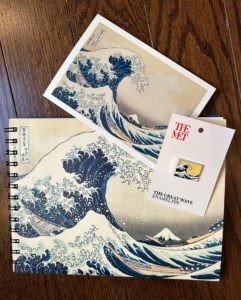
This year, I realized that I could capture “Wave” in an image by invoking one of the Met’s most famous artworks: Under the Wave off Kanagawa, also known as The Great Wave, by Katsushika Hokusai.
I bought myself some items from the Met’s gift shop to help me keep my “Wave” theme uppermost in my mind.
We asked listeners for their one-word themes, and heard many imaginative, thought-provoking ideas:
FreshIdentityAllowPaceDecideSavorShareWaterSimplifyFlexibleMagicGentleEnoughForward TransitionHarvestFloweringHealthyUpgradeMarginFlexWholeReflectFunDrawDigPeacockAudibleAre you going to choose a one-word or one-phrase theme for the year? It’s a surprisingly fun way to reflect on what we want from the coming year, and to generate ideas to meet those aims.
The post One-Word Themes for 2023 appeared first on Gretchen Rubin.
December 8, 2022
Author Interview: Neil Pasricha
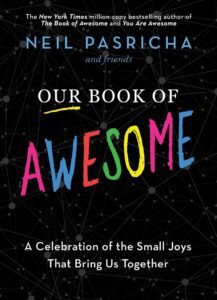
Neil Pasricha is a New York Times bestselling author of seven books, including The Book of Awesome (Amazon, Bookshop) and The Happiness Equation (Amazon, Bookshop). He’s also the host of the award-winning podcast 3 Books. The latest installment of his bestselling series, Our Book of Awesome: A Celebration of the Small Joys That Bring Us Together (Amazon, Bookshop), hit shelves this week.
I’ve known Neil and admired his work for many years, and I couldn’t wait to talk to him about happiness, habits, and small joys.
Gretchen: What’s a simple activity or habit that consistently makes you happier, healthier, more productive, or more creative?
Neil: First off, Gretchen! I just want to say thanks. You’ve been talking about me and my OG blog and books with your community since 2009! That’s like the Paleozoic Era of Internet time. So, thanks, more than anything, for your friendship.
Now, to answer your question! What super-high-leverage habit can I impart? This one’s easy for me! Every single day I wake up—with my cell phone out of my bedroom!—and do something I call two-minute mornings.
I grab a pen, a piece of paper, and write down:
I will let go of… I am grateful for… I will focus on…
For example, I might write:
I will let go of… comparing how popular my podcast is with Gretchen’s.
I am grateful for… having Internet friends I actually made before my first book still help me for my tenth, the way my 1 year old gets so excited to throw dirty laundry down the stairs, and the one barbecue potato chip in the bag with the most barbecue powder on it…
I will focus on… filling out this Q&A for Gretchen!
Anyway, each of the 3 prompts is backed by research and the practice helps you ‘win the morning to win your day. I could drone on and one about the research here but I’ll just point your readers to a longform viral HBR article I wrote on the concept if they’d like to work it into their life.
Just remember this: The average person is awake for 1000 minutes a day—that’s it!—and taking 2 to do this research-based ritual helps your other 998 minutes be happier.
What’s something you know now about happiness that you didn’t know when you were 18 years old?
You know Gretchen, it’s interesting.
Like you, I grew up reading books. Loved books! And then right about when I was 18 and went to college … I stopped. Not sure if six years of textbooks just beat my love of books out of me or what. But I stopped reading. Stopped! So embarrassing for an author.
I mean I literally remember after my divorce having my not-yet-girlfriend Leslie over to my downtown bachelor apartment and she’s like “Where’s your books?” and I was like “Oh, who has time to read anymore!” and she just looked at me horrified. Like “I should leave this man right now.”
And today? At age 43? I read over 100 books a year. And I know, in my soul, and from the research, that reading books is the single biggest lead domino to almost everything that makes me happy in my life. Reading books makes me a better husband, a better father, a better neighbor, a better citizen, a better activist, a better conversationalist—and all those things bring me great joy.
You may know the George R.R. Martin quote: “The man who reads lives a thousand lives before he dies … the man who never reads lives only one.”
I say we need to read books — real books on real paper — more than ever before. We spend over five hours a day on our phones right now. In a world of endless dings and pings we need to get back to single-tasking. That’s partly why I started up my podcast 3 Books—which you were so kind to be one of my first guests on!—back in 2018. It’s a path to finding great books again.
And, hey, fellow Rubin Lover, if you don’t believe me, take it from a 2011 study published in the Annual Review of Psychology showed that reading triggers our mirror neurons and opens up the parts of our brain responsible for developing empathy, compassion and understanding. That’s EQ! The toughest-to-grow leadership skills of all. Another study from Science Magazine in 2013 showed that reading literary fiction helps improve empathy and social functioning. And, finally, a 2013 study at Emory University showed MRIs taken the morning after test subjects were asked to read sections of a novel showed an increase in connectivity in the left temporal cortex. What’s that? The area of the brain associated with receptivity for language. The MRIs were done the next day.
Just imagine the long-term benefits of cracking open a book every day.
Reading! Books! Reading books! Powerful driver of happiness. Yet 57% of Americans read zero books last year. We have to remember, and get back into, books!
Have you ever managed to gain a challenging healthy habit – or to break an unhealthy habit?
Well, lemme stick with “not reading” to “reading” for a second here. I mean, seriously Gretchen, I went from reading four or five books a year in 2017 to reading fifty in 2018 to reading over 100 a year now.
HOW? I’ll give your readers three simple ways to kickstart (if it’s dead) or turbocharge (if it’s alive but sputtering) their own reading habit.
Centralize reading in your home. Back in 1998, psychologist Roy Baumeister and his colleagues performed their famous “chocolate chip cookie and radish” experiment. They split test subjects into three groups and asked them not to eat anything for three hours before the experiment. Group 1 was given chocolate chip cookies and radishes, and were told they could eat only the radishes. Group 2 was given chocolate chip cookies and radishes, and were told they could eat anything they liked. Group 3 was given no food at all. Afterward, the researchers had all three groups attempt to solve an impossible puzzle, to see how long they would last. It’s not surprising that group 1, those who had spent all their willpower staying away from the cookies, caved the soonest. What does this have to do with reading? I think of having a TV in your main living area as a plate of chocolate chip cookies. So many delicious TV shows tempt us, reducing our willpower to tackle the books.Roald Dahl’s poem “Television” says it all: “So please, oh please, we beg, we pray / go throw your TV set away / and in its place, you can install / a lovely bookshelf on the wall.”
Last year my wife Leslie and I moved our sole TV into our dark, unfinished basement and got a bookshelf installed on the wall beside our front door. Now we see it, walk by it, and touch it dozens of times a day. And the TV sits dormant unless the Blue Jays are in the playoffs. Which isn’t often.
Make a public commitment. In his seminal book Influence: The Psychology of Persuasion , Robert Cialdini shares a psychology study showing that once people place their bets at the racetrack, they are much more confident about their horse’s chances than they were just before laying down the bet. He goes on to explain how commitment is one of the big six weapons of social influence. So why can’t we think of ourselves as the racehorses? Make the bet on reading by opening an account at Goodreads, friending a few coworkers or friends, and then updating your profile every time you read a book. Or put together an email list to send out short reviews of the books you read. I do exactly that each month, with my Monthly Book Club Email. I stole the idea from bestselling author Ryan Holiday, who has a great reading list.Change your mindset about quitting. This may be the most important one and it’s a bit subtle. Hear me out! It’s one thing to quit reading a book and feel bad about it. Most of us do this. Vestigial guilt from eighth grade when you didn’t finish reading Lord of the Flies or whatever. But I say: When you quit a book you should feel proud of it. Don’t settle for neutral, Gretchen! It’s pride we want here. All you have to do is change your mindset. Just say, “Phew! Now I’ve finally ditched this brick to make room for that gem I’m about to read next.” I quit three or four books for every book I read to the end. I do the “first five pages test” before I buy any book (checking for tone, pace, and language – things that aren’t gonna change if I like it or not) and then let myself off the hook if I need to stop halfway through.
Would you describe yourself as an Upholder, a Questioner, a Rebel, or an Obliger?
A Rebel!
Does anything tend to interfere with your ability to keep your healthy habits or your happiness?
Oh my god yes. So, let’s go back to two-minute mornings. Do I try to do that every morning? Yes. What if my one-year-old is up scream-coughing at 4am and I need to take him on a walk around the pitch-black block so he doesn’t wake up everybody else? That happens! So do a million other interruptions. The growth for me, Gretchen, is honestly just not beating myself up when I fall off the wagon. Recognizing that it’s inevitable. And, here’s the important part, non-judgementally getting back on. The getting back on is key. We so often don’t get back on because we’re busy beating ourselves up. So: If I miss doing two-minute mornings today? I just try again tomorrow.
Remember: The goal is not to be perfect. The goal is just to be better than before. To fully borrow one of your book titles.
Have you ever been hit by a lightning bolt, where you made a major change very suddenly, as a consequence of reading a book, a conversation with a friend, a milestone birthday, a health scare, etc.?
You mean like you reading Gary Taubes!? Ha! I’ll never forget when you told me about that on 3 Books.
So, I guess yes: This is perhaps a good time to tell people my backstory. Essentially, in my late 20s, after my wife left and after my best friend took his own life, I couldn’t eat, couldn’t sleep, and lost forty pounds due to stress. I started going to therapy twice a week, and, here’s the major change, I began a blog to try and cheer myself up. The blog was called 1000 Awesome Things and for the next 1000 straight weekdays I posted a short essay about one small joy in life.
My mind was dark and many of my attempts were duds—my first awesome thing was broccoflower, the ‘strange mutant hybrid child of nature’s ugliest vegetables’—but some posts started making me smile: Bakery air, warm underwear out of the dryer, and playing on old, dangerous playground equipment.
Still, nobody read the blog except for my mom. Although, one day, she forwarded it to my dad and my traffic doubled. And then one day I started getting tens of hits. And then one day I started getting hundreds. And then thousands. And then … millions. It just got bigger and bigger and bigger and bigger and then I got a phone call and the voice on the other end of the line said, “You just won the Best Blog in the world award!” And I said, “That sounds totally fake.”
But turns out it was real. It was The International Academy of Digital Arts and Sciences and they flew me down to New York City to parade me down a red carpet before handing me the award for “Best Blog”. When I got home to Toronto I found ten literary agents waiting for me in my inbox, eager to turn 1000 Awesome Things into . . . The Book of Awesome.
The Book of Awesome came out in 2010 and landed on the New York Times bestseller list and stayed on international bestseller lists for over 200 weeks over 8 years. Over the next two years a litany of sequels and spin-offs followed: The Book of (Even More) Awesome, The Book of (Holiday) Awesome, The Calendar of Awesome, The Journal of Awesome, The App of Awesome, and on it went.
Over a million copies of the books were sold and it spawned a pre–social media movement of people mailing in photos of themselves with the book in front of famous landmarks and hundreds of elementary and high schools creating plays, projects, and homemade Books of Awesome based on the concept. I got invited to give a TED Talk, got asked to “teach America to be happy” on the Today show, and was flown to Abu Dhabi to speak to the royal family.
What’s the takeaway? Well, it depends what you want, of course. But I paint that story out of people here, now, 14 years later, just to show the potential impact of being ‘hit by a lightning bolt’ or making a sudden change.
And now here we are in 2022 talking about the release of my tenth book or journal: Our Book of Awesome. I would never be here without being there.
Is there a particular motto or saying that you’ve found very helpful? (e.g., I remind myself to “Be Gretchen.”) Or a quotation that has struck you as particularly insightful?
I do really like “No or hell yeah”.
I got this idea from the brilliant Derek Sivers. Here’s how it works: You receive an invitation to do something (a date, a job, a social event, whatever), then take a minute to observe your authentic reaction—which is invariably either one of two things: 1) A super emphatic, fist-pumping, “Hell yeah!” where you’re just shaking with excitement to do it (in which case you do it), or 2) Literally anything else at all (in which case you don’t.
The beauty of this model is that it filters every other positive reaction into a no: “Um, sounds good!”, “Lemme check my calendar, I think I’m open,” or the dreaded, “Can I get back to you?” No, no, all no!
Those are lukewarm reactions that remain positive until just before you get to the commitment and realize you wish you’d said no instead. Maybe you even bail last-minute, which destroys trust and hurts your reputation. It’s much easier to simply filter your options through the “No or Hell Yeah” model up front, to make sure you’re only committing to things you really want to do.
And if that tiny iota of life advice isn’t hitting I also just recently wrote a list of 43 Things I’ve (Almost) Learned By Age 43. Here it is right here.
In your field, is there a common misconception that you’d like to correct?
Yes, people often assume that ‘awesome’ should be reserved for ‘staring into the Grand Canyon’ type feelings only.
I say: No! Wide eyes on graduation stages, father-daughter dances at weddings, healthy babies screeching in delivery rooms – these big moments only ever add up to a tiny, tiny percentage of our lives. We need to train our brains to see awe in the simple and smaller joys of life. Research from Maria Monroy and Dacher Keltner show that experiencing awe is associated with lower stress and inflammation levels and a higher sense of meaning and connection. And awe is quickly being redefined in the literature to apply to small pleasures, too. We were just ahead of the curve! LOL. (Do you remember your cover blurb for The Book of Awesome back in 2010, Gretchen? “Little things, it turns out, are extremely important to happiness.”)
What kinds of small, simple things am I talking about? I’m glad you asked! Here are a few from my new book Our Book of Awesome:
Successfully carrying the ice cube tray to the freezer without spillingWhen your kids don’t hear you opening a bag of chipsSeeing your parents danceNailing the timing on that avocado When the cake plops flawlessly out of the panFinally unsubscribing from that annoying email you’ve been getting foreverWhen the hand sanitizer isn’t that extra slippery kind that never driesAdding a gift note to yourself in your online orderWhen a human answers the phoneActually making the right amount of spaghetti
I have a few secret ingredients to source awesome things:
– I do 1 NNO (“Neil’s Night Off”) a week and my wife does 1 LNO (“Leslie’s Night Off”) each week. We have little kids but these two nights ‘pay for each other’ and it lets me take long walks which is an incredible tool to combat stress and anxiety and fuel creativity. Plus, trees release a chemical called phytoncides which lower cortisol and adrenalin levels. As Thoreau said “Nothing can befall me in life—no disgrace, no calamity—which nature cannot repair.”
– I take deep cell phone breaks—My wife and I keep our chargers downstairs. Research shows exposure to bright light within two hours of bedtime reduces our melatonin production. Everyone’s talking about intermittent fasting with their food. They should be talking about intermittent fasting with their phones.
– I don’t believe in retirement—I believe retirement is a false prophet based on assumptions that are no longer true—that we want to do nothing, that we can afford to do nothing, that we can afford to pay others to do nothing. I believe we don’t actually want to retire. We just want the 3 S’s instead: Social (having friends), Stimulation (always learning), and Story (purpose). If you have those 3 S’s you never need to retire.
I would also, of course, shine a spotlight on anything that you’d particularly like to bring to readers’ attention.
Well, I have a new book! For the first time in 10 years I have returned to writing a new Book of Awesome. It’s a 432-page hardcover from Simon&Schuster and you can check it out right here: www.ourbookofawesome.com
Why did I write this book? Honestly, I’ve found myself feeling overwhelmed by a world that seems messed up with algorithm-infused addictions, widening wealth gaps, destabilizing senses of reality, reductions in privacy and freedoms—all against a backdrop of environmental, political, and mental health turmoil. I have felt raw, fried, chewed up, and spit out, and so I have turned to the medicine that research proves works. Finding small pleasures. Writing them down. Sharing them. Reminding ourselves of the endless simple joys we’re surrounded by every day.
Why is this book called “Our” book of awesome?
As Daniel Gilbert wrote in Stumbling on Happiness: “If I knew everything about you—your race, your income, your health, your nationality—none of it would compare to the strength of your relationships with your friends and family.” I believe the collective ‘we’ is being lost in society today. You can see it in any public space where, instead of interacting, we all have our heads down in our phones.
Our Book of Awesome is the first book of awesome where you can hear voices from people all over the world. (I took out my face, bio, and even the dedication and acknowledgements, so it could feel like our book—not mine.)
In addition to awesome things by me you’ll hear the story of a couple using awesome things to connect on a brief Christmas layover between military stints, a cancer patient using awesome things with her young children, teachers teaching lessons on awesome things to students, and lots of incredible entries from people around the world like:
Wheelchair accessible nature trailsCooking for a loved one whose just been released from 27 years of incarcerationA steaming bald head after a satisfying winter runWhen you go out for lunch and your daughter is your serverHearing the little boys playing upstairs from my basement apartment
What else do you want to share with us, Neil?
Well, sadly, we live in overwhelming times. Nothing is more important—and vital!—today than cultivating the habit of positive thinking. Being happy first is the lead domino to becoming a better spouse, parent, son, daughter, brother, or sister… Our Book of Awesome is a tool to cultivate a positive mindset. I hope it’s helpful for everyone. I know it has been for me. Thank you deeply Gretchen for another joyful connection. I think this has to be our ninth or tenth over the years. It’s a real treat, as always. Grateful for your friendship and the light you endlessly leave on for the world.
The post Author Interview: Neil Pasricha appeared first on Gretchen Rubin.