
Gretchen Rubin's Blog, page 13
October 25, 2022
Do You Follow Any “New” Traditions?
I’m very interested in the traditions of everyday life.
Research shows that traditions and rituals boost physical and emotional health. They can elevate experiences, enrich memories, strengthen relationships, and reduce decision-making. They can add a sense of whimsy, community, and holiday to our lives.
I got curious about new, secular traditions in the United States—ones that have arisen in recent decades. I came up with:
elaborate yearly photos for the first day of school or summer campthe great expansion of HalloweenTaco Tuesday
I asked on social media for other ideas, and was fascinated to read about so many traditions—many of which I’ve observed myself, but without quite realizing that I was participating in a new traditional practice.
People suggested so many traditions:
Dry January—my sister Elizabeth likes to do thisPromposals—an elaborate “Will you go to the prom with me?”NaNoWriMo—National Novel Writing Month—I’ve done NaNoWriMo myselfGraduations for many milestones—preschool, kindergarten, sixth gradeTailgating at football gamesElaborate bachelor and bachelorette partiesPregnancy photosBabymoonPush presentPhotos of marriage proposalsPumpkin Spice Latte release date—I think it’s so funny to think of this as a cultural traditionBlack FridayCyber MondayGiving TuesdayMonthly photos of a new baby, with a prop to show how old the baby is and how big—I did this for my daughters, but took a photo every three months, not every month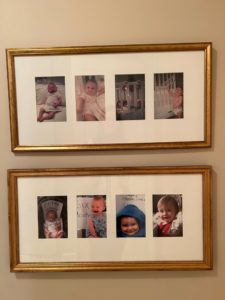
I’d never heard of some traditions:
Someone wrote, “Here’s a tradition that I wish would gain some traction: clean up after yourself. Can someone make this a social media sensation?” Hilarious.
If you want some ideas for family traditions, Elizabeth and I talked about listeners’ ideas in episode 378 of the Happier with Gretchen Rubin podcast.
Traditions are fun, but they can consume a fair amount of time, energy, and money. Do you tend to embrace new traditions, or are you more reluctant to join in?
The post Do You Follow Any “New” Traditions? appeared first on Gretchen Rubin.


October 18, 2022
Behold! The New-and-Improved Website Is Unveiled
Unveiling…this website, new and (vastly) improved!
Back in March 2006, I launched this site. I remember the first time I managed to post an image—I was so pleased with myself.
I handled that little site all by myself, but over the years, as I added more elements to it, I needed more help as I did periodic updates.
For this most recent redesign, I needed the help of many brilliant people. It’s a whole new look!
I’m so grateful to everyone who worked on it—for their thoughtful decisions, technical expertise, and design chops. After all their hard work, the site is more appealing to look at, smoother to navigate, loads faster, and works better on mobile.
Perhaps most useful, you’ll find it much easier to learn more about subjects that interest you.
Explore: Under “Explore,” you can go deeper into particular topics.
Getting Started: If you’re not sure where to start to find key material on a huge subject like Happiness, Habits, or the Four Tendencies, you can go to “Getting Started.” (I’ll soon be adding an additional category there…can you guess what it will be? I give you five guesses.)
Topics: If you want to learn more about a narrower topic, such as Self-Knowledge, Energy, Creativity, or Relationships, you can go to “Topics” and find featured material.
Category: If you want to search by a particular type of content, rather than by subject, in “Category,” you can search by Books, Podcast, Quotations, Quizzes, Resources, and more.
And speaking of resources…I’m so happy with the newly organized “Resources” section. I have to admit, in the old version of the site, it was very hard to direct people to resources they wanted. I have so many resources that I’ve created over the years! This new system will make referral much smoother. Also, you’ll see resources offered as you go deeper on a particular topic, so they’ll be easier to find.
For the Happier podcast, each episode’s notes will now include a YouTube link, as well as a tool that lets you listen on-site if you want, and coming soon, episodes will also have written transcripts. It has been a lot of work to set up these systems, but so worth it—I’m really happy to offer this greater accessibility.
I’ve been through a few massive website redesigns, and each time, I end up feeling a little…homesick. It takes me some time to adjust to the new look. But then, I always get a bit unsettled when things change.
The redesign also threw me into a bit of an existential crisis. How do I characterize my work? How do I present myself? What’s the most logical way to organize ideas? It’s like searching your soul while also renovating your kitchen.
Now, however, I’m just delighted by the clean, functional, beautiful design.
So much outstanding, tireless work by so many brilliant people! Many thanks to everyone at Global Prairie, and Adam Caswell, Lauren Christensen, Annie Jolley, Emy Joyeuex, Jason Konrad, Andrew Lennon, Lindsay Logan, Joe Wadlington, Austin Walsh, Hannah Wilson—and especially Anne Mercogliano, who led the effort.
The post Behold! The New-and-Improved Website Is Unveiled appeared first on Gretchen Rubin.
October 12, 2022
Tips for Making the Holidays More Fun—with a Little Planning
Every year, I think, “What, the drug store has already put out the Halloween decorations? It’s too early!” But then, in a flash, we’re in the midst of holiday activity.
The holidays are fun, but they can take a lot of time, energy, and money. Planning ahead can make things less stressful.
On social media, I asked for ideas about ways to prepare early for the holidays, to make it easier to relax, enjoy, and celebrate.
People had great ideas, which we shared in episode 399 of the Happier with Gretchen Rubin podcast:
over time, add gift ideas to a wish listif you plan to have guests, start clearing clutter now so you don’t have to rush before a party starts or house guests arrivecreate a system for holding on to holiday memories—use the Storage Box for mementos and souvenirs, use the Memento Keepsake Journal for memorable papers, invitations, menus, tickets, etc.choose a theme gift—for instance, give everyone the same item in a different colormake travel plans early, to save money and hassle, and…make arrangements for pets if you’ll be awayidentify non-gift gifts: a class, movie tickets, a “certificate” to do an irksome chore, the Gift of Podcastmake a list of don’t-miss seasonal experiences to enjoy or hostto host a holiday party early in the season when things are calmer, invite people to trim the treefor larger purchases of food or drink, buy early or arrange delivery, to avoid shopping in crowds or not being able to find what you want
To be sure, many people said they didn’t want to prepare too early:
When it comes to planning, many people mentioned the importance of thinking ahead with holiday cards.
Many people mentioned using a particular date as a starting point, such as October 1, Advent, the day after Thanksgiving, or the twelve days of Christmas.
My own family has a big tradition of gift-giving, but without emphasis on surprise. Each of us is expected to provide a long list of things we want, and the joy for others coming from each of us getting what we ask for—with a few surprises thrown in. These gifts are usually extremely practical, like socks or phone chargers. So in my family, it’s important for me to start early on a list of what I want, as well as what I think others might want.
For more tips and ideas to help you plan ahead, check off your holiday to-do list, and appreciate the season, visit our Holiday Jump-Start.
If you’re a planner, how do you get ready the holiday season? If you’re not a planner, is there anything you wish you could get yourself to do?
The post Tips for Making the Holidays More Fun—with a Little Planning appeared first on Gretchen Rubin.
October 4, 2022
What I Read This Month: September 2022
For six years now, every Monday morning, I’ve posted a photo on my Facebook Page of the books I finished during the week, with the tag #GretchenRubinReads.
I get a big kick out of this weekly habit—it’s a way to shine a spotlight on all the terrific books that I’ve read.
As I write about in my book Better Than Before, for most of my life, my habit was to finish any book that I started. Finally, I realized that this approach meant that I spent time reading books that bored me, and I had less time for books that I truly enjoy. These days, I put down a book if I don’t feel like finishing it, so I have more time to do my favorite kinds of reading.
This habit means that if you see a book included in the #GretchenRubinReads photo, you know that I liked it well enough to read to the last page.
When I read books related to an area I’m researching for a writing project, I carefully read and take notes on the parts that interest me, and skim the parts that don’t. So I may list a book that I’ve partly read and partly skimmed. For me, that still “counts.”
If you’d like more ideas for habits to help you get more reading done, read this post or download my “Reading Better Than Before” worksheet.
You can also follow me on Goodreads where I track books I’ve read.
If you want to see what I read last month, the full list is here.
Lately, I’ve been listening to a lot of episodes of Backlisted, a books podcast that I love, and many of the suggestions this month were inspired by the hosts’ conversations.
September 2022 Reading:Punch Me Up to the Gods: A Memoir by Brian Broome (Amazon, Bookshop) — Winner of the Kirkus Prize, Winner of a Lambda Literary Award, Named a Best Book of the Year by Publishers Weekly, Kirkus Review, Library Journal, Amazon, and Apple Books — an unforgettable, compelling, candid memoir of growing up. I picked up a copy in a bookstore, started reading the first page, and just had to buy it.
Mrs. Tim Christie by Dorothy E. Stevenson (Amazon) — An engaging picture of a world that has disappeared. Apparently, it was based very much on her own journals, which makes it even funnier.
The Fortnight in September by R. C. Sherriff (Amazon, Bookshop) — A quiet, thoughtful, beautiful book about two weeks in the life of a loving family of five, as they go on their annual holiday to the seaside.
Yield: The Journal of an Artist by Anne Truitt (Amazon, Bookshop) — I love the writing of artist Anne Truitt, and was so excited to learn that her final journal had been published.
The Return of the Soldier by Rebecca West (Amazon, Bookshop) — Who knew Rebecca West had written (short) fiction? In its plot, it reminded me of Liane Moriarty’s What Alice Forgot (Amazon, Bookshop) An interesting, restrained study of character.
Visual Thinking: The Hidden Gifts of People Who Think in Pictures, Patterns, and Abstractions by Temple Grandin (Amazon, Bookshop) — On an upcoming episode, Elizabeth and I will interview Temple Grandin for the Happierpodcast — this book was a fascinating look at how people think differently.
Love That Story: Observations from a Gorgeously Queer Life by Jonathan Van Ness (Amazon, Bookshop) — I’m a big fan of Jonathan Van Ness’s energetic style and his ability to strike a light, funny tone while engaging with difficult subjects with great insight.
Oh William! By Elizabeth Strout (Amazon, Bookshop) — Booker Prize finalist; NPR’s One of Ten Best Books of the Year; New York Times bestseller — I read this novel in practically one sitting. I truly couldn’t put it down. It started me on an Elizabeth Strout kick; her work is so, so good.
Listening Valley by Dorothy E. Stevenson (Amazon, Bookshop) — A sweet, old-fashioned novel. On a Stevenson kick (see above).
A Face for Picasso: Coming of Age with Crouzon Syndrome by Ariel Henley (Amazon, Bookshop) — A Schneider Family Book Award Honor Book for Teens — a compelling memoir about finding identity while growing up with a rare condition, constant operations, physical pain, a twin sister, and more.
My Name Is Lucy Barton: A Novel by Elizabeth Strout (Amazon, Bookshop) — Longlisted for the Man Booker Prize, named one of the best books of the year by the Washington Post, New York Times Book Review, NPR, and more, #1 New York Times bestseller — See above, more Strout! This was a re-read — after reading Oh, William!, I wanted to remind myself of this novel. Next: Lucy by the Sea (Amazon, Bookshop).
The Feast by Margaret Kennedy (Amazon) — an engaging, delightful book that’s a bit of a puzzle, in the best way. I checked out this novel from the library, then bought my own copy, because I wanted to own it for myself.
The post What I Read This Month: September 2022 appeared first on Gretchen Rubin.
September 29, 2022
Alex Budak: “I Believe That Becoming a Changemaker Is an Inclusive Identity That We Can All Step Into.”
Interview: Alex Budak
Alex Budak is a social entrepreneur, a faculty member at the Haas School of Business at the University of California, Berkeley, and author of the new book, Becoming a Changemaker (Amazon, Bookshop).
I couldn't wait to talk to Alex about happiness, habits, and leadership.
Gretchen: What’s a simple activity or habit that consistently makes you happier, healthier, more productive, or more creative?
Alex: An evening walk! As a social entrepreneur, faculty member, author, and (most importantly!) a dad, solo time to think and reflect is all too rare right now. My wife and I both prioritize ensuring that each of us get a walk-in most nights, and we both come back healthier and happier as a result. Sometimes I will listen to music (ask me for my playlist!), but oftentimes I just let my mind wander.
What’s something you know now about happiness that you didn’t know when you were 18 years old?
That happiness is something that can be shared. I love your Second Splendid Truth: “One of the best ways to make yourself happy is to make other people happy; One of the best ways to make other people happy is to be happy yourself.” I think we tend to focus so much on the individual, but I’ve absolutely found my greatest personal moments of happiness in making others happy and in sharing these moments together.
You’ve done fascinating research. What has surprised or intrigued you – or your readers – most?
I’ve conducted the first ever longitudinal study – The Changemaker Index – that explores how individuals develop their capacity to lead positive change over time. One of my favorite findings is that there is no statistically significant difference in development based on one’s age. No matter one’s age, everyone develops at approximately the same rate. That means that no matter how young you are or how old, you can become a changemaker! How wonderful is that?
Would you describe yourself as an Upholder, a Questioner, a Rebel, or an Obliger?
Perhaps it’s not a surprise since I teach changemaking for a living – but I am a rebel through and through!
Is there a particular motto or saying that you’ve found very helpful?
The one quotation that has stuck with me since I was a child comes from Jackie Robinson: “A life is not important except in the impact it has on other lives.” It’s a regular north star for me as I reflect on how I spend my time and remain in service to others.
In your field, is there a common misconception that you’d like to correct?
A lot of people think that leadership cannot be taught – that it’s an innate ability that one either has or does not have. My teaching at UC Berkeley has shown me the exact opposite. While “leaders” might be scarce (there will only be one CEO, after all), “leadership” is abundant. We can all learn to step up and lead positive change from where we are. I teach leadership through a combination of sharing empirical data and research from leading scholars; interactive case studies; hands-on, experiential exercises; and bringing in a diverse array of guest speakers to share stories and inspiration. I find it really inspiring to see just how much my students develop as leaders and how they step into their own leadership potential. If they can do it, so can any of us. That gives me a ton of hope for the future.
Lastly, what does being a changemaker mean to you?
I define changemaking in a boldly-inclusive way. Simply put, I believe a changemaker is someone who leads positive change from where they are. There’s no mention of roles, titles, or formal authority here. And crucial to this definition is the opportunity to lead change at any level and in any situation: we need not be a senior leader in order to lead change. In my book, Becoming a Changemaker, I include over 50 case studies showing how people from all walks of life have led positive change from where they are: from a Walmart associate fighting for equality in parental leave policies to a project manager who just really, really wanted his team to start composting. I believe that becoming a changemaker is an inclusive identity that we can all step into, in our own ways, and I’m so excited to see how people take these lessons and put them into practice!
Author Interview: Alex Budak
Alex Budak is a social entrepreneur, a faculty member at the Haas School of Business at the University of California, Berkeley, and author of the new book, Becoming a Changemaker (Amazon, Bookshop).
I couldn’t wait to talk to Alex about happiness, habits, and leadership.
Gretchen: What’s a simple activity or habit that consistently makes you happier, healthier, more productive, or more creative?
Alex: An evening walk! As a social entrepreneur, faculty member, author, and (most importantly!) a dad, solo time to think and reflect is all too rare right now. My wife and I both prioritize ensuring that each of us get a walk-in most nights, and we both come back healthier and happier as a result. Sometimes I will listen to music (ask me for my playlist!), but oftentimes I just let my mind wander.
What’s something you know now about happiness that you didn’t know when you were 18 years old?
That happiness is something that can be shared. I love your Second Splendid Truth: “One of the best ways to make yourself happy is to make other people happy; One of the best ways to make other people happy is to be happy yourself.” I think we tend to focus so much on the individual, but I’ve absolutely found my greatest personal moments of happiness in making others happy and in sharing these moments together.
You’ve done fascinating research. What has surprised or intrigued you – or your readers – most?
I’ve conducted the first ever longitudinal study – The Changemaker Index – that explores how individuals develop their capacity to lead positive change over time. One of my favorite findings is that there is no statistically significant difference in development based on one’s age. No matter one’s age, everyone develops at approximately the same rate. That means that no matter how young you are or how old, you can become a changemaker! How wonderful is that?
Would you describe yourself as an Upholder, a Questioner, a Rebel, or an Obliger?
Perhaps it’s not a surprise since I teach changemaking for a living – but I am a rebel through and through!
Is there a particular motto or saying that you’ve found very helpful?
The one quotation that has stuck with me since I was a child comes from Jackie Robinson: “A life is not important except in the impact it has on other lives.” It’s a regular north star for me as I reflect on how I spend my time and remain in service to others.
In your field, is there a common misconception that you’d like to correct?
A lot of people think that leadership cannot be taught – that it’s an innate ability that one either has or does not have. My teaching at UC Berkeley has shown me the exact opposite. While “leaders” might be scarce (there will only be one CEO, after all), “leadership” is abundant. We can all learn to step up and lead positive change from where we are. I teach leadership through a combination of sharing empirical data and research from leading scholars; interactive case studies; hands-on, experiential exercises; and bringing in a diverse array of guest speakers to share stories and inspiration. I find it really inspiring to see just how much my students develop as leaders and how they step into their own leadership potential. If they can do it, so can any of us. That gives me a ton of hope for the future.
Lastly, what does being a changemaker mean to you?
I define changemaking in a boldly-inclusive way. Simply put, I believe a changemaker is someone who leads positive change from where they are. There’s no mention of roles, titles, or formal authority here. And crucial to this definition is the opportunity to lead change at any level and in any situation: we need not be a senior leader in order to lead change. In my book, Becoming a Changemaker, I include over 50 case studies showing how people from all walks of life have led positive change from where they are: from a Walmart associate fighting for equality in parental leave policies to a project manager who just really, really wanted his team to start composting. I believe that becoming a changemaker is an inclusive identity that we can all step into, in our own ways, and I’m so excited to see how people take these lessons and put them into practice!

The post Author Interview: Alex Budak appeared first on Gretchen Rubin.
September 27, 2022
Have You Ever Saved Anyone’s Life?
Recently, at a birthday party, I fell into conversation with three friends and, to my astonishment, I discovered that all three of them had saved someone's life.
One had saved a child from drowning in a hotel pool.One had saved her own son from choking at dinner at a restaurant.One had done both—he'd saved a man from choking on a piece of bread, and saved a child from being swept out into the ocean.What struck me was my friends' attitudes toward what they'd done. I expected them to describe these stories with elation, excitement, triumph—to feel so happy about what they'd done. I would've thought that for the rest of their lives, they could comfort themselves with the thought, "No matter what else I did or didn't accomplish, I saved a life."
But in fact, they seemed almost...haunted...by what had happened. I could tell that they still felt very shaken, describing the events. They kept talking about the near-miss, their fear of what could've happened—and even feelings of almost-guilt, of what they would have felt if they'd failed.
I'd always assumed that it was very rare for someone to save someone's life, but maybe it's more common than I thought. How have I never thought to ask a doctor what it feels like to save someone's life?
Sometimes, too, people save someone's life less directly. They offer help at just the right time, or they provide crucial information.
Sometimes, it's enough to make a simple remark: when the student is ready, the teacher appears. A friend got out of a terribly destructive relationship when someone said to her, "You act like he's smarter than you, that's he's more attractive than you. But it's obvious that he's not." For whatever reason, that comment sunk in.
Have you ever saved someone's life? Or has someone saved your life? How do you feel about it?
Have You Ever Saved Anyone’s Life?
Recently, at a birthday party, I fell into conversation with three friends and, to my astonishment, I discovered that all three of them had saved someone’s life.
One had saved a child from drowning in a hotel pool.
One had saved her own son from choking at dinner at a restaurant.
One had done both—he’d saved a man from choking on a piece of bread, and saved a child from being swept out into the ocean.
What struck me was my friends’ attitudes toward what they’d done. I expected them to describe these stories with elation, excitement, triumph—to feel so happy about what they’d done. I would’ve thought that for the rest of their lives, they could comfort themselves with the thought, “No matter what else I did or didn’t accomplish, I saved a life.”
But in fact, they seemed almost…haunted…by what had happened. I could tell that they still felt very shaken, describing the events. They kept talking about the near-miss, their fear of what could’ve happened—and even feelings of almost-guilt, of what they would have felt if they’d failed.
I’d always assumed that it was very rare for someone to save someone’s life, but maybe it’s more common than I thought. How have I never thought to ask a doctor what it feels like to save someone’s life?
Sometimes, too, people save someone’s life less directly. They offer help at just the right time, or they provide crucial information.
Sometimes, it’s enough to make a simple remark: when the student is ready, the teacher appears. A friend got out of a terribly destructive relationship when someone said to her, “You act like he’s smarter than you, that’s he’s more attractive than you. But it’s obvious that you’re smarter and better-looking than he is.” For whatever reason, that comment sunk in.
Have you ever saved someone’s life? Or has someone saved your life? How do you feel about it?
The post Have You Ever Saved Anyone’s Life? appeared first on Gretchen Rubin.
September 22, 2022
Author Interview: Liz Brown and Amy Impellizzeri
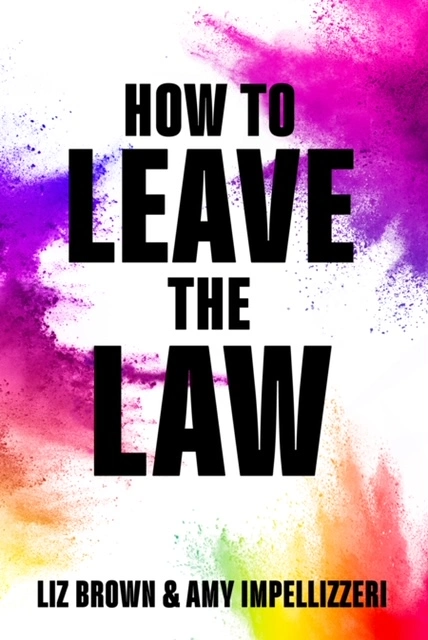
Amy Impellizzeri (a lawyer-turned-novelist) and Liz Brown (a Harvard-grad-turned-law-partner-turned-undergrad-professor) feel strongly about the need for lawyers and law students to innovate and pivot. How to Leave the Law (Amazon), their co-authored follow-up to their respective books, Lawyer Interrupted (Amazon, Bookshop) and Life After Law (Amazon, Bookshop), just hit shelves.
As a lawyer-turned-writer myself, I couldn’t wait to talk to Amy and Liz about happiness, habits, and career changes.
Gretchen: What’s a simple activity or habit that consistently makes you happier, healthier, more productive, or more creative?
AI: My morning ride! I’m an unapologetic Peloton addict – converted largely by fellow reformed litigator, Robin Arzon and company. But my (almost) daily ride is so much more than an act of physical exercise. A group of college friends (shout out to my Peloton Kappas!) and I text each other every night to suggest rides and then again in the morning to cheer each other on. The text thread has become our way of staying connected across the miles and a venue for placing our daily challenges and successes, and is, in many ways, much more important than the ride itself.
LB: I pay a lot of attention to my morning coffee: buying good beans, using mugs I bought at craft fairs, making flavored syrups, etc. This week’s flavor is a spiced tahini simple syrup. I fit in at least some movement every day, and getting out of the house even if just to walk my little dog. Following visual artists and museums, and nobody else, on Instagram – the flow of creative images inspires me even when I don’t draw myself.
What’s something you know now about happiness that you didn’t know when you were 18 years old?
AI: Part of me wishes I could go back and tell 18-year-old me that happiness is not a mirror image. That it has nothing to do with what you’re reflecting out into the world, and everything to do with that part of yourself you’re reluctant to show the world. But the other part of me is grateful it took me 50 long years to learn it. Maybe I won’t be so quick to forget it now!
LB: It becomes both easier and harder to be happy when you get older. For me, happiness has become a quieter thing than it was when I was 18. I find it more in everyday things, especially in the consistency of things like old friendships. and less so in Big Adventures.
You’ve done fascinating research. What has surprised or intrigued you – or your readers – most?
LB: To me, what’s intriguing is the extent to which many lawyers prioritize being successful, according to other people’s definitions of success, over being happy. We put so much effort into reaching certain goals that our profession lays out for us as targets – whether it is winning a motion for our clients or earning partnership for ourselves – that there is often no room for reflection about what all of these goals mean to us personally. That makes it hard for a lot of lawyers to carve out the space to ask whether they are genuinely happy or to value happiness in the first place.
AI: My biggest surprise over the years of interviewing transitioning attorneys is that the one – and only one – demographic that expresses any regret about transitioning – is the group of lawyers that leave the law to become full-time caregivers. It’s this group of lawyers – largely women – that I believe are pushed out of the practice of law prematurely. HOW TO LEAVE THE LAW is as much for this group as the other lawyers clamoring to leave an unsatisfying lifestyle. It’s my hope that some people will be inspired to make changes from within the walls of the broken law firm culture, while the rest of us continue to help make changes from the outside.
Have you ever managed to gain a challenging healthy habit – or to break an unhealthy habit? If so, how did you do it?
LB: I now have the habit of doing Peloton workouts regularly. To be honest, the Peloton app’s tracking function compels me to keep up with that. I don’t want to break my streak of consecutive workouts, even though nobody else is watching (at least, I hope nobody else is watching).
AI: Ha! I already confessed my Peloton addiction, but the other biggest lifestyle change I’ve made in the last few years is to go gluten-free (ish) by choice. I went cold turkey at first and now, the way I continue the habit is by noticing how good I feel without gluten in my diet PLUS allowing myself “special occasion” gluten. A New York City bagel or a plate of homemade Pasta Bolognese or a slice of pizza now and then qualifies, but the longer I stay gluten-free (ish), the less I’m tempted even by these treats!
Would you describe yourself as an Upholder, a Questioner, a Rebel, or an Obliger?
LB: The quiz says I am an Upholder, but I question those results, so I am going with being a Questioner.
AI: According to the test, I’m an Obliger, and I confess … that’s probably right. I will set myself on fire to keep my inner circle warm. I’m working on that, frankly, but unlike gluten, I’m not likely to give it up cold turkey any time soon!
Does anything tend to interfere with your ability to keep your healthy habits or your happiness? (e.g. travel, parties, email)
LB: Mothering a young teen challenges my ability to stay balanced. It makes me both wildly happy and deeply frustrated, often on the same day, which makes it even more important for me to maintain my habits as best I can. I really wish it were parties, though.
AI: Oh, why can’t it be parties?! Yep, kids for me too. I’ve got three teens pulling me in different directions on any given day and while I work hard to keep balance, I’m perfectly imperfect on all my best days. It’s imperative to me, however, that they see me constantly working, constantly getting back up, and constantly moving forward. So in that sense, while they are my greatest challenges, they are also my greatest inspirations!
Have you ever been hit by a lightning bolt, where you made a major change very suddenly, as a consequence of reading a book, a conversation with a friend, a milestone birthday, a health scare, etc.?
AI: Well, oddly enough, it took me almost a decade to respond to my own lightning bolt. I survived a residential plane crash on my New York City corner in 2001, which really made me want to reclaim my life and my voice, but I couldn’t find my way out of the law until I took a sabbatical in 2009. When I finally wrote a (fictional) story of survivor guilt and rebirth in the form of my sophomore novel, Secrets of Worry Dolls (Amazon, Bookshop), I realized that was the book I actually left the law in order to write.
LB: Yes! I decided to leave my law partnership when I saw my newborn daughter. That was my lightning bolt moment. As it turned out, 2008 was not the greatest year to give up a lucrative job, but it was an important turning point and led to a much more satisfying second career.
Is there a particular motto or saying that you’ve found very helpful?
AI: “Be the Buffalo.” I learned recently that in storm conditions, cows try to outrun the rain, while buffalo, turn into the storm and run right through. That’s the kind of badass attitude I’d like to harness on my darkest days.
LB: For me, it is “Be the change you wish to see in the world.” When I feel like complaining about something, that saying reminds me to take some action myself instead of expecting the change to come from other people. It has led me to take on leadership roles and challenges at work that I would otherwise have shied away from. It also led me to write my first book, Life After Law: Finding Work You Love with the JD You Have, because I wanted there to be a better self-help book for lawyers who were struggling with their career transitions like I had been. I still complain a lot, however.
The post Author Interview: Liz Brown and Amy Impellizzeri appeared first on Gretchen Rubin.
Author Interview: Liz Brown and Amy Impellizzeri
Interview: Amy Impellizzeri and Liz Brown
Amy Impellizzeri (a lawyer-turned-novelist) and Liz Brown (a Harvard-grad-turned-law-partner-turned-undergrad-professor) feel strongly about the need for lawyers and law students to innovate and pivot. How to Leave the Law (Amazon), their co-authored follow-up to their respective books, Lawyer Interrupted (Amazon, Bookshop) and Life After Law (Amazon, Bookshop), just hit shelves.
As a lawyer-turned-writer myself, I couldn't wait to talk to Amy and Liz about happiness, habits, and career changes.
Gretchen: What’s a simple activity or habit that consistently makes you happier, healthier, more productive, or more creative?
AI: My morning ride! I’m an unapologetic Peloton addict - converted largely by fellow reformed litigator, Robin Arzon and company. But my (almost) daily ride is so much more than an act of physical exercise. A group of college friends (shout out to my Peloton Kappas!) and I text each other every night to suggest rides and then again in the morning to cheer each other on. The text thread has become our way of staying connected across the miles and a venue for placing our daily challenges and successes, and is, in many ways, much more important than the ride itself.
LB: I pay a lot of attention to my morning coffee: buying good beans, using mugs I bought at craft fairs, making flavored syrups, etc. This week’s flavor is a spiced tahini simple syrup. I fit in at least some movement every day, and getting out of the house even if just to walk my little dog. Following visual artists and museums, and nobody else, on Instagram - the flow of creative images inspires me even when I don’t draw myself.
What’s something you know now about happiness that you didn’t know when you were 18 years old?
AI: Part of me wishes I could go back and tell 18-year-old me that happiness is not a mirror image. That it has nothing to do with what you’re reflecting out into the world, and everything to do with that part of yourself you’re reluctant to show the world. But the other part of me is grateful it took me 50 long years to learn it. Maybe I won’t be so quick to forget it now!
LB: It becomes both easier and harder to be happy when you get older. For me, happiness has become a quieter thing than it was when I was 18. I find it more in everyday things, especially in the consistency of things like old friendships. and less so in Big Adventures.
You’ve done fascinating research. What has surprised or intrigued you – or your readers – most?
LB: To me, what’s intriguing is the extent to which many lawyers prioritize being successful, according to other people’s definitions of success, over being happy. We put so much effort into reaching certain goals that our profession lays out for us as targets - whether it is winning a motion for our clients or earning partnership for ourselves - that there is often no room for reflection about what all of these goals mean to us personally. That makes it hard for a lot of lawyers to carve out the space to ask whether they are genuinely happy or to value happiness in the first place.
AI: My biggest surprise over the years of interviewing transitioning attorneys is that the one - and only one - demographic that expresses any regret about transitioning - is the group of lawyers that leave the law to become full-time caregivers. It’s this group of lawyers - largely women - that I believe are pushed out of the practice of law prematurely. HOW TO LEAVE THE LAW is as much for this group as the other lawyers clamoring to leave an unsatisfying lifestyle. It’s my hope that some people will be inspired to make changes from within the walls of the broken law firm culture, while the rest of us continue to help make changes from the outside.
Have you ever managed to gain a challenging healthy habit – or to break an unhealthy habit? If so, how did you do it?
LB: I now have the habit of doing Peloton workouts regularly. To be honest, the Peloton app’s tracking function compels me to keep up with that. I don’t want to break my streak of consecutive workouts, even though nobody else is watching (at least, I hope nobody else is watching).
AI: Ha! I already confessed my Peloton addiction, but the other biggest lifestyle change I’ve made in the last few years is to go gluten-free (ish) by choice. I went cold turkey at first and now, the way I continue the habit is by noticing how good I feel without gluten in my diet PLUS allowing myself “special occasion” gluten. A New York City bagel or a plate of homemade Pasta Bolognese or a slice of pizza now and then qualifies, but the longer I stay gluten-free (ish), the less I’m tempted even by these treats!
Would you describe yourself as an Upholder, a Questioner, a Rebel, or an Obliger?
LB: The quiz says I am an Upholder, but I question those results, so I am going with being a Questioner.
AI: According to the test, I’m an Obliger, and I confess ... that’s probably right. I will set myself on fire to keep my inner circle warm. I’m working on that, frankly, but unlike gluten, I’m not likely to give it up cold turkey any time soon!
Does anything tend to interfere with your ability to keep your healthy habits or your happiness? (e.g. travel, parties, email)
LB: Mothering a young teen challenges my ability to stay balanced. It makes me both wildly happy and deeply frustrated, often on the same day, which makes it even more important for me to maintain my habits as best I can. I really wish it were parties, though.
AI: Oh, why can’t it be parties?! Yep, kids for me too. I’ve got three teens pulling me in different directions on any given day and while I work hard to keep balance, I’m perfectly imperfect on all my best days. It’s imperative to me, however, that they see me constantly working, constantly getting back up, and constantly moving forward. So in that sense, while they are my greatest challenges, they are also my greatest inspirations!
Have you ever been hit by a lightning bolt, where you made a major change very suddenly, as a consequence of reading a book, a conversation with a friend, a milestone birthday, a health scare, etc.?
AI: Well, oddly enough, it took me almost a decade to respond to my own lightning bolt. I survived a residential plane crash on my New York City corner in 2001, which really made me want to reclaim my life and my voice, but I couldn’t find my way out of the law until I took a sabbatical in 2009. When I finally wrote a (fictional) story of survivor guilt and rebirth in the form of my sophomore novel, Secrets of Worry Dolls (Amazon, Bookshop), I realized that was the book I actually left the law in order to write.
LB: Yes! I decided to leave my law partnership when I saw my newborn daughter. That was my lightning bolt moment. As it turned out, 2008 was not the greatest year to give up a lucrative job, but it was an important turning point and led to a much more satisfying second career.
Is there a particular motto or saying that you’ve found very helpful?
AI: “Be the Buffalo.” I learned recently that in storm conditions, cows try to outrun the rain, while buffalo, turn into the storm and run right through. That’s the kind of badass attitude I’d like to harness on my darkest days.
LB: For me, it is “Be the change you wish to see in the world.” When I feel like complaining about something, that saying reminds me to take some action myself instead of expecting the change to come from other people. It has led me to take on leadership roles and challenges at work that I would otherwise have shied away from. It also led me to write my first book, Life After Law: Finding Work You Love with the JD You Have, because I wanted there to be a better self-help book for lawyers who were struggling with their career transitions like I had been. I still complain a lot, however.



![[image error]](https://gretchenrubin.com/wp-content/uploads/sites/2/2022/09/Budak-hc2-2-crop.png)
![[image error]](https://gretchenrubin.com/wp-content/uploads/sites/2/2022/09/image0.jpeg)