Gretchen Rubin's Blog, page 12
December 5, 2022
Jump-Start Your Holidays
Every year, to me, the holidays seem to arrive more suddenly. A few years ago, we almost forgot to make our graham-cracker holiday houses, even though it’s one of my favorite traditions. I kept thinking we had plenty of time—until it was almost time to get on the plane for Kansas City.
I’ve learned that by planning ahead, I can make sure that I take time for everything that’s important to me. Plus, I can stay calm and relaxed, so that a time that’s supposed to be fun stays fun.
Consider these easy prompts each day to plan ahead, check items off your to-do list, and find ways to be present and enjoy the season.
7 Days of PlanningHow do you want to feel this holiday season? Pick a one-word theme to set your intention for the coming weeks. Some ideas: grateful, present, vibrant, slow, connected. (My word is “merry.”)The holidays begin at different times for everyone. To help yourself prepare and enter into the spirit of the year, choose a particular date to kick off your holiday season, such as the day after Thanksgiving or the first day of Hanukkah or Advent.Make a list of don’t-miss holiday activities or traditions that you want to incorporate. What steps can you take now to ensure they happen? Do you need to schedule time on the calendar, gather supplies, or send invitations? (I added graham cracker houses” to my calendar.)
If you plan to host guests, start clearing clutter now so you don’t have to rush before a party starts or relatives arrive. Once a week, spend an hour chipping away at tidying tasks. Don’t forget to stock extra items and gifts for unexpected visitors.Write a packing list. Especially if you don’t travel often, a packing list helps ensure you don’t leave anything behind, or bring anything you don’t need. (Tip: Always bring snacks, and always leave room in the suitcase.) Staying put? Plan your gift list ahead of time so you can shop efficiently rather than making multiple trips.Schedule a time to decorate. Planning and anticipating will make holiday decorating feel festive rather than chore-like. Make sure family members or roommates save the date, and make a list of what you’ll do: trim the tree, put out candles, unearth decorations from the basement, hang lights, add evergreen boughs.If you’re feeling anxious about family gatherings, make a plan ahead of time for dealing with difficult relatives or reducing conflict. You can’t control how others behave, but you can prepare yourself to act in a calm, patient, and loving manner.7 Days of DoingGo through your wrapping paper collection and see what you have and what you need. Kraft paper makes for simple and affordable gift wrap, or you could repurpose newspapers and magazine pages. Keep dedicated storage containers for wrapping paper, and label everything so you can find it easily next year.Pick a theme for gift-giving. Buy multiple people the same gift—a book you love, a useful tool, a favorite food item—or purchase the same item for everyone in a different color.Watch your favorite holiday film. Don’t have one? Pick one to watch for the first time. Maybe this new movie will become a yearly ritual.‘Tis the season for giving back. Consider donating time, money, goods, or skills to a cause you care about. Caring for others is a good way to boost your own happiness, as well as the happiness of those around you.If you’d like to start sending out holiday cards, hang on to the envelopes of the cards you get from other people and store them for next year. That will give you a great start on your address list.Surprise someone with a treat. Bake bread for your mail carrier, give a candle to your dog walker, write a note to your barber.Invent a new tradition. It can be as small and whimsical as you like. Maybe you’ll invite neighbors on a walk to look at lights, make your kids cocoa before bed, create a new dish out of Thanksgiving leftovers, or turn Black Friday on its head by donating items you no longer need.7 Days of AppreciatingEnjoy one of your favorite seasonal food items. Bake cookies, make pumpkin bread, simmer cider, or buy something that’s only sold this time of year.Create a five-senses snapshot of the holiday season. What do the holidays look, sound, taste, smell, and feel like to you? Write down one experience for every sense—like listening to a favorite carol or wearing a warm sweater—and plan to appreciate each one this season.Take a photo that captures the essence of this holiday season. Save it to print, use it for next year’s holiday card, or frame it as a gift for someone else. If you observe a tradition that has run its course, allow yourself to leave it behind. Enjoy the space this creates for being present, slowing down, and connecting with others.Put screens away during quality time. Turn off the TV during family gatherings or leave your phone in a different room when sharing a meal with friends. Practice gratitude. Write down a dozen of the experiences, people, and lessons this year for which you’re most grateful. Can you tell someone what they meant to you, or write a thank-you note?Make a time capsule of your year. You might include printed photos, a list of favorite songs, special objects, or a letter to your future self—anything that encapsulates 2022 for you.
With a little forethought, we can help keep the holidays a time of light-hearted fun—and appreciation for the people and traditions we love.
The post Jump-Start Your Holidays appeared first on Gretchen Rubin.


November 30, 2022
Author Interview: Mary Beth Albright
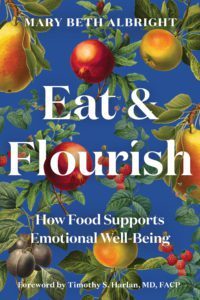
Mary Beth Albright is a writer, editor, and host at The Washington Post, where she has developed multiple culinary series since she arrived in 2017. She was a project director and subject matter expert for the US Surgeon General, appeared on Food Network, and earned degrees from Johns Hopkins and Georgetown. Her book, Eat & Flourish: How Food Supports Emotional Well-Being (Amazon, Bookshop) hit shelves this week.
I couldn’t wait to talk to Mary Beth about happiness, habits, and the way we eat.
Gretchen: Is there a particular motto or saying that you’ve found very helpful?
Mary Beth: When I was on a months-long cooking competition show on the Food Network, every time I looked at a clock (which is a lot during timed challenges) I said to myself “I am a great cook and I can help people.” It always helped give me confidence and focus on why I was there. I still say it to myself when I walk into work in the morning.
In your field, is there a common misconception that you’d like to correct?
You can’t eat pleasurably and have good health. How sad would it be if this were true? Because it’s one thing to live a long life…it’s another thing entirely to actually enjoy getting to old age.
Pleasure is a critical part of nourishment and health, and we can get food pleasure several times each day. It’s all about working with how your body and brain create flavor and in Eat & Flourish I have lots of evidence-based tips on how to do that. For example, a dessert served on a round plate tastes sweeter than the same dessert served on a rectangular plate. Even the scientists I spoke with about their research said that, while they know it’s the same coffee in a blue cup and in a white cup, it just tastes better in the white cup.
Ultra-processed food actually interferes with that body-brain connection—I’m talking cellophane-wrapped mass-produced cakes with an expiration date a year away—and doesn’t tell your body when it’s had enough. Eat a homemade cake and the neurons in your stomach (yes there are neurons in your stomach!) will tend to tell your brain that you’ve had more pleasure (and you will likely stop eating sooner, if you’re concerned about that kind of thing).
You’ve done fascinating research. What has surprised or intrigued you – or your readers – most?
In Eat & Flourish I discuss what I call the Feast Paradox, that people who eat in groups eat more food, but they have better health. Eating alone as a regular pattern is a health risk. We focus more on nutrients when we talk about food health though, because nutrients are as familiar as our alphabet and they’re measurable. But, for example, the Mediterranean diet is about community and food preparation, as much as it’s about the actual foods. For some of us, being nutrient-focused has taken away the pleasure of eating a snappy carrot because we just see “Vitamin A.”
What’s a simple activity or habit that consistently makes you happier, healthier, more productive, or more creative?
In science there is something called Hebb’s Postulate, that neurons that fire together wire together—meaning that when you associate a food or activity with a feeling, you’re creating an association that continues getting stronger the more you do it. We create our own comfort foods every day.
When my book’s first review came out—I know this sounds like bragging but for the sake of the story I have to tell you, it was a great review—I consciously had fish and vegetables for dinner so I could solidify my association of fish with happiness. (PS—I know this sounds all virtuous but the fish was positively smothered in a lush, mouth-coating tomato sauce glistening with olive oil and the vegetables were caramelized broccoli. I’m not a monster.)
It’s not a quick fix, but science shows it’s lasting.
Does anything tend to interfere with your ability to keep your healthy habits or your happiness? (e.g. travel, parties, email)
Yes! I’m so protective of my own happiness that sometimes I err on the side of isolating myself because it’s just easier than dealing with people.
People are messy but we’re worth it. Family-of-origin drama is particularly triggering, because when I was younger I dealt with it by eating in ways that didn’t support my intense emotions, including eating alone. There was so much shame around eating that I learned that the most pleasurable way to eat was with no one else around. And a pattern of eating alone is a risk factor for poor emotional well-being, regardless of what you eat.
Which is not to pathologize eating alone; I love it sometimes. But there is a big difference between a steamy bowl of homemade stew while watching a movie and shoveling in Halloween candy.
The post Author Interview: Mary Beth Albright appeared first on Gretchen Rubin.
November 28, 2022
Great Gifts for Teachers and School Staff
It’s holiday time! For many of us, that means giving gifts. It’s fun to give a gift, when you have a great idea for what item to give.
One common challenge? Finding a great gift for teachers or school staff.
In episode 406 of the Happier with Gretchen Rubin podcast, we shared suggestions from listeners.
Here are some ideas—many of which come from teachers themselves:
A note from a child—many teachers mentioned how much they love theseGift cards—note: these are easier to use when they’re more general (Target, MasterCard) rather than specific (Starbucks, a local movie theater)A jar filled with strips of paper on which every member of the class wrote a favorite memoryAs an end-of-year gift, a beach towel with magazine and mini-sunscreenThe gift of a parent’s time in the classroomA recipe book to which each child contributed a favorite illustrated recipeSchool supplies, such as pencils or dry-erase markersStationery printed with the teacher’s name and schoolAnything handmade by a childA donation to a cause of special meaning to the teacher A gourmet box lunch with a note and a nice bowOne listener mentioned that she asked teachers to fill out a “Getting to Know You” sheet, with questions about favorite foods, favorite drinks, favorite treats, hobbies, etc. That information made gift-buying easy.
I can’t resist mentioning a few items from The Happiness Project store that would make great gifts for teachers:
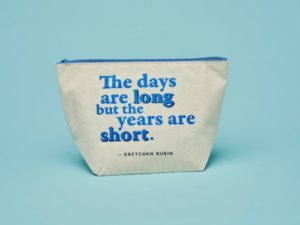
The Tackle Box—a set of five sticky pads, “To Do,” “Could Do,” “To Day,” “Ta Da” and “To Doodle.”“The Days Are Long” canvas pouch—perfect for school supplies, cords and chargers, etc.“Choose the Bigger Life” travel mugSeveral teachers noted that while they always loved the thoughtful gesture represented by a gift, they would rather not get “World’s Best Teacher” mugs (“school staff rooms are overflowing with these”) or sweets (“We have allergies and a very specific diet. When people load us up on cookies we often can’t even eat them and end up tossing them”).
The most common observation from teachers? The most meaningful gifts they can receive are notes of appreciation and favorite memories from their students. Many teachers mentioned how they look back on these gifts, years later.
The post Great Gifts for Teachers and School Staff appeared first on Gretchen Rubin.
November 23, 2022
Hacks for Making Holiday Decorating More Fun and Manageable
It’s holiday time, and for many of us, that means unpacking and displaying holiday decorations.
On episode 405 of the Happier with Gretchen Rubin podcast, we asked listeners for hacks for keeping holiday decorating fun and manageable.
We heard many terrific suggestions:
Decorate a tree with ornaments that represent people’s favorite hobbies, travel, or milestonesDisplay the mittens and gloves from the days when your children were very smallChoose an unexpected bush or tree to decorate in a whimsical wayTake photos to remember where you placed decorations, so you don’t have to figure it out fresh each yearStart clearing and organizing early, to make the effort less stressfulUse natural decorations, such as pine cones, greenery, candles, and flowersLet a child do the decorating!Do the same thing over and over again, and call it traditionDecorate alone and use the time to reflect on happy memoriesOrganize boxes of decorations by room to make it easier to unpack and repack.Decorate over the course of several weekends, to keep it manageableSuit yourself if minimal decorations are more pleasing to you, such as a platter, wreath, or small tree
My favorite hack? I play holiday music while I unpack my decorations. It helps to set the mood.
The post Hacks for Making Holiday Decorating More Fun and Manageable appeared first on Gretchen Rubin.
November 22, 2022
A Travel Hack That Makes It Easy to Stay Organized
In episode 403 of the Happier with Gretchen Rubin podcast, we mentioned that Elizabeth’s writing partner Sarah was a big fan of packing cubes. Neither Elizabeth nor I had never used them, and we were astonished by people’s enthusiasm for this travel hack.
Listeners had many suggestions about how to use these cubes, which by helping to keep items organized and separated, reduce a lot of the mess and stress of travel.
Some suggestions:
Assign a different color of packing cube to each member of the family. That way, you don’t have to paw through other people’s stuff to find what you need.Assign a different color for dirty clothes and clean clothes.Choose colorful packing cubes, because they’re easier to spot in a crowded suitcase than black cubes.Organize your clothes by day, and mark each cube with a laminated card for “Day One,” “Day Two,” “Day Three,” etc., so that you know exactly what outfits you’ve planned for each day. Bonus: by being so organized about what you’re wearing each day, you eliminate decision-fatigue as well as the need to over-pack.If you don’t want to buy packing cubes, use the packaging used for pillowcases, bed sheets, and small comforters. They are often square, zippered, and transparent.If you’re try to pack a lot of clothes into a suitcase, cubes help to save space, by compressing clothes (even if they’re not officially “compression” cubes).If two people are sharing a suitcase but not staying in the same room, packing cubes make it easy for one person to grab their stuff and go.
It’s always great to have new travel hacks to make traveling easier! I was sorry to hear that Elizabeth had already bought herself some packing cubes—I could’ve given her a set for her birthday. Packing cubes would make a great, easy gift.
Have you found any other hacks to use packing cubes to make traveling more hassle-free?
The post A Travel Hack That Makes It Easy to Stay Organized appeared first on Gretchen Rubin.
November 21, 2022
The Happier Podcast Holiday Gift Guide
Happy holidays from the Happier with Gretchen Rubin podcast team! Here is our gift guide from episode 404, where we offer many suggestions for holiday gifts, of all kinds: substantial gifts, stock-stuffers, experiences-as-gifts, and handmade.
Elizabeth’s current favorite gifts: Gretchen’s current favorite gifts:Classic holiday-themed picture books – I mention the magnificent pop-up books by Robert Sabuda
Listeners’ suggestions:Gift voucher to Stitch Fix
Sweet Paws Wearable Puppy Teethers
Nautilus puzzles – one for you, one for a friend or family member, and you connect by video while you each work on your puzzle
Recently, when I was getting my makeup and hair done for The Talk, I asked for product recommendations:Mineral Air complexion starter kit
Bare Minerals Complexion Rescue tinted gel cream
Bumble and Bumble Thickening Spray
Check out all the great gifts on The Happiness Project shop:Four Tendencies mugs, journals, water bottles…listeners can ask for a Happier podcast mug!
20% off any orders of $100+ with promo code: HAPPIERNOVEMBER2015% off any order for returning customers with promo code: HOLIDAYVIP15Stocking stuffers:
Custom socks with a dog’s face on them
Gifts you or your kids can make:Use a laminator to create placemats, menus, favorite recipes, bookmarks
Iron leaves, crayon shavings, or whatever you like between wax paper
“52 things I Love About You” deck of cards
Art made from children’s hand prints
Non-stuff gifts:Give a set of notecards with 12 notecards and envelopes. Write in one note and put it back in the box, wrap it, and give it. Keep the other 11 notecards. Each month, write and send one of the notecards, so by the end of the year, the notecards are all in the recipient’s box.
Gift of Podcast—you can print out a certificate to “give” a podcast
An annual membership to zoo, aquarium, children’s museum, etc.
A dozen grapefruits from Pittman & Davis
A “Mama Day” and “Papa Day” each
Charity on Top gift cards
Are you giving my books as gifts? Or asking for one for yourself? If you want personalized, signed bookplates for books by me that you’re giving as gifts, or for yourself, request them here. U.S. and Canada, only – mailing costs.
Happy gift-giving!
The post The Happier Podcast Holiday Gift Guide appeared first on Gretchen Rubin.
November 17, 2022
Author Interview: David Sax
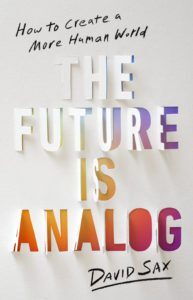
David Sax is an award-winning writer whose work on cultural and business trends has been featured in New York Magazine, Vanity Fair, Bloomberg Business Week, The New York Times, and more. His books include the James Beard Award-winner Save the Deli (Amazon, Bookshop) and #1 Washington Post bestseller The Revenge of Analog (Amazon, Bookshop). His latest book, The Future is Analog: How to Create a More Human World (Amazon, Bookshop) just hit shelves.
I couldn’t wait to talk to David about happiness, habits, and technology.
Gretchen: What’s a simple activity or habit that consistently makes you happier, healthier, more productive, or more creative?
David: Leaving my phone at home, and heading outside. Usually for a walk, though sometimes for another activity (hiking, biking, surfing, paddle boarding). As soon as the phone is away from my body, my happiness increases. It never fails. It’s like the world opens up before me, and I reconnect with my senses, and my mind, and that’s when my imagination and emotions wake back up, and the ideas begin to flow again. When I’m working on a book, especially early on when the ideas are still forming, I might do this twice a day or more. A sort of cognitive reset, that also benefits the body and soul.
What’s something you know now about happiness that you didn’t know when you were 18 years old?
That it is never a static thing. Happiness is not some endpoint or destination you arrive at. It is fleeting, and true happiness is sort of a positive balance of more moments of fleeting happiness than less. So instead of chasing it, you just have to try to keep tipping the balance in the moment, by what you do, and how you think.
You’ve done fascinating research. What has surprised or intrigued you – or your readers – most?
What’s surprising to me is how universal the desire for analog experiences is across the world. Whether it was the revival of physical goods, like vinyl records, film cameras, or bookstores, or the experience in the pandemic, of something like virtual school, or live streamed cultural events, there’s a clear global voice that says “We value real things, and the analog life,” and that the digital future is not something everyone is widely embracing, despite what we’re sold.
Readers are also consistently surprised at how the analog resurgence is driven by younger generations, the Millennials and Z’s, and others who grew up with digital as the default, and often knew little else. For them, analog is novel, and digital is kind of boring. But too often older generations assumed, wrongly, that because a kid or teenager likes to play on an iPad, that’s somehow all they want and desire. What I’ve found is so much of this is rooted in people’s personal happiness…those who opt for an analog alternative in part of their life do it because it makes them happier. A great example are books. Most books sell more in paper, and younger readers are a big driver of this. Why? Because they enjoy reading in paper more, despite the costs, the space constraints, the sheer heft of all that book. My kids are a prime example. They have no interest in ebooks. Zilch.
Have you ever managed to gain a challenging healthy habit – or to break an unhealthy habit? If so, how did you do it?
I used to be pretty good with the unplugged sabbath. It began at a Jewish retreat I went to in 2008, organized by a group called Reboot (who went on to help create the National Day of Unplugging). It was so simple, and the time was so defined, that I built my Saturdays around it. It’s become more challenging as I have kids, and they need pickups or playdates, or whatever, but I still give it my best shot.
Would you describe yourself as an Upholder, a Questioner, a Rebel, or an Obliger?
According to the quiz, I’m an “obliger.” I guess I see this most with volunteer work on the parent council at my kids’ school…but I’m also one to push back, be annoying, and “voluntold” other parents for stuff that needs to get done. I’m typically avoided in the schoolyard!
Does anything tend to interfere with your ability to keep your healthy habits or your happiness?
Laziness. Stretching is the perfect example. It’s great for me. I’m happier when I do it (and miserable when I don’t, and pull out something). But as soon as I stretch enough to work out whatever kink I have, I stop. “Ok, I’m better,” and back to not stretching. I wish I could be more disciplined.
Have you ever been hit by a lightning bolt, where you made a major change very suddenly, as a consequence of reading a book, a conversation with a friend, a milestone birthday, a health scare, etc.?
I guess the original unplugged sabbath ritual, after that first Reboot retreat I went to in 2007. I was forced to shut off my laptop and cell phone for a day (pre-smartphone, pre-Blackberry, pre-iPhone), and I just realized “Oh, yeah, that was great. Let’s do this every week.”
Is there a particular motto or saying that you’ve found very helpful?
Nine years ago, when our daughter was born, my good friend Larry Smith (of Smithmag and six word stories) gave me the six word advice: In is Bad, Out is Good. In short, don’t sit inside with a crying newborn, just because it’s easier. Get outside. Force yourself outside. You won’t regret it. That advice carries over so perfectly to other parts of life, and was my salvation during the depths of the pandemic. I write about how it was the one thing that rescued both my body and soul during the dark days of lockdown. I’d be inside, climbing the walls, shuttling between screens and pleading with my kids during virtual school, and it’d pop into my head. I’d toss aside the phone and turn off the tablets, and force everyone out, and once we hit the park, things just reset. It restored me, without fail.
Has a book ever changed your life – if so, which one and why?
I read Barbarian Days by William Finnegan (Amazon, Bookshop) when it came out, and I loved it, and it got me back into surfing, even though I live in Toronto, and surfing here means donning a super thick wetsuit and trying to catch waves on a lake, in the worst imaginable conditions (ice, rain, crazy wind). It was the best thing I ever did. I’m actually re-reading the book now, because the first time I barely even noticed the writing, I was just so pumped about the passion for surfing it reignited in me.
In your field, is there a common misconception that you’d like to correct?
I think it’s the idea that nonfiction writers and journalists operate in the same way as novelists…romantically typing away at brilliant ideas until a perfect book emerges. In reality, we create a similar end product but in an entirely different way. A novelist will chip away at the marble until the beautiful sculpture emerges. A journalist/nonfiction writer will assemble something resembling a coherent structure from random objects they find, then nail, staple, and glue together, so that only in the end does it resemble something. And it’s the information we find along the way (through reading, interviews, conversations and research) that shape the final product.
I would also, of course, shine a spotlight on anything that you’d particularly like to bring to readers’ attention.
Well, in terms of happiness (and the theme of my book), I want people to reflect back on the pandemic, and the times they were most happy and those they were most unhappy. I’d wager the unhappiest times were those fully ensconced in digital: shuttling between screens for work, entertainment shopping, and even conversations, in a spiral of exhaustion, eye strain, and stress. And I’d wager the happiest were those away from screens: kicking a ball in the park, walking in a city or forest, having a face to face conversation for the first time in a while.
Our sense of happiness has evolved in tune with our analog selves and the world around us. There is increasing science that bears this out, but really, if we look back, it’s so obvious. Try thinking of a single truly happy memory that occurred digitally…online, when you were looking at a screen. Almost everything we associate with happiness is analog. As we hurtle toward whatever the next version of the future is, and you’re told that the future is digital, please try and remember that, and know that you can shape the happiness you feel in the future. What does that look and feel like, and what role does non-digital experiences and technology play in that?
The post Author Interview: David Sax appeared first on Gretchen Rubin.
November 8, 2022
5 Ways Keeping a Journal Boosts Happiness
More and more, it seems, I hear from people who regularly keep a journal—or who want to do it. That’s not surprising, because keeping a journal can be a great tool for building a happier, healthier, more creative life.
A journal can help us remember happy times and good experiences.Research shows that recalling happy times from the past helps boost happiness in the present. Also, a journal can help us see the funny side of bad experiences—after all, the things that go wrong often make the best memories. As writer Nora Ephron’s motto holds, “Everything is copy.”
A journal can help us spot patterns in our thoughts and actions.I have a friend who kept a journal for years, and one summer, she re-read all her old journals. Her realization? “I kept having the exact same epiphany, over and over,” she told me. Reading her journals helped her understand a pattern she’d been trapped in.
A journal can help us make sense of our experiences.By telling the story of what happened, we often help ourselves to gain perspective and make sense of what happened, so that life feels less chaotic and unpredictable.
A journal helps us remember everything we’ve accomplished, or how far we’ve come.Just as it’s helpful to have a “ta-da list” as well as a “to-do list,” a journal can serve as an encouraging reminder of our growth and progress. Whenever I happen to refer back to last year on my digital calendar, I think, “Wow, I’ve done so much since then.” It’s a good feeling.
A journal can give us an outlet for our creativity.Putting thoughts into words is a satisfying, creative act. Some people also incorporate drawings, stickers, or colors as well as writing.
Now, what if you have the itch to keep a journal, but don’t have much time or energy to spare?
If you’re intrigued by the thought of keeping a journal, consider these options from The Happiness Project shop.
One-Sentence JournalSatisfying yet manageable, the One-Sentence Journal is designed for those who want to keep a record of their lives, but who can’t manage to write a long entry every day. By resolving to write just one sentence a day, you keep it manageable. And, it turns out, one sentence is enough to be satisfying.
Use this journal to record general reflections, creative insights, the progress of a new business or project, sweet memories of a child’s first year, a course of medical treatment, or as a gratitude journal or food or travel journal.
Know Yourself Better JournalThe Know Yourself Better Journal is made for anyone who wishes to gain insight into themselves, but needs more direction than a blank page. In this journal, you’ll find questions and distinctions meant to help you develop self-compassion and understanding, and discover ways you might make your life a little happier.
The Happier™ appUse the One-Sentence Journal tool in the Happier app to capture highlights from the day, note something you’re grateful for, or record your progress on an aim or project. You can also use the Don’t Break the Chain tool to check off every day you keep up your writing habit, and even set reminders to help you stay consistent. On the “Explore” tab, you’ll find “Know Yourself Better” questions which can act as prompts for your entries.
The post 5 Ways Keeping a Journal Boosts Happiness appeared first on Gretchen Rubin.
November 3, 2022
Author Interview: Becky Blades
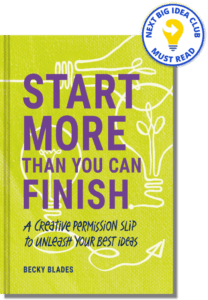
Becky Blades is a writer, artist, and strategist. She has built an award-winning communications firm, launched creative marketing departments, and served as an advisor to growing companies. Her new book, Start More Than You Can Finish: A Creative Permission Slip to Unleash Your Best Ideas (Amazon, Bookshop) just hit shelves.
I couldn’t wait to talk to Becky about happiness, habits, and creativity.
Gretchen: What’s a never-miss habit that you’ve discovered makes you happier, healthier, or more creative?
Becky: Every morning, before I journal, while my coffee is brewing, I walk through my yard to visit and tend to my plants. During winter or bad weather, I walk instead through my messy art studio to visit my works in progress. This, I’ve learned, starts my day happy. I connect with things that give me awe, curiosity and wonder. It removes me from whatever anxiety I might have about the looming responsibilities of the day. Over time, this routine has become an anchor that gives me a deep sense of confidence that everything is okay…that I can always find truth and beauty, or I can make my own.
Would you describe yourself as an Upholder, a Questioner, a Rebel, or an Obliger?
I’m a Questioner. No doubt. What a time-saver it is to know this! I’ve been intrigued by the fact that questioning is central to the creative process. With each layer and iteration, we need new information. But too much asking and planning stalls us. I work to replace questioning with experimenting. What I find out along the way satisfies my curiosity and builds new curiosities. It’s a tried and true source of imagination.
You’ve made some fascinating discoveries about starting. What has surprised or intrigued you—or your readers—most?
It fascinates people to learn that even the most creative people put off beginning their best ideas. Not all creators are initiators! It doesn’t surprise any of us, however, to learn the reasons – that we ALL may keep our longings on the back burner because we’re not sure how our efforts will finish. We often feel certain that we don’t have enough to get our ideas where we want them to go. When we instead ask the question “Do I have everything I need to just start?” minds shift and answers change. Nearly everyone has enough to BEGIN acting on their ideas. Then, momentum and the creative process show up to help. My research is all personal interviews with people who know they are creative, which makes this finding all the more powerful.
Is there a quotation or a question that you’ve found helpful?
I like to ask people: “What would you start if you knew you could finish?” You’d be amazed how it helps separates longings and things we “want to do” from things we feel obligated or driven by ambition to “have done.”
What’s something you know now about happiness and creativity that you didn’t know when you were 18 years old?
When I was 18, I just wanted to be 21…and to never reach 30. I thought the 20’s were the happy season and I thought I knew what 20-something me would wrangle from life. Of course, I was dead wrong. I now know that I’m clueless about what my future self is capable of…I’m happiest when I trust that she is smarter, more relaxed and has better judgment than I can fathom. Trusting future Becky makes me imagine bigger and lean into the mindful joy of creating. Respecting her makes relationships better, because I show up for the long game.
Most important, now in my 60’s, I know that I’m not that important. Everything I begin is a partnership; I collaborate with a moment in time and whatever resources are available to me. I get neither full credit nor full blame for the finish. What a relief.
Has a book ever changed your life – if so, which one and why?
Every book I read changes me! I’m a believer in the saying that “The difference between the person we are today and the person we will be five years from now depends on the people we share time with and the books we read.” Of course, WRITING my own books has changed me tremendously. That’s why I encourage people who have a book idea to get started.
Studies over two decades show that 70 to 80 percent of people say they want to write a book, yet less than 15 percent ever begin. More than half of people surveyed think their own lives are worthy of a book. The world wants to read them! Telling our own stories or writing about something we know is a transformative process, regardless of the audience size it reaches. It’s wonderful to consume books, but creating one of our own is certain to impact us personally and deeply.
Does anything tend to interfere with your ability to keep your healthy habits, your creativity, or your happiness?
Early morning responsibilities scramble my mojo, so I try to keep mornings sacred. My centering habits happen in the morning, so a 7 a.m. coffee meeting across town that requires me to get up while it’s still dark is a heinous joy thief. It keeps me from talking to my journal and my plants. (Do they miss it as much as I do? I worry, you know?) Also, fretting that I will not get enough sleep keeps me from getting enough sleep. So answering an alarm at ‘zero dark-thirty’ is a double whammy – late to sleep, early awake. When I was younger, I could power through, but at age 60, messing with my sleep schedule is risky business. (If you’re reading this and have an early meeting scheduled with me, it’s not too late to make it happy hour.)
The post Author Interview: Becky Blades appeared first on Gretchen Rubin.
November 1, 2022
What I Read This Month: October 2022
For six years now, every Monday morning, I’ve posted a photo on my Facebook Page of the books I finished during the week, with the tag #GretchenRubinReads.
I get a big kick out of this weekly habit—it’s a way to shine a spotlight on all the terrific books that I’ve read.
As I write about in my book Better Than Before, for most of my life, my habit was to finish any book that I started. Finally, I realized that this approach meant that I spent time reading books that bored me, and I had less time for books that I truly enjoy. These days, I put down a book if I don’t feel like finishing it, so I have more time to do my favorite kinds of reading.
This habit means that if you see a book included in the #GretchenRubinReads photo, you know that I liked it well enough to read to the last page.
When I read books related to an area I’m researching for a writing project, I carefully read and take notes on the parts that interest me, and skim the parts that don’t. So I may list a book that I’ve partly read and partly skimmed. For me, that still “counts.”
If you’d like more ideas for habits to help you get more reading done, read this post or download my “Reading Better Than Before” worksheet.
You can also follow me on Goodreads where I track books I’ve read.
If you want to see what I read last month, the full list is here.
Lately, I’ve been listening to a lot of episodes of Backlisted, a books podcast that I love, and many of the suggestions this month were inspired by the hosts’ conversations.
October 2022 Reading:The Skylarks’ War by Hilary McKay (Amazon, Bookshop)—A Boston Globe Best Book of 2018, a Horn Book Best Book of 2018—a great children’s novel about wartime Britain.
Fuzz: When Nature Breaks the Law by Mary Roach (Amazon, Bookshop)—How I love the work of Mary Roach! Hilarious, interesting, educational.
The Golden Enclaves: A Novel (The Scholomance) by Naomi Novik (Amazon, Bookshop)—New York Times bestselling trilogy—I read this book the day it came out, because I couldn’t wait to find out what happened next in this trilogy. I’m a big fan of Novik’s work; how I love His Majesty’s Dragon (a great portrait of a Questioner and an Upholder, by the way).
Best Thought, Worst Thought: On Art, Sex, Work and Death by Don Paterson (Amazon, Bookshop)—I do love an aphorism.
Fairy Tale by Stephen King (Amazon, Bookshop)—Stephen King! I raced through this novel.
Safekeeping: Some True Stories from a Life by Abigail Thomas (Amazon, Bookshop)—a memoir presented in a very interesting structure of short essays.
The Kingdom of Sand by Andrew Holleran (Amazon, Bookshop)—a brilliant, beautiful, mournful novel about the end of a life.
The Chosen: A Novel by Chaim Potok (Amazon, Bookshop)—a New York Times bestseller—the story of the friendship between two teenage boys and how they choose to forge their paths; an interesting portrayal of American Orthodox Jewish life around World War II.
My Own Two Feet by Beverly Cleary (Amazon, Bookshop)—a New York Times Notable Book—a charming memoir of Cleary’s hardscrabble young-adult years and how she started telling her stories of Henry Huggins and Ramona.
Living with a Wild God: A Nonbeliever’s Search for the Truth about Everything by Barbara Ehrenreich (Amazon, Bookshop)—a provocative spiritual memoir.
An Outsider’s Guide to Humans: What Science Taught Me About What We Do and Who We Are by Camilla Pang, PhD (Amazon, Bookshop)—a fascinating fresh way of looking at human behavior through scientific processes.
The Treasure is the Rose by Julia Cunningham (Amazon)—When I was walking through the Tudor exhibit at the Met, I was suddenly reminded of this beautiful little novel that I’d read so many times as a child. I couldn’t wait to re-read it, and I was astonished by how perfectly I could recall many sentences and passages.
The Town House by Norah Lofts (Amazon, Bookshop)—I loved this novel—historical fiction that traces the history of a family over three generations in the fourteenth century. I do love a gripping story, and this is terrific. (I just learned that this novel is the first in a trilogy, so can’t wait to read more.)
The Maude Reed Tale by Norah Lofts (Amazon)—as I was reading the final chapter of The Town House, titled “Maude Reede’s Tale,” I thought…haven’t I heard this before? I looked on my shelf of children’s literature, and sure enough, I have this novel by Norah Lofts about Maude Reede. The two stories aren’t exactly the same, so I re-read this children’s novel as well.
Life’s Work: A Memoir by David Milch (Amazon, Bookshop)—I love a spiritual memoir, and I love a creative memoir, and this book is both. Now I want to watch NYPD Blue and Deadwood.
The post What I Read This Month: October 2022 appeared first on Gretchen Rubin.