
Brenda Seefeldt Amodea's Blog, page 8
May 24, 2024
Noticing Gen Z and the Tweens of Gen Alpha, Part 4
This generation is different. Says someone who has been there with teens since the 1980s. I as a youth pastor have worked with teens in the 1980s, 1990s, 2000s, 2010s, and now the 2020s. (Read about these different decades here.) So I say confidently that this Gen Z and the new tweens of Gen Alpha are very different. This Information Age and the smart devices have changed adolescence. This is a good and bad thing. Join me in this series at the odd wonder of what is going on. Your heart will break and you will find inspiration. I believe in teens.
I have long said I never want to do another lock-in again. I’m much older now. Plus nothing good happens after midnight. That is mostly true for lock-ins. The day-after a lock-in comes at a great cost to parents. Grumpy teens are returned to them and I’m a big supporter of parents of teens.
While the nostalgia may be there for a ‘90s-style lock-in, I wonder if today’s teens would give up the sleep one requires. Gen Zers are getting more sleep than any other generation, with an average of 9 hours and 12 minutes per night. Source. The science of what good sleep can do for you overall is sinking in. I bet they learned about that science on TikTok videos.
Would they attend a lock-in on a Friday night? Probably not. Friday nights have become an okay night to stay home. Because the end of the week simply brings exhaustion. Because of budgeting decisions, and this generation is all about budgeting. Because socializing can happen still at home. Because FOMO isn’t strong enough to sacrifice money or sleep. This is one reason why we meet as a church on Friday nights. The slowness of church is a good way for the soul to end the week. (A lock-in is anything but slow.)
Whoever thought that staying home on a Friday night or going to church on a Friday night would be in the realm of possibility? This generation is different and I’m okay with that.
They are the first generation who defines themselves by their personal achievements (43%) and and hobbies and pastimes (42%). Source. Previous generations chose family or religion as top identifiers. One is something you are born into and one is something you achieve. This generation is trying to achieve their identity. I am a lot worried about this.
Parents, you really matter. You always have, says the youth pastor from all of the decades. The Barna Group study also found this: “A sizable majority of Gen Z says their parents or another family member is their role model. But why? On an open-ended question, top answers say that the role model is hard-working and responsible, that he or she provides for their family, that they have a good career, that they have an education, that they are successful and that he or she is independent. To be clear: Six out of the top 10 reasons teens look up to their role model are related to career or financial success.” Source. (There is is that achieving their identity again.)
One way teens and young adults are trying to level the field on achievement is self-diagnosing a psychiatric need so they don’t have to live up to the expectations. Something else they’ve learned on TikTok. Read more about this. It’s okay to have Tourette’s Syndrome?
A diagnosis gives you a community to belong to, though not a binding community. A diagnosis gives you belongingness too.
What is a binding community? A church is a good example of one. Jonathan Haidt can’t stop shouting from his mountaintop that the one institution that can help today’s teens is a church that has expectations for teens. This is a binding community. Some may call this type of church judgey. From the social scientist mind of Jonathan Haidt this institution provides the best place to help teen’s navigate this complicated world they were born into. Haidt is not a Christian, he claims to be an atheist. He sure believes in the Church though.
Parents, the arguments you have with your teen because you believe in the rhythm of boring church is worth it.
Teens are more curious about Jesus. So many don’t have the baggage of a hand-me down faith because they haven’t been raised in the church. The social obligation to go to church was so 1990s. So many parents in the 2000s and 2010s chose their child’s achievements over a rhythm of church. (I was there.)
The question then becomes, how will today’s teens theologically define their own search for their own faith?Will it be biblical or part of a smorgasbord of beliefs? Part Jesus and part horoscopes. Part Jesus and part manifestation. Part Jesus and part universalism. This concerns this pastor’s heart a lot.
Read about this religion professor’s study from 2008 on his findings that college freshmen were choosing a religion with few demands morally or intellectually but still wanted to be called Christian. This is from 2008. There might be a reason that the book from Christian mystic John Mark Comer, Practicing the Way, is #1 in 2024. The high call of the Way of Jesus is laid out loud and clear.
Maybe this curiosity in Jesus is in response to today’s teens realizing that they are growing worse.From Freya India again, “Here’s a post about Palestine where I’m posing! I’m standing up for conservative values—with a hot selfie of me at a protest! People on all sides pretend their platforms are about political causes and activism when really they just provide perfect opportunities to constantly talk about themselves. And to be rewarded for doing nothing! Now you can be showered with praise for that heartfelt tweet you typed about your mum on Mother’s Day when you didn’t bother to call her or write her a card. You can be applauded by strangers for that Instagram post about how much you love the daughter you don’t spend any time with and never really listen to. And even if we mean it, I think sharing these things shreds them of sincerity. Now we feel a flicker of integrity and immediately publicise and monetise it until it’s dead. We enjoy validation from the fakest displays of virtue and then at the same time revel in the downfall of others; reserve so little faith and forgiveness for anyone else.
“And actually, paradoxically, I think all this is a major part of the mental health crisis. This feeling that we are all becoming worse. Our loss of empathy, our lack of regard for others, our neurotic obsession with our own image—it’s taking a toll.” https://www.freyaindia.co.uk/p/whats-become-of-us (Read the entire alarming and insightful article.) (Bold is my addition, I’m alarmed.)
Once again, the teens’ souls are feeling the toll. This has been a through line throughout this series. Hence the curiosity about Jesus and the hope that Jesus is someone to aspire to.
I believe whole of Ecclesiastes is the word to this generation, beginning with v. 2:
Yet the antiquity and history of the way of Jesus—as well as the Way of Jesus–speaks into this meaninglessness. We are claimed and spoken for. We belong somewhere and to someone. We are people of a place. We are people of a person, not a notion or algorithm or belief system or philosophy but the person of Jesus Christ. This has placement and is not fluid.“Everything is meaningless,” says the Teacher, “completely meaningless!”
Ecclesiastes 1:2
This is what I believe and what I teach still. I’ve got no plans to retire yet. A revival is coming.
The post Noticing Gen Z and the Tweens of Gen Alpha, Part 4 appeared first on Bravester.


May 18, 2024
Noticing Gen Z and the Tweens of Gen Alpha, Part 3
This generation is different. Says someone who has been there with teens since the 1980s. I as a youth pastor have worked with teens in the 1980s, 1990s, 2000s, 2010s, and now the 2020s. (Read about these different decades here.) So I say confidently that this Gen Z and the new tweens of Gen Alpha are very different. This Information Age and the smart devices have changed adolescence. This is a good and bad thing. Join me in this series at the odd wonder of what is going on. Your heart will break and you will find inspiration. I believe in teens.
Part 4.
So Gen Z is using their power to bring these things back.“This is a sentiment I often sense from my generation, Gen Z—especially in recent years. I see it in the YouTube videos of old concerts that get millions of views. I see it in our fascination with polaroids, vinyls, vintage cameras, and VHS tapes.”
–Freya India, https://www.afterbabel.com/p/a-time-we-never-knew
Gen Z is purchasing vinyl record albums. They are listening to full albums in the song order that the artist created the album to be, and reading all of the album liner notes too. Swifties alone account for 1 out of every 15 vinyl record sales. Source.
Gen Z is reading more books. The books they are reading are actual books, not digital versions. They are also returning to hanging out in libraries. They like the quiet of those luddite spaces. Source.
Landlines are becoming a thing again? Teens actually want to be tied down to a corded phone plugged into a wall? So the trend says. Source. The pursuit of landline phones is a popular antique hunt but you don’t have to only look in antique stores. Urban Outfitters, Best Buy and Target are selling new ones looking straight out of The Brady Bunch. Of course, marketers are capitalizing their own profits again after capitalizing on us getting rid of our landlines.
Maybe they are simply tired of the digital overload. Maybe they grieve the more innocent time they were robbed of due to the social media invasion on their lives.
Parents, you can now not be shocked when your teen asks you to get that landline installed again. Act like you knew this was coming.
Many Gen Zers are keeping their phones on “do not disturb” all of the time. 90% of Gen Z report feeling anxious about talking to someone on the phone. Source. They are carrying a smart phone but don’t want to use it as a phone.
Though some are no longer carrying smart phones, intentionally. Dumbphones are back. Source. The New Yorker has declared that dumbphones are a burgeoning cottage industry. Source. A dumbphone is a basic, ’90s-inspired cellphone without the vortex of apps that contribute to high screen times.
Parents, research all of the good options for dumbphones so you are ready when your teen asks for this. Act like you knew this was coming.
I love these lines from that The New Yorker article,
The internet isn’t fun anymore. We are all noticing the toll on our souls.“So many hours of each day are lived through our portable, glowing screens, but the Internet isn’t even fun anymore. We lack the self-control to wean ourselves off, so we crave devices that actively prevent us from getting sucked into them.”
There are so many good books and good articles on why the internet isn’t fun anymore. Read them. Listen to the many podcast interviews. Acknowledge this out loud too. Say the words out loud, “The internet isn’t fun anymore.” You will sound like a prophet or like the one who said what everyone else is thinking.
Teens aren’t the happiest age group anymore either. Even with all of the awkwardness of adolescence, these are still the best years of their lives as teens make so many first-time memories. This reality has led to the idealization of adolescence. I’m guessing you have even idealized some of your teen memories as “the best times ever.”
Hopefully today’s teens will be able to do that too…still. But they have just been declared the saddest generation. After twelve years in which young people aged 15 to 24 were considered happier than previous generations, in recent years the trend has reversed, with the depression rate among the youngest increasing by over 50% between 2010 and 2019 in North America and Western Europe. According to Vivek Murthy, US Surgeon General, young people are facing levels of depression comparable to those faced during a midlife crisis. Source. No one wants a mid-life crisis at age 15!
Yes, social media and smartphones are to blame.
Most teen girls consider themselves below average mostly because they’ve been on social media at too young of an age and social media is all about looks. How cruel is this! Puberty is awkward. There are early bloomers who have to live through lots of awkward. There are late bloomers who have their own awkward. This has always been true. Ask Marcia Brady, who was beautiful and didn’t know it. And who helped us awkward teen girls normalize these feelings. (I was there for the first-run of The Brady Bunch.) Social media has amped up this comparison problem with the barrage of filtered photos. Who can compare in real life to the filter? Or now the AI-created friend? Especially because the teen brain is developing?
How many of you adults already regret the filtered photos you have posted in social media world?
I feel like I’m triggering every parenting fear that you have. What I want you to notice LOUDLY is that you are already regretting the filtered photos you have published. These regrets are being learned at a younger age and because Gen Z believes they can change the world, they are actively seeking NOW to live this life differently. Parents, don’t be crippled with your regrets. Start coming alongside the “crazy” ideas your teens are having because they want to change this world that was handed to them.
I wish all of their “crazy” ideas came from a biblical worldview. Ask the good questions with your teen to steer these ideas into that biblical worldview. The way of Jesus is already fascinating to this generation. Jesus is a radical figure that is causing aspiration. Jesus does care about climate change too because he is the creator of the climate.
Please don’t minimize these fears of climate change. 2023 was the hottest summer ever on record. Weird weather patterns continue. Environmental refugees will increase. These are people who will lose their homes because of climate change. This issue is complex and involves more than just the ozone problem. This is affecting real vulnerable people which you should be proud that your teen cares about.
I have a young adult sometimes attending my church. She became intrigued with Jesus, purchased her own Bible, and has begun reading it. She cold-called contacted me when she started having questions about what she is reading. She has zero church background to figure out what a parable is, for example. She gives me hope because she is a real person exemplifying what I’ve been praying for. She also told me that becoming a Christian is way easier these days thanks to social media. Social media is what directed her to recognize what the longing inside of her soul was and how to purchase her Bible.
So thank God for social media? Yes, also.
I have so many more observances, research links, and wisdom from my 40+ years of believing in teens. Please continue to read this series. Trust me, I see hope everywhere.
Part 4.
The post Noticing Gen Z and the Tweens of Gen Alpha, Part 3 appeared first on Bravester.
May 16, 2024
Why is Having Some of Our Prayers Answered Not Enough For Us?
This is a question that was asked during one of our conversations at my church. Think about that for a moment. Such honestly allowed at church?!
It led to some good insight and some science that I am passing on. Even though this question was asked during church, this pastor (me) did not have the answer. Yes, I did have some sort of an answer but the answer that came out of the conversation around the question was the answer.
But first, I start with a question I asked the church family: What kind of monsters would we be if our prayers had immediate answers? How shallow would our lives be?
Ponder that question to yourself. What would you be like if God answered every one of your prayers?
Okay, so maybe we don’t want all of our prayers answered but we do want some of our prayers answered. Why are having some of our prayers answered not enough for us?
The education science that was brought up in response to this conversation names that when you receive the reward every time you then need bigger and bigger rewards to feel satisfied. This is called satiation. Satiation creates expectation transaction monsters.
The flip side is intermittent reinforcement–which has been found to be the strongest maintainer of a behavior. (Isn’t that an interesting fact?) This is when you randomly receive candy for doing well on a school quiz, for example. It’s not every time you complete a school quiz because then you expect it every time and that one piece of candy is not enough. But on the random, that’s a nice metaphorical fist bump. When it comes to your prayers, aren’t you encouraged for quite a while when one of your prayers get answered? Same thing.
It gets hard when there is a “ratio strain.” This means I need to work harder than I want to get the results that I want. So when it comes to our prayers we start praying, “God, I want you to do this but I’m jumping through too many hoops.” Or, “God, I’ve been praying for a while now and I haven’t received my candy yet. What is going on?”
This is not relationship and it is exhausting. This is all about viewing your prayers as a transaction with God.The question was then asked at church,
“Are we looking too much for the transaction which is why it feels more like ratio strain as opposed to the conversation with God?”(How crazy great is it that this question was asked at church?!)
Yes, answered the wise teacher (who is not the pastor). Because this means it is almost implicit that our prayers are prayed to get what we want. I am praying to get what I want and thusly I’m not satisfied until I get what I want.
There is a pattern here, noticed the wise teacher. We are treating God like a vending machine that if we push the right button we can release exactly what we want from the vending machine.
Prayer is not a button to be pushed. It is a relationship to be pursued. Prayer is how we live out our relationship with God.The wise teacher added, the ultimate prayer is “Thy will be done.” It takes out the control. It takes out the expectation. It takes out all of the weight.We sing this song at our church, “Thy Will Be Done.” You may know it. It has been thematic for us for nearly a year. We have lots of uncomfortable conversations and end up back with this song as a benediction. Because this is the ultimate prayer when life doesn’t make sense. Remember this prayer takes out the control, expectation and the weight of the problem you are praying about.
The words of the song open with:
I’m so confused
I know I heard you loud and clear
So, I followed through
Somehow I ended up here.
I don’t want to think
I may never understand
That my broken heart is part of your plan
When I try to pray
All I’ve got is hurt and these four words
The words only get better. Especially for those of us who pray with trust issues.
This is our version of it from our church. I’m partial to it. Pray this song. Again and again and let’s see if your prayer life becomes less exhausting and frustrating.
The post Why is Having Some of Our Prayers Answered Not Enough For Us? appeared first on Bravester.
May 14, 2024
Praying with Your Trust Issues
#thebravepray but you still have trust issues when it comes to prayer.
Prayer isn’t hard. The belief in prayer is hard. It triggers our trust issues.
We don’t trust the government. We don’t trust institutions. We don’t trust God.
I have a grown teen in my life who believes prayer is like that wheel on Wheel of Fortune. To pray you spin that wheel. But her wheel has 7/8 of it with a “no” and only one spot for a yes. Does that feel like prayer for you?
One of the reasons to not try prayer is due to a lack of tangible results.Since prayer is often seen as a communication with a higher power or deity, individuals may expect their prayers to be answered in a specific way or to bring about desired outcomes. When these expectations are not met, it can lead to doubts and a loss of trust in prayer.
We don’t trust prayer because of inconsistent or contradictory outcomes.You may have witnessed instances where prayers seemingly went unanswered or where different individuals praying for the same thing received different results. These inconsistencies can raise doubts about the efficacy and reliability of prayer.
We don’t try prayer because of a lack of scientific evidence.Many individuals place their trust in empirical evidence and scientific methods. Since prayer is often considered a spiritual or religious practice, it may not have the same kind of scientific evidence backing its effectiveness as other approaches. This absence of scientific validation can contribute to doubts and skepticism about prayer. (Read the book, When I Pray, What Does God Do? by David Wilkinson. He is a scientist and pastor who answers this question with the scientific method.)
We don’t pray because prayer is a dependency on a Savior who isn’t us.Some individuals may prefer to rely on their own actions and efforts rather than relying on prayer. You may feel that taking direct action is more effective and within your control, while prayer is seen as a passive or uncertain approach. This desire for personal agency can diminish trust in prayer as a reliable means of achieving desired outcomes.
Some people don’t pray because they believe it is wishful or magical thinking.Prayer is sometimes perceived as a form of wishful thinking or a psychological coping mechanism rather than a genuine means of communication with a personal God. Skeptics may argue that prayer provides a sense of comfort or psychological relief to individuals, but it does not actually influence external events or bring about real change.
Cynicism is a scar tissue that keeps us from prayer.We don’t speak about the heartfelt prayer that goes unanswered. We keep our doubts hidden even from ourselves because we don’t want to sound like bad Christians. We don’t want to add shame to our cynicism. So our hearts shut down.
Have you ever let doubt creep in believing that you didn’t pray enough so the outcome is your fault? Do you believe that if you clap enough and say “I believe in fairies” that Tinkerbell will live?
Faith is not produced by some kind of bargain with God. It is relational. Trust issues trigger our relationship with God.Trust issues trigger vulnerability. Prayer tweaks our vulnerability. After all prayer is an act of dependence.
This is one of my favorite Dr. Brene’ Brown quotes (and I tend to quote her a lot.)
“I’ve spent my entire career sitting across from people, listening to them tell me about the hardest and most painful moments of their lives. After fifteen years of this work, I can confidently say that stories of pain and courage almost always include two things: praying and cussing. Sometimes at the exact same time.
–Brene’ Brown, Braving the Wilderness, pp. 24-25
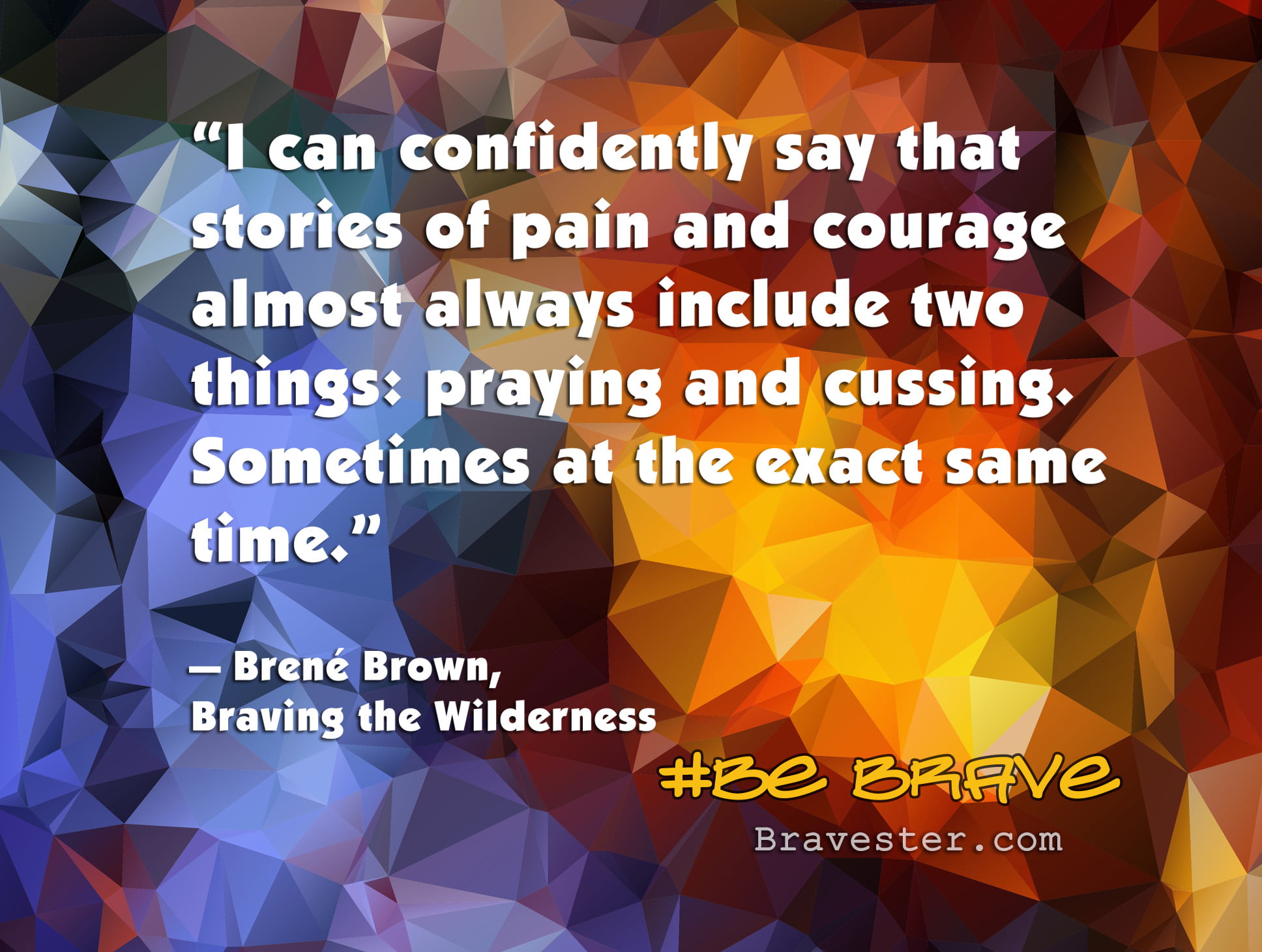
Out of that vulnerability sometimes all you can do is cuss. Praying and cussing at the same time.
I’m okay with this. And I believe God is too. God is not shocked by you. Pray on.
Because of your vulnerability, do you pad your prayers with insincere pats on the back for God before you tell God why you are really praying? Sometimes the prayer formulas we’ve been given have triggered attachment wounds.
To explain this better I share this story from author Amanda Anderson, whom I follow. This is about her time in a horse lesson.
“When he finally held still, instead of getting down to business (which was cleaning his hoof with a pick), I tried to make friends by petting him, even though I was pretty irritated with him at this point.
“The horse guru came up and questioned me:
“Guru: What are you doing?
“Me: Petting Merlin.
“Guru: Why?
“Me: Uh. I’m making friends with him. I want him to like me.
“Guru: Why?
“Me: Uh. I don’t want him to think I just want something from him.
“Guru: But you do want something from him. You want his hoof.
“Me: Ok.
“Guru: Do you always need people to like you before you can ask for something you need?
“Me: Uh. Yes.
“My time with Merlin revealed some of my anxious attachment wounds. It revealed a manipulative side of me that tried to be nice rather than direct. I believed that before I could get my needs or wants met, I had to prove my worthiness through people pleasing. And also, through pleasing God.” https://www.amandaandersonwriter.com/post/healing-prayer-perfection-paralysis
Ummm…is this you? I’m not talking about the good prayer practice of including gratitude in your prayers. If this is you, you know it. Some of you resort to prayer formulas out of desperation, broken attachment issues, disappointment with God. Trust issue revealed.
When you pray for big things, are you really praying for an eraser? Are you praying for things to go back to the way they were before?
Prayer is not an escape from reality but it is the deepest place of reality.Prayer is how we enter into our lives and live in honesty.
Through prayer I am also entering into the cosmic reality. There are forces at play here that are not human and not for me.
Prayer unlocks tears and hidden sorrows. Because relationships require tears. Prayer is all about our relationship with God. No wonder we don’t like prayer. There is that vulnerability again. Trust issue revealed.
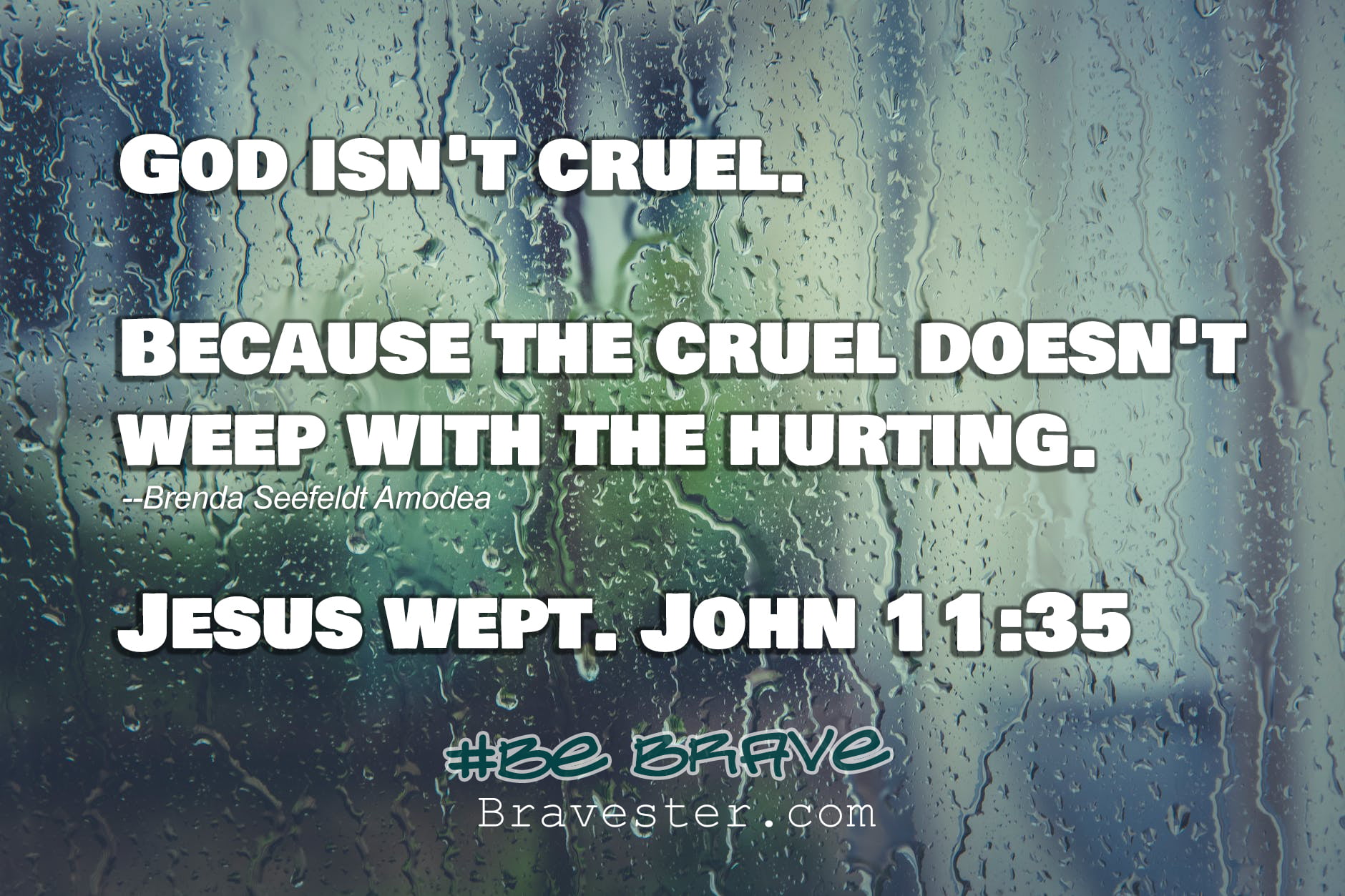
How do you keep praying when you want to give up? When there is too much pain? When it seems like nothing is changing? When the opposite of what you prayed for happens? When in those moments when you feel very distant from God. When you bang down the door of heaven for years and are not sure anything is going on up there at all?
We are part of a larger story. Our inheritance of this larger story is of overcomers. We can remember the old stories. We can remember the new stories.
There are 550 references to remembering in the Bible.
There is the one verse which is easy to memorize (even I can.)
Give all your worries and cares to God for he cares for you.
1 Peter 5:7
This verse is more beautiful from the First Nations version:
The Great Spirit cares deeply about you, so gather all your worries into a basket and throw them on his shoulders. He will carry them for you.
1 Peter 5:7
I vulnerably pray to put all those worries into God’s basket (angrily at times) who puts them upon his shoulders. I have learned over time that God does carry them.
This is a knowing that time and people have taught me.Are your trust issues leading your life a bit too much? I have created a Bible study with video teaching about those trust issues which will take you all over the Bible. You will be studying over 125 verses. Perhaps you may find some hope. Order your copy. Bulk orders available too.
The post Praying with Your Trust Issues appeared first on Bravester.
May 12, 2024
Noticing Gen Z and the Tweens of Gen Alpha, Part 2
This generation is different. Says someone who has been there with teens since the 1980s. I as a youth pastor have worked with teens in the 1980s, 1990s, 2000s, 2010s, and now the 2020s. (Read about these different decades here.) So I say confidently that this Gen Z and the new tweens of Gen Alpha are very different. This Information Age and the smart devices have changed adolescence. This is a good and bad thing. Join me in this series at the odd wonder of what is going on. Your heart will break and you will find inspiration. I believe in teens.
Part 3.
Part 4.
Boomers like me who hate math had no idea what an algorithm was before the 2000s. Now we all know we are victims of algorithms. And now know how to spell algorithms. We still don’t know how they work.
Gen Z has grown up inside the algorithms and are for the most part okay with algorithms informing their lives. This is how they learn what they like. Algorithms help form their identity, which is a crucial role of adolescence.
Gen Z do depend on these algorithms to learn as they are also aware of the downside. “Algorithms act like conveyor belts. Show even the slightest interest, fear, or insecurity about anything—hover over it for half a second—and you will be drawn in deeper. Little by little, the algorithm learns what keeps you watching. And since the most negative and extreme posts get the most engagement, very often your feed will become an endless stream of content that makes you feel worse about yourself. You’ll find yourself on a continuous conveyor belt of apps, products, services, pills, and procedures to fix you.” –Freya India https://www.afterbabel.com/p/algorithms-hijacked-my-generation
This insight comes from a Gen Zer who has the uncanny knack to reveal what Gen Z is just beginning to figure out. While all they know is learning through algorithms, they are also just figuring out how this is ruining their growing-up experiences.
(Millennials: Forgive yourself. No one knew about social media addiction and the dangers when you were teens. You were the guinea pigs to the many who have made millions off of you. Social media has been falsely named to dupe us. It’s not about relationships. It’s about transactions.)
More from Freya: “I remember first hearing conversations about mental health in the mid-2010s when I was 12 or 13. The first YouTube stars started opening up, tentatively, about their anxiety and depression. Celebrities confessed to struggling. Mental health communities formed on Tumblr. I learned about anorexia, self-harm, and disorders like ADHD. It all felt important to talk about.
“But things quickly began to change. Some of us got hitched to the algorithm. Platforms like YouTube began to reward cheap, clickbait posts to boost ad revenue, meaning that users were being served more and more sensational content. Slowly we went from watching influencers talk about anxiety to live-streaming their panic attacks, describing deeply personal traumas along to pop songs, and even capturing split-personality switches on camera. TikTok came out and suddenly everyone seemed to be sharing their symptoms of mental illness. Next, they started telling us we might be mentally ill! We began to see TikToks telling us we have anxiety, autism, ADHD, and traumatic stress disorders. (Read more about this trend.) Companies caught on. Soon we were served customized ads, micro-targeted ads, solutions to our specific struggles. Videos with vaguer and vaguer symptoms. Distracted a lot? You might have ADHD. Have ADHD? You need Ritalin. Pay for this virtual therapy app; get medication delivered to your door; buy some ADHD merch!
“And where have we ended up? With genuine conversations about mental health cheapened, monetized, and often trivialized into TikTok trends and fashion accessories. With pre-teens making mental illness the core of their identity.”
“…We didn’t just grow up with algorithms. They raised us. They rearranged our faces. Shaped our identities. Convinced us we were sick.”
This is where we find ourselves today. This is where us adults who believe in the abilities of teens are lost in how to reach through THIS noise with the message of the truth of Jesus.I have hope that my wisdom coming in real life from my skin that now has wrinkles will be trusted more than the noise. I promise to enter the struggle with them and be a guide to what their souls are seeking. Skin-on consistency may be the best thing we have to offer teens today.
Teens do not have the social obligation to attend church anymore. Many haven’t been in a church before, or maybe just occasionally. The Barna Group’s landmark study has found that this generation is seeking Jesus. Barna calls them the Open Generation. They are seeking for something real that their soul wants. The algorithm has not provided this.
This means when they do come to church, they want to learn about Jesus. It’s not the pizza and coffee, the bright lights, and the noise they have everywhere else in their lives.Who is telling them to shut off their smartphones?Where else can they find some quiet away from the technology?Where else can the algorithms be stopped and they can listen to their souls?“Gen Z has grown up immersed in algorithmically-driven social media, and now–emerging from a pandemic and its economic repercussions–they want more simplicity and kinship. They’re sidestepping dating apps when seeking love, and turning away from Instagram and TikTok when seeking friendship. ‘Gen Z simply are sick of the same old, same old when it comes to social media,’ says Katya Varbanova, a brand marketing strategist. ‘They’re craving new experiences mainstream apps aren’t able to produce…add information overload to that, [and] the comparanoia can lead to anxiety, [eating disorders], and mental health struggles. No wonder Gen Z are craving places that make them feel better, not worse.’” –Katya Varbanova, Source.
Of course, Katya’s idea is to promote another app. This one similar to the original MySpace. Hearkening back to time before smart devices.
Freya India wrote this haunting article about nostalgia for a time Gen Zers never knew. “There is a beautiful and melancholic word I like called anemoia. It means nostalgia for a time or a place one has never known.
“This is a sentiment I often sense from my generation, Gen Z—especially in recent years. I see it in the YouTube videos of old concerts that get millions of views. I see it in our fascination with polaroids, vinyls, vintage cameras, and VHS tapes.” –Freya India https://www.afterbabel.com/p/a-time-we-never-knew (Please read all of this article.)
In the article she included this random YouTube video of someone’s last day of high school in 1999 which has millions of views and over 30,000 comments. Watch it.
Did you notice what is missing?
No phones. Face-to-face conversations were happening. Groups were gathered and were talking to teach other. Memories being made together instead of watching memories on YouTube. Adults that mattered enough to be recorded.
This video causes an ache—and grief–in today’s teens.
Not one of us is going to give up all of the conveniences of our smart devices. I am noting though that the Church has a unique place to help this grief. I believe in this so much. Let’s intentionally move out of the algorithms and into the contemplative ways of our church history. Now more than ever.
My church has a saying, “We are a part of a larger story that is over 2,000 years old. This larger story has staying power because it is true. Join us to find your place in that larger story.” This has resonance.
I have so many more observances, research links, and wisdom from my 40+ years of believing in teens. Please continue to read this series. Trust me, I see hope everywhere.
Part 3.
Part 4.
The post Noticing Gen Z and the Tweens of Gen Alpha, Part 2 appeared first on Bravester.
May 8, 2024
Noticing Gen Z and the Tweens of Gen Alpha, Part 1
This generation is different. Says someone who has been there with teens since the 1980s. I as a youth pastor have worked with teens in the 1980s, 1990s, 2000s, 2010s, and now the 2020s. (Read about these different decades here.) So I say confidently that this Gen Z and the new tweens of Gen Alpha are very different. This Information Age and the smart devices have changed adolescence. This is a good and bad thing. Join me in this series at the odd wonder of what is going on. Your heart will break and you will find inspiration. I believe in teens.
Part 2.
Part 3.
Part 4.
Is it a bad thing that this generation is more afraid of flying? 67% of Gen Z experience the fear of flying, compared to 59% of the rest of us. (Source.) Is too much information at our fingertips the cause of this?
Is it a bad thing that making a choice off of a menu is causing anxiety? This is known as menu anxiety which is the overwhelming feeling of indecision and stress when faced with many culinary choices. 87% of Gen Z adults (aged 18 to 24) experience menu anxiety, compared to 67% of the rest of us. 34% are so nervous about ordering that they ask others at the table to do it for them. 40% of Gen Z even stated that they would not eat out unless they had reviewed the entire menu beforehand, often off of a website. (Source.)
Menu anxiety is deeply rooted in the psychology of choice. While having options is desirable, too many choices can lead to stress and dissatisfaction. The fear of making the wrong meal choice paralyzes making the dining out experience more stressful than enjoyable. What if a regretful decision is made?
This sounds like the paralysis of decision making that is happening from dating apps. Thankfully, Gen Z is using dating apps a lot less. All that choice turned out to not be a good thing. Gen Z has higher expectations of a relationship growing with someone whom they’ve met in real life. Of course, Gen Z is also dating a lot less. Dating is so risky and vulnerable. Way more risky than ordering off a menu. What if a regretful decision is made?
Dating is only becoming more complicated than it already is with the increase of AI. Because now you can have an AI boyfriend or girlfriend. This boyfriend or girlfriend can be created to the exact specs that you prefer and won’t reject or hurt you and is always available when you want.
One of our Brave Dating Practices is “Do not limit yourself to a type.” When you can “AI-create” your boyfriend or girlfriend, you won’t know who your type is because you can create the type you think you want and he/she won’t be a bad match because he/she is programmed to be your good match.
Dating is already risky and vulnerable. How much more so when you start dating a real person who doesn’t match the perfect physical traits of your AI relationship and has the possibility of breaking up with you?
Comparison is already a problem in the real world. Now you get to compare yourself to the AI-created version.
AI is new and we are just learning about what it can do. These boyfriend and girlfriend relationships are happening already. First time sexual experiences have already been happening through the use of porn. Now first-time sexual experiences are happening through AI. We do not know yet of the harm of this but the harm is going to be real. Read more about this from this voice who is influencing me, Freya India, https://www.freyaindia.co.uk/p/we-cant-compete-with-ai-girlfriends.
Life as an avatar is defining today’s teen identity. When you don’t like the way God has created you, you can now create your favored identity through your avatar. You can be who you think you should be. Finding your identity is one of the biggest milestones of adolescence. But now you don’t have to awkwardly grow to figure out who you are. You can create who you want to be.
Experts have long been talking about the delays in adolescence. Back in the 1980s teens were more ready to be adults at 18 than they are in the 2020s. (I was there.) Are avatars interfering in another delay of adolescent development, especially the all-important development of identity?
Gaming platform Roblox’s annual report, “Digital Expression, Fashion & Beauty Trends,” found how digital identity is crossing into people’s real-life decisions:
54% of respondents say their physical style is “very” or “extremely inspired” by what their avatars (and others) wear in the metaverse.56% confess that styling their avatars is more important than styling themselves in the physical world.84% say after wearing or trying on a popular brand’s item virtually, they’re “somewhat likely” to consider the brand IRL, with 50% “very” or “extremely likely” to do so. Source.These are some high percentages.
A created avatar can become the ideal self before that ideal self is revealed to your teen. A created avatar has more of the chance to be accepted in the digital world without disappointing parents, authorities, and peers. The created avatar doesn’t have to live in the same space as parents, authorities, and peers who are real people living in the real world. All teens need firm foundations in the real world to help them form identity and develop character. And their sense of style.
To the heartbreak of parents and youth pastors everywhere, teens try on many identities during their adolescent years. Who they are at home is different from who they are at school or at their after-school club. All those are different from who they are at church. This “trying on” of identities is a part of normal adolescence which is why the consistency of parents and the five other adults in a teen’s life is so important. These are the people you can trust to tell your teen who God has made him/her to be.
Your teen knows he/she is fake with all of these identities and the perfect avatar identity while trying to figure life out. Being this fake does bother them. They want to be their “true selves” but who is that? Without the struggles and failures to figure out identity issues, the fake self may continue for way too long.
I “get” the safety of trying out a new persona in the digital world. But this awkwardly transfers to the real world where God is growing the beautiful teens to the identity they were born to be.
I have so many more observances, research links, and wisdom from my 40+ years of believing in teens. Please continue to read this series. Trust me, I see hope everywhere.
Part 2.
Part 3.
Part 4.
The post Noticing Gen Z and the Tweens of Gen Alpha, Part 1 appeared first on Bravester.
April 16, 2024
Make the Brave Decision to Make Small Talk
More small talk please.
In a world with more loneliness and isolation, I say we need more small talk. This is a brave decision you can make because we need to do something to help this world full of loneliness and isolation.When I will talk small talk, I promise I won’t ask you about the weather (a pointless conversation) or what do you do (a scaling conversation). I am just going to intentionally let you know that you matter somehow through small talk.
You say you hate small talk. I’m going to say you hate the wrong kind of small talk and I have something better to offer you. Please consider this possibility…to help this world full of loneliness and isolation.
Intentionally do these things:Retrain your thinking that small talk is an opportunity, not an annoyance.Whatever room you are entering, you be the warm light. Place your eyes on people; a smile on your face; your face not in your phone; a look of curiosity on your face; a look of anticipation that there is something for you in this place.Decide to avoid predictable superficiality. This is your brave decision to make.Now you are ready to engage in small talk with someone.Notice and then wonder and then ask a good question. Asking about their dog is more interesting than asking about the weather. But even asking about the dog might too simple of a question. Look at the branding on their water bottle or coffee mug. That might give you a question. Are they wearing a t-shirt from a location or event? That might give you a good question. Do you see the notice, then wonder, then question pattern?Come up with a good question, not a closed question. This one takes some practice. You may accidentally in the awkwardness of a new situation ask a closed question. So what. There is always next time.Be an active listener. This means you are not planning on what you will say next. You will have to trust yourself more to allow the person to be the talker of the conversation because you are more interested in the person you’re talking to than talking about yourself. Besides, something the person said may lead you to a next question. You might miss that if your head is full of thinking about what you might say about yourself.Small talk is not transactional. Take that assumption out before you even start.Allow people to have a conversation on their terms. Not your expectations.Be curious. You may never see this person again. You are not forming a BFF friendship. But you may learn something. You are definitely letting this person know that they matter. In this world of loneliness and isolation, mattering makes a difference.Do not presuppose you are going to get stuck in small talk. Small talk always has potential, especially if you decide to give it potential.Silence is not unbearable. Allow silence to have space.Don’t make it weird. Keep it warm and introductory with no ulterior motives. The person may not trust you no matter what. The goal is to leave the small talk conversation with the person thinking “maybe I matter.” Or, “maybe I can trust humankind.”Share the real you. Not the masked you. Give this person who you may never see again the dignity of seeing you. You are pretty awesome. You letting someone else know that they matter shows that awesome you care about people which is why you are awesome.Here are some slightly braver challenges. You are asked to try at least one:Make eye contact with a stranger.Give a compliment to an acquaintance or a stranger.Spark a short conversation with this random starter: Someone asks how you are. Here’s your opportunity to start something. Instead of answering “I’m fine,”, respond with a 1-10 rating. Then ask the other person to rate how they are feeling. That little bit is conversation enough. This may open to another more pointed question, a shallow question or you both just walk away.Prepare 5 good questions to always have at the ready. This helps to do it ahead of time. I’m an extrovert and this “have ready” idea helps me.Throw a party of mixed friends. Maybe 5 people. Maybe more. Once the party starts, give everyone two question cards and ask them to mix with everyone by asking these questions. Some question suggestions are:When and what have you collected during your life?Which do you like better—sunrise or sunset? Why?If you were hiking down a path and it came to a Y, would you take the well-traveled path or the overgrown path?What Crayola Crayon color would you choose to describe God?If you had $100 to give away to one organization, who would you give it to and why?I think you can do this–and not hate it–and make this world a slightly better place.
The post Make the Brave Decision to Make Small Talk appeared first on Bravester.
March 13, 2024
Gnarled and Broken Can Still Grow Hope
Even a tree has more hope! If it is cut down, it will sprout again and grow new branches. Though its roots have grown old in the earth and its stump decays, at the scent of water it will bud and sprout again like a new seedling.
Job 14:7-9
I live near Washington DC. Spring equals the blooms on our cherry trees. This is one of my hundreds of pictures having now 36 springs living near Washington DC.

I’ve always called the experience of walking under the cherry blossoms mystical. Especially at night. There is a wonder about getting under trees. This quadruples when you are under cherry blossoms.
Our DC cherry blossom trees are old, gifted to us from Japan in 1912. The old beauty in this picture is old and still blooming. Not like the others but aren’t you inspired by the tenacity?
Does this tree give you hope?
 Does your faith feel as gnarled and rough and hardened as this tree trunk?Does your crown of beauty feel lopped off by the unfair thing in life?And yet you find a few sprigs of hope growing inside of you?
I’m hoping this article and this picture of this tree is helping you identify that sprig of hope you now feel. It is amazing how contagious hope is.
It is amazing how much our broken soul clings to the smallest of hope.From the unfairness in Job’s life (Job 1-2), Job makes this observation. Hope will bud and sprout again.Notice that this hope comes from the “scent” of water. That’s all it takes. Not with the drenching of water or with the flooding of nutrients. It takes just a little bit.
I’ve written a Bible study about your trust issues with God. In this Bible study I ask you to begin it with a 51% trust in God. I’m asking you to begin it with just a smidge over halfway, or with just the scent of water. Let’s see where an honest conversation with lots of Bible can lead to.
The post Gnarled and Broken Can Still Grow Hope appeared first on Bravester.
March 6, 2024
Darkness is My Only Friend. A Statement of Hope.
Psalm 88 is a psalm about faith that is mixed with total confusion, exposed vulnerability, and a smashed heart. Because this is still faith.
This psalm is different from the other 150. This is an honest part in the Bible. For a holy book, the Bible is full of too much honesty. I’m not sure how the Bible made the holy book cut because of this raw honesty.
That isn’t why this psalm is different. The Psalms are full of so many emotions and anguish. This psalm is raw and full of pain like so many of the others but it doesn’t end with the normal psalm ending of “But I trust in your unfailing love; my heart rejoices in your salvation.” Or some other proclamation of trust. This psalm just ends making this statement, “Darkness is my only friend.” This psalm just ends with that.
No declaration of trust.Let’s read this Psalm:
O Lord, God of my salvation, I cry out to you by day. I come to you at night.
Now hear my prayer; listen to my cry.
For my life is full of troubles, and death draws near.
I am as good as dead, like a strong man with no strength left.
They have left me among the dead, and I lie like a corpse in a grave. I am forgotten, cut off from your care.
You have thrown me into the lowest pit, into the darkest depths.
Your anger weighs me down; with wave after wave you have engulfed me. Interlude
This interlude or this selah (depending on translation) means take a breath. After this honest anguish, let’s take a breath. Feel the emotion expressed. Do you feel any of this inside of you? (You are invited to feel.)
You have driven my friends away by making me repulsive to them. I am in a trap with no way of escape.
My eyes are blinded by my tears. Each day I beg for your help, O Lord; I lift my hands to you for mercy.
Are your wonderful deeds of any use to the dead? Do the dead rise up and praise you? Interlude
Whew. We need to take another breath.
Can those in the grave declare your unfailing love? Can they proclaim your faithfulness in the place of destruction?
Can the darkness speak of your wonderful deeds? Can anyone in the land of forgetfulness talk about your righteousness?
O Lord, I cry out to you. I will keep on pleading day by day.
O Lord, why do you reject me? Why do you turn your face from me?
I have been sick and close to death since my youth. I stand helpless and desperate before your terrors.
Your fierce anger has overwhelmed me. Your terrors have paralyzed me.
They swirl around me like floodwaters all day long. They have engulfed me completely.
You have taken away my companions and loved ones. Darkness is my closest friend.
Is God at fault for all of this despair?Or is God who we talk to honestly when we are in despair?Notice from beginning to end of this psalm that there is no trace of bitterness; no desire for revenge on enemies; no angry reflections on the goodness of God. No matter how deep and dark the author’s affliction was, he could still talk to God about it—day by day, v. 13. Notice how he each day he begged for help, v. 9.
He didn’t leave his relationship with God, he kept vulnerably returning.How does one trust like that in the midst of this much despair?The author of this Psalm is not David as so many of the Psalms are. This one-off is from Heman the Ezrahite, son of Korah. Experts are not sure if this is the same Heman but there is one mentioned many times in the days of David and Solomon. This Heman was noted for:
His great wisdom (1 Kings 4:31).His being a Kohathite, among the sons of Korah (1 Chronicles 6:33).His musical ability and service (1 Chronicles 6:33, 15:17-19, 16:41-42, 25:1; 2 Chronicles 5:12, 35:15).His many and exceptional sons and daughters (1 Chronicles 25:5-6).His service to the king (1 Chronicles 25:6).A corny superhero cartoon in the 1980s. (Did I make you giggle?)This song of despair came from a wise, talented, accomplished, and blessed man. Someone who “should” not have such complaints. Someone who “should” have reasons to trust God.
Noticed how in v. 15 he said he’s been in this despair since his youth. How did he become such an accomplished leader with all of this despair? His secret knowing is that darkness is his closest friend.
Darkness is generally considered bad. It is when the creepy crawly things come out. The nightmares happen that haunt you. Night frights are real. When you can’t see far enough in front of you. When it is braver to stay in than to venture out. You find yourself waiting anxiously for the daylight to return—for normal to return.
Yet in this darkness, God is.
As the people stood in the distance, Moses approached the dark cloud where God was.
Exodus 20:21
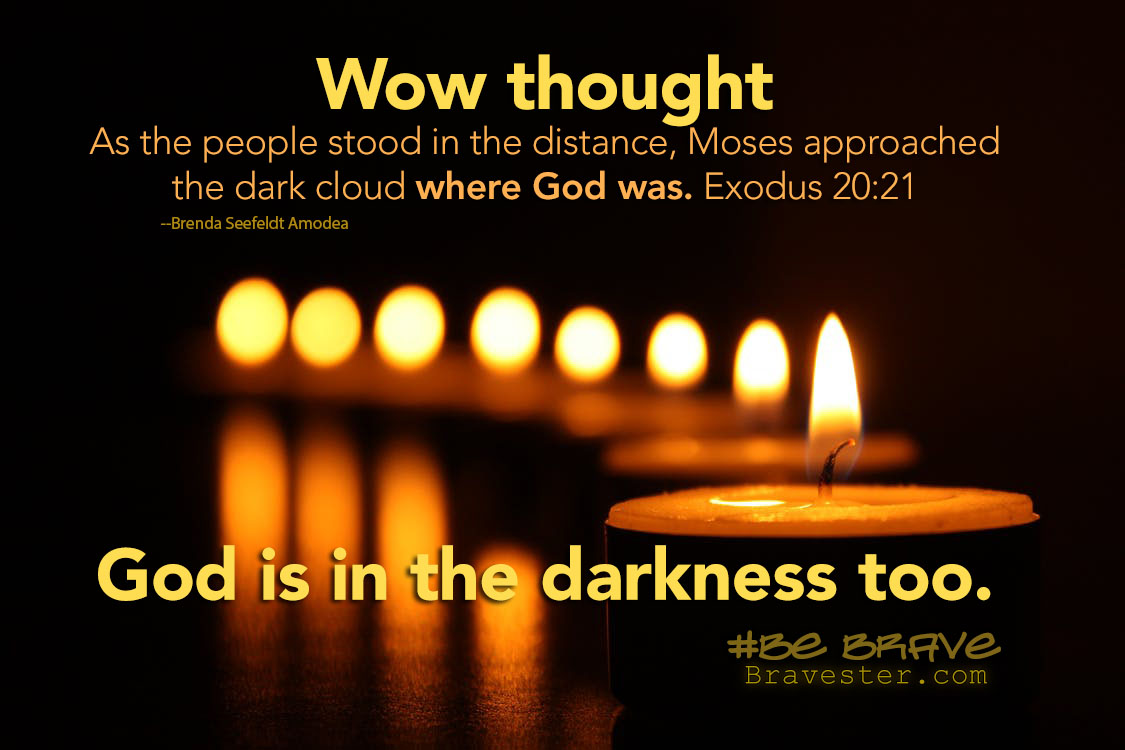
Exodus 20 is the chapter we find the 10 Commandments. This is the moment when Moses left the people to meet with God—and it was darkness. (God in the darkness is throughout the Bible, read more.)
What happened those three hours of darkness on the cross is core to our faith.
Lent is an observance of the darkness. Lent is leading us to the cross which lead us to Easter. The darkness of Lent makes Easter all the brighter.
When you have lived a while with an honest faith, you come to know that darkness is one of your dearest times.Darkness is an invitation. Lent is an invitation of ritual in our church calendar to remember the darkness. Darkness is in the church calendar.
This terrible time has in a deep and even terrible way brought Heman, me, and maybe you into closer trust relationship with God.
I’m not saying that you aren’t in anguish. That this really isn’t the worst time of your life. It is. Let’s stay in the honesty.
In that darkness I have learned that I am known the deepest. I am learning the deeper things. I know of God’s love in a deeper way. These things I don’t ever forget. Darkness has become a dear old friend I don’t always want to welcome but I do find comfort in…now.
I have authored a Bible study with video about these thoughts. Though Psalm 88 didn’t make the cut of the other 125+ verses in the Bible study. This Bible study comes from the best of our conversations at church, like this one. You can learn more about it at www.trustissueswithGod.com.

Hello darkness, my old friend… You may recognize that song lyric. Watch this beautiful remake of that song from the worship team at my church.
The post Darkness is My Only Friend. A Statement of Hope. appeared first on Bravester.
March 5, 2024
Teaching to Hear the Holy Spirit
There is a voice in my sons’ heads–and it isn’t mine!
The boys I raised are now in their early 40s. I am learning the dance of letting go and shutting up and when they want to hear my voice. This dance will probably never be over until it becomes that time when they will become the parent to aged me.
As my sons are this age, I am seeing that there is a voice in their heads all of the time. The Holy Spirit has not let them go. From their own words, they constantly hear this voice.
Because I’m the greatest influence in their lives, this Holy Spirit voice tends to sound like me. But as I’ve lessened my “telling,” they are learning that this Holy Spirit voice is actually speaking to them personally. And they are listening.
Oh the joy to have that Holy Spirit voice not be my nagging voice. Oh the joy to know that my sons hear it and are obeying.I want you to know that this one day will come for you. Now as a parent of your teen, I’m sure you are doing more “telling” than you would like. This is your responsibility while your child is still a minor.
(Check out our free resource, Parenting to Survive Failure.)
You are probably also quite worried that your teen won’t take his/her faith decision into adulthood so you are taking on the Holy Spirit’s role there too. Some days you are the Holy Spirit teaching discernment and wisdom. Some days you say things led out of your anxiety and not from a humble stance of learning. Those “telling” moments leave you with regrets once you realized that you let your anxiety lead.
I’ve had so many of these regrets. Yet somehow my sons can hear the Holy Spirit’s voice now and the Spirit doesn’t sound like me. I must have done something right. If you are feeling the holy tension of being the Holy Spirit’s voice to your teen, I believe you might be doing something right too.
I give you this hope.
The post Teaching to Hear the Holy Spirit appeared first on Bravester.


