
Brenda Seefeldt Amodea's Blog, page 20
September 8, 2021
To the Single Mom Who Has Set Faith to the Side. Again.
You have always known that you have loved Jesus. Whether it is from the home you grew up in or because you simply have always loved Jesus. You loved learning the stories in children’s church. You loved your memories of the things you did in youth group. These things have formed you.
But for the reasons you know, you became a single mother to an adorable child anyway. You know the lies you believed that got you here.
You’ve been scared, thrilled, overwhelmed, heart-broken, disappointed, and exuberantly proud of yourself. This is not the life you planned but you are happy.
You even started back up at church again. You found a way back to your childhood faith that was pure and growing again. You found a way to heal from the shame—mostly heaped on by yourself because of your decisions though it was more convenient to blame others. You were back in church, your child was getting the same Bible stories you had growing up, you found your place to volunteer at church, you were a part of a church family who wanted you.
But once again you find yourself drifting from church. And find your faith drifting from God again. It’s been a slow drift. It stems because you really want to find a husband.
There was a time you believed that if you started back up at church again you would meet the kind of guy you thought you would marry. You have always desired to be married. And now you want your beloved to know the love and care of a good father, even if he is not the bio-father. Surely you would find that person at church. Or through church people.
Alas some years have passed and you have not found anyone. You’ve prayed and God has not delivered. Your intentions were true and honest.
Your desire to be married has found you looking for men now in happy hours, breweries, concerts, etc. At least here men are talking to you. At least here there are possibilities.
But are these men true possibilities? Have you met a good one yet? Yes, you are meeting men but have you met a good one? The reality of meeting men has led you to contort yourself again to believe that you will find that love of a lifetime you’ve always been searching for here. Those lies you told yourself before you are telling yourself again.
You’ve stopped attending church. Your people miss you. But even worse, you’ve put your growing faith on the back burner because your desire for marriage is more important right now. You’ve had to put that faith on the back burner—again—to justify the men you are talking to.
I wish I wish I WISH God would bring you that love for a lifetime you have desired since you were young and so full of faith and hope. I don’t know why you haven’t met him yet. I do know that time is the one brave dating practice neither you nor I have any control over. I do know that I would do anything to find you that good match because I know what a good match you are.
But not now. I see you compromising and lying to yourself again.
I get it. I understand it. But I know these decisions are not going to get you what you want. And I’m sorry that you are angry at God for not delivering yet.While I’ve been praying for you, I know a remarried mom sick in the hospital. She’s been remarried for quite some time now. She found a good one after finding a pretty bad one the first time around.
During her long hospital stay, she told me, “Life always looks better and the world is a little less scary when I’m holding David’s hand!”
Those beautiful words are stuck in my head. This is what you want. It is such a good thing to want this. This is what I want for you. But you aren’t making the decisions now to give yourself this. I don’t know what to do to help you. I’ve said so many words of encouragement but I can’t speed up time. I can’t answer the “why” of why you haven’t met him yet.
I want to pound your pain at the feet of Jesus on behalf of you. But I can’t do that also. I need you to have a bigger faith which is also mixed with total confusion. I wish for you to desire that kind of faith. You need to be the one pounding your pain at the feet of Jesus.
So I write these words for you. And for you whom I haven’t met yet.
I want to give you some hope. I want you to trust God just a bit more through this long season (too long!) of time. I wish for you to make small, deliberate tweaks to your thinking because you choose to give God more credibility than everyone else. I want to also say, I’m frustrated for you too.
I see you. I see your disappointment in God. I see your dream for a husband and father to your child. Please make these braver decisions.
These words are my gift to you.

The post To the Single Mom Who Has Set Faith to the Side. Again. appeared first on Bravester.


August 30, 2021
Memes to Share About Hope Being More Than a Wish

 Christmas Star Happy drawing (Emotions) christmas,star,winter,nicholas,santa claus
The post Memes to Share About Hope Being More Than a Wish appeared first on Bravester.
July 30, 2021
The Cradle to Adulthood Pipeline is Broken
Youth ministry is broken. As a youth pastor now in her 5th decade I can declare this. It’s been broken for decades. I was there when it broke. I’m still in youth ministry but my role has looked very different since the mid-1990s. Because I still believe in youth ministry. Sheesh…I so love teens!
Watch this excerpted portion of The Holy Post podcast withPhil Vischer having this conversation about the cradle to adult pipeline beingbroken in the church. Yes, this is the same Phil Vischer who gave us one of thebest video resources to help us keep that pipeline in tact—Veggietales. I have given all of my grandchildren Veggietales because I believe in theteaching impact of them.
(Watch to 36:42)
Does this trigger your feels as a parent? Does this confirmyour doubts and worries? How worried are you for your children to grow in theirfaith?
I say this as I also realize this post-pandemic world hasmade parenting so much more anxious. You’ve had to walk with your child throughnew fears and new types of fears. You’ve had to have more responsibility thanever before for your child’s education. You’ve not been able to utilize thiscradle to adulthood pipeline because churches had to close.
Why do you doubt your abilities to pass on your faith toyour children?This is the consistent theme of everything here at Brave Parenting. There is lot of encouragement and truth for you here because as a youth pastor I’m desperate for you to try to pass on your faith to your children—even with all of your awkwardness. You’ve got this. You are probably not a Bible scholar but you do have your teen’s unconditional love. You already are the loudest voice in your teen’s heads. You have the influence to do this—even with all of your awkwardness.
Try something. Find websites full of resources to help you. Finda church that will resource you. Try something.
Because the fruit of passing your children off to the churchpipeline from cradle to adulthood isn’t all that good anyway. See the storyshared by Jason in the video. Yikes!
I believe this broken pipeline is a good thing because fromyouth pastor world, I see the best fruit when a teen is connected by faith totheir parent. Because of you I can become the better youth pastor.
The post The Cradle to Adulthood Pipeline is Broken appeared first on Bravester.
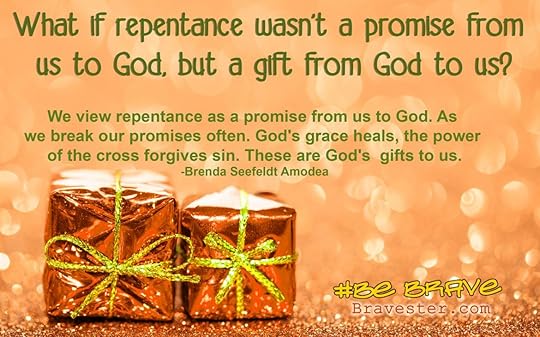
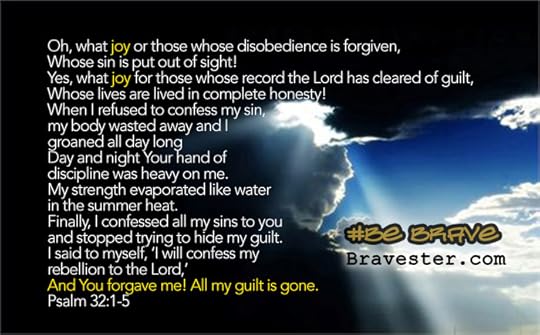
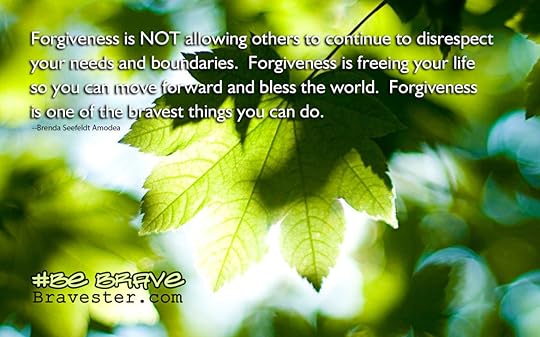
Memes to Share About the Brave Journey of Forgiveness
Forgiveness is an F-word for too many people. Forgiveness involves pain. Forgiveness involves unfairness. Forgiveness means something is wrong.
To not forgive God, yourself, or someone is so easily justified.
It is much easier to power through or power over than to forgive. Until it isn’t. Which brings with it a whole lot of life complications.
Forgiveness is one of the basic principles of the Christian faith. In fact, it is unique to all of the world religions. And this is why:
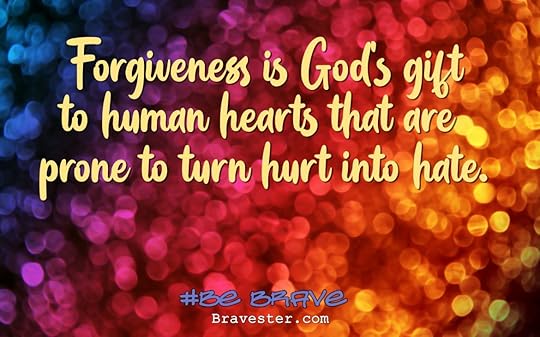
Forgiveness is God’s gift to human heart who are susceptible to turn hurt into hate.
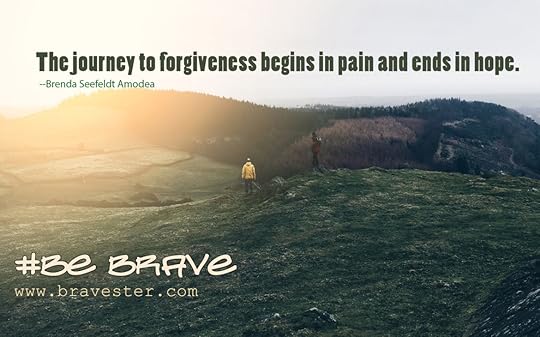
Take the brave journey of forgiveness. It does begin in pain and it does end in hope.


The post Memes to Share About the Brave Journey of Forgiveness appeared first on Bravester.
The Time I Compared Myself to a 90-Year Old Woman to Feel Accepted
Oh the struggle of comparison and scarcity. This is a true story.
An elderly neighbor friend of mine invited me to her line dancing exercise class with the local senior center. Due to Covid the class had been moved to the local VFW which put this in walking distance for both of us. I went because I want to say “yes” in my life and I want to be a good neighbor and I can always use more exercise.
Thankfully I was the youngest person there. That’s my vanityspeaking.
My friend told me to move to the front of the class, watchthe instructor, and I’ll figure it out. Which I didn’t. I was a left-footedmess. Maybe because I’m left-handed thus left-centric.
After the first disastrous song, the instructor yelled out, pointed her finger at me, and said “Some of you need to learn what a beat is.” I knew she was talking about me. I also knew because her finger was pointed at me.
I wanted to shrink away. I thought this was going to be good-hearted old lady fun. I wanted to shout back, “Do you know the DNA of my family?!” That’s for those of you who know my family. We may be famously too smart thus awkward in the real world.
Thankfully I had enough sense to realize that “justifying my behavior” at this moment would make me look ridiculous. (I wish I always had such clarity about that.)
Instead I breathed. I told myself that being “cool” amongstthis crowd wasn’t worth my fight for control of this belittling situation. Itold myself that this peer group will not define me. I told myself to tryagain.
The next song was not much better.
A wonderfully kind lady next to me (not my friend who just left me hanging by the way) decided to take me under her wing and personally teach me the dance steps. She had my full concentration. I did want to fit in and achieve.
My new friend had my full concentration until the loudyelling voice was back complete with finger-pointing at me again. “You of allpeople in this room need to be listening to me the most.” “Yes, you.” I was “you”as she also knew my name.
This is a true story.
This was when my new friend, in her effort to encourage me,told me that one of the ladies in the room is 90-years old and is here everyweek. She told me that this is such a wonderful group of encouraging women tobe a part of.
This was when I compared myself to a 90-year old woman. I compared my dance steps to her dance steps and tried to make myself feel better. But it was in that silent-to-yourself “mean girl” kind of way.
I realized in that moment that the rejected junior high girlis still inside of me—especially vulnerably exposed on a dance floor.
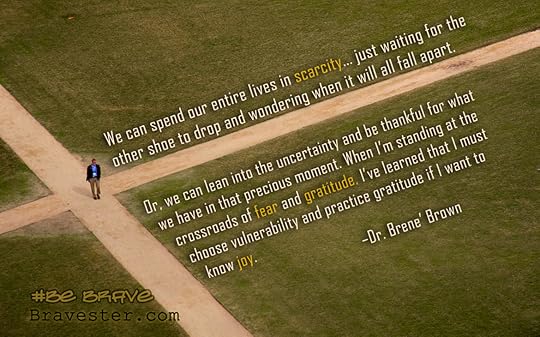
Scarcity thinking brings up those terrible thoughts of who in this room can I make feel smaller so that I feel bigger? As I’m in a room full of ladies from a senior center!I kept reminding myself:
These senior center ladies cannot define me. This mean instructor cannot define me. Starting every dance move with my left foot cannot define me. I’m capable of learning to start with my right foot. I have other qualities I prefer to define me. I have other people who I prefer to define me—other people who I have intentionally and vulnerably placed in my life. These are my gift of people. I can be mediocre or less than in this one class and be okay in the rest of my life.This was all swirling in my brain as I was trying to learn the dance steps, start with my right foot, and stay on beat. Because I didn’t want to get called out again.
I was anyway. This calling out happened two more times.
I was exhausted when I was done. That is a lot of mind work. I felt my guilt for comparing myself to a 90-year old lady. It was a good workout.
I have returned to the class. I am learning to start with myright foot. I have not been called out again but I do hide in the far backcorner. I’m okay with being mediocre at something because what a group ofladies to be surrounded by when I am being mediocre.
Worthiness is my birthright. The dance floor is not my domain and I am okay at just being okay on that dance floor surrounded by the right people.
(Photo credit: https://www.postandcourier.com/health...)
The post The Time I Compared Myself to a 90-Year Old Woman to Feel Accepted appeared first on Bravester.
July 21, 2021
Hiding Your Trust Issues in Untrustworthy Colorless Gray
Do you ever feel like in your relationship with God that youare winning?
That question may make you uncomfortable. How about thisone? Do you ever feel like in your relationship with God that you are caredfor? At least a little?
Disappointments color everything with a colorless gray. Wethen view God with this untrustworthy colorless gray.
You believed once. You believe still. You are afraid to notbelieve. So this untrustworthy colorless gray becomes a safe place for you.
It even hides your trust issues with God. Because it iseasier to pretend you are okay. (That’s an exhausting lie.) Because it is toofearful to openly share your doubts or your anger at God. (Or is it really rageat God? I’ve been there.) The fearedrejection of your people feels safer than the risk of them seeing your smashedheart and how angry you are at God and how little you trust God. You believeyour people prefer this untrustworthy colorless gray on you.
Yet something deep in your soul wishes for you and God to beclose again. You long for those days when God made sense. Trust is evidence-based.Trust builds trust.Wrestling with God builds trust. As in the story from the Old Testament of Jacob getting his opportunity to “take God on.” Jacob wrestles with God all night long, but doesn’t know it yet. He’s just angry, frustrated wrestling because he can. When dawn breaks and he realizes who he’s been wrestling with, Jacob didn’t let go and apologize. Scripture says Jacob hangs on tighter and says, “I will not let you go until you bless me.” (Genesis 32:26).
That one sentence describes my Bravester faith—even in mymost confused times.
This seems so opposite. It seems that wrestling with God isyou full of doubts and anger and nottrusting God. It seems that a faithful person would be able to wait in trustbecause they know that God is sovereign.
I have a single mom in my church. She has three children.When they come back from their dad’s they are emotional messes letting her seeand feel all of their wide range of emotions. She’s okay with that because sheunderstands that her kids trust her to show all of the emotions this divorcegives them. At their dad’s house they have to perform happy. Her safe homeallows her kids to feel the emotions and still know they are deeply loved. Whata gift this mom is giving to her children.
This is wrestling with God. Wrestling with God is honesty. Wrestling with God is allowing your emotions to move you towards God. Especially the God you don’t understand any more.
Because God’s love is safe and big enough for your honesty.
Trust is evidence-based.Trust builds trust.Wrestling with God builds trust.The wise Dr. Henry Cloud created this list of ingredientsfor trust to take place in a relationship.
Intent — You’ll trust when you know someone’s motives are good.Understanding — You’ll trust when you feel someone understands you.Character — You’ll trust when someone’s character reveals traits such as honesty, love, compassion, mercy, courage, patience, etc.Capacity and Ability — You’ll trust when someone has the ability to do what you need them to do. A surgeon, for example, should know how to perform an operation.Track Record —You’ll trust someone based on their past behavior. –Dr. Henry Cloud, email, November 16, 2020You will learn all of these when you dare to wrestle withGod. You will learn that God is trustworthy. You will learn that God istrustworthy again.
Wrestling with God always starts with a painful time. Pain is your beginning.
Wrestling with God requires vulnerability because everydoubt you have about God is magnified. This life event already magnified those doubts.Instead of ignoring those doubts and just pushing through with that untrustworthycolorless gray, you have decided to “know if you have the blessing.”
This takes time (and you come to understand that realpromise that God waits with you). Thismeans you have to feel the disappointment, confusion, anger. This takes openingand reading the Bible, no matter how much the Bible is adding to your confusion.This becomes one of the most memorable times of your life. (True that!)
You will find God’s intent, understanding, character,capability and ability, and track record. This confusing and intimidating Biblewill show you that God is trustworthy.
Your questions matter. Your fears matter. Your angermatters. Embrace the vulnerability of them and find out who God is.
In this story of Jacob wrestling with God, do you realize thatJacob was winning? When the man saw thathe would not win the match, he touched Jacob’s hip and wrenched it out of itssocket. Genesis 32:25.
What? The man/the angel/pre-incarnation Jesus (theological debate on this identity) took advantage of supernatural power to win? Yes.
Do you ever feel like in your relationship with God that youare winning?
A safe colorless gray faith does not have that feeling. A safe faith says “I know you are omnipotent so I will feel helpless while I wait on you.” You may choose to wait on God like this. Not I. I choose to bravely—thus vulnerably–trust God. It’s my brave decision to brave decision to brave decision.
The post Hiding Your Trust Issues in Untrustworthy Colorless Gray appeared first on Bravester.
July 16, 2021
What Kind of Faith Would Your Teen Want? A From Faith or a To Faith?
We keep hearing about this surge of Millennials leaving the church and/or leaving their faith. I believe they are not leaving their faith as much as they are leaving the church culture.
Ever since they were born, Millennials have been marketedto. More than any other generation before them. I believe they are so tired ofbeing marketed to. Sadly, the church culture has marketed to them also. Theydon’t want to hear yet another pitch for a short-term mission trip that alsoincludes a zipline. They don’t want to see a smoke machine in their churchworship center and their Saturday night club.
This marketing has blinded them to what their faith could actually look like. The faith that their soul is calling out for.
Sadly what have the youth group teachings (more marketingincluded) and church teachings been dumbed down to? How to be a moral person.
The teachings are more about what have they been saved from? “She’s a Christian because she doesn’t drink.” “He’sa Christian because he doesn’t cuss.”
What do such behavior modifications have to do with being aChristian?This is more about being moral. Maybe that is why so manymoral people are mistaken as Christians. But many moral people do not know ofthe saving grace of Jesus Christ.
Teaching to be dependent on a Savior is the way of Jesus but also difficult to teach in this self-absorbed culture. These moral messages of what we are saved from are easier to teach. Plus they also easily impress senior pastors, church boards, and parents.
There is so much more to faith than fromming.I have a favorite book that has influenced me for a long time. It was published in 1988 and it is still influencing me to this day. This is from p. 140 of Real Christians Don’t Dance by John Fischer.
“For many, fromming is the reason why we have Christian schools, Christian movies, Christian nightclubs, Christian music, Christian aerobics, Christian TV. In fact, seemingly every aspect of popular culture and contemporary life sooner or later sprouts a Christian counterpart. Fromming has become the major justification for the Christian sub-culture now firmly rooted in contemporary society. It is also a convenient excuse for any shortcomings the ‘Christian’ version displays when compared to its ‘secular’ counterpart and when such a venture comes up short of funds.
“From. It has become an all-important word in the apologetic rhetoric of popular Christianity. We are constantly being bombarded with fromism—From this, that, and the other thing, From all of the things we are being saved from.”
You are seeing it, aren’t you? You have felt this also about your faith over time, right? This is not just a Millennial or Gen Z thing. This has also been your thing. (Remember that this book was written in 1988!)
Just say the word “from.” It makes your mouth frown.
What happenswith fromming faith is thatChristians become identified not for what they do but more from what they don’tdo.Even that thought brings a frown to your face.
Let’s flip this around to a to faith. What are we saved to?
(This list is in no random order and was put together from a group conversation at my church. I’m sure this list can be much longer. What would you add to it?)
To healthy relationshipsTo peaceTo do good things for GodTo help folks financiallyTo help friends in needTo help enemiesTo a healthy lifestyleTo God’s loveTo confidence in our decision-makingTo confidence in our direction in lifeTo acknowledgement of past mistakesTo overcoming shameTo forgivenessTo forgiving ourselvesTo forgiving othersTo generosityTo kindnessTo lovingTo graceTo soft-heartednessTo live faith confidentlyTo do what God has called us to doTo change in our motivationTo bigger freedomTo outreachTo compassionTo worshipTo heavenTo life to the fullTo second chancesTo integrityTo loyaltyTo longer sermonsThat last one is for real. This is from The Barna Groupresearch into Millennials and their faith. Sadly only 10% of this age grouphave a faith that is defined as resilient. This would be the kind of faith wewant for our children. https://www.barna.com/research/of-the-four-exile-groups-only-10-are-resilient-disciples/Those with a resilient faith also survey that they want longer sermons. Whichmay mean they also want less of the attractional—overmarketed—church, huh?
Instead of being saved from the travails of sin, a to faith is life to the full. This is what a resilient faith is. You don’t leave that kind of faith behind in your late adolescence because that is when you need it the most. Plus this kind of faith does not take away your fun. The fun comes in the success you daily live. Look at that curated list again.
Teach this tofaith. Be wary of the easy trap of frommingfaith. Do praise fromming moralbehavior but actively teach what you are being saved to.
And turn that frown upside down to to. Now you are smiling—and hopeful.
Idea: Create your own “to list” with your teen. Use this conversation to give your teen a bigger view of a resilient faith. Your teen may be inspired.
The post What Kind of Faith Would Your Teen Want? A From Faith or a To Faith? appeared first on Bravester.
July 13, 2021
Wisdom from Judaism, Catholicism, Protestantism, and Science All Teaching Us that Prayer Changes Us
Because we don’t want to appear bossy to God. Because prayertoo often becomes a wish list. Because we don’t want to sound selfish with ourlists. Because we are trying to change God’s mind? Or we are not trying tochange God’s mind?
And the biggest reason may be we don’t want to be disappointed by God. So we pray our low expectations.
Prayer is vulnerable. As George Bailey said, “That’s what I get for praying.”
I can justify those low expectations because at least I’mnot asking God for a personal jet.
Then there is the big trailing thought of do my prayers doany good when God already knows what he is doing? I could then reason that Goddoesn’t even need my prayers. I do trust his sovereignty over my life and Itrust that God will provide and lead accordingly. So why does God even need myprayers when I am doing my best to walk out my trust in that sovereignty?
We had this conversation about safe prayers in our church. (We weekly have such conversations.) We initially vulnerably struggled with the question because shame was speaking exposing our selfishness and low expectations. This was flipped when one of my people mentioned this quote from a book she is reading about Judaism.
“Asking God for things is not the main purpose of Jewish prayer. A commonly held view in Judaism is that we pray…to change ourselves–not because God needs our prayers, but because WE do… It’s designed to wake us up–to show us how far we’ve wandered from the Divine and to help us return… It does so by connecting us more deeply to others and to ourselves; helping us cultivate gratitude, awe, and humility; and spurring us to take action.
“Jewish prayer…seems designed to bring us into each other’s presence. Much of our liturgy is written in the ‘we’ rather than the ‘I’ voice, and there are certain prayers we’re not supposed to say by ourselves… Judaism wants us to be seen and supported in our grief, anxiety, and elation. And it wants us to witness and share in the struggles and celebrations of others, adding our ‘amens’ to their mourning and healing prayer, and blessing their life cycle ceremonies with our presence.” Here All Along: Finding Meaning, Spirituality, and a Deeper Connection to Life–in Judaism (After Finally Choosing to Look There), Sarah Hurwitz
(Did you notice how we need our people with our prayers?!)
Which then reminded me of this Mother Teresa quote that Ilove and use: “I used to believe thatprayer changes things. But now I know that prayer changes us and we changethings.”
That’s aJewish view and a Catholic view stating that prayer changes us so we can bemore connected here in our lives.Hmmmm…maybe us Protestants have prayer wrong or at least too simple. Or maybe shame lies to us so we misunderstand prayer. More likely it is the shame.
Prayer is one of those spiritual formation practices. Prayer is encouraged throughout scripture and in teaching to be a regular practice in our lives, whether in the morning or evening and/or all day long. Prayer is encouraged to be conversational because we are having conversations with God. Prayer is to include times of silence so we can hear God’s response back to us. Prayer can include music, books, nature, walking. There is definitely not a definitive box around prayer.
You do prayer. But have you ever asked how can prayer change you?
How has prayer connected you more deeply to others and to yourself; helped you cultivate gratitude, awe, and humility; and spurred you to take action here in your real life?
My husband John remembers being challenged when he was a young Christian to pray for someone you hate daily for at least two months. He knew immediately who he was being challenged to pray for—his brother. He took up the challenge. To his surprise over that two-month time span he grew to have compassion for his brother. (There is an obvious story here not being told.) This compassion also gave John greater wisdom to place boundaries with his brother–which thusly increased his compassion. No longer was he up at night planning the demise of his brother. John actually slept better.
This practice of prayer did change John. Especially as a young Christian. John grew to believe early in his faith that God was for him to change his heart so much. This has formed him over these 25+ years.
Inspired by John’s story another friend shared that hetreats prayer like he does forgiveness. Forgiveness is more often the blessedrelease for the forgiver than it is for the one who was forgiven. Same withprayer. Praying to God with his list changes him, makes him that better person.
When I pray for my list of others in my life I am connecting with them every time I pray for them. It is good for me to stay connected to them. Prayer gives me that way to stay connected to them and that changes me. I am reminded every time I pray for them why I love them so and why they are important to me. Do my prayers change God’s mind about the events of their lives? I hope so. I hope God is intervening on their behalf. I believe God is intervening on their behalf because of my prayers. I’m desperate for God to intervene on their behalves.
Then there is the increasing brain science that is findingout that prayer actually does change the brain. The brain changing would thenchange us, right?
Read: Prayer Changes Me–Literally Physically Changes Me (On a Brain Scan)
This is a new finding.
From findings from Dr. Andrew Newberg who specializes in the field of nuclear medical brain imaging: “With spiritual practices, the more you do it, the more you do it. That is, the more people can be encouraged to prayer, to engage their church and the people in it, to do charitable work, the more these concepts become a part of how your brain functions. With ongoing practice, you can do these things more easily and you want to do them more. You become ‘wired’ for it. Whether meditation, prayer, reading the Bible, discussing the Bible, or Bible studies, they change your brain, making you more receptive.
“Positive perspectives about God are good for the brain. However, negative perspectives about God can be detrimental, causing stress, anxiety, and can cause depression and negative emotions.” https://www.christianitytoday.com/pastors/2014/summer/faith-and-brain.html
Here together we have wisdom from Judaism, Catholicism, Protestantism, and science all teaching us that prayer changes us. Hmmmmm…maybe I can shut down that shame voice telling me how selfish my prayers are.
Maybe I can pray bigger prayers.Maybe I can trust God to see my world as bigger.The post Wisdom from Judaism, Catholicism, Protestantism, and Science All Teaching Us that Prayer Changes Us appeared first on Bravester.
July 7, 2021
My Bigger And Lower God
The post My Bigger And Lower God appeared first on Bravester.
My Bigger and Lower God
It happened.
The very thing you’ve been so afraid of.
What you’ve been praying desperately for to not happen.
What you’ve been bracing your heart for…because you knowyour heart will never recover.
The cancer diagnosis came back.
Your husband did leave.
The foreclosure notice has a date on it.
Your teen daughter is pregnant.
Your wife has been living a double-life.
Your son has been arrested. Again.
This is the day when every moment from this moment forwardwill be changed. Tainted.
There was your life before.
Now there is the uncertainty of your life going forward.
But right now you can’t even imagine going forward.
You can’t even imagine getting out of bed today.
You are feeling a level of pain you are not sure you willever get through.
It is at this point I want to talk to you.
I am exhausted and completely crushed. My groans come from an anguished heart. You know what I long for, Lord; you hear my every sigh.
Psalm 38:8-9
I just read to you a beautiful piece of the Bible as youcannot find God right now.
I didn’t do this to remove myself from your pain.
I didn’t do this to spiritualize your pain.
I did this because this is what I have learned.
When I can’t see God I look lower.My big faith is now a smashed faith. But I hang in.
I scream at God. I cry. I become despondent.
It is in those moments that a knowing comes into my smashed heart.I know God hears me.
I see my people doing whatever they can to show me God hears me.
I hear the lie that “I am all alone” and still know it is a lie.
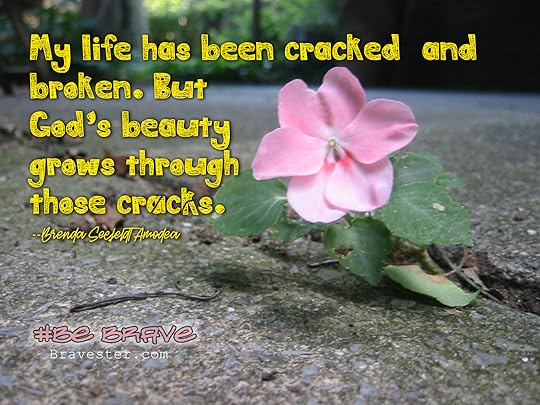
I see a flower growing through a crack.
I see my beautiful grandbabies faces—and nothing createsmore gratitude in me than my growing grandbabies.
I eat some very good food—often provided for by my people.
I hear these words from this Psalm whispered inside of brokenme and I know they are true.
And I have hope.
I have learned hope.
Hope is not a feeling. Nor is it a wish or a prayer.
I have learned that hope is a function of struggle. Andsheesh, am I struggling.
I have learned that hope is Hang On Pain Ends.
This horrible horrible time of my life will come to an end.
I have learned this.
My heart will recover. Bruised. Scarred.
But that scar is actually proof of a healing.I know that I am healed as I am forever changed.
There is a before in my life.
And now there is this after.
Things are forever changed.
I am forever changed.
Somedays I wish for the simpler, more naïve me.
But there are more days that I see God closer and lower tome than God has ever been.And I am grateful for this view of a bigger and lower God.
The post My Bigger and Lower God appeared first on Bravester.


