
Brenda Seefeldt Amodea's Blog, page 15
May 26, 2022
Lead Your Brain Through the Chaos and the Confusion
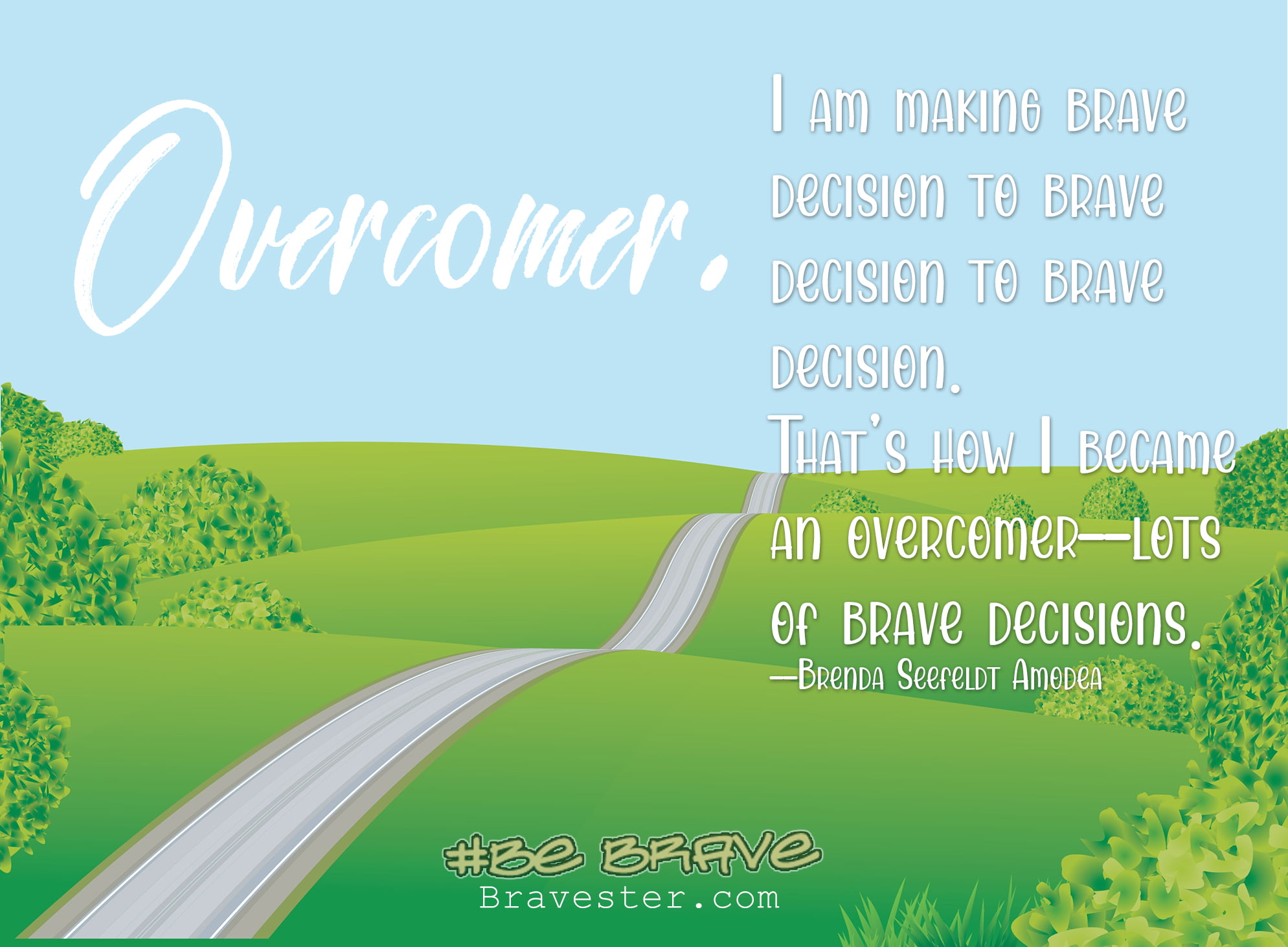
To live Bravester is to make brave decision to brave decision to brave decision. We can do this because we’ve been given the God-given authority to lead our brains.
You do not need to follow your brain and believe what it is regurgitating is real. When you recognize your God-given authority over your brain, you can lead your brain.
Do you want to learn more about why we believe what our brains regurgitate? Read here.
Do you want to learn more about the small, deliberate tweaks (brave decision to brave decision to brave decision) that change our brain because we were knit in our mother’s womb with a brain made to be changed? Read here.
In every relationship there are occasional (or not so occasional) gaps or lapses. There are gaps between promises and performance. There are gaps between expected behavior and actual behavior. The problem comes in what do we do with those gaps. Hence the chaos and the confusion.
Our brains innately fill those gaps with a story—any story whether true or not. We can’t help ourselves. We have a primal need to make sense of the gap and how the promise didn’t mean anything or how what was expected never happened.
When we fill those gaps we have two directions we lean in: trust or suspicion. You either believe the best or suspect the worst. It always goes to each extreme, never something reasonable in the middle.
When we make these small, deliberate tweaks to our thinking, when we start leading our brains, when we trust God more than we trust what our brain is regurgitating, we start making decisions based on trust. (Doesn’t that sound brave?)This is not a guarantee that you will not be hurt by someone as you start trusting more. That person’s failure to be honorable to you isn’t a definer of who you are. That person’s failure is that person’s failure. You are not defined by that negative relationship. You are defined by your heart of trust. (Doesn’t that sound like a beautiful person to know?)
How can we help our brains lean more towards trust? By leading these big, beautiful, plastic brains God gave us.
Our brains are designed by God to protect us. Part of our brain is this amygdala which keeps us alive from the dangerous world and the stupid things we do.
For example, when we are on a hike and a boulder is falling off a cliff and rolling in our direction. The amygdala is activated to help you make a quick decision before the rest of your brain can even think. The amygdala directs the whole body: hormones adrenaline and cortisol are released into the blood; adrenaline causes the air passages in the body to dilate. This allows the body to supply more oxygen than usual to the muscles so you can do something amazing to save yourself. Again, all before your brain can even think.
The amygdala also helps to store memories of events and emotions so that you may be able to recognize similar events in the future. This means the amygdala stores trauma. It will remember that path you went hiking on and your body will automatically “be on alert” for falling boulders.
But this doesn’t mean you are stuck in your trauma. Our big, beautiful, plastic brain is capable of healing. God made our brains to be able to be rewired for change.
Learned responses to trauma are flight, fight, freeze or fawn. All of these leave your body in a heightened tense position. This may be something you know already…that tension. You feel it in your body.
As you are feeling this in your body right now, I’m going to say something crazy true. Confusion is a gift from God.
We are afraid of confusion because it is uncomfortable. Or because we don’t want to look dumb. Or because we are afraid it will lead to doubt. Or because we experience negative emotions such as shame, frustration, and anger. These negative emotions lead to irrational behavior like yelling at someone else, mocking someone, or offloading with bad humor. You know your bad triggered response. Who wants to say with me, “me, too”?
Yet confusion is the first step to learning something new. Confusion is an opportunity to start believing something useful. Confusion motivates, leads to deep learning, and triggers problem solving. This sounds like leading your brain material. This sounds like leading your brain out of trauma responses which cripple you. It starts with all that confusion you feel.
Confusion is a whole-body response. Have you ever watched a child learn how to play the piano? The child uses the whole upper body—wrists, arms, shoulders—to play each note. The facial muscles tighten. The whole body reads confusion but is learning something new.
With practice, the child develops “piano grace” and relaxes when he/she plays. This is because the child goes from using a massive number of neurons to an appropriate few neurons which are well matched to the task.
Confusion started with a lot, but grew to a few.
The first place we experience emotions is in our bodies, it is physiological. When you are driving a car and an 18-year old swerves into your lane, what is happening in your body? Can you name all of the senses which are suddenly on high alert?
In this confusion of a car swerving into your lane, the amygdala is doing what it can to protect you. What you do next is how you start leading your brain.
The brain wants a story for what just happened. There is that gap we need to make sense of. When you give the brain a story, your brain gets a chemical reward to give you a sense of calm—whether the story is true or not. The brain wants a story that minimizes variables, minimizes uncertainties, and gives you a good guy and a bad guy. Whatever to eliminate that gap. We’d all be dead if the amygdala took the time to work through the nuances.
So you make up a story in that rush of emotions of confusion. Is the story that the driver is stupid? Or that driver is only 18? Or that driver wants to destroy you? Remember for the brain to be rewarded and move you to safety, the story doesn’t have to be true.
What stories have you told yourself to fill in that gap? What stories have you used to excuse the bad behavior in a relationship? Especially those relationships that keep you in confusion?What stories have you made up about God to explain the gap in your expectations of God? Are they true stories or false stories?Psychiatrist Dr. Curt Thompson who loves to teach about neuroplasticity and our faith says,
“It takes less than three seconds for the neuro-affective effects of shame to register in the mind, changing the contours of our felt sensations and perceptions. It takes anywhere from thirty to ninety seconds for us to fully receive the emotional “load” of a compliment, of a bid for attachment, of a gift of goodness or beauty directed our way. For goodness and beauty to arise, time for dwelling is necessary. — The Soul of Desire, pg 149
That’s 3 seconds to register something hurtful. That’s 30 to 90 seconds to register something good. Ouch. This now makes sense, right?
Oh the big, beautiful, plastic brain. Lead your brain. Breathe. Wait.
Our beautiful brains have trees in them.
“A healthy brain cell indeed looks like a tree with a full canopy. There’s a trunk, which is the cell’s nucleus; there’s a root system, embodied in a single axon; and there are the branches, called dendrites. Neurons in your brain pass signals from one to another like they’re playing an elaborate, lightning-quick game of telephone, using axons as the transmitters and dendrites as the receivers. Those signals originate in the brain and are passed throughout the body, culminating in simple actions, such as wiggling a toe, to more complex instructions, such as following through on a thought. Just as you can judge a healthy tree by its canopy, so too can scientists judge a healthy neuron by its dendritic branches.” https://www.sciencedaily.com/releases...
Breathing. Waiting, And having positive thoughts help lead our brains to lean towards trust instead of suspicion.
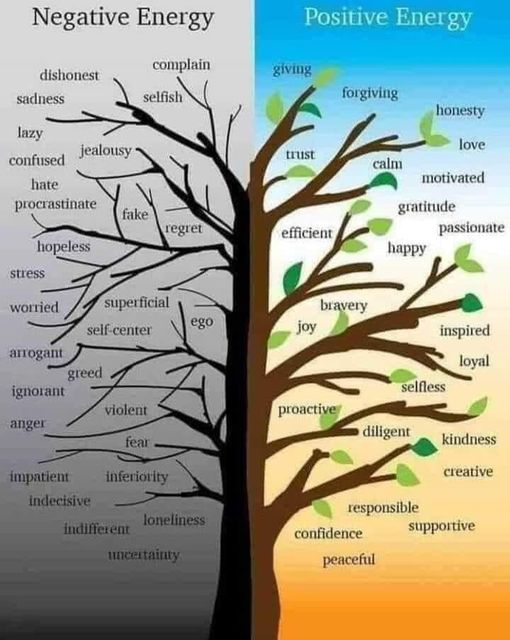
A meme like this could feel like some do-gooder positive thinking meme. Yet this is how God made our brain. These are the small, deliberate tweaks we can do to bring change into our lives. This change in our lives is the way of Jesus.
You are more than what your brain believes. You are a soul designed by God. Part of that design is the neuroplasticity of your brain which can change your habits, your reactions, and how you think. You are growing better trees.
This is living in tree time–where growth is always happening. It is those small, deliberate tweaks as I choose to give God more credibility than everyone else.
The post Lead Your Brain Through the Chaos and the Confusion appeared first on Bravester.


May 16, 2022
Memes to Share About the Brave People in My Life
Are you one of those brave friends too?
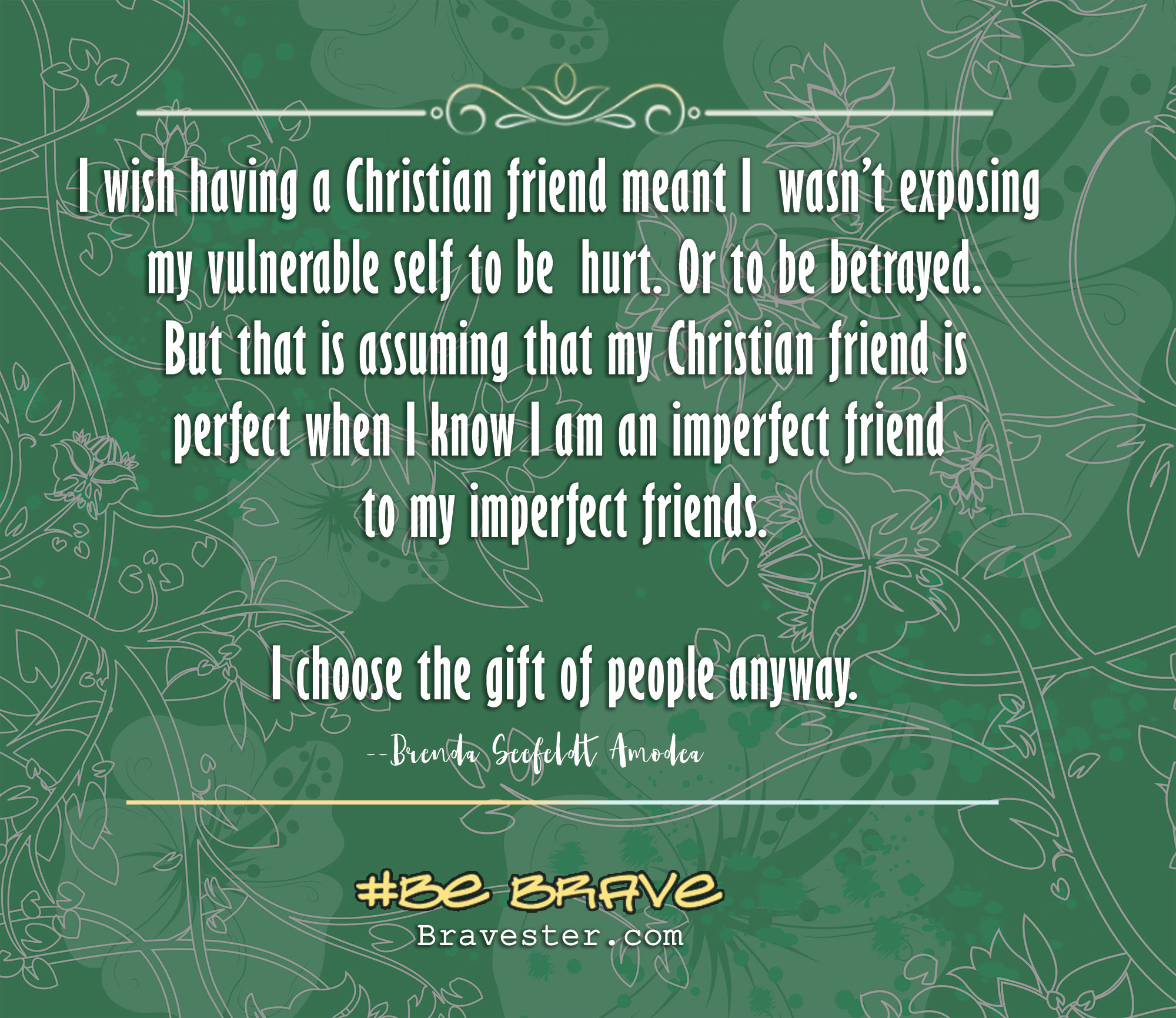
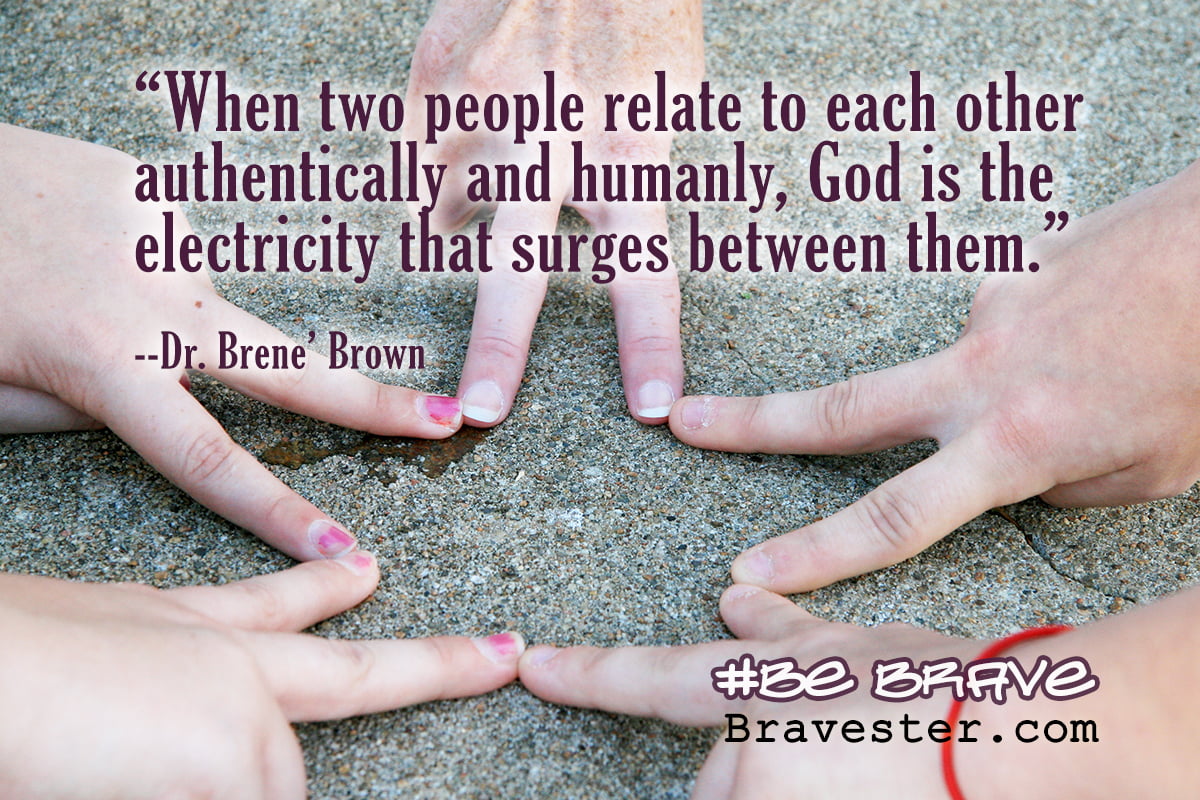
I need to be in a vulnerable relationship with somebody. I need encouragement. I need cheering on. I need to be told that I made the right choice. But here���s the thing. Not just anyone can tell me that. For it to sink into my calloused heart it has to come from people who know that calloused heart. This knowing comes from my feeling safe enough to be vulnerable.
These vulnerable relationships for me often include more than one person. I trust certain people which then allows me to lead the rest of my life with a bigger and braver faith.��
Friendships are an important part of our spiritual formation.





The post Memes to Share About the Brave People in My Life appeared first on Bravester.
May 4, 2022
Please Remember Me
A random church renovation led to a story that captured the heartstrings of many people.
Holy Trinity Church in Sunderland, England, was undergoing a renovation. A church has not met in that space since 1988. Stuffed down the side of one of the pews was a note written 125 years ago. It was written by a 13-year old choir boy who was orphaned. William Elliott on August 11, 1897, wrote on the back of an order of service this note as a request to not be forgotten.
I love teen boys. They simply want to be seen. We all want to be seen–and hopefully remembered.The note said:
Dear friend, whoever finds this paper, think of William Elliott who had two months and two weeks and four days on the 11 of August 1897. Whoever you are that finds this paper don’t tear it up or throw it away… keep it in remembrance of me, W. Elliott…I was the leading boy of this choir… I love you if you love me.
 https://www.bbc.com/news/uk-england-t...
This was stuffed down the side of one of the pews because here in this church this orphaned boy wanted to be seen and remembered by someone. I believe that here in this church he was seen.
���I love you if you love me.��� This is the cry of a wounded boy���s heart. This is the cry of everyone���s wounded heart.
This pulls at my youth-pastor-heart. This pulled at many people���s hearts because this story went viral.
William came to live in Sunderland Orphanage Asylum after his father was washed overboard in 1887 and his mother could no longer take care of him. He lived at the orphanage from 1892 to October 29, 1897���which was his 14th birthday. This birthday was just weeks after he wrote his letter, stuffed it, hoping that someone would remember him because he knew he would be gone.
Of course, people started researching now to see what became of William Elliott. This is not my research. I���m one of the hooked ones who have been following this story.
Two years after William���s release from the orphanage, he followed his sister to immigrate to New York when he was 19. He soon enlisted in the US Navy. This led to a 42-year career, serving in both World Wars.
William had two children, eight grandchildren, and was married three times. His first two wives left him a widower. At the age of 84, William died in a San Diego rest home in 1968 and was buried at Arlington National Cemetery in Washington DC. In Arlington National Cemetery he will never be forgotten. Source.
Did William���s innate desire to become someone lead to his 48-year honored Navy career? Is this what drew him to the Navy? So many questions we could have asked if this note was found a hundred years ago or even 60 years ago.
It is hard growing up as a teen boy. Not that I would know but I���ve seen thousands of teen boys in four decades as a youth pastor. Their antics, their silliness, their respectfulness (I have received this sooooo much), and their farts are all an effort to be seen hoping that someone will say to them, ���You are going to be a good man.���
I want to be that person. I particularly want to tell parents to be that person.Parents, tell them. Tell them that adolescent development and all the extras that come with it are temporary. Tell them they are not stupid, just developing. Give them a good foundation. Tell them that they are good and will grow into good men. Bring them around a circle of good men so they can observe all the details of how to be a good man.
I wrote these expectations I have for teen boys. Parents, use this.
I���m sure this is why I ended up raising four boys, who are now all over the age of 40. I���m still telling them they are good men.
I���m sure this is why I���m in contact with many graduated teens who are now men. They are either still seeking this from me or keep reaching out to show me that they are good men. They are good men. This is why I love being a youth pastor.
May you–and may our churches–see the wonder of teen boys and remember them.
May our teen boys know this so much they won’t have to write a note, hide it in a pew, and hope someone remembers them.
The post Please Remember Me appeared first on Bravester.
April 26, 2022
About the Leading Cause of Teen Deaths
The leading cause of death for teens is now firearms.
It used to be car accidents.
I have lots of thoughts about this.
I���ve been a youth pastor for 40 years. Back in the 1980s suicide was a huge concern. At that point suicide was the #3 cause of death of teens. Us young and passionate youth pastors, my many peers, were teaching every way we could so that suicide wouldn���t become #2. I was so well-versed in this I was even the chair of our county suicide prevention coalition. Suicide never did reach #2.
In this new data suicide still is not #2. Or #1. With all of the new data on the rise of anxiety in teens you would think so. This is what I assumed when I read this new data. You would think with the mention of firearms that suicide would be a part of that.
Thankfully no. As if this is some sort of good news. These high numbers of firearm deaths is actual gun violence. In fact in 2019 alone there was a 29 percent increase in gun violence deaths for those under age 19. Gun homicides across the US in all age groups rose 33 percent in 2020. Those are high percentages.
Gun violence deaths is larger than car accidents (now #2), drug overdoses and poisoning (now #3), and cancer. Of course, this is larger than suicide. This is homicides, not suicides. I have lots of thoughts about this.
For 39 of my 40 years of being a youth pastor, car crashes was #1. These numbers have dropped dramatically mostly due to better vehicle safety. Teens are still teen drivers (they still have that growing teen brain) but cars are better built to provide safety for all, especially teen drivers.
Some experts are saying that the rise in handgun ownership is to blame. Covid had a direct effect in the increase of handgun purchases. We are aware of all the high profile shootings that happen on school campuses and inside malls. Those numbers pale in comparison to the numbers of deaths due to interpersonal violence. Which means that gun-related injuries is also an increasing problem.
There is an even sadder note (this is personal to me) about the increase of gun homicides from all age groups. Black Americans make up 14 percent of our population and yet they make up nearly half of all homicide victims. 2020 is the first year that more children and teens were killed by guns than in car accidents. But gun violence has been the number one cause of death among Black teenage boys over 15 for the last decade. This grieves me so. ��
When my boys were teens in the 1990s I made the decision that I would get between a bullet and them, even at the cost of my life. Thankfully this never happened. But I knew about the stolen guns they were handling and I knew about the beefs between crews that were going on and I knew that it would just take a moment for something to escalate to this point. We did lose my son���s cousin, a young man I knew well and discipled, to gun violence because his roommate was in a beef. The conflict escalated to a warning gun shot into their rented home. It just so happened that the bullet hit Maurice in the forehead while he was on the couch. Another good young black man gone.
These new numbers hurt my broken heart. The lives of young black men are a passion of my heart.
I���m mentoring an incarcerated man (introduced to me from one of my sons in prison) who aspires to be a children���s book author. He has written a series for children ages 6 to 12 called TaQuan Makes a Choice. The first book in that series is about TaQuan being asked to hold a real gun from an older teen and the choice TaQuan has to make. This does not sound like a children���s book about bunnies in the sun. How would you illustrate a book like this? But you can see the importance of the message, right?
We are in year 2 of trying to find a publisher. I have found an agent who has pitched this book series to 14 different publishers. Four have said no. We are still waiting and praying to hear from the other nine. Will one of these have the foresight to try this series? Because you can see why this series is needed.
(You can follow this story and get to know Latif at his webpage, Stay Focused Stay Free.)
The rise of gun ownership is only a small part of this problem. The dehumanization of the other is a part of this problem. ���Powering over��� thus the need to carry a gun is a part of this problem. The ingenuity of ���ghost guns��� is a part of this problem. Hopelessness is a part of this problem.
My broken-hearted bravery leads me to discern that the way of Jesus is the solution. The way of Jesus is hope for the future, as well as hope for today. Hope leads to better decision making today. The way of Jesus is compassion on the other. The way of Jesus is identity not in carrying a gun but in who God is growing you to be, which is living in hope of making that Plan B.
There is so much to teach. There is so much to pray for. There is so much to walk through with���how hope is best caught.
Parents, you have your very important role. I will continue to do mine. May lots of others join us.
John 10:10, a favorite verse of mine since the 1980s, teaches, ���The thief���s purpose is to steal and kill and destroy. My purpose is to give them a rich and satisfying life.” I���ve hated teen death for a long time because Satan has taken out worldchangers before they could become their God-given purpose. My heart is broken yet again but I will continue on yet again.
For the love of teens���for the love of our young black men���
Brenda!
Sources: NBC News, The Guardian
The post About the Leading Cause of Teen Deaths appeared first on Bravester.
April 22, 2022
Pain is Always a 10—Until it Isn’t
Have you seen in doctors’ offices a poster to help the patient identify the pain level? This is something you can use to help your teen learn perspective about those big emotions.
Big emotions is a normal part of adolescent development. It’s a part brain growth. A part of adolescent development is feeling these emotions for the first time and creating those neural pathways for the future. This is feeling all of the emotions.
For a teen who is experiencing so many new and often big emotions, everything registers as a 10. But that is not very helpful to you as you try to figure out how to respond. What is really a 10 and needs my immediate attention and wisdom and what is less than 10 and will pass in 5 minutes? This is not so easy to discern. What you may think is a 5-minute outburst could actually be a window into a deeper problem.
Remember that perspective is not learned “in the moment.” In that painful moment, it will always be a 10. Allow that 10 to be true. Comfort your teen as if this adolescent problem is a 10—every time.
This will mean you will have to interrupt what you are doing. This means you will have to give your teen time—time you probably don’t have. This means you will have to feel your teen’s pain—even if to you it feels silly. This means you will have to watch that you don’t roll your eyes or say something trite. This means you don’t say, “When I was your age…”
This is a vulnerable moment and you have to be in it.
I have a parent in my church who calls this “interruptive parenting.” She’s willing to be interrupted by Holy Spirit-led moments to let her teens know she sees them in their pain, which for her is so often nonverbalized.
After that moment has passed, bring out the pain scale you have stored in just that right location. Ask what number that life crisis deserves now. This is such a teachable moment!
Your teen will begin to learn about perspective.
Your teen will learn that pain does end. And that pain is not the end of everything.
You can introduce your teen to where God really is when life hurts so much. This is when you can share what you have learned. This is when you can share how you’ve come to trust God through it all. (Such a powerful truth to pass on.)
You can teach your teen about bravery. Which I define bravery as your decisions to actually trust God. That is full of vulnerability because with God there is not the guarantee of the controlled outcome you want.
You can teach about “holy tension” which is the discomfort of being stuck in between but knowing that if you can make a brave vulnerable decision something holy is going to happen. Something holy can happen out of this pain that was a 10.
You can teach your teen to not be afraid of his/her pain. How pain is always the beginning to something. A broken heart is always a beginning.
You can teach that God has hard-wired us for pain. Our brains were created for growth and change.
It is in these moments that you can teach your teen about the newness of these emotions and the Larger Story God.
All of this because you decided to not be afraid of your teen’s pain, to interrupt your life, and to pull out this pain chart to have this discussion.
We are cheering for you, parent.
The post Pain is Always a 10—Until it Isn’t appeared first on Bravester.
Pain is Always a 10���Until it Isn���t
Have you seen in doctors��� offices a poster to help the patient identify the pain level? This is something you can use to help your teen learn perspective about those big emotions.
Big emotions is a normal part of adolescent development. It���s a part brain growth. A part of adolescent development is feeling these emotions for the first time and creating those neural pathways for the future. This is feeling all of the emotions.
For a teen who is experiencing so many new and often big emotions, everything registers as a 10. But that is not very helpful to you as you try to figure out how to respond. What is really a 10 and needs my immediate attention and wisdom and what is less than 10 and will pass in 5 minutes? This is not so easy to discern. What you may think is a 5-minute outburst could actually be a window into a deeper problem.
Remember that perspective is not learned ���in the moment.��� In that painful moment, it will always be a 10. Allow that 10 to be true. Comfort your teen as if this adolescent problem is a 10���every time.
This will mean you will have to interrupt what you are doing. This means you will have to give your teen time���time you probably don���t have. This means you will have to feel your teen���s pain���even if to you it feels silly. This means you will have to watch that you don���t roll your eyes or say something trite. This means you don���t say, ���When I was your age������
This is a vulnerable moment and you have to be in it.
I have a parent in my church who calls this ���interruptive parenting.��� She���s willing to be interrupted by Holy Spirit-led moments to let her teens know she sees them in their pain, which for her is so often nonverbalized.
After that moment has passed, bring out the pain scale you have stored in just that right location. Ask what number that life crisis deserves now. This is such a teachable moment!
Your teen will begin to learn about perspective.
Your teen will learn that pain does end. And that pain is not the end of everything.
You can introduce your teen to where God really is when life hurts so much. This is when you can share what you have learned. This is when you can share how you���ve come to trust God through it all. (Such a powerful truth to pass on.)
You can teach your teen about bravery. Which I define bravery as your decisions to actually trust God. That is full of vulnerability because with God there is not the guarantee of the controlled outcome you want.
You can teach about ���holy tension��� which is the discomfort of being stuck in between but knowing that if you can make a brave vulnerable decision something holy is going to happen. Something holy can happen out of this pain that was a 10.
You can teach your teen to not be afraid of his/her pain. How pain is always the beginning to something. A broken heart is always a beginning.
You can teach that God has hard-wired us for pain. Our brains were created for growth and change.
It is in these moments that you can teach your teen about the newness of these emotions and the Larger Story God.
All of this because you decided to not be afraid of your teen���s pain, to interrupt your life, and to pull out this pain chart to have this discussion.
We are cheering for you, parent.
The post Pain is Always a 10���Until it Isn���t appeared first on Bravester.
April 13, 2022
Dating You “As Is”
When you are meeting someone for that coffee date, you want to put some effort into hygiene and a cute outfit. Because you are cute. You will probably dress cuter than you would for when you meet with your friends for coffee.
Your friends get you “as is.” This new intriguing person gets a more spiffed up you but he/she is still dating you. Your whole you—even if only the good parts are seen on that first coffee date, and probably for the next several dates.
Getting to know this intriguing person is the fun part of dating. The assumption is you are getting to know the whole person—not just the good parts. Over time you also learn about the broken parts, the healed parts, and the parts which are in the process of healing.
Time reveals who this intriguing person is. Time may reveal that this growing relationship is not a match. This is one of the purposes of dating. This means that not everyone you date will the “the one.” Until you do find your love for a lifetime.
This means eventually your not-so good parts are going to be seen by someone you are dating. At least I hope this happens eventually. Because there will be major problems that will likely end the relationship if you keep only presenting your good parts. Major problems like, “If you lied to me about that, what else have you lied about” kinds of problems.
If you are only presenting your good parts in your dating relationships, why are you doing this? This is an identity question. Which also means you probably don’t want to do the hard work to answer it truthfully.
If you are only giving your good parts, I’m going to guess you feel like you are not enough. This matters so much in dating because you will then look for the “ideal” or perfect person to make up for what you feel is lacking in yourself.
This is not a good match for you. This is why you keep attracting the wrong type.
So how do you date “as is” when “as is” feels like you are setting yourself up for rejection every time?First of all, every relationship you try will come to an end until you do find the one. This one is just common sense—which we don’t often think about. Maybe because we dread the emotional toll of the end of relationships so much.
Remember this. A failed date or a failed relationship is not a definer of who you are. There are so many variables as to why things didn’t work out.
How about trying to be “as is” in a group of safe people first? This is your team. This could be a small group you try at your church—or another church. (Search and find the one you want!) This could be your intentional friend group who all agree together to see into the vulnerable stuff of each others’ lives.
These people will help you safely grow and to become better spiritually formed. Exposure and influence to such people grow you in such areas as:
Gain awareness of what you like and don’t likeDefine who you are and who you are notDevelop your “no” muscleStop blaming othersStop playing the victimPerseveranceCompassion for othersBecome proactive, not reactiveSet limits and boundariesChoose and enforce your valuesAccept others’ choices because you can’t control themRealize your separateness and independence from othersWhat is honestyWhat is trustworthyHow to be clearBetter listening skillsChallenge your distorted thinkingChallenge you to a larger view of GodThis takes time. This takes your vulnerability. This is hard work. This is the beginning of finding your boundaries.
Read also People Are a Part of Spiritual Practice.
If you do choose to join a small group (this may be your brave decision because small groups contain people), you are not allowed to dominate the center of the small group so you can hurry up this process. You must participate as part of the group while purposely practicing the things on this list. This is why it takes time. The small group likely does not exist to help you grow. Though this small group will be the catalyst to help you grow.
Here is the truth I want you to remember as you put in the hard work and the time. I see your worthiness and you are more worthy than the losers you’ve been attracting. I believe you are capable of attracting more than one right person. And I can’t wait to watch you be this whole person who is dating whole people and the one who will be a good match with which will lead to a love for a lifetime. I see this for you. Because you are trusting yourself to be vulnerable to me (by reading, though we can get a Zoom coffee sometime) and the people you are choosing. We are going to find joy in watching you. This will be your diary of a relationship.
The post Dating You “As Is” appeared first on Bravester.
Dating You ���As Is���
When you are meeting someone for that coffee date, you want to put some effort into hygiene and a cute outfit. Because you are cute. You will probably dress cuter than you would for when you meet with your friends for coffee.
Your friends get you ���as is.��� This new intriguing person gets a more spiffed up you but he/she is still dating you. Your whole you���even if only the good parts are seen on that first coffee date, and probably for the next several dates.
Getting to know this intriguing person is the fun part of dating. The assumption is you are getting to know the whole person���not just the good parts. Over time you also learn about the broken parts, the healed parts, and the parts which are in the process of healing.
Time reveals who this intriguing person is. Time may reveal that this growing relationship is not a match. This is one of the purposes of dating. This means that not everyone you date will the ���the one.��� Until you do find your love for a lifetime.
This means eventually your not-so good parts are going to be seen by someone you are dating. At least I hope this happens eventually. Because there will be major problems that will likely end the relationship if you keep only presenting your good parts. Major problems like, ���If you lied to me about that, what else have you lied about��� kinds of problems.
If you are only presenting your good parts in your dating relationships, why are you doing this? This is an identity question. Which also means you probably don���t want to do the hard work to answer it truthfully.
If you are only giving your good parts, I���m going to guess you feel like you are not enough. This matters so much in dating because you will then look for the ���ideal��� or perfect person to make up for what you feel is lacking in yourself.
This is not a good match for you. This is why you keep attracting the wrong type.
So how do you date ���as is��� when ���as is��� feels like you are setting yourself up for rejection every time?First of all, every relationship you try will come to an end until you do find the one. This one is just common sense���which we don���t often think about. Maybe because we dread the emotional toll of the end of relationships so much.
Remember this. A failed date or a failed relationship is not a definer of who you are. There are so many variables as to why things didn���t work out.
How about trying to be ���as is��� in a group of safe people first? This is your team. This could be a small group you try at your church���or another church. (Search and find the one you want!) This could be your intentional friend group who all agree together to see into the vulnerable stuff of each others��� lives.
These people will help you safely grow and to become better spiritually formed. Exposure and influence to such people grow you in such areas as:
Gain awareness of what you like and don���t likeDefine who you are and who you are notDevelop your ���no��� muscleStop blaming othersStop playing the victimPerseveranceCompassion for othersBecome proactive, not reactiveSet limits and boundariesChoose and enforce your valuesAccept others��� choices because you can���t control themRealize your separateness and independence from othersWhat is honestyWhat is trustworthyHow to be clearBetter listening skillsChallenge your distorted thinkingChallenge you to a larger view of GodThis takes time. This takes your vulnerability. This is hard work. This is the beginning of finding your boundaries.
Read also People Are a Part of Spiritual Practice.
If you do choose to join a small group (this may be your brave decision because small groups contain people), you are not allowed to dominate the center of the small group so you can hurry up this process. You must participate as part of the group while purposely practicing the things on this list. This is why it takes time. The small group likely does not exist to help you grow. Though this small group will be the catalyst to help you grow.
Here is the truth I want you to remember as you put in the hard work and the time. I see your worthiness and you are more worthy than the losers you���ve been attracting. I believe you are capable of attracting more than one right person. And I can���t wait to watch you be this whole person who is dating whole people and the one who will be a good match with which will lead to a love for a lifetime. I see this for you. Because you are trusting yourself to be vulnerable to me (by reading, though we can get a Zoom coffee sometime) and the people you are choosing. We are going to find joy in watching you. This will be your diary of a relationship.
The post Dating You ���As Is��� appeared first on Bravester.
April 12, 2022
Why Teens Must Do Hard Things–The Brain
Written by Eden Detwiler, age 14.
100 billion. That���s a big number. As teenagers, we rarely think of a number that huge. Trust me, a million is a lot for my mind to grasp.
Thankfully, we have a God who loves big numbers.
One fact I learned recently is that we have 100 billion neurons in our brain and 100-1,000 trillion synapses.
While this might seem like some fancy fact you learned in science class, this statement is actually proof of why teenagers must do hard things.
The Creator���s DesignGod has amazingly created your brain. Hands down, it is one of the most extraordinary and astounding things to learn about. It is even more mind-blowing that He���s shared this information with us!
The psalmist overflowed with praise for God���s design in Psalm 139:13, ���For You formed my inward parts, You knitted me together in my mother���s womb. I praise You, for I am fearfully and wonderfully made.���
The psalmist understood that God made you fearfully and wonderfully���and that includes your brain.
When we are teenagers, our brain is developing into our adult brain more than at any other time in life. Our brain will always be changing but the teen years are the most formative! Everything we do makes a connection in our brain called synapses. Things we do all the time, like reading and writing, produce synapses that are really strong! Other connections, for tasks you don���t do that often, are weak.
God designed your brain to form all these billions and trillions of connections for a purpose���that you glorify God and love Him with all your mind (Matthew 22:37).
One of my favorite verses is��Romans 12:2��which says, ���Do not be conformed to this world, but be transformed by the renewal of your mind, that by testing you may discern what is the will of God, what is good and acceptable and perfect.��� And yet, I didn���t know how literal this is!
As teenagers, we���re given the responsibility to shape our brains for our adulthood. We have the opportunity to ���renew our minds��� by saturating ourselves with God���s truth. We can make it our goal to use His Word to divide the truth from the lies. We can either maximize our time as teenagers by forming godly mind-connections now, or we can work hard later to weed out the lies we let ourselves believe.
Imagine your brain as a garden. You are planting seeds and pulling weeds for your future adult brain. Trust me, the good seeds you plant will produce a thousand fold. But if you allow the weeds to grow, they will dominate your garden overtime. Talk to your grandparents and parents. They will tell you it���s harder to learn and remember the older you get. Take advantage of how malleable your brain is now! You don���t get this time back! It���s a glorious, God-given time.
The Brain of CultureWe���re always being influenced. Perhaps one of the greatest influences for teens today is our culture. How does culture influence us? Well, one way is through what we watch, what we read, and what we see. It���s all influencing us, forming synapses, even if we���re not conscious of it. This is such a great responsibility! No wonder it says in 1 Timothy 4:12, ���Let no one despise you for your youth, but set the believers an example in speech, in conduct, in love, in faith, in purity.���
For example, a teen might play video games all the time. They might eat, sleep, and dream video games. Do you know what this teenager���s adult brain will be like? That adult brain is wired for playing video games. Now I have nothing against video games. They can be fun, but we must be mindful of what our attention is on most of the time.
This could be said for anything��� your friends, your job, your hobbies. It has been said, ���what you behold, is what you become like���. This should be a scary thought for those of us who spend more time thinking about worldly things than God���s Kingdom!
Now, God, in His grace and mercy, can redeem and change the brains and hearts of people who have formed strong ungodly mind-connections. However, we should still heed the warning God gives us in 1 John 1: 15, ���Do not love the world or the things in the world.���
Our God knows that what���s best for us is Himself, not the world. He gives us this command and the responsibility to steward our minds and time well so that we are shaped into reflections of Christ.
Developing a God-Glorifying BrainThe goal of the teenage brain should be to become more like the mind of Christ Jesus. So, how do we go about forming our brain to glorify and honor God? How do we form strong godly synapses? The answer is simple.
1.We grow in knowledge of God: We get to know God through studying His Word, spending time in prayer, fellowshipping with Christian friends and mentors, and connecting with the Church.
2.We grow in love for God: When we spend time beholding God, growing in knowledge of Him, we are forming our brains to love Him and to love others. We are conforming to Jesus��� image and working with the Holy Spirit toward sanctification. What joy! We also know that those who love God, follow His commandments (John 14:21). Our love for Christ spurs us to action, which spurs godly mind-connections.
God made your brain for a purpose. He fashioned every part of you to glorify Him. Let���s set out to become the God-glorifying, people-serving, hard-working people He intended us to be.
So, the next time you think of a really big number or marvel at your brain, remember that you���ve been given a responsibility. Praise God for wonderfully designing the teenage brain!
Read more about this God-given authority to lead our brains. Here and here.
Eden Detwiler is a fourteen-year-old homeschooler from lands far far far away. Actually, she is now residing in KY, U.S.A. She adores starbursts, hot cups of tea, and sitting in warm chairs cuddled up with good 800 pages long novels. Aspirations of hers would be pursuing a career in being a missionary and an author. Her goal is to love God, love others, and be all in for Christ���s kingdom. If you want to support her check out��her blog! (Endorsed by Bravester.)
Previously published on the Rebelution.
The post Why Teens Must Do Hard Things–The Brain appeared first on Bravester.
April 11, 2022
Teens Learn Hope From Parents
This nugget from Dr. Brene��� Brown���s book, Atlas of the Heart, stopped me.
“It���s also important to know that hope is learned. According to Snyder, children most often learn the habit of hope from their parents. To learn hopefulness, children need relationships that are characterized by boundaries, consistency, and support. Children with high levels of hopefulness have experience with adversity. They���ve been given the opportunity to struggle, and in doing that they learn how to believe in themselves and their abilities.
“As someone who struggles watching my kids struggle, I can tell you���this is hard. I remind myself of the saying, ���Prepare the child for the path, not the path for the child.��� One thing that bolsters my commitment to letting my kids figure out on their own things that are both developmentally appropriate and possible is thinking about the alternatives: hopelessness and despair. ���Dr. Brene’ Brown, Atlas of the Heart, p. 101
Snyder is in reference to C. R. Snyder and his book, Handbook of Hope. I���m sure I want to read more about this but the book costs $120. So���
I write a lot about hope because it is a part of bravery. Hope isn���t an emotion. Hope isn���t optimism. Hope is a habit. Hope is a way of thinking that requires brave decisions. John Parsi, the executive director of the Hope Center (I���ll call him an expert) says,
���Optimistic people see the glass as half full, but hopeful people ask how they can fill the glass full.���
–John Parsi, The Hope Center
These are the brave decisions. These are the tenacious decisions to make that Plan B because you believe you are worthy of something good happening to you.
This is something cannot be offloaded to God. This is you having to enter the emotional tunnel and travel through the whole tunnel. This is hope having bloody fists.
So, of course, I took notice when one of the voices in my head said that parents are the ones to teach that hope is a habit. And then she gifts us with the how to parent and teach hope. These are all Bravester.
BoundariesEvery child needs to learn boundaries or ���what is okay and what is not okay.��� This is Parenting 101. The reason behind this is the research that discovered boundaried people are the most compassionate people. You want to raise a child who knows how to show compassion for the world. This builds hope. Your child will not be afraid to make that brave decision to show compassion because your child will know that the failure of that compassion does not change who they are. They are free to hope and believe in the others.
ConsistencyAnother Parenting 101 lesson but to stay consistent is so hard. This is your brave decision to brave decision to brave decision. Because there are days you just want to slack off and take the easy way.
This is the gift you give your teen when you can be tenacious in consistency just this bit longer: Your teen will learn how to predict life. When your teen can���t figure out how to gauge you, your teen is then learning how to live with anxiety and chaos in what is supposed to be the safe place.
The world is scary and unpredictable enough. Your teen needs to have the home be the safe place to navigate boundaries, adversity and failures and they will learn this from gauging you.
SupportThere is rah-rah support which means basically I am saying the words but I���m not showing the words to be true in my consistency. Then there is the support that allows for adversity and failure, as well as the successes, and then feels into the pain of failure and walks your teen all the way through that emotional tunnel.
You don���t forget someone who carries your pain. You feel even more loyal to that person. This can be you.
When you feel supported like this, one cannot help but be a hopeful person feeling worthy to make that Plan B.
Experience with adversityEncourage your teen to do the hard things. As this one 14-year old teen wrote, this actually helps brain growth. That is reason enough.
With your support you can teach your teen so much about navigating through adversity. It is the first decision after deciding to not quit that begins the life lessons.
To encourage you to help get your teen past that decision to not quit, this is a great example from John Parsi:
���If there���s an accident on the I-10 or construction on the Broadway curve, I have to work around that to get to my destination. I can���t just stop in the middle of the highway and give up. I have to navigate through the traffic using hope theory and ultimately take agency to literally steer my actions.��� Source.
How does that win feel now? Give your teen that feeling. Even as you feel the agony of the process.
Do this before your teen turns 18, when you have a lot more say in your teen���s life.
Opportunity to struggleThere is a lot of discomfort in struggling. Discomfort can teach your teen so much.
Discomfort teaches problem solving and coping skills. You get the privilege of teaching your beloved the right coping skills.
Discomfort teaches grit and the power that grit will have for the rest of his/her life.
Discomfort also teaches the the joy of overcoming. Do you see how this leads to hope?
Failure is a Bravester value. Failure teaches so much, including to not fear failure. We have this great resource for you about failure for teens.
Suffering is a part of your teen finding his/her identity. Which is hopefully an identity of hopefulness.
The alternative to not doing these hard things as parents, as Dr. Brene��� Brown shared, is hopelessness and despair. None of us want this.
Then there is this. This is what I believe in my soul. This is why I���m in my 40th year of working with teenagers as a pastor. Teens who grow with hope will be our worldchangers. They will make the brave decisions. They will love even though that love will lead to heartbreak because this is what worldchangers do. They will figure out how to make that Plan B and love again. This will change our world.

The post Teens Learn Hope From Parents appeared first on Bravester.


