Anndy Lian's Blog, page 14
August 11, 2025
Interview with Anndy Lian- Discovering Singapore By Chance
Anndy Lian
Interview with Anndy Lian- Discovering Singapore By Chance

Tell us about yourself.
I’m Anndy Lian—a Singapore-born investor, author, and advisor at the intersection of technology, finance, and innovation. Over the years, I’ve worked closely with startups, governments, and global organizations on digital transformation, blockchain, and the future of Web3. I’ve served as Chairman of BigONE Exchange and advised on fintech strategies across Asia and beyond.
But beyond titles, I’m someone deeply curious about how technology reshapes lives. I believe complex ideas should be accessible to everyone—not locked behind jargon. That belief led me to write books that simplify the future: from Blockchain Revolution 2030 and NFT: From Zero to Hero, to my latest work, Discovering Singapore By Chance, co-authored with Jenny Zheng.
I’m also a public speaker, media contributor, and educator, passionate about empowering creators, entrepreneurs, and everyday people to understand and shape the digital world. Whether through writing, speaking, or advising, my mission is clear: to bridge the gap between innovation and understanding.
At heart, I’m a storyteller—using words, ideas, and action to make sense of change, one book, one conversation, one breakthrough at a time.
What inspired you to start writing, and how did you get started in the world of storytelling?
I started writing because I was frustrated—frustrated that powerful technologies like blockchain and NFTs were being discussed in ways that only experts seemed to understand. I saw people shutting down, switching off, because the language was too technical, too cold. I knew these innovations could change lives, but only if people could get them.
That sparked my journey into storytelling. I realized I didn’t need to be a journalist or a novelist to make a difference. I just needed to explain things clearly, honestly, and with heart.
It began with short articles and social media posts—breaking down blockchain concepts in simple terms. I wrote for the person who had no background in tech but wanted to learn. My goal wasn’t to impress, but to empower.
The response was immediate. People reached out saying, “Now I finally understand.” That feedback fueled me. I started speaking at events, and eventually, I co-authored my first book, Blockchain Revolution 2030, to reach even more readers.
From there, writing became a natural extension of my work and mission. With NFT: From Zero to Hero, I wanted to guide creators into the digital economy. And with Discovering Singapore By Chance, I used storytelling to explore identity, belonging, and the soul of a nation.
So what inspired me? A simple belief: knowledge should be shared, not hoarded. I got started not with a grand plan, but with a keyboard, a message, and a desire to make the complex feel human. And I haven’t stopped since.
What’s the most fun part of writing—plotting a twist, creating a quirky character, or something else entirely?
For Discovering Singapore By Chance, the most fun part of writing was capturing the small, human moments that reveal the soul of a place.
Since the book is a blend of personal discovery and cultural insight, the joy came not from plotting twists or inventing characters—but from reliving and sharing the quiet, unexpected moments that make Singapore feel alive: the hawker stall banter, the MRT conversations in three languages, the way tradition and innovation coexist on the same street.
It was especially rewarding to write from two perspectives—Jenny’s fresh, outsider curiosity and my own insider reflections—and see how they shaped each other. The “aha” moments weren’t in dramatic turns, but in realizations: how a simple act like queuing for food can reflect national values, or how urban planning quietly shapes daily life.
The most fun, honestly, was turning observations into stories that resonate—where a walk through a neighborhood becomes a window into identity, history, and belonging. In this book, the city itself is the main character, and uncovering its layers, one story at a time, was the greatest joy.
What’s the most unusual or quirky source of inspiration you’ve ever had for a story?
The most unusual source of inspiration for Discovering Singapore By Chance was a 20-cent packet of curry puffs from a hawker stall at 8 a.m.
One morning, I was sitting at a crowded coffee shop in Toa Payoh, eating a curry puff with my co-author Jenny. We were tired, slightly grumpy from the early hour, and just going through our notes. Then, an elderly uncle at the next table—who had been quietly observing us—leaned over and said, “You two write about Singapore? Then you must understand kiasu.”
That one word—kiasu, meaning fear of losing out—sparked a two-hour conversation about competition, survival, national mindset, and how a simple snack could reflect deeper cultural values. We recorded it (with his permission), and that impromptu chat became the foundation of a full chapter on Singapore’s psychology.
It wasn’t a conference, a policy paper, or a tech trend that inspired me—it was a random, warm-hearted local with a strong opinion and a love for curry puffs.
That moment reminded me: the best stories don’t come from grand events. They come from real life—over coffee, in hawker centres, in the middle of an unexpected conversation. For me, that’s where truth, humor, and insight truly meet.
What advice would you give to aspiring authors who are just starting their writing journey?
To aspiring authors just starting out, here’s my advice:
Start small, but start now. You don’t need a book deal, a big platform, or perfect conditions. Write one paragraph today. One page tomorrow. Momentum builds not from inspiration, but from action.
Write what you know—and what you’re curious about. Your unique perspective is your greatest strength. Whether it’s your career, your culture, or a technology you’re passionate about, your voice matters because it’s yours.
Don’t aim for perfect—aim for clear. Your first draft isn’t supposed to be flawless. It’s supposed to exist. Edit later. For now, get the ideas out. The magic happens in rewriting, not in waiting.
Use real life as your source. The best stories come from conversations, failures, observations, and questions. That moment on the MRT, a debate with a friend, a problem you solved—these are all seeds for powerful writing.
Share your work early. Post a short piece online. Read it to a friend. Get feedback. Writing is not just a solitary act—it’s a conversation. Let people respond before you’re “finished.”
Be consistent, not heroic. You don’t need to write 5,000 words in a day. Just 200, five days a week. Small steps lead to finished books.
And finally, finish something. So many writers begin but never complete. Push through doubt, silence your inner critic, and ship it—whether it’s a blog, an ebook, or your first manuscript.
Because the world doesn’t need more unpublished genius.
It needs your voice—clear, honest, and shared.
Write with purpose.
And keep going.
What role does research play in your writing process, especially when you’re exploring new genres or themes?
Research is the backbone of my writing—especially when exploring new technologies or cultural themes. I don’t write from opinion alone; I write from understanding.
When I worked on Blockchain Revolution 2030 or NFT: From Zero to Hero, research meant diving into technical whitepapers, studying real-world use cases, interviewing developers, and even testing platforms myself. I needed to know how things worked under the hood, not just the surface hype.
For Discovering Singapore By Chance, the research was different—it was human-centered. I walked through neighborhoods with fresh eyes, revisited history, spoke to community elders, and listened to expats and locals alike. Jenny and I collected stories, compared perspectives, and questioned assumptions. We didn’t just rely on data—we lived the moments.
Even for my upcoming book on Web4, I’m deep in research: studying AI behavior models, ambient computing trends, digital identity frameworks, and global policy shifts. I read academic papers, attend tech demos, and talk to engineers building the future.
But here’s my approach: I research not to overload the reader, but to simplify with confidence. My goal is never to show how much I know—but to make the complex feel clear and relatable.
So yes, research comes first. Then storytelling.
Because you can’t explain the future—unless you’ve first taken the time to understand it.
Can you share a favorite quote or line from one of your books that holds a special meaning to you?
One line from Discovering Singapore By Chance that holds deep meaning for me is:
“Singapore is not just a place; it’s a state of mind.”
This line captures the essence of what Jenny and I wanted to convey—not just the efficiency, cleanliness, or skyline, but the underlying mindset that makes Singapore unique: discipline balanced with ambition, diversity woven into unity, and a constant drive to reinvent despite size or odds.
To me, this quote reflects how a nation’s identity can transcend geography. It’s about resilience, pragmatism, and the quiet pride of building something lasting from almost nothing.
I return to this line often—because it’s not just about a country.
It’s about what people can achieve when they think ahead, work together, and believe in progress.
And that, to me, is timeless.
What is your favorite part of the writing process, and why?
My favorite part of the writing process is the moment an abstract idea becomes clear and real—when a complex thought finally clicks into a simple, powerful sentence.
It often happens during editing, not the first draft. I’ll go back to a messy paragraph—something I spoke into my phone or scribbled in a notebook—and suddenly, the right words fall into place. That’s when the magic happens: when something that felt confusing or overwhelming becomes understandable, even inspiring.
I love this part because I know that once I’ve made it clear to myself, I can make it clear to others. That single sentence can become a turning point in a chapter, a quote someone remembers, or the insight that helps a reader finally “get” blockchain, NFTs, or what Singapore truly stands for.
It’s not about style or flair. It’s about clarity with purpose. And when I achieve that, I feel like I’ve done my job—not just as a writer, but as a guide, helping others see the future a little more clearly than they did before.
How do you approach character development? Are there any real-life influences in your characters?
Since I write nonfiction, my “characters” are not invented—they are real people, including myself, my co-author, and the individuals we meet along the way. In Discovering Singapore By Chance, the development of these voices is intentional and deeply personal.
My own role in the book is not as a fictional character, but as an insider—someone born and raised in Singapore, shaped by its systems, culture, and unspoken rules. I reflect on my assumptions, biases, and emotional connections to the country, revealing a more vulnerable, thoughtful side of myself than people might expect from a tech and finance commentator.
Jenny Zheng, my co-author, serves as the curious outsider—her journey of discovering Singapore mirrors that of many global readers. Her observations, questions, and emotional responses are all authentic, drawn directly from her lived experience. Together, our dialogue becomes a kind of dual narrative—one rooted in belonging, the other in discovery.
Beyond us, the “characters” include everyday people we encountered: a hawker stall uncle with sharp opinions on national identity, a young artist blending heritage with digital tools, or a policymaker quietly shaping the city’s future. These voices are real, lightly anonymized for privacy, but their insights are preserved with care.
So my approach to “character development” is about truthful representation—not crafting personalities, but listening deeply, reflecting honestly, and showing how real experiences can illuminate larger truths. The most powerful stories, I’ve learned, don’t come from imagination alone—they come from paying attention.
What’s your favorite “oops” moment from writing—those happy accidents that turned into something wonderful?
One of my favorite “oops” moments happened while writing Discovering Singapore By Chance.
Jenny and I were working on a chapter about cultural identity, and I had written a serious, data-heavy section on Singapore’s multilingual policies. It was accurate—but dry. Lifeless. As I read it aloud during editing, even I was bored.
Frustrated, I vented in a voice note: “Honestly, the real language of Singapore isn’t English, Mandarin, Malay, or Tamil—it’s code-switching, sarcasm, and food.” I wasn’t planning to use it. I was just ranting.
But when Jenny heard the playback, she said, “That’s going in the book.”
We turned that offhand comment into a full section—“The Real Languages of Singapore”—where we explored how Singaporeans communicate not through official policy, but through humor, food metaphors, and seamless switching between dialects and tones depending on who we’re with. It became one of the most relatable, human chapters in the book.
That “oops” moment taught me something important: the best writing often comes from letting go of perfection and embracing honesty. If I hadn’t made a mistake in tone, gotten frustrated, and spoken from the heart, we would’ve missed one of the book’s most authentic insights.
Now, I welcome the glitches, the rants, the accidental lines. Because sometimes, the truth slips out when you’re not trying to sound smart—just real.
Have any of your characters ever “taken over” a scene and surprised you with where they went?
Since I write nonfiction, my characters aren’t fictional—they’re real people, including myself and my co-author Jenny Zheng. But yes, there were moments when someone’s words or actions shifted the entire direction of a scene in a way I never expected.
One powerful example was during an interview with a third-generation hawker in Geylang. We went in to talk about food heritage, but he surprised us by turning the conversation toward loneliness, legacy, and fear of failure. He shared how his son didn’t want to take over the stall—not because he disliked the work, but because “it’s invisible work. No one sees you, even when they’re eating your food.”
That raw honesty wasn’t in our plan. But his voice, his emotion, took over the moment. We rewrote the entire section around the idea of invisible labor—how Singapore runs on people who rarely get recognition. That scene ended up connecting to bigger themes: national identity, value, and what we choose to celebrate.
Even I surprised myself. In responding to him, I opened up about my own fears—of being forgotten, of building things that might not last. That vulnerability wasn’t scripted. It just happened.
So while no fictional character has “taken over” a scene, real people, speaking truthfully, absolutely have. And that’s the beauty of writing nonfiction: you show up to tell one story, but life hands you a deeper one. You just have to be quiet, listen, and let them lead.
Source: https://mybookplace.net/interview-with-anndy-lian/

The post Interview with Anndy Lian- Discovering Singapore By Chance appeared first on Anndy Lian by Anndy Lian.


Ether soars past US$4,300, gold hits US$3,400: Is a new duty rule about to crash the market?
Anndy Lian
Ether soars past US$4,300, gold hits US$3,400: Is a new duty rule about to crash the market?

A wave of cautious hope surrounding a potential Russia-Ukraine ceasefire has buoyed global risk sentiment, propelling US stock markets to their strongest weekly performance since June. The S&P 500 climbed 0.8 per cent, the Nasdaq surged one per cent, and the Dow Jones edged up 0.5 per cent, primarily driven by a rally in big technology stocks. This optimism stems from reports of diplomatic engagements, including a confirmed meeting between Presidents Vladimir Putin and Donald Trump, which has sparked speculation about a possible de-escalation in the Russia-Ukraine conflict.
Such a development could alleviate a significant geopolitical overhang, fostering a more favourable environment for risk assets. This positivity is tempered by uncertainties in US monetary policy, trade dynamics, and the evolving role of cryptocurrencies, particularly stablecoins, in reshaping global finance.
The US stock market’s recent gains reflect a broader market narrative of resilience amid geopolitical and economic crosscurrents. The technology sector, a perennial driver of market momentum, has been at the forefront, with companies like Nvidia and AMD playing pivotal roles. Reports indicate that these chipmakers have agreed to remit 15 per cent of their China chip sales revenue to the US government to secure export licenses, a move that underscores the intricate balance between national security and economic interests.
This agreement, while facilitating continued access to the lucrative Chinese market, has sparked debate about its legality under the US Constitution, which prohibits export taxes. Critics argue it could set a precedent for unconventional trade policies, while supporters view it as a pragmatic compromise to maintain technological competitiveness. The deal highlights the strategic importance of semiconductors in global trade, particularly as tensions between the US and China intensify. Despite these complexities, the tech-driven rally in US equities signals investor confidence in the sector’s long-term growth prospects, even as trade uncertainties loom.
In the bond market, US Treasuries experienced a decline last Friday, with yields rising by 3 to 5 basis points across the curve in a subdued trading session. Investors remain focused on the Federal Reserve’s leadership transitions, particularly President Trump’s nomination of Stephen Miran, Chairman of the Council of Economic Advisers, for a Fed governor role. This appointment has fuelled speculation about a potential shift toward a more dovish monetary policy stance, as Miran’s economic philosophy aligns with Trump’s preference for lower interest rates to stimulate growth.
The US Dollar Index, which dipped 0.22 per cent, later recovered some ground following this news, reflecting market sensitivity to Fed leadership changes. The anticipation of upcoming inflation data, with the Consumer Price Index (CPI) report due on Tuesday and the Producer Price Index (PPI) report on Thursday, adds another layer of complexity.
Federal Reserve Chair Jerome Powell’s recent comments at the Federal Open Market Committee meeting, suggesting that a September rate cut is less likely and will hinge on macroeconomic data, have tempered expectations for immediate easing. These reports will be critical in shaping the Fed’s policy trajectory, as persistent inflationary pressures could force a more hawkish stance, impacting both equity and bond markets.
Geopolitical and policy developments have also swayed commodity markets. Gold prices surged to nearly US$3,400 per ounce after a US government agency ruled that gold bars would be subject to duties, triggering volatility in bullion markets. The White House’s promise of a forthcoming clarification has done little to quell uncertainty, as investors grapple with the potential cost implications for gold as a safe-haven asset.
Meanwhile, Brent crude prices remained unchanged after a volatile session, reflecting the market’s indecision amid ceasefire optimism and ongoing geopolitical risks. The stability in oil prices suggests a wait-and-see approach, as traders assess whether reduced tensions in Eastern Europe could ease supply concerns or if other global factors, such as US tariffs, might sustain price pressures.
In Asia, equity indices opened with mixed performance, signalling varied regional responses to global developments. US equity index futures, however, point to a positive opening, suggesting that the momentum from last week’s rally may persist. This divergence underscores the fragmented nature of global risk sentiment, where local economic conditions and policy responses shape market outcomes.
For instance, Hong Kong’s Hang Seng index has benefited from a recovery in Chinese technology stocks, driven by President Xi Jinping’s public engagement with tech leaders, signalling a potential easing of regulatory pressures. This contrasts with mainland China’s more subdued market performance, highlighting the nuanced dynamics within Asian markets.
The cryptocurrency market has emerged as a focal point of investor enthusiasm, propelled by significant policy shifts in the US Bitcoin soared past US$121,000, and Ethereum reached US$4,300, fuelled by President Trump’s executive order exploring the inclusion of cryptocurrencies in 401(k) retirement accounts. This move, which also considers private equity, could unlock substantial demand by opening millions of American retirement portfolios to higher-risk assets.
Spot Ethereum exchange-traded funds (ETFs) have outpaced Bitcoin ETFs, attracting US$461 million in inflows over the past week, reflecting robust institutional interest. Ethereum’s price, now 11 per cent below its all-time high of US$4,878, may continue to outperform Bitcoin if these inflows persist. The influence of large corporate treasuries, as noted by industry expert Anndy Lian, underscores their role in driving price action. Lian’s assertion that investors should remain steadfast as long as these treasuries continue buying highlights the market’s reliance on institutional momentum.
Stablecoins, a subset of cryptocurrencies pegged to assets like the US dollar or Bitcoin, are reshaping the competitive landscape between the US and China. In Hong Kong, new legislation aims to position the city as a global hub for stablecoins and Web3 technologies, which leverage blockchain for decentralised internet applications. This strategic pivot seeks to restore Hong Kong’s stature as a financial powerhouse amid intensifying global competition.
In the US, the Trump administration’s embrace of cryptocurrencies, bolstered by campaign support from crypto advocates, signals a proactive approach to integrating digital assets into mainstream finance. The passage of stablecoin regulations in both jurisdictions underscores their potential to revolutionise global finance by offering stable, blockchain-based alternatives to traditional currencies. This rivalry carries risks, as stablecoins could disrupt monetary policy frameworks and challenge the dominance of fiat currencies like the dollar and renminbi.
From a personal perspective, the convergence of these developments paints a picture of a world at a financial crossroads. The optimism surrounding a potential Russia-Ukraine ceasefire offers a glimmer of hope for stabilising global markets, but the path forward remains fraught with uncertainty. The US stock market’s resilience, driven by technology giants, reflects a broader trend of innovation outpacing geopolitical and economic headwinds. The reliance on tech stocks raises concerns about market concentration and vulnerability to sector-specific shocks.
The Federal Reserve’s cautious stance on rate cuts, coupled with upcoming inflation data, suggests that monetary policy will remain a critical determinant of market direction. The cryptocurrency surge, particularly in stablecoins, signals a transformative shift toward decentralised finance, but it also introduces new risks, including regulatory ambiguity and market volatility. The US-China rivalry over stablecoins and Web3 technologies underscores the strategic importance of digital innovation, but it also highlights the potential for economic fragmentation if competitive tensions escalate.
As markets continue to evolve, adaptability and informed decision-making will be paramount in capitalising on emerging opportunities while mitigating inherent uncertainties.

The post Ether soars past US$4,300, gold hits US$3,400: Is a new duty rule about to crash the market? appeared first on Anndy Lian by Anndy Lian.
August 10, 2025
북한 해킹 ’15억 달러’, 아시아 암호화폐 시장 ‘취약성’ 노출
Anndy Lian
북한 해킹 ’15억 달러’, 아시아 암호화폐 시장 ‘취약성’ 노출

북한 해커들이 암호화폐 거래소 바이비트(Bybit)를 해킹하여 약 15억 달러(약 2조 원)에 달하는 디지털 자산을 탈취한 사건이 발생했다.
이는 아시아의 신생 암호화폐 시장이 가진 취약성을 여실히 드러냈을 뿐만 아니라, 북한의 사이버 작전이 더욱 정교해지고 있음을 보여주는 사례로 주목받고 있다고 10일(현지시각) 사우스차이나모닝포스트(SCMP)가 보도했다.
미국 블록체인 분석 회사 체이널리시스(Chainalysis)의 보고서에 따르면, 지난 2월 21일 발생한 이번 해킹은 북한에서 발생하는 사이버 작전의 규모와 정교함이 비약적으로 발전했음을 의미한다.
도난당한 자금은 2025년 상반기 전 세계에서 도난당한 모든 디지털 자산의 거의 70%를 차지하며, 이는 아시아 디지털 생태계의 보안 균열이 확대되고 있음을 보여준다.
전문가들은 바이비트 해킹 사건의 규모가 가장 우려스러운 요소가 아니라고 경고한다. 국가 개입의 명백한 징후와 함께 기술적 숙련도의 정도는 훔친 자금이 북한의 무기 및 군사 프로그램에 직접 유입되어 국제 안보를 위협하고 있다는 우려를 불러일으켰다.
체이널리시스의 디데릭 반 베르쉬(Diederik van Wersch) 아세안 지역 이사는 “북한은 광범위한 증거를 통해 라자루스 그룹과 같은 정교한 해킹 그룹과 연관되어 있다”고 지적하며 “이는 단순한 사이버 보안 사고가 아니라 심각한 국가 안보 문제”라고 경고했다.
사이버 보안 전문가들은 동남아시아, 특히 캄보디아, 미얀마, 라오스가 취약한 법치주의, 권위주의적 보호, 경제적 절망의 복합 작용으로 인해 사이버 범죄의 글로벌 허브가 되었다고 지적한다.
이러한 배경 속에서 북한은 제재로 인해 다른 수익원이 막히자 암호화폐 도난에 끊임없이 집중하고 있다.
싱가포르 정부 간 블록체인 고문 앤디 리안(Anndy Lian)은 “북한 해커들의 기술적 기량은 이제 정통한 사이버 보안 전문가조차 표적으로 삼을 수 있다”고 말했다.
체이널리시스는 2025년에는 사이버 범죄 활동이 눈에 띄게 확대될 것으로 예상하며, 해커들이 고부가가치 개인 지갑을 의도적으로 표적으로 삼고 있다고 경고한다.
최근 홍콩이 암호화폐 친화적인 정책을 추진하고 있지만, 전문가들은 혁신과 함께 강력한 보안을 구축하는 데 중점을 둬야 한다고 강조한다.
한국과 일본 등 아시아의 선진국들은 북한과의 지정학적 근접성 때문에 특히 해킹에 취약하며, 인도네시아와 같은 신흥 경제국도 디지털 금융의 인기가 높아지면서 위험에 처해 있다.
Source: https://www.g-enews.com/article/Global-Biz/2025/08/2025081017380566150c8c1c064d_1

The post 북한 해킹 ’15억 달러’, 아시아 암호화폐 시장 ‘취약성’ 노출 appeared first on Anndy Lian by Anndy Lian.
How North Korea’s US$1.5 billion hack exposed Asia’s crypto weaknesses
Anndy Lian
How North Korea’s US$1.5 billion hack exposed Asia’s crypto weaknesses
 It began, as so many epochal crimes do, with a single breach. But by the time the dust had settled on the Bybit hack, nearly US$1.5 billion in digital assets had vanished, exposing not just the vulnerabilities of Asia’s fledgling crypto markets but the growing reach of North Korea’s cyber operatives.
The hack on February 21 represented a quantum leap in the scale and sophistication of cyber operations emanating from North Korea, according to a report released last month by American blockchain analysis firm Chainalysis.
It accounted for nearly 70 per cent of all stolen digital assets globally in the first half of 2025 – laying bare the widening security cracks in Asia’s digital ecosystem and signalling the arrival of a new era of cybercrime that is increasingly targeting victims around the globe, from Bybit’s Dubai headquarters to the United States and beyond.
Last year, North Korea-linked cybercriminals were responsible for an estimated US$1.3 billion in losses, then the highest figure on record. But this year is shaping up to be even worse for the victims, with Pyongyang’s state-sponsored hackers on track to reap even greater illicit rewards, according to the Chainalysis report.
Experts warn that the sheer size of the Bybit heist is not the most alarming element. The degree of technical proficiency, coupled with clear signs of state involvement, have raised concerns that the stolen funds are being funnelled directly into North Korea’s arms and weapons programmes, fuelling instability far beyond the digital realm.
“While North Korea typically doesn’t claim responsibility for these cyber exploits, extensive evidence has linked them to sophisticated hacking groups like the Lazarus Group,” Diederik van Wersch, regional director for Asean at Chainalysis, told This Week in Asia.
The Lazarus Group, a shadowy collective of state-sponsored cybercriminals infamous for siphoning off billions from the cryptocurrency industry, is thought to be behind the Bybit hack. The group’s modus operandi? Exploiting security vulnerabilities in order to finance the North Korean regime by employing complex laundering methods to obscure the trail of stolen funds.“These aren’t merely cybersecurity incidents, they represent significant national security concerns,” van Wersch warned. “The UN has confirmed that North Korea uses these stolen funds to finance its weapons programmes, making these attacks a direct threat to international security.”
The United States and its allies have repeatedly accused Pyongyang of using cyberattacks to fund its military and nuclear ambitions.Pyongyang has never officially acknowledged any connection to the Lazarus Group, but it is believed to be unique in its state-directed quest for financial gain through hacking. Its operations, which include advanced social engineering and the infiltration of crypto platforms via compromised IT staff, have set a new standard for financial cybercrime.
Asia: cybercrime epicentre?The dangers are not confined to any one country. Southeast Asia – Cambodia, Myanmar and Laos, in particular – has now become a global hub for cybercrime, cybersecurity experts say, driven by a toxic mix of weak rule of law, authoritarian protection and economic desperation.International sanctions and the closure of criminal platforms such as Russia’s Garantex and Cambodia-based Huione Guarantee have barely made a dent in the volume of illicit cyber transactions, which Chainalysis estimates hit US$51 billion worldwide in 2024 alone.Against this backdrop, North Korea’s relentless focus on cryptocurrency theft had been propelled by US-led sanctions strangling its other revenue streams, said Anndy Lian, a Singapore-based intergovernmental blockchain adviser.“It seems likely that this phenomenon could inspire other countries, particularly those facing political instability or sanctions, to engage in similar activities,” he said. “However, replicating North Korea’s capabilities requires significant investment in cyber infrastructure and expertise, which may be challenging.”
Research suggests that while North Korea leverages a mixture of services to launder its gains, other nations that lack its technical sophistication would indeed struggle to emulate its success.
The technical prowess of Pyongyang’s hackers was now such that it allowed them to “target even well-versed cybersecurity professionals”, Lian said, adding that their increasingly elaborate laundering networks complicated the recovery of stolen assets.
In Asia’s other cybercrime hotspots, such as Myanmar and Cambodia, the focus has tended to be more on scamming and money laundering, but this threat matrix now appears to be evolving.According to Chainalysis, 2025 has seen a marked expansion of cybercriminal activities: more laundering, larger cross-border networks and a disturbing rise in physical violence.
‘Wrench attacks’For the hackers’ victims the pain can be both financial and physical. Chainalysis in its report described a “particularly disturbing subset” of recent thefts known as “wrench attacks”.
Far less sophisticated than the image of an invisible hand picking the digital pockets of unsuspecting crypto adopters, these actual assaults rely on violence and threats of force to extract assets from victims.
The kidnapping and murder of Chinese-Filipino tycoon Anson Que, former CEO of Ellison Steel, earlier this year provided a chilling example of these so-called wrench attacks in action. Investigators believe his death was linked to ransom payments laundered through casino gaming and digital shell accounts to obscure the money trail.Meanwhile, Asia’s digital boom has in many ways made it a magnet for cybercriminals. Japan, Indonesia and South Korea now rank among the world’s leading victims of stolen digital funds, reflecting not only their increasing adoption of crypto but also their exposure to North Korean hackers – with the infamous 2016 Bank of Bangladesh cyber heist being an early and illuminating case in point.That US$81 million theft from the bank’s account at the Federal Reserve Bank of New York was one of the largest cyber heists ever recorded at the time. The attack, attributed to the Lazarus Group, was ultimately traced back to servers in the Philippines, where much of the stolen money was laundered through casinos.A decade on and the “velocity and consistency” continues to grow exponentially, Chainalysis warns. It took hackers just 142 days this year to surpass the US$2 billion mark in global losses, compared to 214 days in 2022. At this rate, total losses could exceed US$4.3 billion by year’s end, the report warned.
The soaring prices of cryptocurrencies and other digital tokens have only made things worse. Bitcoin, for example, hit an all-time high of more than US$123,000 last month, buoyed in part by favourable signals from US President Donald Trump’s administration and a growing global appetite for crypto assets.Chainalysis data shows that attackers are now deliberately targeting high-value individual wallets, with bitcoin theft accounting for a disproportionate share of losses. As asset values rise, the incentive for thieves grows ever larger.
“The current crypto market momentum also presents increased opportunities for attackers,” van Wersch said, adding that the liquidity and cross-border nature of digital tokens made them especially attractive targets.
Experts warn that advanced economies such as South Korea and Japan are especially exposed to hacks due to their proximity to North Korean actors and their thriving crypto markets, while emerging economies like Indonesia are also at risk as digital finance gains in popularity.
“Geopolitical tensions may motivate North Korea to target these nations, as seen in reports linking attacks to historical adversaries,” Lian said of Japan and South Korea.
Building smarter defencesAmid the surge in cybercrime, there are signs of hope. Advances in tracing cryptocurrency transactions now allow for near-instant tracking of funds and the transparency of blockchain technology provides some measure of visibility into illicit flows.
“As jurisdictions like Hong Kong move forward with progressive stablecoin legislation, the focus should be on building robust security alongside innovation,” van Wersch said.
“The key is implementing sophisticated real-time threat monitoring systems and leveraging advanced blockchain analytics that can help prevent attacks before they occur.”
Real-time monitoring and predictive technologies are set to become indispensable, as hackers probe for vulnerabilities across the region’s digital infrastructure. Crypto exchanges, in turn, must demonstrate to regulators and users alike that they can safeguard funds against increasingly resourceful adversaries, according to van Wersch.
Jake Sims, founding partner of Operation Shamrock – a global coalition working to disrupt Southeast Asian cybercrime networks – stressed the complexity of taking on state-linked actors, as well as the risks of financial contagion.
“The use of crypto for laundering cyber-scam proceeds certainly erodes public and regulatory confidence in digital assets,” he said. “Unresolved enforcement gaps in Southeast Asia risk contaminating broader digital finance ecosystems.”
Earlier this year, Hong Kong was ranked as the second-most crypto-friendly city in the world, behind only the Slovenian capital of Ljubljana, by migration platform Multipolitan.Regional rival Singapore, meanwhile, was recently named as one of the most crypto-obsessed countries globally, after research from digital asset exchanges ApeX Protocol and Taurex found nearly one in four Singaporeans owned cryptocurrency in 2024.
Recent high-profile attacks have exposed the urgency with which robust defences need to be built. In July last year, US$235 million was stolen from Indian crypto exchange WazirX by North Korean hackers masquerading as legitimate users – a breach that ultimately led to the closure of the platform and a restructuring plan by its Singapore-based parent Zettai.
Lian said such incidents had exposed persistent weaknesses in the security of even major exchanges and risked provoking a regulatory backlash that could stifle digital innovation.
Hong Kong, which has spent years steadily building a regulatory framework for virtual assets, has so far licensed 10 virtual asset trading platforms including New York-based Bullish, which in February became the first international crypto exchange to gain approval in the city.Experts are now calling for regional and international cooperation, from establishing intelligence-sharing platforms to harmonising cryptocurrency regulation, to help reduce risks.
Joint efforts under the aegis of the United Nations might exert much-needed diplomatic pressure, Lian suggested, while targeted sanctions could help stem the tide of cyber crimes.A “harm minimisation approach” targeting revenue streams and increasing reputational costs and legal expenses for jurisdictions that host cybercriminals was another option, Sims said.
Regulators needed to strengthen both domestic security and cross-border collaboration, he argued, possibly through task forces operating outside the Association of Southeast Asian Nations.
“A subregional task force outside formal Asean structures may actually be more effective for constraining harms emerging in high-risk contexts, like Cambodia where political will is lacking,” Sims said.
Despite differing international treatment, Sims said that North Korea and Cambodia shared “significant similarities … in terms of the degree of consolidated coercive power, the degree of state involvement in criminal activity, and the global reach of state-embedded criminal industries”.
The recent border conflict with Thailand could also lead “Cambodia’s scam-invested elite to look away from the Thai border as they evaluate new locations”, he said. “But it is important to note that scam compounds in Cambodia are everywhere.”So what of Asia’s digital future? While new tools built using artificial intelligence can flag scam scripts and analyse transaction patterns for signs of deep-faked identities, Sims cautioned that technology alone was insufficient to combat cybercrime.
“These tools will need to be complemented by human intelligence, as well as policy reforms and enforcement mechanisms,” he said. “Without political will and cross-border cooperation, AI and other technological interventions will only offer partial mitigation.”
For now, it would seem that no one is immune. The Bybit hack may have set a new record, but it is unlikely to be the last. Asia’s digital future will depend on what happens next.

The post How North Korea’s US$1.5 billion hack exposed Asia’s crypto weaknesses appeared first on Anndy Lian by Anndy Lian.
August 7, 2025
Bitcoin soars to US$116K: Is US$200K next thanks to Trump?
Anndy Lian
Bitcoin soars to US$116K: Is US$200K next thanks to Trump?

Global risk sentiment has cooled recently, and the reasons are pretty clear. Investors are getting nervous about an overheated market, a phrase that surfaces when asset prices surge quickly, sometimes too quickly, sparking fears of a looming correction. After a robust rally across multiple markets, many are opting to lock in gains rather than push their luck.
This shift is evident in the US stock markets, which ended mixed overnight. The S&P 500 slipped 0.1 per cent, the Dow Jones dropped 0.5 per cent, while the Nasdaq climbed 0.4 per cent. To me, this divergence paints a picture: tech enthusiasts are still betting big, but other sectors are retreating, hinting at wider unease. It feels like a party where some are still grooving, yet others are inching toward the door.
Meanwhile, the Bank of England made waves on Thursday, trimming interest rates by 25 basis points to four per cent. The decision squeaked through with a 5-to-4 vote, underscoring the economic tightrope they’re walking. Governor Bailey shed some light, suggesting borrowing costs could keep drifting down since inflation might not linger.
However, he tempered that with a warning, noting the next cut’s timing remains up in the air. I see this as the BOE’s balancing act, supporting growth without rekindling inflation. For markets, this blend of decisiveness and hesitation adds complexity. Investors crave certainty, and Bailey’s cautious tone likely didn’t soothe many jitters.
US treasuries and the dollar’s danceIn the bond world, US Treasuries stumbled on Thursday after a tepid 30-year auction. Lackluster demand drove yields higher across the curve: the 30-year yield edged up 0.6 basis points to 4.826 per cent, the 2-year yield rose 1.4 basis points to 3.728 per cent, and the 10-year yield increased 1.2 basis points to 4.250 per cent.
What’s triggering this sell-off? I’d argue it’s investors reassessing their positions. Weak demand for long-term bonds often signals worries about future inflation or doubts about growth. People want more yield to commit their cash, and that ripples outward. This ties into those overheated market concerns, suggesting some are gearing up for turbulence.
The US Dollar Index throws in a curveball. It held steady on Thursday but dipped again on Friday, marking six straight sessions of losses, the longest streak since March 2024. A softening dollar stands out because it cuts both ways. It can boost US exports and pad corporate profits, yet it also hints at waning global faith, perhaps a drift from dollar assets. Combined with the Treasury sell-off, I wonder if investors are hunting for safer or juicier returns elsewhere.
Gold, oil, and Asian marketsCommodities offer their own narrative. Gold rose 0.8 per cent to US$3,396 per ounce, capitalising on the dollar’s slide. It’s a textbook play, when the dollar weakens, gold steps up as a safe haven. I view this as investors playing defence amid the uncertainty clouding stocks and bonds.
On the flip side, Brent crude fell 0.7 per cent to US$66.43 per barrel. Traders appear to be on edge, awaiting a Trump-Putin meeting. Given Russia’s oil clout, any news there could jolt supply and prices. I’d bet this dip is more about anticipation than a demand shift.
Asian stock markets sparked some optimism, ticking up at Friday’s open. US equity futures also hinted at a firmer stateside start. After Wall Street’s mixed cues, this feels like a cautious bounce. It suggests some are wading back in, perhaps thinking the profit-taking has peaked or that moves, like the BOE’s cut, might stabilise things. Still, it’s too early to call it a turnaround, more like a breather.
Bitcoin’s moment in the spotlightNow, let’s focus on Bitcoin, which surged 1.87 per cent to US$116,731 in the last 24 hours, outpacing the broader crypto market’s 3.27 per cent gain. That’s a notable leap, and I think three key factors are at play: US policy shifts, corporate strategies, and technical signals. Let’s unpack them.
US policy tailwindsUS policy is shaking things up. Trump’s push to allow crypto in 401(k) accounts is ambitious. If it happens, it could tap into US$9 trillion in retirement funds for crypto. That’s massive, and it’s got institutions buzzing. Picture millions funnelling retirement savings into Bitcoin, and it’s a demand explosion. There’s also a draft executive order aiming to prevent banks from freezing out crypto firms.
Regulatory murkiness and banking woes have long hampered crypto’s mainstream rise, so this could open the floodgates for institutional cash. Plus, the GENIUS Act, targeting stablecoin rules, is on my radar. If it passes, it could bolster crypto stability. To me, these moves scream institutional green light, and Bitcoin’s price reflects that hope.
Corporate Bitcoin strategiesCompanies are diving in deep. Cipher Mining has launched new Texas facilities, achieving a 16.8 EH/s capacity and holding US$112 million in Bitcoin. That stash strengthens the network and shrinks supply. Less Bitcoin floating around with steady or rising demand typically lifts prices.
Then there’s WiMi, a Nasdaq firm, pouring US$212 million into Bitcoin derivatives and short-term crypto bets. That’s not just hodling, it’s a calculated play, showing corporates are embracing crypto strategically. This is Bitcoin maturing from a fringe asset to a balance-sheet staple, a bullish sign.
Technical breakout setupThe charts are buzzing too. Bitcoin’s been forming a bullish flag since peaking at US$123,000 in July, a sharp rise followed by a consolidation, hinting at another jump. Support is solid at the 50-day moving average of US$113,154, a level traders obsess over.
Breaking US$117,350 could target that US$123,000 high again. The RSI at 56.55 suggests room to climb, though the MACD at -444.94 flashes bearish caution. I think it’s a toss-up: a breakout could ignite a rally, but a drop below US$113,000 might spark a pullback. Traders are likely salivating over the possibilities.
My point of viewSo, what’s my take? The global market’s in an odd place, edgy but not collapsing. Profit-taking and the Treasury sell-off signal hedging, not a mass exodus. The BOE’s cut and Bailey’s wariness fit a world where inflation lingers like a stubborn guest. Gold’s rise and the dollar’s dip are classic safe plays, while oil’s drop feels like geopolitical suspense. Asian markets and US futures show grit, but I’d need more to call it a trend.
Bitcoin’s the one I can’t shake. Those US policy shifts could rewrite the game, drawing in big money like never before. Corporate moves from Cipher and WiMi reinforce that heavyweights are buying in. The technicals are tantalising, poised for a move, but direction’s unclear.
I’m bullish long-term, the fundamentals are compelling, yet I’d urge traders to watch those levels closely. We’re at a junction where macro nerves collide with crypto’s breakout shot. My hunch is Bitcoin’s got staying power, but the broader market’s still sorting itself out. Stay sharp.
Source: https://e27.co/bitcoin-soars-to-us116k-is-us200k-next-thanks-to-trump-20250808/

The post Bitcoin soars to US$116K: Is US$200K next thanks to Trump? appeared first on Anndy Lian by Anndy Lian.
Trump’s policy effect: From semiconductors to Bitcoin, how government moves are shaping markets
Anndy Lian
Trump’s policy effect: From semiconductors to Bitcoin, how government moves are shaping markets
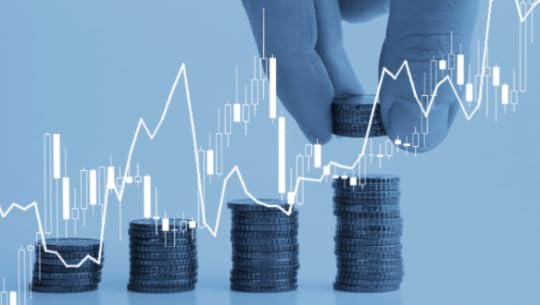
News of US President Donald Trump imposing a 100 per cent levy on semiconductor imports, paired with exemptions for companies relocating production to the US, has sparked a wave of optimism among investors. This development has lifted global risk sentiment and fuelled a rally in US stock markets, especially in big tech.
At the same time, the Bank of England’s anticipated interest rate cut, mixed signals from US Treasuries, a weakening US dollar, and movements in commodities like gold and Brent crude paint a complex picture. Meanwhile, Bitcoin has caught attention with a modest rebound, bolstered by surging ETF inflows, technical support, and corporate accumulation.
Let’s unpack these interconnected events and explore what they mean for the world economy and financial markets.
Trump’s semiconductor levy: A game-changer for US marketsThe announcement of a 100 per cent levy on semiconductor imports stands out as a pivotal move. Semiconductors are the backbone of modern technology, powering everything from smartphones to cars to defence systems. By slapping such a steep tariff on imports while offering exemptions to companies that shift production back to the US, Trump aims to rewire global supply chains in America’s favour.
The immediate market reaction has been telling. The S&P 500 climbed 0.7 per cent, the Dow Jones edged up 0.2 per cent, and the Nasdaq surged 1.2 per cent, with big tech stocks leading the charge. Investors clearly see this as a boon for US-based firms, especially those in the technology sector that rely heavily on these critical components.
This policy could spark a renaissance in US manufacturing. Companies that move production stateside might tap into tax breaks, create jobs, and bolster national security by reducing dependence on foreign suppliers. For tech giants, the exemptions could translate into lower costs and a competitive edge, explaining the Nasdaq’s outsized gains.
Yet, the picture isn’t all rosy. The levy could jolt global supply chains, raising costs for companies unable to relocate quickly. Many firms operate intricate networks spanning multiple countries, and uprooting those operations might prove costly or impractical. Consumers could feel the pinch too, as higher production costs trickle down to product prices.
On the geopolitical front, this move might ruffle feathers. Major semiconductor exporters like Taiwan, South Korea, and China could view the levy as a shot across the bow, potentially sparking retaliatory tariffs or trade disputes. The long-term success of this policy hinges on execution, whether companies can realistically shift production without derailing efficiency or profitability. For now, though, the market’s bullish response signals confidence in the short-term upside, even if uncertainties loom on the horizon.
Bank of England’s Rate Cut: Stimulus with Strings Attached
Across the Atlantic, the Bank of England has investors on edge as it prepares to announce its policy decision on Thursday. Analysts widely expect a 25-basis-point cut, bringing the key interest rate to 4.00 per cent. This move aims to juice up the UK economy by making borrowing cheaper, encouraging businesses to invest and households to spend. After a period of tighter policy to tame inflation, this shift suggests the central bank sees room to prioritise growth.
What does this mean for the UK? Lower rates could lift demand, supporting sectors like housing and retail. Exporters might also catch a break if the British pound weakens, making UK goods more attractive overseas. However, a depreciating pound could stoke inflation by driving up import costs, a risk the Bank of England will need to monitor closely.
The decision’s ripple effects will depend on the central bank’s messaging. If it hints at more cuts ahead, markets might cheer, but any sign of hesitation could dampen the mood. For now, anticipation of this stimulus has added a layer of optimism to the global risk rally.
US treasuries and the dollar: Mixed signals aboundBack in the US, Treasury yields are sending mixed messages. On Wednesday, the 2-year yield dipped 1.1 basis points to 3.714 per cent, while the 10-year yield ticked up 1.6 basis points to 4.226 per cent. This split suggests investors expect short-term rates to stay low, perhaps reflecting faith in a dovish Federal Reserve. Meanwhile, the uptick in longer-term yields points to worries about inflation or stronger growth down the road. It’s a tug-of-war between near-term caution and longer-term bets.
The US Dollar Index, or DXY, underscores this uncertainty. It dropped for a fourth straight day, landing at 98.18. Recent disappointing US economic data, like sluggish job growth or softer consumer spending, might be fueling speculation that the Fed will ease policy further. A weaker dollar boosts US exporters and multinational firms by making their goods cheaper abroad and inflating overseas earnings. Yet, it also reflects a broader shift in confidence, with investors looking beyond the dollar for returns as global risk appetite picks up.
Commodities and Asian markets: Riding the waveCommodities offer another lens on market dynamics. Gold slipped 0.3 per cent to US$3,369 per ounce, a modest pullback after a four-day winning streak. Profit-taking likely drove the dip, but gold’s lofty price underscores its role as a haven amid uncertainty. Brent crude, meanwhile, fell 1.1 per cent to US$66.89 per barrel, nudged lower by news of a potential Trump-Putin meeting. If that summit eases geopolitical tensions over energy sanctions or conflict zones, oil’s risk premium could shrink further.
Asian stock markets, on the other hand, caught the upbeat vibe. They rallied Wednesday and opened higher Thursday, buoyed by hopes of Fed rate cuts. Cheaper borrowing in the US often floods global markets with liquidity, lifting risk assets like stocks. US equity futures echoed this sentiment, hinting at a strong open. The interplay of US policy shifts and Asian market gains highlights how interconnected the financial world has become.
Bitcoin’s bounce: Institutional faith and technical gritThen there’s Bitcoin, which rose 0.85 per cent in the past 24 hours to US$114,592.79, shaking off a 3.23 per cent weekly slide. Three forces are at play here. First, US spot Bitcoin ETFs saw US$91.52 million in net inflows on August 6, snapping a five-day outflow streak. BlackRock’s US$41.9 million and Bitwise’s US$26.35 million led the charge, pushing total ETF assets to US$146.73 billion. This flood of institutional money signals growing trust in Bitcoin’s stability, with heavyweights like BlackRock holding roughly 625,000 BTC. If inflows persist, they could anchor prices above US$115,000.
Second, Bitcoin’s technicals tell a story of resilience. It held firm at the US$112,000 support level, buoyed by the 50-day simple moving average at US$112,860 and a key Fibonacci level at US$113,455. Traders are buying dips, pushing it toward resistance at US$115,500. The RSI sits at 49.15, showing neutral momentum, but a bearish MACD hints at caution. A break above US$115,500 could eye US$117,500, while a slip below US$113,500 might test US$110,800.
Third, corporate moves are turning heads. Japan’s Metaplanet snapped up 463 BTC for US$53.7 million at US$115,895 per coin, while Tether unveiled plans to become the world’s top Bitcoin miner by 2025, aiming for 80,000 BTC. These steps shrink exchange supply and cement Bitcoin’s “digital gold” allure. Tether’s mining push, in particular, could tighten long-term supply, nudging prices higher if demand holds.
For now, the data backs a cautiously optimistic view: markets are climbing, liquidity is flowing, and innovation is humming. The threads tying it all together feel fragile, and keeping a sharp eye on the numbers will be key to navigating what’s next.
As markets climb on policy tailwinds, keeping a sharp eye on the numbers will be crucial to seizing opportunities and sidestepping pitfalls.

The post Trump’s policy effect: From semiconductors to Bitcoin, how government moves are shaping markets appeared first on Anndy Lian by Anndy Lian.
August 6, 2025
The perfect storm: Jobs plunge, tariffs hit, and crypto volatility soars
Anndy Lian
The perfect storm: Jobs plunge, tariffs hit, and crypto volatility soars

Global risk sentiment has taken a noticeable hit recently, and it’s not hard to see why. A weaker-than-expected US ISM services PMI report for July, dropping to 50.1 from 50.8 in June, has raised eyebrows. Any reading below 50 signals contraction, and while 50.1 is just above that line, it’s a close call that suggests the services sector, a massive chunk of the US economy, is losing steam.
Firms are cutting jobs too, with the employment index plunging to 46.4, one of the lowest levels since the pandemic shook things up. This points to tepid demand and rising costs squeezing businesses, and it’s a red flag for anyone watching the broader economic picture.
Then there’s the trade situation, which feels like throwing fuel on an already flickering fire. President Trump has put out word that he’s gearing up to slap tariffs on chips and pharmaceuticals, with the latter starting small but potentially ramping up to a jaw-dropping 250 per cent down the road.
He’s also planning to hike tariffs on Indian goods substantially, and he means to do it fast, within the next 24 hours. These moves could rattle global supply chains, jack up prices for everything from tech to medicine, and sour trade ties with a big player like India. Markets hate uncertainty, and this is a textbook case of it.
The US stock markets didn’t waste time reacting. The S&P 500 dropped 0.5 per cent, the Dow Jones edged down 0.1 per cent, and the Nasdaq took a 0.7 per cent hit. Investors are clearly jittery, pulling back from riskier bets as they digest the economic slowdown signals and the tariff threats. US Treasuries, meanwhile, had a mixed day after two sessions of gains.
The 10-year yield ticked up 1.8 basis points to 4.210 per cent, while the 30-year yield slipped 1.1 basis points to 4.780 per cent. That split tells a story of its own, hinting at confusion over where interest rates and inflation might head next, especially with talk of a Federal Reserve rate cut picking up steam.
Speaking of the Fed, the US Dollar Index, or DXY, is hanging out near recent lows, closing slightly down at 98.78 after last Friday’s non-farm payrolls report. A softer dollar could give US exports a boost, but it also means imports might get pricier, which could stoke inflation just when the economy looks shaky. Gold, always a go-to when things feel uncertain, climbed 0.2 per cent, riding the wave of that weaker dollar and bets on a Fed rate cut coming soon.
On the flip side, Brent crude took a 1.3 per cent dive to US$67 a barrel, thanks to news that the Kremlin might pause air strikes to dodge Trump’s threat of secondary sanctions. That’s a geopolitical chess move that could steady oil prices or shift the conversation with the US, depending on how it plays out.
While the US markets nursed their wounds, Asian stock markets caught a second wind on Tuesday. Investors over there are feeling optimistic, pricing in a 90 per cent chance of a Fed rate cut at the September FOMC meeting. That kind of monetary easing could pump some life into global growth, and Asian markets opened higher this morning, shrugging off the gloom stateside. US equity index futures suggest a mixed open back home, so it’s clear the world’s not moving in lockstep on this one.
The crypto angle: Bitcoin, altcoins, and market moodNow, let’s zoom in on the cryptocurrency market, where things are just as messy but with a twist of their own. Bitcoin recently slid to US$112,000, and normally, you’d expect altcoins to perk up when the big dog stumbles, maybe even kick off an altcoin season. That hasn’t happened this time. Solana’s down 9.45 per cent over the past week, XRP’s off 5.48 per cent, and Dogecoin’s taken a 10.80 per cent beating. The altcoin crowd isn’t catching a bid, and that’s got people wondering what’s up.
Over the last 30 days, Bitcoin’s dominance, its share of the total crypto market cap, has slipped by nearly 5.5 per cent. Meanwhile, Ether’s been on a tear, jumping 40 per cent. You’d think that might mean traders are diving into riskier assets, but the broader altcoin slump tells a different story. It looks more like folks are cashing out Ether’s gains rather than piling into the next big thing.
The OTHERS index, which tracks altcoins outside the top 10 by market cap, crashed 18.7 per cent in just 10 days before bouncing back a bit. That’s a clear sign of investors running from the high-risk, high-reward corners of the market, mirroring the cautious vibe globally.
Bitcoin itself is holding the spotlight, though, and not without reason. Its price just retested a key weekly uptrend line, a level that’s sparked big moves before. Back in early 2023, it broke out of a downtrend after a similar retest and shot up over 95 per cent. In 2024, it did it again, climbing 171 per cent past US$73,000.
Now, in August 2025, it’s bounced off that same ascending support, and analysts are eyeing a short-term target of US$123,300, with a longer-term goal of US$150,000. There’s even talk of an inverse head and shoulders pattern on a 2-day chart, a bullish setup that could push Bitcoin to US$170,000 if it plays out. Volume’s backing the breakout, moving averages are turning up, and the neckline at US$110,000 is holding as support. That’s a 40-50 per cent upside from where we sit, which is no small potatoes.
Adding fuel to the fire, a whale has placed a massive leveraged long bet on Bitcoin, and parabolic chart projections are floating around, hinting at another wild ride. Big bets like that can juice the market, but they also bring volatility, and a wrong move could spark liquidations. Still, the technicals are lining up for a potential rally, and history suggests this trendline retest could be the start of something big.
Piecing it together: What’s driving all this?So, what’s the bigger picture here? The global risk retreat ties straight back to the US economy, showing cracks. The services sector slowdown and job cuts signal weaker growth ahead, and Trump’s tariff plans are stirring the pot, threatening to disrupt trade and hike costs. Stock markets in the US are feeling the heat, while Asia’s betting on a Fed lifeline to keep things humming. Gold’s up, oil’s down, and the dollar’s soft, all classic moves when uncertainty reigns.
In crypto, the story’s a bit split. Altcoins are floundering, suggesting investors are playing it safe or pocketing gains rather than chasing the next moonshot. Bitcoin, though, looks poised for a breakout, backed by solid technicals and some heavy hitters betting big. It’s a tale of two markets, caution on one side, opportunity on the other.
My take: Risks and rewards in a shaky worldHere’s where I weigh in. The US data is worrisome, no doubt, and those tariffs could make a challenging situation worse, hitting consumers and businesses alike. But the Fed’s got room to step in, and if they cut rates, it could cushion the blow and give markets a lift, especially outside the US. Asia’s already banking on that, and they might be onto something.
Crypto’s trickier. Altcoins look stuck, and I wouldn’t hold my breath for a sudden rally there. Too many folks are sitting on the sidelines or cashing out. Bitcoin’s another story. The setup feels legit, and if it breaks out, US$150,000 or even US$170,000 isn’t crazy talk. That said, the macro risks, like a deeper US slowdown or a trade war flare-up, could derail it. Leverage in the mix makes me nervous, too. Volatility cuts both ways.
For anyone playing these markets, it’s about balance. Keep an eye on the Fed, watch how those tariffs land, and don’t sleep on Bitcoin’s next move. Diversifying’s smart, there’s too much up in the air to go all-in anywhere.
Source: https://e27.co/the-perfect-storm-jobs-plunge-tariffs-hit-and-crypto-volatility-soars-20250806/

The post The perfect storm: Jobs plunge, tariffs hit, and crypto volatility soars appeared first on Anndy Lian by Anndy Lian.
August 5, 2025
What’s shaping the markets right now: AI hype, Bitcoin’s calm, and the Fed’s next move
Anndy Lian
What’s shaping the markets right now: AI hype, Bitcoin’s calm, and the Fed’s next move

Global markets are currently riding a wave of optimism, with risk sentiment surging as investors appear to shrug off a host of economic and political uncertainties. This buoyant mood stems mainly from two key drivers: the anticipation of earlier-than-expected Federal Reserve rate cuts and growing excitement about the potential for artificial intelligence to fuel economic growth.
Beneath this surface of confidence, there are substantial risks that could easily unsettle this delicate balance. From escalating trade tensions to shifting monetary policies and fluctuating commodity prices, the global financial landscape is anything but stable. Adding to the complexity is the cryptocurrency market, where Bitcoin’s price volatility has recently hit its lowest point in over a year, offering a curious contrast to the broader market dynamics.
Let’s begin with the economic and political risks that, despite being overlooked by many market participants, remain critical to understanding the current sentiment. One of the most prominent issues is the resurgence of trade tensions, highlighted by former President Donald Trump’s recent threat to raise tariffs on Indian goods substantially. His reasoning ties to India’s continued purchases of Russian oil, a move that has irked US policymakers amid geopolitical strains.
This isn’t just a bilateral spat between the US and India. It has the potential to ripple across global trade networks, disrupting supply chains and increasing costs for businesses worldwide. India plays a vital role in the global economy, particularly in technology and manufacturing, so any escalation in tariffs could dampen corporate earnings and slow economic momentum. This is a reminder that geopolitical posturing can quickly translate into economic consequences, and investors ignoring this risk might find themselves caught off guard if tensions boil over.
Turning to monetary policy, the Federal Reserve’s next moves are shaping up to be a linchpin for market sentiment. San Francisco Fed President Mary Daly recently indicated that the Fed might need to implement more than two rate cuts this year if the labour market weakens further and inflationary pressures from tariffs fail to materialise.
This comment caught my attention because it suggests a willingness to adopt a more supportive stance, which could bolster markets by lowering borrowing costs and encouraging investment. However, it also underscores the Fed’s challenging position. Cutting rates too aggressively risks reigniting inflation, especially if trade disruptions push up prices. On the other hand, holding back could stifle growth if the labor market deteriorates. Fed is walking a tightrope, and its decisions will likely amplify market swings in the coming months. For investors, this means staying attuned to economic data like employment figures and inflation readings, which will heavily influence the Fed’s path.
AI hype changes thingsMeanwhile, the optimism around AI-driven growth is injecting a dose of excitement into the markets, and I can see why. Advances in artificial intelligence are no longer just theoretical. They’re starting to reshape industries. Companies are pouring resources into AI, betting that it will streamline operations, boost productivity, and open new revenue channels.
This enthusiasm is most evident in the tech sector, which has powered a recent rebound in US stock markets. The S&P 500 climbed 1.5 per cent, the NASDAQ jumped 2.0 per cent, and the Dow Jones rose 1.3 per cent, reflecting a clear risk-on attitude. I find this rally encouraging because it signals confidence in innovation as a growth driver. I also think it’s worth tempering expectations.
AI’s economic impact is still unfolding, and while the long-term potential is immense, short-term gains might be overstated. If other risks like trade disputes or policy missteps intensify, the AI narrative could lose its luster, leaving tech-heavy indices vulnerable.
The bond market offers another lens into investor sentiment, and here I see a mix of caution and opportunism. US Treasuries consolidated their gains on Monday after a strong showing the previous Friday, when renewed expectations of Fed rate cuts drove demand. The 10-year Treasury yield dropped 2.4 basis points to 4.192 per cent, inching close to its support level at 4.185 per cent.
Lower yields typically suggest investors are seeking safety, which seems at odds with the equity market’s rally. To me, this divergence hints at underlying unease; some investors are hedging their bets even as others pile into stocks. The US Dollar Index fell 0.4 per cent in response to these lower yields, while gold edged up 0.3 per cent to US$3,373 per ounce. Gold’s modest gain reinforces my view that safe-haven assets still hold appeal, despite the risk-on vibe dominating headlines. It’s a subtle but telling sign that not everyone is fully convinced by the current optimism.
The case with commoditiesCommodities, too, are part of this intricate puzzle. Brent crude oil slipped 1.3 per cent to US$68 per barrel after OPEC+ agreed to increase production by over 500,000 barrels per day starting in September.
This move surprised me a bit, given the group’s usual caution, but it could ease inflationary pressures by keeping oil prices in check. For consumers and businesses, cheaper oil is a welcome relief, potentially supporting spending and investment. However, it also raises questions about global demand. If OPEC+ feels confident boosting output, does that mean they see economic growth slowing? I lean toward the idea that this is a strategic play to maintain market share, but it’s a development worth watching. Lower oil prices might give central banks like the Fed more room to cut rates without stoking inflation, indirectly supporting the risk sentiment driving markets.
Now, let’s shift gears to Bitcoin, where an intriguing story is unfolding. The cryptocurrency’s price volatility has plummeted to its lowest level in over a year, a stark contrast to its historically wild swings. According to Blockforce Capital, Bitcoin’s annualised 60-day volatility fell to 28.53 per cent on July 30, the lowest since August 28, 2023. Its 30-day volatility hit 25.26 per cent on July 23, the calmest since October 15, 2023. This happened as Bitcoin’s price oscillated between US$105,000 and US$122,750 in July, per Coinbase data from TradingView.
I find this stability fascinating, especially given the broader market turbulence. Part of it stems from regulatory progress, including the passage of three US House bills on crypto and the enactment of regulations in July, with the GENIUS Act signed into law by President Trump. These steps likely reassured investors, reducing uncertainty.
But there’s more to this story. Institutional players are flexing their muscles, and I see this as a game-changer. Strategy, formerly known as MicroStrategy, acquired US$2.46 billion worth of Bitcoin between July 28 and August 3, increasing its holdings to 628,791 tokens, valued at over US$71 billion. That’s a massive bet, averaging $117,526 per token, and it shows how Michael Saylor has turned his company into a Bitcoin juggernaut.
Similarly, Japan’s Metaplanet grabbed 463 BTC for US$53 million, pushing its stash to 17,595 BTC, worth about $2.02 billion. These firms are treating Bitcoin like a treasury asset, buying even as retail enthusiasm wanes. I think this institutional muscle could steady Bitcoin through choppy waters, though it also ties the crypto’s fate closer to corporate strategies.
My view? Enjoy the ride, but keep your eyes wide open. The next few months could be a wild one.

The post What’s shaping the markets right now: AI hype, Bitcoin’s calm, and the Fed’s next move appeared first on Anndy Lian by Anndy Lian.
August 4, 2025
When markets falter: US jobs, Russia, and Bitcoin’s moment to shine
Anndy Lian
When markets falter: US jobs, Russia, and Bitcoin’s moment to shine

Financial markets around the world have felt the ripple effects, with stock indices tumbling, Treasury yields dropping, and safe-haven assets like gold gaining ground. At the same time, Bitcoin has bucked the broader market trend, posting a modest gain amid a mix of institutional interest and technical factors.
As someone who closely follows economic and market developments, I find this confluence of events fascinating. It highlights how interconnected global markets are and how alternative assets like Bitcoin can sometimes move independently of traditional risk indicators.
A retreat in global risk sentimentThe retreat in global risk sentiment stems from two major catalysts: a weaker-than-expected US jobs report and escalating tensions between the US and Russia. The jobs report, released for July, showed non-farm payrolls growing by just 73,000, falling well short of the 104,000 that economists had anticipated.
To make matters worse, the previous two months’ figures underwent a sharp downward revision of 258,000 jobs. This kind of miss, combined with such a significant adjustment, sends a clear signal that the US labor market might be cooling faster than anyone expected. This isn’t just a statistical blip. It raises legitimate questions about whether the US economy, often seen as the backbone of global growth, could be heading toward a slowdown or even a recession.
Adding fuel to the fire, geopolitical tensions between the US and Russia have flared up again. The US recently slapped new sanctions on Russia, and Moscow responded with countermeasures. This back-and-forth has stoked fears of a broader conflict, one that could disrupt global trade and energy markets at a time when the world economy already feels fragile.
This is a classic case of uncertainty driving market behaviour. Investors hate unknowns, and right now, there’s a lot they can’t predict about how this standoff might play out.
The impact on financial markets has been immediate and pronounced. In the US, the S&P 500 dropped 1.6 per cent, the Dow Jones fell 1.2 per cent, and the NASDAQ took a steeper 2.2 per cent hit. Volatility spiked, with the VIX climbing above 20 for the first time in over a month. Over in Asia, stocks closed last Friday on a weak note, with the MSCI Asia ex-Japan Index shedding 1.58 per cent.
South Korea’s KOSPI bore the brunt of the decline, plunging 3.88 per cent after the government announced plans to tighten capital gains taxes on stocks and hike transaction taxes. These moves reflect a broader flight from risk assets. Meanwhile, US Treasuries surged as investors piled into safe havens, pushing yields down across the board.
The two-year yield dropped 27.5 basis points to 3.682 per cent, and the 10-year yield fell 15.8 basis points to 4.216 per cent, its lowest in a month. The US Dollar Index slid 0.8 per cent, while gold jumped 2.2 per cent and Brent crude oil slipped 2.8 per cent on worries about weakening energy demand. This market reaction underscores how quickly sentiment can shift when economic and geopolitical risks collide.
Looking ahead, the US economic calendar is relatively quiet this week, with only a handful of data releases scheduled. Earnings reports from multinational corporations, pharmaceutical firms, and major insurers will take center stage instead.
In Asia, though, the data flow is heavier, with July inflation figures due from several countries and second-quarter GDP numbers coming out of Indonesia and the Philippines. These releases could offer more clues about whether the global economy is stabilizing or sliding further. I think the lack of major US data might give markets a breather, but any surprises from Asia could easily sway sentiment again.
The US jobs report: A closer lookLet’s dig into the US jobs report, because it’s the linchpin of this risk-off mood. The 73,000 increase in non-farm payrolls for July was a stark disappointment compared to the 104,000 that analysts had forecasted. The downward revision of 258,000 jobs for the prior two months only deepened the gloom.
I’ve seen weaker reports before, but this one stands out for how much it underperformed expectations and how it rewrote recent history with those revisions. Historically, sharp drops in job growth have often signaled trouble ahead.
Think back to the 2008 financial crisis, when non-farm payrolls tanked by over 500,000 in a single month. We’re not at that level yet, but the parallel isn’t lost on me. It’s a reminder that labor market weakness can be a leading indicator of bigger economic problems.
The fallout from this report has shifted expectations for Federal Reserve policy in a big way. Before the data hit, markets priced in 32 basis points of rate cuts over the remaining three FOMC meetings this year. Now, Fed-dated Overnight Index Swaps suggest a combined 60 basis points of easing. That’s nearly a full quarter-point cut per meeting, a clear sign that traders expect the Fed to act decisively to prop up the economy.
I find this pivot telling. It shows how sensitive markets are to labor data and how quickly they can recalibrate when the numbers disappoint. Lower Treasury yields, especially the steep drop in the two-year to 3.682 per cent, back up this view. Investors are betting on a more dovish Fed, and I’d argue they’re right to do so. If job growth keeps faltering, the Fed won’t have much choice but to ease aggressively.
The broader market reaction ties directly to this policy shift. Stocks fell hard because weaker jobs data dents confidence in corporate earnings and economic growth. Treasuries rallied as investors sought safety and anticipated lower rates. Gold’s 2.2 per cent jump reflects its appeal as a hedge against uncertainty, while the drop in Brent crude points to fears of a demand slowdown. For me, this all fits together logically.
A cooling labor market doesn’t just affect Wall Street; it ripples through consumer spending, energy use, and global trade. The question now is whether this is a temporary stumble or the start of something more serious. I lean toward caution here, given the size of those revisions and the geopolitical backdrop.
Bitcoin’s uptick: A bright spot amid the gloomAgainst this stormy backdrop, Bitcoin has managed to shine, climbing 1.11 per cent in the past 24 hours. That might not sound like much, but in a market where stocks are tanking and volatility is spiking, it’s a standout performance. Several factors are driving this gain, and I think they highlight why Bitcoin often dances to its own tune.
First, institutional accumulation has played a big role. SharpLink Gaming’s US$108 million purchase of Ethereum signals strong corporate interest in crypto, and US ETF inflows of US$1.18 billion weekly suggest the trend extends to Bitcoin, even if specific BTC ETF data isn’t fresh here. Institutional investors have boosted their Bitcoin holdings by over 50 per cent in the past year, a stat that catches my eye. It shows how much the asset’s appeal has grown among heavy hitters who see it as a long-term store of value.
Second, selling pressure has eased. Miners, who dumped 3,000 BTC between July 16 and August 1, according to CryptoQuant, have since paused their sales. That’s a relief for the market, because miner outflows can weigh heavily on prices. With corporate and ETF buying stepping in to offset what selling did occur, Bitcoin has found some breathing room. I see this as a supply-demand dynamic at work—less selling plus steady buying equals upward pressure.
Third, regulatory developments have added a tailwind. The SEC’s approval of in-kind crypto ETPs has made it easier for institutions to get involved, boosting confidence. Hong Kong’s plan to launch tokenized bonds in 2025 is another positive signal, pointing to a future where digital assets play a bigger role in finance. I’m optimistic about these moves. They suggest regulators are warming up to crypto, which could unlock more capital inflows down the road.
From a technical angle, Bitcoin’s price action looks solid. The 14-day Relative Strength Index rose from 37.72, an oversold level, to 46.09 over seven days, indicating that bearish momentum is fading. The price also held firm at the 38.2 per cent Fibonacci level of US$117,135 after testing it on August 3, and the 200-day Exponential Moving Average at US$99,720 remains a strong long-term support.
To me, these levels matter. They show Bitcoin has a foundation to build on, even when broader markets wobble. The Fear & Greed Index ticking up from 48 to 52 in 24 hours reinforces this, despite US$164 million in long liquidations. It’s a sign that sentiment is shifting, and I’d argue it’s spot-driven demand—real buying, not just leverage—that’s keeping Bitcoin afloat.
My take and what’s nextPutting it all together, we’ve got a tale of two markets. On one hand, global risk sentiment is reeling from a dismal jobs report and US-Russia tensions. Stocks are down, yields are falling, and the Fed might need to step in with bigger rate cuts than anyone thought a week ago.
On the other hand, Bitcoin is holding its own, lifted by institutional interest, lighter selling, and regulatory progress. I find this contrast striking. It’s a reminder that traditional markets and crypto don’t always move in lockstep, especially when economic signals get murky.
As for what’s next, I’m keeping an eye on those upcoming data points: Asian inflation, GDP releases, and US earnings. They’ll either calm nerves or pour more fuel on the risk-off fire. For the US economy, I’m cautiously pessimistic.
The jobs report was a wake-up call, and while some argue the economy is still strong, those revisions and the Fed’s reaction tell me we’re not out of the woods. Bitcoin, though, has me more upbeat. Its resilience here suggests it’s carving out a niche as a hedge against uncertainty, and I wouldn’t be surprised to see it keep climbing if institutional buying holds up.
Markets are jittery, but opportunities like Bitcoin show there’s still light amid the gloom. Investors will need to stay sharp, because the week ahead could bring more twists.
Source: https://e27.co/when-markets-falter-us-jobs-russia-and-bitcoins-moment-to-shine-20250804/

The post When markets falter: US jobs, Russia, and Bitcoin’s moment to shine appeared first on Anndy Lian by Anndy Lian.
August 2, 2025
Bitcoin, Ethereum, XRP Struggle After Underwhelming Jobs Report: Will A September Rate Cut Save The Bull Run?
Anndy Lian
Bitcoin, Ethereum, XRP Struggle After Underwhelming Jobs Report: Will A September Rate Cut Save The Bull Run?

The odds of a Federal Reserve interest rate cut in September surged following a surprisingly weak U.S. jobs report, reigniting bullish sentiment across crypto markets heading into a traditionally volatile trading season.
What Happened: According to Polymarket data as of August 1, there is now a 70% chance the Fed will cut rates by 25 basis points at its September 17 meeting, a significant jump from just days prior.
Meanwhile, bets on a 50-basis-point cut stand at 6.8%.
This comes after the U.S. economy added only 73,000 jobs in July, far below the consensus estimate of 110,000.
Markets were further rattled by a downward revision of 258,000 jobs from May and June, the sharpest two-month downgrade since the onset of COVID-19 in 2020.
The unemployment rate ticked up to 4.2%, while wage growth remained stronger than expected at 0.3% month-on-month and 3.9% year-on-year.
Why It Matters: For crypto investors, these signals are meaningful.
“This is absolutely a game changer,” Greg Magadini, Director of Derivatives at Amberdata, told Benzinga. “The Fed has had the luxury of holding rates higher-for-longer because the jobs market remained strong. That narrative is now in question.”
Magadini explained that the sharp revisions and weak July headline caught markets off guard, pushing the U.S. dollar lower and sending bond yields falling.
“This gives the Fed room to cut without appearing to cave to political pressure,” he said, referring to the Trump administration’s public criticism of Fed Chair Jerome Powell.
Speaking with Benzinga, Anndy Lian, a blockchain advisor and author, said the rate cut odds lean favorably for crypto.
“Lower interest rates reduce the opportunity cost of holding non-yielding assets like Bitcoin (CRYPTO: BTC) and Ethereum (CRYPTO: ETH),” he noted, but added that the market’s reaction will also depend on how the Fed communicates its strategy.
The shift in expectations is playing out in prediction markets.
Data from Polymarket shows a sharp rise in bets favoring a September rate cut.
A separate contract for a December decision also now leans heavily toward further easing, with over 60% expecting another 25-basis-point cut.
Tom Bruni, VP of Community at Stocktwits, noted that crypto is entering a seasonally weak window from August through mid-October.
“We’ve already seen ?good news’ fail to drive prices higher. With the Fed now more likely to ease, that could support prices ? but only if economic deterioration doesn’t accelerate into something more serious.”
Sunil Raina, CEO of CereBree, echoed those thoughts: “Unless the Fed wants to risk breaking the economy, a September rate cut now looks like the only sensible move.” But he warned that inflation and geopolitical risks remain, keeping volatility elevated.
What’s Next: In the background is a deeply divided Fed navigating political pressure.
President Donald Trump has continued his public attacks on Powell, calling him a “stubborn MORON” in a Truth Social post and urging the Federal Reserve Board to intervene directly.
While the Fed has so far resisted acting prematurely, the weakening labor data may offer cover to make a policy shift without appearing politically compromised, a dynamic that could heavily influence the path of Bitcoin and risk assets in the coming weeks.
Source: https://fixedincome.fidelity.com/ftgw/fi/FINewsArticle?id=202508011234BENZINGAFULLNGTH46802086
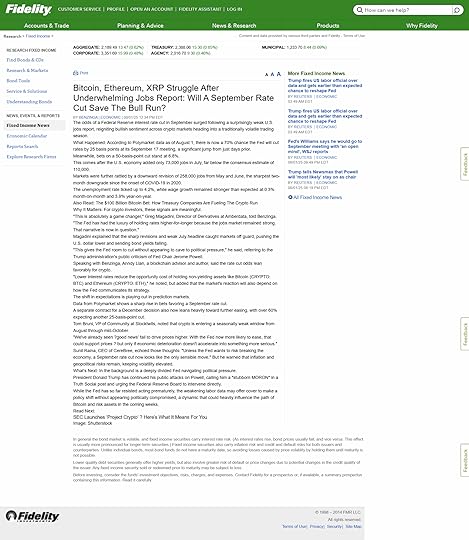
The post Bitcoin, Ethereum, XRP Struggle After Underwhelming Jobs Report: Will A September Rate Cut Save The Bull Run? appeared first on Anndy Lian by Anndy Lian.