David B. Williams's Blog, page 20
October 31, 2012
Geogeek on History Channel
I am always impressed when I can sound like a true geogeek, or in this case geodweeb. Last Thursday night was the premier showing of the History Channel show, What’s The Earth Worth. The show attempts to put a dollar value on our fair planet. I won’t spoil the ending but will let you know that’s it not a number that you probably use very often. It is also a number that sounds sort of odd when you, or at least when the narrator on the show, said it. But I digress.
What I want to address is my performance on the show. I think the highlight was when I said in reference to granite “it’s also very sturdy.” Truly a brilliant insight that most people probably didn’t realize about granite. I was with the film crew for about three hours filming in downtown Seattle last March and this is the best I could utter. I like to think I said something more intelligent but perhaps not.
After my astounding statement, the narrator helpfully comes on to clarify why I am a talking head. “David Williams doesn’t scale mountains to explore geology, he explores the buildings of downtown Seattle.” Of course you would trust the opinions of such a man! But they do kindly make a plug for my book “Stories in Stone,” by then listing my name and the title of the book when I next appear on the screen.
While the narrator is elucidating my authority on the subject, I am seen walking across a street, looking very serious, very sartorial, and quite pensive, as if I am trying to come up with another bon mot. And here it is. “This building uses granite in really the classic way, using it as a way to show grandiosity, to show the status of this building. Using these big columns that really draw people into the building but also shows strength. This building is held up by rock. What more could you want?” Now you know why we writers like editors.
Indeed, I ask again, what more could you want? Well apparently the show’s producers didn’t want anything more from me, as I disappear from the show at this point, never to reappear again. For those who are counting, I said a total of 70 words. And for those who know me, that’s probably the least verbose I have ever been.
I have to say though that I did have fun helping out on the show and was quite tickled that I was asked to do it. I didn’t expect that I was going to be a central part of the show or to be on the screen for more than a minute or so, so I have no complaints.
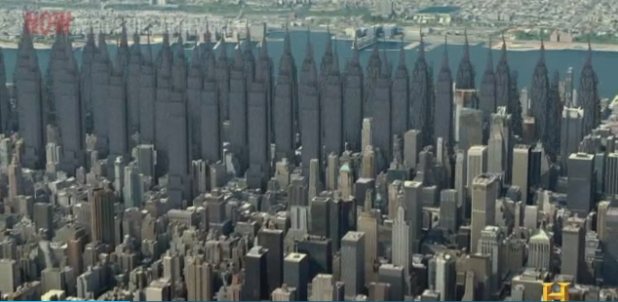
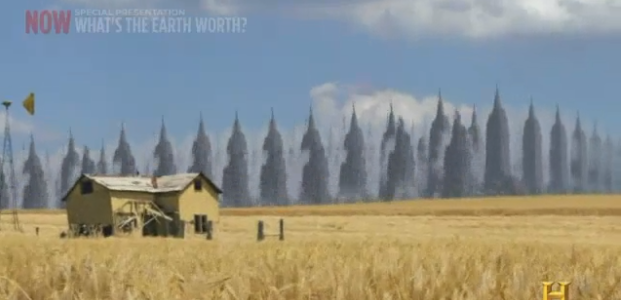
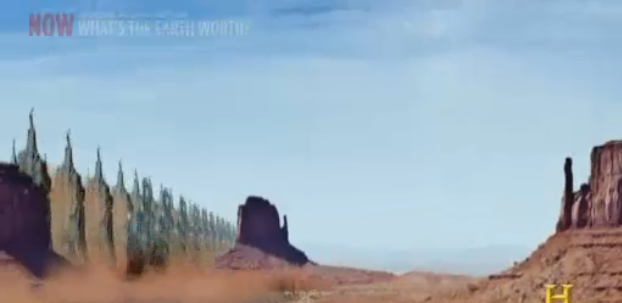
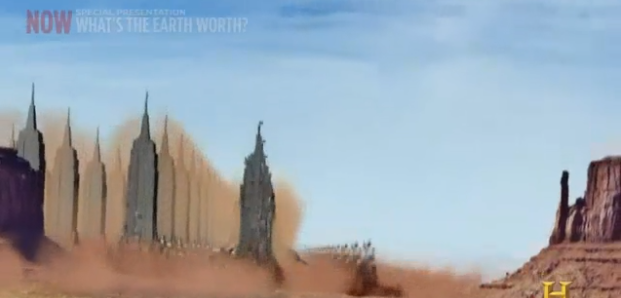
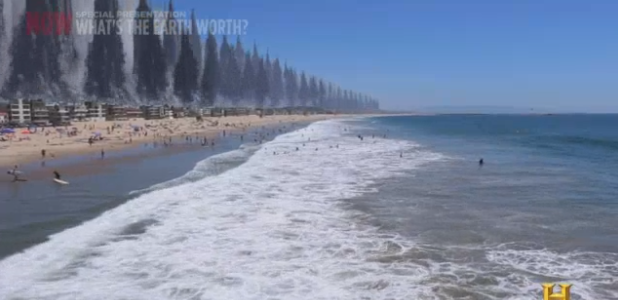
[ALL IMAGES ARE SCREEN SHOTS FROM THE WHAT'S THE EARTH WORTH VIDEO ON YAHOO NEWS]
One final point. The show is filled with tons of pretty crazy graphics (link to a Yahoo News video promoting the show). Who ever did them must have had a great time. And of all them the coolest/craziest is the one on granite. It’s about what one could do with the 500 billion tons of granite left on earth. The narrator asks how many Empire State buildings could be built with all of that granite. The answer “A whopping 11 million.” The graphic then shows a 13-mile-wide column of granite ESBs surging across America to the Pacific Ocean…and beyond.
So if you have a chance to check it out, it is thought provoking.


October 27, 2012
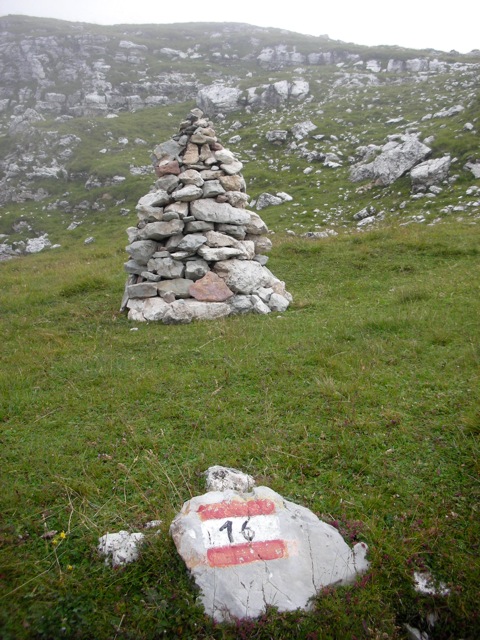
Cairn A Day 17
A cairn all the way from Italy. My pal Terry was hiking with her man in the Dolomites when she saw this handsome cairn. They were hiking down from the Rifugio Puez, part of Italy’s amazing backcountry hut system (several years ago I visited a refugio where we got espresso and lardo–mmmm!), and had just seen a “cute flock of sheep,” when they came across this pile of dolomite cobbles and boulders. She said she took a photo of it because it was so nice looking and because she happened to have her camera available instead of being deeply buried in her pack. Grazie Terry.
October 26, 2012
Cairn A Day 16
Back to posting my cairn a day. This one celebrates the youth of today. This young gal turns two today and is well on her way to becoming a famous builder of cairns. Please note her careful placement of stones to emphasize color and shape. I suspect that she has been studying Andy Goldsworthy. So those who will be out on the trail in 15 or so years keep your eyes peeled for a rash of wonderful cairns.

October 25, 2012
Geologist Goatee and shoes
Rarely does anyone focus on my sartorial splendor but in a nifty little blog piece in the American Scholar, author Priscilla Long highlighted that aspect of me, along with writing evocatively about the geology found in downtown Seattle. Earlier this summer, Priscilla took one of my urban building stone tours and her blog is about that walk. It is always a pleasure to have someone attend one of my walks and get excited about my odd passion for all things rock. Of course, this is my goal, to have people notice something new about something they had taken for granted or had walked by every day, and if they notice my fine fashion sense then all the better.
October 23, 2012
Sad Day for Brownstone
Brownstone is perhaps the most famous building stone of the east coast, quarried for more than three centuries and used primarily in New York, Boston, and Philadelphia. During its peak in the late 1800s, brownstone was the stone to use from coast to coast. So popular was it that “Silver King” James Flood shipped hoards of it around Cape Horn from Connecticut to San Francisco for his mansion, the only building on Nob Hill to survive the 1906 San Francisco earthquake.
But an article in yesterday’s New York Times reported that the final brownstone quarry is now closing. That quarry was in Portland, Connecticut, where the first quarries open in the late 1600s. The area was the prime source for brownstone in New York City. The stone is a 200-million year old sandstone deposited in a valley formed by the breakup of Pangaea.
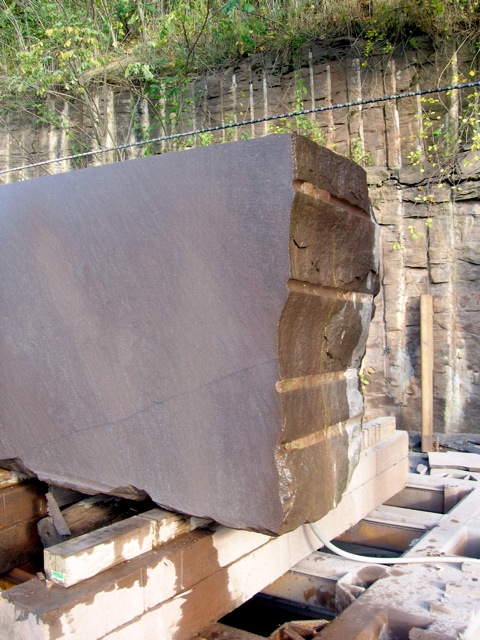


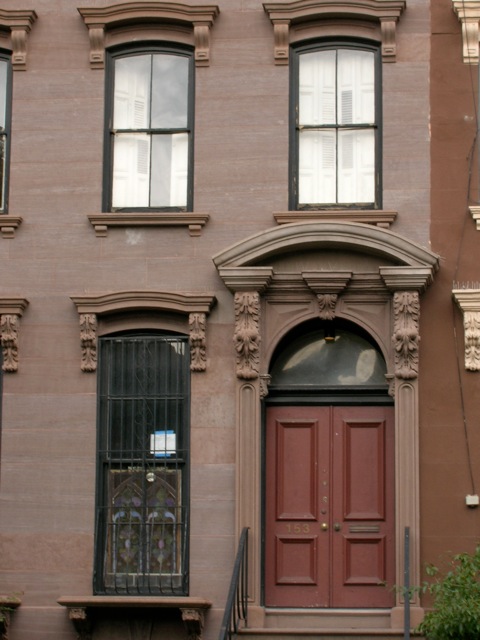
I was lucky enough to interview quarry owner Mike Meehan and tour his quarry in 2007, when I was working on my book, Stories in Stone. As I wrote in my book, in 1993, Mike, an ex-coal miner, opened a small quarry on a ledge north of the lake-filled Middlesex/Brainerd quarry. He knew nothing about quarrying brownstone. “Being a coal miner, I was more adept at blowing things up,” said Meehan. “But at the end of the day, I knew I wanted to be small scale and to be making a product.”
Meehan’s first contract was for $25,000 worth of stone for a restoration project at Gallaudet University in Washington, D.C. He quarried the stone and sent it to Barre, Vermont, to be cut. The only local stone the university had been able to get was from old railroad trestles. He eventually acquired what I described as a giant-wire cheese slicer, except that the wire is impregnated with industrial diamonds. This wire travels between two, spinning, vertical wheels mounted about 20 feet apart from each other on a steel frame. By lowering the wheels in tandem up and down on the frame, Meehan lowers the horizontal wire, which cuts into the block of sandstone.
But now Meehan has put the quarry up for sale. He is 63 years old and wants to retire. It is sad day for brownstone and those who love beautiful stone. Thanks Mike for all you did for the stone and keeping the story of brownstone alive.
October 12, 2012
Cairn A Day 15
From the Antarctic to the Arctic and from the Himalaya to the Sahara, people have been making cairns to mark their way for thousands of years. But you can also find cairns in less exotic places, such as this parking lot in Bellingham. According to my pal Carol Yoon, Bellinghamsters (what a great term) like to pile up stones close to home. This shot comes from a lot right across from the Georgia Pacific Mill (now shut down) in a lot people can park in for the Saturday Farmer’s Market. One might argue that these aren’t truly cairns, but are more stacked stones. Few would argue with this assessment, but these piles do exemplify several themes in my book: community, connection, and a bit of whimsy. And that’s good enough for me.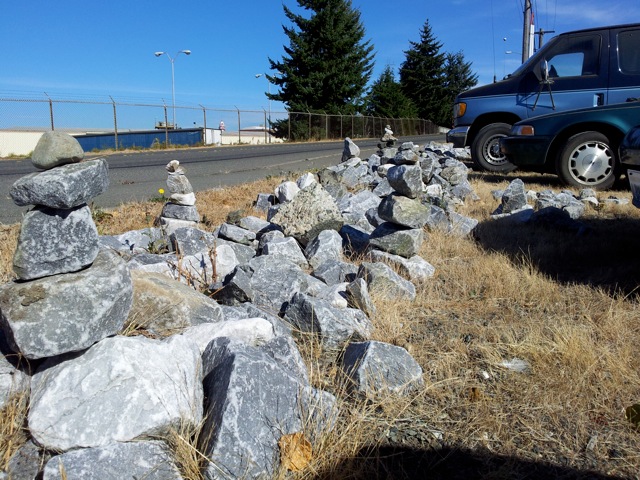
October 10, 2012
Book Launch Tonight
I am very excited as tonight is my book launch for my new book, Cairns: Messengers in Stone. It’s at 7:00 p.m. at the Burke Museum. Thanks kindly to the Burke and to my publisher The Mountaineers Books.
October 9, 2012
Cairn A Day 14
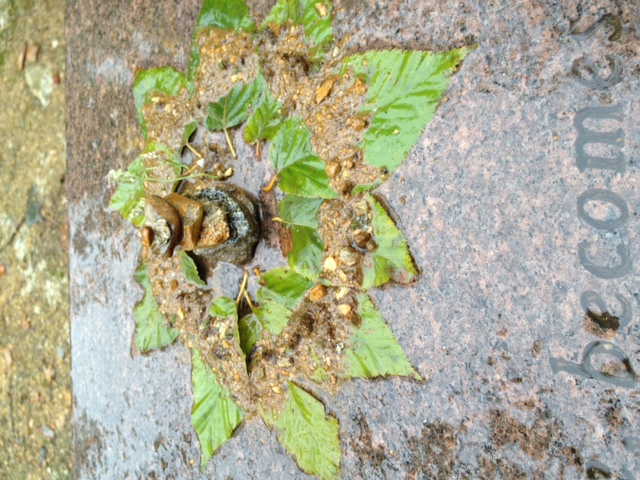
A trip to Concord, Massachusetts, produced this darned nifty photo. A friend of mine was accompanying a colleague’s junior year English classes on a Thoreau/Transcendentalist – themed field trip to Walden Pond and adjacent sites. One such site is on conservation land in Concord where the Walden Woods Project (Ed Begley Jr. and Don Henley are biggies in the group) has made some trails with artistically and strategically placed Thoreau quotes in sculptural granite. (WWP also offers tours of Thoreauvian sights. For the tour of Henry’s cabin at Walden Pond they write “Leave behind a stone from your hometown at the Cairn, a site to honor the memory of Henry David Thoreau.) There’s also a contemplation circle made of big granite blocks inscribed with quotes from a variety of folks from Thoreau to Emerson, to MLK, to JFK and a dozen or so others. The cairn was arranged on top of one of those blocks.
October 8, 2012
Cairn A Day 13
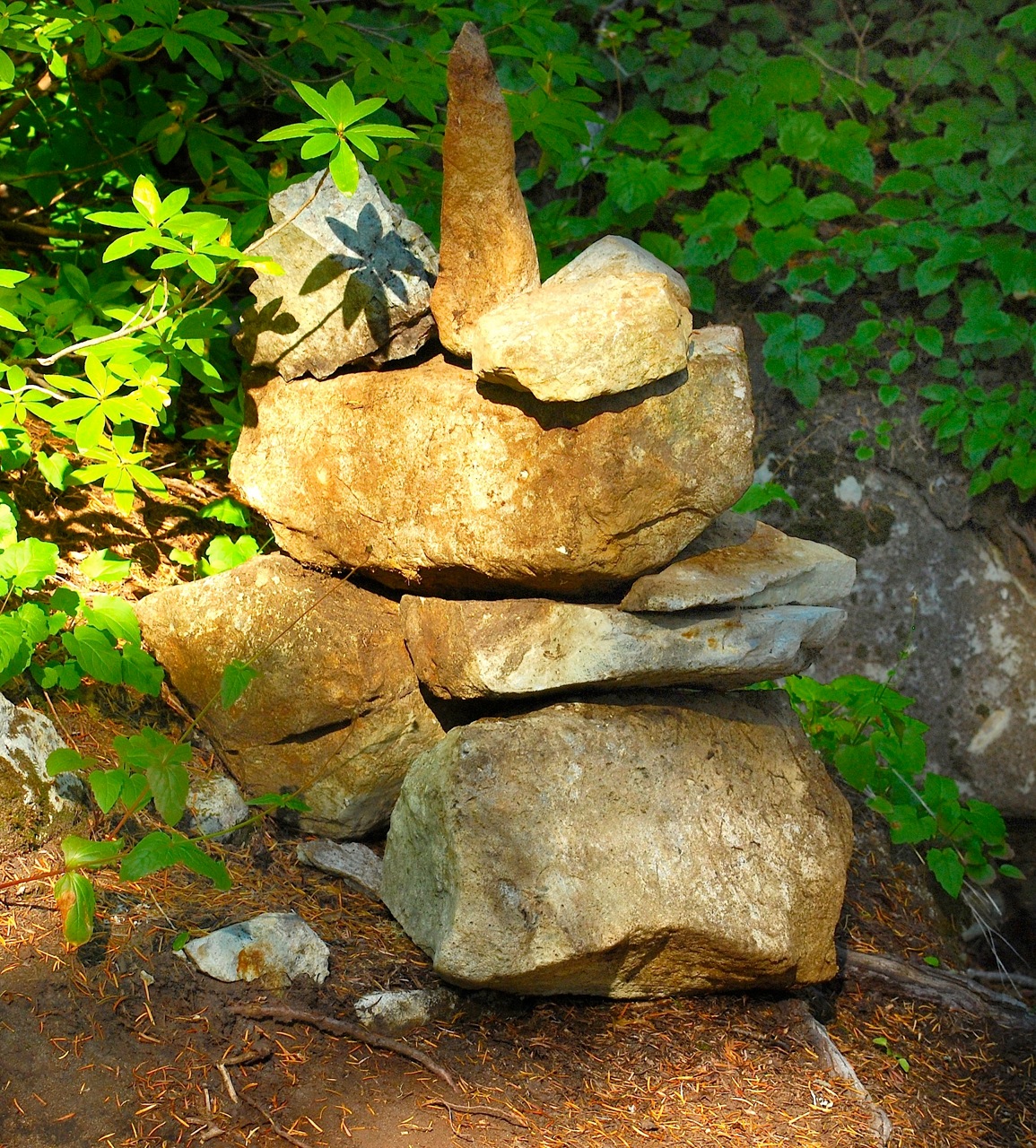
A beautiful photo of a fine looking cairn near the Pacific Crest Trail. This shot was sent to me by another family friend. He took it just south of Snoqualmie Pass, noting that it marked a side trail to the top of an unnamed peak. I think the color and contrast between the rock (granite stained with some iron oxidation) and green foliage is rather pleasing. Fall in the Pacific Northwest has been quite spectacular with lovely light, dreamy clear skies, and pleasant temperatures. Yay!
October 6, 2012
Cairn A Day 12
A family friend sent this cairn shot to me. It’s at the Mendenhall Glacier in Alaska. I think his comments say it all. “I am not sure one could miss the Glacier if there was no cairn as a guide, but I suppose it doesn’t hurt to have one.” Sometimes we all need a little help in life, and a cairn may just be the ticket.