
Adam D. Roberts's Blog, page 12
July 22, 2020
Skillet Chicken Breasts with Corn, Peppers, and Scallions
 Processed with VSCO with al2 preset
Here’s the thing: now that I’m making recipes printable, I feel a new responsibility. I used to just write little essays about how I added a pinch of this and a drop of that and I’m realizing now how useless that was: the people want printable recipes! And I get that because when I first started cooking, I followed recipes to the letter. You want to replicate the image you see in the picture and you want to know exactly how it’s done.
So let me explain the dinner you see before you: I had chicken breasts. I had corn, peppers, onions, scallions, and lots of other vegetables from a recent (terrifying) trip to the grocery store. A few weeks ago, I made an incredible corn dish involving bacon and all of the same vegetables (see here on Instagram). Knowing I had skin-on chicken breasts, I thought: what if I sear the chicken breasts and then cook the corn in the same skillet, working up the brown bits for that same meaty effect?
The result was a one-pan dinner that screams summer and also cozy, weeknight comfort.
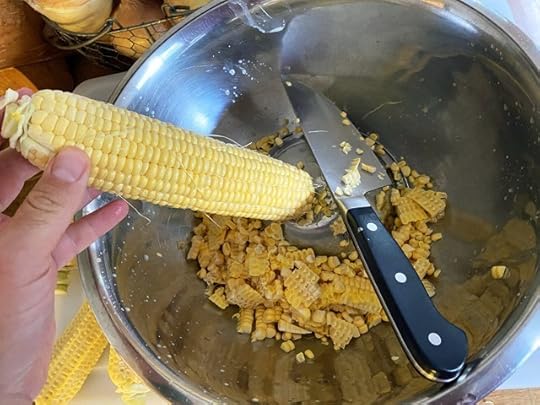
First things first: how to cut fresh corn off the cob. See the picture above? That’s the best set up: put a little bowl upside down in a much larger bowl. Then hold the corn on top of it and cut straight down with a very sharp knife. The corn will stay inside the bigger bowl (this is a tip everyone says at some point, and now I’m saying it too.)

The other star of the show here is the chicken fat that renders out of the skin-on breasts when you sear them in the skillet. Here’s the thing about chicken breasts: they’re not sexy, but when they’re skin-on, bone-in, they’re at least making an effort. Like putting on makeup even though you didn’t take a shower.

Coating all of the vegetables in the chicken fat, plus working up those brown bits at the bottom of the pan (a little cider vinegar helps), not only helps cook the corn just enough without having to boil it first, it gives everything a magnificent chickeny flavor that marries your protein and side.

I threw in a tomato at the end which made things very juicy. If you don’t want juicy, leave out the tomato. But the juiciness made the corn almost like a sauce that helped keep the chicken moist. The other thing that keeps the chicken moist is a thermometer: use it to finish the chicken in the oven and take it out when it’s at 160 (it’ll keep cooking a little as it rests).
You’re probably confused because I never showed you a picture of me searing the chicken breasts first, but it’ll all make sense in the recipe below. Which brings this post full circle: now I don’t have to explain the whole cooking process in the essay that you’re scrolling past anyway. Printable recipes: they just make sense.

Skillet Chicken Breasts with Corn, Peppers, and Scallions
A quick weeknight dinner featuring sweet summer corn and skin-on, bone-in chicken breasts.
Servings 2 hungry people
Ingredients1/4 cup olive oil2 skin-on, bone-in chicken breastsKosher salt and freshly ground black pepper1/2 red onion, chopped6 scallions chopped, whites and greens separated1 red pepper, chopped1 Fresno chili or jalapeño, minced4 cloves garlic, sliced thinly4 ears fresh corn, shucked and cut straight off the cob2 Tbs cider vinegar1 large tomato, chopped Optional: only if you want it saucy!1 Tbs butter Optional: I didn't add it, but if you do it'll make the dinner even better.
InstructionsPreheat the oven to 425.Add the olive oil to a large metal skillet and heat on medium-high heat. Season the chicken breasts all over with lots of salt and pepper and then place, skin-side down, in the skillet. You should hear an immediate sizzle. Cook for several minutes until the skin is deep, dark golden brown. Flip over with tongs and then place the skillet in the oven.Cook the chicken in the oven until a thermometer registers 160 – 165 when inserted into the breast. Takes about 20 – 30 minutes, depending on their size.Carefully remove the skillet from the oven and remove the chicken to a plate to rest.Place the pan back on medium-high heat and add the red onion, the white parts of the scallions, and the red pepper with a pinch of salt. Cook, working up the brown bits as you go, until softened.Add the Fresno chili and the garlic and cook a minute more, until the garlic is fragrant.Now add the corn, stir all around, and sprinkle with more salt. Cook until the corn is glossy, about 2 to 3 minutes. Add the cider vinegar, using it to work up any brown bits that remain at the bottom of the pan. If you're using the tomato, add it here too with another pinch of salt.Cook the vegetables until most of the liquid is gone. If you're using the butter, now's the time to add it: it'll help thicken the sauce and make everything even more shiny. This is also the time to taste the corn. Adjust for salt and acid.Sprinkle the green parts of the scallion over the corn, stir it in, then spoon on to plates and serve with the well-rested chicken breasts.
Related Posts:
Sweet Summer Corn with Bacon and Balsamic Onions (Amateur Gourmet)
Corn Chowder Salad (Smitten Kitchen)
Sautéed Chicken Breasts With Fresh Corn, Shallots and Cream (NYT)
Julia Moskin’s Caramelized Corn with Fresh Mint (The Wednesday Chef)
Vaghareli Makai, Spiced Indian Corn (David Lebovitz)
The post Skillet Chicken Breasts with Corn, Peppers, and Scallions appeared first on The Amateur Gourmet.


July 20, 2020
Our Trip to Japan

Sometimes I scroll through the older images on my phone to remember what life used to be like before Covid and I suddenly remember that back in January (what feels like a lifetime ago) we took an epic trip to Japan.
The trip was both the result of a spontaneous impulse (“What if we go to Japan after Christmas?” Craig asked one day, last September) and then months of planning and replanning. Planning, because I researched all of the coolest restaurants and hotels and then replanning when I discovered that most of them were closed over New Year’s.
New Year’s, it turns out, is the most important holiday in Japan, when businesses shut down and people travel across the country to be with their families. There were moments, in planning this trip, that I thought I’d made a terrible mistake. Every single restaurant that people recommended in Tokyo — Den, Florilege, L’Effervesence, Narisawa, Sushi Sato (pretty much every one on Eater’s list) — was closed for the holiday; and every hotel that people recommended was also shut down for the week we’d be there.

There was a very real moment when I said to Craig: “We made a terrible mistake! Japan’s completely shut down when we’re going. Maybe we can get our money back?”
Craig pointed out that New Year’s was the only time we both knew for sure we’d be free to travel. (Who knew how right he’d be?) And since we already bought the tickets, why not just go ahead and go and let the trip unfold naturally, instead of trying to plan everything? Maybe it would be better to go at New Year’s; less crowded, more interesting.
Turns out, he was 100% correct. Going to Japan at New Year’s was not only totally fine, it was ideal. We barely encountered any tourists and in Kyoto, where tourists can overrun some of the more popular attractions, it felt like we had the whole place to ourselves.
We also had a real advantage when it came to our trip to Tokyo: Craig’s film school roommate, Genjiro, lives there and took us to some truly special restaurants; places I never would have encountered if I had planned the trip the way I originally intended. The first night we got there, Genjiro took us, with his friend Shiho, to a Yakitori restaurant called Daraku in the Shibuya district where we were staying.

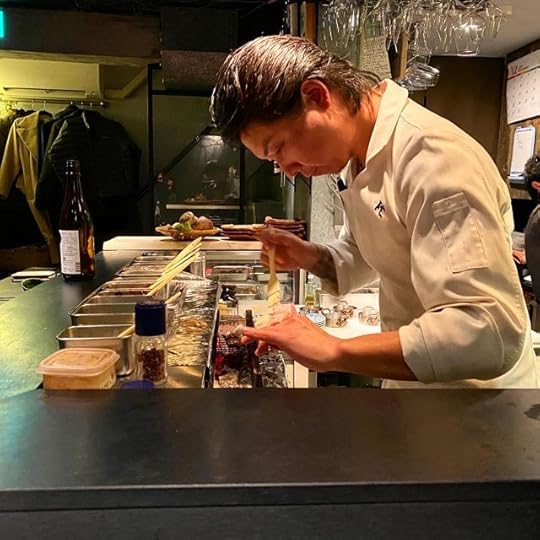
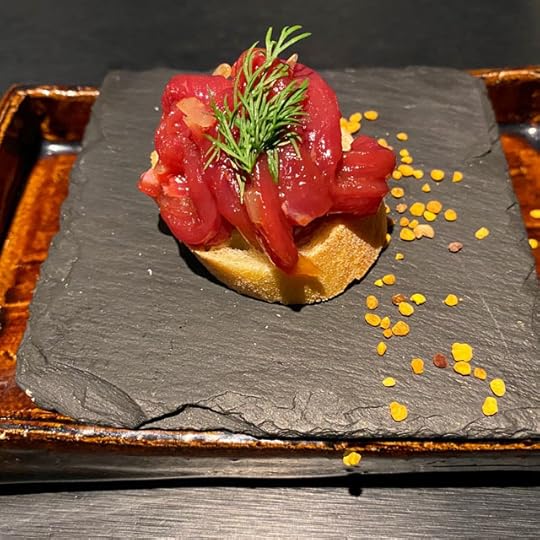
Immediately upon sitting down, the chef — who’s in the previous picture and who grilled all of our food expertly and methodically over charcoal — asked us if we ate raw poultry. Coming from America, where I’m so squeamish about salmonella I marinate my chicken in Chlorox (Jk! don’t try that), we were nervous. But then he served us this ostrich tartare, which was beautiful to look at, as well as to eat.
Each course was better than the next…


…and then, Genjiro informed us, he had specially requested a dish called The Lantern. We watched the chef prepare what looked like golden orbs over the grill and then, when he held it up to us, it resembled a Japanese lantern.

Genjiro explained that they were chicken ovaries and possibly testicles (“boy parts and girl parts” was how he put it) and there was no denying how expertly these two elements had been fused together. It was the first time we’d ever eaten anything like it — almost like biting into a water balloon filled with egg yolks — and we’re not sure we’ll be rushing out to eat it again, but we’re so glad we tried it.
That night it was back to our hotel, The Hotel Koe, which I found after frantic, endless research. I knew I wanted to stay in Shibuya — a central, super lively area — but either the hotels I looked up were way too expensive (we’re talking over $1,000 a night) or kind of dismal seeming and sad.

The Hotel Koe, on the other hand, seemed bright and fun. There was a clothing store and a restaurant in the lobby and it seemed to be close to all the trains; plus the price was super reasonable (I want to say only $300 a night.) Only catch? Our room was going to be comically small. People left comments on the web about how small the room was. So I prepared Craig beforehand and this is what our room looked like:

It may look like a jail cell, but it was actually very comfortable and brilliantly designed. You can’t see, but to the right was an extremely modern bathroom with a Japanese toilet (we fell in love with Japanese toilets) and a spacious, almost luxurious, shower. The room was minimalist but had everything that we needed. Plus, breakfast was included and we enjoyed it every day in a little salon — a black, enclosed space — where we were doted over and every dish was a dreamy version of itself (see: the Eggs Benedict below).

That was the thing we quickly learned about Japan: nothing was taken for granted. Every dish, every cup of coffee, every cocktail (see my strawberry martini at Star Bar in Ginza below) was an opportunity for excellence and care. There was so much attention paid to even the minutest detail, it was hard not to fall in love with the place.

Even something like pizza — which we had at the legendary Seirinkan — gave Italy a run for its money, it was made with so much attention and care.

Of course, we had to have sushi. This is where I struggled the most: the majority of the “best” places were impossible to get into (one food writer told me that to go to her favorite sushi restaurant, you had to know the chef… which was kind of an obnoxious thing to say, but also true, I suppose) and so, after tons of research, I settled on Sushi Ginza Onodera — which, I later learned has outposts in New York and Beverly Hills (haha), but they fly the fish in from Japan so we were eating it at the source.

Turns out, this was a wonderful place to eat sushi in Tokyo. The room was bright and pristine and the chefs stood behind the counter, as you’d expect, but there was something especially theatrical here. The sushi was exemplary; there were the familiar bites — the fatty tuna, the mackerel — but then there were things like live shrimp that crawled right up to us to say hello before they were plunged into boiling water.

Other sushi moments:


As far as other Tokyo experiences, one absolute highlight was a bookstore called Tsutaya in Daikanyama which was an architectural marvel — like three bookstores in one — with a fascinating cookbook section (I loved seeing Kenji’s cookbook in Japanese) and a gorgeous bar/restaurant area where we stopped for some green tea and mochi.


I also became a loyal fan of a store in Shibuya called Loft, which is basically a department store but filled with all kinds of things you’ll actually want for your home: cooking utensils, posters, calendars (the calendar currently hanging in my kitchen is from there), and beautiful mugs, including these speckled mugs which I sadly broke in the sink when I got home; Craig reordered them online.

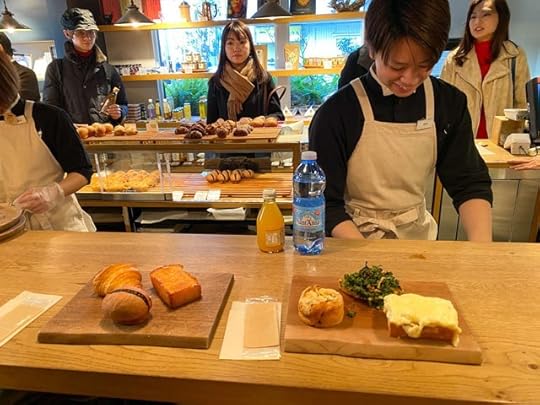
There was also the 365 Days Bakery, recommended to me by The Boy Who Bakes (Edd Kimber), which turned out to be the only place we could find open for lunch right around New Year’s. Eating perfect pastries in the middle of the day for sustenance is my kind of eating.

As much as we loved Tokyo, we loved Kyoto even more. We took the bullet train there (a whole ordeal involving prepaid tickets that ended up not being worthwhile because of something something, I don’t even remember) but upon arrival, we instantly fell in love. Our hotel, The Celestine Kyoto Gyon, was absolutely enchanting. Walking into the lobby, a dragon bit us on the head for good luck (a New Year’s custom).

Then we were escorted to the lobby, where we were presented with soothing green tea as our room was prepared.

The rooms here were spacious, simply adorned, and oh so comfortable (about 10X the size of our room in Tokyo). The hotel also had a public bath which we went to on the first night; you get completely naked, scrub yourself in a little stall, then sit in the very hot water. It was cleansing in every sense.
Our hotel also had the most wonderful Japanese breakfast buffet that had some of my favorite food of the trip.


Kyoto was positively humming with activity when we were there because of the New Year. There were all kinds of festivals going on around the temples with lots of food to sample. When we walked The Philosopher’s Path — an essential hike between two temples — we found a huge line of people waiting to say their prayers at the temple, and near it a woman serving cold soba noodles with smoked fish (it’s the lead picture in this post).

That Nishin Soba was truly extraordinarily — a bite I’ll never forget — the chewy noodles, the complex broth, the smokiness of the fish. It proved that all of the planning in the world couldn’t have generated this moment; it’s the kind of moment you have to open yourself up to without planning (how appropriate that it happened on The Philosopher’s Path).
Our first night there, we ate a traditional Kaiseki dinner at Gion Nanba. We sat in a little room and a woman, dressed in traditional Japanese garb, tended to us.

Every course was a mini masterpiece of elegance and precision. The first course came inside a ceramic swan (I believe it was soup).

But the prettiest course was this intricate array of small bites, each one more fascinating and delectable than the last.

The next day, we explored the Imperial Palace and the Nishiki Market where we had our next moment of culinary kismet. We stumbled upon a ramen shop, Gogyo, that serves burnt miso ramen. It was like regular ramen that spent a week at CBGBs in the 80s; this ramen was punk rock.

That night, we met up with our friends Jimmy and Raef — who were on a similar trip (we spent New Year’s with them in Tokyo) — at Tempura Endo Yasaka Gion.

This meal was a real mind-bender. Something as simple as a carrot was utterly transformed by tempura batter and a quick fry. Even the carrot greens became something special.

And this fried shrimp will probably be the best fried shrimp of my life.

The next day we took the bullet train back to Tokyo, I went back to Loft for some more knickknacks (bowls for eating oatmeal in the morning; two really cool spoons with a red handle) and then, on our last night, Genjiro took us to his favorite Izakaya, Iwao, in Shibuya with his friend Yucca.

We drank sake and ate casual sashimi…

…and gyozo pizza: like the inside of a dumpling on a crispy thin crust.

Plus these young sardines, called shirasu.

Before we knew it, we were at the airport the next day, flying back to L.A. and our beloved Winston. Who knew we’d also be flying back to a global pandemic and months and months of endless social distancing.
I share this with you now to remind you of how much world there still is out there and how exciting it’s going to be when we’re able to get back to it. I’m also sharing this as a reminder not to psych yourselves out of going on adventures; if I’d listened to that voice in my head that said “cancel the trip” none of this would’ve happened. That voice is an idiot.
Thanks to Genjiro for being such an exemplary host. We loved Japan and can’t wait to go back… on another New Year’s, clearly the best time to go.

TOKYO:
Hotel: Hotel Koe (Shibuya)
Restaurants: Reservations recommended (it’s easiest to book through your hotel).
Daraku in Shibuya (for Yakitori)Seirinkan (for pizza)Sushi Ginza Onodera 365 Days BakeryIwao (Izakaya in Shibuya)
Other Tokyo Destinations:
Tsutaya bookstore (Daikanyama T-site)Star Bar (in Ginza for cocktails)Loft Department Store (in Shibuya, for souvenirs)
KYOTO:
Hotel: The Celestine Kyoto Gion
Restaurants:
Gion NanbaGogyo Ramen (for the burnt miso)Tempura Endo Yasaka Gion
Helpful Japan Resources That I Used To Plan The Trip:
The 38 Essential Tokyo Restaurants (Eater)The Eater Guide To Tokyo (Eater)Time Out TokyoTokyo: Places I Love (101 Cookbooks)36 Hours in Kyoto (New York Times)Ed Droste’s Japan Travel Diary (Vogue)
The post Our Trip to Japan appeared first on The Amateur Gourmet.

July 16, 2020
White Bean Soup with Parmesan and Kale
We’ve escaped to Santa Barbara for a week with our friends Ryan and Jonathan, forming a mini quarantine community as Covid cases blow up all over the country. It’s making me think a lot about the idea of a “chosen family,” since my biological family is 3,000 miles away in Florida, at the epicenter of the virus (don’t worry: they’re doing okay).
Usually, when I go on vacation with friends, I take a break from cooking (causing much controversy since many friends are like: “Hey, I look at your Instagram, why aren’t you making me dinner?”). But here in our Santa Barbara bubble, I’ve happily become the resident chef: slicing fruit for yogurt and granola in the morning, toasting bread for sandwiches at lunch, and then whipping up random dinners. I may be annoying as a person, but as a quarantine roommate, I’m a star.
When packing for this week-long escape, I decided to load up my car with all kinds of cooking equipment: my stock pot (great for cooking for a group; not just for making stock), my Le Creuset Dutch oven, my knives, and a few essential tools (a microplane grater, a handheld juicer, a digital thermometer). I also brought a bag of Rancho Gordo cassoulet beans (white beans) in case I felt like making soup.

As you can see by the picture, my soup vision became a reality on our first full night here. The night before, I soaked the white beans in a big bowl of cold water. The next day, I went shopping at Lazy Acres — a pretty charming grocery store here in Santa Barbara, though with my mask on tightly, I was more concerned with getting out of there alive — and came home with onions, carrots, celery, Tuscan kale, rosemary, garlic, and a pasta that seemed good for soup (I forget the name). I also found the most incredible raw milk Parmesan.

It’s a wonder I didn’t just eat the whole thing by itself. Instead, I cut the rind off and threw it into my Dutch oven along with the rinsed beans, lots of cold water, and all of the aromatics. Those perked away for about an hour and then I made a soup base with the rest of the vegetables, pouring the beans and their broth in (after picking out all the stuff) and supplementing with water. The pasta goes in, along with the kale, and then you cook just until the pasta’s al dente.
The resulting soup was so cozy and comforting and not at all wrong for summer, when soup usually comes in the cold variety. But it’s chilly here at night, and this soup is still light because of the white beans and a hit of lemon zest that I added at the end.

Plus I used celery leaves as a garnish because you should never throw away your celery leaves. All in all, it’s a soup that anyone can make and everyone should make, especially now. It’s healthy but feels like a hug. And don’t we all need a hug these days? Here’s my hug to you.

White Bean Soup with Parmesan and Kale
A warming, light soup with lots of flavor from garlic, Parmesan rind, and lemon.
Servings 4 hungry people
IngredientsFor the beans:1 bag Rancho Gordo cassoulet beans (16 ounce bag) Any dry white beans will do here, but these are the best.1 whole carrot, peeled and broken in half1 large piece of celery, broken in half1 whole yellow onion, sliced in half1 head of garlic, sliced through the equator (exposing all the cloves)1 Parmesan rind (cut off a wedge of aged Parmesan)A few sprigs rosemary1 dried red chile 3 Tbs Kosher saltFor the soup:1/4 cup olive oil, plus more for drizzling1 onion, chopped4 carrots, peeled and chopped4 stalks celery, chopped (leaves reserved)6 cloves garlic, slicedPinch red chile flakes (plus more for serving)1 cup dry white wine1 pound small pasta (orecchiette, conchigliette, Orzo)1 head Tuscan kale, stemmed and slicedSalt and pepperFresh lemon zest (for serving)Grated Parmesan (for serving)
InstructionsThe night before you make the soup, rinse the beans and soak them in a large bowl of cold water. Change the water in the morning.In a large pot or Dutch oven, add the drained beans, the carrot, the celery, the onion, the garlic, Parmesan rind, rosemary, and dried red chili. Cover by at least an inch with cold water and season with the salt. Turn the heat to high, bring to a rapid boil for five minutes. Lower the heat to a simmer and cook, for at least an hour, until the beans are cooked through and creamy. (Note: make sure they're creamy, or you haven't cooked them long enough.) It's a good idea to taste the broth as it goes along; if it needs more salt, add it.When the beans are done cooking, turn off the heat and use tongs to remove the carrot, celery, onion, garlic, Parmesan rind, rosemary, and chili. It's okay if some stray rosemary needles are floating around or bits of garlic skin; this is a rustic soup. Set the beans aside.In your largest pot, add the olive oil and saute the onion, carrots, celery, garlic with a pinch of salt until everything is soft but not brown. Add the red chili flakes, cook a moment longer, then add the white wine and let it cook until it boils off.Add the entire pot of white beans and their liquid. Stir everything together and then add about two cups of water with another pinch of salt. Turn the heat to high and let everything perk away together for fifteen minutes.Taste the broth: it should be perfectly seasoned. If not, adjust with more salt. If it's too salty, add more water. Add the pasta and kale and cook together until the pasta is perfectly al dente.To plate, ladle the soup into bowls and drizzle with more olive oil, and sprinkle with the lemon zest, the Parmesan, more red chili flakes, and the celery leaves to garnish.
More White Bean Soups:
Soup of Cannellini Beans with Pasta and Rosemary (Amateur Gourmet)
White Bean Soup with Bacon and Herbs (Food & Wine)
Tuscan White Bean Soup (Barefoot Contessa)
Mediterranean White Bean Soup (The Kitchn)
Italian Wedding Soup (What’s Gaby Cooking)
The post White Bean Soup with Parmesan and Kale appeared first on The Amateur Gourmet.

July 14, 2020
Multicolored Plum Cake with Pistachios
There’s only one plum cake worth making in this world and that’s The New York Times‘s most popular recipe of all time: Marion Burros’ Plum Torte. It’s one of those magical recipes where you think there’s so little going into it, it can’t possibly be that great — you basically make a pancake batter and drop some plums into it — but then the torte comes out of the oven and you feel like Escoffier himself.
The thing is: when I first made this plum torte, I made it with the wrong kinds of plums. The original recipe calls for prune plums, which are very narrow, and allow for maximum plum-age: the recipe calls for 10 to 12 of them halved lengthwise. When I first did it, I used normal purple plums and couldn’t fit all of the plums in. It wasn’t until my friend Cary came over last year with prune plums that I made the cake the right way.
But you know what? My original technique — using normal-sized plums — actually yields a better result if, and only if, you get lots of different kinds of plums with lots of different colors. On a recent trip to Cookbook in Echo Park, I picked up Green Gage plums and Santa Rosa plums (which are purple on the inside too) and made the most gorgeous plum cake I’ve made so far.

The cake takes less plums when you do it this way, but if it’s true that “you eat with your eyes first,” this cake is far tastier than the original version. Plus, this time around, I sprinkled on some pistachios to give it even more color and also flavor and texture.
The results were so dazzling, it felt like eating a firework on the fourth of July (and, funny enough, I served this on the fourth of July). So the next time you’re out of the house and you see plums of many colors (Joseph shoutout!) grab a bunch, come home, and make this cake. It takes no time at all and the results will have you go go go-ing back for more.


Multicolored Plum Cake with Pistachios
A riff on Marion Burros' famous plum torte, with multicolored plums and pistachios.
Servings 8 slices
Ingredients1/2 cup unsalted butter, softened, plus more for greasing the pan3/4 cup sugar, plus more for sprinkling2 large eggs, room temperature1 cup unbleached flour, sifted In this particular version, I did 1/2 cup whole wheat flour, 1/2 cup AP flour, which worked great1 tsp baking powder1 pinch salt6 to 7 multicolored plums, halved and pitted1/2 cup green pistachios (out of the shell)1/4 cup powdered sugar (optional)
InstructionsPreheat the oven to 350 degrees and generously butter a springform pan with softened butter. (I use a lot here, it makes the outside of the cake extra brown and toasty and helps it come out easily.)Now cream the 1/2 cup butter and 3/4 cups sugar in a stand mixer until fluffy. Add the eggs one at a time until well incorporated. Add the flour, baking powder, and salt, and mix just until combined. Pour into the prepared pan.Place in the plums, skin side up (I did the opposite here and it still worked). Sprinkle with the pistachios and a little more sugar.Bake one hour or until a cake tester comes out clean. Cool in the pan for 15 minutes, then remove the sides, cool completely, and dust with powdered sugar right before serving.
Other Plum Cakes:
Almond Cake with Plums (Amateur Gourmet)
Plum Cake “Tatin” (Ina Garten, Food Network)
Plum Cake (Martha Stewart)
Olive Oil Plum Cake (NYT)
Purple Plum Torte (Smitten Kitchen)
The post Multicolored Plum Cake with Pistachios appeared first on The Amateur Gourmet.

July 12, 2020
Darkest Chocolate Sorbet
There’s a certain math when it comes to frozen desserts. The math goes something like this: ice cream > sorbet. The logic for this has everything to do with decadence: ice cream has fat, sorbet traditionally doesn’t. You can blend a watermelon, add a little sugar syrup, and freeze that in an ice cream maker and that’s “sorbet.” It’s basically frozen, blended fruit. Ice cream involves warming cream, infusing egg yolks, adding lots of chopped naughty bits — chocolate, candied walnuts, cake crumbles — and churning that into something that feels like a real treat. Again, at the risk of repeating myself: ice cream > sorbet.
Imagine my shock and surprise, then, to make Melissa Clark’s Darkest Chocolate Sorbet from her new book, Dinner in French, only to discover that this frozen chocolate concoction of the sorbet variety was far to superior to any frozen chocolate dessert I’ve ever had. I’ll give you a moment to take that in.
What makes this chocolate sorbet so extraordinary? It has everything to do with the texture. To make it, you whisk cocoa powder, granulated sugar, and dark brown sugar into water and cook that until the sugar has dissolved. Then you pour that over chopped dark chocolate and wait until the chocolate melts. You stir in vanilla and refrigerate that until it’s ready to churn.

The result, after churning, is light because of the water — it makes refreshing, chocolate ice crystals that cool you down as you eat it — but then there’s that melted chocolate which makes everything so rich. The closest thing I can compare it to is the famous frozen hot chocolate at Serendipity 3 in New York (apparently, it was Andy Warhol’s favorite dessert).
Hot chocolate is a good thing to think about when contemplating this dessert because the best hot chocolate is made the same way: you stir cocoa powder into hot water (sometimes milk, but forget that) and then add chopped chocolate. So you could call this frozen hot chocolate sorbet or you could call it darkest chocolate sorbet or you could even, I bet, call it chocolate ice cream (even though it’s not) and your family would be fooled.
Whatever you call it, you simply have to make it. It’s the best dessert I’ve made all quarantine and I polished it off last night and I’m so sad that it’s gone, I may have to make it tonight. Stop me before I sorbet again.
Darkest Chocolate Sorbet
A decadent yet refreshing chocolate sorbet from Melissa Clark's new cookbook, Dinner in French.
Servings 1 quart
Ingredients3/4 cup granulated sugar1/2 cup dark brown sugarPinch fine sea salt2/3 cup Dutch-process cocoa powder I use Valrhona (it's the best!)8 ounces dark chocolate (at least 72% cacao), chopped Scharffen Berger bittersweet is my go-to.1 tsp vanilla extract
InstructionsIn a medium pot, combine the granulated sugar, brown sugar, salt, and 2 1/2 cups of water and bring to a boil. Reduce the heat to a simmer and whisk in the cocoa powder. Cook, stirring occasionally, until the sugar has dissolved, about 5 minutes.Meanwhile, place the chopped chocolate in a heatproof bowl. Pour the hot cocoa mixture on top. Let the mixture sit for 2 minutes to start melting the chocolate, then whisk until the chocolate is completely melted and the mixture is smooth.Stir in the vanilla. If you want a perfectly silky sorbet, use an immersion blender to briefly blend the mixture and get rid of any chocolate lumps. You can skip this step if you don't mind a bit of chocolate chip-like texture in your sorbet (I skipped this step!). Cover and chill for at least 4 hours and up to overnight.Process the mixture in an ice cream machine according to the manufacturer's instructions. Serve immediately or freeze until hard.
Other Worthy Chocolate Sorbets:
David Lebovitz’s Chocolate SorbetKing Arthur Flour’s Chocolate SorbetSmitten Kitchen’s Chocolate SorbetSaveur’s Chocolate Sorbet
The post Darkest Chocolate Sorbet appeared first on The Amateur Gourmet.

July 10, 2020
Ricotta Pancakes

When I look back on this period of our lives — and I do sincerely hope that we’ll be looking back on it someday and that quarantine isn’t just a new way of life — there are certain cultural artifacts that’ll remind of me this time: The Leftovers (which we marathoned at the start of the pandemic; it’s very on-the-nose and also very good), The Nilsson Sessions (my go-to cooking music these days), The Patrick Melrose novels (read them over the past few months), Parting Glances (an incredible movie that we watched in our Zoom movie club), and, most relevant to your interests: ricotta pancakes.
How did I arrive at these ricotta pancakes? I can trace it back to my friend Diana telling me about Farm Fresh To You (a great CSA) and the incredible ricotta that they carry from Bellwether Farms. I signed up and started getting the ricotta every week — it comes in a little basket, so the whey drains out and the ricotta is extra thick — and at some point I had a ricotta pile-up. Instead of just eating it with a spoon (a viable option, considering how good it was), I decided to treat ourselves to ricotta pancakes one morning for breakfast.
Craig is a waffle guy, a French toast guy, but not a pancake guy. I mentioned that I was making pancakes and he seemed unenthused. I told him that they had ricotta and he seemed a little more thused. Then I made them using a recipe from The Kitchn...

…and upon taking a bite his eyes lit up and he said that they were easily the best pancakes he’d ever had.
What makes them so great? Well the batter is super easy: it’s flour, a little sugar, salt, baking powder, milk, and then that ricotta, which makes everything so rich. But the real kicker is you separate the eggs, working the yolks into the batter, and then you beat the whites until you get stiff peaks and fold that in. That lightens things up so much, the pancakes practically float out of the pan when you’re making them.
So treat yourself, this quarantine, to a pancakes with a little pizazz. When you look back on this time, they’ll be one of the good memories.

Ricotta Pancakes
The fluffiest, most ethereal pancakes you'll ever meet.
Servings 8 pancakes
Ingredients1 cup ricotta cheese The better your ricotta, the better the pancakes will be (find Bellwether if you can). Drain the ricotta for 30 minutes in a strainer if it seems very wet.1 cup all-purpose flour1/2 tsp baking powder1 1/2 Tbs granulated sugar1/4 tsp fine salt3/4 cup milk Whole milk is best here. 2 large eggs, separated1/2 tsp vanilla extractButter
InstructionsWhisk together the flour, baking powder, sugar, and salt in a small bowl. Mix together the ricotta, milk, egg yolks, and vanilla in a separate bowl. Add the dry to the wet and stir gently 'til it's all combined.Now's the workout: beat the egg whites BY HAND with a whisk. I say "by hand" because this is your morning workout! You have to earn those pancakes. Stop when they form stiff peaks (lift up the egg whites with a whisk, and if they stay frozen like a painting of a wave, you're good). Stir some of the egg whites into the pancake batter, then fold in the rest with a spatula.Heat a griddle or a non-stick skillet over medium-high heat and add enough butter to coat the pan. Use an ice-cream scoop or a 1/3-cup measure to pour batter on to the hot butter. Cook for 3 to 4 minutes until you see bubbles on top of the pancakes and the bottoms are starting to crisp and turn golden brown. Flip and cook another minute or two, until golden. Remove the pancakes to a cookie sheet and keep warm in a 300 degree oven until all the pancakes are done.Serve the pancakes with maple syrup and blueberries, if you have blueberries. (Poached rhubarb is great here too.) Enjoy!
Other Worthy Ricotta Pancakes:
Ricotta Pancakes with Blueberries (Food & Wine)Light, Fluffy, and Rich Ricotta Pancakes (NYT)Ricotta Pancakes with Blueberry Compote (Bon Appetit)Lemon Ricotta Pancakes (Simply Recipes)Blueberry Lemon Ricotta Pancakes (The Spruce Eats)
The post Ricotta Pancakes appeared first on The Amateur Gourmet.

July 8, 2020
Darkest Chocolate Sorbet

There’s a certain math when it comes to frozen desserts. The math goes something like this: ice cream > sorbet. The logic for this has everything to do with decadence: ice cream has fat, sorbet traditionally doesn’t. You can blend a watermelon, add a little sugar syrup, and freeze that in an ice cream maker and that’s “sorbet.” It’s basically frozen, blended fruit. Ice cream involves warming cream, infusing egg yolks, adding lots of chopped naughty bits — chocolate, candied walnuts, cake crumbles — and churning that into something that feels like a real treat. Again, at the risk of repeating myself: ice cream > sorbet.
Imagine my shock and surprise, then, to make Melissa Clark’s Darkest Chocolate Sorbet from her new book, Dinner in French, only to discover that this frozen chocolate concoction of the sorbet variety was far to superior to any frozen chocolate dessert I’ve ever had. I’ll give you a moment to take that in.
What makes this chocolate sorbet so extraordinary? It has everything to do with the texture. To make it, you whisk cocoa powder, granulated sugar, and dark brown sugar into water and cook that until the sugar has dissolved. Then you pour that over chopped dark chocolate and wait until the chocolate melts. You stir in vanilla and refrigerate that until it’s ready to churn.
The result, after churning, is light because of the water — it makes refreshing, chocolate ice crystals that cool you down as you eat it — but then there’s that melted chocolate which makes everything so rich. The closest thing I can compare it to is the famous frozen hot chocolate at Serendipity 3 in New York (apparently, it was Andy Warhol’s favorite dessert).
Hot chocolate is a good thing to think about when contemplating this dessert because the best hot chocolate is made the same way: you stir cocoa powder into hot water (sometimes milk, but forget that) and then add chopped chocolate. So you could call this frozen hot chocolate sorbet or you could call it darkest chocolate sorbet or you could even, I bet, call it chocolate ice cream (even though it’s not) and your family would be fooled.
Whatever you call it, you simply have to make it. It’s the best dessert I’ve made all quarantine and I polished it off last night and I’m so sad that it’s gone, I may have to make it tonight. Stop me before I sorbet again.

The post Darkest Chocolate Sorbet appeared first on The Amateur Gourmet.

July 3, 2020
Adeena Sussman’s 24-Hour Salted Lemon Spread

Here in quarantine, we can use all of the thrills we can get. You can run through sprinklers, for a start, or cull your coffee mug collection (Lord knows we have too many) but here’s one that you can actually eat: Adeena Sussman’s 24-Hour Salted Lemon Spread.
I’m a bit obsessed with Adeena Sussman’s cookbook, Sababa. Everything that I’ve made from it has been an enormous hit: the herb and garlic kebaburgers, the creamy green shakshuka, even just the white tahini sauce with garlic that you make in the food processor with ice water (it makes it fluffy). But this salted lemon spread is something else. It’s not for the faint of heart: it’s very salty, very lemony, a little bitter and a little hot from the chiles (I used habaneros). But oh how it enlivens an otherwise humdrum dinner.
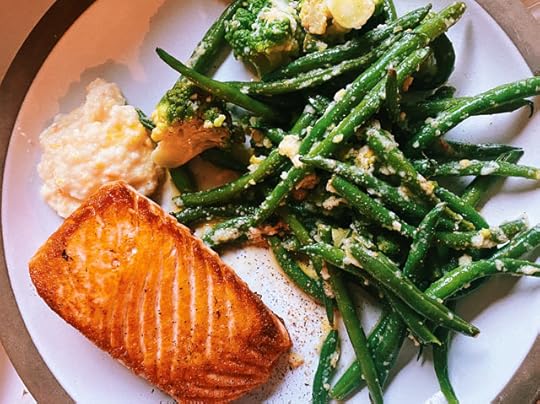
For example, the other night I shallow-steamed haricots verts and some Romanesco florets, then seared some salmon in Canola oil (I normally use grapeseed but couldn’t find any). The dinner would’ve been tasty, but then I stirred some of the salted lemon spread into the vegetables and WHAM! POW! They became exciting. And I put more of the spread on the plate for dipping the salmon, and that too started singing like Ariel in The Little Mermaid.
Then yesterday, I was eyeing an heirloom tomato on the counter and the loaf of sesame sourdough I’d purchased from Cookbook in Echo Park (where you shop one customer at a time, which I love). I decided to mix some of the salted lemon spread with mayo, spread it on slices of the sourdough, top with arugula tossed in olive oil and white Balsamic, and then thick slices of the tomato. It was a tomato sandwich for the ages.

So how do you make it? I suppose this is the place where I should just put the actual recipe so those who like to skip over all of the writing I did above can just read it and make it themselves. Fair enough! Here you go. Hope it wakes up your quarantine the way it’s woken up ours. And if you come up with other exciting ways to use it, please share them here.
Adeena Sussman’s 24-Hour Salted Lemon Spread (from Sababa: Fresh, Sunny Flavors from My Israeli Kitchen)
3 large or 4 medium lemons (1 pound), preferably thin-skinned, scrubbed3 large garlic cloves, thinly sliced1 small green jalapeño, seeded and chopped (I used a habanero because I like the heat and the fruitiness)3 tablespoons kosher salt2 tablespoons canola or other neutral-flavored oil
Trim the tops and bottoms from the lemons and slice each one into 8 wedges, then trim and discard all the visible white membranes from the tips of the wedges and remove and discard the seeds.
Cut each wedge crosswise into 3 chunks (oops, forgot to do this!) and toss them in a medium nonreactive bowl along with the garlic, jalapeño, and salt. Cover and refrigerate for 24 hours, tossing every 8 hours if you can.
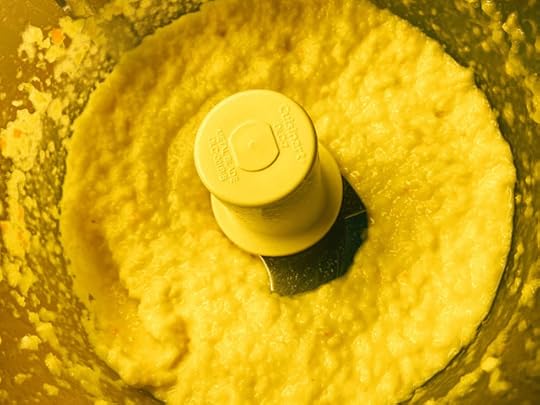
Transfer the contents of the bowl to the bowl of a food processor and puree with the canola oil until just about smooth, 30 seconds to 1 minute. Stored in an airtight container, the 24-Hour Salted Lemon Spread will keep in the fridge for up to 1 month.
The post Adeena Sussman’s 24-Hour Salted Lemon Spread appeared first on The Amateur Gourmet.

April 17, 2020
Homemade Sourdough
Hello from quarantine, my long-lost blog readers. I know I’ve neglected you for a while — I’ve shifted all of my energies to Instagram and my podcast — but something has happened during this strange time that calls for me to dust off the ol’ food blog and tell you about it. And that something is that I’ve become one of those sourdough people.
I know, I know: there’s a lot of uproar about making sourdough right now. For starters (haha: sourdough humor), you need a LOT of flour to make it. Not just to make a loaf, but to feed the starter that’ll give your loaf rise. I bought some red fife whole wheat flour on Anson Mills website a few weeks ago that’s been sustaining me, along with their bread flour; but when that ran out, I went to Central Milling and bought three fifty pound bags of flour. At the time, I didn’t really visualize in my head what that looked like (it seemed like a good deal); now I have three enormous bags of flour in my kitchen that I can barely lift, let alone open. (If that sounds selfish to hoard all of this flour, don’t worry, I’m giving lots of it away; and baking loaves of sourdough for friends which I put in my trunk, so I can stay six feet away upon delivery.)

Now that I’ve addressed the downside of making sourdough right now, let me address the upside: this is the perfect moment to take the time to learn how to make sourdough. Emphasis on the word “time”: if you’ve got plenty of it, like most do in quarantine, and you’ve got plenty of flour, the only thing stopping you is fear. So let me help you with that.
Sourdough is an intuitive process. The main thing to understand is that you’re working with wild yeast. You could make a very plain-tasting bread with a packet of yeast that’ll be a wonderful way to begin your bread journey (I recommend this Splendid Table sandwich bread, which I made a few weeks ago on the recommendation of Tucker Shaw and loved); but with a sourdough starter (and the wild yeast contained within it), you’re going to get a bread that brings in ‘da noise, brings in ‘da funk.
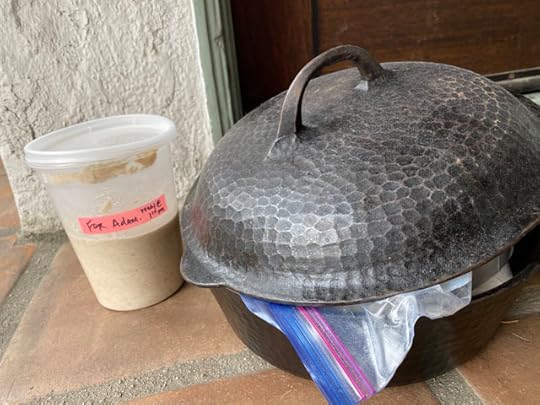
What you see above, is the greatest gift I’ve ever been given: a mature sourdough starter (from the amazing pizza restaurant, Ronan), a cast iron cooking vessel, and two bags of flour from my extremely generous neighbors Rachael Sheridan and Jeremy Fox. You may be thinking to yourselves: “Oh, well no wonder he’s had so much luck with sourdough… famous food people gave him an amazing starter!” And you’d be absolutely right: I think so much of my early success (I’m eight beautiful loaves in), has to do with this magical starter.
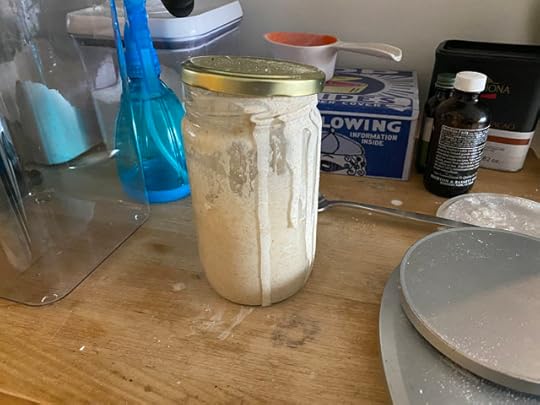
But all is not lost! If you can’t get your hands on a mature starter (and you can buy mature starter online, or ask any bakery if you can have some), you can definitely make your own. My sourdough journey actually began two weeks ago when I started watching Josey Baker’s sourdough tutorials on Instagram. If this post leaves you with nothing else, let it be these tutorials. After reading countless books on sourdough (including Tartine Bread and Flour Water Salt Yeast, both excellent), the Josey Baker videos are what got me off my ass and into the kitchen. He demystifies everything, including making your own starter. In fact that video is kind of hilarious: you just mix flour and water and that’s it. Leave it on your counter for two weeks, feed every day, and you’ve got starter. (Whole grain flour is best.)
Josey made everything seem easy and that’s how I’ve been thinking about sourdough bread-making: the less you build it up in your head, the easier it’ll be. Rachael turned me on to a recipe from Ursula Siker (@basic_baker_bitch) who has her own helpful sourdough tutorials on Instagram. Her recipe made two loaves and so I cut it in half. I often find it helpful to write out complex recipes by hand to help me understand each step, so this is what’s currently attached, via magnet, to my fridge.

It seems complicated, so let me simplify.
The first step is to turn your starter into a leaven. What’s the difference between a starter and a leaven? This is something I’ve been trying to figure out, so here’s how I understand it: a starter is something you maintain to make future bread; a leaven is something you mix when you’re ready to make bread that day. (In either case, I keep the starter on my counter with the lid half-off. You can refrigerate, but then you have to revive the starter, something that I’m scared to do. Plus keeping it on my counter encourages me to keep making sourdough; the more you make sourdough, the better you’ll get at it.) So every day, I feed the starter: I pour out most (leaving 1/2 cup), add 1/2 cup of warm water, and then I add enough flour to make it into a mildly thick paste. That’s it.
But when I’m ready to make sourdough, I make the leaven. So, using a kitchen scale (a must for making sourdough) at 9 in the morning, I mix 25 g starter, 200 g water (at 78 degrees; I don’t take the temp, I just guesstimate), 100 g of AP flour and 100 g whole wheat flour. It should be a thickish paste. Leave that in the jar or container and go have your morning. At 1:30 PM, when your leaven has hopefully come to life (it’ll be bubbly and bigger) it’s time for the next step.
Now it’s time to make your dough. In a large bowl, using the scale, mix together 375 g water (at 90 degrees; again, I guesstimate), 100 g leaven, 450 g AP flour, 50 g whole wheat flour, and 10 g salt. Don’t forget the salt! I mix this by hand, which is important; not only does it help you bring everything gently together, it allows you to get a feel for your dough. As I’ve gone along, I’ve started to notice if my dough is too wet and I’ll sometimes add a little more flour.
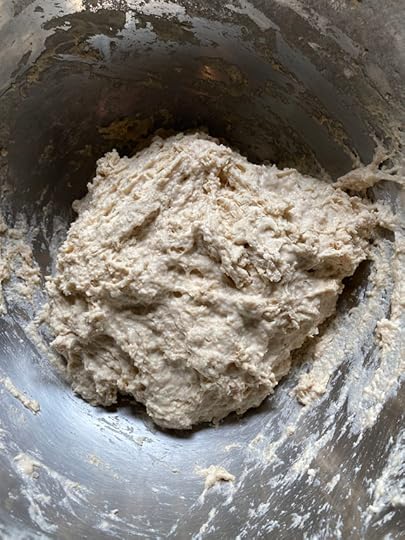
That’s what your dough will look like in that first, shaggy step. Worry not: you don’t need to knead it or work it or do anything. Once it’s mixed (and this is what I learned from Josey), you just cover it with a dish towel and walk away for an hour.
When the hour’s up, it’s time to start your folding. This is where time comes in. You’re going to fold the dough, every 30 minutes, for the next four hours. “Four hours!” you might be thinking. “Yes, four hours,” I reply. But we’re in quarantine, what else are you doing?
Folding may sound complex, but it’s actually super fast and simple. Here’s an image from Flour Water Salt Yeast, I hope I don’t get in trouble for using it. (Josey’s videos are also super helpful on this front.)
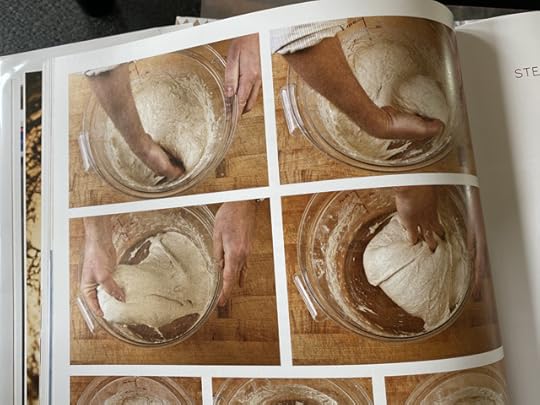
As you can see you just grab the dough from one side and pull it up. You’re stretching it basically; pull it up, but don’t tear it, and lift it to the other side of the dough. So if you’re pulling the dough up from 9 o’clock, pull it to 3 o’clock. Do this four times all the way around (it helps if your hand is wet) from 9 to 3, 12 to 6, 3 to 9, and 6 to 12, and finish by flipping the dough upside down. Cover and do again in 30 minutes.
You’re basically giving this shaggy dough structure each time that you do this. When four hours are up, you should notice that the dough is smoother and sturdier. You can do something called the windowpane test after four hours: that’s where you stretch the dough to see if you can see through it, like a windowpane. If you can, you’ve done a good job. If not, you could keep folding for another hour or so.
Now we’re ready to pre-shape! Dust a large cutting board with flour, dust the top of your dough, and flip upside down (flour-dusted side down). Do your same folding technique and then flip upside-down again and gently shape into a nice ball. Rest for half an hour.

After half an hour, you’re ready to do the final shape and transfer to a proofing basket. I got my proofing basket in France years ago; it’s linen-lined and I DUST IT WELL WITH FLOUR before adding the dough, or I’d never get it out the next morning. My friend Emily doesn’t have a proofing basket and made a successful loaf lining a colander with a dish towel and also dusting it well with flour.
To do the final shape, dust the top of your dough with flour again, flip upside down, then do the same four folds, only this time, instead of flipping upside down, you’re going to place it — smooth side-down, seam-side up — into the well-dusted proofing basket. Nicole Rucker (my friend and one of the best bakers around) saw what I was doing at this point on Instagram and told me to really pinch the seams closed, so be sure to do that.
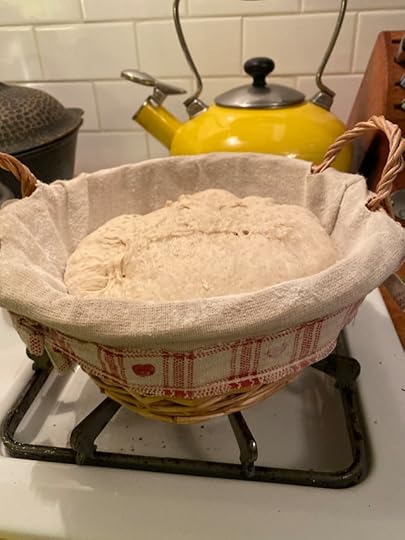
Are you proud of yourself? The hard part’s over! Now you just cover this with a dish towel and place in the fridge overnight.
The next morning, place your Dutch oven into the oven with the lid on and heat to 475. Again, Rachael and Jeremy leant me a beautiful cast iron one; I have a 4-qt Staub one from Sur La Table on the way right now (it’s on sale and worth looking at; $99, down from $400!). The key here is your want a round, 4-quart Dutch oven if you can find one. Anything larger — like my normal, oval-shaped Le Creuset — will give too much room to the bread and it won’t puff up into a beautiful boule.
So once your Dutch oven is hot (I leave it in there at least half an hour), CAREFULLY take it out and lift the lid off. Carefully remove the dough from the proofing basket (don’t handle too much, you don’t want to deflate it) and place it in the hot Dutch oven, smooth side up. Then take a serrated knife and carefully slash along the top.

Carefully put the lid back on and place back in the 475 oven and cook for 20 minutes. Then take the lid off (your kitchen is going to smell amazing right now). Look at how it’s puffed up!

The final step is just to bake it another 15 to 20 minutes. Ken Forkish, the author of Flour Water Salt Yeast, says it’s important to really brown your bread here. So just keep it an eye on it and see how far you can take it. I try to really get a deep, dark brown.

Take it out of the oven, lift with a metal spatula on to a baking rack, and cool for at least an hour before cutting into it.

So, yes, it’s a lot of work to make sourdough. But the secret is, the more you do it, the more all of these steps become second nature. Now I’ve started making a loaf a day; it’s a soothing break from reading the news. And dropping off loaves to friends is a way to not only still feel connected, but to feel like you’re doing some good during this crisis.
And nothing beats the feeling of triumph you’ll feel when you pull a loaf of sourdough that you made yourself out of the oven. So I’m passing the baton to you, dear reader: now it’s your turn to sourdough.


Homemade Sourdough
A step-by-step guide to making amazing sourdough at home with an already active starter.
Servings 1 loaf
EquipmentDigital kitchen scaleProofing basket (or bowl lined with a kitchen towel)4-quart Dutch oven with a lid
IngredientsFor the leaven:200 g water (78 degrees)100 g AP flour100 g whole wheat flour25 g starterFor the sourdough:375 g water (90 degrees)450 g AP flour50 g whole wheat flour100 g leaven10 g salt
InstructionsFirst, make the leaven: in a jar, mix together the 200 g water (at 78 degrees), 100 g AP flour, 100 g whole wheat flour, and 25 g starter. Cover loosely with lid and leave for four hours until bubbly and almost double in size.To make the dough, in a large bowl, using your hands, mix together the 375 g water (at 90 degrees), 450 g AP flour, 50 g whole wheat flour, 100 g leaven, and 10 g salt. The dough should be shaggy; if it's very wet, you can add a little more flour. Cover with a kitchen towel and leave for one hour.Now we start the folding: grab the dough from one side and pull it up. You’re stretching it basically; pull it up, but don’t tear it, and lift it to the other side of the dough. So if you’re pulling the dough up from 9 o’clock, pull it to 3 o’clock. Do this four times all the way around (it helps if your hand is wet) from 9 to 3, 12 to 6, 3 to 9, and 6 to 12, and finish by flipping the dough upside down. Cover and do again every 30 minutes for the next four hours.Time to pre-shape: dust a large cutting board with flour, dust the top of your dough, and flip upside down (flour-dusted side down). Do your same folding technique and then flip upside-down again and gently shape into a nice ball. Rest for half an hour.The final shape: dust the top of your dough with flour again, flip upside down, then do the same four folds, only this time, instead of flipping upside down, you’re going to place it — smooth side-down, seam-side up — into the well-floured proofing basket or a bowl lined with a well-floured kitchen towel. The hard part’s over! Now you just cover this with a dish towel and place in the fridge overnight.The next morning, place your Dutch oven into the oven with the lid on and heat to 475. Once your Dutch oven is hot (I leave it in there at least half an hour), CAREFULLY take it out and lift the lid off. Carefully remove the dough from the proofing basket (don’t handle too much, you don’t want to deflate it) and place it in the hot Dutch oven, smooth side up. Then take a serrated knife and carefully slash along the top.Carefully put the lid back on and place back in the 475 oven and cook for 20 minutes. Then take the lid off (your kitchen is going to smell amazing right now). Look at how it’s puffed up! The final step is just to bake it another 15 to 20 minutes until it's a deep, dark brown.Take it out of the oven, lift with a metal spatula on to a baking rack, and cool for at least an hour before cutting into it.
NotesA lot of people have asked about the amount of leaven this recipe makes vs. the amount that’s actually used (seems to make too much). Lately, I’ve just been winging the leaven step by pouring out most of my starter (until there’s 2 Tbs left in the jar), adding warm water from the faucet (about 1 cup), stirring with a knife, and then adding enough whole wheat flour to form a thick paste. I just use that as my leaven in the next step.
Related Bread Content:
The No-Knead Bread (Amateur Gourmet)
Rustic Sourdough Bread (King Arthur Flour)
How To Make Sourdough Bread (Serious Eats)
Sourdough Bread (The Splendid Table)
Sourdough Starter Crackers (Bon Appetit)
The post Homemade Sourdough appeared first on The Amateur Gourmet.

How I Sourdough

Hello from quarantine, my long-lost blog readers. I know I’ve neglected you for a while — I’ve shifted all of my energies to Instagram and my podcast — but something has happened during this strange time that calls for me to dust off the ol’ food blog and tell you about it. And that something is that I’ve become one of those sourdough people.
I know, I know: there’s a lot of uproar about making sourdough right now. For starters (haha: sourdough humor), you need a LOT of flour to make it. Not just to make a loaf, but to feed the starter that’ll give your loaf rise. I bought some red fife whole wheat flour on Anson Mills website a few weeks ago that’s been sustaining me, along with their bread flour; but when that ran out, I went to Central Milling and bought three fifty pound bags of flour. At the time, I didn’t really visualize in my head what that looked like (it seemed like a good deal); now I have three enormous bags of flour in my kitchen that I can barely lift, let alone open. (If that sounds selfish to hoard all of this flour, don’t worry, I’m giving lots of it away; and baking loaves of sourdough for friends which I put in my trunk, so I can stay six feet away upon delivery.)
Now that I’ve addressed the downside of making sourdough right now, let me address the upside: this is the perfect moment to take the time to learn how to make sourdough. Emphasis on the word “time”: if you’ve got plenty of it, like most do in quarantine, and you’ve got plenty of flour, the only thing stopping you is fear. So let me help you with that.
Sourdough is an intuitive process. The main thing to understand is that you’re working with wild yeast. You could make a very plain-tasting bread with a packet of yeast that’ll be a wonderful way to begin your bread journey (I recommend this Splendid Table sandwich bread, which I made a few weeks ago on the recommendation of Tucker Shaw and loved); but with a sourdough starter (and the wild yeast contained within it), you’re going to get a bread that brings in ‘da noise, brings in ‘da funk.
What you see above, is the greatest gift I’ve ever been given: a mature sourdough starter (from the amazing pizza restaurant, Ronan), a cast iron cooking vessel, and two bags of flour from my extremely generous neighbors Rachael Sheridan and Jeremy Fox. You may be thinking to yourselves: “Oh, well no wonder he’s had so much luck with sourdough… famous food people gave him an amazing starter!” And you’d be absolutely right: I think so much of my early success (I’m eight beautiful loaves in), has to do with this magical starter.
But all is not lost! If you can’t get your hands on a mature starter (and you can buy mature starter online, or ask any bakery if you can have some), you can definitely make your own. My sourdough journey actually began two weeks ago when I started watching Josey Baker’s sourdough tutorials on Instagram. If this post leaves you with nothing else, let it be these tutorials. After reading countless books on sourdough (including Tartine Bread and Flour Water Salt Yeast, both excellent), the Josey Baker videos are what got me off my ass and into the kitchen. He demystifies everything, including making your own starter. In fact that video is kind of hilarious: you just mix flour and water and that’s it. Leave it on your counter for two weeks, feed every day, and you’ve got starter. (Whole grain flour is best.)
Josey made everything seem easy and that’s how I’ve been thinking about sourdough bread-making: the less you build it up in your head, the easier it’ll be. Rachael turned me on to a recipe from Ursula Siker (@basic_baker_bitch) who has her own helpful sourdough tutorials on Instagram. Her recipe made two loaves and so I cut it in half. I often find it helpful to write out complex recipes by hand to help me understand each step, so this is what’s currently attached, via magnet, to my fridge.
It seems complicated, so let me simplify.
The first step is to turn your starter into a leaven. What’s the difference between a starter and a leaven? This is something I’ve been trying to figure out, so here’s how I understand it: a starter is something you maintain to make future bread; a leaven is something you mix when you’re ready to make bread that day. (In either case, I keep the starter on my counter with the lid half-off. You can refrigerate, but then you have to revive the starter, something that I’m scared to do. Plus keeping it on my counter encourages me to keep making sourdough; the more you make sourdough, the better you’ll get at it.) So every day, I feed the starter: I pour out most (leaving 1/2 cup), add 1/2 cup of warm water, and then I add enough flour to make it into a mildly thick paste. That’s it.
But when I’m ready to make sourdough, I make the leaven. So, using a kitchen scale (a must for making sourdough) at 9 in the morning, I mix 25 g starter, 200 g water (at 78 degrees; I don’t take the temp, I just guesstimate), 100 g of AP flour and 100 g whole wheat flour. It should be a thickish paste. Leave that in the jar or container and go have your morning. At 1:30 PM, when your leaven has hopefully come to life (it’ll be bubbly and bigger) it’s time for the next step.
Now it’s time to make your dough. In a large bowl, using the scale, mix together 375 g water (at 90 degrees; again, I guesstimate), 100 g leaven, 450 g AP flour, 50 g whole wheat flour, and 10 g salt. Don’t forget the salt! I mix this by hand, which is important; not only does it help you bring everything gently together, it allows you to get a feel for your dough. As I’ve gone along, I’ve started to notice if my dough is too wet and I’ll sometimes add a little more flour.
That’s what your dough will look like in that first, shaggy step. Worry not: you don’t need to knead it or work it or do anything. Once it’s mixed (and this is what I learned from Josey), you just cover it with a dish towel and walk away for an hour.
When the hour’s up, it’s time to start your folding. This is where time comes in. You’re going to fold the dough, every 30 minutes, for the next four hours. “Four hours!” you might be thinking. “Yes, four hours,” I reply. But we’re in quarantine, what else are you doing?
Folding may sound complex, but it’s actually super fast and simple. Here’s an image from Flour Water Salt Yeast, I hope I don’t get in trouble for using it. (Josey’s videos are also super helpful on this front.)
As you can see you just grab the dough from one side and pull it up. You’re stretching it basically; pull it up, but don’t tear it, and lift it to the other side of the dough. So if you’re pulling the dough up from 9 o’clock, pull it to 3 o’clock. Do this four times all the way around (it helps if your hand is wet) from 9 to 3, 12 to 6, 3 to 9, and 6 to 12, and finish by flipping the dough upside down. Cover and do again in 30 minutes.
You’re basically giving this shaggy dough structure each time that you do this. When four hours are up, you should notice that the dough is smoother and sturdier. You can do something called the windowpane test after four hours: that’s where you stretch the dough to see if you can see through it, like a windowpane. If you can, you’ve done a good job. If not, you could keep folding for another hour or so.
Now we’re ready to pre-shape! Dust a large cutting board with flour, dust the top of your dough, and flip upside down (flour-dusted side down). Do your same folding technique and then flip upside-down again and gently shape into a nice ball. Rest for half an hour.
After half an hour, you’re ready to do the final shape and transfer to a proofing basket. I got my proofing basket in France years ago; it’s linen-lined and I DUST IT WELL WITH FLOUR before adding the dough, or I’d never get it out the next morning. My friend Emily doesn’t have a proofing basket and made a successful loaf lining a colander with a dish towel and also dusting it well with flour.
To do the final shape, dust the top of your dough with flour again, flip upside down, then do the same four folds, only this time, instead of flipping upside down, you’re going to place it — smooth side-down, seam-side up — into the well-dusted proofing basket. Nicole Rucker (my friend and one of the best bakers around) saw what I was doing at this point on Instagram and told me to really pinch the seams closed, so be sure to do that.
Are you proud of yourself? The hard part’s over! Now you just cover this with a dish towel and place in the fridge overnight.
The next morning, place your Dutch oven into the oven with the lid on and heat to 475. Again, Rachael and Jeremy leant me a beautiful cast iron one; I have a 4-qt Staub one from Sur La Table on the way right now (it’s on sale and worth looking at; $99, down from $400!). The key here is your want a round, 4-quart Dutch oven if you can find one. Anything larger — like my normal, oval-shaped Le Creuset — will give too much room to the bread and it won’t puff up into a beautiful boule.
So once your Dutch oven is hot (I leave it in there at least half an hour), CAREFULLY take it out and lift the lid off. Carefully remove the dough from the proofing basket (don’t handle too much, you don’t want to deflate it) and place it in the hot Dutch oven, smooth side up. Then take a serrated knife and carefully slash along the top.
Carefully put the lid back on and place back in the 475 oven and cook for 20 minutes. Then take the lid off (your kitchen is going to smell amazing right now). Look at how it’s puffed up!
The final step is just to bake it another 15 to 20 minutes. Ken Forkish, the author of Flour Water Salt Yeast, says it’s important to really brown your bread here. So just keep it an eye on it and see how far you can take it. I try to really get a deep, dark brown.
Take it out of the oven, lift with a metal spatula on to a baking rack, and cool for at least an hour before cutting into it.
So, yes, it’s a lot of work to make sourdough. But the secret is, the more you do it, the more all of these steps become second nature. Now I’ve started making a loaf a day; it’s a soothing break from reading the news. And dropping off loaves to friends is a way to not only still feel connected, but to feel like you’re doing some good during this crisis.
And nothing beats the feeling of triumph you’ll feel when you pull a loaf of sourdough that you made yourself out of the oven. So I’m passing the baton to you, dear reader: now it’s your turn to sourdough.
The post How I Sourdough appeared first on The Amateur Gourmet.

Adam D. Roberts's Blog

- Adam D. Roberts's profile
- 3 followers

