Dan Leo's Blog, page 35
March 30, 2019
"It Ain't Like the Old Days"

“It ain’t like the old days,” bellowed Frankie Titana. Actually everything he said was bellowed. Bellowing was Frankie’s normal tone of voice. “Nobody’s got no respect no more. Goddam beatniks. Goddam jitterbuggers. When I was a kid people respected their goddam parents. The coloreds knew their place. You know who I blame? I blame Roosevelt. Goddam Communists.”
“Hey,” said Bob, and he rapped his U.S. Marine Corps ring on the bar top, which meant only one thing. “What’d I tell you?”
“What?” said Frankie. “I can’t express an opinion? What is this, Russia?”
“I told you the last time, I’m not putting up with your crap. You’re annoying my customers and you’re annoying me. Now beat it.”
“How about just one more bock, Bob? I’ll be quiet.”
“Out.”
“I”ll be like a mouse. Just one more, and get yourself one, too.”
“I’m not going to tell you again, Frankie.”
“Okay, I’m goin’, I’m goin’. But it ain’t fair.”
Bob didn’t say anything, just gave him that look of his.
Frankie got up off his barstool, gathered up his change and put it in his pocket. He hesitated.
“I ain’t permanently flagged, am I?”
Bob took a few seconds before answering. How many second chances had he given this jerk? Life was too short.
“I don’t want to see you in here again,” said Bob.
“Wow,” said Frankie. “I mean, wow.”
He turned to the right, and to the left, at all the other regulars, but nobody spoke up for him.
“All right,” he said. “I’ll go, but it ain’t fair.”
He staggered out into the bright dirty hot Bowery sunshine. He went up the block to Moe’s liquor store and got a half gallon of tokay, then he walked over to where two bums were sitting on some crates in the alleyway in between the Sunshine Hotel and Schwartz’s grocery store.
“You guys mind if I join you?” said Frankie, and he held up the tokay in its paper sack.
“Sure, pardner,” said the one bum, and he patted the up-ended Andy Boy crate next to him.
Frankie sat down and screwed off the cap of the tokay.
“Yeah, it ain’t like the old days, is it?” he bellowed.
– “It Ain’t Like the Old Days”, from Tales of Bob’s Bowery Bar, by Horace P. Sternwall, a Saber Books paperback original, 1958; out of print.


March 29, 2019
“The Ham-and-Egger”

Hobart Hobson (né Harold Hickelmeier) was a ham-and-egger, and he knew it. At the age of forty-one, he had never played a lead role even once, not even in summer stock. He had peaked at the age of twenty-five when he played the chauffeur in a Katherine Cornell show. The next season he got a smaller part as the gardener in a comedy with the Lunts, but after that it had been all down hill. He eked out a living playing spear-carriers, the cop who didn’t say much, the brother-in-law who gets killed in the first act. He took anything he could get in radio and TV, which wasn’t much, and at least in summer he had stock, which meant three hots and a cot in the Berkshires or on the Cape, while he made a few bucks subletting his railroad flat at Bleecker and the Bowery. But he stayed with it, because he didn’t know how to do anything else, and there was always the hope that someday, somehow, he would catch a break.
And then he met this guy named Larry Winchester at Bob’s Bowery Bar.
“Excuse me, buddy, didn’t I see you on an episode of China Smith, with Dan Duryea?”
“Well, no, it’s true I’m an actor, but I’ve never been on –”
“Maybe it was Dragnet then?”
“No, I wish –”
“Wait, I think it was one of those Aunt Jemima Showcase Theatres?”
“Oh, you saw that episode?”
“You were the thug that got killed by the other thugs for ratting them out.”
“Yes, that was me, heh heh –”
“You made an impression.”
“Well, thank you, Mister, uh –”
“Winchester, Larry Winchester. Maybe you heard of me. I write and direct movies. Showdown in a Town Called Hades?”
“Uh –”
“The Twisted Alleyway?”
“Hmm –”
“Tanker Bound for Tokyo?”
“That sounds, uh, you know, familiar –”
“No matter. You working now?”
“Well, uh, I’m up for a part in this new Charlie Laughton show I think, but, um, nothing definite –”
"What's your name, pal?"
"Hobart, Hobart Hobson."
“Hobart Hobson, great name. How’d you like to play the lead in my new movie, Mr. Hobson?”
“Gee –”
“I need a replacement quick, because the guy I had just broke his leg falling down the subway steps when he was plastered.”
“Well, uh –”
“The part is perfect for you. You play a journeyman actor who gets caught in a web of murder and betrayal. I can only pay you scale but I can toss in let’s say a double sawbuck a day per diem. It’s two weeks’ work, starting next Monday. What do you say?”
“Sure, Mr., um –”
“Larry. And may I call you Hobart?”
“Of course, Larry. And, may I ask, what is this picture called?”
“It’s called The Ham-and-Egger.”
– The Ham-and-Egger, by Horace P. Sternwall, a Pyramid Books “paperback original”, 1954; republished as Death on Location, by “Hubert P. Stuffins”, “a Lion Original, not a reprint”, 1956.

March 28, 2019
"The Brain"
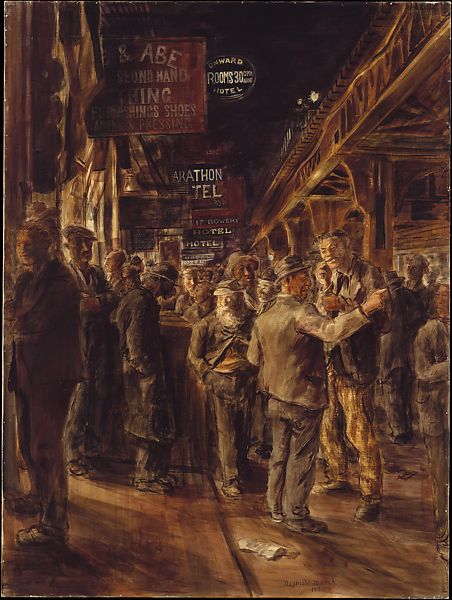
“It’s easy to sound smart when all your friends are dumb asses. And so Gerry Goldsmith, alias ‘The Brain’, was known to all the regulars as the smartest guy in the usual crowd of regulars at Bob’s Bowery Bar. If you had a question, you asked Gerry. If you had a problem, you talked to the Brain. Nobody seemed to know or care if what Gerry said was true or helpful. He was Gerry Goldsmith. He was the Brain.”
– The Brain, by Horace P. Sternwall, an E-Z Books paperback original, 1952; out of print.

March 27, 2019
“Never Fall in Love with a Jerk”

“Life is not a Jane Austen novel. If you meet some guy and he strikes you as a jerk, he’s probably a jerk. So why did I fall for this stupid jerk Jimmy Callaghan? He had jerk written all over him. It was like he was one of those poor schmoes who walk around wearing sandwich boards, except instead of saying MEN’S SUITS 2-FOR-1 his sign said in big black letters: JERK.”
– Never Fall in Love with a Jerk, by “Hilda Pryce Stone” (Horace P. Sternwall), a Beacon Books “Paperback Original”, 1954; republished in slightly revised form as Dally Not With a Lout, by “Hildegard Pierce-Stevens”, Pick-a-Dilly Books, (“Never Published Anywhere Before”), U.K., 1956.

March 26, 2019
“The Redhead and the Red Convertible”

I guess I should have known Maggie Houlihan was trouble. For one thing she was always busy whenever I called her up. She had just painted her fingernails. Or she had one of her migraines. Or her Aunt Rita was visiting. And the only time she ever called me up was when she wanted me to drive her somewhere. Up to Harlem, down to the Battery, out to Coney Island. One time I even drove her all the way up to Schenectady, and I had to wait parked behind a pool hall with the headlights off and the motor running while she went in and “took care of some business”. Five minutes later she came out the back of the pool hall, got in the car and said, “Drive.” And I drove, and she never did tell me what it was all about. I guess I was a sap. I know I was a sap. And yet every time she called me to ask me to drive her somewhere I said yes.
Yeah, she was trouble, but I didn’t care. What else did I have going on in my life? Nothing. But Maggie had blue eyes like the sky over the East River on a nice day. And red hair that reminded me of the sun going down over the Hudson River on an even nicer day. And skin that was white and smooth like that statue of the Blessed Mother with the dead Jesus in St. Pat’s, and, believe me, that was the only thing she had in common with the Blessed Mother. I was a sap for her, but I had that red convertible my dad had left me when he died, and I always kept a full tank of gas in it, just in case Maggie should call.
– The Redhead and the Red Convertible, by Horace P. Sternwall; serialized in Automotive Crime Stories, January-March, 1946. Published in paperback by Hi-Tone Books as The Chauffeur, by “Harry P. St. Alban”, 1948; out of print.

March 23, 2019
“Blanche Weinberg, Lady Psychiatrist”

“So I been taking your advice, Doc,” said Pete. “I been trying to listen to people instead of just interrupting them so I can put in my own two cents.”
“That’s great, Peter,” said Dr. Weinberg. “And how does that make you feel?”
“Can I be honest, Doc? I mean, can I really be honest?”
One thing about Pete Willingham, he was always honest, thought Dr. Weinberg. Delusional, but honest.
“Sure, Peter,” she said. “I would like you always to be honest, because if you’re not honest –”
“I know, I know, if I ain’t honest then I’ll never achieve self-actualization, am I right?”
“Yes, that’s right, Peter,” said Dr. Weinberg.
“So here’s the thing, Doc. I listen to these people. I mean, I want to butt in, that ain’t changed, but like you told me, I bite my tongue. And they go on, talking about whatever, and a funny thing happens, Doc, I find myself, drifting, drifting, off into the clouds, and I know they’re talking, but I ain’t hearing nothing. And then after a while this other person will say, ‘So, what do ya think, Pete?’ And I gotta blink and take a minute because I got no idea what they were talking about. That ever happen to you, Doc, sitting here all day listening to nuts like me?”
Dr. Weinberg paused before answering, and lighted another cigarette. She had just told Pete Willingham to be honest, so was it not also incumbent upon her to tell the truth?
“Yes, Peter,” she said, finally, “it happens to me.”
– Blanche Weinberg, Lady Psychiatrist, by “Hannah Pierce Sandler” (Horace P. Sternwall), a Corgi Books paperback original, 1958; “Dr. Blanche cured the souls of tortured people – but could she find the cure for the emptiness in her own heart?”

March 22, 2019
“The Last of the Elegant International Assassins”

Ever since he was fourteen years old, the only thing Billy Baskins ever wanted to be was an elegant international assassin. But how did you go about becoming one? He scoured the magazines at Doc Williams’s pharmacy for hints about how to break into the business, but to no avail.
“Billy, stop reading those magazines and finish sweeping up,” Doc Williams would say. “I pay you for sweeping, not for reading magazines.”
For twelve years Billy worked at Doc’s, and when he had saved up five hundred dollars he figured that must be enough to start his new career on, so he gave his notice and took the bus to New York City, which he figured was a heck of a lot more likely a place to start a career as an international assassin than Wheeler’s Corners.
He got a one-room apartment at Bleecker and the Bowery, above a bar called Bob’s Bowery Bar. There were a lot of shifty-looking characters in that bar, and something told Billy that this was as good a place as any to start his new career.
He began going into the bar at four in the afternoon, when they started their two-for-one happy hour, and he always ordered the same thing, a glass of their “basement-brewed” house bock. He would sit there and try to look mysterious, and sure enough, one day this woman started to talk to him. She wasn’t really pretty or glamorous like the dames in the magazines, but then Billy knew he wasn’t anything to write home about either, so who was he to be critical?
“Buy me a drink, big boy?”
“Sure,” said Billy, and she ordered a Tokay wine.
After some small talk she said, “So, what’s your line, Billy, if you have a line?”
“I’m not so sure I should tell you,” said Billy.
“Come on, you can tell me. Spill.”
“Well,” said Billy, “don’t tell anybody, but I’m an international assassin.”
“No kidding?”
“No kidding.”
“So what do you charge to bump somebody?”
That was a tricky question. He hadn’t actually thought about how much he should charge. The elegant international assassins in the magazines got fantastic sums for their work, but, after all, Billy was just starting out.
“I guess I could do a job for fifty dollars,” he said.
“Fifty? I ain’t got fifty. Would you do a job for a double sawbuck?”
Twenty dollars. That wasn’t much, but, then again, maybe it would be worth it, just to get his feet wet.
“I guess I could do a job for a double sawbuck, I mean, for a friend.”
“I’ll be your friend, Billy.”
“Okay, then.”
“So how about you bump my old man for me. He’s mean, and he beats me, and also he’s got a life insurance policy, and when I get the insurance money I’ll give you another thirty, which would make it fifty altogether.”
“Well, okay, but only because you’re my friend. What did you say your name was?”
“I didn’t, but it’s Marie. So it’s a deal?”
“Okay. When you want it done by?”
“Soon as possible.”
It was a start. Everybody had to start somewhere, even international assassins. After a few more rounds, Marie admitted she didn’t have a double sawbuck, so she asked Billy if he would do the job on account. Billy said okay, because he was a little drunk, and also because he thought maybe Marie would make savage love with him, like the dames in the magazines always did.
– The Last of the Elegant International Assassins, by Horace P. Sternwall, a Midway Books “paperback original”, 1952; one printing, never republished.

March 21, 2019
"The Buttinski"
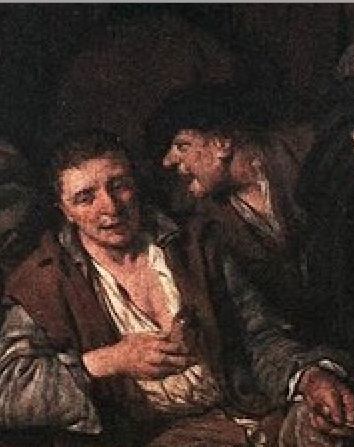
“Here’s the thing, Pete,” said Dr. Weinberg, “you’re never going to be able to hold down a job, to have friends, maybe even someday – who knows – to find a girlfriend, until you learn to listen to other people instead of just waiting for an opportunity to butt in and spout your own opinions, to make yourself seem special, to –”
“Okay, I hear what you’re saying, Doc, but if I may just interject a moment.”
Dr. Weinberg sighed, and tapped out another one of her Vogue ladies’ cigarettes.
“Sure, Pete, what is it?”
“Can I help it if other people are so boring and stupid?”
She lit the cigarette, inhaled deeply, and slowly exhaled. This guy was going to drive her nuts. She looked at her watch.
“Oh, my, look at the time. Okay, Pete, we’ll pick this up next time.”
“Sure, Doc. You have a nice day.”
Pete got the note to show his probation officer in case he got checked up on, went out and caught the subway back downtown. He would be just in time for the 2-for-1 “happy hour” at Bob’s Bowery Bar, which was practically the only bar in the city south of 42nd Street that he hadn’t been flagged from yet.
– The Buttinski, by Horace P. Sternwall, a Monarch “paperback original”, 1957; republished as The Tedious Fellow, by “Hugh Palmerston Stubbins”, the Quayside Press (U.K.), 1959.

March 20, 2019
"The Man Who Loved Himself"
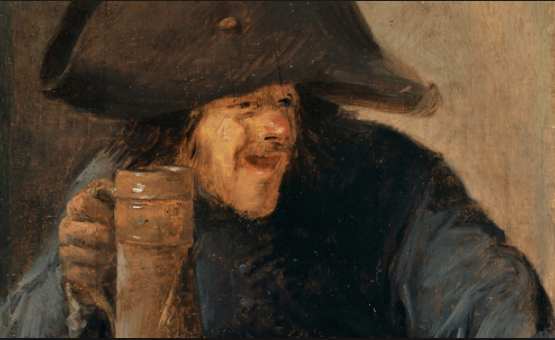
Pete Willingham didn’t know why that court-appointed lady shrink Dr. Weinberg kept insisting that he was a narcissist, as if it was some kind of a bad thing. Narcissism meant you loved yourself, right? And what was so bad about loving yourself? Nobody else loved Pete, that was for sure, so he might as well darn tooting love himself himself, or at least that was the way Pete looked at it. Was it his fault that the rest of the world couldn’t see what a swell guy he was?
– The Man Who Loved Himself, by Horace P. Sternwall, Midwood Books, 1957; revised and republished as The Chap Who Loved Himself, by “Hobart P. Shillingsworth”, Corgi Books (U.K.), 1959; both editions one printing only.

March 18, 2019
“Someone Is Murdering the Men of Wheeler’s Corners”
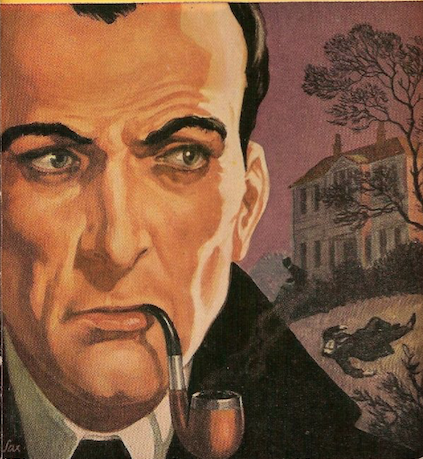
Someone was murdering the men of Wheeler’s Corners, one by one. First it was the mayor, Big Joe Gibbs, who was also the owner of the lumber mill. Then a month later it was Cal Burrowes, the lawyer. Six weeks after that Reverend McIntyre was shot in the back of the head while he was trimming and watering his roses early one morning. Mrs. McIntyre heard the shot but thought it was just a car backfiring, and so she didn’t find the reverend until a quarter of an hour later when she called him to breakfast and he didn’t come in. Five weeks after that Sheriff Boone was picked off as he was taking his evening stroll along Main Street. Some people said the shot came from up the hill, but nobody knew for sure.
The state police sent a man down a few days later, and the second night he was in town he got a bullet in the temple while he was driving over the Crippled Creek Bridge.
The next night Fred Baxter held a meeting in his store.
“Fellas, we gotta do somethin’, afore every man jack in this town winds up with a bullet in his head.”
“What the heck we gonna do, Fred?” said Willie Perkins, the grocery man.
“I’m packing up and gettin’ out,” said Red Durst, the dairy man. “I ain’t sitting around just wondering if I’m next. That ain’t no way to live.”
“I got an idea,” said Chester Higgins, who had never worked a day in his life and lived with his widowed mother and four spinster sisters.
“Oh, great, Chester’s got an idea,” said Bert Pope, who lived with his widower father and worked in the glove factory.
“Now just hear me out,” said Chester. “I been reading a book I got from the lending library, and I think there’s a man who can find this murderer. He’s one of them detective fellers.”
“You mean like a private detective?” said Mr. Moody, the undertaker.
“Yes, sir,” said Chester. “And the thing is, if he thinks a case is inneresting, money is no object, so we could probably hire him cheap.”
“What’s this feller’s name?” said Red.
“Sherlock Holmes,” said Chester.
“I think I heard of him,” said Red.
“Me too,” said Willie. “But don’t he live over in England?”
“That he does,” said Chester. “But maybe if we all chip in for his aeroplane fare he’ll fly over, on accounta this case is so inneresting.”
Everybody was quiet for a moment, and then Fred Baxter said, “You got this feller’s address, Chester?”
“I sure do,” said Chester, and he took out a matchbook, opened it up and read what he had written inside it: “221B Baker Street, London, England.”
– Someone Is Murdering the Men of Wheeler’s Corners, by Horace P. Sternwall; a Hi-Quality Books paperback original, 1951; one printing, never republished.