Dan Leo's Blog, page 34
April 11, 2019
"The Princess"

She lived in the teeming slums, a princess amongst the stench and the filth, the squalor and despair, the violence and poverty.
Her parents were dead, but she took care of her younger brother “Bub” and little sister “Bubbles”, always making sure they got to school on time and wearing clothes that were clean even if they did come from the Goodwill.
She worked as a waitress at Bob’s Bowery Bar, and she saved her tip money because someday she would send both Bub and Bubbles to college, so that they could escape from the slums.
Her name? Well, let’s call her Janet. That’s not her real name, but this is a true story, and we know that “Janet” would prefer to maintain her privacy, although she realizes the good her story might do, as both a cautionary and an inspirational tale.
This is the story of Janet, the Princess of Bleecker and the Bowery.
– The Princess, by Horace P. Sternwall, a Demotic Books paperback original, 1951; out of print.


April 10, 2019
"The Poets"

“There are two sure-fired ways to get someone to leave you the hell alone,” said Scaramanga, the leftist poet. As an infant he had once sat on the lap of Rosa Luxembourg, or at least so he claimed.
“Only two?” said Seamas McSeamas, the Irish poet. He had been just another loud-mouthed drunk back in Dublin, but here in New York, and especially in Bob’s Bowery Bar, he was a “colorful Irish poet.”
“Only two sure-fired ways,” said Scaramanga.
“All ears we are,” said Frank X Fagan, the nature poet. He hadn’t been farther from Manhattan than Coney Island in eleven years, but he still loved nature, or at any rate that’s what he wrote his poems about.
“Unmuzzle your wisdom,” said Howard Paul Studebaker, the “western” poet, who had once spent part of a summer on a dude ranch in New Mexico, when he was a lad, before his father lost all his money in the crash. “That’s from Shakespeare, by the way.”
“The first way to get somebody to leave you alone,” said Scaramanga, “is to ask them to lend you money.”
The other poets all laughed, more or less mirthlessly. Scaramanga had hit close to home.
“The second way,” said Scaramanga, “is to ask them to read one of your poems.”
At this a silence as of the tomb fell over the assembled poets.
Young Hector Philips Stone, the doomed romantic poet, came over to the table.
“I’m broke,” he said. “Will any of you guys lend me a buck so I can have a bock and a hard-boiled egg?”
The other poets all looked at each other. Poor Hector looked like he hadn’t eaten in a week. Scaramanga had just cashed his welfare check, so he dragged out his old Boy Scout wallet and took out a fiver.
“Take this, Hector, and go to the bar and order us another pitcher of bock, and an empty glass and a hard-boiled egg for yourself. You can leave Bob a fifty cent tip, but I want the rest of the change back, comrade.”
Hector took the five and went over to the bar.
“I just hope he doesn’t ask us to read any of his poems,” said Scaramanga.
– The Poets, by Horace P. Sternwall, a Kozy Books paperback original, 1956; out of print.

April 9, 2019
"A Gal Called Midge"

One of the first things Midge ever told me, sitting there that snowy night at Bob’s Bowery Bar, was that she had killed a guy one time.
“This big ex-pug named Mike Grabowski. We were shacked, and I got fed up with his drinking and hitting me, so I told him I was cutting out. He told me over his dead body. So I let him get really drunk on Tokay wine, then said let’s go down to the bar. We lived in a fourth-floor walk-up, and as soon as we got outside our trap and at the head of the stairs I gave him a good push. He broke his neck. So he got his wish. I cut out. Over his dead body.”
She gave me a long hard look.
“You still want to buy me a drink?”
“Sure,” I said.
“Not scared?”
“I didn’t say I’m not scared,” I said.
She looked at me hard again.
“I’m drinking bock beer,” she said.
I got the bartender’s attention and ordered two bocks.
– A Gal Called Midge, by Horace P. Sternwall, a Bantam paperback original, 1950; out of print.

April 8, 2019
"The Be Bop Generation"

“But what’s it all about, man?” said Bosco. “Like, what’s it all about, y’know?”
“I’ll tell you what it’s all about,” said the fellow they called Slim Jim, even though he wasn’t slim and his name wasn’t Jim. “It’s about getting high and watching French movies, man.”
“Wow,” said Bosco.
“It’s about swingin’ over to the Village Vanguard and catching Diz, or Miles, or Chet, man. Or Bird.”
“But Bird is dead, man.”
“I meant Bird before he was dead, man.”
“Oh, cool.”
“And it’s about going out to the desert, man, and feeling God everywhere.”
“I’ve never been to the desert,” said Bosco. “But now I want to go.”
“It’s about being cool, man, like the Negroes.”
“Like the Negroes. I can dig, man.”
“It’s about not working some stupid job, man.”
“Dig that.”
“It’s about not working for the man, man.”
“Right. Screw the man, man.”
“It’s about staying up all night if you want to, and sleeping half the day away.”
“Nice.”
“And making sweet cosmic love to the old lady.”
“Old lady? Now there you might be losing me, Jim. I kinda prefer the young ladies myself, I mean, you know –”
“I don’t mean that kind of old lady. I mean a lady who is your 'old lady'.”
“Oh, like my ‘girl friend’.”
“Right, your old lady.”
“I got you now.”
Slim Jim paused, and took another drag on the reefer.
“It’s about a lot of things,” he said.
– The Be Bop Generation, by Horace P. Sternwall, an Ace Double paperback original, published in tandem with Bongo Girl, by Harriet Preacher Snowe {Horace P. Sternwall}; 1958. Out of print.

April 6, 2019
“Pete Willingham’s Transformation”

Once again Judge O’Hara had made it a requirement of Pete Willingham’s probation that he receive psychiatric help, and so here he was back on Dr. Blanche Weinberg’s couch.
“So, Peter, how has it been going?”
“Well, Doc, I guess you know I copped an insanity plea again, so here I am.”
“Well, strictly speaking, Peter, not insanity per se. It’s more that Judge O’Hara and my colleagues at Bellevue feel that you –”
“Yeah, yeah, I know, I know, I gotta learn how to control my emotions and all.” Peter sat up. He always had trouble remaining in a supine position for more than a few minutes. “Does it say there in them papers what I got arrested for this time?”
“Yes, Peter.”
“Disorderly conduct. Public drunkenness. Criminal mischief?”
“Incitement to riot, assault with a deadly weapon –”
“Okay, Dr. Weinberg, let me ask you a question. May I ask you a question?”
“Of course, Peter.”
“Do you consider a bottle of Tokay a deadly weapon? And it was in a paper sack too, y’understand.”
“I’ll admit that a bottle of Tokay may not fit the traditional idea of a deadly weapon, but I think you have to admit, Peter, that if you struck a person hard enough on the head the blow might prove fatal –”
“Not these Commie hardheads. A baseball bat, maybe. But a bottle of Tokay, and it wasn’t even a full bottle? I ain’t stupid, Doc. You think I’d waste a full bottle of Tokay smashing it on some Commie’s head? I made sure I had drunk every last drop out of that bottle before I tried to smash it on that Bolshevik’s head. And, anyway, I didn’t even hit the guy’s head. He stuck his arm up and blocked it and that was when he hit me with a right cross. Big dumb Commie bull.”
“Well, I think the broader issue, Peter, is that you should learn not to attack people at all, with or without a deadly weapon –”
“So-called deadly weapon, Doc, so-called.”
“You shouldn’t hit people at all, Peter.”
“But these Commies were protesting, preaching their Communist propaganda, what am I gonna do, let ‘em get away with that?”
“It’s freedom of speech, Peter. They have the right to protest, and to speak, just as you do. This freedom of speech is guaranteed in our constitution.”
“Yeah, I guess you’re right. Even if they are Commies. Let me ask you something, Doc. You’re Jewish, right?”
“Well, I was raised Jewish, Peter, but I am not a practicing –”
“But you are a Jew?”
“Yes, I am of Jewish descent.”
“So what do you think of the Protocols of Zion?”
“Peter, that book has been exposed as a fraud. Nothing in it is true.”
“So, like there ain’t a international Jewish conspiracy?”
“I somehow doubt it, Peter.”
“Y’know, that makes sense, Doc. Because if there really was a international Jewish conspiracy they would keep it secret, right? And how can it be secret if everybody knows about it?”
“That’s an interesting observation, Peter.”
“That’s why I think it’s really the Rosicrucians who have the international conspiracy, them and the Masons, and the Catholic Church, too, maybe.”
“Peter, let me ask you a question now. Isn’t it possible that there are no international conspiracies?”
“What about the Illuminati?”
“What if even the Illuminati are a myth?’
“Wow. That’s something to think about. But if it ain’t the Jews, and it ain’t the Rosicrucians, or the Masons, or the Pope, then who’s running the world?”
“Maybe no one runs the world.”
“Maybe. I say maybe, Doc. ‘Cause I ain’t quite convinced yet. Somebody’s got to be running the world. Who runs the the world?”
“I don’t know, Peter. Rich people? Wealthy people?”
“Rich people,” said Pete. “Wealthy people.” Finally he lay back down on the couch. “Y’know, Dr. Weinberg, maybe you’re onto something there.”
And thus Pete Willingham, who had been ousted even from the John Birch Society for excessive zeal, took his first step to becoming a card-carrying member of the Communist Party.
– Pete Willingham’s Transformation, by Horace P. Sternwall; a Workingman’s Press paperback original, 1958; out of print.

April 5, 2019
"The Weirdo"
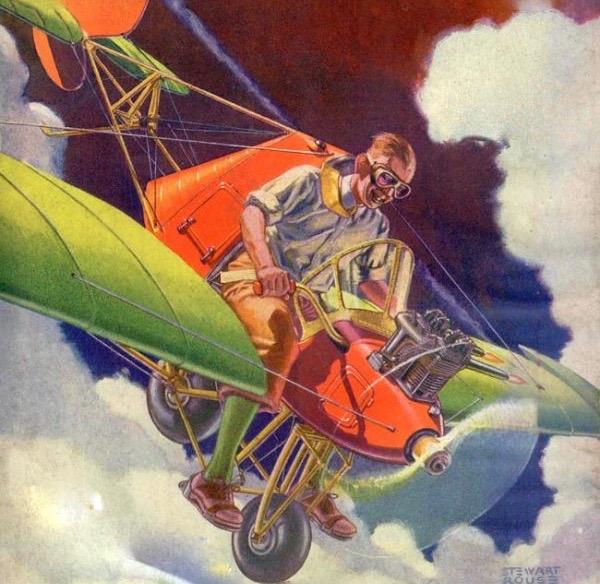
"All the other kids called Bobby Brand a weirdo, because instead of playing their childish games or hanging out in Pop’s Soda Shoppe he spent every summer day and night in his grandfather’s barn, working on his 'inventions'. But someday he would show them, he would show them all!"
– The Weirdo, by Horace P. Sternwall, a Tower Books “paperback original”, 1949; one printing.

April 4, 2019
"A Bock for Old Joe"

Nobody could ever understand a word old Joe ever said. When he spoke it sounded like an old Model T revving its engine a block away in the rain. But this didn’t stop him from talking to anyone who happened to sit next to him at Bob’s Bowery Bar. And whoever he was talking to would nod, and say, “Sure, Joe,” or “Yeah, you’re right, Joe. Absolutely right.” And Joe would make a sound like an old Model T engine on its last legs, a block away, on a snowy night.
One night old Joe went to sleep on his cot in the flop, and the next morning he woke up dead.
He approached the steps of God’s house, up on the hill.
St. Peter sat there on the porch at a little table with a big ledger in front of him.
“Name?”
Joe made a sound like a dying Model T, around the block, on a night thick with fog.
“What?” St. Peter said.
Joe repeated the sound, but louder, as if the Model T was parked right out front.
“I can’t understand a word you’re saying,” said St. Peter.
This went on for a while, and finally St. Peter got fed up. He picked up a small note pad, and scribbled something on it with his quill pen. He ripped off the page, folded it, and handed it to Joe.
“Take this, go through the door, give it to the man you’ll see in there.”
Five minutes later one of the docents led Joe into a barroom not vastly unlike Bob’s Bowery Bar.
“Sit anywhere you like, bar or table, and a server will be right with you.”
Joe always liked to sit at the bar, where he could talk to people, and fortunately there was an empty bar stool.
“What can I get you, sir?” said the friendly bartender.
Joe said something, but the bartender couldn’t understand what Joe said, even after he said it four times, and the guy on Joe’s left said, “I think he said Rolling Rock.”
“No,” said the guy on Joe’s right. “I think he said a bock, he would like a bock.”
The bartender leaned a little closer to Joe.
“Is that what you would like, sir? A bock?”
Joe made a sound like a cow belching.
“Just give him a bock,” said the guy on Joe’s left. “Because this is driving me crazy.”
The bartender gave Joe a pint of draft bock, and Joe made a noise like a stopped-up toilet finally flushing. But, whether he had asked for a bock or not, he accepted it, and drank it, and so for the rest of the eternity a bock became his “usual”.
– A Bock for Old Joe, and Other Tales of the Bowery, by Horace P. Sternwall; a Handi-Book paperback original, 1954.

April 3, 2019
“She Brooked No Nonsense”

“The more you try to convince of me of how interesting you are the more I become convinced of how monstrously boring you are.”
“Wow,” said Thad. “That’s harsh.”
“It’s not my job to bolster your sad little ego,” said Millie.
“So you’re saying you don’t want to go out with me?”
“I would rather die.”
“Gee. How do you think that makes me feel?”
“I should imagine it feels as if you are facing a very unpleasant truth about yourself.”
“So I guess this is it.”
“I certainly hope so.”
“Don’t you think you could have been a little nicer about it?”
“I could have, but if I had you probably would have persisted in pestering me.”
“You really know how to deflate a guy, Millie.”
“Listen, Brad –”
“Thad.”
“Sorry. Listen, ‘Thad’, do you want my advice?”
“I’m not so sure, but okay.”
“You’re not a bad chap, and not bad looking, and you apparently make good money, but you’re a bore, a hopeless bore. But the good news is that there are thousands, no, millions of boring girls out there looking for a fellow, girls who are so boring they won’t think that you’re a bore. Find one of these boring girls. Preferably a nice one. Marry her. Raise boring children. Then grow old, and die. And now please never call me again.”
“So, like, you wouldn’t like to get together just for a cup of coffee sometime?”
Millie gave no verbal reply, but stubbed out her Vogue, polished off the last of her martini, slung her purse over her lovely shoulder, got up, removed her wrap from the back of her bar stool, and walked away.
“Another martini for you, sir?” said the bartender.
“Yes, please,” said Thad.
– She Brooked No Nonsense, by "Harriet Pierce Stonebrake" (Horace P. Sternwall), a Perma Book paperback original, 1956.

April 1, 2019
"Xmas Memory"
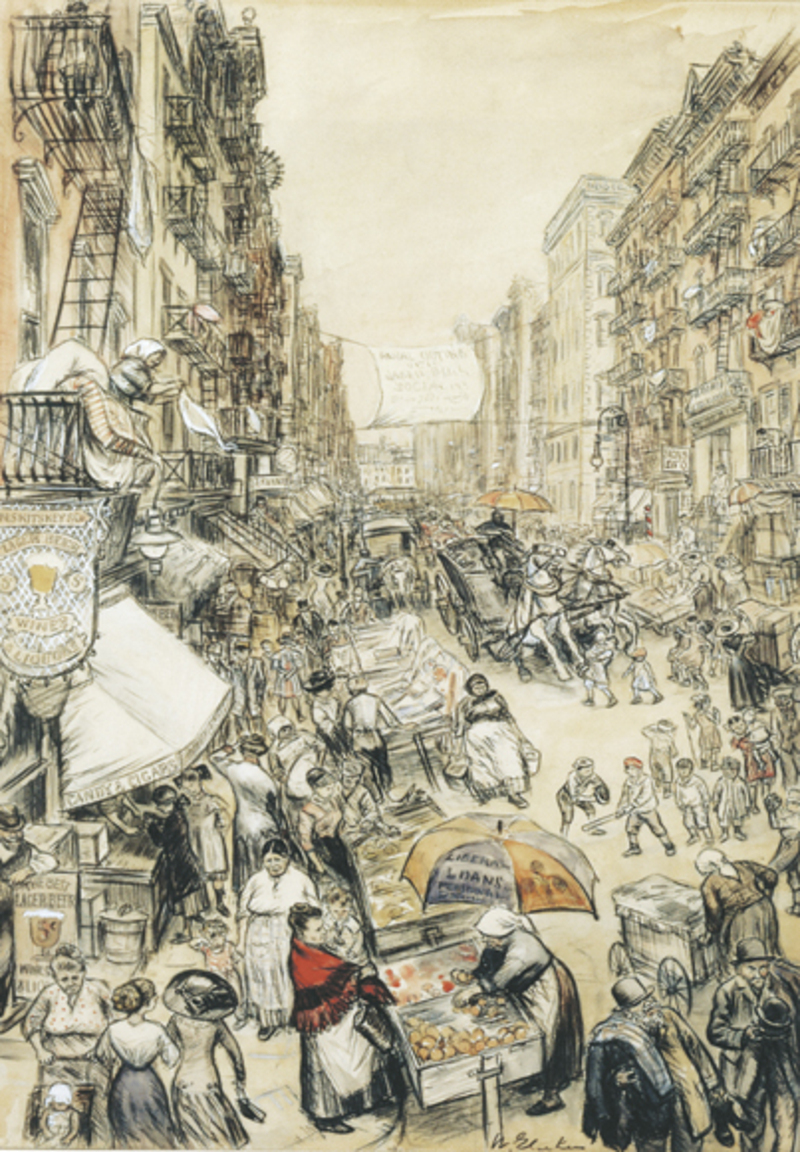
Frankie Titana and Pete Willingham were the two most obnoxious and boring rummies on the Bowery, and so it stood to reason that they would become friends.
They were high on the hog now, because they had just come back from two weeks picking tomatoes in Jersey, and so instead of sleeping in a flop or an alleyway they had a nice clean room with a double bed in the Sunshine Hotel, fresh washed sheets and everything. Another week and they would be back in the flops or in the alleys, but that was the future, and who cared about the future? A hydrogen bomb could drop any minute. A guy could drop dead from a coronary, or get run over by a garbage truck. Worrying about the future was for chumps.
Frankie and Pete were sitting back comfortably in the bed, passing the Tokay bottle back and forth. Sure, they would prefer to be in some bar, but they were both banned from every bar below 52nd Street, and neither of them had felt like taking the subway uptown to try to find some dive they hadn’t been kicked out of yet.
“I got a question for ya, Frankie, and don’t take it the wrong way.”
“Sure, pal. I am an open book, so fire away.”
“When’s the last time you got a piece?”
“You mean tail?”
“Yeah.”
“Well, let me see.” Frankie took a drag on his Bull Durham. “Let me just think a minute.”
“Take your time, Frankie, no rush.”
“Oh, I know, it was like two years ago. It was that broad Marie used to hang out at Bob’s.”
“The one that paid a guy to bump off her husband only the guy bumped her off by mistake?”
“Yeah, that Marie. It was when I had that job at the Fulton Fish Market, so one Friday I got paid, and me and Marie got to drinking, and, well, one thing led to another, and so for a fin she took me out in the alleyway and let me have a piece.”
“A fin, huh? Was it worth it?”
“Tell the truth, Pete, no. And when I think of all the bocks I coulda bought with that five bucks I could kick myself.”
Not to mention that Frankie had gotten not only crabs as a result of that encounter but a dose of the clap, but, no, Pete didn’t need to know that.
“So what about you, pal?” said Frankie. “When’s the last time you got a piece?”
“Creeping up on three years for me,” said Pete. “It was Christmas, and I guess I was feelin’ lonely.”
“You pay for it?”
“Yeah, I paid for it.”
“Was it worth it?”
“Tell the truth, pal, no.”
With Pete it had been Marie, too, except what a fool he had been, paying her a whole sawbuck when he could’ve had her for a fin. And getting crabs and a dose on top of it. But he didn’t tell Frankie that.
– “Xmas Memory”, from The Adventures of Frankie and Pete, by Horace P. Sternwall, an Ace Books paperback original, 1954; republished as The Future is for Chumps, the Didgereedoo Press (Australia), by “Hank P. Sheppard”, 1956.

March 31, 2019
"I just get out there and blow my horn..."

WRTI is a Philadelphia radio station, affiliated with Temple University (my alma mater) that specializes in classical music in the daytime, and jazz at night. I listen to WRTI intermittently all day, every day, because I like both jazz and classical, and incidentally because the disc jockeys are uniformly great.
One thing that the station does daily is host interviews with musicians, conductors and composers, and today when I was listening to an interview with the classical clarinetist Ricardo Morales, it struck me that a quality that nearly always comes through in these talks is joy: the joy of people who make their living making art. At around the same time that I was listening to the radio interview, I was also skimming through an interview with a famous novelist, and then I had my second epiphany of the afternoon, which is that practically every interview one reads with a writer of fiction drips with seriousness and barely-contained gloom, the horror of the blank computer screen in the author’s Brooklyn apartment, alleviated only barely by a dog or a cat, or maybe by a spouse who works in finance.
Now in my own modest way I also try to make art. I have two novels out, and a third one coming in the next few months, and lately just for laughs over my morning tea I’ve been writing brief faux-excerpts from non-existent pulp novels of the 1950s and 40s. I’m happy if I make a few bucks in royalties, but I write not for the money (although I love money), but just because it’s so much fun to do. I realize that writing is a soul-wrenching chore for many talented people, but I don’t think it necessarily has to be. Just as a classical or jazz musician puts up with the uncertainty of employment and the low pay and the tedium of travel all because of the joy of making music, I write because there is a joy in making sentences, and watching characters come alive and watching their stories unfold. It’s work, but it’s fun work, and I wouldn’t do it if it was’t fun.
I’m waiting to see an interview with a novelist who says, like the jazz musicians interviewed on WRTI by J. Michael Harrison or Ms. Blue: “Yeah, I just love doing what I do. It’s a blast, man. I just get out there and blow my horn, and it’s very cool.”