Dave Zuchelli's Blog, page 42
October 20, 2016
Potty Humor From the Lord
 I just read an article about the archeological discovery of a public toilet. This would be less than fascinating were it not for the fact that it’s a find of Biblical proportions. It’s an uncovering of a physical event we see described in 2 Kings 10. In case you haven’t read that account lately, please allow me to elucidate.
There was a guy with the memorable name of Jehu. The prophet Elisha had Jehu anointed King of Israel. The story of the transition of power can be found in 2 Kings 9. I don’t have time to recount it here, but it’s definitely recommended reading.
Seventy sons had father Ahab…
Jehu was given the job of wiping out Ahab’s family. You may remember Ahab as one of the worst kings ever (not to mention his lovely wife, Jezebel—another story altogether). To do so, Jehu enlisted the services of the City Council of Samaria.
Ahab had seventy sons living in that city (apparently, he was rather prolific). Jehu ordered that their heads be cut off and arranged in two piles at the entrance of the city gates (quite the welcoming site upon entering, I’m sure). He then had the rest of Ahab’s family, friends, and political associates put to death as well. This is what we call, “Taking care of the loose ends.”
Now here comes the pièce de résistance. Ahab and Jezebel were big proponents of Ba’al worship. Ba’al was the god of just about anything the pagans wanted him to be (fertility, weather, agriculture—you name it, he was the god of it). You may recognize him better as Beelzebub.
“…converted to a public latrine.”
It was well known among the faithful that the true God of Israel did not take kindly to false gods like Ba’al horning in on his territory. The Israelites were to be loyal to Yahweh, and Yahweh alone. Being in positions of influence, Ahab and Jezebel had led much of the citizenry down the wrong spiritual path.
Once these two were out of the way, Jehu took the final step to remove their ungodly impact. He suckered the priests and congregants of Ba’al into their place of worship and wiped them out. Then he ordered the temple to be destroyed. The temple ruins were then converted to a public latrine (2 Kings 10:27).
 The more we dig out of the ground, the more the Bible is shown to be accurate. The actions described in this little piece of history are definitely not politically correct—just true. What took place there would be roughly akin to our president destroying a place of worship and replacing it with a manure pit. Those were obviously different times.
A little addendum to this revelation is that Jehu destroyed all the remnants of Ba’al worship from Israel. Yet, he overlooked a couple of golden calves that he salvaged for use as his own personal idols. I’m not sure why he didn’t take a lesson from the destruction of Ahab and Jezebel.
[Dave Zuchelli is a graduate of Pittsburgh Theological Seminary and is currently the pastor of Smith Chapel, in Great Falls, VA.]
The post Potty Humor From the Lord appeared first on Dave Zuchelli.


October 18, 2016
Detoxing From the Toxic Church
 I recently attended a three-day Christian Leadership Institute. During the time there, we explored our personal leadership styles and attempted to determine where each of us fit on the spectrum. I won’t tell you what mine was except to say I’m really anal. No big surprise there.
Part of what we looked at was the various categories of congregations that exist out there in churchdom. I guess we were trying to see where our styles fit the best. I’m not sure I really fit in anywhere particular, but that’s no big surprise either.
The Toxic Congregation
Interestingly enough, the leaders of the institute had narrowed the kinds of churches down to four. I won’t bore you with the details, but one of the categories was rather startling. That category was entitled, “The Toxic Church.”
Apparently, toxic churches are ones that have been around a long time and have actually produced a lot of fruit over the years (spiritually speaking). Then, somewhere along the way they became abusive. Congregational members of such churches are abusive to the pastors, abusive to each other, and abusive to their neighbors.
Occasionally, their abusive behavior is interrupted by a move of the Holy Spirit and things seem to be getting back to normal. Before too long, however, these acts of God are suppressed by more abuse, and they get back to normal (or abnormal if you will).
The strange thing about these congregations is their incredible ability to survive. One wonders why the Lord doesn’t just snuff them out, but I guess he’s put up with far worse. The Bible does say something about God being long-suffering.
Just before I sat down to write this blog, I did a quick check of my Facebook page. A short video jumped out at me about a guy who was detoxing from church. He was in his third year of doing so. The coincidence was rather startling for me.
The upshot of all this is that there are congregations out there that are downright poisonous. I guess I always knew this, but having it thrown in my face for the past few days has made it much more of a stark reality. It’s not something we like to admit, let alone talk about.
“Christians have ceased to darken the doors…”
I don’t know that I’ve ever been in such a church. I’m quite sure I’ve never been the pastor of one. Still, I suppose there are small pockets of toxins in every sizeable congregation. It’s just another reason why half of all American Christians have ceased to darken the doors of our church buildings.
It’s incredible to me that anyone can know the love of Christ and still carry around the venom of Satan—ready to strike at any moment. In fact, it’s more than incredible—it’s unthinkable. Still, it apparently happens.
That kind of poison has to be far more toxic than most others. Otherwise, why would my friend in the video have to detox for three years and counting? Heaven help us!
[Dave Zuchelli is a graduate of Pittsburgh Theological Seminary and is currently the pastor of Smith Chapel, in Great Falls, VA.]
The post Detoxing From the Toxic Church appeared first on Dave Zuchelli.
October 16, 2016
The Back-to-Egypt Committee
 If you hang around pastor types long enough, there are certain phrases and concepts you’ll hear repeated. One of the sayings I like to use is, “It’s enough to make a preacher swear.” A short phrase often used to describe certain congregations is, “God’s frozen chosen.” Then there’s the ever-popular, “I’m too blessed to be stressed.” And of course, there’s the one you never want to hear—“God told me to tell you…”
If you overhear pastors complaining to each other about people who buck against everything they try to do, you may hear them refer to the “Back-to-Egypt Committee.” The Back-to-Egypt Committee is not a committee at all, but they seem to function like one.
It’s very Biblical
They usually have a leader (akin to a chairperson). The leader is usually someone well respected in the congregation and who doesn’t want to see anything change. He or she easily gathers a group around them who share the same perspective. Their attitude can be summed up in the phrase, “We’re agin’ it!”
The nickname for this faux committee comes from the Bible (sort of). You may remember the story of the Hebrew nation escaping from slavery in Egypt. Moses led them out, God parted the Red Sea to get them to safety, and they began to cross the wilderness back into the Promised Land.
The problem that occurred really began when the folks began to miss what they had in Egypt. According to the complainers, they had it made in the shade when they were slaves. They had pots full of meat, cucumbers, melons, garlic, leeks, and onions (and some good mouthwash, I hope).
“So You Wanna Go Back to Egypt”
In short, they wanted to go back to Egypt (hence the Back-to-Egypt Committee). It’s these kinds of ad hoc committees that keep congregations from joining the twenty-first-century church. They keep yearning for the “good old days.” Me too, I guess. But we have to come to a point where we realize the good old days are gone. We can’t go back to Egypt. Or, as Thomas Wolfe said, “You can’t go home again.”
The late Keith Green wrote and recorded a great song about the subject (So You Wanna Go Back to Egypt). It’s a tongue-in-cheek rendition of the complaints of the beleaguered Hebrews. It ends with them listing the various ways they have come up with to prepare their daily manna (dishes like manna-cotti come to mind).
Going back to Egypt is always a great temptation. We remember how it used to be, and we long for those things (whatever they were) to be commonplace again.
As far as I can tell, however, the Lord isn’t parting any Red Seas for us to backtrack.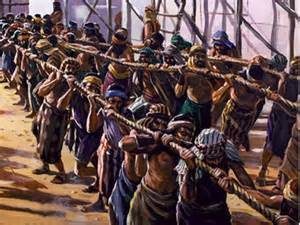 Once we got to the other side, the seawalls crashed back down to the seabed, and that was that. No more dry land on which to return.
We in the church can no longer afford to yearn for the past. The bridges have been burned. Let’s move forward with all haste.
[Dave Zuchelli is a graduate of Pittsburgh Theological Seminary and is currently the pastor of Smith Chapel, in Great Falls, VA.]
The post The Back-to-Egypt Committee appeared first on Dave Zuchelli.
October 13, 2016
Sound the Trump: Revelations of the October Kind
I usually try to stay away from political topics unless they somehow feed into the general life of the church. It’s not that the church is apolitical. It’s just that, as a pastor, I try not to enter that fray unless necessary. This time, however, I just can’t help myself.
A few days ago, someone “leaked” an old recording of Donald Trump making lewd statements. Like we needed more ammunition against either of these candidates. Everyone already seems to be sickened by this election cycle. So now, we’re going to empty the circular files of any garbage we can find.
 Regardless of the fact that this recording was done eleven years ago, all these October revelations seem pretty lame to me. It’s not that what The Donald said wasn’t “deplorable” (see what I did there?). It’s that half the country is acting shocked and surprised.
Who in the world has been walking around under the imbecilic delusion that Trump is a highly moral Boy Scout? Does this disclosure suddenly open our eyes to the reality that politics and politicians are slimy? Please…
“It’s just sex…”
On top of that, many of the people screaming bloody murder are the same ones who gave Bill Clinton a pass when he was involved in all his dalliances. Remember that? “It’s just sex. Someone’s private life has nothing to do with their performance in office.” As a friend of mine used to say, “Horse puckey!”
I don’t doubt that we have a few Hillary surprises in store as well. We really don’t need any more. We already have a pretty good record of the despicable things she’s said and done in the past.
So, we have two candidates who are despised by millions for various reasons. We have plenty of videos and news clippings to remind us of their past foibles. Any new revelations are virtuously superfluous. I suspect most of us have already made up our minds anyway.

The facts are these. We have two candidates whose records and statements are (shall we say) less than immaculate. If we’re going to attempt to elect one of them on the basis of his or her stellar reputation, good luck with that one. They both appear to be narcissistic loudmouths. Who wants that for the next four years?
“We’re going to be stuck with one of them.”
So, if we can’t go by reputations and personalities, we only have one thing left. We’ll have to vote according to their respective platforms (if we can figure out what they are). You may hate Hillary and Donald, as most people seem to do. But let’s face it; we’re going to be stuck with one of them.
I think we’re going to have to set aside their personae (if that’s possible) and elect the one we think will actually do what we’d like to see done (assuming we can place enough trust in one of them to do that).
It seems to be coming down to a roll of the dice. I just hope it isn’t snake eyes.
[Dave Zuchelli is a graduate of Pittsburgh Theological Seminary and is currently pastor of Smith Chapel in Great Falls, VA.]
The post Sound the Trump: Revelations of the October Kind appeared first on Dave Zuchelli.
October 11, 2016
Living Out the Borrowed Vision
 How does your congregation decide what to do? If it’s a sizeable gathering, you probably don’t know the answer to that question. Somewhere along the way, someone (possibly the pastor) stood up front during worship and announced a new program. From that point on, you were clued in.
You didn’t have a part in the decision-making process, so you weren’t invested in the project. If the ensuing announcements, sermons, and promotions were appealing to you, you bought in—maybe. Even then, your big participation might have been to tell others, “Our church is doing this.” Quite often, that was the extent of your involvement.
I’m not accusing your or your church group of this kind of action (or inaction). But the sad state of affairs in today’s Body of Christ often leads to such a process. Consequently, many Christians become spectators rather than players. The larger the congregation, the more prevalent this route becomes. Eventually, it develops into ministerial paralysis for much of the laity.
 Upon recognizing this downward slide, what often happens next is just as bad. When people realize they are being left behind in the mission of the church, they begin to search for things they can buy into. They see what another congregation down the street is doing and they want to do the same thing.
Borrowing the Vision
While that’s not all bad, it’s certainly not all good either. Just because the Christians across town are successful with a certain ministry, it doesn’t mean it’s your calling as well. Still, it’s pretty tempting to borrow someone else’s vision.
Borrowing the vision gets even worse when it becomes the standard operating procedure of the congregation. If we get lazy enough, we don’t even bother to explore the possibilities of ministry. We just look to another church’s program and say, “We can do that, too!”
The fact of the matter is every local expression of the Body of Christ should have its own vision. The Lord hasn’t run out of new things for us to do. The Apostle Paul once said, “For we are God’s handiwork, created in Christ to do good works, which God prepared for us in advance for us to do.” Do you think he’s created some good works for his church to do in your neighborhood? My guess is, “Yes.”

The other side to that is we have been created in his image. Among other things, this undoubtedly means we have an element of creativity within us. Our God is creative–we are as well. We should attempt to discern his will for us in this area.
Grappling with the Vision
Sometimes we think visions are things that are quickly visited upon us. However, casting and living out a vision is the work of a congregation. The vision is something through which leadership and laity journey together. As we grapple with what the Lord has in mind for us, we learn to bear fruit for the Kingdom of God. It’s not always easy, but it’s the way to go.
[Dave Zuchelli is a graduate of Pittsburgh Theological Seminary and is currently pastor of Smith Chapel in Great Falls, VA.]
The post Living Out the Borrowed Vision appeared first on Dave Zuchelli.
October 9, 2016
Do’s and Don’ts and Have-To’s and Gotta’s
One of the most appealing aspects of Christianity is that there aren’t a bunch of rules to follow. We follow Jesus (who, according to the Pharisees, was a rule breaker himself). We live by the Spirit and attempt to go where the Lord leads us.
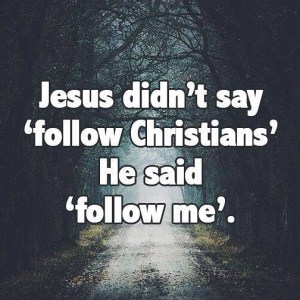 That’s not to say it’s easy. It, in fact, can be extremely hard. As a matter of fact, it can be so difficult that there are a lot of Christians who would rather follow some rules—and so they do.
As a result, we give the impression that everyone has to live up to our standards (whatever those might be). Unfortunately, wherever one goes, it seems like the standards are different. The congregation up the street probably emphasizes far different values than yours. It’s confusing enough for churchgoers. Imagine what it must be like for interested non-believers.
Consequently, a lot of people get the idea that they can join the church someday if they can just become good enough. If they can just follow the right rules, they’ll have it made in the shade. If they can be better than the bad guys (whoever they are), they’ll earn a citizenship in the Kingdom.
“Most Christians will deny this.”
The funny thing is, it doesn’t matter what kind of congregation you step into. It can be liberal, conservative, evangelical, liturgical, full of social justice seekers, or staunch peacemakers. We all have our own little rules to follow and specific values to uphold. We all think ours are the correct ones. Therefore, many of us frown on those who don’t share our way of thinking, acting, and living out the Gospel.
Most Christians will deny this, but their actions belie their words. The reason we deny it is because we know it’s wrong. Still, we get royally annoyed when others who call themselves Christian don’t see things our way.
With all these “do’s, don’ts, have-to’s, and gotta’s,” it’s no wonder why the church is losing ground. Statistics today show that there are at least as many Christians who avoid the organized church as there are who actually attend and belong. It sounds kind of crazy, but it’s true.
 Think about it. How many times have you felt like leaving the congregation to which you belong because of some ridiculous rule (stated or unstated)? People expected you to live a certain way. You didn’t care to do so, and you couldn’t find it in the Bible. You stayed because you were strong enough to ignore their attitude (or maybe you just figured you could outlast them).
The sad, sad story is this. For every one of you who stayed, there was one who left. It’s a tale told over and over again. It’s almost laughable.
Trying to follow the do’s, don’ts, have-to’s, and gotta’s has a name. It’s called legalism. Sadly, some of the best Christians I know fall into that trap. It’s easily done. I know, because I’ve done it too. I think it’s time to stop and reevaluate. It can’t hurt.
[Dave Zuchelli is a graduate of Pittsburgh Theological Seminary and currently pastor of Smith Chapel in Great Falls, VA.]
The post Do’s and Don’ts and Have-To’s and Gotta’s appeared first on Dave Zuchelli.
October 6, 2016
The Faster Pastor
 A pastor friend of mine once had an interesting hobby. He drove racecars. At one point he actually held the title of “Faster Pastor.” It seems the track officials sponsored a race for a couple of years that pitted the town’s pastors against each other. I can’t even imagine. I know I’d never allow some preacher to race my car (no offense against preachers, but I just know them too well).
I’m also amazed at that because many people seem to think pastors can’t do anything but preach. I remember once when one of the laity in from a congregation I was serving came to the parsonage to do some work. He was a fine carpenter and did a great job.
“I wasn’t always a pastor.”
While he was there, he needed a certain tool and was going to run home to get it. I told him he didn’t have to go anywhere because I had one. He was shocked and exclaimed, “I didn’t know pastors had tools!” My retort was quick and simple. I said, “I wasn’t always a pastor.”
The perception of pastors, in general, is rather shallow. Most people think we’re one-dimensional. I suppose there are a few preachers out there who actually are, but not many. In fact, most parsons I have met are multi-talented.
 I know pastors who are great musicians and singers. Others are good teachers. I’ve met some who are very accomplished mechanics, opticians, counselors, baseball players, heavy equipment operators, and even funeral directors (several of those, in fact).
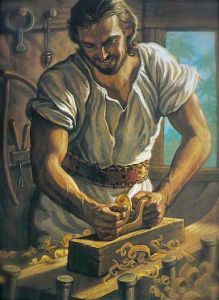
“Jesus was a carpenter…”
A lot of preachers are accomplished writers, businessmen and women, farmers, accountants, life coaches, and military leaders. This comes as a surprise to many people. It really shouldn’t be. Jesus was a carpenter for most of his life.
I’m not exactly sure why we’ve come to see clergy types as milquetoast, theological nerds. The fact is, however, that seems to be the general consensus.
It appears as though that stereotype is going to come quickly to an end. It’s inevitable. The church is headed in a direction that will dictate a whole new view of the clergy.
As the number of clerics continues to wane and congregational sizes diminish, the church is soon going to find herself in a situation where bi-vocational preachers will be a necessity. There are a lot of us already.
 Frankly, I see this as a good thing in many respects. As this trend continues to grow, the laity will, out of necessity, take on a greater role in ministry. Clergy will find themselves on more of an equal footing with the laity. In fact, I wouldn’t be surprised if the term, clergy, disappears from our daily lexicon.
It’s really too bad that the church had to begin falling apart before we recognized our plight. Still, the Lord often uses difficulties to put us back on the right pathway. After all, the church really began to experience explosive growth when she was under persecution. It looks like he’s letting us off easy this time.
[Dave Zuchelli is a graduate of Pittsburgh Theological Seminary and is currently the pastor of Smith Chapel, in Great Falls, VA.]
The post The Faster Pastor appeared first on Dave Zuchelli.
October 5, 2016
Sick as a Dog
 I’m publishing this blog a day late because I’m a tad under the weather (as they say). I went away with my lovely bride for a long anniversary weekend and brought back a nasty cold. I can’t remember the last time I had one of these, but I hope I don’t get another anytime soon.
In moments like these, I simply like to use the old phrase, “I’m as sick as a dog.” While I’ve used that phrase hundreds of times over the years, I have to say I can’t remember ever seeing a sick dog. I suppose that’s due to the fact that I don’t have one (a dog, I mean). It makes me wonder how sick dogs get (also, where did that phrase come from?).
I checked a concordance, and it doesn’t seem to have come from the Bible. Since a lot of sayings come from Scripture, I thought it might. I did find some other interesting facts, however. For example, dogs get a lot of bad press from the Bible.
More than one person in Scripture is referred to as a “dead dog.” This term, from the context, appears to be a way of demeaning someone. A guy by the name of Mephibosheth even called himself by that term. He used it as a form of self-deprecation. I have to say, however, if I had a name like Mephibosheth, I might actually consider “dead dog” as an upgrade.
You’d be hard pressed to find a verse of Scripture that showed dogs in a good light. They’re usually depicted as scavengers cleaning up the carcasses of evil people. It’s a dirty job, but someone has to do it.
There is one verse that’s somewhat related to being as sick as a dog. You can find it in Proverbs 26:11. It says, “As a dog returns to its vomit, so fools repeat their folly.” I’ve never found this to be the most uplifting passage in the Bible. In fact, it kind of makes me sick to read it. I certainly wouldn’t meditate upon it too much. Once you picture that in your mind, it becomes very hard to un-see.
Here’s another one from Ecclesiastes 9:4. “Anyone who is among the living has hope—even a live dog is better off than a dead lion!” I guess that’s a tad more positive, but not much.
Even the prophets couldn’t resist using dog analogies. Isaiah 56:10 has this to say. “Israel’s watchmen are blind, they all lack knowledge; they are all mute dogs, they cannot bark; they lie around and dream, they love to sleep.” I know people like that.
I decided to move to the New Testament.  I figured Jesus would have something positive to say about man’s best friend. No such luck. He just continued with the Old Testament onslaught. When speaking about a certain beggar, he said, “Even the dogs came and licked his sores.” (Luke 16:21) Well, at least now I know why dogs get so sick.
[Dave Zuchelli is a graduate of Pittsburgh Theological Seminary and is currently the pastor of Smith Chapel, in Great Falls, VA.]
The post Sick as a Dog appeared first on Dave Zuchelli.
October 2, 2016
Returning to Square One
 In my last blog, I spoke of how the church was transformed when the citizens of the Roman Empire generally accepted Christianity. After the Emperor himself was converted, most everyone else followed suit.
Prior to that, one could get you trouble by merely saying, “Jesus is Lord.” The common greeting was, “Caesar is Lord.” Two lords were not cool.
Romans were used to being told what to do. They were good at following the leader. Everything happened from the top down.
This attitude and practice quickly trickled into the church. Follow-the-leader became the byword there as well. Eventually, elders, pastors, and bishops were venerated. They were like royalty. The church hasn’t been the same since.
“We hire professional clergy…”
In today’s church, we hire professional clergy to preach to us, tell us what the Bible says, and lead us in the way we should go. A thorough reading of the New Testament reveals a much different kind of gathering.
When the church began, it was informal and intimate. Each congregation was more of a family than a corporation. Clergy were not CEOs. There was a deep understanding that all her members were a priesthood of believers. Everyone played a part, had a  say, and pulled their weight.
I may be romanticizing it a bit, but not much. When the clergy became a special class, we lost a lot. Over the centuries, it’s only gotten worse. These days, we don’t know any other way. It seems normal and practical.
When we strayed from our roots, we developed a chain of command. That may sound harsh, but that was our model. We were more benevolent than tyrannical, but our new hierarchy was strengthened by our willingness to allow someone else to do it—whatever it happened to be at the time.
Where does the power lie?
I’m sure this sounds strange coming from a man who has been a hired gun for over thirty-five years. There was a time when I thought it was right and good that people like me should lead. We do need leaders. But we’ve got to realize that leading is not the same as calling all the shots.
It’s not simply that clergy types have usurped all the power (although that has certainly been the case in many instances). Over the years, much of the laity has willingly ceded their ministerial responsibilities and calling. The result is a sharp contrast between the laity and clergy. It has become an “us and them” situation.
 One would be hard pressed to read Scripture and find such a distinction. Yet, we do. I think this is a result of reading the Bible through our twenty-first-century blinders. It’s all we know, so it’s all we see.
The church is God’s instrument on this earth to share the good news. These days we seem to be more interested in simply preserving what we have.
We need to get back to square one. It won’t be easy to return there from here, but we need to make a strong attempt to do so.
[Dave Zuchelli is a graduate of Pittsburgh Theological Seminary and is currently the pastor of Smith Chapel, in Great Falls, VA.]
The post Returning to Square One appeared first on Dave Zuchelli.
September 29, 2016
The New Pecking Order and the Curse of Eden
When Adam and Eve were formed, they were created to be equal. I strongly  suspect there was no wife beating or henpecking going on in the Garden of Eden. My sense of what happened there was mutual cooperation, respect, and love.
That, of course, all changed when they disobeyed God and brought sin into the world. The Lord then proceeded to curse everything under the sun. Eve’s part of the curse of Eden was, “Your desire will be for your husband, and he will rule over you.” (Genesis 3:16)
That word, rule, is pretty heavy. But, as history shows, men pushed females around for a long time after that. It’s no wonder politicians like to talk about a “glass ceiling” for women.
Domination is the way of human history.
It didn’t stop there, as we know. Cain killed Abel, Moses killed an Egyptian, and Herod beheaded John. Ever since we got kicked out of the Garden, we’ve been trying to lord it over one another. Some have been more successful at that than others.
Monarchs and dictators rule over their subjects and attempt to rule over each other. Apparently, one kingdom isn’t enough. Going after someone else’s stuff and dominating them is the way of human history. This attitude even wormed its way into the church.
 Up until 300 AD, Christianity was more of a movement than anything else. It certainly wasn’t a world religion. The early Christians weren’t particularly known for their pious rituals. They were, instead, known for the way they lived—for the way they treated each other and the people around them.
They weren’t institutionalized and formal. They existed more like a household than a corporation. They cared about each other and were known for their love. They lived like a family with roots in the community and compassion in their hearts. And, much like in the Garden of Eden, no one lorded it over another. Even the Apostles were servants, shoulder to shoulder with everyone else.
“We created a new pecking order.”
Then the Roman Empire decided Christianity was the way to go, and everything changed. Rome was a place of hierarchy. It was the mother of the corporation. Before too long, so was the church. Quickly, the leaders were no longer the servants. Bishops, pastors, and elders became the hot shots. Interestingly enough, the Biblical word (in the Greek) for all these positions is often the same term. Yet, we created a new pecking order. The Bible doesn’t do that—we did that.
 Consequently, we began to read our new practices back into Scripture. We began to discover positions of authority in the Bible that weren’t really there. Some of the servants became the rulers, and we found Scripture to validate that practice.
These days, it’s hard to find a congregation that actually functions as a family. People are leaving churches in droves because we often lack real community. Others, who never were part of a church, see no reason to start now. Why should they? They can find more of a community in their local taverns.
[To Be Continued…]
[Dave Zuchelli is a graduate of Pittsburgh Theological Seminary and is currently the pastor of Smith Chapel, in Great Falls, VA.]
The post The New Pecking Order and the Curse of Eden appeared first on Dave Zuchelli.