Dave Zuchelli's Blog, page 43
September 27, 2016
A Horny Moses: Biblical Translation Gone Awry?
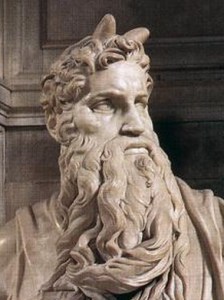 A friend recently asked me if Moses was ever depicted with horns. I wasn’t sure where he was going with that (or why he was asking me), so I looked it up. To my surprise, I quickly found a depiction of the great Moses with two horns on his head. If I hadn’t known better, I’d have thought it was Beelzebub himself.
As it turns out, there are many representations of Moses in a horned state (the most famous of which was by Michelangelo himself). When I discovered that, I needed to find out why. The answer was a tad unsettling.
To help you get the picture, I need to give you a little background. Today, we have many translations of Holy Scripture in many different languages. The science of Biblical Translation has been refined over the years to the point where we have a strong handle on what the Good Book actually says.
Isn’t Satan the one with horns?
That wasn’t always the case, however. In the fourth century, St. Jerome translated Scripture from the original languages into Latin. That version of the Bible became known as the Vulgate and was the official Bible of the Roman Catholic Church.
In the story of Moses receiving the Ten Commandments, it is said he came down from Mt. Sinai with his face radiating the glory of the Lord. The Hebrew language connotes something radiating from Moses’ face (much like horns or 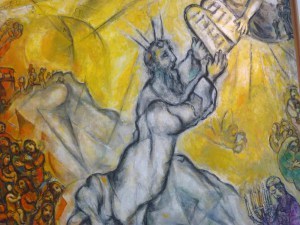 rays of light). Jerome chose to use horns as the metaphor to depict this radiation. He understood it as light, and explained it as such in subsequent commentaries. Unfortunately, there were others who didn’t quite get the picture. Hence the horny Moses (see Rabbi Art Levine).
Over the centuries, people have argued as to whether guys like Michelangelo knew what they were doing when they applied horns to Moses. It’s not a huge deal, but it does make for an interesting discussion.
Location, location, location…
What it points up, however, is how someone can take a sentence in Scripture and turn it into something it was never meant to say. Moses’ face shone like the sun. He didn’t have horns. If we read that in its context, we can derive the proper meaning. But that’s where a lot of folks get into trouble.
It’s like the three laws of real estate—location, location, location. The three laws of Biblical interpretation are context, context, context. We need to read Scripture from the context in which it was written.
We need to ask questions of the text. Who wrote it? To whom did they write it? Why was it written? What was the geographical area, the cultural surrounding, the circumstance of  the people who first received it? We can’t just pluck a lone sentence from a book written a thousand years ago and plop it into twenty-first century America without a little context.
Of course, people still do that all the time. If you don’t believe me, just listen to any politician who likes to quote Scripture. It’s a little scary.
The post A Horny Moses: Biblical Translation Gone Awry? appeared first on Dave Zuchelli.


September 26, 2016
“Say It Ain’t So, Joe!”
 Yesterday morning on my way to worship, I flipped on the MLB Network. The first thing I heard from the program host was about the passing of Jose Fernandez. My mind immediately raced to figure out which Jose Fernandez this might be. I just knew it couldn’t be the twenty-four-year-old standout pitcher for the Miami Marlins.
I reasoned that Jose Fernandez has to be a common Hispanic name and that it had to be another Jose Fernandez. It couldn’t be the young man who had finally and successfully fled Cuba on his fourth try as a teenager. It couldn’t be the kid who was shot at and who jumped into shark infested waters to save his mother from drowning when she fell off the small boat that was carrying them to asylum. It couldn’t be the young baseball phenom who rose to stardom in his very first year in the major leagues.
It couldn’t be… But it was. “Say it ain’t so, Joe!”
The King is dead…
Hours later when I was climbing into bed, my lovely bride asked me if I’d heard that Arnie Palmer had died. I didn’t have to do a reality check on that one. Arnie was eighty-seven years old. And though he was known as the “King of Golf,” even kings die eventually. That news was a mild surprise, but not a shocker.
People die all the time, but we don’t know most of them. I didn’t actually know Jose or Arnie either. They were both heroes of sorts—certainly so in the world of sports. As such, many in the world will mourn their passing.
 I can’t help thinking, though, that this happens every day. Every day, at least one twenty-something dies in a tragic accident, and at least one elderly person crosses the bar. It certainly has to be a common occurrence. Yet, on this day, it’s a standout.
I remember the day I heard about the death of Hall of Famer Roberto Clemente (thirty-seven-year-old baseball star of the Pittsburgh Pirates). I was twenty-one years old. He was one of my heroes as I grew up. I couldn’t believe he was gone. Sometimes, I still have a hard time believing it. I guess death is like that.
“It all seems like a dream.”
To this day, I have a hard time believing my Mom and Dad are gone too. There are times when it all seems like a dream. If I could only wake up, they would be here. But I can’t wake up, and they’re not around anymore.
That’s one reason, I guess, that our faith is so important to us. There is, in faith, that overarching understanding that death is not the end. There is an afterlife, and there is a reunion. The folks we have lost are not lost at all. They’re simply in another place—a place where we can follow.
Jesus once said, “Whoever believes in the Son has eternal life…” (John 3:36) In Christ, we’ll see them again. Thanks be to God.
[Dave Zuchelli is a graduate of Pittsburgh Theological Seminary and is currently the pastor of Smith Chapel, in Great Falls, VA.]
The post “Say It Ain’t So, Joe!” appeared first on Dave Zuchelli.
September 22, 2016
One Heart at a Time
 The Bible takes an interesting tact when it comes to social ills. It begins with the individual. Instead of taking on a major malady as a negative to be cured, it appeals to the individual to be positively transformed—in all areas of life. The obvious advantage is that hearts are changed and permanently improvement. The just-as-obvious drawback is it takes a long time.
It would be simpler to pass a law requiring everyone to follow a certain pathway. Governments do this. People like to say, “You can’t legislate morality.” Yet, virtually every law on the books attempts to do exactly that. As we all know, many of those laws have terrible, unintended consequences.
If you’ve read my last couple blogs (Inside Job and Loving Your Neighbor), you know that I’ve been using the topic of slavery to briefly explore how Scripture seems to deal with some of our major foibles. I won’t attempt to recap those postings for you, but I offer them for your perusal.
“There is no passage denouncing road rage…”
The subject of slavery is a great example of how Scripture deals with many specific evils. There is no passage that says, “Thou shalt not own slaves.” Some people extrapolate from that silence that it’s okay to put other people into bondage. I would remind you that there is no passage denouncing road rage either (maybe that’s a bad example, but very appropriate for our time).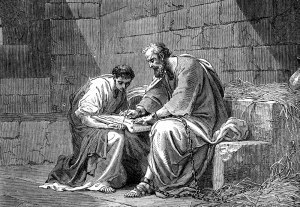
The Apostle Paul wrote a short, one-page letter to a man by the name of Philemon. Philemon was a Christian brother who owned a Christian slave named Onesimus. Paul apparently knew them both rather well. In his letter, Paul urged Philemon to set Onesimus free.
In this letter (interestingly enough), Paul did not denounce slavery. The lack of such condemnation is conspicuous by its absence. I suspect many of us (if we were in the same situation) would go immediately to the point that slavery is evil. Paul does nothing of the sort.
An appeal to the heart.
What Paul did (and what Jesus always seemed to do) was appeal to the heart. He asked him to set Onesimus free “on the basis of love.” Paul, like Jesus, was out to change the world, one heart at a time.
It helps to remember that slavery was common during the centuries in which the Bible was written. This applies both to the Old and the New Testaments. When writing to slaves who were also Christian, Paul generally told them to do their best for their masters. Again, it was not an affirmation of the institution of slavery. It was another appeal to the individual, human soul—one heart at a time.
It’s like racial bias in our own time. We know it’s all around us. If we’re sensitive enough to it, we may even be aware of it when, and if, it arises in our own lives. Some people simply and loudly denounce it. Others look to change individual hearts, beginning with their own. It seems like a good place to start.
[Dave Zuchelli is a graduate of Pittsburgh Theological Seminary and is currently the pastor of Smith Chapel, in Great Falls, VA.]
The post One Heart at a Time appeared first on Dave Zuchelli.
September 20, 2016
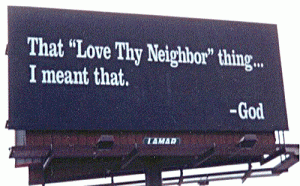
Loving Your Neighbor
 If you read my last blog (Inside Job), you might remember my reference to an e-mail I received about the issue of slavery and the Bible. The e-mail was a well-crafted recap of how Scripture actually supports slavery rather than abolishes it.
While I disagree with the sentiment that the Bible undergirds slavery, I can certainly see how one could come to that conclusion. While Scripture doesn’t support slavery, it doesn’t directly and specifically condemn it either.
Did Jesus approve of slavery?
As part of his argument, he cited Jesus’ parable about a slave being beaten. (Luke 12:47-48) His observation was that Jesus approved of physically punishing slaves. A clear understanding of Jesus’ parables would not allow for such a viewpoint. This parable, in particular, is merely an illustration of a much different theme. If you study the parables of Jesus, you’ll see he used objects and common circumstances of everyday life as object lessons to make deeper, spiritual points. Slavery was one of the common circumstances of his day, so he used it as such.
For the most part, Jesus didn’t go around making sweeping generalizations about humanity’s social ills. His focus was clearly on the individual heart. It was because of this focus that he earned the reputation of being extremely compassionate.
 Jesus was once asked, “Which is the greatest commandment?” Part of his answer was, “Love your neighbor as yourself.” (Matthew 22:34-40) This teaching was at the heart of everything Jesus did when he was here on this earth. It’s at the heart of who he is.
God could have laid out everything he wants us to do as well as everything he wants us to avoid. Yet he didn’t. Maybe the closest he ever came to that was when he issued the Ten Commandments to Moses and the Hebrew people. He seems to take a different route toward guiding us. That route is love.
Who will set us free?
Our general directive is to love God and love our neighbor. Our specific directive is to follow the path of the Holy Spirit. These are not easy tasks, but they are attainable ones.
If we are loving God, loving our neighbor, and following the leading of his Holy Spirit, things like slavery have no place in our lives. It’s just that simple. Jesus didn’t embrace slavery, he didn’t support beating people, but he didn’t physically free all the slaves either (nor did he own any). He DID say, however, that we would be set free by the truth (and that proclamation included slaves).
Our big problem is we are slaves to our ow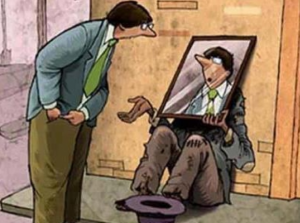 n sin, our own egos, and our own selfish motives. That problem dissipates the more we love God, love our neighbor, and follow the leading of the Holy Spirit. The big trick, of course, is to learn to do all that. It doesn’t happen in the twinkling of an eye. It’s a long journey.
Still, it’s a journey worth taking. When more of us decide to take it, the world will be a better place. (To be continued…)
[Dave Zuchelli is a graduate of Pittsburgh Theological Seminary and is currently the pastor of Smith Chapel, in Great Falls, VA.]
The post Loving Your Neighbor appeared first on Dave Zuchelli.
September 18, 2016
Inside Job
 In one of my recent E-letters (Slavery Hits the Skids), I used the institution of slavery as a jumping off point to make a plea for prayer. One of my readers, an avowed non-believer, wrote a private response aimed at the slavery issue.
He presented a well thought out case as to how Scripture has been used to support the oppression of humanity. He’s correct, of course. The Bible has been used to back many vile things—human bondage is one of the worst examples of this.
He cited Old Testament laws on the treatment of slaves and New Testament passages encouraging slaves to be faithful to their masters. One doesn’t have to read very far to see how slave owners could easily justify their position using Biblical proof texting.
Of course to do this, one has to toss out the first rule of Biblical interpretation—context, context, context. I don’t have room here for a lengthy discussion of how the Bible treats this (or any other subject) in its entire context. Suffice it to say, the Old Testament laws were instituted in an era when slavery was a way of life. The laws were merely there to manage the situations that arose from such a practice.
 Likewise, the New Testament passages directed to slaves were part of a general pattern urging people to be deferential to each other. This included husbands and wives, children and servants, Jews and Greeks, etc. The Apostle Paul (who wrote many of these passages) was not looking to entrench the institution of slavery any further. In fact, if one reads his letter to Philemon, just the opposite is expressed.
In this letter, Paul urges Philemon to set his slave (Onesimus) free. In doing this, he says he could order him to do so but would rather he do it on his own—out of the goodness of his heart—“on the basis of love.” (Philemon 8-9)
This displays the general crux of Scripture. The Bible seldom makes sweeping statements about what nations, cultures, and societies should do. Scripture is generally directed at the individual—the very personal. In the words of Dion DiMucci, it’s an “inside job.” It’s directed toward changing the heart of a person, one soul at a time. When enough hearts are converted, practices like slavery will dissolve into history (at least for the believers).
 But that’s how it is for everything in life. I didn’t pick up my pocket New Testament one day and read, “Thou shalt become a pastor.” The calling on my life was an inside job. It was (and is) part of a journey. The Lord is remaking me from the inside out.
It’s that way with all of us. As we walk with the Lord, as we read his Word, as we grapple with what life is and who we are in Christ, we get remade from the interior of our being. It’s not a top-down process. It begins where we are and moves outward. (To be continued…)
[Dave Zuchelli is a graduate of Pittsburgh Theological Seminary and is currently the pastor of Smith Chapel, in Great Falls, VA.]
The post Inside Job appeared first on Dave Zuchelli.
September 15, 2016
Blood Stained Get-Out-of-Jail-Free Card
 When you were younger, did you play Monopoly for hours on end? It’s not uncommon to play one game for a couple of days. As kids, we took breaks to eat and do other things like sleep. But a two-day game of Monopoly was not uncommon. I haven’t played in years, but some of you might still do that from time to time.
A lot of board games are imitations of life. In fact, one of them was named “Life.” Monopoly was no exception. We did things like pay rent, buy homes, and even went bankrupt. Going belly-up was a lot more fun when the monetary loss was play money.
“Do not pass go, do not collect $200.”
The best fun, of course, was when someone would land on the Chance Square and pull a card. You never knew what was going to happen when you had to take  a Chance. The best fun was when someone else pulled the card that said, “Go to Jail; go directly to jail; do not pass Go; do not collect $200.” I loved it when someone else got that baby.
But, like many things in life, there was a simple remedy for that situation (if you were lucky enough to have it). That remedy was a Get-Out-of-Jail-Free card. It was like gold. If matters were going right for you, you could sell it to the highest bidder. That was especially true if there were a couple people in jail who needed desperately to get out.
“Every one of us is spiritually bankrupt.”
I suppose the game of life (the real one) is like that. We’re always looking for an easy way out. Depending on what we’ve gotten ourselves into, the exit is not always so simple. For example, bankruptcy in real life is not as easy as it sounds. It involves attorneys, courts, and government regulations. Need I say more?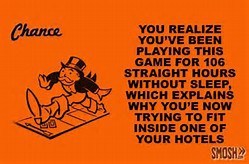
It’s also true in real life that every one of us is spiritually bankrupt. We land in a sort of spiritual morass with nowhere to go and no one to which we can turn. It’s like we took a chance card that said, “Go to hell; go directly to hell; do not pass Go; do not collect $200.” We find ourselves like King David who sinned and cornered himself into a place of no return. His only recourse at that point was to throw himself on the mercy of God (see Psalm 51).
All of us need to do the same. Our get-out-of-jail-free card is blood stained. The card isn’t really free at all. It was paid in full by the blood of Jesus. It’s only free to us because he then turns around and offers it to us as a gift. I guess that’s why they call it amazing grace.
A few days ago, I sat and listened to a beautiful rendition of Miserere Mei Deus (Psalm 51 set to music). It’s ancient—written in the 1600’s. I invite you to listen to it and think about the blood stained get-out-of-jail-free card that’s been extended to you.
[Dave Zuchelli is a graduate of Pittsburgh Theological Seminary and is currently the pastor of Smith Chapel, in Great Falls, VA.]
The post Blood Stained Get-Out-of-Jail-Free Card appeared first on Dave Zuchelli.
September 13, 2016
Discouragement Aside…
 Merriam-Webster defines discouragement as “a feeling of having lost hope or confidence.” I was experiencing a bit of discouragement this morning, so I decided to write about it to make myself feel a little better.
“Feel” is the key word here. I was thinking about how I felt, and told myself I would get over the feeling soon. I was happy to read that discouragement was, indeed, a mere feeling. Downer emotions can be overcome—they can eventually go away.
How do you feel?
The reasons for my own personal discouragement are not important. As occasionally happens to everyone, a few arbitrary circumstances in my life seemed to rise to the surface all at once. Add to that our recent remembrance of the events of September 11, 2001, and it was pretty easy to feel discouraged.
Oddly enough, a lot of good things have happened to me lately. I’ve had, what many might call, triumphs in my life. I shouldn’t be discouraged. Nevertheless, I had the feeling.
Emotions are funny things. I don’t have to tell you we can ride emotional roller coasters based on the tiniest of things—a poor night’s rest, a good dream, or something someone said (either positive or negative). The ability to remain on an even keel in life is, I suppose, a wonderful gift. The highs and lows will come, but a return to the center is always very settling.
Your discouragement, of course, doesn’t necessarily lie with you. Discouragement can arise from what we perceive as the misdeeds, foibles, or maladies of other people (particularly if they’re folks we love). In fact, discouragement might come from mere circumstances beyond (or even within) our control. Come to think of it, feeling discouraged can come quite easily.
I’m no psychologist, but I suppose constant discouragement can lead to despair. Extended times of despair can then develop into full-blown depression. None of us wants that. Most folks I know avoid depressed people like the plague. If your discouragement ever gets that bad, do yourself a favor and get some professional help.
For most of us, however, discouragement is a short-lived thing. We quickly realize that our feeling is temporary. Furthermore, it usually rises from something that’s not all that important (such as our favorite sports team riding a long losing streak).
“Rub it off.”
My Dad used to have a solution for all my ills. It didn’t matter what the circumstance. It could be a physical injury or an emotional breakdown. Regardless of what I was feeling, he used to tell me to “rub it off.”
Once, I got hit in the head with a rock thrown by a playmate (I was about eight years old at the time). I could feel the blood trickling down the back of my neck and ran crying to my parents. My Dad’s reaction was predictable. “Rub it off.”
While I don’t prescribe that treatment as much as my Father did, it’s often a good remedy. If you’re discouraged today, rub it off. It should be gone soon.
[Dave Zuchelli is a graduate of Pittsburgh Theological Seminary and is currently the pastor of Smith Chapel, in Great Falls, VA.]
The post Discouragement Aside… appeared first on Dave Zuchelli.
September 11, 2016
The Other Side of Prayer
 One of the most difficult concepts of our Christian journey is prayer. In the end, I suspect no one really understands it—we just do it. How well we do it is probably a whole different question.
In the end, we have many more questions than answers when it comes to this subject. Any thoughtful answer we do come up with has to be long and involved. I suppose that’s why we humans have come up with things like systematic theology. While it doesn’t provide all the answers, at least it can make us feel better about ourselves for a little while.
How often should we pray? How long? When? What should we pray for, or should we pray for anything? Do our prayers really make a difference? Questions like these are merely the tip of the proverbial iceberg.
Here’s my Christmas list, Lord.
Because we don’t really understand it, we often end up reducing prayer to a laundry list for God. “Okay Lord, here’s what I want.” In our best moments, we’re not praying for ourselves but for someone else. Either way, we’re asking our Creator for something we don’t have at the moment.
Entire books have been written on the subject. Different styles of prayer have been developed. Formal prayers have been written and used repeatedly by the masses. All this has been done so we can somehow get a handle on what prayer is and how it relates to us as individuals. Just when we think we’ve got it down pat, another question arises that throws the whole thing off kilter.
I think our big problem is we’ve often forgotten the other side of prayer. We readily remember the part where we do all the talking. After all, we’re the ones with the voices. God, on the other hand, often seems so silent. That’s where we make our big mistake.
“Prayer is having a conversation with God.”
If you ask anyone what prayer is, the most common answer you’ll receive (I hope) is that “prayer is having a conversation with God.” If you boil down all the theology behind our understanding, that definition is as good as any. Let’s have a little talk with God.
Prayer, like any conversation, becomes really frustrating when we do all the talking. Somewhere along the way, we need to begin listening. After all, the Lord is the real expert here, not us.
When is the last time you picked up a copy of the Scripture to pray? We usually pray on the fly and never consider taking a look at God’s Word. We seldom read a passage and meditate on it. We seldom look at the Lord’s agenda, because we’re too busy foisting ours on him.
I’ve found that the biggest attribute of prayer is that it pulls us into God’s will. It only makes sense. When you sit and converse with someone long enough, you begin to have a better understanding of them. Since the Lord understands everything, it would behoove us to listen to what he has to say.
[Dave Zuchelli is a graduate of Pittsburgh Theological Seminary and is currently the pastor of Smith Chapel, in Great Falls, VA.]
The post The Other Side of Prayer appeared first on Dave Zuchelli.
September 8, 2016
Does God Hate Us?
![Smith_Chapel7[1]](https://i.gr-assets.com/images/S/compressed.photo.goodreads.com/hostedimages/1473423914i/20462753.jpg) Last year, we had a new roof put on our church building. Our chapel is over 125 years old, and as far as anyone knew, the old roof was the original. Since it was a metal roof, that’s not a miracle or anything. Still, it lasted a long time—kind of like the Hebrew sandals in the Sinai Desert. But over the years it was wearing a little thin. Even metal can erode over time.
Last year, we had a new roof put on our church building. Our chapel is over 125 years old, and as far as anyone knew, the old roof was the original. Since it was a metal roof, that’s not a miracle or anything. Still, it lasted a long time—kind of like the Hebrew sandals in the Sinai Desert. But over the years it was wearing a little thin. Even metal can erode over time.
So now we have this nice, new, shiny, metal roof. And since we were sending a crew up there already, we decided to have the gutters replaced as well. It just made sense.
One day this spring, someone glanced up at the east side of the building and noticed the gutter was flipped up and pulling away from the building. I told everyone not to be concerned. I was sure it would be covered under the warranty, and I told them I would call the roofing company and have them take care of the problem.
I did that, and they were very nice about it. They said they would send someone out that week to check it out and get us on their calendar for a repair job.
Before too long, I received a sizeable estimate from that company to fix the gutters. I was surprised (and a tad confused), so I called them up. They said the damage was not covered by warranty because it was “an act of God.”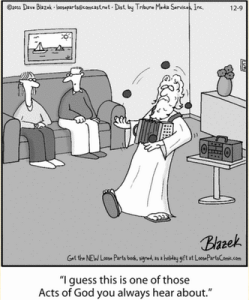
“God gets blamed for a lot of stuff…”
Frankly, you could have knocked me over with a feather. I almost wanted to reply, “Hey! We’re a church. God wouldn’t do that to us! You’re obviously mistaken.” But I’ve been around long enough to know better than to shoot from the hip like that. Besides, I wasn’t exactly sure that would be correct. As they say, God works in mysterious ways.
I’ve noticed over the years that God gets blamed for a lot of stuff like that—occurrences like diseases, accidents, hurricanes, earthquakes, hail, floods, and forest fires. Does he dislike us that much? What in the world is he thinking?
If the Bible is any indication, God doesn’t hate us at all. In fact, just the opposite is true. The very point of Scripture seems to be that God loves us. With all we’ve done in opposition to his will, it’s a wonder how that can be true. Still, he loves his creation.
Genesis conveys that humanity is the pinnacle of God’s design. Yet, each of us is a small part of a larger whole that God holds together every moment of every day. Stuff happens that we don’t like. Blaming God for every malady doesn’t seem very helpful. I didn’t protect my kids from every negative in life. God doesn’t either.
Many years ago, a massive tornado passed through an area near my hometown. A church building was in its path. The only things left were the cement steps out front. God must have really loved those steps.

[Dave Zuchelli is a graduate of Pittsburgh Theological Seminary and is currently the pastor of Smith Chapel, in Great Falls, VA.]
The post Does God Hate Us? appeared first on Dave Zuchelli.
September 6, 2016
Weekend at Davey’s
Last weekend, a couple of old high school buddies came to my home and we  spent some significant time together. It was one of those gorgeous weekends (weather-wise) that enabled us to do whatever we felt like doing (as long as our old frames would hold out).
I folded back the top of the Jeep and took off the doors. Aside from losing a couple of ball caps in the wind, it made for a great ride. The sun was shining much of the time, the temperature was right, and there were enough clouds to make the scenery all that much more beautiful.
“We chortled it up for a couple of days.”
We hit some restaurants, a distillery, and an antique car show over the weekend and added a few miles onto the Jeep’s odometer. King crab, short ribs, and country fried chicken was some of our fare, and we chortled it up for a couple of days.
Aside from seeing each other and catching up on what was happening, the highlight of the get together was probably our road trip to the Shenandoah Mountains. We headed down to Shenandoah National Park and did a leg of Skyline Drive.
If you’ve never been there, I encourage you to take the time to meander down this wonderful stretch of road. If you do, you’ll wind along the ridge tops as you peer down at the Shenandoah Valley far below. It’s an indescribable sight.
We stopped at various overlooks, took a few pictures, and drank in the vistas. It was an incredible venture. I had done it before, but it’s one of those things you just can’t get over.
“There is a God.”
At one point as I gazed over the seemingly endless valley, I turned to my buddies and said this: “When I look at stuff like this, it just confirms to me that there is a God.” They both agreed. I’m glad they did because I just wasn’t in the mood for an argument.
At college, I majored in biology—the study of life. Like most students, I heard about the big bang, the primordial sludge, and how all of life evolved from some slimy sorghum. Sorry, but I just don’t buy it. I guess I know too much (or not enough). My money is on a benevolent Creator as opposed to an amoeba gone bad.
I’m not much of a world traveler, but I’ve been around enough to see some rather diverse people, geography, flora, and fauna. They all speak to me of a world put here by someone who cares—someone who holds it all together for us. Someone who likes order and beauty… That someo ne has placed within us the capacity to love and to appreciate the world around us, despite our shortcomings, failures, and rebellious spirits.
I may be naïve, but I don’t think so. There’s too much evidence for me to turn my back on the Lord for a few theories. Maybe we all need a weekend at Davey’s. It did ME some good, at least.
[Dave Zuchelli is a graduate of Pittsburgh Theological Seminary and is currently the pastor of Smith Chapel, in Great Falls, VA.]
The post Weekend at Davey’s appeared first on Dave Zuchelli.