Dave Zuchelli's Blog, page 46
July 19, 2016
Coming Alive in the Twenty-First Century

As Christians, we are called to subvert the world. That’s what Jesus did, and (if I read my Bible correctly) that’s what we’re supposed to do as well.
I use the word, subvert, because we don’t like it. We’ve been trained to think that anything subversive is automatically bad. Remember what it means. To be subversive (among other things) is to be revolutionary. It means to cause destabilization. We REALLY don’t like that definition.
But isn’t that exactly what Jesus did? He destabilized an entire way of thinking because he was so radical—revolutionary. We hear it all the time about Jesus but seldom think how that should translate for us. How could such a concept work its way into our lives?
“The world needs people who have come alive.”
The late Baptist minister and civil rights leader, Howard Thurman, once said this: “Don’t ask yourself what the world needs. Ask yourself what makes you come alive, and go do it. Because what the world needs are people who have come alive.” Ponder that one for a while.
Jesus didn’t show up merely to meet the needs of some people. He certainly did that along the way, but what he ultimately came to do was inject life where there was only death. He was (and is) the most “alive” person ever. He was alive to his

Heavenly Father, alive to himself, and alive to those around him. His aliveness resulted in the gift of life and salvation that he offered to the world.
What really makes you come alive? What turns you into a vehicle for joy and excitement? How often do you actually do it?
I suspect Jesus really enjoyed the majority of his time on this earth. He was doing something he loved—something that made him come alive. And while his greatest gift to us is that of salvation, his greatest example may be that he did what he was born to do. How many of us actually do that? How many of us even try? How many of us even think about it?
We are so caught up in our daily struggles to put bread on the table, fight traffic, or maintain a certain standard of living that we ignore who we’re meant to be. What important desire has gone unfulfilled in you? What should you be that you would never become? It’s probably not as impossible as you think.
“You are a world changer…”
If the Lord has planted a dream inside you that has thus far gone unfulfilled, maybe you should look into pursuing it. Some dreams lie dormant for years until the Spirit of God motivates us to give it one last shot.
 I didn’t become a preacher until I was thirty. I finished seminary when I was thirty-five. I became a Harley-Davidson owner and rider when I was fifty-five. I published my first book when I was sixty-five.
You are a world-changer—a subversive. Don’t give up on that thing that makes you come alive. Walk in the footsteps of Jesus.
[Dave Zuchelli is a graduate of Pittsburgh Theological Seminary and is currently the pastor of Smith Chapel, in Great Falls, VA.]
The post Coming Alive in the Twenty-First Century appeared first on Dave Zuchelli.


July 18, 2016
“I’d Kill for a Nobel Peace Prize!”
 Comedian Steven Wright has said he’d “kill for a Nobel Peace Prize.” That’s funny in the context of his stand-up routine. In our current state of affairs, however, people are killing for a lot less than peace prizes. Obviously, there’s absolutely no humor in any of these shootings, bombings, and other sundry techniques people have dreamed up to destroy human lives.
We wake up almost daily to the news of another insane act of violence. Some of the perpetrators seem to have a sliver of reason for their evil deeds, but none have a truly rational one.
Pokemon Strikes Again
To make matters worse, there seems to be no solid pattern. They can happen in gun-free zones or at heavily guarded events. They can be in high crime areas or in neighborhoods where police are seldom needed. They can be well-planned acts of terror or spur of the moment snaps.
You may have heard recently about the Pokémon Go App craze. It’s a reality game played using cell phone technology. I don’t understand it exactly, but I know it’s been used to lure people into isolated traps where they are vulnerable to armed robbers (or worse). We can’t even trust games anymore!
The first telling of this sort of thing is in Genesis. As a matter of fact, that’s where 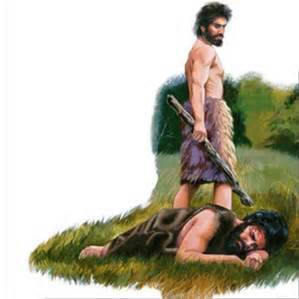 we hear of many of our “firsts.” You may remember that Adam and Eve had a couple of sons named Cain and Abel. For flimsy reasons (mainly jealousy, I suppose), Cain killed his brother Abel.
As the account goes, God called Cain on the carpet and asked him where his brother was. Cain commits the pitifully naïve act of lying to the Lord and tells him he doesn’t know. God’s reply is, “What have you done? Listen! Your brother’s blood cries out to me from the ground!” We would do well to evoke this little bit of history from time to time.
It’s enormously incredible to me how cheap life seems to have become these days. Even many who decry these senseless acts turn around and support other acts of violence on humanity. They call them by other names and find high and mighty excuses to defend them, but they are no less heinous.
“Thou Shalt Not Kill”
If Abel’s blood cried out to God from the ground, I’m pretty sure modern day victims spill blood that does a considerable amount of screaming to the heavens as well. In the end, God will have the final say. We can argue and fuss as to what we’re going to do to prevent unwarranted slaughters. Nevertheless, history shows we will never stop them all—not that we shouldn’t try.
As for Cain, God cursed him. He spared his life, but Cain’s reaction to the curse was, “My punishment is more than I can bear.” Whatever punishment waits our modern day Cain’s, it’s undoubtedly more than we mere humans will ever be able to mete out. I pity those in defiance of God’s simple command—“Thou shalt not kill.”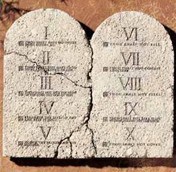
[Dave Zuchelli is a graduate of Pittsburgh Theological Seminary and is currently the pastor of Smith Chapel, in Great Falls, VA.]
The post “I’d Kill for a Nobel Peace Prize!” appeared first on Dave Zuchelli.
July 14, 2016
Perichoresis: The Divine Dance
 There’s a Greek word that’s used to encapsulate the relationship between the three persons of the Triune God (Father, Son, and Holy Spirit). That word is perichoresis. It’s a compound word often simply defined as “rotation” or “a going around.”
The literal makeup of the word is peri (around) and chorein (to give way or make room). The idea (in relation to the Holy Trinity) is that each person of the Trinity moves around and makes room for the others. Some refer to this as the “Divine Dance.” The same term is often applied to the two inherent natures of Jesus (human and divine) as well as God’s relationship with creation. Simply put, there’s a never-ending dance going on, and the Lord is always a part of it.
I don’t mean to dazzle you with fancy terms here (I, too, had to look it up). However, I ran across this term recently and its definition sparked a whole different train of thought for me.
This past week, five policemen were shot dead in Dallas, Texas. If you haven’t heard about this, you are about as far off the grid as one can get. It’s an understatement to say that it was a horrific crime and a despicable act. I won’t attempt to add to the thousands of words written and spoken about it except to say I am numbed by the news.
At the memorial service for the five policemen, former President Bush delivered  a six-minute oration. It was one of the best six minutes I’ve heard in a long time. In it, he made this statement. “Too often we judge other groups by their worst examples while judging ourselves by our best intentions.” He, accordingly, received a goodly amount of applause for this particular sentence. He did so, I’m sure, because it hit the nail on the head and put a lot of things in a nutshell (if I may mix metaphors).
The violence in Dallas (as well as what’s been happening in many related incidents in this country), is a result of our failure as God’s creation to join in the dance. We have neglected our partner in the perichoresis if you will. God has asked us to dance, and, for the most part, we have refused.
This, of course, is nothing new. Adam and Eve got us off to a good start (or maybe I should say a bad start). Cain later killed his brother, Abel, and we’ve been headed down that path ever since. Dallas is another chapter in our long story of sin. (Whoops! I used the “s” word. At least it doesn’t have four letters.)
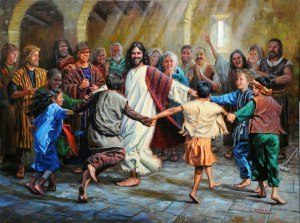 It is sin that brings about sagas like the Dallas murders. Our sin is our refusal to “dance with the one who brung us.” If we continue to refuse his invitation, we will undoubtedly see more violence, brutality, and out and out madness.
We’ve been RSVP’d to the perichoresis. We might want to respond while the offer still stands.
[Dave Zuchelli is a graduate of Pittsburgh Theological Seminary and is currently the pastor of Smith Chapel, in Great Falls, VA.]
The post Perichoresis: The Divine Dance appeared first on Dave Zuchelli.
July 12, 2016
Rules for the Seventy-Two
 There’s a fascinating passage in the Luke chapter ten. It’s the portion of Scripture where Jesus is described as sending out seventy-two of his disciples. They were to travel to the towns and into the countryside where he would be teaching.
The captivating part of the story is the instruction he laid out for them. In twenty-first century America, we would expect that he was sending them out for some promotional work. You know—a little PR. That didn’t seem to be the case, however.
His first instruction was not surprising. He told them to pray. The prayer, however, was for them to ask God to send workers out into the fields for harvest. We’re used to this kind of prayer, but here it seems a little out of place. Weren’t the seventy-two (and more importantly, Jesus) the workers going out to harvest souls? Apparently, more than seventy-three were needed.
His second instruction was much stranger. They were not to take any baggage. That little omission would leave them more than a bit helpless. They were forced to depend on the provision of the Lord (and the people whose lives they encountered). They were vulnerable. Interestingly enough, this instruction was preceded by the statement, “Go! I am sending you out like lambs among wolves.” I’ll say!
The third instruction deals with their behavior  when they stay in other peoples’ homes. This strongly implies that they were to go into villages and towns and get to know the people, work for them, help them out, and gladly accept what they are given. Part of their work among the people is to heal the sick and relay to them that the Kingdom of God is near.
Their final instruction deals only with those places that reject them. If that were to happen, they were to shake the dust of the town off their feet. As they left, they were to issue a sharp warning that the townsfolk were on the wrong spiritual path.
A thoughtful look at this passage reveals a startling truth. What Jesus instructed them to do was pretty much the opposite of what we in the church do today. They were to go as strangers looking for people who would welcome them into their lives. The church today settles for staying at home readying herself to welcome the occasional stranger should one wander in.
The seventy-two had nothing to offer outside of themselves. They had nothing, brought nothing, but sought refuge and community. Out of the relationships they formed came healing and salvation. They had to depend on God to prepare the way, and they had to offer only what God gave them.
There were no programs, buildings, rallies, or children’s ministries. There were only strangers looking to belong. Have we gotten it all wrong? Are we doing it backwards?
Becoming the stranger in the crowd can be a scary thing, but it might be something we should do a little more. Can we find ways to do that?
[Dave Zuchelli is a graduate of Pittsburgh Theological Seminary and is currently the pastor of Smith Chapel, in Great Falls, VA.]
The post Rules for the Seventy-Two appeared first on Dave Zuchelli.
July 10, 2016
Father McKenzie
 I serve a small congregation on the outskirts of a village in Northern Virginia. To describe the churchyard as picturesque just doesn’t do it justice. There are towering oaks on the property that are as old as our little chapel (125 years). It’s quiet and peaceful, belying the fact that it’s a suburb of DC.
On the southern edge of the two-acre plot lies a fifty-foot strip of land dedicated in 1891 to be a cemetery. Although I don’t have time to do it often, I love to putter around the property doing a little groundskeeping every now and then. It’s quite therapeutic.
I was doing just that a few days ago when I discovered a song rattling around inside my head. I realized immediately that I subconsciously hear it every time I work in the graveyard. The song is the old Beatle tune, Eleanor Rigby.
The composition is about lonely people in general. But there’s a specific part of the number dedicated to a fictitious clergyman by the name of Father McKenzie. The particular line I always think of at times like those says this:
“Father McKenzie, wiping the dirt from his hands as he walks from the grave. No one was saved”

Said dirt was from the grave of Eleanor Rigby—one of the lonely people mentioned in the song. As I wipe the dirt of our cemetery from my hands, I often think that (in some small way) I’ve become Father McKenzie.
It’s not that I’m lonely—far from it. But I’m now sixty-six years old. The majority of my life has passed (I assume), and I find pleasure and solace in trimming trees at gravesites. Father McKenzie I presume.
Maybe the saddest line in the song is the phrase that asserts, “no one was saved.” It’s almost a throwaway line, but it stands out to me. I think it says more about the Beatles than it does about lonely people. Since the people mentioned in the song are fictitious, it’s easy to say they weren’t saved. It’s their song, after all.
Still, there’s an underlying current that smacks of hopelessness. It seems to strongly imply (if not downright proclaim) that Father McKenzie is wasting his precious time. His life amounts to nothing, and his ministry is bogus. Obviously, I disagree.
 The Beatles have been one of my favorite bands since they burst upon the scene in the sixties. I love their music (their judgment of other peoples’ usefulness not withstanding). They helped to shape my teenage years. Hence, they made me feel really bad for the lonely priest in their song. Now, in some ways, I’m him.
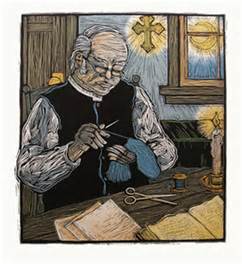
The Father McKenzie of song darns his own socks and writes sermons that no one will hear. I haven’t gotten to that point yet, and hopefully never will. Still, that day may be on the horizon. In the meantime, I’ll find fulfillment in writing, preaching, and cleaning up around the tombs. Someone may even be saved.
[Dave Zuchelli is a graduate of Pittsburgh Theological Seminary and is currently the pastor of Smith Chapel, in Great Falls, VA.]
The post Father McKenzie appeared first on Dave Zuchelli.
July 8, 2016
Eleanor Rigby
 Remember the old Beatle song, Eleanor Rigby? They sang, “All the lonely people, where do they all come from? …where do they all belong?” A few years later, the group America sang, “This is for all the lonely people, thinking that life has passed them by.”
There seems to be a fascination with loneliness and lonely people (as well there should be). Songsters write about them, poets romanticize their plight, and preachers expound on the subject. I suppose we all find ourselves in lonely situations from time to time.
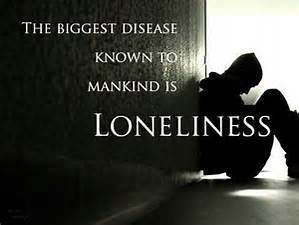
“The biggest disease known to mankind is loneliness.”
The Beatles had no answers (at least not in Eleanor Rigby). They simply pointed to her as a fictional example of the plague of loneliness. There was neither a glint of hope nor any silver lining in that song. It was merely a haunting reminder of how an empty life can end up.
America was a tad more positive. At least they urged the lonely people to keep plugging away. “Don’t give up until you drink from the silver cup and ride that highway in the sky.” In other words, you might be lonely now, but when you die it will get better (at least that’s how I read it).
Aloneness is a genuinely human condition. It can be almost disease-like in its  insipidness. It can feed on itself until a person’s life is as empty as a discarded cardboard box. It can be experienced in a crowd or in a nondescript room. It can eat away at someone’s very soul.
Psalms speak of loneliness more than once. In that context, the answer to the Psalmist’s condition is God. In Psalm 25, the writer seeks the Lord’s comfort and refuge. His hope is in the Lord.
Psalm 68 refers to God as “a father to the fatherless, a defender of widows” who “sets the lonely in families.” These are good things for the lonely to know. But what about the rest of us? Friends, family, and the fellowship of other Christians constantly surround me. What do I know of loneliness?
“Do you even know someone who is lonely?”
It has always been my understanding that we are here to be the answer to someone else’s prayer. It’s a privilege and a high calling—an opportunity to be a vessel for the Lord’s grace and presence. Answering the cry of the lonely then becomes an opportunity for service in God’s Kingdom.
Do you even know someone who is lonely? You might actually have to go out of your way discover someone in that situation of life. After all, if you already know them, they probably aren’t lonely.
 There may be someone in a nursing home, a neighbor down the street, or even a popular figure who is dying of loneliness once his or her bedroom door is shut. It may be someone you never even liked. You may have to bury a hatchet or mend a fence to be there for them.
Eleanor Rigby is somewhere in your life. Seek her out. It’s God’s opportunity for you (and her).
[Dave Zuchelli is a graduate of Pittsburgh Theological Seminary and is currently the pastor of Smith Chapel, in Great Falls, VA.]
The post Eleanor Rigby appeared first on Dave Zuchelli.
July 5, 2016
Holy Transcendence–Anarchy by Another Name
 A few years ago, a nearby church in my denomination decided to buck the system. They chose to go against something that had long been held, formalized, ratified, and institutionalized. It was a bold move, to say the least.
The revolt (if I may call it that) was in an area of belief and understanding that is still a hot-button issue today. Ultimately, in my opinion, it will cause the demise of our denomination. It’s that divisive.
“I applaud their courage…”
While the battle still rages, my attention is drawn to some of the rhetoric that surrounds the controversy. The congregation I pointed to earlier voted by an overwhelming margin (almost unanimously) to rise up against the system. One of the terms used for their action was “holy transcendence.”
While I disagree with their decision, I applaud their courage to stand upon what they believe to be true. What I cannot applaud is the description of their deed.
With a short, two-word term, they were placed above the fray. Their position (at least by perception) was elevated to one of “we’re right, and everyone else is wrong.” Whether it was meant that way or not, on the surface at least, it smacked of arrogance.
I point this out not to pick on our sister congregation, but to draw attention to a much larger issue. We’ve become very good at manipulating language to place ourselves in the best possible light. It’s become known as “spin.” I catch myself doing it all the time. It almost seems natural—second nature.
It’s one thing when politicians do it. That’s bad enough. But when we adopt that practice as Christians…look out!
“Holy transcendence” is a really clever term. I could use that baby to excuse a lot of things. I may have to try it sometime.
“A lesbian trapped in a man’s body…”
It reminds me of something a well-known radio host said in my hearing years ago. He simply stated that he was “a lesbian trapped in a man’s body.” Just think of the things such a person could excuse with that one. I’ve been using it as a joke ever since.
Holy transcendence is much like that. If my denomination wants me to do something (or avoid something) and I disagree with it, I can sweetly pronounce my defiance as holy transcendence. The more honest approach would be to simply say, “I’m out of here.” Of course, if an entire congregation says that (as opposed to an individual), it becomes a major deal. In essence, it becomes anarchy.
Anarchy is certainly a strong term, but so is holy transcendence. The difference is that the former sounds cold and obtrusive. The later sounds lofty and  spiritual.
It seems to me, honesty and humility would cause one to say, “We strongly disagree, and after much prayer and reflection, we must part ways.” I realize there are lots of reasons to avoid that sort of daring action, but there are just as many to avoid using terms like “holy transcendence.” Just a thought…
[Dave Zuchelli is a graduate of Pittsburgh Theological Seminary and is currently the pastor of Smith Chapel, in Great Falls, VA.]
The post appeared first on Dave Zuchelli.
July 3, 2016
Thin Places
 There’s an old Celtic term I love. The term is “thin places.” A thin place can be anywhere on earth, really. It’s any location in which the distance between Heaven and earth seems to be greatly reduced. It can be some sort of holy site where pilgrimages commonly occur, or it can be on a crowded subway. For each of us, it’s different.
I’ve thought about where my thin place might be, and I think I have several (which is probably not unusual). One of those places (a place I’ve only visited once) is in Jerusalem.
I was with a tour group walking down the old narrow streets. My mind was consumed with the sights and sounds of the vendors, the signs, the vegetation, and anything else that made the city what it is. Suddenly we took a right turn into a building and headed down the stairs into a vast underground area.
“The sense of God’s presence in that moment was overpowering…”
Having gotten lost in my own little world of tourism, I hadn’t been paying very close attention to the guide. Consequently, I didn’t know where we were. And where we ended up seemed like an unlikely, nondescript place. I figured it must  be pretty important, so I readied my camera. I glanced down and noticed we were standing on stone tiles or pavers of some sort. Instinctively, I pointed my camera toward my feet and snapped a shot.
Our guide then informed us that we were standing on the spot where the cross was thrust upon Jesus. It was the plaza from which Jesus began his ascent to Golgotha (the inception of the Via Dolorosa). I broke down and cried.
The sense of God’s presence in that moment was overpowering and unmistakable. It was a thin place for me.
I have experienced thin places at various times and in different locales. In each one, the curtain that separates Heaven and earth was almost vaporized. The power of the Holy Spirit was instantly recognizable, and the reality of God’s presence undeniable—a personal Pentecost. Some theologians call this the “numen tremendum.” The term refers to an awestruck state experienced when one comes into contact with the “wholly other” (God). Numen tremendum indeed… Even these Latin words seem to capture the encounter (at least in part).
Have you denied your thin places?
I don’t know where your thin places are. Maybe you’ve experienced them on literal mountaintops—maybe watching a sunrise over the ocean or listening to a particular musician. Wherever they may occur for you, those are your thin places.
As I relate all of this to you, it occurs to me that there are people who have denied their thin place. That is to say, they have explained it away somehow—i.e., it was the emotion of the moment; it was the wine I had; I was simply overcome by natural beauty, etc. If you’re one of those folks, I urge you to reconsider. It’s a magnificent phenomenon to be confronted by the living God. Embrace your thin place. It’s a beautiful thing.
[Dave Zuchelli is a graduate of Pittsburgh Theological Seminary and is currently the pastor of Smith Chapel, in Great Falls, VA.]
The post Thin Places appeared first on Dave Zuchelli.
June 30, 2016
Hydroponic Churches
I don’t know if you’ve ever eaten a tomato grown hydroponically. You probably have, even if you don’t know it. Hydroponic tomatoes are ones that are  grown in water (along with a few additive minerals). It’s kind of an amazing process. It’s one thing to water your plants; it’s entirely another to grow them in water.
Once, when my wife was on a weeklong business trip, I was left in charge of watering her potted plants. I forgot to water them until the last day prior to her return. It was summer, and the only reason I remembered was the sight of the wilting flowers. A few of them burned out, and none of them were very healthy looking when she arrived home.
The next time that happened, I wrote myself a note to avoid a similar occurrence. I watered like a fiend. I literally drowned some of them. And to think I had once entertained the idea of becoming a farmer. For normal plants, water is critical–and too much is deadly (as I sorrowfully discovered).
In our day and age, many churches are unwittingly making an attempt to grow without soil. While you can pull that off with tomatoes, it’s not a good plan for congregations.
When the loyal commuters are gone…
What happens is this. A church is established in a neighborhood over a period of years—often for generations. Then people begin to move away for whatever reason. If their move isn’t too far, they continue to attend on Sundays. Anything scheduled during the week, however, necessarily has to be ignored by these loyal commuters.
Eventually, more and more people move  away, and fewer and fewer continue to attempt giving long distance support. Other members die. A small remnant is left behind holding the watering can, and the roots of the community are now elsewhere.
Even a cursory reading of the New Testament will give one a deep sense of the fact that the church was always a community of people deeply rooted in the soil of the surrounding neighborhood. When the roots are stripped away, they must necessarily be replaced. The church, unlike hydroponic tomatoes, cannot be separated from the soil.
“They will eventually wither and die.”
Many of our congregations today are attempting to grow absent that soil. The neighborhood, for them, is something that used to be theirs. Now it’s someone else’s. If they don’t work to become a part of that neighborhood, they will eventually wither and die. Hydroponic churches simply don’t exist. And neither can they exist with new roots that merely float in thin air. Any new roots must dig deep into the nearby soil.
The church, it seems to me, was always meant to be an integral part of her neighborhoods. The neighbors can no longer be expected to show up just because the church building is still present in the community. That day has passed.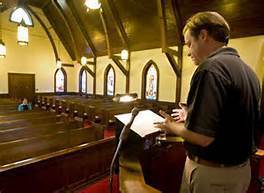
We need to plant our seed (and ourselves) in the things God is doing locally. If we don’t, we’ll surely fade into the sunset.
[Dave Zuchelli is a graduate of Pittsburgh Theological Seminary and is currently the pastor of Smith Chapel, in Great Falls, VA.]
The post Hydroponic Churches appeared first on Dave Zuchelli.
June 29, 2016
See Jesus and Mess Up
 I recently read about a Christian family who begins each day with the following prayer. “Today I will pay attention, see Jesus, be Jesus, and mess up.” I was immediately intrigued. It’s so human and so spiritually real.
They follow that refrain with the Lord’s Prayer. Then the kids head off to school, and the parents do whatever it is that parents do these days. What happens when everyone gets back home is the key to their family life together.
At the end of the day, they gather around the evening dinner table. The conversation surrounding their daily meal is focused on the prayer that opened their day. They grapple with the events of their individual lives in this family setting.
“They discuss how they messed up.”
They speak about the things to which they paid attention that day. They talk about how they saw Jesus during the day as well as how they were Jesus to someone else. And, yes, they discuss how they messed up. What a great way to raise children! I wish I’d thought of it first.
During their mealtime conversations, they deal with their attitudes and how they can choose to improve them. They speak of looking for opportunities to spend their time in meaningful ways. They also talk about ways they can help each other as a family unit to achieve their goal of a fulfilled life together and separately.
This is a wonderful practice on many levels. For one thing, it brings Jesus into the center of each of their lives. He is not merely someone they speak of on Sunday morning; he is an integral part of their daily life as a family.
For too many of us, Jesus is an add-on. He’s given an assent during a prayer prior to family meals (maybe). He’s used as a threat when the kids misbehave. He’s seldom seen as a guide through life.
A lot of us internalize the things of Christ and live them out on an individual basis. But having these things lived out and ingrained in a child as he or she grows is immeasurable. It not only encapsulates their faith, it confirms and supports it as they develop into mature disciples of Jesus.
“They fully admit they’re human…”
I guess what really jumped out at me, though, was the messing up part. In their morning prayer, they flat out state that they would “mess up” during the day. They fully admit they’re human and fall short of the glory of God. It doesn’t end there, however.
They take the time to wrestle with weaknesses in their lives and choose (as a family) to be honest and ultimately do something about it. To top it all off, they’re not left on their own to tackle these life situations. They have the love and support of their family members to enable them to accept their humanity and still grow in the faith.
Today, I want to see Jesus, be Jesus, and mess up with you. It’s the church at its best. 
[Dave Zuchelli is a graduate of Pittsburgh Theological Seminary and is currently the pastor of Smith Chapel, in Great Falls, VA.]
The post See Jesus and Mess Up appeared first on Dave Zuchelli.