Dave Zuchelli's Blog, page 45
August 11, 2016
The Empire Strikes Back
 The Christian movement has always been subversive. As you may know, it began in an obscure place—a little dot amid the Roman Empire known as Palestine. A seemingly harmless, itinerant preacher traveling and teaching within a radius of only a few miles from his home in Nazareth spurred this movement. There were many of these types of teachers, so it was safe to assume this one would be as innocuous as the rest. Nevertheless, he and his credo changed everything.
“His ministry may have faded into the lost pages of history…”
This teacher, whom we call Jesus, was radical. His thoughts and actions were revolutionary. His strategies were unorthodox. His followers were, shall we say, a tad less than sophisticated.
His ministry may have faded into the lost pages of history had he not proclaimed the ushering in of a “Kingdom.” This was not a word the Roman Empire looked upon kindly. It was a revolt, albeit a peaceful one. They attempted to snuff out his life and his legacy along with it. Big mistake on their part… By doing so, they became an unwitting pawn in one of his unorthodox strategies—salvation through sacrifice.
His other strategies were unconventional as well—eating with sinners, touching the unclean, feeding the hungry, making peace and loving his enemies. No one did these things. They were extreme and  nonconforming. To top it all off, he was a threat to the cadre of gods worshiped by the surrounding pagan culture. As far as the empire was concerned, this was downright treasonous as his followers soon discovered.
It can be argued that his practice (often referred to in the early days a “The Way”) eventually overtook the empire and replaced it (or at least fundamentally changed it). The Way was not an empire, but it was a Kingdom within. The Way then became known as “the church,” and a lot of history (both good and bad) has flowed under the bridge. Today, we of The Way seem a little less subversive. I fear the empire is overtaking us, once again.
“We are becoming more like the surrounding pagan culture…”
Little by little, we are becoming more like the surrounding pagan culture instead of continuing in the unorthodoxy of Jesus’ strategies. We are adopting their ways instead of promulgating those of the Master.
Recently, one of the presidential candidates proclaimed in a major address that our “religious beliefs…have to be changed”. (Let’s take a short pause here to ponder that one.) Really? I wonder how many Christians heard that and didn’t think anything of it—just the meaningless words of a politician.
 The empire is striking back, folks. This time, it’s not the Romans. It’s the government of the United States (and probably a lot of other governments as well). Next, they’ll want to bring back crucifixion, the Coliseum, and a few lions.
The good news in all of this (if I may bring a more positive note to the table), they are, once again, setting themselves up to be pawns in another of Jesus’ unorthodox strategies. One can only hope, anyway.
[Dave Zuchelli is a graduate of Pittsburgh Theological Seminary and is currently the pastor of Smith Chapel, in Great Falls, VA.]
The post The Empire Strikes Back appeared first on Dave Zuchelli.


August 9, 2016
You Don’t Have Enough Bandwidth
 My lovely bride works in the world of business and finance while I’m usually squirreled away in my study doing research and writing sermons, blogs, books, and curricula. Consequently, she picks up on all the latest jargon while I’m still locked into twentieth-century vocabulary.
One day I was attempting to do something I obviously couldn’t achieve. She looked at me and said, “You don’t have enough bandwidth to do that.”
I immediately burst out laughing. It’s not that she wasn’t correct because she was. It was her terminology that tickled my funny bone.
“Let’s run it up the flagpole…”
I know what bandwidth is (sort of), and it had nothing to do with what I was trying to accomplish. I immediately recognized the phrase as new, twenty-first century, business vernacular (I’m quite perceptive that way). For some reason, it struck me as funny.
You may remember some of the old phrases used by business types. Ones like, “Let’s run it up the flagpole and see who salutes it.” Those are now apparently passé. They now use ones like, “Let’s whiteboard that.” Okay. I think I have enough bandwidth to do that.
I’m pretty sure we will soon see a BVV Bible (Business Vernacular Version). We have a modern language version coming out every couple of years anyway. Why not have one for the commercial crowd as well? It would definitely be popular with the CEO types on Wall Street.
I’m sure it would have wonderful verses such as Jesus saying, “But this is to fulfill what is written in their Law: ‘They hated me without forward planning.’” (John 15:25) Or this more famous one, “Jesus replied, “I tell you truly, no one can see the kingdom of God unless they experience a paradigm shift.”
I realize some of you are still stuck on the King James Version of the Bible. After all, it was good enough for Jesus (at least that’s what I’ve been told). Still, I don’t hear very many business people using any thee’s and thou’s. How are we going to reach them with Scripture written in Olde English? We’ve got to beef it up, take a high altitude view, and drill down on where the modern corporate person is coming from. After all, we wouldn’t want to wrongside the demographic.
“Live by the strategic staircase…”
As long as we can get the message out, what’s wrong with a little modern upgrade. Scripture is Scripture regardless of the lingo. As long as we hold to the truths of the Gospel, we’ll be okay. Like the Apostle Paul wrote to the Romans, “The righteous shall live by the strategic staircase.” (Romans 1:17)
We have the Great Commission to fulfill after all. We can’t ignore Jesus’ parting words to us when he said, “Therefore go and make disciples of all nations, incentivizing them in the name of the Father and of the Son and of the Holy Spirit.” (Matthew 28:19)
If you don’t agree with me on any of this, feel free to give me a call. We can touch base about this offline.

[Dave Zuchelli is a graduate of Pittsburgh Theological Seminary and is currently the pastor of Smith Chapel, in Great Falls, VA.]
The post You Don’t Have Enough Bandwidth appeared first on Dave Zuchelli.
August 7, 2016
Why Three and a Half?
My second pastorate was, by far, the shortest. Yet, it seemed to have yielded the most fruit (at least numerically). Rest assured, I’m not unaware of the circumstances that allow for and produce church growth. When I arrived at that location, the congregation was emotionally hurting, spiritually hungry, and financially desperate. Anyone willing to preach the Word could have gone into that context and have seen the results we saw. The focal point for me (today, at least) is not the growth we experienced, however. It’s the short amount of time I spent there—3½ years. Compared to the nine years I spent in my first stint as pastor and the twenty-one I’ve spent in my current appointment, it was a flash in the pan. And yet, the growth there was explosive (in a good way).
Knowing when to leave a pastorate is always a struggle, I suppose. I know I struggled with that in my first two go-arounds. Almost every other pastor I’ve ever spoken with on the subject has expressed similar feelings. Discerning God’s will in that situation is always hard because of the emotions that cloud the issue.
“Today’s church is going through tumultuous times.”
Jesus spent 3½ years in his public ministry. It seems like such a short time to prepare a few people for the huge task of reaching the world. Obviously, he was able to pull it off. We’re here, aren’t we?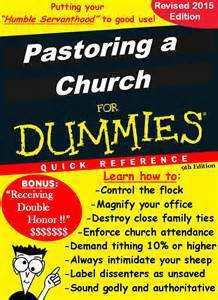
Today’s church is going through tumultuous times. There are as many dedicated Christians outside the confines of the local church as there are inside. Those on the outside are often called the “Gones.” Many of the Gones express the belief that there should not be such a thing as paid clergy. In fact, some of them go so far as to say it’s not only un-Biblical but a heresy as well.
As one who has been a monetarily recompensed pastor for over thirty-five years, I view their understandings with great interest. What if I’ve been wrong all these years? If I have, it means I’ve been fleecing the sheep. Not a pleasant thought…
That ties in with the brevity of Jesus’ ministry in this way. If ministry is brief and fleeting, the urgency of the situation dictates a much deeper concentration toward making disciples. Once the disciples are grounded, maybe it’s time to move on.
“We may want to take a second look…”
The other side of that coin is an elongated ministry during which more and more resources are spent enabling the pastor to stay on. Salaries rise, benefits increase, and duties get expanded beyond the spiritual gifts of the clergy in residence. The pastor earns more while getting spread thinly over areas he or she was n ever meant to occupy.
I’ve never looked at the length of Jesus’ ministry as a yardstick by which to measure our own. I’m not a legalist and certainly wouldn’t want to become one on this topic either. Still, we may want to take a second look at how we do ministry during this chaotic era in which we live.
[Dave Zuchelli is a graduate of Pittsburgh Theological Seminary and is currently the pastor of Smith Chapel, in Great Falls, VA.]
The post Why Three and a Half? appeared first on Dave Zuchelli.
August 4, 2016
Jesus and the Three and a Half Year Run
 My last blog (Three and One-Half Years: The Perfect Ministry?) was a somewhat tongue-in-cheek tour de farce. In it, I listed some reasons why I (or any other pastor these days) shouldn’t have a ministry similar to that of Jesus.
As I wrote it, I couldn’t help but think some readers would take it the wrong way and begin to pray for my salvation. If that indeed happened, please rest assured. My ending remarks were satirical in nature. They were expressed as such only to make a point. I won’t try to remake that point here, but if you’re one of those of whom I speak, I urge you to go back and read it with a different mindset.
“My thinking may have been skewed.”
Shortly after writing it, it caused me to think about the length of my three turns as a pastor. My first was nine years, my second was four, and my current one is in its twenty-second year. I’ve always strived for an extended tenure thinking that local congregations needed the constancy and stability of a lengthier pastorate.
For the first time ever, it has dawned on me that my thinking may have been skewed. In each place I’ve served, we have seen growth, fruitfulness, and at least a modicum of success (depending upon how one measures success in ministry). If a lengthy tenure equals greater success, my present situation should yield the greatest harvest. I’m still serving in my third appointment, so I can’t fully judge the results yet.
Still, as I compare the three stints, my second stretch far outweighs the other two in terms of pure church growth numbers. This was the one in which I spent the least amount of time.
“I really don’t want to compare myself with Jesus…”
I left that pastorate prematurely because of a personal issue that was draining me emotionally and debilitating my ability to be effective. During the last six months of that four-year period, I was virtually gone (present physically, but mentally checked out). So, in effect, it was a 3½ year run. Coincidence?
I really don’t want to compare myself with Jesus—it’s obviously no contest. But I can’t help noticing a couple similarities when it comes to length of service.
Jesus left by way of death. Even before that, however, he knew he had accomplished all he needed with his group of disciples. I left to take a leave of absence because I was emotionally spent. I just couldn’t function anymore. The handwriting was on the wall, and I would have been foolish stay any longer. Three and one-half years…
As I look back on it, I did what I needed to do in those 3½ years. While Jesus knew when it was time to leave, I did not. Had I not experienced the draining personal issue, I would have undoubtedly stayed a long time. A longer pastorate, at that point, may have been a mistake. The point is debatable for sure. Nevertheless, it seems I was there for exactly the right length of time. (To be continued)
[Dave Zuchelli is a graduate of Pittsburgh Theological Seminary and is currently the pastor of Smith Chapel, in Great Falls, VA.]
The post Jesus and the Three and a Half Year Run appeared first on Dave Zuchelli.
August 2, 2016
Three and One-Half Years: The Perfect Ministry?
According to most Biblical historians, Jesus carried on his earthly ministry (the public one) for 3½ years. I’ve never quite figured out how he was able to pull that off and be so successful.
Although (now that I think about it), how successful was he really? When he was crucified, all he seemed to leave behind were 120 frightened followers hiding in an upper room. Not much of a legacy.
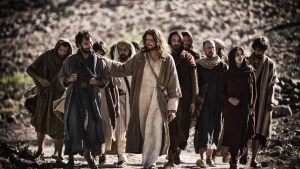
For 3½ years, he poured himself into a small, ragtag bunch. They never seemed to get what he was laying down. They were constantly messing up. Even the leader (Peter) didn’t have the chutzpah to acknowledge he was Jesus’ friend for a while. And that was after he had proclaimed Jesus to be the Messiah. Denying the Chosen One is no minuscule deal.
So when he exited this earth, Jesus left this small band of bunglers to carry on. And what were they to carry on? Only to evangelize the entire earth…that’s all. Frankly, it sounds like a bad plan to me.
Of course, as we all know, a good dose of the Holy Spirit changed that small, ragtag band into a sizeable ragtag band—and so it went from there. All of a sudden, Jesus’ 3½ years seemed well spent.

Of course, that begs the question—why have I been pastoring the same church for twenty-one years? I know the obvious answer is that I’m not Jesus. Add to that the simple facts that the circumstances are not even similar, and the context bears no resemblance to first century Palestine. Still, the fields are ripe for the harvest. It’s a little embarrassing.
Maybe we’ve been going about this all wrong. Instead of hiring ourselves out to established congregations, guys like me should be gathering a few souls who are interested in being discipled, spending 3½ years teaching them all we know, and setting them loose on the unsuspecting world. It worked once; maybe it will work again.
I’m no carpenter…
Still, I’m not a carpenter so I’ll have to learn a trade first. Then there’s the whole thing of a 401k for when I retire. I’ll have to build that up before I embark on something so risky as possibly wasting my time with a group of losers. Then, of course, I’ll probably have to relocate, sell some of my possessions, and maybe reduce some of my stock holdings.
And my current congregation… What in the world would they do without me? I’m a fixture. You just don’t find replacements for people like me on trees.
I don’t know. Maybe this isn’t as good an idea as it first seemed. There’s nothing quite so comfortable as the status quo. I’ve  gotten pretty good at maintaining it. Why venture out into the deep when I’ve got a proverbial hot tub right here?
On top of all that, I’m already sixty-six years old. Jesus was only thirty-three when he died. I’m twice his age. No sense rocking the boat now.
[Dave Zuchelli is a graduate of Pittsburgh Theological Seminary and is currently the pastor of Smith Chapel, in Great Falls, VA.]
The post Three and One-Half Years: The Perfect Ministry? appeared first on Dave Zuchelli.
July 31, 2016
Smile: Here Comes a Visitor
When I was a newbie Christian, I worshiped with a small congregation. The highlight of most months was to have a visitor stop in to worship with us. Any strange face would cause a stir and at least a modicum of excitement. The younger the visitor, the more it would ratchet up the ante on our excitement. Half the congregation would be beside themselves at the site of an entire young family walking through the back door.
I’m sure this is how it is in most small church families. Visitors are few and far between, and they represent new fodder for a variety of possibilities—evangelization, greater vitality, and (of course) more money for the mission (and upkeep) of the church.

It’s kind of amazing how that works. Even in our small burg, a few thousand people surrounded us. Yet, for the most part, we sat in our little, isolated building and hoped everyone would come to us.
I’ll bet you’ve heard Einstein’s definition of insanity—doing the same thing over and over again while expecting different results. By that definition, we were insane. In fact, by that definition, most congregations are insane.
Of course, we would stand on our heads if we thought it would bring better results (at least I think we would). Naturally, we don’t think it would do any good; so we don’t stand on our heads. Since we don’t think anything in particular would do any good, we do nothing. How’s that for logic? So now we’re both insane and illogical (a good combination, don’t you think?).
Many of us are part and parcel of insane, illogical congregations…”
And so it goes… Many of us are part and parcel of insane, illogical congregations going about the Lord’s work (as long as that work doesn’t take us beyond the four walls of the sanctuary). Unfortunately for us, we keep forgetting that the Lord’s command is to “Go!” Remember the Great Commission?
Just before he left us behind to fend for ourselves, he gave us this parting gift. “Therefore GO and make disciples of all nations, baptizing them in the name of the Father and of the Son and of the Holy Spirit…” Don’t you just hate that?
If only he had said, “Stay where you are, build nice, comfortable buildings with really modern accommodations, and I’ll funnel some awfully cool sheep in your direction.” Maybe it does say that in some lost gnostic gospel somewhere. If so, it’s just our misfortune that it never made it into the final canon. Drat the luck!

Hence, we’re stuck with the command to go (not stay). We’ve been commissioned to make disciples of people out there in the nations. Man, that’s a lot of territory. And to think, Jesus started with twelve close disciples, seventy-two short-term missionaries, and one hundred twenty frightened rabbits in an upper room. How in the world did we get this far? A little insanity, a dearth of logic, and a whole lot of the Holy Spirit…
Don’t look now—here comes a visitor—everyone smile!
[Dave Zuchelli is a graduate of Pittsburgh Theological Seminary and is currently the pastor of Smith Chapel, in Great Falls, VA.]
The post Smile: Here Comes a Visitor appeared first on Dave Zuchelli.
July 28, 2016
Just Call Me Hair
As I was driving to work today, a distant memory popped into my mind. I hadn’t thought of this in years, and I’m not sure why I did so today. It was undoubtedly some strange chain of thought (one which I can’t seem to trace back like I so often do). Regardless of where it came from, it took me back quite a ways.
When I was a freshman in college, I lived in a dorm with a lot of guys (before the days of coed dwellings). As fate would have it, I my coif was a bit longer than the rest of them so they started calling me “Hair.” I hated that nickname. That’s probably why I suppressed the memory for so long.
I guess I hated it so much because they used it as a derisive term. They didn’t like my mane, they let me know as much, and they disdainfully named me Hair. I was vastly outnumbered, so I never said much (a lot of them were football players—big football players). The next year I moved off that floor and the name quickly faded away.
The funny thing is, as that I think back on it, I kind of like that nickname now. I think if someone called me that today, I would embrace it. If you look at a picture of me, you’ll see that it fits.
In an odd twist of history, I ended up becoming a United Methodist pastor. If you know much about our history, you’ve probably heard that the term “Methodist” began as a derisive one. John Wesley’s detractors sarcastically called him and his followers Methodists. Wesley, rather than fight it, embraced the name and adopted it.
Coincidentally, Wesley had long locks flowing over his shoulders. I’m glad his detractors didn’t call him and his followers “Hairs.” United Hair doesn’t flow quite as well as United Methodist (at least not for a Christian denomination).
 John Wesley
I’m not totally sure what the point of all this is except to remind you that we are in the midst of a presidential campaign. So far (and I’m quite sure this will continue), a lot of derisive nicknames have been tossed around. While I don’t expect the candidates to embrace any of them, I sure wish they’d back off from using them. Our society is contentious enough without our presumptive leaders showing us the way toward bad behavior.
Unfortunately, I suspect there’s little chance of them cleaning up their act. We, as a society, will probably follow suit; and our culture will become even more belligerent. It’s almost become a sport.
During the current national convention, there seems to be a lot of booing, shouting, and name-calling—and these guys supposedly like each other. I know that some families like to fight, but most of them don’t do it on national TV (except maybe the Kardashian’s and such).
I hate to be a pessimist, but I think we’re doomed. Just call me Hair!
[ Dave Zuchelli is a graduate of Pittsburgh Theological Seminary and is currently the pastor of Smith Chapel, in Great Falls, VA.]
The post Just Call Me Hair appeared first on Dave Zuchelli.
July 26, 2016
Bailing Out the Church
 I don’t think I’m revealing any secrets when I say the church as we know it is in trouble. For the most part, today’s church is not much different than it was in the days of Martin Luther. We had a Protestant Reformation, and that was that.
It’s almost as though we entered into some sort of denominational dispensation and immediately adopted the new status quo. Certainly we’ve had a history of schisms, mergers, and controversies since then; but by and large, we’ve not changed all that much since the sixteenth century…until now.
When I say we’re in trouble, I’m not decrying that fact. Trouble might just be exactly what we need. Trouble is what caused the church to gather in an upper room to pray on the day of Pentecost. Trouble is what caused the early church to leave Jerusalem and ultimately spread the Gospel throughout the world. Trouble is what causes Chinese Christianity to form house churches that fan the flames of revival all over a nation that has attempted to eradicate them.
“I doubt most of us will recognize the church in fifty years.”
I’ve heard in recent days that there are as many people now living active Christian lives outside the walls of the institutional church as there are within. This is the current trend, and it’s been gathering momentum for quite a while. In other words, the day of what we call the Christian denominations is waning.
 The way things are changing, added to the rapidity of that change, will undoubtedly bring a new era—dare I say, a revival. I doubt most of us will recognize the church in fifty years. She will be unrecognizable because she is being transformed into something we’ve never seen before (or at least something we didn’t anticipate seeing).
If all this is true (and I believe it is), a new question arises. What will be our reaction to the change? I’ve been a pastor in an institutionalized denomination for over thirty-five years. As such, I have a pretty good idea of what our initial reaction will be. In fact, I think we’re already seeing that response take root.
“It’s not about us!”
Our first response will be to bail out the church. We will do everything we can to maintain the status quo as we know it. We will seek to bolster our programming, inject new life, and find new members to keep what we hold near and dear. The problem (probably to our chagrin) will be that new life and new members will be different than what we expected and hoped they would be. When that happens, change will roll over us like a tsunami.
 What we will probably discover is what we often hear these days. Namely, “It’s not about us!” The sooner we learn that, the sooner we’ll realize our need to get on board with what the Lord is doing. We’d rather try to get him to bless our own plans.
Could the best course of action be to see what the Spirit is doing and join in?
[Dave Zuchelli is a graduate of Pittsburgh Theological Seminary and is currently the pastor of Smith Chapel, in Great Falls, VA.]
The post Bailing Out the Church appeared first on Dave Zuchelli.
July 24, 2016
Ninety-Nine and 44/100ths Impure
 Recently, I was perusing the more astute pages of Facebook when I ran across this quote. “The Body of Christ will not become mature while 99.9% of its members are passive pew sitters. We need every part to go live out its created purpose and contribute to the overall wellbeing of the body.” ~Oliver Day~
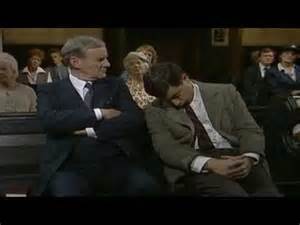
I was struck by Oliver’s comment for a couple of reasons. The first is the percentage he chose. As a pastor of some thirty-five years, I’ve seen my share of “passive pew sitters” (if I correctly understand his terminology). There are certainly a number of people who merely want to be observers of the festivities for whatever reason.
“We’re in much bigger trouble than I had imagined.”
I don’t know the actual percentage of such folks, but I sure hope it’s not anywhere near that high. I don’t know Oliver, so I’m going to venture a guess that he was exaggerating (at least slightly). If he wasn’t, we’re in much bigger trouble than I had imagined (depending on his accuracy). Regardless, it certainly speaks to a rather low view of the majority of churchgoers.
The second reason his statement struck me is his feeling that every person in the proverbial pew must live out their part for us to be mature as the Body of Christ. I really hope he’s wrong about that. It seems to me we’re never going to have 100% cooperation from even the most mature members of the Body. It’s called being human.
 I might be taking his thoughts out of context (primarily because there was no context given). Still, the Body of Christ here on this earth is never going to be pure. We are, after all, a human institution—even if we are a spiritually directed group. The Lord often seems to use imperfect and impure people to do his work. Even a cursory reading of Scripture will bear me out on that one.
Still, I fully understand Oliver’s sentiments. It must be extremely frustrating for someone who is totally committed to the Lord’s work to see so much passivity. It would be exasperating to be surrounded by others whose zeal is limited to something less than God’s will.
“There are now just as many Christians outside the buildings…”
A lot of people have left the institutional church because of such passivity. I’ve heard there are now just as many Christians outside the buildings we refer to as churches as there are within those hallowed halls. Many of them left, not because they no longer believed. They left because they felt like they were the only ones who cared.
There was an old soap commercial many of you may remember (I think it was Ivory). It stated that the soap was “ninety-nine and 44/100ths percent pure.” I always found that to be a bit hard to accept, but maybe it was true.
Today, many people like Oliver are saying that the church is now ninety-nine and 44/100ths percent impure. I find that just as hard to accept, and I sure hope THAT isn’t true.
[Dave Zuchelli is a graduate of Pittsburgh Theological Seminary and is currently the pastor of Smith Chapel, in Great Falls, VA.]
The post Ninety-Nine and 44/100ths Impure appeared first on Dave Zuchelli.
July 21, 2016
Spiritual Free Agents
In the major professional sports, there is a magical phenomenon call “free agency.” This appeared on the scene when I was a young man. Up to that point, players were basically tied to their team for life (unless the team traded them).
 That kind of servitude doesn’t fly in our modern world. Some say it’s akin to slavery. While that’s probably a bit exaggerated, it is nevertheless on point.
Now, when a player’s contract is up, he gets to offer his services to the highest bidder—advantage; large market teams. But that’s the way the ball bounces (excuse the pun). Now (unlike the old days when a player often played for one team his entire career), it’s not uncommon for an athlete to play for half a dozen teams or more. Some guys change teams so often I can’t keep up.
“I was baptized Presbyterian.”
During the same time free agency began to take root in sports, it started to emerge in the life of the church. In the old days, it was not uncommon for someone to say, “I was baptized Presbyterian.” You don’t hear stuff like that much anymore because folks just don’t care where they were baptized, married, went to Sunday School, or took their first communion.
People nowadays flit from congregation to congregation on a whim—they’re free agents. The name on the sign seldom matters anymore. If you were raised Baptist, no problem… That was then, this is now. It’s a new day, and this group over here has something to offer that I happen to want at this moment–period.
A lot of the old timers decry this sort of behavior. They used to call these kinds of folks all sorts of names like “lone ranger Christians” and “charismatic butterflies.” Let’s face it. They’re just free agents.
I always hated free agency in baseball. I hated it because my favorite team is from a small market and can’t afford to compete with the big boys. I can usually count on my favorite players leaving for greener pastures sooner or later.
There’s probably a similar sentiment underlying our disdain of spiritual free agency. If we don’t have what the congregation down the street has, we’re going to lose some of our best people sooner or later.
So let’s face it, folks. That’s just the way it is in twenty-first century America. We can either go with the flow or hang on to the old school way of doing things and get plowed under. Frankly, things like membership vows are now an exercise in futility (if you can even get people to take them).
“The Spirit is doing something new…”
 I’m not whining about this overwhelming wave of spiritual free agents. That’s just how it is these days. Still, I’m at a loss to know exactly how to relate to people who are parishioners one day, gone the next, and back again a year later for another short stint with us.
The Spirit is doing something new. We’ve just got to figure out what it is.
[Dave Zuchelli is a graduate of Pittsburgh Theological Seminary and is currently the pastor of Smith Chapel, in Great Falls, VA.]
The post Spiritual Free Agents appeared first on Dave Zuchelli.