Dave Zuchelli's Blog, page 41
November 13, 2016
Only the Strong Survive: Well, Maybe Not Always
A few days ago, Comedian Amy Schumer stepped out of her funny woman role long enough to make a few pronouncements about the state of our country. She was lamenting the fact that her candidate of choice failed in the recent presidential election. That, of course, is nothing new. We all sing the blues when our fervent selection is denied. Schumer went a bit further, however.

She called those who firmly resided in her camp, smart, and those who voted the opposite way, weak. I’m not sure how she would react if pressed on these overgeneralizations, but I hope she would at least back off a tad.
“18% of us are smart…”
The most recent tabulations find that there are slightly over sixty million weaklings in the USA. Fortunately, over sixty million smart people balance them out. As we examine these results, we can see that Schumer has set up the classic Brains v. Brawn argument (or in this case, Brains v. Lack-of-Brawn). Upon further review, however, I suspect that Amy was referring to weak as in weak-minded.
Currently, there are about 325 million people in these United States. It’s comforting to know that at least 18% of us are smart enough to keep us afloat. Some would ask how I know that 18% is enough. I’m glad they asked.
In Genesis, the Lord visited Abraham. God told him he was about to destroy the city of Sodom. Old Abe was distraught by this development and pled the case for the not-so-fine folks of that burg. He finally asked if ten good people were enough to prevent the destruction of this municipality. The Lord finally relented and said, sure. If we can find that many, we’ll spare the joint.
The intelligentsia numbers over sixty million.”
Unfortunately, in that case, ten couldn’t be found. In our case, however, we’ve got over sixty million who number among the intelligentsia. We will undoubtedly be spared from the wiles of the weak. Hooray for the smart people, Amy!
On the other hand, the Apostle Paul told us that God uses the foolish to shame the wise and the weak to confound the strong. If that’s true, to which of these groups are we to turn? Who actually holds the key to our salvation?
Well, let me tell you. There’s good news in all of this. Our salvation does not lie in the wiles of the weak or the cunning of the wise ones. It lies within no ordinary human begin (wise or otherwise). Our salvation lies in Jesus. Calling each other names is just not going to help. Working together for solutions to our problems might actually be a viable alternative.
On a side note, I’m not sure how Amy views the 600,000 who voted for third party candidates (not to mention the scores of millions who didn’t even bother to vote). It seems they are the actual smart ones since they’re the only ones not being called names and being labeled for good or ill (at least by Amy).
[Dave Zuchelli is a graduate of Pittsburgh Theological Seminary and is currently the pastor of Smith Chapel, in Great Falls, VA.]
The post Only the Strong Survive: Well, Maybe Not Always appeared first on Dave Zuchelli.


November 10, 2016
Fifty More Shades of Gray
 Shortly after Donald Trump became the President Elect, people took to the streets. Usually, when we gather in the streets after a stunning victory like his, it’s to celebrate—especially in the good old USA. This time, not so much…
The people in the streets were demonstrators—in some cases, rioters. Fires were set using rubbish, images of Trump, and American flags as fuel. Chants of “not my president” and “f— Trump” were shouted into the night air. Streets and highways were blocked, causing traffic jams. Train delays were instigated. At least one person was hit by a car.
Get a Grip!
These occurrences were almost minor in comparison to what happened on the Internet. Announcements began to pop up for anti-Trump rallies from now through inauguration day. People took to Twitter to call for the assassination of Trump and Pence causing the Secret Service a few overtime hours.
“Getting a grip” does not seem to be a common practice these days. Almost 60 million people voted for Trump. A tad more than that voted for Clinton. Not counting third party candidates, we were roughly split down the middle. On election night, it felt like the seventh game of the World Series. Unfortunately, the aftermath didn’t resemble those emotions at all.
 I understand feeling bad when your candidate loses. I’m almost sixty-seven years old and have been through it many times. I have to say, however, I’ve never been tempted to call for someone’s head, threaten to leave my country, or destroy someone’s property. Where does this attitude come from?
I’m sure any meaningful response to that is extremely complicated. But the simple answer is this—for some reason, we now see everything in black and white (and I don’t mean skin color). We can’t seem to detect grayish hues anymore. Either you’re for me or against me–truly good or perfectly evil–positively right or all wrong–my true-blue friend or my mortal enemy.
“Many of us don’t care to know others…”
Years ago, when Ronald Reagan won his upset victory over Jimmy Carter, a flabbergasted reporter declared, “I don’t know anyone who voted for him!” That little statement speaks volumes.
Many of us don’t care to know others who differ from us. We surround ourselves with people who look, act and think like we do. We end up speaking into an echo chamber, and we never come to an understanding of why they’re different. The end result can be fear, hatred, and extreme mistrust.
 Those of us who are followers of Christ are called to be different than that. Jesus instructed us to get to know people and reach out to them. When you really know people, it’s not as easy to shove them into a stereotypical category. We no longer see their views and attitudes as black or white—they start to appear in varying shades of gray. We begin to see them as real people like us—not as extremists trying to do us in.
If we adopt that attitude, we may even love the new president.
[Dave Zuchelli is a graduate of Pittsburgh Theological Seminary and is currently the pastor of Smith Chapel, in Great Falls, VA.]
The post Fifty More Shades of Gray appeared first on Dave Zuchelli.
November 8, 2016
Days of the Dead
 Last week I posted a blog entitled, “All Souls Day: Hallow-mas Revisited.” In it, I inadvertently conflated two separate days on the calendar of the Church. Folks who knew better graciously pointed out my error. I should have known better anyway.
Even as I wrote that piece, I had the passing thought that All Souls and All Saints are two different concepts. Alas, instead of researching that idea a bit, I hurriedly passed on by without a second thought. Mea culpa…
Days of the Dead
The history of these two days is quite interesting (if you like history—which I do). I won’t put forward all the details here, but I commend a little search engine investigation to you on the subject of All Souls v. All Saints. Distinctions between the two definitely exist.
Interestingly enough, they are not only tied together by their close proximity on the calendar but also by the general term “Days of the Dead.” The Days of the Dead apparently run from October 31 (Halloween) through November 2 (All Souls Day). All Saints Day is sandwiched in between. All things dead seem to be celebrated on these days by various cultures and cults as well as by the Catholic Church and Christians in general.
 The Days of the Dead are big in various pagan rituals and celebrations dating back for centuries. The Aztecs were celebrating Dia de los Muertos (Day of the Dead) three thousand years ago. Old habits die hard. It’s actually been declared a public holiday in Mexico.
On the Christian end of things, All Saints is generally a day to celebrate the dead in Christ. In the Roman Catholic Church, it is considered a holy day of obligation. All Souls, on the other hand, is a day set aside by the Catholic Church to pray for the deceased who currently reside in purgatory. I find it a bit curious that this is not a holy day of obligation. It would seem to me, if you believe praying for the dead is efficacious, that would be more important than celebrating those who’ve already made it to Heaven. (Maybe my Catholic friends can straighten me out on that one.)
Good vs. Evil
Be that as it may, the Christian introduction of Halloween into all this is what has always fascinated me. Apparently, a thousand years ago or so, Christians would gather on the day prior to All Saints Day (also known as All Hallows Day) to ask for the Lord’s blessing and protection. Many on that night would dress as saints and/or demons and act out the war between good and evil. The play was usually performed at night around a bonfire. It became known as All Hallows Eve (or Halloween). 
In my research on the topic, I haven’t run across any article that reveals the eventual winner in these mock battles between the forces of the virtuous and the evil. From my perspective, I’m rooting for the good guys. A Zombie Apocalypse is not my idea of a decent ending.
[Dave Zuchelli is a graduate of Pittsburgh Theological Seminary and is currently the pastor of Smith Chapel, in Great Falls, VA.]
The post Days of the Dead appeared first on Dave Zuchelli.
November 6, 2016
Cubs Win: Another Sign of the Apocalypse
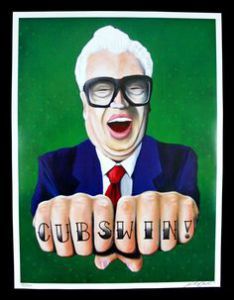 Unless you’ve been living way off the grid, you probably know by now that the Chicago Cubs have won the World Series of baseball. The lovable losers had not won the world championship since 1908. They are no longer losers.
I’ll do the math for you. That was a one hundred eight year drought (or as a friend of mine said, “Let’s be real. It wasn’t a drought. It was the Sahara Desert!! Pretty sure we’ve found water on Mars since the last Cubs championship!”). No other major league baseball team had ever gone that long between ultimate victories.
Why now after all this time? In the seventh and deciding game, the Cleveland Indians came back to tie it in the late innings. It looked like the momentum swing was going to make the Cubs wait at least one more year.
“A conquest of Biblical proportions”
It was not to be, however. The game went into extra innings, was delayed by rain, and had a dramatic finish. In the end, one got the feeling that a Chicago triumph was inevitable. Indeed, this was a conquest of Biblical proportions.
I say this because Scripture is being fulfilled before our very eyes. In Daniel 7:5, a prophetic Cubs victory clearly spells out the beginning of the end. This passage tells of a second beast that resembles a bear. What other beast looks like a bear—a bear cub, of course. But why second? After four games, the Indians were  up three games to one. They were clearly the front-runners. The Cub team was obviously the second beast at that juncture.
This second beast “was raised up on one of its sides.” This is unmistakably an animal poised for a comeback. The passage then relates that the second beast is told to, “Get up and eat your fill of flesh!” There can be no doubt that this is a clear reference to an overwhelming and emotional triumph.
There is one curious part of this end-times prophecy that had me puzzled for a while. The pericope says that the bear-like beast had three ribs in its mouth. For the life of me, I couldn’t understand the meaning behind this obviously important phrase. So I jumped on the web and did a little research.
“Your old men will dream dreams.”
Lo and behold, Terry Francona (manager of the Cleveland Indians) told reporters of a strange dream he had the night before game seven. His literal quote was, “I was having a nightmare that somebody was breaking my ribs, and I woke up and my ribs hurt.” He was given a premonition of impending doom. (Read Full Story Here.) You can’t make this stuff up.
I felt it necessary to explain all this just in case John Hagee and Hal Lindsay missed it. I don’t know if they’re even baseball fans. We can’t simply allow another sign of the Apocalypse to pass by unnoticed.
[Disclaimer: Every time I write something like this, a few people take me dead serious. To you, I say, “Really?! I’m just joking.”]
[Dave Zuchelli is a graduate of Pittsburgh Theological Seminary and is currently the pastor of Smith Chapel, in Great Falls, VA.]
The post Cubs Win: Another Sign of the Apocalypse appeared first on Dave Zuchelli.
November 3, 2016
Drink Lots of Water and Get Plenty of Exercise
The church needs to go on a diet. I say that because, in many corners of the world, we have become fat and lazy. A sedentary church is next to useless.
I know a little something about diets. Three different times in my life I gained considerable weight and had to lose it. Unfortunately, I’m at that stage once again. I suspect a lot of you have had a similar experience to mine.
“Universal with all diets.”
There are all sorts of diets out there. You’ve heard of many of them—the Scarsdale, the Atkins, Weight Watchers, South Beach, Mediterranean, and the Paleo (just to name a few). From low-fat to low-carb to high protein, they’re all different. Yet there’s one thing that seems to be universal with all diets.
Whenever you embark upon one of these surefire ways to regain your girlish figure, the last line usually goes something like this. “Drink lots of water and get plenty of exercise.” It stands to reason that, if these two things are central to a healthy diet, we should be doing them at all times—diet notwithstanding.
In actuality, we are all on a diet of one sort or another. The question is always this: is it a good diet or a bad one? If your daily diet consists of things like French Fries and Philly Cheese Steaks, chances are you’ll get a tad heavy around the middle. If you are disciplined and practice portion control, you have a good chance at maintaining a reasonably healthy level. Drinking lots of water and getting plenty of exercise is a part of that as well.
Before, when I said that the church is fat and lazy, I was thinking along spiritual terms. A congregation could all look like gym rats and still be spiritually ineffective. Generally, that ineffectiveness comes from a lack of water and exercise.
Dehydrated spirits tend to wither.
Biblically, water is one of the symbols of the Holy Spirit. Jesus instructs his church to drink in plenty of God’s Spirit (see Luke 11:9-13). When we are drinking our fill, we can go through the driest desert and not thirst. When we refuse to ask for those daily drinks, we dehydrate and our spirits wither.
The other side of that spiritual diet, of course, is exercise. But how do we exercise our spirits? Well, let me first tell you how you DON’T exercise your spirit. Go to a building once a week, sit in a pew for an hour, listen to a sermon (no matter how good or dynamic), and then leave. That is a plan guaranteed to get you fat and lazy. It’s like eating a seven-course meal just before bedtime. Not a stellar idea.
We need to exercise our spiritual muscles by doing the things Jesus prepared the way for us to do. His teachings on this matter include things like feeding the hungry, visiting the sick and imprisoned, praying, and making disciples. You can find the entire list in the four Gospels. It comes highly recommended.
[Dave Zuchelli is a graduate of Pittsburgh Theological Seminary and is currently the pastor of Smith Chapel, in Great Falls, VA.]
The post Drink Lots of Water and Get Plenty of Exercise appeared first on Dave Zuchelli.
November 1, 2016
All Souls Day: Hallow-mas Revisited
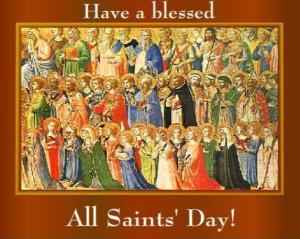 Most of us don’t give it a second thought (or even a first), but yesterday (November 1) was All Saints Day. It’s also known as All Souls Day, Hallowmas, All Hallows Day, Solemnity of All Saints, and the Feast of All Saints.
Many of us miss this day because of the big deal we make over Halloween. The secular celebration, of course, always trumps the Christian one. (I almost said it trumps the spiritual one, but there is a spiritual aspect to Halloween as well—one I will not get into here).
If I remember correctly, the Feast of All Saints is a holy day of obligation celebrated among the Roman Catholics. In fact, it’s a national holiday (or at least, has been) in many countries that have been historically Catholic.
Replacing the Pagan Festivals
Like many Christian holidays, the date was chosen to replace a pagan celebration. In this case, November 1 was chosen as All Saints Day to displace the Celtic pagan festival of Samhain. Celebrating Jesus’ birthday during the winter solstice did the same thing. He was undoubtedly born some other time than December 25, but it usually works better when you replace something rather than simply try to forget it.
The great thing about the celebration of All Saints is the fact that it is truly the commemoration of ALL saints. We usually recognize the famous ones—St. Francis, St. Joseph, St. Teresa, St. Joan of Arc, etc. In doing so, we often forget the ones who have not been canonized.
If you read the New Testament (especially the letters of Paul), you’ll notice phrases like, “All the saints greet you.” (1 Corinthians 13:13) Biblically, a saint was anyone who believed in Jesus. We’ve somehow lost that definition in some quarters, but it’s still the correct and operative one.
What this means is there are saints who should be remembered on this day (and all days for that matter). They are saints with names like Fred, Ginger, Sally, Hank, and Tonisha. They have titles like Dad, Mom, Nona, and Tio. They did miraculous things like raise up families, work in coal mines, and round up cattle.
Are the saints all dead?
In other words, saints are not simply those the church has venerated over the years. The saints, both past and present, are those who live(d) their lives in an attempt to follow the risen Christ. They are/were not perfect, but they are remembered for their stance—a stance that says, “Jesus is Lord.”
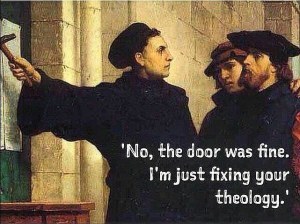 It’s a shame that we seem to have supplanted All Saints Day with something as trivial as Halloween. Don’t get me wrong here. Halloween can be a fun, entertaining night. But the real heroes are not the ghouls, vampires, and living dead. The real heroes are the people who got us to this point in life—those who led the way in faith.
We are the current saints. Let’s celebrate the past, present, and future of God’s church. Let us celebrate all the saints, shall we?
[Dave Zuchelli is a graduate of Pittsburgh Theological Seminary and is currently the pastor of Smith Chapel, in Great Falls, VA.]
The post All Souls Day: Hallow-mas Revisited appeared first on Dave Zuchelli.
October 30, 2016
We’re Now in Permanent Whitewater
 Most people love to go to the beach. Me? Not so much. There are three things at the beach that bother me—sand, sun, and water. These, of course, are the three things many people love about the beach.
First, there’s the sand. It gets into everything and is hard to clean out. It’s irritating, scratchy, and often too hot to cross—especially in bare feet.
Then there’s the sun. My pigment-deprived, northern Italian skin-type can’t take much of it. The process my outer membrane goes through is burn-and-peel (then repeat). I’m not sure whether I hate the burn or the peel more.
Finally, there’s the water. I dislike any water that is not controllable—i.e., puddles, ponds, lakes, and oceans. They’re great to look at, but that’s as far as it goes. I try to stick with faucets and showers. They’re more my speed.
I say, “Nay, nay!”
The one that really gets me, however, is whitewater. Some people spend a great deal of time and money placing their lives in danger to go whitewater rafting. For me, that does not compute. Would I ever go on one of these excursions? As the late John Pinette used to say, “Nay, nay!”
Still, I must admit that whitewater is quite useful in another way. In keeping with Jesus’ tradition of parables and poignant metaphors, whitewater is wonderful imagery. We are often negotiating life’s cascades. They consist of situations that put us in one kind of peril or another. And so, occasionally we find ourselves in the whitewater of human existence. As an extension of who we are, the church also must travel these less than optimal waterways. It comes with the territory.
Unfortunately, the times in which we live seem to present us with more and more cataracts to maneuver. The waters appear to be growing extra treacherous while our raft seems to be collapsing. The torrents seem to be expanding to Biblical proportions. Instead of us shooting the rapids, they are shooting us.
I attended a clergy seminar recently during which the speaker said, “We are now in permanent whitewater.” That really hit me between the eyes. I think it would have bothered me even if I liked water.
“It feels apocalyptic.”
It bothers me because I believe he’s correct. The troubles and controversies never seem to end. We never seem to ease out onto the quiet waters of Lake Placid—with the warm breeze gently blowing and the soft beams of sunshine caressing our shoulders. Instead, it feels apocalyptic. Could it be the eschaton is near?
I prefer the relaxing sway of a hammock under a shade tree on a summer day. Being thrown into the chaotic mix of life is not always my first choice. Still, there is something to be said about the joy of the risk-taker.
Whitewater rafters seem to get a thrill out of navigating the unseen rocks through the foam and watery madness. Despite the turmoil, I must admit we are living in exhilarating times.
Still, I really hate water.
[Dave Zuchelli is a graduate of Pittsburgh Theological Seminary and is currently the pastor of Smith Chapel, in Great Falls, VA.]
The post We’re Now in Permanent Whitewater appeared first on Dave Zuchelli.
October 27, 2016
You Have to Stir Up the Dirt Before You Can Grow the Corn
I’ve never been a farmer, although I’ve had far away dreams of actually living off the land. Allergies and an aversion to doing mechanical things caused those dreams to be quickly waylaid. Still, I’ve had my turn at growing a few things over the years
I was reminded of this when I recently heard someone say, “You have to stir up the dirt before you can grow the corn.” I chuckled when I heard it. It sounds a little funny, a tad hick-ish, and very down-to-earth. Like all earthy sayings, there’s a lot of truth packed into it.
If you want to grow some corn (or almost anything else), you’ve got to plow up a measure of ground. Hard soil doesn’t cut it. You need a place to stick the seed. Otherwise, it will blow away or have no place to root.
When I heard this statement, however, it wasn’t in reference to farming. It was in reference to growing the church. That’s another reason why I laughed. I’ve been present to see a little stirring in my time. It’s not always pretty.
“Coasting is not the optimal existence…”
The easiest thing for any congregation to do is coast. There are certain minimum requirements that need to be met, of course. There must be a worship service of some integrity. The building should be in some semblance of upkeep. The flock needs to offer up at least enough money to pay the bills (winter worship can be rather cold).
Coasting is not the optimal existence for any body of believers, however. As you’ve probably heard, if you’re not growing, you’re going backward. Once coasting sets in, the proverbial ground gets hardened. No seed can be planted, and fruit becomes rare if not impossible.
Getting Our Hands Dirty
The ground needs to be tilled, the field plowed, and the dirt stirred up. This doesn’t come without effort and at least a few aching muscles. To make matters worse, it comes with a price—dirty hands.
Many in today’s church would rather not get their hands dirty. They like the way things are—clean and neat. What they often don’t notice is the dust that’s settling across the congregation. A white glove test would reveal a whole lot of non-movement. It’s a test we avoid like the plague—sometimes until it’s too late.
Stirring up the dirt requires change. It requires keeping up with the times. It requires some hard work and some step taking. It requires us to evaluate and re-evaluate what we’re doing, why we’re doing it, and what new pathways should be traveled in the future.
A Declining Church
The church in America is in decline. People are leaving by the droves. Some sit around and are puzzled by it all. They look at the way things are and think everything’s fine. Why would anyone leave?
Unfortunately, thing’s aren’t fine. People are leaving because the terrain has been hardened. It may be comfortable for you, but it isn’t for many others. It’s time to begin breaking up the fallow ground again.
[Dave Zuchelli is a graduate of Pittsburgh Theological Seminary and is currently the pastor of Smith Chapel, in Great Falls, VA.]
The post You Have to Stir Up the Dirt Before You Can Grow the Corn appeared first on Dave Zuchelli.
October 25, 2016
Baking the Cake
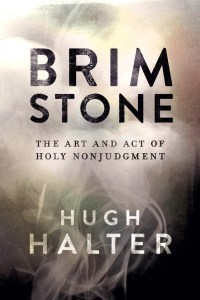
 In his fascinating book, Brimstone, Hugh Halter puts forth the following scenario: “In a small town, there is only one bakery. Jesus is the baker. Two gay men walk in and ask Him to bake a cake for their wedding. Would Jesus bake the cake?”
In promoting the book, this question is asked. “Jesus was the least judgmental person the world has known, yet Christians persist in drawing lines in the sand. How can we tear down barriers that keep people from being drawn to us—and to him?”
“What Would Jesus Do?”
Of course, homosexuality and same-sex marriages are big controversial topics for Christians in our time. Still, they’re not the only ones. The underlying thread behind almost any controversy in the church becomes the wristband question: What Would Jesus Do?
Would Jesus bake the cake? Would Jesus baptize this person? Would Jesus enter that foul den of iniquity? Inquiring minds want to know.
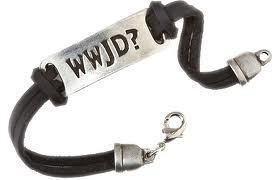 The truth of the matter is it’s seemingly impossible to know what Jesus would do in almost any situation. If Scripture is true (and I believe it is), it’s quite apparent that Jesus is the Lord of surprises.
People were constantly trying to back him into some philosophical or religious corner. It seems at these times he was his most unpredictable self. It was also at these times he seemed to do extremely well at turning it back around to the aggressor.
“Their hearts were hard.”
For example: When pressed about the topic of the divorce laws, he told the Pharisees, “Moses permitted you to divorce your wives because your hearts were hard.” (Matthew 19:8) It didn’t matter that they weren’t around when Moses handed down those laws. He did it because THEIR hearts were hard.
Another time, when discussing loving their neighbors, Jesus was asked to define the term neighbor. He replied with the story of the Good Samaritan and asked his inquisitor who he thought the neighbor was. The now sheepish Pharisee had to answer in a way he would not have originally chosen. Turning the tables, Jesus suggested to the Pharisee that he should “go and do likewise.” (Luke 10:25-37)
 While we can’t always know what Jesus would do, we should have a pretty good handle on how he would be. In any situation dealing with people, he would be loving, compassionate, and truthful. We could add a lot more descriptors as well, but I’m sure you get the picture. Jesus wasn’t about prescribing specific actions in specific situations. He was about living out certain attitudes that came from the bottom of his heart. He admonishes us to do the same.
Hugh Halter posted the scenario mentioned above on his blog site. He said within an hour over 4500 people responded. They were split down the middle.
The burning question for me is, “How could Jesus, who will be judge over all, be so non-judgmental in the way he lived? I, on the other hand, have no right to judge. Yet, I do it all the time. Lord have mercy.
[Dave Zuchelli is a graduate of Pittsburgh Theological Seminary and is currently the pastor of Smith Chapel, in Great Falls, VA.]
The post Baking the Cake appeared first on Dave Zuchelli.
October 23, 2016
Chasing the Wild Goose
 Sometimes, making decisions in the Christian walk can be excruciating. Should I go here? Should I do that? Would it be better for me to x or y? Would the Lord prefer me to be like this?
I suspect some of us overthink things to the point where we become powerless to do anything. Sometimes we “wait on the Lord” so intensely, we miss everything he seems to be telling us. We become frozen with inaction while we hesitate to march on. We are paralyzed by indecision.
The Wild Goose
I recently read of a group of Celtic Monks who were just the opposite. Their philosophy was to move ahead and expect the Holy Spirit to go before them and prepare the way. They fondly called the Holy Spirit the “Wild Goose.”
They lived on the small island of Iona off the coast of Scotland. They were fishermen, sailors, and missionaries. They survived raids by the Vikings.
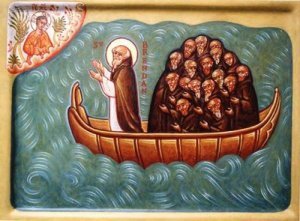
It is said that they would get in boats and just sail. With no specific destination in mind, they would sail until they came to some land. Their assumption was that the Wild Goose would take them where they were supposed to be. When they landed, they would form a colony and do the work of missionaries. In so doing, introduced many to Jesus.
Since this occurred back in the fifth and sixth centuries A.D., Christianity was not as widespread as one might imagine. Apparently, they were quite successful in their exploits as they chased the 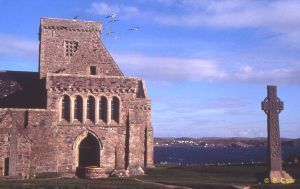 Wild Goose.
The most famous of these monks was Saint Brendan. Legend has it that he actually sailed as far as North America. He was gone for seven years and returned with amazing stories of this new land. And while many think this story is the stuff of myth and legends, his tale is still one of mystery and fascination.
Brendan is still fondly remembered to this day. The progressive rock group, Iona, recorded an entire album inspired by his voyage (Beyond These Shores). Its haunting instrumentation and lyrics have made it one of my favorites for many years (it was released in 1993).
A New Sense of Adventure
These stories and music have piqued my curiosity about this group that was so willing to be adventurous for their Lord. It has also caused me to think more and more about how entrenched we can become as we live such sedentary lives in a century when everything is so comfortable.
 As I attempt to do things the Lord’s way, sometimes I wonder if we miss the adventures he has created for us because we’re too quick to pass up anything out of our norm. If a million other people haven’t done it before, we’re not willing to step out in faith to test the waters.
We like to speak of being filled with the Holy Spirit of God and going where he calls us to go. Still, we are petrified of going on a Wild Goose chase. Maybe we need a new sense of adventure.
[Dave Zuchelli is a graduate of Pittsburgh Theological Seminary and is currently the pastor of Smith Chapel, in Great Falls, VA.]
The post Chasing the Wild Goose appeared first on Dave Zuchelli.