Dave Zuchelli's Blog, page 38
January 22, 2017
The Class and Dignity of Politicians
I came down with some sort of stomach virus on Thursday evening. I won’t give you the gory details, but suffice it to say that I was down for the count. As I write this, I’m just beginning to feel like a human being once again.
[image error]Since I was all but immobilized on Friday, I lay on the living room couch all day and watched the inaugural proceedings. Usually I find these things more than boring, but in my state of semi paralysis, I was quite content to lie there in a somewhat comatose state and take it all in.
Pomp and Circumstance isn’t my thing.
For the most part, it was the usual pomp and circumstance with high-sounding words and formal traditions. But when I watch such proceedings, I try to look for the little human elements behind the story of the day. There were lots of them to be sure. But there was one thing that really spoke to me.
I was struck to see Hillary Clinton among the dignitaries sitting behind the president and he gave his inaugural address. I was particularly taken back for a couple of reasons. One: She didn’t have to be there. She wasn’t the outgoing president or vice president. She had no obligation to sit and listen to the guy against whom she had just run such a difficult campaign.
Secondly, the campaign had been such a ferocious (maybe even vicious) one, any wounds opened by the battle couldn’t have possibly been healed already. I can’t say that I would have shown up had I been in her place. It was almost like saying, “Here I am. You can pull a few scabs off if you’d like.”
Another old politician showed up as well. Former president George W. Bush was there with the other former presidents. If you followed the campaigns from the beginning (especially the Republican one) you know there was at least a little bad blood between the Bush family and Mr. Trump. I suppose former presidents normally show up for these things, but like Mrs. Clinton, he had no obligation to do so.
The word that comes to mind is “class.”
[image error]Finally (and probably more surprising to me than the other two examples I’ve mentioned) came from the pen of Dick Durbin, Senator from the state of Illinois. Mr. Durbin wrote a letter to his fellow Democrats who made their absence felt from the whole inauguration ceremony. In his words, “it is critical to a democracy that those who lose the election acknowledge the choice of the American electorate.” While no friend to Donald Trump, Durbin chose the high road and put his country ahead of his ego.
The word I have to describe each of these actions is “class.” Clinton, Bush, and Durbin each went out of their way to do what could only be seen as unifying actions. We don’t always like the people who lead our country or the people with whom we have to work. I have to give kudos to anyone who shows a little class.
[Dave Zuchelli is a graduate of Pittsburgh Theological Seminary and is currently the pastor of Smith Chapel, in Great Falls, VA.]
The post The Class and Dignity of Politicians appeared first on Dave Zuchelli.


January 19, 2017
When I Become a Nonagenarian
 Nonagenarian Betty White
Over the past three weeks, four people have died that have directly or indirectly affected my life. (I’m not including among them Carrie Fisher or Debbie Reynolds.) The three who directly affected me were an aunt, an uncle, and a current parishioner. The one who indirectly touched my life was the father of a girl I dated in high school.
Outside of the fact that their lives somehow touched mine, they had at least one thing in common. They were all nonagenarians. This is a term that is seldom used, but it refers to people who are between the ages of ninety and ninety-nine. In the cases of the four I’ve mentioned, one was ninety, two were ninety-two, and another was ninety-five.
Succumbing to the dreaded “other”
I don’t actually remember stumbling across the term, nonagenarian, until I began to write this blog post. When I did, I also stumbled across these little bits of info. When a person hits ninety, the life expectancy is four years for a male, almost five for a female. 22,948 out of 100,000 people are still alive at ninety (I was a bit surprised it was almost 23%). The single leading cause of death among nonagenarians is (not so surprisingly) heart disease. Thirty-six percent of them succumb to the dreaded “other.”
 Anthony Hopkins as Methuselah
Most folks (from what I can tell) want to live a long life. The one exception to that desire in my experience is a lady who always said she’d rather die young. She is now nearing her nonagenarian years and is in a state of health she always wanted to avoid. Such is often the story of our existence.
In a few days, I will hit the big sixty-seven mark. They call guys like me sexagenarians (something of a misnomer if you ask me—that’s what they should call twenty year olds). Like a lot of guys my age, I like to say, “I don’t feel sixty-seven.” Truth told, however, I rarely think about it. As a matter of fact, I don’t even know what a sixty-seven year old is supposed to feel like.
Living to a Ripe Old Age
My philosophy on that subject is this. I’m sixty-seven. I feel like I feel. So I guess I feel like a sixty-seven year old. It’s all wrapped up in the old saying, “I’m old enough to know better.” That philosophy doesn’t always help, however. I still do stuff when I should know better. Oh well…
There was a guy in Biblical history that lived to be nine hundred sixty-nine years old. You may have heard of him. His name was Methuselah (Genesis 5:21-27). I realize those were vastly different times, but I’m guessing his quality of life toward the end wasn’t all that great. As that intergalactic philosopher, Yoda, once said, “When nine hundred years old you reach, look as good, you will not, hmmmm?”
When all is said and done, I guess I’d like to live to a “ripe old age.” I just hope the ripeness is not a reference to my aroma.
[Dave Zuchelli is a graduate of Pittsburgh Theological Seminary and is currently the pastor of Smith Chapel, in Great Falls, VA.]
The post When I Become a Nonagenarian appeared first on Dave Zuchelli.
January 18, 2017
Mediocre Negroes and Old White Hippies
 When I read (or hear) the word, Negro, my ears perk up (in a manner of speaking). I’m sure that’s true for many of you as well. The reason that happens is because the term has all but been eliminated from our vocabulary. When I was a kid, it was commonplace. But at that time, it’s what our Black brothers and sisters preferred to be called. That was highly understandable considering some of the other despicable terms that were openly tossed around at the time.
“I was a bit flabbergasted…”
So yesterday, I was a bit flabbergasted to read the words “mediocre Negroes” in print. My immediate assumption was that another Black person had used the term, and I was right. There aren’t too many white journalists around who would have the audacity to toss that word around as far as I can tell (and rightfully so).
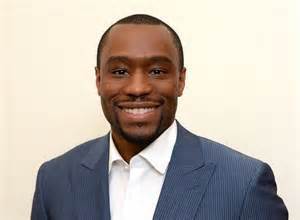
Marc Lamont Hill, a CNN contributor, used the phrase to call out fellow Blacks who took the time to meet with President Elect Donald Trump. He called them mediocre because they were not policy makers. He was referring to men such as Steve Harvey (comedian, entertainer, and game show host) and Rev. Darrell Scott 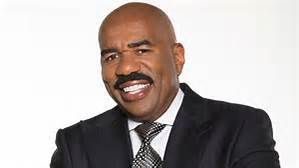 (pastor of the New Spirit Revival Center in Cleveland, Ohio). Apparently, they don’t have enough gravitas or clout to suit Mr. Hill.
When he was called on his use of the expression, he argued that he was not name-calling. Still, he had issue with them because he felt the President Elect and his team was using them as pawns. So, he was not name-calling. He was merely… Well, I’m not exactly sure what he was doing. It couldn’t be name-calling, however, because he said so.
“I was never a hippie.”
Since he is Black himself, Mr. Hill can seemingly get away with what he just said (at least the Negro part—the mediocre portion might be a tad stickier). I, myself, don’t like being called an old hippie (even though I look like one). But another guy with long, gray hair and a gray beard could get away with calling me that, I suppose (he’s earned it). The fact of the matter is, however, I was never a hippie. I’ve never even played one in a movie—thank God. Nevertheless, I am old. Harvey and Scott, on the other hand, are anything but mediocre.
 Interestingly enough, a small Twitter war broke out after the incident. It was sparked by Sherriff David Clarke (another Black, Trump supporter) who called Hill an old epithet I just can’t bring myself to reprint in this space. After that, all hell broke loose, and it started sounding like Mississippi in the 1930’s.
Somehow, I can’t see how a national journalist can get away with calling an accomplished entertainer mediocre. And the pastor… His list of accomplishments is a mile long (See Dr. Darrell). I think I understand Hill’s point, but it’s not very well taken. Nor is it very well stated. Methinks he’s looking for specks of sawdust (Matthew 7:3).
[Dave Zuchelli is a graduate of Pittsburgh Theological Seminary and is currently the pastor of Smith Chapel, in Great Falls, VA.]
The post Mediocre Negroes and Old White Hippies appeared first on Dave Zuchelli.
January 16, 2017
Post-Truth: Are You Kidding Me?
 Each year, various dictionaries come up with their word of the year. The Oxford Dictionary states that its decision for that word each year is based upon a spike in the use and popularity of a particular term. Their choice for 2016 was the word “post-truth.”
According to them, post-truth refers to “circumstances in which objective facts are less influential in shaping public opinion than appeals to emotion and personal belief.” In other words, people are more apt to be ruled by their emotions than by the facts. Ugh!
UGH! And again, I say, “UGH!”
According to Oxford, post-truth has seen an increase in usage in conjunction with Brexit and the US presidential election. Apparently, the upsurge in its frequency has been sparked by these two major world events. (Time for another ugh!)
If they are correct, two of the most important, life-altering decisions of the year were infused with more emotion than clear thought. Either that, or the fall-out from these events was more reactionary than reasoned. Actually, it could be both.
I’m sure I’m not the only one who finds it a tad disturbing that this might actually be true. (Of course, I don’t discount the fact that my feelings of disturbance may be post-truth itself—my synapses are beginning to crackle and pop.)
Have we actually gotten to the point where most of us make decisions on our sentiments rather than reality? Are our reactions to the events around us now simply cacophonous tirades against things we don’t choose to understand? Have we gotten to the place where logical thought is passé?
Using your brains to love God…
One of the reasons Christianity helped to shape the world in the first place is its propensity to cause people to think. It’s no coincidence that the early scientists were Christians. Faith in God and belief in Scripture sparked humanity to explore creation. If we were to take dominion over the earth and tend the garden (Genesis 1:26), we had to know everything we could discover about it. We’re still doing that (although some of the underpinnings may have been misplaced).
In Deuteronomy, there is a passage that exhorts us to love God with all our heart, soul, and strength (Deuteronomy 6:5). When quoting that passage, Jesus added one word. He said we should love the Lord with all our heart, soul, MIND, and strength (Mark 12:30). In other words, we were to love the Creator by using our brains as well as our brawn and emotion.
If the folks at the Oxford Dictionary are right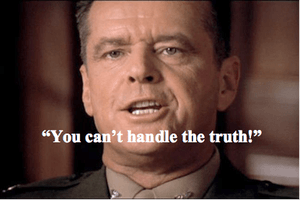 , we’ve taken a giant step backward. If we’re making decisions based upon our feelings, or reacting to our circumstances in a knee-jerk fashion, it could get real scary real fast.
It seems to me, Adam and Eve had the same problem. They were given enough facts to make the logical decision to avoid the forbidden fruit. They chose to go the touchy-feely route instead, and look at what it’s gotten us. Maybe we should try to avoid the same mistake. Think about it. Truth matters.
[Dave Zuchelli is a graduate of Pittsburgh Theological Seminary and is currently the pastor of Smith Chapel, in Great Falls, VA.]
The post Post-Truth: Are You Kidding Me? appeared first on Dave Zuchelli.
January 13, 2017
Behaving Badly: An Insight to My Psyche
My lovely bride and I have been watching a show this season. Please don’t ask me what a season is these days. If I recall correctly, a TV season used to be from September through May. Then, of course, there were the summer replacements that lasted for three months.
 Now it seems that a season is whatever the producers (or whomever) decide it should be. Programs begin at the oddest times and end without warning. I just can’t keep up. This is all leveled by the fact that no one watches anything in real time anymore (at least, we don’t). We jump onto Netflix, Hulu, or some other outgrowth of the DVR generation and binge-watch whatever series we choose to indulge ourselves in at the time. It’s a rather amazing phenomenon.
Anyway…back to the show we’ve been watching. I’m not sure how we stumbled onto this series, but it’s called “Good Behavior.” At least, I think that’s the name of it (I’m not very good with titles). Nomenclature aside, we seem to be hooked on this thing.
Their behavior is anything but good.
The show revolves around two of the most despicable individuals you’d ever want to come across. Well…let me restate that. These two characters do some of the most despicable things imaginable. Despite that, I find myself rooting for them every time. It’s almost embarrassing. If it was a comedy, I could excuse myself—but it’s deadly serious. While I love these TV roles, I wouldn’t want hang around them in real life.
Due to the subject matter, I don’t think I would recommend this show to anyone under sixty. Actually, as a pastor, I’m not sure I should recommend it to anyone at all. Yet, it’s a fascinating study in multifaceted personalities and the-end-justifies-the-means lifestyles.
TV Schizophrenia
The way the production is handled portrays some of its inner conflict. For example: The characters have a propensity for dropping the f-bomb. Interestingly enough, every such occurrence is carefully bleeped out. Yet, every episode or two portrays a few seconds of somewhat graphic sexual content. While they can occasionally display the actions, they can’t allow the crude word that describes what they’re doing. It’s all a bit schizophrenic.
I say all this to ask myself a question. How can I be so sympathetic to murderers, thieves, and all around scofflaws? Is it just the way they’re portrayed that manipulates my loyalties? Or is it simply my compassion for the lost shining through in some twisted way? I’m not at all sure.
 One of my favorite parables is the one about the sheep and the goats (Matthew 25:31-46). The upshot of it is that we should see Jesus in everyone. The result of doing that is a desire to help people because, in actuality, we’re helping Jesus.
I guess (when it comes to the folks in Good Behavior) I want them to be okay. If they were real people, I’d want to help fix them somehow. I may be rationalizing, but I think that makes me okay (hopefully).
[Dave Zuchelli is a graduate of Pittsburgh Theological Seminary and is currently the pastor of Smith Chapel, in Great Falls, VA.]
The post Behaving Badly: An Insight to My Psyche appeared first on Dave Zuchelli.
January 10, 2017
On This Day in 1964
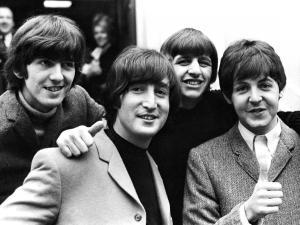 I just saw a news blurb: “On this day in 1964, the Beatles released their first album.” Some of you may remember albums. They were large, flat, vinyl discs about twelve or thirteen inches in diameter. We used to put them on turntables, place a needle in the groove, and the stereo produced sound.
I was fourteen years old when this monumental event occurred. The sound my stereo made when I played this particular album consumed me for the next several years. I was an immediate Beatle fan. I loved their sound, their music, and just about everything else about them.
“I still get a kick out of listening…”
As I look back, it’s seems pretty obvious that they were gods to me. They could do no wrong. Their music was perfect and their philosophy impeccable. That was fifty-three years ago.
I still get a kick out of listening to some of their music, even now. From my new perspective, however, it turns out they were less than perfect. A lot of what they did was wrong, and their philosophy (pick whichever one you wish) less than desirable. They certainly weren’t gods.
Much of what I experienced back then was the emanation of an immature, fourteen year old brain, immersed in the culture of my day. My gods at that time were musicians and baseball players. If I could only be like any one of them, my life would be ideal. At least that’s what I thought.
 I spent considerable hours trying to make that happen. When I wasn’t playing baseball, I was playing music. There were times as a teenager I would leave my position playing center field for the local Legion team, take a shower, and head off to a gig my band was playing that evening. I was in Heaven (albeit a Heaven on earth).
Reality soon set in, however. I discovered the hard way that I was never going to play for the Pittsburgh Pirates. Even worse, I was never going to star in a successful rock and roll group. Life can be cruel.
“I have struck out…”
Somehow, I muddled through these past few decades without the glitter of stardom showering me. No aura of fanfare and heroism has surrounded my existence. I have struck out in sports and hit a sour note in music. Oh to be able to relive the glory days of my youth.
I look back on those days with fondness and a little nostalgia. Still, I’m glad they’re gone. I have answered the calling that was placed upon me, and I wouldn’t have it any other way. I still love a good baseball game and am thrilled by great music. There’s nothing so sweet, however, as the Good News of Jesus to my ears.
Jesus once said that life was more than baseball and music—or something to that effect. (Matthew 6:25) As it turns out, he was right. The gods of 1964 still live in my memory, but the Lord of the universe has taken their place in my heart.
[Dave Zuchelli is a graduate of Pittsburgh Theological Seminary and is currently the pastor of Smith Chapel, in Great Falls, VA.]
The post On This Day in 1964 appeared first on Dave Zuchelli.
January 8, 2017
Virtual Reality: The New Savior?
 If you watch much TV these days, you’ve probably seen commercials for products like the Samsung Gear VR. This little baby is a set of goggles that can immerse you in virtual reality games that make you feel like you’re in another world. I’ve not tried them, but the commercials are quite enticing.
I been on virtual reality rides at theme parks and find them to be every bit as enjoyable as the real thing—maybe more so. Having that capability in your own living room seems very tempting. It appears these things have taken gaming to a whole new level. Technology is an amazing thing.
“Don’t leave home without it.”
As we embark on the year 2017, the field of technology seems to become more and more invasive into our lives. It used to be we couldn’t leave home without our VISA cards. Now we can leave those at home as long as we have our cell phones. The VISA cards are on our phones along with everything else we need in order to survive the twenty-first century.
While virtual reality (VR) appears to be our next form of entertainment, it’s also fraught with spiritual danger. I don’t want to be one of those reactionaries who point to every new thing as a spawn of Hell. Christians in the past have done that with things like television and the Internet. Still, there seems to be something a little more insidious about the VR thing than might meet the eye.

The problem probably doesn’t lie in the current VR products on the market. It’s where these things are headed that might cause us to stumble. Think about how quickly technological advancements are made these days. What could be next?
I’ve heard talk of VR suits. How far into the future can these things be? If goggles can give us the perception of reality through our eyes, how encompassing might the new reality become if our bodies are encased in a suit that can touch each of our senses?
Think of it. If you’re some poor schmuck with no life to speak of, a dead-end job, and a bereft social life, a VR suit could seem like the answer to all your needs. You’re living in a small barren apartment, barely eking out the rent money. You save every extra dime you have (or use your credit card) to purchase your very own VR suit.
“You’ve entered your own Matrix.”
Each day after a dreary eight hours of toiling in a menial occupation,” you come home, quickly eat a Hot Pocket, and put on your suit. By doing so, you enter a new world—your own world…a world of your choosing. In it, you have a gorgeous mate (or harem), a myriad of entertainment choices, and you aren’t faced with the massive problems of reality. The possibilities are endless.
 You’ve entered your own Matrix; and in it, you don’t need anyone or anything else. Your soul is satisfied. You don’t even need Jesus…until you die. Then it’s too late.
[Dave Zuchelli is a graduate of Pittsburgh Theological Seminary and is currently the pastor of Smith Chapel, in Great Falls, VA.]
The post Virtual Reality: The New Savior? appeared first on Dave Zuchelli.
January 5, 2017
The Last of the Shakers
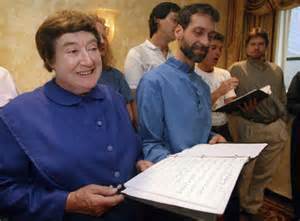 A friend of mine recently posted an article on Facebook that immediately caught my eye. It was entitled, “One of the Last Shakers Dies.” I have always found the Shakers to be a fascinating group. The name by which we know them is actually a nickname that has been shortened from “Shaking Quakers.” This came from their worship style that apparently included some sort of ecstatic bodily tremors. I’ve never seen them in action, and now I may never get the chance.
The deceased in question is Sister Frances Carr. She was 89 years of age and was one of three people still living in the Shaker community in Sabbathday Lake, NY. Among the group’s tenets are “pacifism, gender equality, communal ownership and celibacy.” The last of those beliefs undoubtedly contributed mightily to their ultimate demise. The two remaining members are sixty and seventy-eight years old. Time is not on their side.
Celibacy probably accelerated the process.
As I read the article, it caused me to think about the death and demise of an institution that had survived two and a half centuries. The whole celibacy thing probably accelerated the process, but the fatality of a spiritual establishment is a fascinating study in itself. Even if you’re having children, how do you maintain and grow the gathering as a healthy and viable expression of God’s love on this earth? Maybe the deeper question is, “Should we even try?”
 Think about the typical local church. Where (and how) did it start? In many cases, a few enthusiastic Christians gathered in someone’s home for Bible study. The study turned into a fellowship and developed into a small community of believers. They got excited about the Lord, each other, and what they believed. They began to reach out into the surrounding community to meet perceived needs and minister to their neighbors.
Eventually, it became prudent to have a central location from which they could operate. They pooled their resources, saved some money, bought land, and erected a building. Before long, most of their money went into maintaining the building and hiring staff. The church, which started as a small group of vibrant Christian disciples, now becomes a corporation of like-minded people striving to maintain their traditions.
Churches close their doors every year.
It’s no secret that most of the church’s money is spent on herself. It’s not that money is the measuring stick, but it’s often an indicator of what we think to be most important. After the “glory days” of the congregation are over, the church begins to wane and eventually die. The number of churches that close their doors each year is staggering.
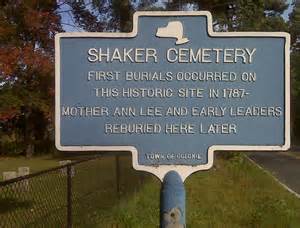 It sounds a bit sad, but it might not be a bad thing. If we spend most of our time protecting what we have, we are spending less and less time serving Jesus.
People live and die—so do congregations and denominations. The Christian communities planted by Paul are long gone. The Shakers are all but extinct. Despite all this, the church lives on. Long live good King Jesus!
[Dave Zuchelli is a graduate of Pittsburgh Theological Seminary and is currently the pastor of Smith Chapel, in Great Falls, VA.]
The post The Last of the Shakers appeared first on Dave Zuchelli.
January 3, 2017
Trying to See Jesus
 I was reading a passage of Scripture a couple days ago and ran across a sentence that never really struck me before. It was the passage in the beginning of Luke 9 where Jesus sent out The Twelve on a mission trip of sorts. The Bible relates to us that the Good News was being preached and people were being healed.
All this was causing a bit of a stir in the region of Galilee, and the word spread like wildfire. When the news of these events reached the ears of Herod (the governor, not the dead king), he was a bit confused. You may recall that he was the one who had put John the Baptist to death. There was a rumor going around that John had been raised from the dead. Herod, of course, didn’t buy that little number and was curious about who was doing the great things of which he was hearing.
Herod tried to see Jesus.
Sooner or later, word came through to him that the one responsible for all the fuss was Jesus of Nazareth. Anyone causing this much of an uproar would be a magnetic phenomenon for anyone, particularly the governor. Verse 9 contains a sentence averring that Herod tried to see Jesus.
Allow me to supply a little background for all this. Previously, John the Baptist had been badmouthing Herod for his sexual indiscretions, so Herod had him rounded up and imprisoned. Despite the fact that John was preaching against him, Herod protected him and often enjoyed listening to him preach (Mark 6:20). Finally, Herod’s wife (who couldn’t stand John) tricked the governor into having the Baptist beheaded. Nice lady…
So when Jesus emerged in a public way, Herod was fascinated. John was gone, but the phenomenon lived on. In fact, it was now bigger and better than ever. Herod wanted to see this new holy man about whom everyone was talking.
“He never got around to it…”
I guess governors are too busy to be bothered with seeking out the religious peasantry. Herod, although he was trying to see Jesus, never seemed to catch up with him until it was time to put him to death. If someone as important as the governor really had it as a priority to see Jesus, I’m sure he could have easily arranged it. He never got around to it, however.
Like Herod, there are a lot of people who’d like to see Jesus. A Messiah who can purportedly save them attracts their attention. Still, there are a lot of distractions out there. There are a lot of things that have to be done—important things. Who’s got time to chase after some holy-man preacher? What if it’s merely a wild goose chase? So they take their chances. Instead of looking for him, they hope he’ll find them instead. After all, it’s his job, isn’t it?
If you’re one of those people (and you’re reading this), let me suggest the possibility that he just found you. Now it’s your turn. Time to respond to him.
[Dave Zuchelli is a graduate of Pittsburgh Theological Seminary and is currently the pastor of Smith Chapel, in Great Falls, VA.]
The post Trying to See Jesus appeared first on Dave Zuchelli.
January 1, 2017
Sitting Next to Zacchaeus
The strategy of Jesus was clear—go out among them, touch their lives, and love them into the Kingdom. This, of course, does not address his death as a sacrifice for our sin and his Resurrection, which seals the deal for us. But we can take that up at another time.
He not only used this approach himself, he taught others to use it. In the Gospel of Luke, we see him first send out the twelve and then seventy-two disciples to be “advance men” of sorts. They were to go to the places Jesus was planning to go, live among the people, befriend and love them, and let them know the Kingdom was near. (See Luke 9 and Luke 10) Presumably, these mission trips were to prepare the way for Jesus to enter the hearts of the previously unschooled.
“It causes me to wonder…”
I don’t want to append things to Scripture, but I’m guessing these were not the only two times Jesus sent people ahead of his entourage. Even if they were, I take these as examples of our own mission here on the earth. Just as John the Baptist was sent to prepare the way, we too have such a calling.
It causes me to wonder if a guy like Zacchaeus (Luke 19) was enticed to get a glimpse of Jesus by such an advance man. If you will recall, Zacchaeus climbed a tree to view Jesus as he walked by. Why bother? Apparently, someone told him about the Messiah who was bringing about a new kingdom, and his curiosity was aroused.
An important part of this occurrence is Jesus’ reaction to Zacchaeus’ tree scaling exploits. When the Master reached the site of the tree, he looked up and engaged the little guy in conversation. He, essentially, invited himself over to Zacchaeus’ home. It sounds a bit forward to us, but in that culture it wa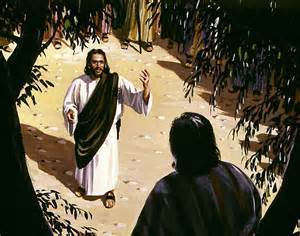 sn’t quite as big of a deal as it would be in twenty-first century America. Still, it was a momentous event in the life of this reviled tax collector.
I suspect there are myriads of Zacchaeuses around us. They are people on the periphery of our lives. Some are just trying to get a glimpse of Jesus. Others haven’t even heard of him yet. We, as individuals, just might be the ones sent to tell them the Kingdom is near.
Who will climb the tree?
Because he was a tax collector, it’s likely that very few people associated with Zacchaeus. Jesus did, though. He called him down and went to his house (an unclean place according to the religious authorities of the day). Jesus cared more about the person than the person’s sin.
I’m convinced that we need to be ones who will climb the tree and sit beside a Zacchaeus in our lives. We need to invest a little time in people who want to (or need to) know. Sitting on a branch next to Zacchaeus might seem like a waste of time to some. For us, it’s a calling.
[Dave Zuchelli is a graduate of Pittsburgh Theological Seminary and is currently the pastor of Smith Chapel, in Great Falls, VA.]
The post Sitting Next to Zacchaeus appeared first on Dave Zuchelli.