P.J. Thorndyke's Blog, page 3
October 7, 2024
A Quick Guide to Slasher Movies
While a sizable chunk of the horror genre features crazed murderers stalking and killing victims, the term ‘slasher movie’ has evolved to encapsulate a group of movies that conform to a specific set of rules. Emerging in the late-seventies and reaching a boom period in the eighties, slashers usually feature a group of teenagers being stalked and slain by a masked killer in an isolated location where help is unavailable. The ‘final girl’ motif is often mentioned (although possibly overstated) in reference to a wholesome female protagonist who outwits the killer and survives while her more promiscuous friends meet grisly ends.
Alfred Hitchcock’s Psycho (1960) is an early influence on the genre but isn’t really a slasher for a couple of reasons. It doesn’t involve a group of teenagers and, aside from Janet Leigh being butchered in the notorious shower scene, the movie is more of a psychological thriller with only one other character being killed onscreen. Other crime-mystery movies like The Bat (1959) and Peeping Tom (1960) contain slasher elements and the Italian giallo movement (named in reference to the yellow covers of crime fiction books popular in Italy) is a definite precursor to the slasher. Gialli like The Bird with the Crystal Plumage (1970) and A Bay of Blood (1971) are essentially stylish whodunnits which often include shots from the killer’s point of view and grisly murder set pieces which became staples of the slasher genre.
 Dario Argento’s giallo classic The Bird with the Crystal Plumage (1970) is considered a strong influence on the slasher genre.
Two movies in 1974 are often quoted as ‘proto-slashers’ or even slashers in the truest sense. The Texas Chainsaw Massacre and Black Christmas both deal with groups of teenagers being terrorized by a killer in an isolated location but it would be John Carpenter’s Halloween (1978) which truly established the genre. Featuring the masked maniac Michael Myers who escapes from a psychiatric hospital and returns to his hometown to terrorize babysitter Laurie Strode (Jaime Lee Curtis, the daughter of Psycho star Janet Leigh), Halloween shifted horror into the suburban backyards of the middle class and countless imitators followed.
By utilizing a specific date, Halloween started a trend with many copycats keen to cash in on the calendar gimmick. Friday the 13th, New Year’s Evil, Mother’s Day and Christmas Evil all emerged in 1980, followed by Bloody Birthday (1981) and My Bloody Valentine (1982). 1984 saw a further two Christmas themed slashers; Don’t Open till Christmas and Silent Night, Deadly Night, the latter igniting protests by incensed parents at the depiction of Santa as a bloodthirsty killer.
 John Carpenter’s Halloween (1978) introduced the world to Michael Myers and set the slasher movie in America’s backyard, igniting a slew of imitators.
 Another popular motif of slasher movies to the point of almost being another subgenre altogether is the ‘camp slasher’. Largely inspired by Friday the 13th (one of Halloween’s more high-profile imitators), summer camps became the stalking ground for many forest dwelling maniacs who butchered their way through groups of not-so-happy campers in Madman and The Burning (both 1981) as well as Sleepaway Camp (1983) and its sequels.
While many killers were simply psychos lacking much in the way of motive, some killed due to tragic backstories or the pursuit of material gain. A prank gone wrong motivates the killers in The Burning and Terror Train (1980) while strong competition between female performers lies at the heart of Curtains (1983). Many of the killers were surprisingly nondescript. The killer in Prom Night (1980) merely wore a ski mask and looked little different from your average bank robber while some killers didn’t bother with a mask at all. The demented drill-wielding fiend in Slumber Party Massacre (1982) does nothing to conceal his identity and the villain in Final Exam (1981) really is just ‘some guy’ with no backstory, mask or anything particularly noteworthy about him. Perhaps these movies were onto something in the way of presenting a more realistic killer who could be anybody in a crowd, but it was the masked killers like Michael Myers who really left an impression on the genre, and one mask in particular was about to become the most famous of them all.
 Jason Voorhees appeared in Friday the 13th Part 2 (1981) and donned his distinctive hockey mask a year later to become a slasher icon to rival Michael Myers.
Jason Voorhees may not have made his first appearance in the Friday the 13th franchise until the second movie (and even then, he wore a pillowcase over his head, not picking up his iconic hockey mask until Part III) but he would quickly become the focus of the series and an icon of the genre which had exploded in the early ‘80s.
Cheap and formulaic, slasher movies were easy to make and over 100 examples were released between 1978 and 1984, earning much controversy and critical derision. That was of no concern to their target audiences however, namely teenagers out for thrills, chills and high body counts. Paramount, a respectable studio, had expressed a certain embarrassment at the popularity of their Friday the 13th franchise and tried to kill Jason Voorhees off in Friday the 13th: The Final Chapter (1984) but didn’t count on that movie being one of the most popular in the series, igniting a second wave of sequels.
1984 marked a change in the straight-forward slasher formula which had saturated the first half of the decade. The release of Wes Craven’s A Nightmare on Elm Street with its star, Freddy Krueger; a knife-fingered bogeymen who murders teenagers in their dreams, revitalized the flagging genre and placed more emphasis on the supernatural and the use of special effects.
More talkative and wisecracking killers with supernatural backstories followed suit like Chucky in Child’s Play (1988), a talking doll possessed by the spirit of a serial killer. It was no longer enough to have a masked maniac as the antagonist. Now, the supernatural was more often then not behind the plunge of the knife. Maniac Cop (1988) featured a murdered cop come back from the dead for revenge and, despite Paramount’s attempts to bury the franchise, Jason Voorhees was brought back as a zombie in Friday the 13th Part VI: Jason Lives (1986) a movie so tongue-in-cheek it was almost a parody of itself. That same year, The Texas Chainsaw Massacre 2 also poked fun at the genre, a clear sign that slashers were starting to draw laughs rather than screams.
Despite a slew of Elm Street sequels, Freddy Krueger’s reign of terror was short-lived as he gradually morphed into a figure of fun than of fear and the series found itself on life support by the end of the decade. The Friday the 13th series was also struggling, despite efforts to mix telekinesis and a trip to Manhattan into the formula and the slasher genre limped into the nineties with an uncertain future.
 Wes Craven’s ‘A Nightmare on Elm Street’ (1984) gave the slasher formula an overhaul and introduced one of the genre’s biggest bogeymen, Freddie Krueger.
Occasional highlights aside (such as 1992’s Candyman), the early ‘90s was something of a dead zone for the slasher as audiences suffered genre fatigue and the juggernaut franchises dried to a trickle with ever diminishing box office returns. New Line Cinema (which owned the Nightmare on Elm Street franchise) had bought the character rights to Jason Voorhees from Paramount (but not the Friday the 13th title) and toyed with the idea of a Freddy-versus-Jason movie. Audiences would have to wait until 2003 for that, and in the interim endured the baffling Jason Goes to Hell: The Final Friday (1993). Meanwhile, Wes Craven returned to Elm Street with Wes Craven’s New Nightmare (1994); a self-referential slasher in which actors played themselves while Freddie Krueger, a fictional movie monster, seeps into the real world.
Strangely, Halloween, the movie which really got the genre up on its feet, never enjoyed as much success as a franchise as its rivals. After a lackluster Halloween II (1981), the series attempted to go in a different direction with Halloween III: Season of the Witch (1982) as it didn’t feature Michael Myers, wasn’t even a slasher and went largely ignored by audiences. Michael Myers remained in the shadows until the tenth anniversary of the original movie in which he made a comeback in Halloween 4: The Return of Michael Myers (1988) but its sequel the following year was less well-received. 1995 saw Myers return again in Halloween: The Curse of Michael Myers, a late attempt to provide a supernatural explanation for the killer’s apparent immortality involving a rune curse and a secret cult.
Wes Craven can be credited with revitalizing the slasher genre not once, but twice. As well as revolutionizing it in 1984 with A Nightmare on Elm Street, he gave it another shot of adrenaline in 1996 with Scream, a self-referential slasher focusing on a group of horror-obsessed teens and the ghost-faced killer who starts knocking them off. Smart and sexy, Scream was a massive success, bringing the slasher back from the grave but in a new guise. The slashers of the 1980s were notable for their low budgets and no-name casts, but the post-Scream slashers of the late ‘90s like I Know What You Did Last Summer (1997) and Urban Legend (1998) were a lot glossier, boasting bigger budgets and actors who were at least recognizable from popular teen TV shows of the time. Even the Halloween franchise got in on the action by bringing back Jaime Lee Curtis as Laurie Strode for a showdown with Michael Myers in Halloween H20: 20 Years Later (1998) that adopted the glossy Scream formula.
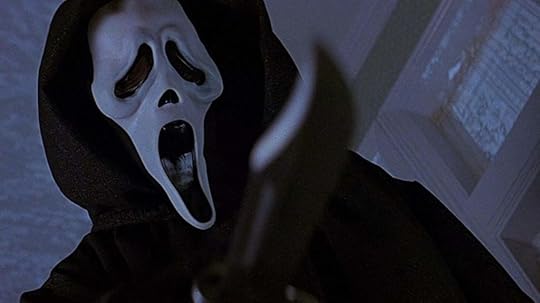 In 1996, Wes Craven revitalized the slasher genre yet again with Scream.
The slasher renaissance was short-lived, and, by the mid-2000s, it had deviated from the formula as the ‘torture porn’ subgenre emerged, typified by the Saw and Hostel franchises. In the late 2000s, remakes were the name of the game and pretty much every big horror movie of decades past got the reboot treatment, though were met with little approval by horror fans.
The slasher genre is far less prolific than it once was. A few gems stand out in the past ten to fifteen years like You’re Next (2011) and The Terrifier series which gave us our most recent masked manic in the form of Art the Clown. The Scream franchise chugs along with a new cast and now has six entries to its name and the Halloween series brought Jamie Lee Curtis back once again in yet another sequel confusingly called Halloween (2018) which was popular enough to earn a couple of follow-ups.
Nostalgia for the 1980s exemplified by the success of the Netflix series Stranger Things and a new adaptation of Stephen King’s It (2017) fueled several slashers which reveled in the genre’s halcyon days like Summer of 84 (2018) and X (2022), the latter of which spawned a prequel and a sequel to much acclaim. In a more comedic vein, The Final Girls (2015) and Totally Killer (2023) literally revisited the ‘80s via time travel plot devices.
Perhaps the most interesting slashers of the modern period are the ones that bend the rules of the genre or reinterpret the formula. Freaky (2020) has a final girl swap bodies with the killer and Don’t Breathe (2016) introduces its teenaged protagonists as housebreaking delinquents who get more than they bargain for when they try to rob an old blind man. It Follows (2014) doesn’t feature a killer with a knife but still presents a group of teens being stalked and slain by a supernatural something while playing with an interesting reversal of the chastity ‘rule’ of earlier slashers.
 A new kind of slasher? 2014’s ‘It Follows’ bends genre definitions but is considered by many to be one of the best slashers in recent years.
But where does the slasher genre go from now? As the original generation of fans grow increasingly older, nostalgia for the ‘80s can only carry it so far and, as movies like It Follows prove, the formula can be twisted so out of shape that genre definitions begin to seem redundant. But, with ‘legacy sequels’ like Scream (2022) riffing on the ‘90s slasher renaissance (just as the original Scream did on the ‘80s slasher boom), we can confidently say that the slasher is going nowhere. It might not be as common as it was, but if done right, it will always find an audience who eagerly await a mixture of old school scares and new takes.
If you love ’80s slashers, be sure to pick up my own humble entry in the genre – Twilight of Evil – available in print and for Kindle from Amazon, Godless, and a whole host of other places. You can also grab the prequel novella – Mountain Bike Massacre – for free here!


August 1, 2024
Free Horror eBooks throughout August!

I just wanted to make you aware of a fantastic deal happening throughout August. I and over forty other horror authors have come together in one incredible group promo. My own ’80s slasher novella Twilight of Evil: Mountain Bike Massacre is in there along with some other fantastic titles which you can pick up completely free! Some are novellas, some are samples and some are full novels. Some require a signup to a newsletter but each and every one is a great way to get hooked on a new horror author!
July 10, 2024
New Celluloid Terrors Novel Now Available!
The next installment in the Celluloid Terrors series is now available in e-format from all good vendors with a print version in the works!
The Celluloid Terrors series is a collection of standalone horror novels, each set in a different decade and inspired by the horror movies popular in that decade. We’re up to the 1980s with Twilight of Evil and that means slasher movies!
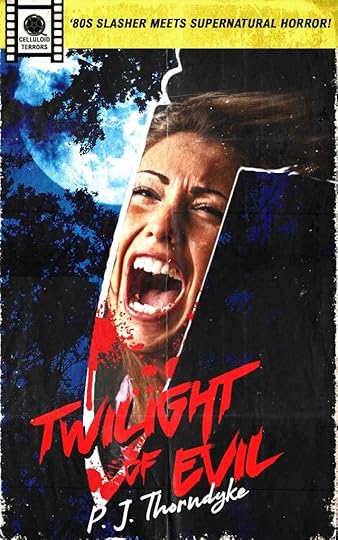
Think Nightmare on Elm Street, Friday the 13th and a touch of Evil Dead and you’re somewhere in the right ballpark. Twilight of Evil: ’80s Slasher meets Supernatural Horror is available from Godless as well as Amazon and a host of other platforms. I’m currently working on the print version so look out for that. Meanwhile, here’s the blurb!
What if your father was a mass murderer?
That’s the living hell of eighteen-year-old Lauren Mackenzie. Five years ago, Anthony Stevens, her estranged father, broke out of prison and descended on the small town of Crimson Bay to murder eleven people in vengeance for his incarceration. Shot by the police, his body was never recovered. Growing up with that kind of family history isn’t easy. Treated as the town pariah, Lauren is bullied at school and can’t even get babysitting gigs. Now, fresh murders have everybody asking the same question; has Lauren’s father returned?
But there are dark forces at work in Crimson Bay. Four teenagers who lost somebody to Anthony Stevens’s knife five years ago have come into the possession of a book of Satanic spells which can resurrect the dead. In a bungled ritual atop a moonlit mountain, the four try to bring back their loved ones but instead awake a cosmic force that descends on Crimson Bay like a bloody whirlwind of death.
Twilight of Evil is a chilling supernatural horror novel inspired by the slasher movies of the 1980s.
January 28, 2024
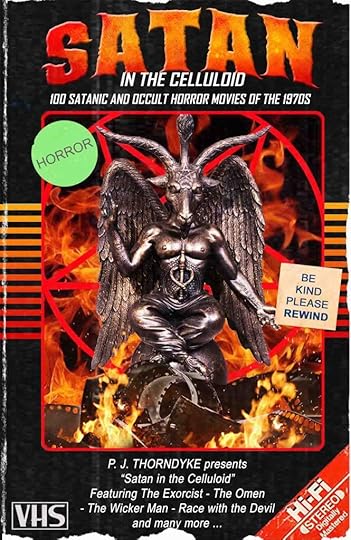
Satan in the Celluloid is now available!
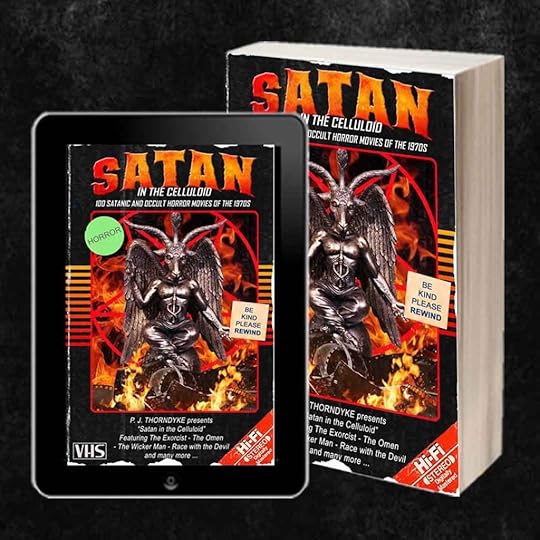
The wait is over! Satan in the Celluloid: 100 Satanic and Occult Horror Movies of the 1970s is now available in print and e-format!
You can grab the ebook from Godless
Or Amazon, where the print version is also available.
So, if you’re into occult horror, exorcists, and movies about sinister cults, be they the big budget classics or the grimy grindhouse, drive-in ‘b’ movies and video nasties, be sure to pick up your copy and, as always, please consider leaving a review. Fresh books need them!
January 16, 2024
‘Satan in the Celluloid’ now available for pre-order!
My most recent book is a follow up to one of my bestsellers – Barbarians at the Gates of Hollywood: Sword and Sorcery Movies of the 1980s – and my second non-fiction book. I’m thrilled to bring you Satan in the Celluloid: 100 Satanic and Occult Horror Movies of the 1970s, which has been a real passion project for me for the best part of a year.
You know the movies I mean. The Exorcist, The Omen etc. But there were a ton of other movies (most on the cheaper end of the spectrum) some of which are downright bizarre. Satan in the Celluloid is available to pre-order from Amazon and will be released on January 28. You can also pick up the ebook from Godless.
August 8, 2023
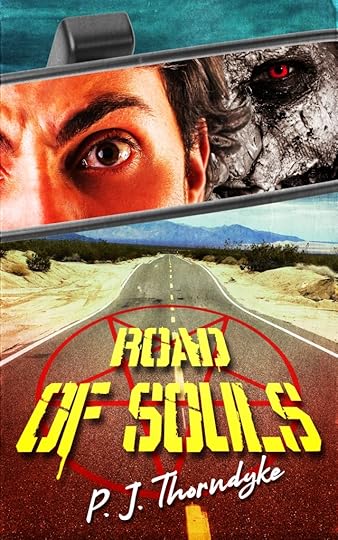
‘Road of Souls’ now available!
The fourth entry in the Celluloid Terrors series – Road of Souls – is now available from Amazon! You can get it in print, for Kindle or, if you’re a member of Kindle Unlimited, you can read it for free! Get your copy here.
July 9, 2023
Road of Souls now available for pre-order!
New entry in the Celluloid Terrors series is now available for pre-order!
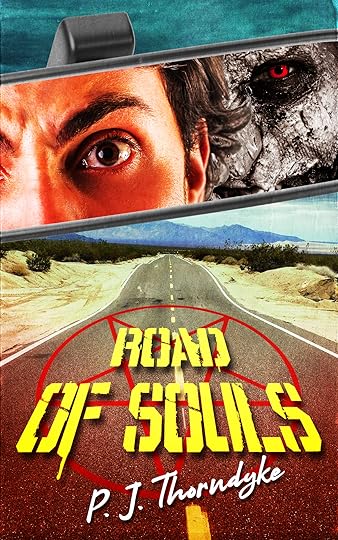
Set in 1977, Road of Souls is inspired by occult thrillers and road movies from the 1970s. Head on over to Amazon to order your copy now!
November 28, 2020
10 Great Juvenile Delinquent Movies from the ’50s
America’s postwar prosperity had a marked effect on its young adults. A booming economy and the rise of high schools meant that many kids were no longer expected to leap straight into the workforce at a young age. For the first time ever, teenagers had money to spend and the time to spend it. Pop culture rushed to supply the demand. Rock ‘n’ roll happened; a musical revolution that was geared almost exclusively to teenagers and theaters and drive-ins began to show movies that catered to a younger demographic.
A perceived rise in juvenile delinquency accompanied this teenage revolution as parents read aghast, of kids terrorizing the streets in their hot rods, joining gangs, taking drugs and generally running amok. There was an element of hysteria about it and, as movie makers keenly capitalized on sensational headlines, the juvenile delinquent (or ‘JD’) movie was born.
Much like the gangster flicks of the 1930s, this new breed of cinema came with a moral warning label. Their melodramatic trailers were keen to emphasize that these movies weren’t trying to glamorize the drug-taking, joyriding exploits of their teenage protagonists, but were merely trying to warn kids of the pitfalls of such devil-may-care antics. But a lot of that was just lip service to the censors. These movies were titillating and often exploitative in their design to thrill the very people they were about; teenagers.
[image error]
The Wild One (1953)
With his jaunty white cap, sideburns and leather jacket, a young Marlon Brando became an outlaw icon astride his Triumph Thunderbird as he led his Black Rebel Motorcycle Club into a dusty California town for a rowdy weekend. The short story by Frank Rooney on which The Wild One is based was inspired by the fabled Hollister Riot; a small bit of bother at American Motorcyclist Association rally which was massively sensationalized by the press in 1947.
With Brando’s Johnny Strabler and his outlaws tearing up the town and their dust up with a rival gang (led by a young Lee Marvin), The Wild One felt like a western updated for a new generation and only added to the hysteria surrounding teenagers and biker gangs. The movie was even banned in the UK until 1967.
[image error]
Rebel Without a Cause (1955)
Teen angst never looked so cool as the sensitive misfit Jim Stark (James Dean) with his white tee, red jacket and messy hair. Picked on by high school meathead ‘Buzz’, Jim is roped into a contest of machismo in that staple of the ’50s teen movie; the ‘chickie run’. The fallout leads to Jim hiding out in an abandoned mansion with the equally lost and troubled Judy (Natalie Wood) and the abandoned (and clearly homosexual) Plato (Sal Mineo). It’s a brief respite from a world that doesn’t have a place for them as the movie’s devastatingly bleak climax approaches.
Rebel Without a Cause is one of those movies given inadvertent weight by real-life tragedy. The death of James Dean in a car crash a month before the movie’s release meant that Dean, like his most famous character, remains frozen in time as the epitome of the teenage outsider and a cultural icon.
[image error]
Blackboard Jungle (1955)
The tale of a new teacher’s struggle to connect with the pupils of a rough, intercity school is a plot we’ve seen many times since but Glenn Ford’s clashes with rapists and switchblade-wielding gang members in Blackboard Jungle was highly controversial on its release. Standout performances by Sidney Poitier and Vic Morrow as the troubled teens Ford refuses to give up on lift this from melodrama to something much more powerful.
The movie is also notable for being one of the first to feature a rock song on its soundtrack, namely ‘Rock Around the Clock’ by Bill Haley and his Comets which reportedly had teenagers dancing in the theater aisles and, in some instances, ripping up the seats. The song’s popularity soared and inspired a movie of the same name the following year, giving birth to the ‘rock and roll movie’.
[image error]
Running Wild (1955)
Undercover cop Ralph Barton (William Campbell) infiltrates a teenage car theft ring led by gangster Osanger (Kennan Wynn). Loyalties are torn as Ralph falls for Osanger’s moll, Leta (Kathleen Case) who is desperate to protect her illegal immigrant father from deportation.
Although sounding like The Fast and the Furious of the fifties, Running Wild actually doesn’t feature any car chases and is more of a crime drama. It is however notable for being the first such movie to feature blonde bombshell Mamie Van Doren who would go on to play the bad girl in many a JD movie. There is also a young John Saxon in his first movie appearance.
[image error]
I Was a Teenage Werewolf (1957)
Echoes of Jekyll and Hyde abound in this cult classic as short-tempered high school student Tony (Michael Landon) is roped into a psychological experiment by Dr. Brandon (Whit Bissell). Despairing of the state of humanity, Brandon is convinced that its only hope is to use past life regression to hurl man “back to his primitive state”. Tony is inadvertently turned into a slavering werewolf and runs rampant across campus.
Werewolf movies, although popular in the 1940s, fell out of favor at the dawn of the Cold War when teenagers flocked to see movies about alien invaders and giant radioactive bugs. I Was a Teenage Werewolf married old-fashioned horror with new-fangled science fiction and offered a clever commentary on those frenzied, hairy creatures driven by primal, sexual lust. Oh, and werewolves.
[image error]
Reform School Girl (1957)
Donna Price (Gloria Castillo) takes the rap when the stolen car her boyfriend is driving hits and kills a pedestrian. Refusing to rat on Vince (Edward Byrnes), Donna is sent to reform school where a sympathetic psychologist (Ross Ford) takes a shine to her. Meanwhile, the police are closing in on Vince who is terrified Donna will blab. Seeking to silence her for good, he frames Donna as a stool pigeon and hopes that her fellow inmates will do his dirty work for him.
[image error]
Hot Rod Rumble (1957)
The members of the Road Devils hot rod club are fed up with their overly aggressive member Arnie Crawford (Richard Hartunian). Even his girl, Terri (Leigh Snowden) ditches him and takes off with another boy called Hank. So when a car sideswipes Terri and Hank on their way home, killing Hank and knocking Terri unconscious, all fingers point at Arnie. He’s innocent but has a tough time proving it to his friends, his family and the cops.
[image error]
High School Hellcats (1958)
New girl Joyce Martin (Yvonne Lime Fedderson) struggles to fit in at high school until she is asked to join a girl gang called the Hellcats led by Connie Ross (Jana Lund). The rules are simple; don’t get good grades and only date Hellcat approved boys. Joyce breaks the latter and strikes up a secret relationship with square-jawed coffee shop boy Mike (Brett Halsley). When a game of sardines at an illicit house party ends up with Connie tumbling down the stairs to break her neck, the girls flee the scene and swear themselves to silence. But when the police start sniffing around, tensions in the gang begin to stretch to breaking point.
[image error]
High School Confidential (1958)
New kid in school Tony Baker (Russ Tamblyn) is in fact an undercover cop who is there to bust a narcotics ring, 21 Jump Street style. He befriends Joan Staples (Diane Jergens) who has picked up a reefer habit and her friend Doris (Jody Fair) who has quite naturally (according to the authorities of the day) graduated to heroin. Tony eventually infiltrates the school dope-selling gang in his attempt to find the source of the junk. It’s the cast that really makes this movie pop, including John Drew Barrymore as the school’s top dog, Teenage Werewolf‘s Michael Landon, Mamie Van Doren posing as Tony’s seductive live-in aunt and Jerry Lee Lewis himself performing the title song.
[image error]
Joy Ride (1958)
Middle-aged suburbanite Miles Renny (Regis Toomey) becomes the subject of a campaign of terror when four teenage boys set their hearts on taking his brand new Thunderbird out for a joy ride. The police are unable to help and the four thugs eventually graduate from threatening calls and bricks through the windows to a full on home invasion that puts Miles’s wife in the hospital. Driven to desperate measures, Miles decides to take the law into his own hands.
[image error]
P. J. Thorndyke’s new novel – Invasion of the Brain Tentacle – is an homage to JD movies and alien invasion B movies of the 1950s. It tells the story of a meteorite that lands near a pleasant Californian town. Soon the townsfolk start showing strange symptoms and it falls to the local hot rodders and teenage gangs to deal with the fallout…
Check it out here!
November 23, 2020
Greatest Ever Pulp Stories #12 – Slime
[image error]By: Joseph Payne Brennan
Appeared in: Weird Tales (March, 1953)
A volcanic upheaval on the bottom of the ocean floor releases a primeval, gelatinous glob that rises up and slithers through the outskirts of a New England town. As people (and cows) begin to vanish, a police search is set in motion and the true nature of the slithering horror is gradually revealed.
Slime follows a very simple and episodic plot but Brennan’s writing and the sense of terror he creates of what might be lurking out in the darkness is superb. Drawing on the Lovecraftian tradition of unstoppable, primeval horrors, Slime’s influence on both horror fiction and Hollywood is clear. The 1958 sci-fi classic The Blob isn’t an adaptation of Brennan’s story but it comes damn close.
Although Brennan would go on to become one of the greatest writers of short horror fiction of the ’60s and ’70s, by 1953 the age of the pulp magazine was coming to an end. Weird Tales folded the year after Slime‘s publication and, in response, Brennan founded his own magazine – Macabre – as a rallying point for all Weird Tales alumni who needed a new outlet for their stories. Always an H. P. Lovecraft enthusiast, Brennan printed several articles devoted to the master of cosmic horror and Macabre became an important step in the continuation of Lovecraft’s Cthulhu mythos.
September 11, 2020
Vintage Reads – Swords and Deviltry
In 1937, long before Dungeons & Dragons, two friends began designing a board game set in the fantasy world of Nehwon (‘no when’ spelled backwards). They each wrote a story concerning two of this world’s adventurers; a giant northern barbarian called Fafhrd and his diminutive comrade, the Gray Mouser. The two friends were Fritz Leiber and Harry Otto Fischer and their characters of Fafhrd and the Gray Mouser were loosely based upon themselves, Leiber being tall and Nordic-looking while Fischer was somewhat smaller and darker.
It would be Leiber who would continue with the literary side of their adventures. The first short story featuring the duo to be published was Two Sought Adventure (later to be re-titled The Jewels in the Forest), in the August 1939 issue of Unknown. Leiber would pen over 30 stories concerning Fafhrd and the Gray Mouser. In the beginning, they were only loosely connected without much in the way of continuity but, by the 1970s, Leiber had begun to put them in chronological order, ripe for publication as a set of volumes.
The first book in the collected saga was Swords and Deviltry, published by Ace Books in 1970. It’s comprised of four sections; a story each for Fafhrd and the Gray Mouser before their definitive first meeting in the highly acclaimed tale Ill Met in Lankhmar. This is all preceded by Part I which is a brief taster called ‘Induction’ and is an alternate and context-light description of the first meeting of our heroes in the massive-walled and mazy-alleyed metropolis of Lankhmar.
Part II is the tale of The Snow Women in which Fafhrd’s youth in the snowy wastes of the north is recalled and the events that led to his departure for warmer environments. Originally published in the April 1970 issue of Fantastic Stories it tells of an eighteen-year-old Fafnir, a member of a matriarchal tribe of which his mother is a formidable elder. Despite the rage of his mother, Fafnir falls in love with Vlana, an actress in a travelling show and together the pair flee south.
Part II is the Gray Mouser’s turn in The Unholy Grail. First published in the October 1962 issue of Fantastic, we meet ‘Mouse’, a young apprentice of the exiled wizard Glavas Rho. After his master is slain, Mouse falls in love with Ivrian, the daughter of the duke who has outlawed magic in his realm. Captured by the duke and tortured, Mouse is presented with a choice; use black magic to escape with his life, or remain true to white magic and die.
Part III is the Nebula and Hugo Award winning tale Ill Met in Lankhmar, which was first published in the 1970 issue of The Magazine of Fantasy and Science Fiction. The mazelike warren of the city of Lankhmar is the setting where two members of the Guild of Thieves are ambushed simultaneously by Fafhrd and the Gray Mouser. Recognizing a kindred spirit in the other, the pair head back to the Mouser’s lodgings where Ivrian waits. On the way, they pick up Fafhrd’s girl, Vlana, and the four of them have a private party. After imbibing much, Fafhrd and the Gray Mouser concoct a bold plan to rob the Thieves’ Guild.
Beginning his career in the wake of Robert E. Howard’s suicide, Fritz Leiber picked up the torch of sword and sorcery from its fallen titan and carried it forward, helping shape and define the genre. We even owe the label ‘sword and sorcery’ to Leiber who unknowingly christened it in a 1961 letter in the Conan fan magazine Amra, as a reply to a question posed by fellow fantasy writer Michael Moorcock:
“I feel more certain than ever that this field should be called the sword-and-sorcery story. This accurately describes the points of culture-level and supernatural element and also immediately distinguishes it from the cloak-and-sword (historical adventure) story—and (quite incidentally) from the cloak-and-dagger (international espionage) story too!”
Leiber and Moorcock would go on to become members of SAGA (The Swordsmen and Sorcerers’ Guild of America), an informal gathering of like-minded writers who met for drinks after conventions and gave themselves outrageously pompous titles (Moorcock was The Veiled Thaumaturge of the Mauve Barbarians of Ningg). It was the efforts of SAGA and its anthologies like Flashing Swords! that promoted the genre in an era when it had largely been forgotten and are responsible for sword and sorcery being recognized as it is today. Leiber’s influence is highly notable in both sword and sorcery and high fantasy (his walled city of Lankhmar and its various guilds is clearly recognizable in Terry Pratchett’s Discworld series).
[image error]Michael Whelan’s illustration for Swords and Ice Magic, 1977