
Steve Hely's Blog, page 16
April 26, 2024
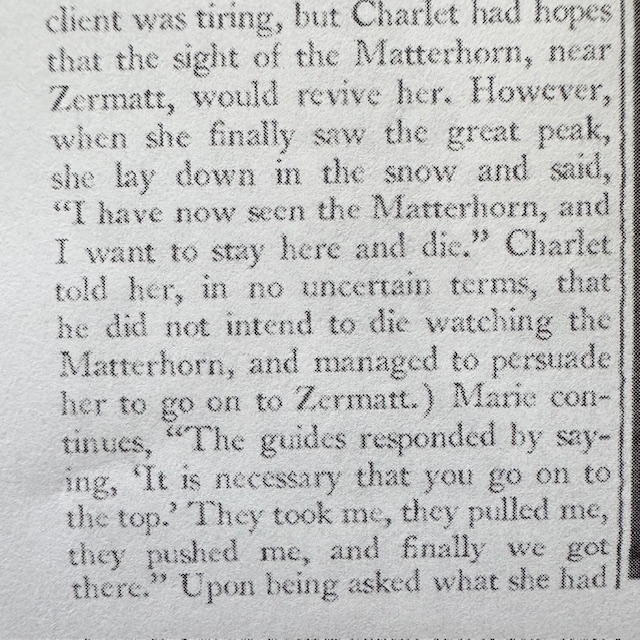
The first woman to climb Mont Blanc




April 19, 2024
The Official Records of the War of the Rebellion
The first time I went to look at the Official Records of the War of the Rebellion at the LA Public Library (Central, Geneaology and History Department) the librarian said “it’s… it’s a lot” and then he showed them to me:

Before the Civil War was even over they’d started compiling the official records: every report and bit of correspondence they could gather.
Some of it is dull, and some of it is very vivid:

April 14, 2024
Seven Samurai
interview with Edward Luttwak:
Then there are people who are more familiar like Akira Kurosawa. Anybody who has actually been involved in war – in fighting, in using weapons – knows that Seven Samurai is a complete course on how to train fighters, raise their morale, and command them in war. When Seven Samurai came out, people quickly realized that it was a film that had to be watched three or four times in a row, and then every few years. And people did that, very commonly.
I have actually trained men to fight in war, and I have sat them down and made them watch Seven Samurai, and they complained a lot. Then a few of them wanted to see it again. Then after a while, all of them wanted to see it again. All of them learned a hell of a lot from that film. Leadership, cohesion, morale, when you should raid and when you shouldn’t raid, when you should be on the defensive, when you should be on the offensive. Akira Kurosawa pretended that he was a pacifist and antiwar (in post-1945 Japan, war was unfashionable, to say the least). But in truth he loved war. I’ve used it in El Salvador – actually did the same thing – train villagers to defend themselves from any passing guerilla. Making the name of the village a terror to them all. They would no longer be attacked anymore.
Source. Helen DeWitt would be nodding. how about this:
MR: Where do you think the best snorkeling in the world is?
EL: I think it’s the Tuamotu Archipelago in French Polynesia – as it happens where Gauguin went, but not his particular atoll, Rangiroa. There are different atolls in the archipelago, and one has a very rude name. That is my favorite atoll.
MR: What’s it called?
EL: I’m not going to tell you, but it’s extremely rude.
Warren Buffett on love
After visiting [his wife Susan] in hospital, he told a class at Georgia Tech, “When you get to my age, you’ll really measure your success in life by how many of the people you want to have love you actually love you. I know people who have a lot of money, and they get testimonial dinners and they get hospital wings named after them. But the truth is that nobody in the world loves them. If you get to my age in life and nobody thinks well of you, I don’t care how big your bank account is, your life is a disaster. That’s the ultimate test of how you have lived your life.” He continued, “The trouble with love is that you can’t buy it. You can buy sex. You can buy testimonial dinners. You can buy pamphlets that say how wonderful you are. But the only way to get love is to be lovable. It’s very irritating if you have a lot of money. You’d like to think you could write a check: I’ll buy a million dollars’ worth of love. But it doesn’t work that way. The more you give love away, the more you get.” Of all the lessons that Warren has taught me, perhaps this is the most important.
from Education of a Value Investor by Guy Spier.
If you keep Jimmy Buffett and Warren Buffett as navigational beacons, you’ll probably have an ok ride.
April 13, 2024
news from Paris
a report from Paris in the FT:
There’s been a spectacular decline in wine drinking. I sometimes ask people to guess which country was the world’s biggest exporter of wine in 1970. The answer: Algeria. Even after independence, the Muslim country was still producing cheap plonk that kept the former motherland pickled. French winemakers did their bit, too. But since the 1960s, the average French person’s consumption of wine has dropped by about 70 per cent, to below 40 litres a year. Wine barely exists at lunchtime any more. Younger French people prefer cannabis.
Swisstory (Part One)
We’ll be at the Annecy Animation Festival in June to present the world premiere of COMMON SIDE EFFECTS, hope to see you there! Although Annecy is of course in France, this trip will bring me for the first time to the nation of Switzerland, so I’ve been reading up on her history.
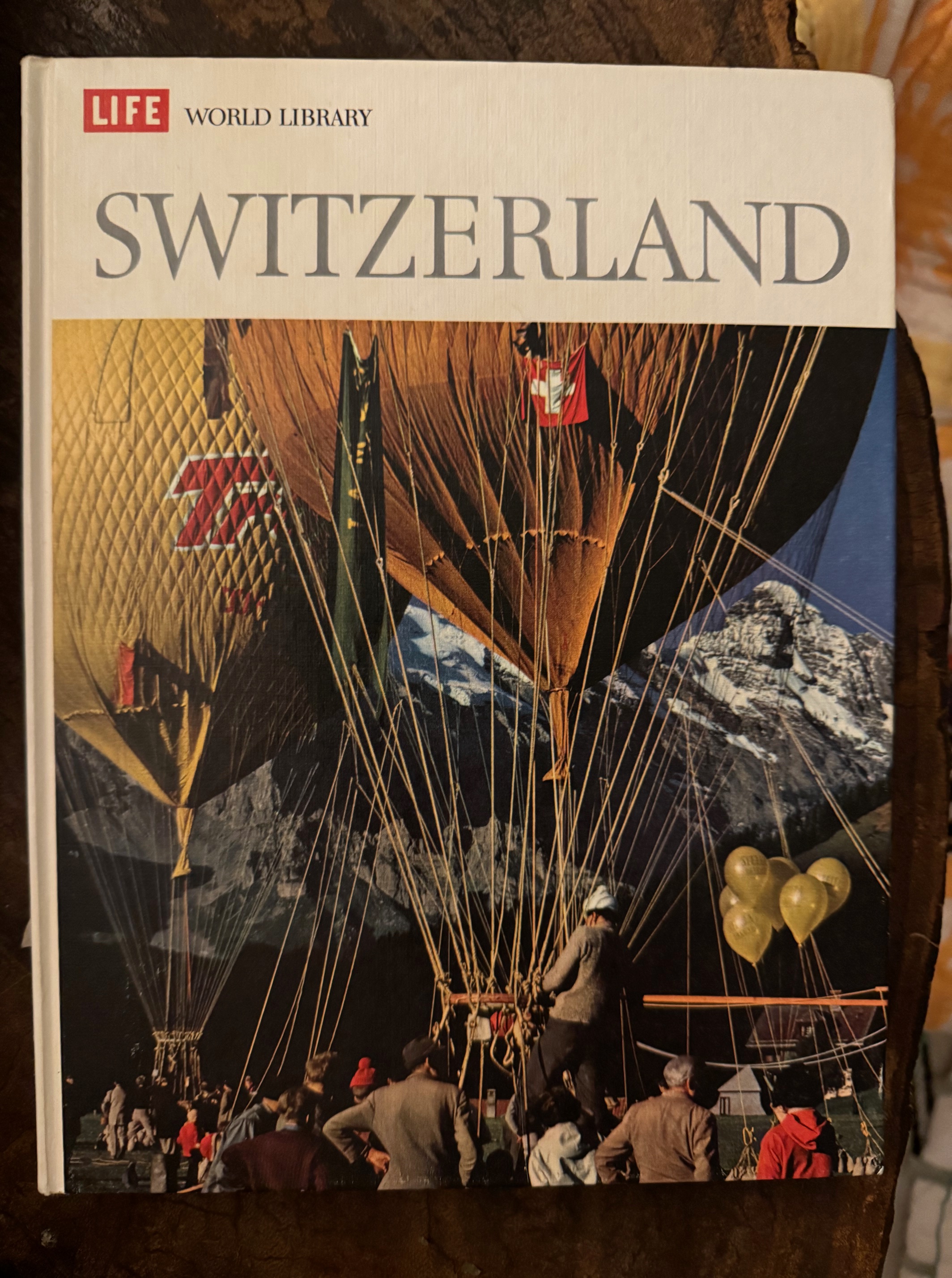
I took Tyler Cowen’s advice and bought a picture book:
The map in there is really good:

Here’s Google:

Here’s another map:

As you can see we have the Alps, some tough to traverse terrain, to the south, another gentler spine of mountains, the Jura, running along the northwest, and a juicy plateau in the middle, where you’ll find Geneva, Bern, and on up to Zurich.
Remember Otzi, the Ice Man? Here’s a reconstruction of the withered ice-mummy:

(source)
Otzi was found in the Italian Alps near Austria, and he lived around 3000 BC. Presumably there were wandering ice men and women all over what’s now Switzerland in wayback times. Now you can see Otzi in a special refrigerated chamber in the South Tyrol Museum of Archaeology in Bolzano. His murderer has yet to be identified. Boy, talk about a cold case!

A lucky or industrious iceman might’ve built himself and his family a pile-dwelling. The various alpine pile-dwellings are a UNESCO World Heritage Site. A reach, in my opinion. There’s apparently one in Bourg I may get to check out. Do the people of Bourg live any better now?
 apartments of Bourg by MHM55 for Wikipedia. Less drafty, probably.
In looking into that I found this cool picture of nearby Versoix, taken in 1925 by aviator Walter Mittelhozer.

But we’re getting ahead of ourselves.
Fast forward from the iceman and the pile houses a couple thousand years. Herbert Kubly, writing the Time Life text, does a great job:
Switzerland was brought into history by Julius Caesar.
he says. Backing up a bit:
During the Iron Age several tribes of barbaric Celts overran the area and one of them, the Helvetii, stayed. By 500 B.C. these Helvetians seem to have shared the land with a wild tribe called the Raeti, from northern Italy. They were not destined to share the land in peace.
Soon restless and powerful Germanic tribes from north of the Rhine began to press relentlessly southward.
Driven westish by these invaders, the proto-Swiss met the Romans in what’s now France. There they scored a win at Agen, in what’s now France.
According to Caesar, the captured Roman soldiers were ordered to pass under a yoke set up by the triumphant Gauls, a dishonour that called for both public as well as private vengeance. Caesar is the only narrative source for this episode, as the corresponding books of Livy’s histories are preserved only in the Periochae, short summarising lists of contents, in which hostages given by the Romans, but no yoke, are mentioned.
This episode was painted by Swiss artist Charles Gleyre:

Gleyre also did a nice portrait of Sappho:

That’s now in the Musee Cantonal des Beaux Arts in Lausanne, I hope I have a chance to view it.
In any case the Helvitii victory was short lived. Caesar went after the bad boys of the plateau. Says Kubly:
In 58 B.C., a great column of men, women and children, with their cattle and provisions, started westward toward what is today southern France, their goal the mouth of the Garonne River and the Atlantic coast.
It was this attempted tribal relocation that ushered Switzerland onto the stage of world 25 history. Southern France was a Roman province and Caesar was understandably reluctant to have this disrupting human tide cross his territory. He rushed 700 miles from Rome to Geneva in eight days, marshaled six legions and defeated the Alpine tribesmen in a battle near the present-day French city of Autun. After the defeat, Caesar ordered the Helvetii to stay home.
Another version:
In 58 BC, Julius Caesar prevented the Helvetians from leaving the Swiss plateau when they wanted to avoid the Germanic incursion from the west by migrating to the south of France. They were stopped by Julius Caesar at Bibracte (Montmort near present-day Autun, Burgundy, F). He sent the Helvetians back and settled them as a “buffer people” under the control of the Roman army. After Caesar’s death, the Romans, now under Emperor Augustus, increased their influence over Swiss territory.
so says the Swiss tourist board, which has a great website. Here’s a nice Roman arena at Aventicum/Avenches:

(source: Ludovic Péron for Wiki)
There were some Roman outposts in Switzerland:
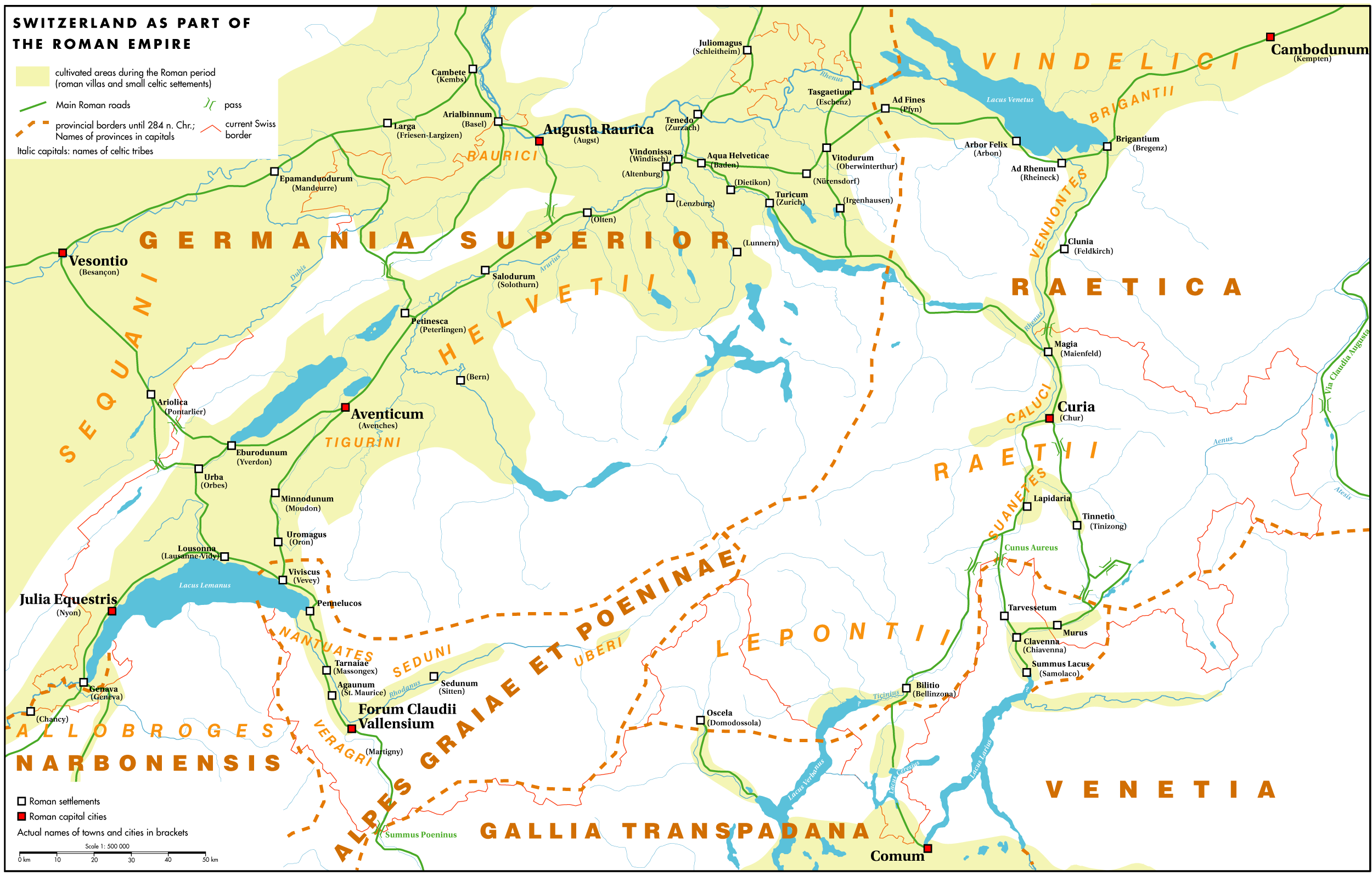
and it seems like it was mostly a good time:
The hundreds of villae found in Switzerland, some very luxurious, attest to the existence of a wealthy and cultured upper class of landowners. Many villae belonged not to Roman immigrants, but to members of the Celtic aristocracy who continued to hold their lands and their rank after the Roman conquest. Of the lower classes, much less is known, although there are inscriptions attesting to the existence of guilds (collegia) of boat skippers, doctors, teachers and traders, as well as to the existence of a trade in slaves.

A Roman era arch on Lake Geneva, thanks Hapax.
Says Kubly:
Over the succeeding centuries the troops and the Roman governors established Roman law and built towns with palaces, temples and amphitheaters. They introduced cherries and chickens to Helvetian agriculture and improved cattle breeds and the cultivation of vineyards.
Their most enduring enterprise was the construction of roads with which they crisscrossed the country, including a road over the Great St. Bernard Pass which assured permanent communication between Italy and the north.
Then it all went to hell. The “catastrophe of 260” led to the place being overrun by warlike German tribes, the Romans retreated, they were gone completely by 454 AD.
There’s a small little nook of Switzerland where people still speak Romansh, which is something like Vulgar Latin.

(source)
But mostly the Germanic / Frankish peoples would be running the show in what’s now Switzerland from now on.
Now we enter a period where like four or five hundred years goes by and very little is recorded, aside from the occasional mention of a monastery or something. What the hell was happening? “I’m in the dark here” as Al Pacino says in Scent of a Woman. It’s unfashionable to call it the Dark Ages, but… it was dark! Like literally, there was probably very little light. World Lit Only By Fire as William Manchester titled his fascinating and bizarre book. People livin, dyin, lovin. All vanished.
Says Kubly, deftly summarizing a few centuries of what must’ve been intense struggle times:
With the Romans gone, two Germanic tribes gradually took over Switzerland. The Burgundians moved in from the west. The Alemanni, invading from the north, gradually pushed the Burgundians to the Sarine River, which became the border between the two and established permanently the division which still exists today between Switzerland’s French- and German speaking peoples.
In the Sixth Century both tribes came under Frankish rule, and the country eventually became a part of Charlemagne’s Holy Roman Empire. After Charlemagne died in 814, his descendants fell to bickering among themselves and Switzerland was once again divided, this time between two of Charlemagne’s grandsons who ruled upper Burgundy and Germany. In 888, a minor despot named Rudolf seized part of the old Burgundian territories and had himself crowned ruler.
When we come back: oaths, Eidgenossenschaft, and the Bern Book.

April 12, 2024
Harrison Ford on Jimmy Buffett
Speaking at the Hollywood Bowl tribute.
Jimmy Buffett was a cool guy. A lot of cool guys are not that nice. Jimmy was more than nice. He was kind.
paraphrase but pretty close. (oh looks like it’s up on YouTube already). Occurred to me watching that Harrison Ford probably could’ve been a great standup.
Brandi Carlisle said whenever she was in some random spot and wanted to go fishing, she’d call Jimmy Buffett and soon some salty dog captain would pick her up.
The Coral Reefers Band has held together for close to fifty years.
Everyone mentioned that Jimmy Buffett had “a twinkle in his eye.” The word “generous” came up a lot. Everyone’s story was about like flying with Jimmy (or refusing to) in St. Barth’s or meeting him by chance on some island.
If after you die Paul McCartney sings “Let It Be” at a sold out tribute to you, not bad.
More on Jimmy. May as well watch Brandi Carlisle sing Come Monday:
I never film anything at a concert. Why would I? Somebody else is on it, always!April 11, 2024
Dumb and Dumber and Bill Clinton
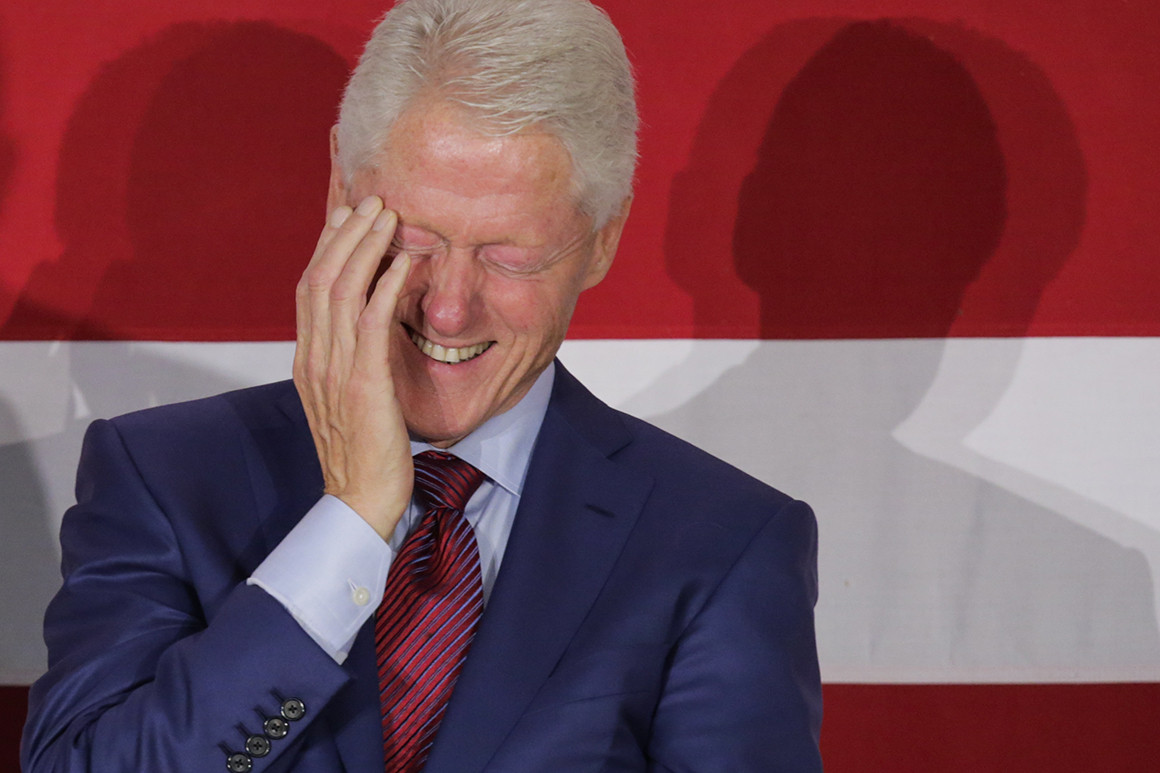
(source)
We’d sit on that airplane and watch—one example, the classically brilliant, stupid movie, Dumb and Dumber.
Riley
I love Jim Carrey, but that’s one I haven’t even been able to watch.
Friendly
It’s a hilariously stupid movie, and there’s Clinton sitting there. This is one of the most brilliant people I’ve ever met and he’s sitting there chewing a cigar, playing hearts, watching Dumb and Dumber, laughing hysterically, but then also not getting some of the story line. I mean partly because he’s playing cards, he’s doing a crossword puzzle, talking to somebody, and watching Dumb and Dumber. But there I am trying to describe the plot line of Dumb and Dumber to the President of the United States. This is surreal.
(source: Andrew Friendly interview at The Miller Center)
Then there were silly little things, too, like his crossword puzzles. That seems like a silly thing, but to the extent that there are pop culture clues in crossword puzzles—The Sunday New York Times is the hardest one, because they get harder throughout the week. I never noticed many pop culture references in the Sunday one, but I’m sure the Monday one might have one or two. He loved to watch cheesy movies. We’d be landing in Moscow, but he wanted to see the last minute of Dumb and Dumber before he walked off the plane or something.
Riley
Does that get him charged up, the last minute of Dumb and Dumber?
Goodin
He likes action movies better. All of this is to say he actively cultivated these lifelong friendships. By virtue of who he is and the life he’s led, those friendships are totally across the spectrum of “real people.” He has such capacity to take in everything. He’ll have as much joy talking about the latest biography of [Abraham] Lincoln as he will about the most ridiculous scene in Dumb and Dumber. He has so much real estate in his brain for these people and relationships and knowledge, and he kept himself open to as many channels as possible.
April 9, 2024
Prorsum

went looking into Burberry, the English clothing brand, famous for their iconic plaid.

Prorsum, on their logo, a Latin form: towards, forwards.
Turns out Burberry made a movie about Thomas Burberry:
Thomas Burberry invented the fabric gabardine and revived the name (which had been used in the Middle Ages to describe, like, overcoats). Mallory was wearing gabardine when he died trying to summit Mount Everest (he still is wearing gabardine. If you’re morbid, you can find photos of his body and see how well the Burberry is holding up after a hundred+ years).
April 6, 2024
Guns on the Western Waters, H. Allen Gosnell
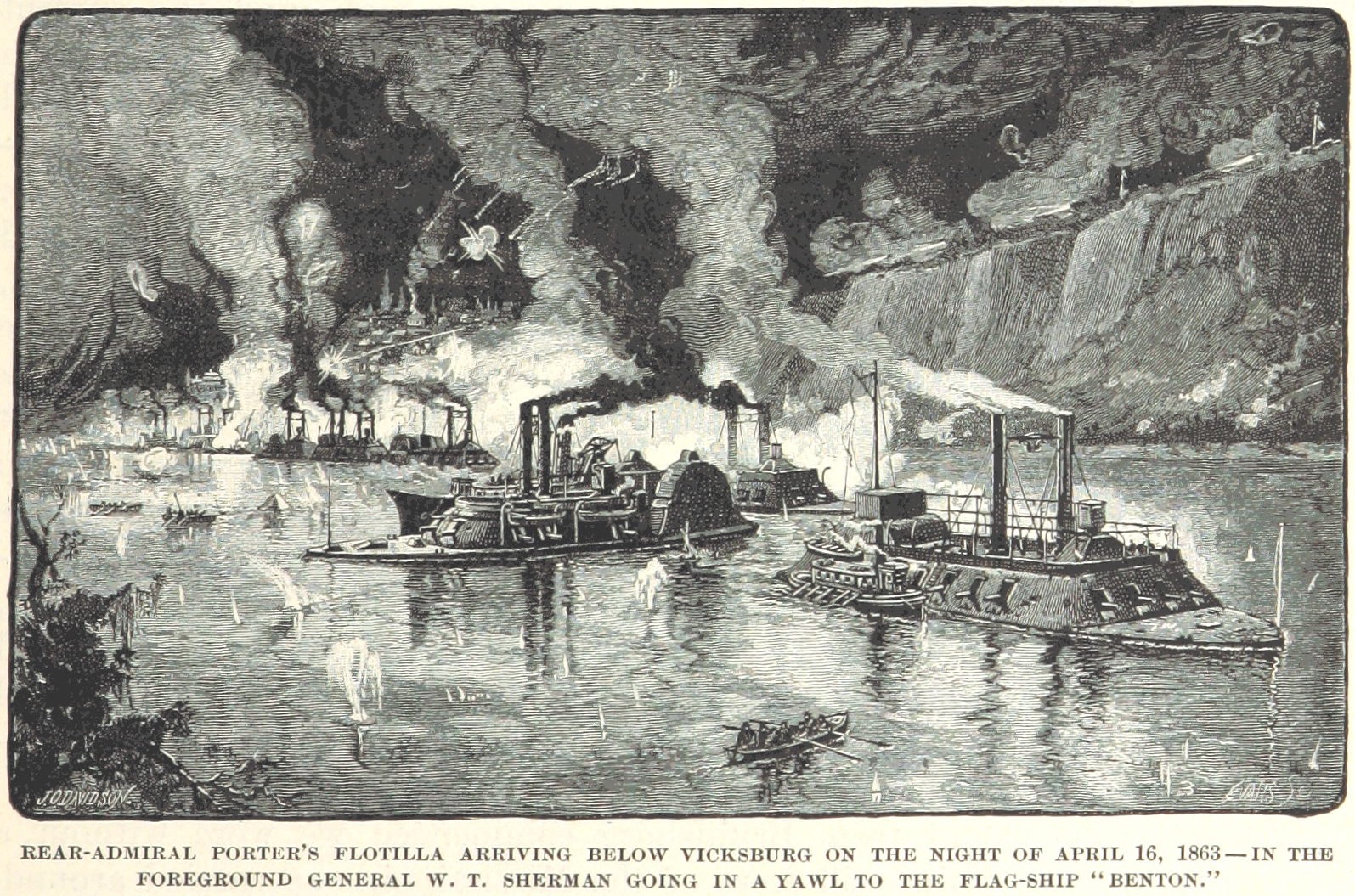
Can you imagine seeing this in color? Fire in the darkness reflecting on the flowing water? The sounds?

Ulysses Grant, who heard the screams of the wounded at Shiloh, Cold Harbor, the Wilderness, a hundred other battlefields, uses the word “sickening” only twice in his Personal Memoirs: once to describe a bullfight he saw in Mexico, and once to describe “the sight of the mangled and dying men which met my eye as I boarded” the USS Benton, a steamship, after a battle on the Mississippi River off Grand Gulf, Louisiana.
It’s incredible. The amazing things about naval engagements are the accounts of men firing eight-inch guns at each other from a range of eight-feet. I’m afraid that is beyond my understanding. But they did it all the time in naval battles. It was a very strange business.
So said Shelby Foote in a Naval Institute Proceedings interview. In that same interview:
Naval History : Many regimental histories were written for Army units in the Civil War. Why was that apparently not the case for the Navy?
Foote: I really don’t know. No big Navy man even wrote his memoirs, did he? Guns on the Western Waters was one of my main sources. And I use the naval Official Records. But I have found a shortage of naval material.

I got so much value out of this book, which I bought used via Amazon. Gosnell was a Lt. Commander in the Navy Reserve. I can find little else about him except possibly this letter?:

Anyway his book is terrific. Here’s how it begins:

The book is indeed mostly firsthand accounts of the river battles along the Mississippi during the War of the Rebellion (fka Civil War).
It’s arguable that all the drama with Lee in Virginia was just a sideshow/violent pageant, that the real war was won and the rebellion ended when the Union seized the Mississippi from New Orleans to Illinois, slicing the Confederacy in half. This was finished by July 4, 1863. When it was done the guy who did it, Grant, was brought east to mop up the operations there.
The best section of Guns On the Western Waters is David Dixon Porter’s story of an expedition along the Yazoo River backwaters, and what he encountered there. Next best is Junius Henri Browne’s tale of a night in a boat passing under the guns of Vicksburg, from his Four Years in Secessia. Gosnell says he’s sometimes edited accounts to make them less graphic, but guys are still trampling around in their shipmate’s brains. These battles were infernal, boilers would explode scalding people, if they didn’t write their memoirs maybe it’s because it was too intense to think about, plus half of them were dead.
When Grant heard that Junius Henri Browne and his fellow “Bohemians” (a gang of war correspondents who don’t seem super likable) were lost this is what he said:

An unsung hero of this era is James Buchanan Eads

who was contracted to construct the City Class ironclads for the war on the Mississippi, and built seven in five months.
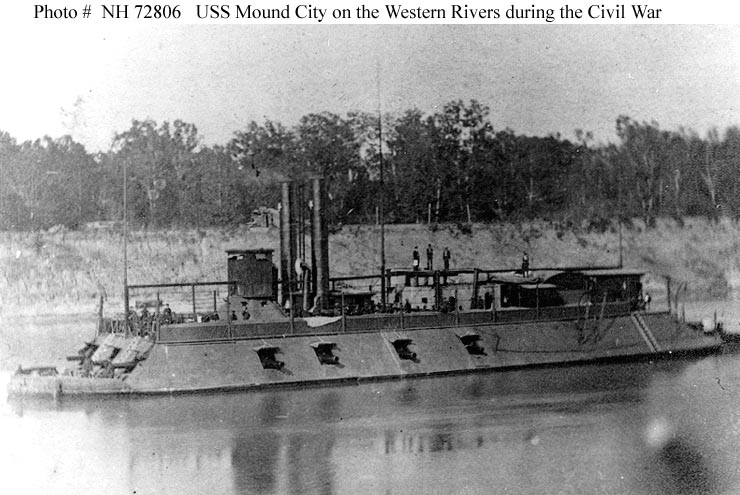
The Union was just superior to the Confederacy in building, technology, mechanizing. Arguably Confederate Navy Secretary Stephen Mallory did the best he could with a challenging situation, and for that he has a nice square named after himself at Key West. But throughout the war we just find a more effective machine destroying a feebler competitor.
Eads has a bridge named after him near St. Louis. I said unsung earlier but I guess he’s reasonably sung. And how about his wife, Martha Dillon Eads?:


