
Steve Hely's Blog, page 130
June 17, 2016
Is this a survey or the chant of a cult?
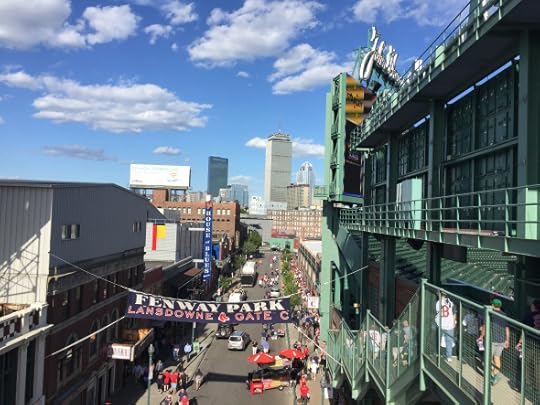
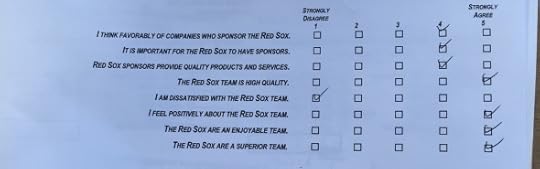
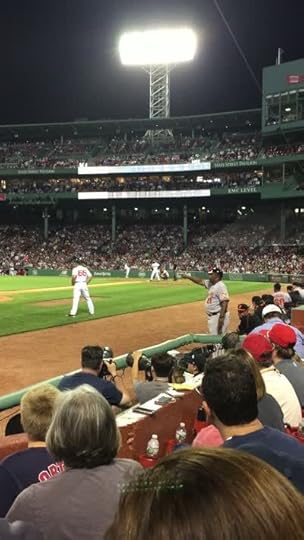
At Fenway Park for Jason Varitek bobblehead day, I stopped to fill out a two page survey. Here’s the bottom of page 2:
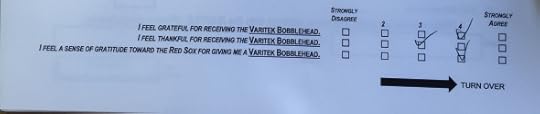
The whole survey had a bit of a hypnotism vibe:
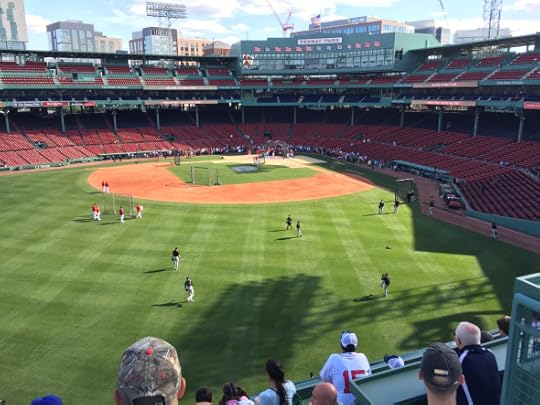
If you’re an official card-carrying member of Red Sox Nation ($14 a year) you can watch batting practice from on top of the Green Monster:
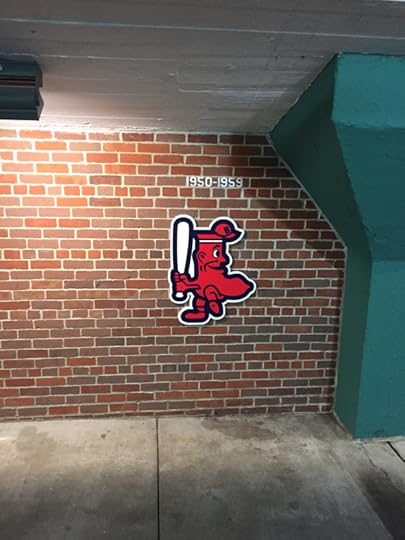
Fenway is just so wonderful. From the wall of former Red Sox logos, one of the more unsuccessful efforts:
Orioles outfield coach Wayne Kirby kept giving emphatic instructions that, as far as I could tell, were heard by nobody:
The Red Sox encourage you to follow “the time-honored tradition of keeping score.” A very Zen activity, recommended. I developed my method during my Roxbury Latin playing career, when I was judged more valuable for my tactical/strategic and historical mind than for my hitting/fielding abilities.
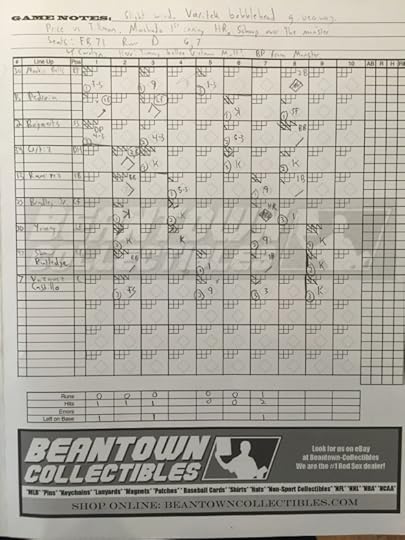
Doesn’t that just tell the whole story. A tough night for Boston but any night at Fenway is a good time.
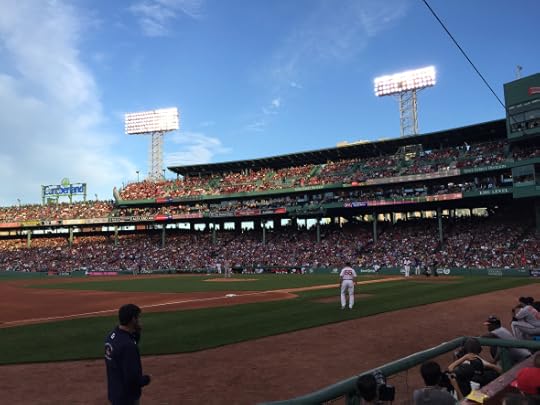
I feel grateful to the Boston Red Sox.
I feel thankful for the Boston Red Sox.
I feel a sense of gratitude towards the Boston Red Sox.
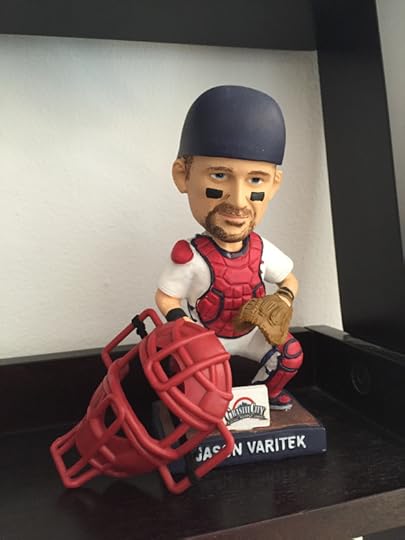
(contact me if you wish to purchase a Varitek bobblehead, $6000 obo)



June 14, 2016
New book out today!
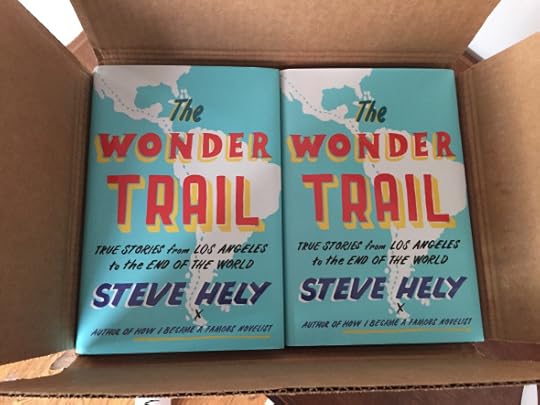
Get some! More about the book here, Hank the Cat reviews it here, handy reviewers’ guide, order on Amazon here, from your local indie bookstore here! And hey: lemme know what you think. The book’s intended to illuminate and entertain and I hope it does so for YOU.
If you’re in LA, come see me at Book Soup, in conversation with Little Esther, on Monday June 20 at 7pm.

June 13, 2016

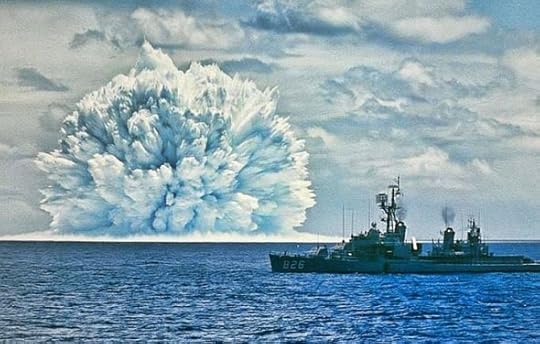
Hydrogen bomb photos
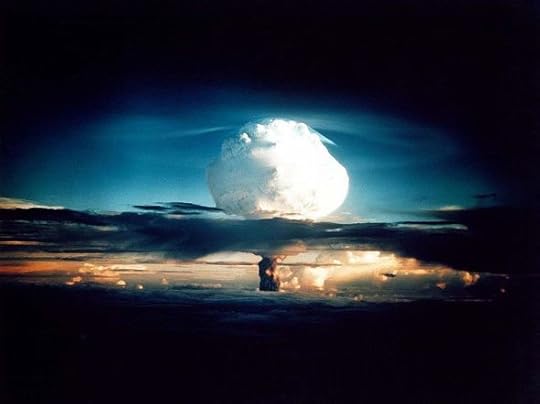
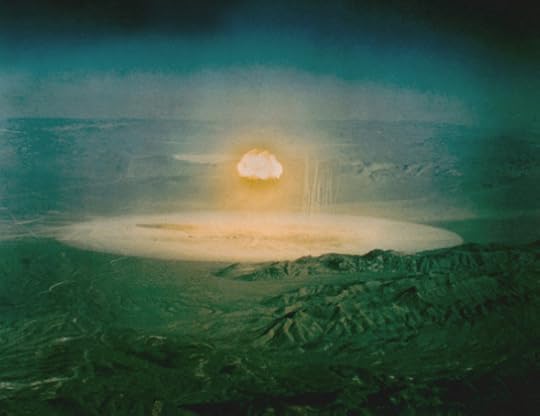
ca. 1951 – 1962, Nevada, USA — Mushroom Cloud From Nuclear Test — Image by © CORBIS
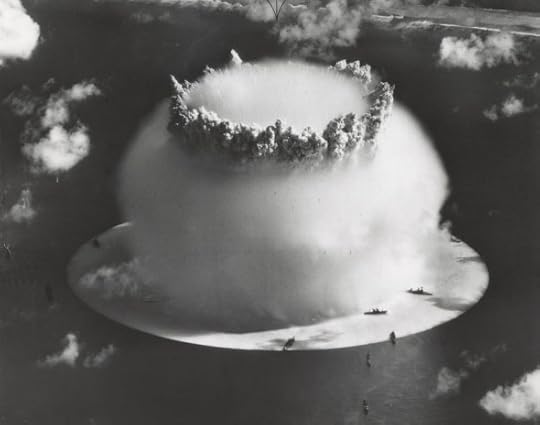

Between the show’s first and second seasons, the writers waited in the lobby of Andreessen’s office, where photographs of hydrogen-bomb blasts hang on the walls. (“They’re a good way to make sure people are awake,” Andreessen’s spokesperson told me.) Then the writers were ushered into a conference room, where, for more than an hour, they sat around a blond-wood conference table while Andreessen pitched them jokes. “They weren’t terrible, either,” one of the writers told me. “I have eight dense pages of notes from that meeting. I have never heard a man speak as fast as Marc Andreessen.” None of his jokes appeared on the show in their original form, but a concept he explained—the downside of accepting too much free money from investors—became a scene in season two. In the TV version, the venture capitalist is a young woman, and the conversation begins with her interrupting Richard while he’s in the bathroom.
(from this New Yorker thing by Andrew Marantz about Silicon Valley.)
.jpg)
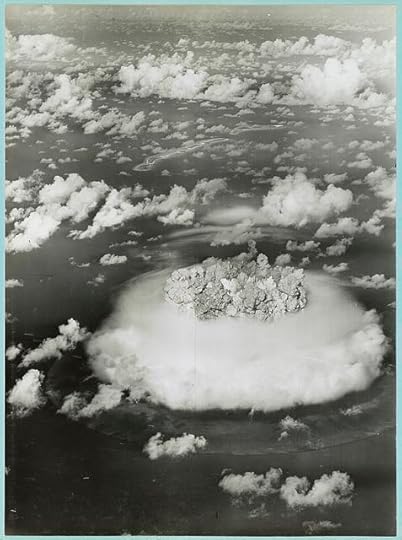
Tough to find original sources for some of these photos, click through for the ends of my trails. More.

June 12, 2016
School vacations and diplomacy
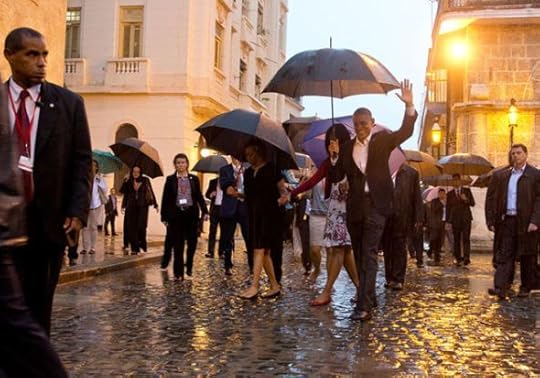
Stephen Crowley/ NY Times
But the driving force, according to sources at both State and the Vice President’s office, was that the president and first lady very much wanted a family trip, and the March 20-23 dates coincided with spring break at Sidwell Friends School for daughters Malia, who’s been studying Spanish, and Sasha
How much world diplomacy comes down to school vacations? from this interesting article in Politico about Obama’s trip to Cuba.
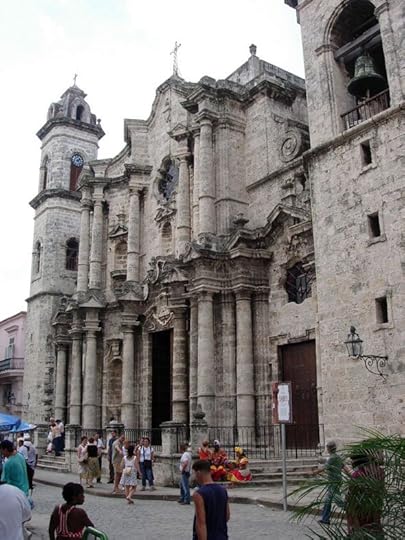
The Obama family made the requisite tourist stops, including the city’s grand Cathedral, built in 1777 from blocks of coral; they took a walking tour led by Havana’s remarkable official historian, Eusebio Leal. Despite failing health and being in considerable pain, Leal gamely guided the Obamas through historic Havana in and around the Plaza de Armas.
The buzz of la bola en la calle—Cuban street gossip—was that the visit had prompted previously unimaginable upgrades to parts of the capital. Every building that the Obama entourage passed had been repainted, and every road his limousine traversed had been repaved. Some streets were still being paved and re-striped just hours before his arrival. “Come visit us,” cried out residents of neglected, pot-holed barrios in what became a weeklong running joke, “y llevar el asfalto!” — “and bring the asphalt!”
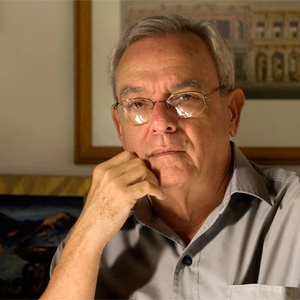
Eusebio Leal
from an interesting profile of Leal in the Washington Post:
Eusebio Leal, a diminutive, silver-haired man in a dark suit, sips sweet Cuban coffee in an elegant salon of the Cuban Interests Section mansion on 16th Street NW and recalls the day they began calling him crazy in Havana.
The year was 1967, in a country not known for rewarding dissent, and Leal, then 25, was relatively new on the job as a city preservationist. He was leading a project to skin the asphalt off a historic street, revealing the original wooden surface, and he had a special load of vintage wood to restore the centuries-old grandeur. But government officials told him the street would have to be paved over immediately so it could be used for an important diplomatic visit.
The next morning, crews came to do the work — and Leal lay in front of the trucks to save the street.
“The mayor had to come to persuade me,” Leal recalls in his deep voice, through an official interpreter. “I didn’t get up until he guaranteed that we could complete our work. He kept his word. It was a very tense moment. Then they started saying I was a madman — but in that kind of aspect in which being a madman is a good thing.”
(Is Havana Cathedral the largest building made of coral in the world?) As for this picture:
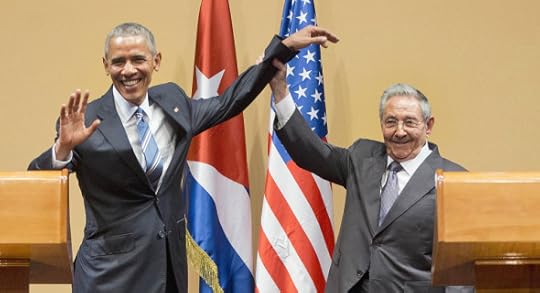
AP photo
As the conference streamed live, Cubans watched a flustered Raul lose his cool, then abruptly end the news conference and march over to Obama to raise his arm in a victory salute. A bemused Obama was having none of it, and let his arm dangle. “Oh my god,” said a former Cuban diplomat. “It made Raul look weak. No one here has ever seen anything like that.”

June 11, 2016
Be like Beyers!
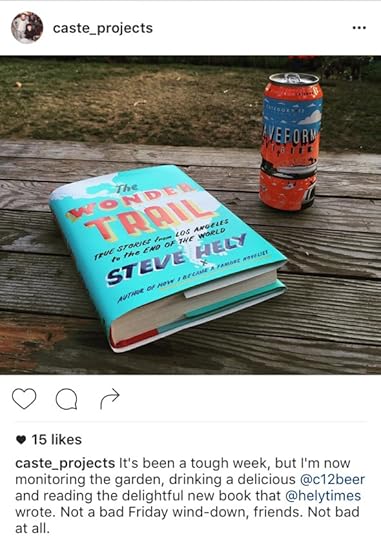
Come see me interview Mary Roach on Friday, June 17 or come see me be interviewed about WONDER TRAIL at Book Soup in LA on Monday, June 20.

June 6, 2016

At the fights
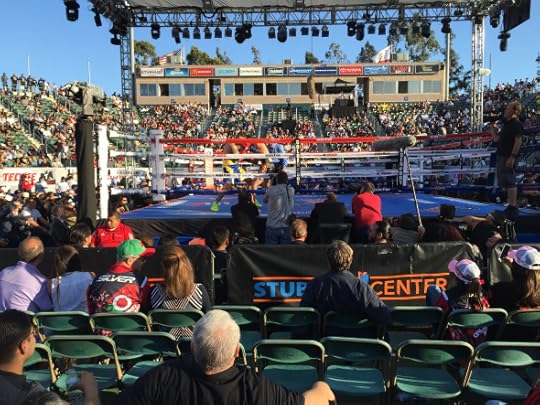
In an entertaining ten round middleweight slugfest, Gabriel Rosado edged out a wildly unpopular unanimous decision victory over Antonio Gutierrez (21-2-1, 9 KOs). Gutierrez dropped Rosado hard in the fourth round with a solid one-two combo and was the more aggressive fighter, often chasing a back-peddling or sidestepping Rosado. It was a slugfest, throughout, and a very evenly matched fight. Gutierrez is the hard luck loser while Rosado builds off his recent victory over Joshua Clottey. Judges scored the bout 95-94, 96-93 and 95-94, all in favor of Rosado.

June 5, 2016
D*-Day
 * the D is for Dave!
Happy birthday, tomorrow, June 6, to Dave King (the Great Debates co-host, not the Bad Plus drummer)
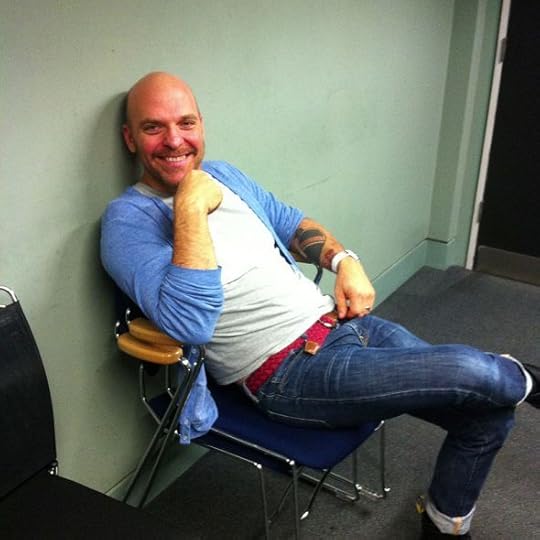
Dave King the drummer photographed by Wiki user Steve Bowbrick
A promise made in Host Chat is a promise kept so here is a selection of D-Day readings for Davis.
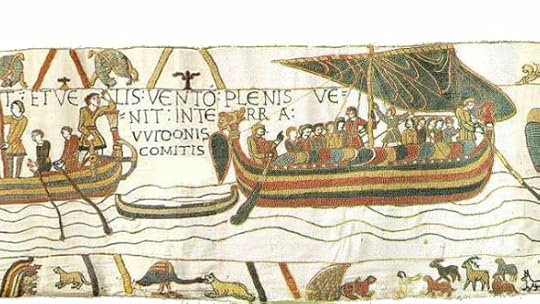
scene from the Bayeux Tapestry
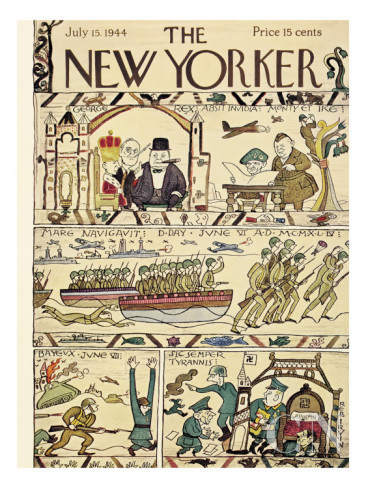
New Yorker’s July 15, 1944 parody of the Bayeux Tapestry
The single best thing to read about D-Day
is online and free. It is S. L. A. Marshall writing for The Atlantic in November, 1950.
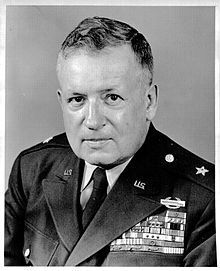
During World War II, Marshall became an official Army combat historian, and came to know many of the war’s best-known Allied commanders, including George S. Patton and Omar N. Bradley. He conducted hundreds of interviews of both enlisted men and officers regarding their combat experiences, and was an early proponent of oral history techniques. In particular, Marshall favored the group interview, where he would gather surviving members of a frontline unit together and debrief them on their combat experiences of a day or two before.
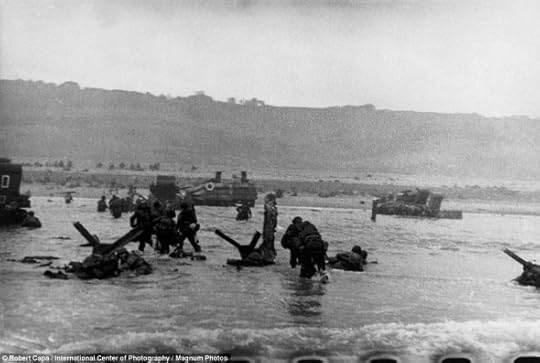
The article is called “First Wave On Omaha Beach” here is an excerpt:
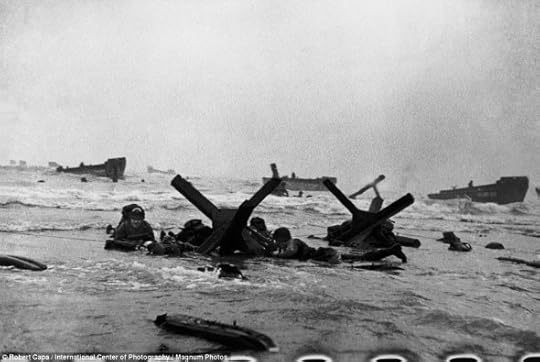
Even among some of the lightly wounded who jumped into shallow water the hits prove fatal. Knocked down by a bullet in the arm or weakened by fear and shock, they are unable to rise again and are drowned by the onrushing tide. Other wounded men drag themselves ashore and, on finding the sands, lie quiet from total exhaustion, only to be overtaken and killed by the water. A few move safely through the bullet swarm to the beach, then find that they cannot hold there. They return to the water to use it for body cover. Faces turned upward, so that their nostrils are out of water, they creep toward the land at the same rate as the tide. That is how most of the survivors make it. The less rugged or less clever seek the cover of enemy obstacles moored along the upper half of the beach and are knocked off by machine-gun fire.
Within seven minutes after the ramps drop, Able Company is inert and leaderless. At Boat No. 2, Lieutenant Tidrick takes a bullet through the throat as he jumps from the ramp into the water. He staggers onto the sand and flops down ten feet from Private First Class Leo J. Nash. Nash sees the blood spurting and hears the strangled words gasped by Tidrick: “Advance with the wire cutters!” It’s futile; Nash has no cutters. To give the order, Tidrick has raised himself up on his hands and made himself a target for an instant. Nash, burrowing into the sand, sees machine gun bullets rip Tidrick from crown to pelvis. From the cliff above, the German gunners are shooting into the survivors as from a roof top.
Captain Taylor N. Fellers and Lieutenant Benjamin R. Kearfoot never make it. They had loaded with a section of thirty men in Boat No. 6 (Landing Craft, Assault, No. 1015). But exactly what happened to this boat and its human cargo was never to be known. No one saw the craft go down. How each man aboard it met death remains unreported. Half of the drowned bodies were later found along the beach. It is supposed that the others were claimed by the sea.
After the war, Marshall would write Men Against Fire:
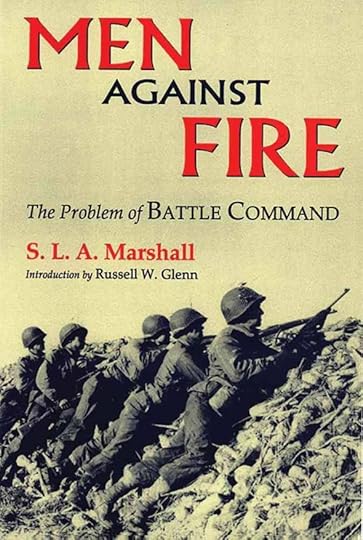
which claimed that only about 25% of American combat soldiers actually fired their guns at the enemy:
Marshall’s work on infantry combat effectiveness in World War II, titled Men Against Fire, is his best-known and most controversial work. In the book, Marshall claimed that of the World War II U.S. troops in actual combat, 75% never fired at the enemy for the purpose of killing, even though they were engaged in combat and under direct threat. Marshall argued that the Army should devote significant training resources to increasing the percentage of soldiers willing to engage the enemy with direct fire.
Marshall has been harshly criticized:
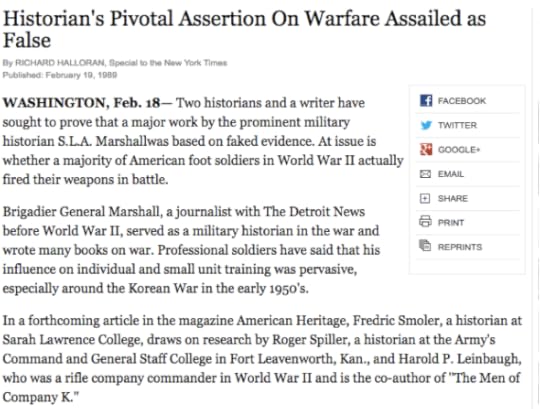
General Marshall said soldiers who did not fire were motivated by fear, a desire to minimize risk and a willingness, as in civilian life, to let a minority of other people carry the load.
In his 1989 memoir, About Face, Hackworth described his initial elation at an assignment with a man he idolized, and how that elation turned to disillusion after seeing Marshall’s character and methods first hand. Hackworth described Marshall as a “voyeur warrior,” for whom “the truth never got in the way of a good story” and went so far as to say, “Veterans of many of the actions he ‘documented’ in his books have complained bitterly over the years of his inaccuracy or blatant bias”.
Omaha Beach was the worst of it, but experiences on D-Day were vastly different.
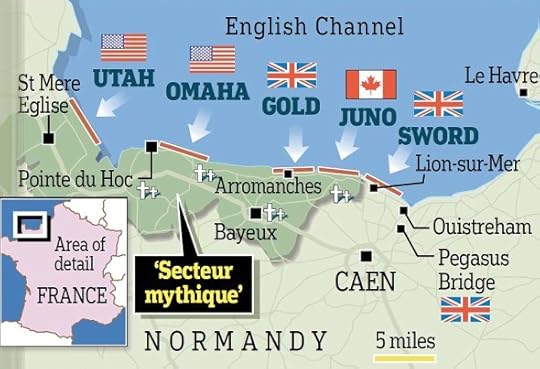
stolen from the Daily Mail: http://www.dailymail.co.uk/news/article-2336753/Back-beaches-final-time-D-Day-heroes-return-Normandy-mark-69th-anniversary-landings.html
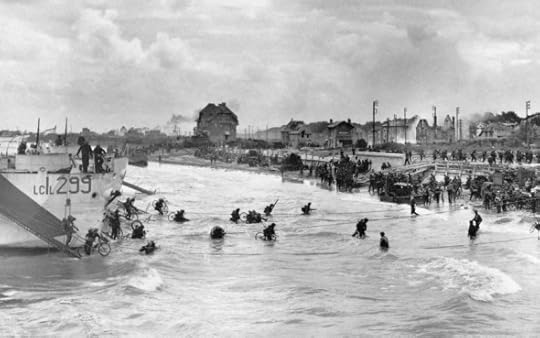
Twenty-one miles away on Juno Beach the Canadian Ninth Division landed with their bikes:
Picture: STF/AFP/Getty Images
Leave it to Canadians to bring their bikes. (900 Canadians died in a botched semi-practice D-Day in 1942).
Best Single Book To Read About D-Day
Looking around I can’t find my copy of Normandy Revisited by AJ Liebling:
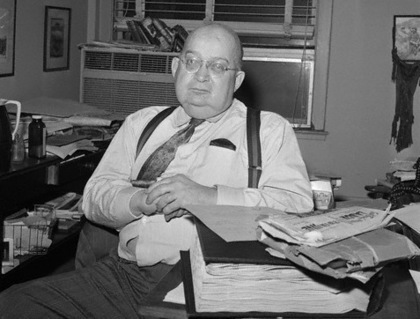
Image by © Bettmann/CORBIS found here
Liebling, a vivacious fatso who had spent a lot of time in Normandy pre-war, describes going through with the Army and eating at spots he remembered from before. Definitely a different kind of war corresponding.
This book
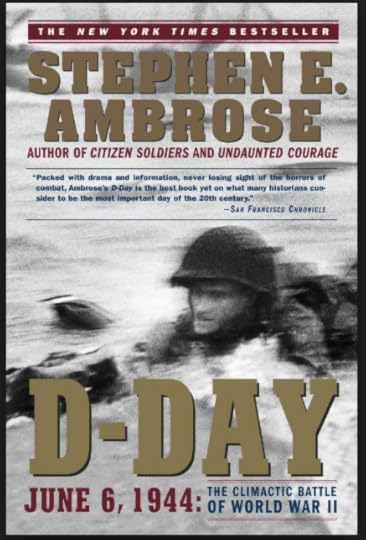
was wildly popular for a reason: it’s thrilling, readable, and full of epic American hero stories.
Maybe starting with Andrew J. Higgins of Nebraska and Mobile, Alabama:
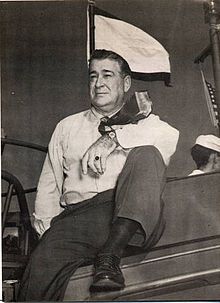
who developed shallow-draft boats for logging in the bayou (or for bootlegging?) and then took on the job of making similar boats for amphibious landings:
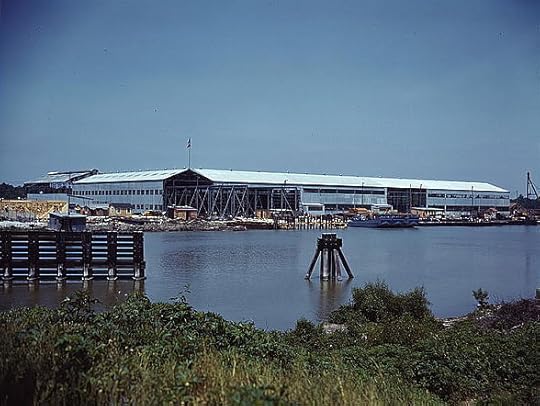
Higgins Industries
Anthony Beevor has a blunter take. Major takeaway from his book:
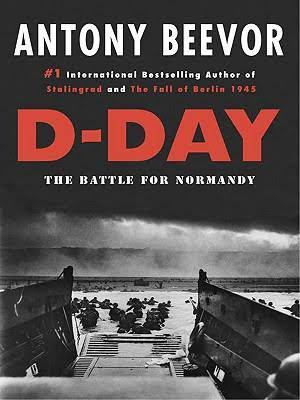
was that the Allies came up way short of their goals on D-Day. Unsurprisingly, many of those who got off the beaches in one piece considered their work done for the day. They were literally in Calvados,
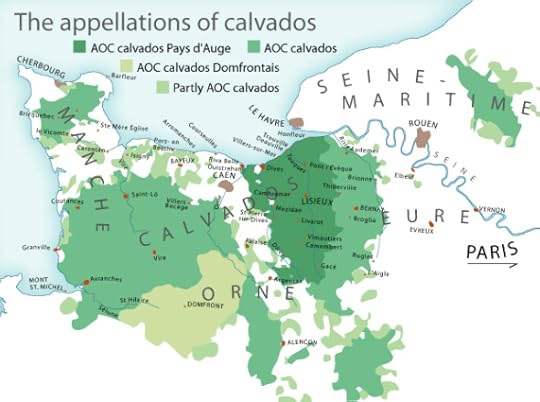 it was pretty easy to find bottles of highly alcoholic apple brandy, and a lot of survivors got hammered at first opportunity.
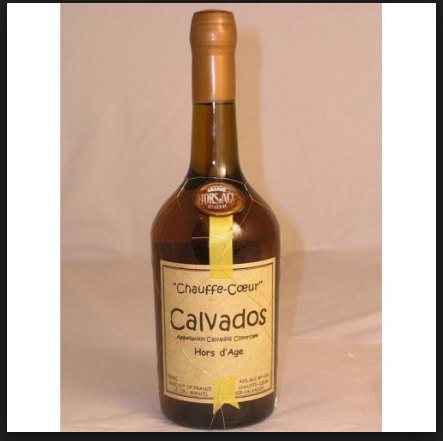
Who can blame them? But the failure to achieve the ambitious goals had costs. Caen was the biggest city around:

British and Canadian troops had intended to capture the town on D-Day. However they were held up north of the city until 9 July, when an intense bombing campaign during Operation Charnwood destroyed 70% of the city and killed 2,000 French civilians.
From this Washington Post review of Beevor, some excerpts:
US Army medical services had to deal with 30,000 cases of combat exhaustion in Normandy,” and:
“Nothing . . . seemed to reduce the flow of cases where men under artillery fire would go ‘wide-eyed and jittery’, or ‘start running around in circles and crying’, or ‘curl up into little balls’, or even wander out in a trance in an open field and start picking flowers as the shells exploded. Others cracked under the strain of patrols, suddenly crying, ‘We’re going to get killed! We’re going to get killed!’ Young officers had to try to deal with ‘men suddenly whimpering, cringing, refusing to get up or get out of a foxhole and go forward under fire’. While some soldiers resorted to self-inflicted wounds, a smaller, unknown number committed suicide.”
But the single best book to read about D-Day I would say is The Boys’ Crusade by Paul Fussell:
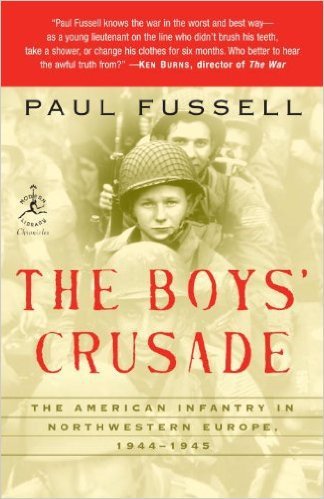
Amazon reviewer Bill Marsano sums it up nicely:
It’s probably all that “good war” and “greatest generation” stuff that drove Fussell to write this book; he doesn’t have much truck with gooey backward glances, and that will probably make some readers mad. Well, you don’t come to Fussell–author of, among other things, “Thank God for the Atom Bomb, and Other Essays”–for good times. You come to Fussell for the hard stuff.
And here it is his contention that behind and beneath all that “greatest generation” nonsense was the Boys’ Crusade–that last year of the war in Europe when too many things went wrong too often. The generals who’d convinced themselves that this war would not be a war of attrition–i.e., human slaughter–like the last one found they’d guessed wrong. Casualties were horrifyingly high and so huge numbers of children–kids 17-19 years–old were flung into combat. And they were, with the help of the generals, ill-trained, ill-clothed and ill-equipped.
They were also faceless ciphers. As Fussell points out, the US Army’s policy was to break up training units by sending individual replacements up to the line piecemeal–one at a time–so they often arrived as strangers among strangers, often addressed merely as “Soldier” because no one knew their names. The result was too many instances of cowardice–both under fire and behind the lines–too many self-inflicted wounds to escape combat. Too many disgraces of every kind because the Army’s system, Fussell says, destroyed the most important factor in the fighting morale of the “poor bloody infantry”–the shame and fear of turning chicken in front of your comrades. Many of these boys–and Fussell is properly insistent on the word boys–funked because they had no comradeship to value.
This is not in the least a personal journal. Fussell was serriously wounded as a young second lieutenant; he was also decorated. But he wisely leaves himself out of this narrative. There’s no special pleading here, no showing of the wounds on Crispin’s Day. Instead this is a passionate but straightforward report on what that last year was like for the poor bloody infantry–those foot soldiers, those dogfaces, those 14 percent of the troops who took more than 70 percent of the casualties.
And yet there were those who stood the gaff, who survived “carnage up to and including bodies literally torn to pieces, of intestines hung on trees like Christ,mas festoons,” and managed not to dishonor themselves. They weren’t heroes, Fussell says, just men who earned the Combat Infantryman’s Badge, which was the only honor they respected. In a brief but moving passage, he explains why: It said they’d been there, been through it, and toughed it out.
Horrible as it is I found this book refreshing when I first read it, because it felt like somebody was telling me the unvarnished truth, which is that even for the good guys this was a series of catastrophes, fuckups, and massacres.
All Fussell’s books are good. This one in particular I was obsessed with:
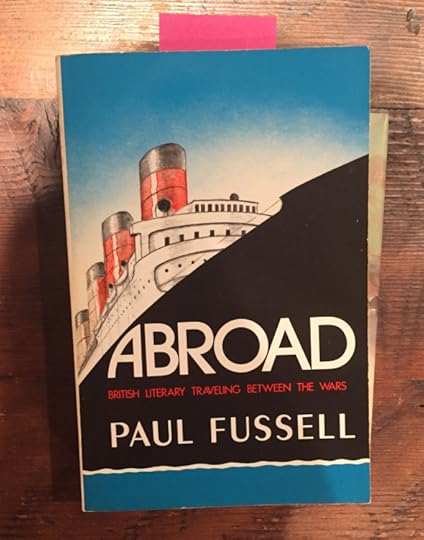
and I talk about it in The Wonder Trail: True Stories From Los Angeles To The End Of The World, out June 14:
Those photos are by Robert Capa, who lost all but 11 of the 106 or so photos he risked his life shooting when the guy developing them was in such a hurry he fudged up the negatives.
Let’s give the last word to Fussell:
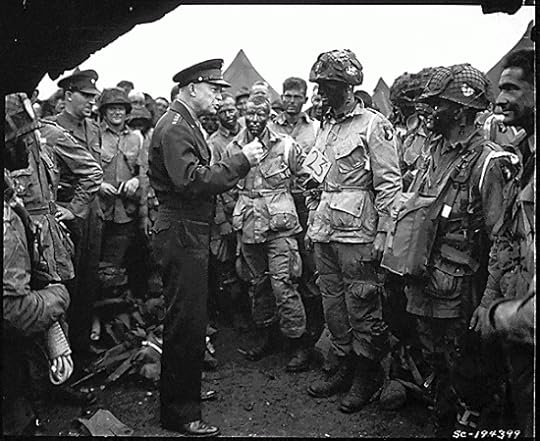
One wartime moment not at all vile occurred on June 5, 1944, when Dwight Eisenhower, entirely alone and for the moment disjunct from his publicity apparatus, changed the passive voice to active in the penciled statement he wrote out to have ready when the invasion was repulsed, his troops torn apart for nothing, his planes ripped and smashed to no end, his warships sunk, his reputation blasted: “Our landings in the Cherbourg-Havre area have failed to gain a satisfactory foothold and I have withdrawn the troops.” Originally he wrote, “the troops have been withdrawn,” as if by some distant, anonymous agency instead of by an identifiable man making all-but-impossible decisions. Having ventured this bold revision, and secure in his painful acceptance of full personal accountability, he was able to proceed unevasively with “My decision to attack at this time and place was based on the best information available.” Then, after the conventional “credit,” distributed equally to “the troops, the air, and the navy,” came Eisenhower’s noble acceptance of total personal responsibility: “If any blame or fault attaches to the attempt, it is mine alone.” As Mailer says, you use the word shit so that you can use the word noble,and you refuse to ignore the stupidity and barbarism and ignobility and poltroonery and filth of the real war so thatit is mine alone can flash out, a bright signal in a dark time.
Happy Birthday Dave!

June 3, 2016
Raise prices?
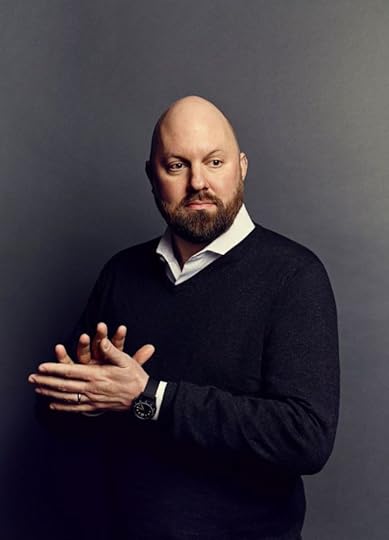
photo by Joe Pugliese for The New Yorker, click through for source.
Tim Ferriss: If you could have one billboard, anywhere with anything on it, what would you put on it? If you wanted to convey a short message to as many people as possible.
Marc Andreessen: I’ve got one, I’ve actually thought about hiring a skywriter to do this one. Right in the heart of San Francisco would be a billboard with just two words on it: Raise Prices.
TF: Raise prices?
MA: Yes. The number one thing – just the theme and we see it everywhere – the number one theme with our companies have when they get really struggling is they are not charging enough for their product. It has become absolutely conventional wisdom in Silicon Valley that the way to succeed is to price your product as low as possible under the theory that if it’s low-priced everybody can buy it and that’s how you get the volume. And we just see over and over and over again people failing with that because they get in the problem we call too hungry to eat. They don’t charge enough for their product to be able to afford the sales and marketing required to actually get anybody to buy it. And so they can’t afford to hire the sales rep to go sell the product. They can’t afford to buy the TV commercial, whatever it is. They cannot afford to go acquire the customers.
TF: Too hungry to eat.
MA: Too hungry to eat. And then they sit there and they don’t sell anything and then they get nervous and then they cut their prices.
TF: And then it’s a race to the bottom.
MA: It just makes the problem worse. And so, probably the single number one thing we try to get our companies to do is raise prices. By the way, it’s like, “Is your product any good if people won’t pay more for it?”
from here. ReformedBroker warms that up with:
Good advice is worth multiples of what a client pays for it. Mediocre advice is not worth a little less, it’s worth nothing because it won’t be adhered to.


