
Steve Hely's Blog, page 124
October 13, 2016
Popular Journalism Writing

I’ve had Hillary’s book staring back at me on my desk for weeks now. It’s pretty boring, here’s a passage more or less at random:

On the other hand, increasingly convinced that politics should be boring. The thesis of the book might be that life, especially international relations and politics, is full of hard choices with no good answer. She seems dedicated to taking on the grim, serious job of making those hard choices, and determined to make those in sober and rational ways. Recommend reading this NY Times article:

Some excerpts:
“Near existential” is how Tim Kaine recently described this campaign, and it did not come off as complete hyperbole.
Trying to wrap your head around Trump:
the blustering mogul had endured — or rather perpetuated — a series of self-immolations that included a fat-shaming Twitter assault on a Latina beauty queen (one of those things you never thought you’d write during a presidential campaign, and yet it barely registers a blink), a few pages of his 1995 tax return finding its way to The New York Times and the ensuing revelation that Trump had declared a $916 million loss, which could have enabled him to avoid paying 18 years’ worth of federal taxes.
How about this:
“It does feel much different,” she said. “If I were running against another Republican, we’d have our disagreements, don’t get me wrong, and I would be trying to make my case vigorously. But I wouldn’t go to bed at night with a knot in the pit of my stomach.” She enunciated her T’s (“knoT in the piT”) as if she were spitting out the words.
The mentality at her level:
Given that, I asked Clinton if Nov. 8 scared her. “No, not really,” she said slowly. I clarified that I was talking about the prospect of her losing. She knew what I was talking about. “I’m not going to lose,” she said. She shot me a knowing grin.
This is the standard politician’s answer when asked to contemplate defeat — even candidates who are down 30 points — but Clinton seemed to mean it. “I don’t go there,” Clinton said. Trump is such an unnerving figure, partly because in getting this far he has already defied so many predictions, largely on the strength of his ability to command the media fun house. This has been the enduring, defining characteristic of the race. His mania for being seen and heard and mentioned has proved exceptionally well suited, maybe codependent, to the current age.
Interesting point:
Bill Clinton’s campaigns for governor of Arkansas were relatively simple, small-scale and stable productions, conducted via traditional television, news radio and print outlets. But from the moment the Clintons went national in the early 1990s, their ambitions have met head-on with a series of transformative new media adversaries. His presidency was the first to suffer a sustained assault from conservative talk radio, particularly in its first term, when Rush Limbaugh was establishing himself as the most influential radio host of his generation. The Monica Lewinsky scandal and Clinton’s subsequent impeachment were driven heavily by revelations on a new website, the Drudge Report, and covered exhaustively by the emerging force that cable news was becoming.
How about this?:
[Hillary] described a meeting with a group that had developed online mental-health programs. One woman predicted to her that a big challenge in mental health over the coming years would be “how to undo the damage that the internet has caused young people.”
…Trump, of course, both shares and feeds his audience’s addiction to stimuli and entertainment.
I mean this is a shameless, but kind of cool move?:
He can be undeniably fun and, to a point, seductive. My first encounter with Trump, more than a year ago, came in an unsolicited note that said simply, “Mark, It’s Time for a Cover!”
Is this true or a cutesy fiction?:
“My husband and I laugh sometimes about the ‘Antiques Roadshow,’ ” Clinton told me, referring to the PBS show about antique appraisers that she watches devoutly. “Sometimes we feel like we are the antiques on a roadshow when it comes to politics.”
A view of the media:
There are many more women and minorities in the group (as in, there are more than almost none); there is considerably less drinking, and no one smokes; and while reporters 40 years ago paid their dues and scrapped like hell to cover a presidential campaign, many of today’s cast members are in their first journalism jobs. They are competitive but collegial. Their tech savviness is astounding (actually it made me scared). It’s easy to see why a control-freakish enterprise like the Clinton campaign might be terrified of an army of smartphone dynamos who are just dying to tweet out what color cough drops the candidate was popping (Halls, yellow).
This is great:
People inside the Clinton orbit mourn the familiar shirts and skins of going up against a more conventional Republican nominee. They dealt in familiar Republican themes and operated within certain boundaries. You hear a surprising amount of Romney nostalgia: Several Clinton aides I spoke to brought him up in almost wistful terms, as well as John McCain and George W. Bush. They are now fondly recalled as familiar predators in the political habitat, like the characters from that old cartoon “Ralph Wolf and Sam Sheepdog.”Ralph and Sam show up to work, punch the clock and greet each other amiably before starting their daily game — Ralph trying to corral sheep while Sam thwarts him. Each episode ends with the adversaries punching out their timecards and bidding farewell to each other until the next installment.
Popular journalism writing:
Whenever she is asked questions that touch on possible sexism and double standards, Clinton tends to assume a slow, sarcastic and vaguely disdainful voice. She declared the topic “interesting”; she would “leave it to others” to determine. On whether she is being treated differently as a female candidate, Clinton suggested that it would be a great topic, in the future, for “a lot of Ph.D. theses and popular journalism writing.” She then wrapped things up, disappeared behind her curtain and left us to our “popular journalism writing.”
A scene from the plane:
“O.K., so I was back here a few minutes ago, and everyone was laughing and throwing an orange around,” Merrill said, assessing the situation. “And now I come back again, and suddenly everyone is really tense.” Correct. In any case, Merrill clarified that the clementine had not actually reached Clinton, but rather he picked it up first and read the question aloud. To which Clinton remarked that she had once eaten dinner with Putin. Merrill then circled “Putin” and rolled back the clementine.
Everyone tweeted out Merrill’s clarification. The tension lifted; Merrill headed back to the front cabin and, as he passed my seat, said, “I can’t wait to read four paragraphs of this stupidity in your magazine story.”
I thought this was a rare slip:
After Bill Clinton was elected, his wife vowed that every letter sent to the White House, especially from a child, would receive a response. I have no idea how well they actually executed on this, but Clinton was making a bigger point here, about the importance of connection and the sharing of stories in a political world overrun by snapshots, caricatures, fragmentation and reality distortion.
Well I mean aren’t you a reporter? Find out!
Earlier [Hillary] had mentioned the 1985 book “Amusing Ourselves to Death,” by Neal Postman, about how television has oriented politics more and more toward entertainment.
Interesting! I no longer have my copy, but I remember Postman predicted exactly The Daily Show: a parody news show would arise that would show how ridiculous TV news was, but that the stars of the parody show would inevitably become famous themselves and continue the cycle of amusement without confrontation? something like that.

The secret key to Hillary?:
In college in the late 1960s, she resisted revolutionary change in favor of grinding out incremental progress inside the system. She has no patience for messianic rhetoric and hyperbolic slogans and grandiose speeches.
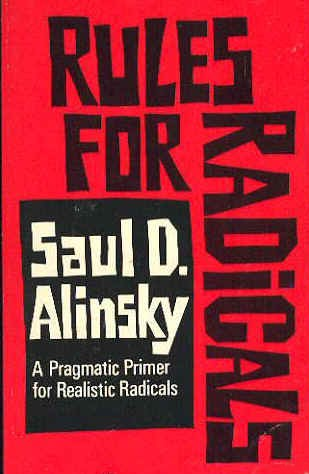
Is that really what conservative conspiracy theory subject Saul Alinsky taught Hillary and Barry O?:


October 11, 2016
Not great optics

as they say. Not into this vibe AT ALL.

Solid takedown

I don’t usually read Christianity Today magazine but was alerted to this by one John Delury who apparently I follow on Twitter.
And therefore it is completely consistent that Trump is an idolater in many other ways. He has given no evidence of humility or dependence on others, let alone on God his Maker and Judge. He wantonly celebrates strongmen and takes every opportunity to humiliate and demean the vulnerable. He shows no curiosity or capacity to learn. He is, in short, the very embodiment of what the Bible calls a fool.

October 10, 2016
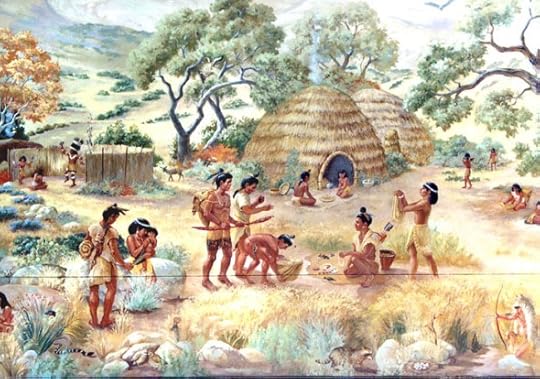

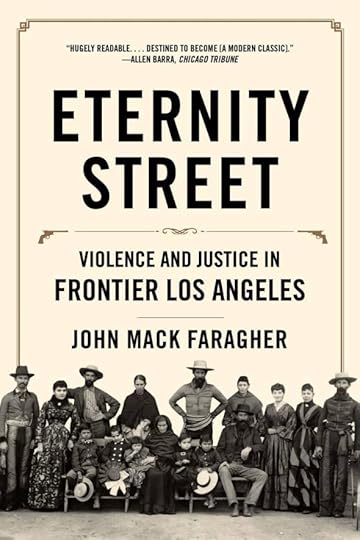

What do these buildings have in common?
One Beacon Street, Boston

425 Market Street, San Francisco:

11 Times Square, New York:

Along with a lot of other buildings in Boston, New York, San Francisco, Paris, London and elsewhere, they’re all 47% or so owned by the Norwegian people, in the form of their nation’s sovereign wealth fund.
They own a lot of other stuff, too. $21 mill worth of Buffalo Wild Wings, for instance.

And 1.5% of Whole Foods:

In a tiny way, every Norwegian helps Marc Maron, because they own about a million bucks worth of Stamps.com.


October 9, 2016
A Description Of Distant Roads
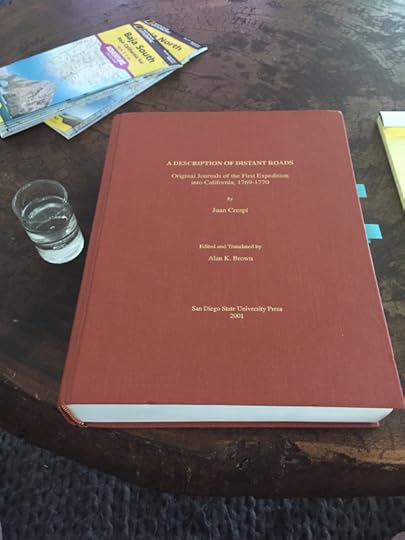
Another incredible title for a travel book. This one from the missionary Juan Crespí, who in 1769 took a walk from Baja California to San Francisco and back.
Really appreciate the translation with careful annotations by Alan K. Brown. Here’s Crespí on the origin of the name Carpinteria.
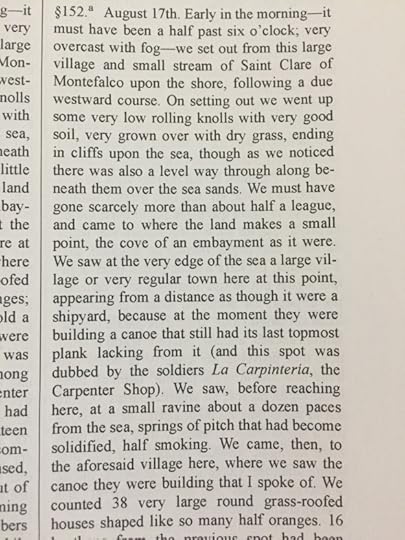

Carpinteria
I wonder if he stopped to get a burger at The Spot.

My favorite part of the book so far though is this poem.

I found it a soothing pastime late one evening to make a map of Crepsí’s trip.

He must’ve seen some interesting stuff.

Much boring stuff as well:

That photo from the collection of Harry Crosby, who photo’g’d much of Crespí’s trail in Baja California.
Not to be confused with the other Harry Crosby:
But he yearned to escape the rigidity of everyday life in Boston. His experience in France made it unbearable to live among what he called “dreary, drearier, dreariest Boston” and to put up with “Boston virgins who are brought up among sexless surroundings, who wear canvas drawers and flat-heeled shoes.” He wanted to escape “the horrors of Boston and particularly of Boston virgins.” Any sense of propriety was wiped out by a lust for living in the moment, forgetting all risks and possible consequences.
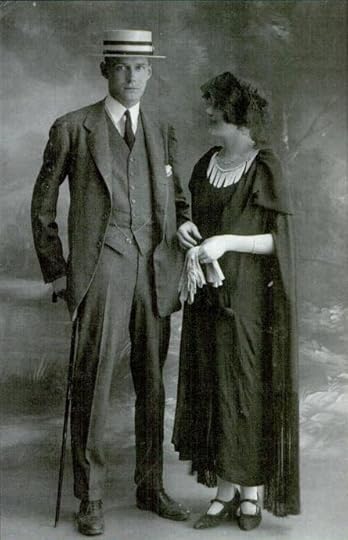
The Fire PrincessOn July 9, 1928, Crosby met 20-year-old Josephine Noyes Rotch, the daughter of Arthur and Helen Ludington Rotch in Boston. Ten years his junior, they met while she was shopping inVenice at the Lido for her wedding trousseau… “She was dark and intense… since the season of her coming out in 1926-7, she had been known around Boston as fast, a ‘bad egg’…with a good deal of sex appeal.”
They met for sex as often as her eight days in Venice would allow.

October 7, 2016
Meme Critics

Some critics have asserted that to be a proper meme my font should have the stroke outline, and to them I respond with the above meme.
But also


October 6, 2016
Taking the high road

The warps and folds of reality and meaning in this election are incredible.
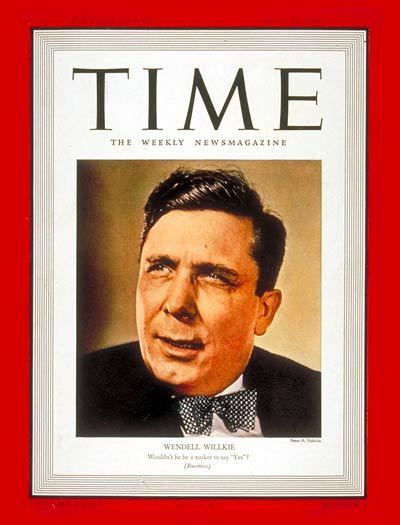
When was the last time two New Yorkers ran against each other for president? Was it 1940?

Thanks a lot bitch
that some of you have not seen the thirteen second video entitled Thanks A Lot Bitch. The context is some reporters trying to interview Mark Cuban before the first presidential debate.

October 5, 2016
Latest from my meme workshop

this one you could use for example when declining an invitation to go out. Photo from Comisión de Tránsito del Ecuador’s Facebook page.


