Ray DelVecchio's Blog, page 9
December 12, 2019
Changing the Channel: 12 Easy Ways to Make Millions for Your Business
Author
Michael Masterson & MaryEllen Tribby
Quick Summary
Changing the Channel: 12 Easy Ways to Make Millions for Your Business dives into a wide variety of marketing channels or mediums, which they encourage businesses should use to grow.
Among these many potential avenues, individual chapters are devoted to:
Direct Response-Online MarketingSocial MediaSearch Engine MarketingTeleconferencesDirect MailDirect PrintDirect Response TelevisionDirect Response RadioTelemarketing Joint VentureEvent MarketingPublic Relations
You’ll learn how each channel can be utilized and integrated as parts within a comprehensive marketing effort, exploring the benefits of research & test-oriented strategies that allow your business to grow while curating products and campaigns to your customer base.
The #1 Takeaway
Collecting information is paramount, whether it’s your customers’ desires or needs, contact information, advertising data, etc. There’s a ton of information you can gather even when a campaign or event doesn’t work out, which will help you in the future. Take your successes and apply them in new ways and learn from your mistakes. Similarly, just because one’s first attempt at utilizing a specific channel fails, that doesn’t mean you should abandon the channel altogether. Likely, you haven’t tested enough or exercised enough creativity!
How to Apply to Your Daily Routine
While I had previous knowledge about some channels and how they’re applied, others were out of my comfort zone. However, now that I have a better understanding of how performance is measured, I’m more likely to explore these new marketing mediums within my business.
The multi-channel approach also seems to be a great way of maintaining consistent contact with your current and potential customers, creating awareness and familiarity. That builds more trust when people see you in a variety of places, ultimately leading to increased success across all campaigns.
Favorite Quotes
Your best customers are those who are motivated, financially capable of buying from you, and prepared to buy. If you don’t locate and convert those customers through a multi-channel, direct-response advertising campaign, then you are leaving dollars—perhaps millions of dollars—on the table.
As we look forward into the twenty-first century, 100 years after the birth of direct marketing, we can see another huge trend that has taken shape and is moving fast. That trend is multi-channel marketing—an integrated form of advertising that takes advantage of everything we learned about direct marketing in the twentieth century, plus some astonishing new things we have been learning since the rise of Internet marketing in the 1990s.
Measure, track, and analyze. None of the above steps will do much good if you’re not keeping metrics on your progress. If you are not tracking and analyzing, you are simply wasting time and money.
The post Changing the Channel: 12 Easy Ways to Make Millions for Your Business appeared first on Website Profit Course.


November 16, 2019
How Much Should I Charge For a Website?
2 Types of Freelance Clients
Estimating Your Time & Value
Designer or Entrepreneur?
WordPress vs. Squarespace
Your Expenses
How to Accept Payments
FREE Client Questionnaire!
This story is typical – you learn web design by building your website. A friend, family member, or co-worker becomes intrigued by your new skill.
Eventually, they ask you to make a website for them. Your first thought is – how much do I charge for a website?
If they don’t expect you to work for free (which is also common), their first thought is similar – what does a website cost me?
Once you have the confidence to deliver a website, it’s natural to go one step further and wonder how much money can I make by selling websites to local businesses? Is web design freelancing an option to generate a side-income?
The answer is YES – but what you charge for a website depends on many factors!
You can launch a website for free on a generic platform, or find an agency to create a major brand redesign for $10,000 – and everything in between.
FREE Download: Web Design Client Questionnaire
Your information will not be shared or sold, period.
Right off the bat, here are two recommendations for freelance pricing:
DO NOT Charge Per Hour
DO NOT List Your Prices
Let’s dig into the details, and I’ll explain why.
Web Design Pricing Structures
Just like you, a potential web design client is going to wonder immediately what they must pay to get the website they envision. It’s going to be the first question they ask 95% of the time – before giving you any details on what they want. These are the main ways to charge for your services.
Hourly Cost
Average Price: $50 – $100/hour
You absolutely want to consider what you make hourly after all is said and done with a website project, but do everything you can to avoid pricing per hour.
The reason for that is simple. Pretty much every other pricing structure provides a known cost for your client where they understand what they are going to pay in advance. It gives them a reference point that they can wrap their head around.
With an hourly rate, you may do the work upfront and then send an invoice, but if it wasn’t clear how long it would take, they might have “sticker shock.”
And obviously over time, you’re going to get better at whatever you’re doing, so you shouldn’t get compensated less when you become more efficient per hour!
By Project
Average Price: Custom Quote
The project could be a one-page brochure website, you might need to set up a signup form and write an email sequence, you may need to implement advanced tracking, it could be an e-commerce website selling physical products.
Bottom line, it’s best to have a conversation with your potential client to work out these specifics before giving them a price range. That way, you understand what work you have to perform before launching the website and estimate your time/cost accordingly.
Set Packages
Average Price: $500 – $5,000 (one-time)
Creating packages is a great option when you work with one business industry. The projects become similar enough that you can take out the core essentials that work for any business in your chosen niche. The benefits of this pricing style include:
You standardize your work making it easier to outsource
You make it easy to understand for your potential client
EXAMPLE: Create a business website package for $2,000 – $3,000 that includes up to 10 pages, paired with domain registration, hosting, Facebook page and cover photo, logo design, business cards, etc. This is a really unique package that will set them up online.
Plus if they don’t want to manage the website or social media accounts, guess who can do that for a monthly charge (see section below)?
The great thing about the web is even though there’s a million services that do all these things, you’re the one that’s going to hand-select the tools that best fit your clients and manage them. As you get experience, you’ll learn which methods are working best and you can double-down on those to see better results.
Monthly Retainer
Average Price: $50 – $500/month
In my opinion, this is the best method that may take a little experience until you feel comfortable finding clients willing to pay you monthly, often for years.
High-end clients realize the potential of a website and have a desire to keep it updated with fresh content regularly. In these cases, you can build a great relationship with local business owners and amplify their vision with your expertise.
It doesn’t necessarily take world-class work on your end. In my experience, paying attention to the simple details and staying active over a long period are the most significant influences to drive more traffic to a small business website.
Your ability to charge monthly increases when you diversify your skills.
Websites are the entry point to learning so many useful adjacent skills like search engine optimization (SEO), code, graphic design, copywriting, marketing, advertising, and more. Once you have a bit of knowledge in a few of these areas, the value you bring becomes a no-brainer to the right types of clients.
2 Types of Freelance Clients
Most people will fall in between good or bad, though it’s useful to consider the two extremes as your reference point.
The Worst Clients

The less you charge, the more your client will attempt to take advantage of you. Psychologically it is weird because the more you pay for something, the more you value it and the less you complain.
So if you have a low price, people are going to see how much they can squeeze out of you. Whereas if you price yourself at a premium level, you’ll have more leeway to over-deliver and provide the “wow” factor to please your client.
Low prices = Cheap customers
This can be a hard concept to let sink in, and even harder to implement. You may need to tap into your network for the first jobs to build your portfolio before you feel comfortable asking for a higher rate or price.
But one way or another, you need to get to that premium level because if you’re the lowest-cost, you are a commodity and therefore replaceable.
The perfect examples of this are big service companies offering the lowest level website creation packages like Squarespace, Wix, Weebly, Vistaprint, and GoDaddy. They usually start at $10 – $20/month, but you still need to learn their system and add content to the website.
The Best Clients

You want business owners who don’t want to deal with managing it themselves.
There’s plenty of them in the real world, and they are the people you want to become an asset for and develop an on-going relationship. That is what builds trust along the way, and they are the ones that will value what you do because they see the benefit of having a website as a lead generation method in their marketing toolbox.
It’s usually not black and white when it comes to figuring out whether a person is going to be a good client or a bad one, however, these are the top 3 signs that I’ve noticed within my top web design clients:
They care about all aspects of their brand image
They are obsessed with improving their business
They take an interest in how the online world works
Perhaps these seem apparent, however, I’ve talked with my fair share of business owners who have an end-goal of doing nothing and reaping all of the rewards.
Handling a client’s expectations is a large part of working for yourself.
The best clients are no doubt more clear-headed and realistic with the results you can bring to their business. They understand that the best outcome depends on work from both of you.
Ironically, the cheap clients pay less and still believe they deserve an “easy button” solution with no effort on their end. Even if you explain this on multiple occasions, they’ll always blame you when things don’t improve.
The earlier you can spot a bad client and keep them from hoarding your time, the better.
If you enjoy working with a client, hold onto them.

Estimating Your Time & Value
Now in terms of gathering the right information to provide an accurate quote, you want to create a web design client questionnaire.
This is what you will send to customers or even just give them a call and go through each question over the phone. Be sure to write down their answers and feel free to ask spontaneous questions if they pop into your mind.
When you have an idea what the project entails and you present your proposal with the price, make sure you give them a bullet list with everything that’s going to come with the website. If you don’t, a lot of times people are going to push you to do more, or say, “Oh, I thought that was included with the price”.
Be VERY clear about what needs to be accomplished so you both fully understand the project.
That includes a list of things they may need to provide you.
EXAMPLE: The website will be 10-pages, one layout for the homepage with an image slider, another layout for all the inner pages, 1 company e-mail address (something@theirdomain.com), 1 contact form which forwards to their e-mail, and they must provide all the photos and wording for the website. Simple, yet provides a solid structure for what you need to accomplish and what isn’t within the scope of the contract or “handshake” agreement.
Pricing is really determined by two things:
The Value to the Client
Your Own Value on Your Time
Notice how neither of these relate to the actual details of the website.
Let’s start with your time…
I want you to think about how long it’s going to take you to complete the project. List out the high-level steps that you need to accomplish, i.e. register domain, setup website hosting, install WordPress, find a professional theme, customize with their logo and colors, etc.
Once you come up with the estimated hours it will take, double it.
Or at least tack on a few extra hours, because more often than not, in the beginning, you will underestimate the effort and communication required. I find this to be true with myself, even to this day.
Once you become comfortable with the process, you tend to have the approach that you can do anything quickly. And you might be able to do a lot, but there are always technical challenges that arise mid-project or a new idea from the client that you need to implement. So be careful of being overly ambitious and underpricing yourself.
So now that you have an idea of how long it’s going to take, how much do you want to make per hour? What is going to pay for your expenses and your lifestyle?
This isn’t about being a baller and charging $150/hour from Day 1.
It’s about knowing you have a valuable skill to offer, and in order to use that skill for someone else’s business, they need to compensate you to live comfortably.
That may be $25/hour now, but it can change at any time or for every new potential client – it’s completely up to you. That’s also why I recommended keeping your prices guarded and also pricing for each project that involves some type of customization or effort on your part.
Multiply your rate by the estimated hours: $100/hr x 10 hrs = $1,000
Obviously, over time as you get better at what you do, you will increase your hourly rate and also find ways to become more efficient throughout the creation process. This may involve creating a systematic process that you go through for each project, or it could simply be outsourcing the repetitive tasks.
RELATED: What I Learned Making $100/Hour on My First Project
Now that we discussed your own time value, what is the value to the client?
As a real world example, a website for a newly created yoga studio will not be as valuable as one for an established divorce lawyer. The lawyer may get clients paying them $10,000 – $20,000 each, so getting leads to them through their website is extremely valuable.
You want to focus on the businesses that already have money coming in offline, and would greatly benefit from adding a website to their marketing arsenal. Those are the businesses that have the willingness to pay you and that get more value out of your services.
The nice thing is those small business owners are often much less of a hassle.
They don’t have elaborate technical ideas that will be over your head, they don’t need to have a meeting to make a decision, they don’t micromanage what you do. They will simply let you do your thing and even fund your ability to learn and test online marketing strategies!
Are You a Designer or an Entrepreneur?

I’ve found that web designers will fall into one of three categories:
The Business Savvy Entrepreneurs
Entrepreneur-types don’t care about getting in the trenches with design. They want to make money. They’re the ones using professional WordPress templates, adding text/photos, but not doing any customizing. Honestly, with some of the pro themes available, you don’t have to because they are beautiful. They sell websites to businesses that need them. And for a nice profit.
The Uber Creatives
On the other end of the spectrum, you have more creative folks that come up with an idea and design it from scratch. They then create an HTML website or WordPress theme from their design. Entirely custom = expensive and time intensive.
Stuck in the Middle
I believe I’m somewhere in the middle, and I recommend you find your spot there too. You want to start with a clean looking WordPress theme for the vast majority of small business web sites. But more than design, I’m looking for layout. If I find an OK design with the layout I want, I can then spend a couple of hours making relatively easy customizations to make sure the website looks unique. I don’t like a website that mirrors the WordPress theme demo.
As someone with no design background and perfectionist tendencies, I have to catch myself spending an absurd amount of time on extremely minor details like picking between shades of blue. I’ve been working hard to just pick something and go with it… fast is better than perfect!
If there is one takeaway, it’s that you want to focus on efficiency. I recommend tracking your time on the first projects so you have a concrete idea of how long it takes, and work to improve from there. That is how you make more money with less effort.
WordPress vs. Squarespace
Nowadays, the 3 most popular website builder platforms (outside of WordPress) include Squarespace, Wix, Weebly. And almost all hosting companies offer a version of their own starting with drag-and-drop design templates.
For quickly launching a website, there is nothing wrong with using these easy-to-use services.
However, if you are professionally building websites for other people or even an individual power user, WordPress is a preferred platform for many reasons.
Portability
With all website builders, you become locked into them as your hosting company and cannot transfer your design to another service.
However, WordPress is open-source, and your website is under your total control where you can change the domain or hosting providers anytime you want.
RELATED: How to Move Your WordPress Website to a New Host
Flexibility
If you are coming into WordPress from web development or even graphic design, you probably have perfectionist tendencies. You are likely going to be limited to what you can customize by using web builder templates.
On the other hand, with WordPress, you can “hack” into the PHP/HTML/CSS code and solve any problem you can think of with enough knowledge and elbow grease.
RELATED: How to Customize Any WordPress Theme with Code
Extensibility
One of the best parts of WordPress is its plugin directory. Software developers around the world let you use their customizations, and take an already excellent product to the next level.
WordPress plugins add functions to your website, whether it’s for performance, marketing, social, or otherwise.
It’s one area that website builders fall completely short.
RELATED: 15 Best WordPress Plugins
Documentation
Perhaps most important to me is the ability to figure things out on your own. Because WordPress has been around for years with millions of users, there are forums across the internet answering questions that you’ll likely have as you create your first websites on WordPress.
Your Expenses
When compared to most other business types, freelancing with web design is a fairly inexpensive way to start a business while working from home.
The main expenses that you’ll spend money on are:
Domain Registration
Average Cost: $10 – $20/year per domain
I’ve always used GoDaddy for domain registration only, although you can go with any service provided they are easy-to-use with great support.
Web Hosting
Average Cost: $300 – $500/year (unlimited)

This part of your freelancing business is flexible because you can invest in hosting that allows you to create unlimited websites or get individual plans each time you add a new web design client.
I currently use HostGator for many of my local small business website clients.
RELATED: Beginners Guide to Web Hosting & DNS
Web Design Tools & Training
Average Cost: $200 – $300/year

This might include premium WordPress themes/plugins, templates, tutorials or other useful tools that help you launch a website faster.
One of the best WordPress themes for beginners is Divi by Elegant Themes. They give you a drag-and-drop solution to build your own page layouts and customize every section.
RELATED: How to Build a WordPress Website with Divi
Other Services
Average Cost: $500 – $1,000/year
My current favorites include: Adobe Creative Cloud, Dropbox, Google Drive, LastPass, Evernote, and Grammarly.
This is where you can pick and chose the right ones that help you perfect your business processes. Most of these fall around the $99/year mark and you can stack them together one-by-one as you earn more money as a freelancer.
How to Accept Payments as a Freelancer

Lastly (but some would say most importantly), how do you get your money?!
For a project-based fee, you should charge at least 50% upfront before doing any web design work, and the remaining 50% is due on or before launch day.
Other than exchanging information and ideas, I won’t invest hours of time without money deposited into my account. There are too many flaky people to do a ton of work without knowing the cash is coming. Not to say you should never do this – there are ALWAYS exceptions to any rule – but it’s more important when dealing with an individual that you don’t know or fully trust vs. an established company.
As a personal warning, I’ve had multiple business owners that have paid me the initial 50%, I finished about 80-90% of the project work, and they wouldn’t get in touch with me to put the final touches on the website. It was always, “Let’s review it soon” or “I’ll have those pictures over to you next week”.
It became a long game of back and forth where nothing was accomplished.
But I wasn’t empty-handed, I still made an OK hourly rate despite never launching those websites.
The other related lesson here is that money is more powerful than a contract.
People often fret when it comes to doing a website without a contract or they spend weeks overthinking what should be in a contract instead of meeting business owners who need a website.
Let me say this with the caveat that a contract of some sort (it can simply be an e-mail) is GREAT when it comes to turning a client down for work that wasn’t included with the original price. You can point to it and say, hey I told you XYZ would be in there and doing this is more work than we agreed to.
But think about a situation where someone stiffs you, like my situation above. Are you really going to get a lawyer involved because they didn’t follow the contract (which stipulates the project must be completed/paid in 90 days)?
Unless we are talking in the multiple thousands or higher, the answer is no.
So it’s best to meet these people in person if possible to build a level of trust. Or if that’s not possible, make sure they give you those Benjamins before you get your butt to work!
My first two customers went from one-time project work to a paid monthly retainer where I work on essentially whatever I see fit. That’s a much better situation than trying to be a master of litigation, let me tell you.
When you get a handful of raving clients, people will start coming to you because they will refer you.
Ultimately, the best part of working for yourself as a web designer is the learning experience you have. You work directly with business owners and you should be asking a lot of questions about their business. Not only will this give you more insight into how you can improve their website for their customers, but you’ll also be able to take their strategies and stories and use them for your own business.
Plus people like to talk about themselves, so they’ll like you even more when you are interested in them 
November 15, 2019
Web Design Questionnaire: 23 Things to Ask Client to Build Their Website
A web design questionnaire helps you earn more money as a freelancer by increasing your efficiency in two ways:
You standardize your procedures for each new client websiteYou better estimate any custom work that is necessary
If you are looking for less guesswork and more productivity with website design, ask your potential clients these questions during your initial consultation.
FREE Download: Web Design Questionnaire
Your information will not be shared or sold, period.
By asking your clients about their company, their past marketing decisions, their vision, and what they want to accomplish, you will be in a much better position to charge for their website accordingly.
Many small business owners have bad experiences with web designers and digital marketing “experts” who provide the most basic canned service that doesn’t move the needle. They’ll have next to zero interaction with the web designer after it’s launched.
That presents both an opportunity to outperform competitors and a challenge to build trust with them before they choose you to build their website.
When you start going deep about their business, they’ll know you care. Here are my favorite questions to get a ballpark of the job scope:
Company Information
In part one of the web design questionnaire, we’ll get to know our potential client.
List all of the following: Company Name, Address, Phone and Website (if available)
This is the bare bones necessities of what you must include on a local business website, but it’s more important than you may think. One of the main factors of getting traffic on Google is the consistency of your business details online.
The acronym is known as NAP in the local SEO world, which stands for name, address, and phone number.
Several of my clients have been bad in this regard, whether it’s using multiple addresses, changing phone numbers, or completely hiding their street address.
What year was the company founded?
This is an obvious signal of trust for people who don’t know anything about the company as they research competitors. It’s also a key detail that can be included on social media profiles.
Do you have a company logo or preferred colors?
Not that many small business owners have a standard logo. Or if they do, it doesn’t exist on their computers in an easy format that you can take. On multiple occasions, a client has sent me a photo of a t-shirt with their logo and expect me to work with it.
That means recreating graphics, guessing fonts and plenty of headaches.
It’s always a good sign if a potential client comes prepared with these details expecting to use it for the website.
List all primary contacts: Name, E-mail, and Phone
These are the people that you’ll be in contact with to update the website. It’s usually the business owner, a secretary, assistant or their significant other.
List all of your services/products that you want to be included on the website
This is an important detail because it’s going to determine how many pages you’ll need to create on the backend of WordPress or your chosen web design software. Also, consider that each new page will require written content and unique photos.
These two things are often the hardest pieces of information to get from a client to launch their website!
List all nearby cities, towns or counties within your service area
As a local business, it’s best to start small by dominating your city, then work outward as you begin to rank on Google.
One good strategy is to create case studies for their website including references to where they’ve worked (i.e. these target service areas) to help show Google you are active in those locations.
What differentiates you from your competition?
Whatever it is, you need to figure out what makes you stand out. The truth is that what’s separating you from your next customer is a lack of trust.
Utilize the website to be transparent and share as much information to educate potential customers so they choose you instead of your competition!
What types of advertising do you use now, or have you used in the past?
One major observation while building websites for local clients is that almost all offline advertising sources aren’t tracked well enough to actually know if they are working.
It’s almost alarming how much people spend when they have no idea of the return on their investment.
Online advertising is the polar opposite where you get all the data and can track “conversions” whether it’s booking an appointment or sending an email.
Website Content
In part two of the web design questionnaire, we’ll focus on things that will help you put together the nuts-and-bolts of their website.
Do you have a domain and/or website hosting?
It is common for business owners to leave this to the website provider, and the domain name could be under their control. In this case, it’s hard to recover or transfer the domain name and you may need to start from scratch.
My preference is to put everything under my accounts so I can manage it for them. However, if the client already has taken care of either domain or web hosting, I will gladly manage it for them – to do this you can use their account information or create a secondary account for yourself if the service allows it.
What is the main goal of the website? (i.e. phone calls, e-mail leads, sell products)
On the back-end, do your best to track these goals via Google Analytics. Tracking phone calls is a little bit harder unless you acquire a tracking phone number that is dynamically replacing the main local phone number.
What I like to do is track phone number clicks on the website which is a good indicator of the total number of phone calls.
Within the analytics data, you can identify the traffic source that is converting to leads most often.
List all pages you want on your website
This goes back to the services/products your client offers, however they may have a couple of ideas in mind for something unique they’d like to see on the website.
Once you know what great websites look like in a certain local small business niche, you can then provide them suggestions and advice to stand out amongst the competition.
Do you want a contact form on your website?
I have two clients that both offer a local service, however, one accepts leads through a quick contact form on the sidebar of the website, while the other will only talk details through the phone. Because of this, he does not care for communicating via email and wants all questions to come on a sales call.
My favorite WordPress plugin solution to implement this is Contact Form 7.
Do you want to list any organizations you are part of?
Adding badges and logos of respected organizations is another method to build trust that you are a professional in your field.
From an SEO standpoint, you also want to pursue getting listed within these organization directories with a reference to your business and a link to your website.
The more links you get from other niche and/or local websites, the better chance you’ll get free traffic from Google search which is highly valuable to any business.
Do you have social media accounts that you want to link?
If the business is active on social media, the website is a natural “hub” to link out to all the places potential customers can find their content.
You can also browse their social feeds to get a better idea of their business, and transfer that into the website design and copywriting.
If you have website stats, how many visitors do you get each month?
There is a high probability the answer to the question is “I don’t know.” It’s rare to find people outside of the online marketing world who review this information regularly, if at all.
Several of my clients are amazed by the amount of information that is available, however very few go beyond the surface level to understand how their websites work.
That’s why I actively stay up to date and send video reports to my best clients quarterly. In those, I’ll break down their analytics data into simple terms and suggestions for how they can help themselves get better results, i.e. encouraging online reviews.
If you have website stats, what is your main source of traffic?
This depends largely on the type of business because some thrive exclusively from a social media profile and word of mouth, while others need a professional website and rely on Google search.
Once you track the analytics data for about 3 months, you should see trends begin to emerge as to which traffic sources are converting to leads.
Do you have text, photos and/or testimonials ready for the website?
Here it is – what I consider to be the biggest hassle to launch a client website!
I think clients always have a vision for what they want, but when they need put in a little effort to get pictures of the team, their office, and their work, there is radio silence that turns into unexpected delays.
To counteract this, I usually offer to write very short bullet points for each page, along with using stock photos to launch, with the agreement that it is best to replace them with real photos and longer wording to get better results.
People who browse are perceptive and they know when you’re putting up a facade. Being detailed and transparent always wins online.
Do you have videos to feature on your website?
There has never been a better time than today to add headshot videos to your website to introduce yourself and pitch your business.
Over time you can gather short testimonials from real customers to boost your trust factor and keep the website active which Google loves.
All you need is the phone in your pocket.
How often do you plan to update the website content after launch?
You must educate your potential client on how simply having a website isn’t enough. If it is launched and then collects dust for years, it will drop off the map (literally on Google).
Active businesses stay busy, put out new content, consistently get reviews, and make a mark in their local neighborhood.
People who come into a project with this mindset are often better clients than those who must hear this message over-and-over to sink in.
Do you have other marketing materials (i.e. brochures) to use as inspiration for the website design?
This is always a good starting point for the color scheme, text, and logos. With local businesses, think business cards, brochures, lawn signs, t-shirts, small publications, etc.
Do you have 2-3 websites that you would like to emulate?
Local businesses usually have a competitor website in mind they want to replicate.
Also, each person has a unique design style. What is beautiful to one person is ugly to another.
The website design needs to be something they’ll look at and love, plus built the right way to bring them leads.
What is your target date for launching the website?
Be realistic with this date, both in terms of your design capability, current schedule, and the back-and-forth communication that will be required for both of you to be aligned on the project.
There comes a point in most projects where things start to drag along, and it’s good to reference the intended launch date to get both parties working towards the same goal.
If your ideal customer was searching for you, what would they type into Google? Please list 5-10 that come to mind
The key here is that a professional with years of experience thinks and speaks differently than someone who encounters a problem they know nothing about.
In essence, you have to “dumb down” the technical language and write for the common man.
You can do keyword research with Google Ads to get a rough estimate of the search volume for various phrases.
Conclusion
So there you have it – a web design questionnaire template that will be tremendously useful on your next sales call with a local business or potential client. Click the link below and get a PDF copy to write down their answers!
The post Web Design Questionnaire: 23 Things to Ask Client to Build Their Website appeared first on Website Profit Course.
October 22, 2019
The Path to Success in Life: Get Better at One Thing Every Year

My approach to self-improvement is simple, though it takes patience: advance one part of your life each year.
This philosophy came from the hindsight of looking at my top priorities over the past decade. I wasn’t working on an established agenda the entire time.
For many years, I was drifting and trying to figure out the direction of my life. I just knew I didn’t want to take the standard path of employment.
Here is a look into my #1 focus by year :
2020 – Outsourcing
2019 – Scheduling
2018 – Finances
2017 – Exercise
2016 – Diet
2015 – Sleep & Gardening
2014 – Creating Niche Blogs
2013 – Promotional Products
2012 – Homebrewing
2011 – Business & Freelancing
2010 – HTML / CSS / SEO / WordPress
2009 – Finish Grad School
As time goes by, I become more obsessed with what it takes to reach your full potential. It was, and is still clear that I’m not close and have plenty of work to do!
You can call it “self-help,” which rubs people the wrong way. I know I don’t like the shallow motivational tactics that come along with that broad category.
Instead, I now search for virtual mentors who’ve accomplished something I want to achieve and consume all their content – books, podcasts, blogs, videos.
Many of my current ideas come from my “tree” of teachers, the three most prominent being Tim Ferriss, Jocko Willink, and James Altucher. Tim introduced me to both Jocko and James through his podcast. Almost all the people I follow have a connection to one of these three guys.
The good news is there is no shortage of information available in our global online world. If you are willing to make a change in your life, you’ll figure out a way to do it, or find someone who can help you.
Prioritizing Health vs. Wealth

My physical health slipped as I spent far too much time sitting at the computer.
I was going to bed at 4 AM. I was working on a bright screen at night, which threw off my sleep schedule. I was gaining weight and feeling less energetic.
Every winter, the daytime hours got shorter, and I would barely see the sun. That’s when seasonal depression hits you unexpectedly, and your productivity is gone.
As this became a yearly routine, I prioritized fitness over business development from around 2015-2017.
How to Form Life-Long Good Habits

Have you heard the saying that it takes three weeks to develop a new habit? I’m here to tell you that’s false.
You start to feel comfortable around 3-6 months.
Locking in a habit where it’s completely mindless takes 12-18 months. Anytime before this period, you are vulnerable to reverting to your old habits. My theory is that going off-course for three straight days will destroy your progress in the early stages of acquiring a positive habit.
The perfect example is my current focus: scheduling.
I worked spontaneously for many years without planning and operated mostly from written to-do lists on index cards. You’d be shocked how much I accomplished purely out of curiosity and stubbornly working through problems for hours at a time.
It became unsustainable as I was managing multiple web design clients and growing personal blogs at the same time.
So in August 2018, I began to track all my hours using Google Calendar. In the beginning, I would do work and then log it on the calendar at the end of the day.
After a few weeks, I was getting better at scheduling out my day in advance.
My three most significant problems were:
Over-ambitiously scheduling too much in one day
Not leaving free time between tasks
Not scheduling fun things as a reward
After a few months, I built a spreadsheet to log my total productive hours and chart them weekly. I also categorized my time into client work, personal websites, and future projects to see the % breakdown.
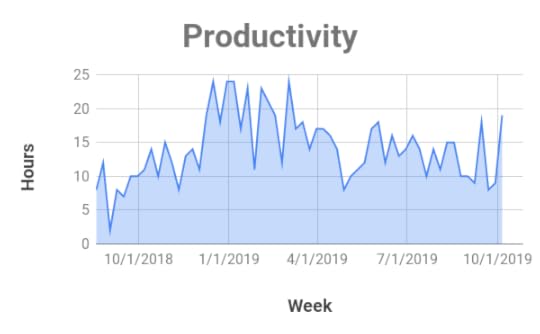
It’s been about 14 months since using a calendar for all work, and I’m finally planning full weeks.
I know my ideal work periods and when I’m least productive. I’m more protective of my own time and less likely to say “yes” to off-the-cuff requests that sidetrack me. I have a much better grasp of the timeline to push a project forward and how to divide it into smaller chunks for the calendar.
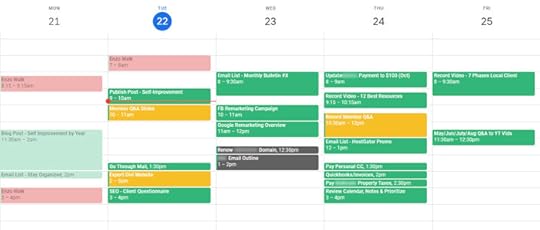
It’s excellent progress, but consider that many highly prolific business people have their entire year set on January 1st!
The biggest lesson is that not only do you need discipline, but you also require flexibility for unexpected circumstances. When they happen now, I’m better at shuffling things around and making it work without blowing up my entire schedule.
Balancing a Successful Life

One natural conclusion through this yearly process of self-improvement is balancing all areas of a happy life is hard work.
The dichotomy is that to excel in one field, you must go out of balance in other areas for an extended period to form better habits.
Once you’ve gone through this iterative process of getting better, the new task becomes balancing everything into an integrated daily lifestyle that is fulfilling and healthy long-term.
When you feel out of balance, you must actively manage yourself to restore it before you tip the scales too far in one direction.
But if you choose to stay on the path towards success, regardless of how you define it, you’ll discover valuable insights that guide you forever.
The challenging part of life is not finding the information to get you to the next step. It’s the conviction to make hard decisions every day to inch closer to a target that’s far away instead of looking for shortcuts.
My goal now is to share these impactful life lessons with you, because I know how much they’ve helped improve my game!
Click the link below to get a freelancing blueprint that leads you to predictable income:
The post The Path to Success in Life: Get Better at One Thing Every Year appeared first on Website Profit Course.
October 12, 2019
How to Get Local Web Design Clients: 7 Ways to Find High-Paying Work
Do you have web development or WordPress skills and you’re now wondering how to find your first local web design client?
Landing new high paying clients is the MOST DIFFICULT job in freelancing, regardless of the industry! But it’s not impossible.
Let’s discuss the 7 best ways to get your first web design client fast to create a snowball effect for your business & life.
15 Tools to Start Your Web Design Business
Your information will not be shared or sold, period.
1) Your Personal Network

Yes, starting with your personal network is cliche. And that’s for a reason – it works.
Your best chance for new web design clients is through people you know via recommendations and referrals. People do business with those that they know, like, and trust.
You’d be surprised how out of the loop people are today when it comes to websites unless they are actively involved in the web design or development world.
Plus, it’s much easier getting money from someone with a connection to you. Even if it requires a few degrees of separation, any connection will reduce the friction during a financial transaction that is inevitable.
Be Realistic With Your Expectations
Don’t expect to reach out then get 10 new jobsDon’t expect an immediate pay-day, be humble at the beginningYou may need to work for free at least once to get experienceMost business owners are reluctant to spend money on any serviceMany people WILL NOT choose you until you have verified testimonialsIt’s about planting seeds, not instantaneous resultsIt can take weeks or months for those seeds to blossomBe proactive over a long period, don’t ask once and expect a decisionOnce you build a reputation, there is a compounding effect of referralsYour goal should long-term clients, not constantly seeking short-term clients
These are all beliefs that I came to after being stubborn and thinking the opposite way while things weren’t working for me.
I now understand why the long-term approach to getting clients is more important than the success or failure of finding a new client today.
Be Direct with People
When it comes to finding clients through your personal network, you don’t want to blast Facebook with a status update saying that you are looking for work.
You want to be as direct as possible.
Go through the people you know that have a business, hobby, or an existing website that needs work. Send them a text, email, or any direct message that is one-on-one communication.
If they don’t need a website or help, see if they can refer you to someone that does need your talents.
Go through one or two degrees of separation via your personal network to find new leads. You are likely going to have to talk to someone over the phone or meet in person to get their business. But, having that connection is going to make things a lot easier down the road.
2) Target a Web Design Niche

I first started with the belief that it was best to build websites for every type of business to go after a wider pool of potential clients. That is the absolute wrong way to go and I highly advise against it.
If you target everyone, then you aren’t appealing to anyone.
I recommend finding a specific business industry that interests you and that you want to learn more about. Not just the online side of things, but actually how the business works offline, marketing, their products/services, etc.
If you know intricate details about a specific type of business besides the technical aspect of building a website, you are going to offer more to your client. You are also going to understand the language that they speak.
That means you will be more comfortable with the sales conversation selling them the website! Business owners in one industry often ask the same questions over and over again regarding how online marketing works.
If one of your first clients in that industry gets tangible results from your efforts, you appear more professional when selling yourself to ALL future potential clients!
The other benefit is that you can begin to “templatize” your services because you are making similar websites between all clients. This feels weird to creative people, but it’s the smart business decision because the time you must invest per project becomes predictable.
When you bounce around between business types, you’re always doing something custom which takes longer than you originally anticipated. That’s how you slash your hourly rate and earn less money than what you should.
3) Free Offer or Trial

Another good strategy is to have a free offer that can be as simple as registering their domain. I did this once with a client who was not sold on creating a website at the current moment, but I told him I will register the domain name for free to ensure it didn’t get taken by someone else.
It only costs you $20 and over the next year when and if that person is ready to build, they will immediately go to you as opposed to someone else since you build a level of trust by doing something above and beyond for them.
I have also offered a free setup fee to land a client on a monthly recurring package. This can be a little bit complicated because you will run into flaky people who are going to take advantage of that free offer, and then avoid you when you present them a bill.
However, if they are enthusiastic about building their brand online, you can sell them on a fast launch with a basic design and then charge a monthly cost to maintain/update the website. There’s a chance you may get a solid long-term client.
Also, for businesses that don’t have a website and want to create one, I have offered free business cards. If they have a new website built for them, they are going to want their new email address and domain name on their business cards – so you might as well handle it for them!
4) Provide Web Design Example

The best example is the real-world web design work that you have done for someone in the past. The most powerful asset you have is previous work with a similar type of business or person as the one you’re currently selling.
That could mean you’re freelancing now, but you had a job where you created websites or did something related to online marketing. Those are perfect examples to share with a potential client.
If you don’t have work from previous clients, build a demo website similar to other websites within an industry, and show them what they are going to get.
Of course, you’ll customize it for a unique look once you land the project.
This lets them visualize the work you are going to do for them. A demo website will bridge the gap between the abstract concept of the website in their mind, and how it actually looks within the browser on their computer or phone.
If you are looking for your first client then it’s more difficult without a testimonial to land an established high-paying client. However, plenty of small business owners are budget conscious and prefer hungry new freelancers who are ready to help their business.
When you do get your first client, use the results of that client to sell your subsequent clients.
Even better if you organize the information you’ve tracked to create a “case study” of the results that you got for that person along with a short testimonial of their experience working with you.
5) Cold Email Local Business

Once you have an industry type or local businesses that you are willing to target, you can go to their existing website or online business directories (if they don’t have a website) to get their email address.
You want to be as personal as you can when you send a cold email. It’s important to realize that business owners get pitched every single day and their instinct is to ignore you.
It’s crucial to approach this client getting method with humility and realize there is an element of luck when you are reaching out to hundreds, if not thousands, of people.
Selling is ultimately a numbers game where you must block negative emotions that induce fear and eliminate any chance of long-term success.
Find the business owner’s first name if you can and information about them or their business. Weave those connections into your initial email.
You want to have cold email scripts that you can work off of, and I open emails with one of the biggest benefits they are going to get by having a professional website. This may or may not be specific to the business, but one constant is that all business owners are looking for new leads.
If you can articulate how having a strong online presence is going to help them gain more business, they will be open to your pitch.
You also want to discuss who you are after you explain the benefits. But be brief in this area because they care much more about what you can do for them, not who you are.
Don’t start by talking about your skills, instead focus on a real personal connection you have to the business that will separate you from the noise.
This is why I specifically recommend going local. That in itself will stand out compared to generic service offers from around the country or internationally.
6) Cold Calling

As an introvert, cold calling is something I have avoided for a long time. It’s undoubtedly the easiest way to get in touch with a decision-maker and build trust to influence them.
You just need to mentally handle the voice-to-voice rejection compared to getting no responses for cold emails!
With the business type I choose to work with – local home service contractors – most calls are answered by the owner, or by someone who works directly with the owner (like a secretary or their significant other).
You don’t necessarily want to sell them right away unless they display an eagerness to begin work on a new website immediately. You want to set up an in-person meeting where you both will get a better feel for each other.
Once again, that’s why it’s best to focus on your local area to meet people face-to-face.
In my experience, the fact they are willing to set up a meeting is a massive indicator that they want to make a buying decision. You’re also more likely to close a deal when they get to know who you are by spending time with them.
I’ve had clients write me a check on the spot!
Pick your poison with either cold emails or cold calls. You must break out of your shell to achieve better results.
The key is to realize there are people MUCH worse than you, both in terms of their skills and moral compass, freelancing with web design. Don’t let them steal business that could be yours.
You are making the world a better place by sharing your skills with your local community!
7) Follow Up with Everyone

All these methods require you to contact someone for the first time, but I have seen so many sales studies out there that say 80% of sales deals are closed after five or more contacts.
Conversely, about 85% of salespeople contact their leads three times or less.
You are leaving business on the table if you don’t follow-up! Be creative in your methods, too. These follow-up messages can be phone calls, text messages, emails, advertising campaigns, etc.
Ultimately, you have to be persistent if you really want to get that first client.
As an example, for my last two clients, it took multiple emails to finally coordinate a time where I could pitch them my offer. They would say, “I’ll get back to you soon,” and not surprisingly, they didn’t.
I just had to consistently reach out to them over the course of a few weeks, slowly pushing them along the process and making sure they felt comfortable asking any questions.
In the end, I set up those meetings, further educated them, and landed their business.
I’m not here to convince you to become a hard salesman and start harassing people until they hand over their credit card. I’ve stated it many times, I’m introverted and found my best clients through personal referrals. But you must get out of your comfort zone to achieve your financial goals.
For instance, I found my first web design client because he did work on my parents’ roof. I built his website for a one-time fee and occasionally did hourly work for him.
I got this initial job with literally 1 contact, all due to the personal referral. Because my parents spent money with him, he was more willing to reciprocate with me.
It took nearly 2 years before he decided that he wanted to advertise online, only through my persistence.
We met at least 10x until I convinced him to pay me monthly to manage his online advertising campaigns with Google. Some of these meetings occurred because I helped him fix computer virus and speed issues, not pure website work.
This is why you have to set the bar lower at the beginning and practice friendly persistence while helping people along the way.
Earning good money takes trust, and trust takes time.
Sometimes a small project or personal connection turns into something much better when you least expect the tide to turn. That’s why determination is as important, if not more so than your skill level.
15 Tools to Start Your Business
Freelancing Tips for Success
The first barrier to financial success could be your own mindset, and that’s why you must start here instead of pure tactics.
Have an Open Mind on Your Path
We are taught for years that our life plan must be high school, college, get a well-paying job, then start a family. It’s the straight and narrow track to the “suburban dream”.
If you stray from this in any way, you are viewed as an outcast.
Along with this thinking comes the idea that we deserve to be paid for our skills. You believe someone owes you a consistent income because of your knowledge or degree.
I’ve learned the hard way, this is not the way business works.
At the beginning of my freelancing journey, I felt confident with my skill set in WordPress and web design. My yearly income would need to be $60,000 to come close to a computer engineering job.
In my first two years, I made a tiny fraction of this while living at home with my parents.
It’s a gut punch to your ego. It’s easy to question the decisions you’ve made if your goal is purely financial and you’re thinking short-term.
The harsh truth is finding the right web design clients takes time. Finding high-paying, low-stress clients can take months or even years.
And unlike learning the technical side of WordPress or websites, there is often no clear “right” or “wrong” to how you approach client acquisition.
Things don’t universally work, because there is this major variable in business – HUMANS!
You truly need to earn every dollar you bring in as a freelancer, entrepreneur or business owner.
It ain’t easy, but the reward of setting your rules and pursuing your interests is well worth the sweat and tears (hopefully no blood).
Diversify Your Skills & Toolkit
There is one inherent downside to schooling, at least as I see it.
By choosing one major in college, you learn an area deeply which has considerable benefits.
However, in order to put ideas into practice in the real world, it often takes a wide variety of skills PLUS a deep focus on one area.
Let me give you a unique example.
Have you ever built a chicken coop?
I can see this outdoor project in my future, and my cousin did. Her husband (one of my clients) is a successful business person.
He owns a high-end service business and most clients find him through his website. Lately, I’ve been pushing him to take his skills and put them online – whether it’s a book or instructional videos. Something that is more passive, because his service is extremely time consuming and he works odd hours.
To educate him about the possibilities of building a presence online, I showed him this website which sells training on how to build a chicken coop:

The creator of this product is a rural farm family. They are hands-on and old-school.
You might think, “What would they know about online business”?
To release this digital product, they needed to:
Register a domainSet up website hostingBuild the websiteCreate & edit an animated sales videoWrite an e-bookWrite sales copyFind a shopping cart solutionCreate a full marketing planConsider paid advertisingDrive quality traffic to the websiteImplement a referral programFind affiliate sales opportunitiesManage freelancersManage customer service issues
Big companies have the money to fill these discrete needs with specialists.
If you have a degree in Creative Writing, you might be a good match as a copywriter, but you probably know nothing about the website technology or shopping cart.
When you are a freelancer creating your own web design business, EVERYTHING is on you.
If you are hiring help, you are managing someone else, which can prove to be even more challenging than doing it yourself (especially for business beginners).
It’s overwhelming at times…. in fact, most of the time. You need strong determination to match the knowledge you must learn.
However painful it may be, continue to gain new skills when times are tough finding new web design clients. Particularly marketing because those lessons can apply to all businesses.
The more you offer, the more valuable you are to your existing clients. Upsell them services to make more money instead of constantly needing to find clients for one-time work.
15 Tools to Start Your Business
Work with Cool People (Like You)
Maybe this is simplifying things, maybe not.
Why choose an industry purely for money if your clients are bad people or have nothing in common with you?
I met with a divorce lawyer once thinking he could be my best potential client for web design. This opportunity came via a referral.
I thought the meeting went well, however they never got in touch with me after I followed up.
Maybe if I followed the aforementioned advice, I would have reached out multiple times thereafter.
The bigger story here is the guy who referred me to the lawyer said their relationship soured not long after. He ended up breaking his word on something, and I may have avoided a huge mess.
After then, I realized the importance of finding an “ideal” client type and working solely with them. I put “ideal” in quotes because it’s impossible to expect every business owner to be the same, however, you can target them closely.
Your ideal client type should match your personality. A divorce lawyer would have been a horrible match for me in retrospect.
My best clients give me a good “vibe” when we meet and discuss ideas.
This is something I cannot really explain, it’s something that you need to feel through working with someone.
The meeting with the lawyer was uptight, he had someone who did bad work on his website previously so he was very guarded about letting that happen again.
After you work with 3-4 different people, you should know which put you at ease and which you’d rather not be around.
The easiest way to get your foot in the door is through your personal interest.
This is like creating a larger personal network of strangers through common interests.
You could be alumni at the same college, from the same town, played the same sport growing up, have a similar hobby. It doesn’t really matter what, if you share something with a potential client, they will think more fondly of you.
I’ve done some odd experimenting with my dieting habits, and I can’t tell you how many times meeting with a client turns into an extended discussion on how to eat more healthily.
When I leave, I feel like I was having a conversation with a friend, not a client. That’s the feeling I want, but it only got to that point through my hard work over a long period time.
It’s funny because this is a lesson I know from my dad. I swear, he runs into someone he knows every other time we go somewhere together. He always strikes up a conversation with new people. This is undoubtedly the biggest reason for his success in life, working from a carpenter and warehouse worker to multiple executive positions.
As an introvert, I always believed there were other methods for finding web design clients while working in the background. I thought my technical skills would shine through my lack of conversational ability.
My dad was right, I was wrong.
Being a people person is more important than anything because that’s what it takes to close more sales.
I’m admittedly still working hard on this. I enjoy being reclusive, but I’m slowly getting better at the whole social thing!
Build Your Online Presence
If you aren’t thinking into the future and dedicated to building a presence online, that’s another avenue of client acquisition lost.
I say this with a twinge of regret because I planned to be more consistent with this years ago and never was.
Even with my small effort, I received multiple phone calls from prospective web design clients inquiring about my services.
This resulted in a few one-time small jobs and one client that currently pays me monthly.
If I had stuck with building on my portfolio website and blog, I’m confident it would have resulted in more paid projects.
It’s difficult to look past the short-term pain of doing work up-front with no guarantee it will lead to anything. You need to believe. Have belief in your ability to learn, and your ability to plant seeds that will eventually blossom.
I lost sight of this and got into a funk where I felt I shouldn’t work on anything unless it was for cash. That isn’t the correct way to go about life in general.
Money is a byproduct of genuinely helping people solve their problems. And the easiest way to help people is to discuss things you know that they don’t. The best place to do this is on your website or blog where people searching about those topics will find you.
Start building it today, give back, and leave your mark on the web.
80% of Success is Showing Up
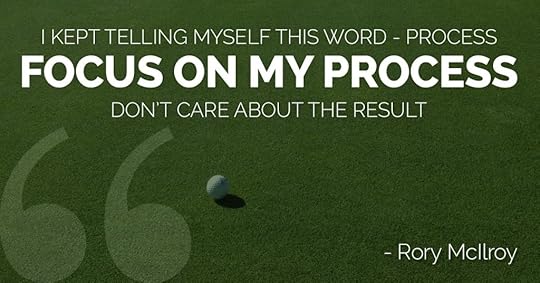
We keep hitting on this long-term idea, and not getting down on yourself in the short-term. That’s exactly what this quote embodies.
It’s easy to think you should go from 0 to 100 in year one, however, success (whatever it means to you) takes time.
It’s way better to plug along each day vs. going full-speed for a month and then losing focus when things don’t go your way.
It’s the compounding effect of momentum. Starting to roll the ball down the hill takes focus and dedicated effort. But once it’s on the way, it almost cannot be stopped.
Sometimes you can point to your efforts and say, “this directly lead to finding a client”.
I think a lot of people would agree, though, sometimes the best encounters that propel you forward happen completely by accident, because you show up every day for a long period.
Two clear examples of this in my life:
1) I golf often and get paired with strangers, this has led to exchanging business cards when I talk about my work
2) I once got a well-paid gig through a friend of a friend that I met at a bar before a concert.
These times weren’t planned for business networking. Yet they resulted in work.
Why?
Because over the long haul, I stuck with a vision and successfully helped people along the way to build my list of testimonials.
I can’t help but point out the personal nature of both. Golf is a passion of mine, so others that share the passion want to work with similar people.
And my buddy’s friend referred me two months after the bar meeting because he knew a company that needed website help and had my business card.
After the interview, I got a distinct feeling that the company had no other candidates.
A day later, they shared their Dropbox folder and I got the notification when it started syncing. This is how I found out they gave me the opportunity to work on their existing website before they sent me a “we chose you” e-mail. Pretty cool moment.
I’ve continued to work with them on small projects for over a year.
Focus, Focus, Focus
I can’t stress enough that you eventually want to settle on a specific business niche or “client profile” for your website or WordPress management.
You want to develop a “sixth sense” when it comes to understanding your client’s business decisions outside of the website.
It’s easy to understand how to add a widget to their website, it’s a lot harder to offer practical advice on how they approach their marketing because you understand their business as well as they do.
That’s the level you eventually want to reach because that is where the highest degree of trust will exist between you and your client. They won’t see you as a commodity, you will instead be an indispensable resource advising them on how to get the most of online marketing AND customer retention beyond the initial website visit.
Plus, once you reach this level, it becomes much easier to pitch your services to other similar types of businesses. You know their biggest problems and you know the best way to solve them.
Get Aggressive
Here’s the deal, if you want to make money FAST, you need to be aggressive.
This wasn’t necessarily my method, but that doesn’t mean I don’t have thoughts on how you can approach the process most efficiently.
Sales is ultimately a numbers game. You will not get paid by the vast majority of the prospective leads you have.
If we limit this to your personal network, maybe a 20% response rate is reasonable.
If you are pursuing businesses that don’t know you, a 2% response rate could be the end goal.
You have to put in a lot of effort and contact people consistenly if your goal is getting sales as quickly as possible. That means advertising, cold-calling, pitching your services to almost everyone.
It’s definitely possible, just not my style. If you are an extrovert with the right web skills, you could strike a gold mine if you are savvy.
Even if you are aggressive, I still think you cannot overlook keeping your current clients happy and up-selling them with more marketing or management services.
That, to me, is the better way to build a business that stands the test of time by building a relationship with every client.
Pay to Play with Advertising
Other than cold-calling, paid advertising is the most aggressive way to acquire new web design clients. The stakes are much higher when your credit card is charged each day your advertisements are running.
My first advice is never even consider paid advertising unless you are incredibly specific with one of two areas – your business niche or your location.
The more specific you are, the easier it is to choose your best marketing channels, and the cheaper it will be to reach your ideal customer.
If you are generic, you’ll waste your marketing budget serving ads to people that have no interest in your services, and they view you as a dime-a-dozen business.
Crude example – which advertisement for a Chevy Corvette would do better?
1) An ad in the local newspaper which is delivered to every household
2) An ad in “Car and Driver” magazine which is delivered to auto-enthusiasts
The answer seems obvious, but so many small businesses make the mistake of advertising on platforms that don’t offer much return on investment.
Even if you are paying for advertising, you still need to hone in on your selling process because that’s the only way you will convert someone responding to your ads.
You Are Braveheart

You need a strong will and belief if your working for yourself.
Learning WordPress, web design and web development are the first steps of the process, but it’s not over there.
There’s a lot of mixed emotion.
It’s lonely but it’s so rewarding as you gain knowledge. One success can change everything.
You will feel like a failure at one moment, then an hour later revel in how you solved a problem.
You’ll work 100 hours without a dollar, then get a check for $1,000 when you least expect it.
The topics you learn are varied, but you begin to understand how they work together.
All of these things are not linear. You can have zero progress for weeks then a breakthrough. Or a string of successes that are halted by bitter disappointment.
There is no secret bullet to finding new clients. What works one time may not the next. What works with one person may be undesirable to the next.
The key is to continue to fight the good fight, build your knowledge, reflect often to gain wisdom and never lose momentum because that is when good ideas die out.
You never know when you’ll find the perfect web design client that redefines your view of business and the value you provide.
15 Tools to Start Your Business
The post How to Get Local Web Design Clients: 7 Ways to Find High-Paying Work appeared first on Website Profit Course.
How to Get Web Design Clients
Do you have web development or WordPress skills and you’re now wondering how to find your first local web design client?
Landing new high paying clients is the MOST DIFFICULT job in freelancing, regardless of the industry! But it’s not impossible.
Let’s discuss 7 ways to get your first web design client fast to create a snowball effect.
15 Tools to Start Your Web Design Business
Your information will not be shared or sold, period.
1) Your Personal Network
Yes, starting with your personal network is cliche. And that’s for a reason – it works.
Your best chance for new web design clients is through people you know via recommendations and referrals. People do business with those that they know, like, and trust.
You’d be surprised how out of the loop people are today when it comes to websites unless they are actively involved in the web design or development world.
Plus, it’s much easier getting money from someone with a connection to you. Even if it requires a few degrees of separation, any connection will reduce the friction during a financial transaction that is inevitable.
Be Realistic With Your Expectations
Don’t expect to reach out then get 10 new jobsDon’t expect an immediate pay-day, be humble at the beginningYou may need to work for free at least once to get experienceMost business owners are reluctant to spend money on any serviceMany people WILL NOT choose you until you have verified testimonialsIt’s about planting seeds, not instantaneous resultsIt can take weeks or months for those seeds to blossomBe proactive over a long period, don’t ask once and expect a decisionOnce you build a reputation, there is a compounding effect of referralsYour goal should long-term clients, not constantly seeking short-term clients
These are all beliefs that I came to after being stubborn and thinking the opposite way while things weren’t working for me.
I now understand why the long-term approach to getting clients is more important than the success or failure of finding a new client today.
Be Direct with People
When it comes to finding clients through your personal network, you don’t want to blast Facebook with a status update saying that you are looking for work.
You want to be as direct as possible.
Go through the people you know that have a business, hobby, or an existing website that needs work. Send them a text, email, or any direct message that is one-on-one communication.
If they don’t need a website or help, see if they can refer you to someone that does need your talents.
Go through one or two degrees of separation via your personal network to find new leads. You are likely going to have to talk to someone over the phone or meet in person to get their business. But, having that connection is going to make things a lot easier down the road.
2) Target a Web Design Niche
I first started with the belief that it was best to build websites for every type of business to go after a wider pool of potential clients. That is the absolute wrong way to go and I highly advise against it.
If you target everyone, then you aren’t appealing to anyone.
I recommend finding a specific business industry that interests you and that you want to learn more about. Not just the online side of things, but actually how the business works offline, marketing, their products/services, etc.
If you know intricate details about a specific type of business besides the technical aspect of building a website, you are going to offer more to your client. You are also going to understand the language that they speak.
That means you will be more comfortable with the sales conversation selling them the website! Business owners in one industry often ask the same questions over and over again regarding how online marketing works.
If one of your first clients in that industry gets tangible results from your efforts, you appear more professional when selling yourself to ALL future potential clients!
The other benefit is that you can begin to “templatize” your services because you are making similar websites between all clients. This feels weird to creative people, but it’s the smart business decision because the time you must invest per project becomes predictable.
When you bounce around between business types, you’re always doing something custom which takes longer than you originally anticipated. That’s how you slash your hourly rate and earn less money than what you should.
3) Free Offer or Trial
Another good strategy is to have a free offer that can be as simple as registering their domain. I did this once with a client who was not sold on creating a website at the current moment, but I told him I will register the domain name for free to ensure it didn’t get taken by someone else.
It only costs you $20 and over the next year when and if that person is ready to build, they will immediately go to you as opposed to someone else since you build a level of trust by doing something above and beyond for them.
I have also offered a free setup fee to land a client on a monthly recurring package. This can be a little bit complicated because you will run into flaky people who are going to take advantage of that free offer, and then avoid you when you present them a bill.
However, if they are enthusiastic about building their brand online, you can sell them on a fast launch with a basic design and then charge a monthly cost to maintain/update the website. There’s a chance you may get a solid long-term client.
Also, for businesses that don’t have a website and want to create one, I have offered free business cards. If they have a new website built for them, they are going to want their new email address and domain name on their business cards – so you might as well handle it for them!
4) Provide Web Design Example
The best example is the real-world web design work that you have done for someone in the past. The most powerful asset you have is previous work with a similar type of business or person as the one you’re currently selling.
That could mean you’re freelancing now, but you had a job where you created websites or did something related to online marketing. Those are perfect examples to share with a potential client.
If you don’t have work from previous clients, build a demo website similar to other websites within an industry, and show them what they are going to get.
Of course, you’ll customize it for a unique look once you land the project.
This lets them visualize the work you are going to do for them. A demo website will bridge the gap between the abstract concept of the website in their mind, and how it actually looks within the browser on their computer or phone.
If you are looking for your first client then it’s more difficult without a testimonial to land an established high-paying client. However, plenty of small business owners are budget conscious and prefer hungry new freelancers who are ready to help their business.
When you do get your first client, use the results of that client to sell your subsequent clients.
Even better if you organize the information you’ve tracked to create a “case study” of the results that you got for that person along with a short testimonial of their experience working with you.
5) Cold Email Local Business
Once you have an industry type or local businesses that you are willing to target, you can go to their existing website or online business directories (if they don’t have a website) to get their email address.
You want to be as personal as you can when you send a cold email. It’s important to realize that business owners get pitched every single day and their instinct is to ignore you.
It’s crucial to approach this client getting method with humility and realize there is an element of luck when you are reaching out to hundreds, if not thousands, of people.
Selling is ultimately a numbers game where you must block negative emotions that induce fear and eliminate any chance of long-term success.
Find the business owner’s first name if you can and information about them or their business. Weave those connections into your initial email.
You want to have cold email scripts that you can work off of, and I open emails with one of the biggest benefits they are going to get by having a professional website. This may or may not be specific to the business, but one constant is that all business owners are looking for new leads.
If you can articulate how having a strong online presence is going to help them gain more business, they will be open to your pitch.
You also want to discuss who you are after you explain the benefits. But be brief in this area because they care much more about what you can do for them, not who you are.
Don’t start by talking about your skills, instead focus on a real personal connection you have to the business that will separate you from the noise.
This is why I specifically recommend going local. That in itself will stand out compared to generic service offers from around the country or internationally.
6) Cold Calling
As an introvert, cold calling is something I have avoided for a long time. It’s undoubtedly the easiest way to get in touch with a decision-maker and build trust to influence them.
You just need to mentally handle the voice-to-voice rejection compared to getting no responses for cold emails!
With the business type I choose to work with – local home service contractors – most calls are answered by the owner, or by someone who works directly with the owner (like a secretary or their significant other).
You don’t necessarily want to sell them right away unless they display an eagerness to begin work on a new website immediately. You want to set up an in-person meeting where you both will get a better feel for each other.
Once again, that’s why it’s best to focus on your local area to meet people face-to-face.
In my experience, the fact they are willing to set up a meeting is a massive indicator that they want to make a buying decision. You’re also more likely to close a deal when they get to know who you are by spending time with them.
I’ve had clients write me a check on the spot!
Pick your poison with either cold emails or cold calls. You must break out of your shell to achieve better results.
The key is to realize there are people MUCH worse than you, both in terms of their skills and moral compass, freelancing with web design. Don’t let them steal business that could be yours.
You are making the world a better place by sharing your skills with your local community!
7) Follow Up with Everyone
All these methods require you to contact someone for the first time, but I have seen so many sales studies out there that say 80% of sales deals are closed after five or more contacts.
Conversely, about 85% of salespeople contact their leads three times or less.
You are leaving business on the table if you don’t follow-up! Be creative in your methods, too. These follow-up messages can be phone calls, text messages, emails, advertising campaigns, etc.
Ultimately, you have to be persistent if you really want to get that first client.
As an example, for my last two clients, it took multiple emails to finally coordinate a time where I could pitch them my offer. They would say, “I’ll get back to you soon,” and not surprisingly, they didn’t.
I just had to consistently reach out to them over the course of a few weeks, slowly pushing them along the process and making sure they felt comfortable asking any questions.
In the end, I set up those meetings, further educated them, and landed their business.
I’m not here to convince you to become a hard salesman and start harassing people until they hand over their credit card. I’ve stated it many times, I’m introverted and found my best clients through personal referrals. But you must get out of your comfort zone to achieve your financial goals.
For instance, I found my first web design client because he did work on my parents’ roof. I built his website for a one-time fee and occasionally did hourly work for him.
I got this initial job with literally 1 contact, all due to the personal referral. Because my parents spent money with him, he was more willing to reciprocate with me.
It took nearly 2 years before he decided that he wanted to advertise online, only through my persistence.
We met at least 10x until I convinced him to pay me monthly to manage his online advertising campaigns with Google. Some of these meetings occurred because I helped him fix computer virus and speed issues, not pure website work.
This is why you have to set the bar lower at the beginning and practice friendly persistence while helping people along the way.
Earning good money takes trust, and trust takes time.
Sometimes a small project or personal connection turns into something much better when you least expect the tide to turn. That’s why determination is as important, if not more so than your skill level.
15 Tools to Start Your Business
Freelancing Tips for Success
The first barrier to financial success could be your own mindset, and that’s why you must start here instead of pure tactics.
Have an Open Mind & Be Realistic
We are taught for years that our life plan must be high school, college, get a well-paying job, then start a family. It’s the straight and narrow track to the “suburban dream”.
If you stray from this in any way, you are viewed as an outcast.
Along with this thinking comes the idea that we deserve to be paid for our skills. You believe someone owes you a consistent income because of your knowledge or degree.
I’ve learned the hard way, this is not the way business works.
At the beginning of my freelancing journey, I felt confident with my skill set in WordPress and web design. My yearly income would need to be $60,000 to come close to a computer engineering job.
In my first two years, I made a tiny fraction of this while living at home with my parents.
It’s a gut punch to your ego. It’s easy to question the decisions you’ve made if your goal is purely financial and you’re thinking short-term.
The harsh truth is finding the right web design clients takes time. Finding high-paying, low-stress clients can take months or even years.
And unlike learning the technical side of WordPress or websites, there is often no clear “right” or “wrong” to how you approach client acquisition.
Things don’t universally work, because there is this major variable in business – HUMANS!
You truly need to earn every dollar you bring in as a freelancer, entrepreneur or business owner.
It ain’t easy, but the reward of setting your rules and pursuing your interests is well worth the sweat and tears (hopefully no blood).
Diversify Your Skills & Toolkit
There is one inherent downside to schooling, at least as I see it.
By choosing one major in college, you learn an area deeply which has considerable benefits.
However, in order to put ideas into practice in the real world, it often takes a wide variety of skills PLUS a deep focus on one area.
Let me give you a unique example.
Have you ever built a chicken coop?
I can see this outdoor project in my future, and my cousin did. Her husband (one of my clients) is a successful business person.
He owns a high-end service business and most clients find him through his website. Lately, I’ve been pushing him to take his skills and put them online – whether it’s a book or instructional videos. Something that is more passive, because his service is extremely time consuming and he works odd hours.
To educate him about the possibilities of building a presence online, I showed him this website which sells training on how to build a chicken coop:
The creator of this product is a rural farm family. They are hands-on and old-school.
You might think, “What would they know about online business”?
To release this digital product, they needed to:
Register a domainSet up website hostingBuild the websiteCreate & edit an animated sales videoWrite an e-bookWrite sales copyFind a shopping cart solutionCreate a full marketing planConsider paid advertisingDrive quality traffic to the websiteImplement a referral programFind affiliate sales opportunitiesManage freelancersManage customer service issues
Big companies have the money to fill these discrete needs with specialists.
If you have a degree in Creative Writing, you might be a good match as a copywriter, but you probably know nothing about the website technology or shopping cart.
When you are a freelancer creating your own web design business, EVERYTHING is on you.
If you are hiring help, you are managing someone else, which can prove to be even more challenging than doing it yourself (especially for business beginners).
It’s overwhelming at times…. in fact, most of the time. You need strong determination to match the knowledge you must learn.
However painful it may be, continue to gain new skills when times are tough finding new web design clients. Particularly marketing because those lessons can apply to all businesses.
The more you offer, the more valuable you are to your existing clients. Upsell them services to make more money instead of constantly needing to find clients for one-time work.
15 Tools to Start Your Business
Work with Cool People (Like You)
Maybe this is simplifying things, maybe not.
Why choose an industry purely for money if your clients are bad people or have nothing in common with you?
I met with a divorce lawyer once thinking he could be my best potential client for web design. This opportunity came via a referral.
I thought the meeting went well, however they never got in touch with me after I followed up.
Maybe if I followed the aforementioned advice, I would have reached out multiple times thereafter.
The bigger story here is the guy who referred me to the lawyer said their relationship soured not long after. He ended up breaking his word on something, and I may have avoided a huge mess.
After then, I realized the importance of finding an “ideal” client type and working solely with them. I put “ideal” in quotes because it’s impossible to expect every business owner to be the same, however, you can target them closely.
Your ideal client type should match your personality. A divorce lawyer would have been a horrible match for me in retrospect.
My best clients give me a good “vibe” when we meet and discuss ideas.
This is something I cannot really explain, it’s something that you need to feel through working with someone.
The meeting with the lawyer was uptight, he had someone who did bad work on his website previously so he was very guarded about letting that happen again.
After you work with 3-4 different people, you should know which put you at ease and which you’d rather not be around.
The easiest way to get your foot in the door is through your personal interest.
This is like creating a larger personal network of strangers through common interests.
You could be alumni at the same college, from the same town, played the same sport growing up, have a similar hobby. It doesn’t really matter what, if you share something with a potential client, they will think more fondly of you.
I’ve done some odd experimenting with my dieting habits, and I can’t tell you how many times meeting with a client turns into an extended discussion on how to eat more healthily.
When I leave, I feel like I was having a conversation with a friend, not a client. That’s the feeling I want, but it only got to that point through my hard work over a long period time.
It’s funny because this is a lesson I know from my dad. I swear, he runs into someone he knows every other time we go somewhere together. He always strikes up a conversation with new people. This is undoubtedly the biggest reason for his success in life, working from a carpenter and warehouse worker to multiple executive positions.
As an introvert, I always believed there were other methods for finding web design clients while working in the background. I thought my technical skills would shine through my lack of conversational ability.
My dad was right, I was wrong.
Being a people person is more important than anything because that’s what it takes to close more sales.
I’m admittedly still working hard on this. I enjoy being reclusive, but I’m slowly getting better at the whole social thing!
Build Your Online Presence
If you aren’t thinking into the future and dedicated to building a presence online, that’s another avenue of client acquisition lost.
I say this with a twinge of regret because I planned to be more consistent with this years ago and never was.
Even with my small effort, I received multiple phone calls from prospective web design clients inquiring about my services.
This resulted in a few one-time small jobs and one client that currently pays me monthly.
If I had stuck with building on my portfolio website and blog, I’m confident it would have resulted in more paid projects.
It’s difficult to look past the short-term pain of doing work up-front with no guarantee it will lead to anything. You need to believe. Have belief in your ability to learn, and your ability to plant seeds that will eventually blossom.
I lost sight of this and got into a funk where I felt I shouldn’t work on anything unless it was for cash. That isn’t the correct way to go about life in general.
Money is a byproduct of genuinely helping people solve their problems. And the easiest way to help people is to discuss things you know that they don’t. The best place to do this is on your website or blog where people searching about those topics will find you.
Start building it today, give back, and leave your mark on the web.
80% of Success is Showing Up
We keep hitting on this long-term idea, and not getting down on yourself in the short-term. That’s exactly what this quote embodies.
It’s easy to think you should go from 0 to 100 in year one, however, success (whatever it means to you) takes time.
It’s way better to plug along each day vs. going full-speed for a month and then losing focus when things don’t go your way.
It’s the compounding effect of momentum. Starting to roll the ball down the hill takes focus and dedicated effort. But once it’s on the way, it almost cannot be stopped.
Sometimes you can point to your efforts and say, “this directly lead to finding a client”.
I think a lot of people would agree, though, sometimes the best encounters that propel you forward happen completely by accident, because you show up every day for a long period.
Two clear examples of this in my life:
1) I golf often and get paired with strangers, this has led to exchanging business cards when I talk about my work
2) I once got a well-paid gig through a friend of a friend that I met at a bar before a concert.
These times weren’t planned for business networking. Yet they resulted in work.
Why?
Because over the long haul, I stuck with a vision and successfully helped people along the way to build my list of testimonials.
I can’t help but point out the personal nature of both. Golf is a passion of mine, so others that share the passion want to work with similar people.
And my buddy’s friend referred me two months after the bar meeting because he knew a company that needed website help and had my business card.
After the interview, I got a distinct feeling that the company had no other candidates.
A day later, they shared their Dropbox folder and I got the notification when it started syncing. This is how I found out they gave me the opportunity to work on their existing website before they sent me a “we chose you” e-mail. Pretty cool moment.
I’ve continued to work with them on small projects for over a year.
Focus, Focus, Focus
I can’t stress enough that you eventually want to settle on a specific business niche or “client profile” for your website or WordPress management.
You want to develop a “sixth sense” when it comes to understanding your client’s business decisions outside of the website.
It’s easy to understand how to add a widget to their website, it’s a lot harder to offer practical advice on how they approach their marketing because you understand their business as well as they do.
That’s the level you eventually want to reach because that is where the highest degree of trust will exist between you and your client. They won’t see you as a commodity, you will instead be an indispensable resource advising them on how to get the most of online marketing AND customer retention beyond the initial website visit.
Plus, once you reach this level, it becomes much easier to pitch your services to other similar types of businesses. You know their biggest problems and you know the best way to solve them.
Get Aggressive
Here’s the deal, if you want to make money FAST, you need to be aggressive.
This wasn’t necessarily my method, but that doesn’t mean I don’t have thoughts on how you can approach the process most efficiently.
Sales is ultimately a numbers game. You will not get paid by the vast majority of the prospective leads you have.
If we limit this to your personal network, maybe a 20% response rate is reasonable.
If you are pursuing businesses that don’t know you, a 2% response rate could be the end goal.
You have to put in a lot of effort and contact people consistenly if your goal is getting sales as quickly as possible. That means advertising, cold-calling, pitching your services to almost everyone.
It’s definitely possible, just not my style. If you are an extrovert with the right web skills, you could strike a gold mine if you are savvy.
Even if you are aggressive, I still think you cannot overlook keeping your current clients happy and up-selling them with more marketing or management services.
That, to me, is the better way to build a business that stands the test of time by building a relationship with every client.
Pay to Play with Advertising
Other than cold-calling, paid advertising is the most aggressive way to acquire new web design clients. The stakes are much higher when your credit card is charged each day your advertisements are running.
My first advice is never even consider paid advertising unless you are incredibly specific with one of two areas – your business niche or your location.
The more specific you are, the easier it is to choose your best marketing channels, and the cheaper it will be to reach your ideal customer.
If you are generic, you’ll waste your marketing budget serving ads to people that have no interest in your services, and they view you as a dime-a-dozen business.
Crude example – which advertisement for a Chevy Corvette would do better?
1) An ad in the local newspaper which is delivered to every household
2) An ad in “Car and Driver” magazine which is delivered to auto-enthusiasts
The answer seems obvious, but so many small businesses make the mistake of advertising on platforms that don’t offer much return on investment.
Even if you are paying for advertising, you still need to hone in on your selling process because that’s the only way you will convert someone responding to your ads.
You Are Braveheart
You need a strong will and belief if your working for yourself.
Learning WordPress, web design and web development are the first steps of the process, but it’s not over there.
There’s a lot of mixed emotion.
It’s lonely but it’s so rewarding as you gain knowledge. One success can change everything.
You will feel like a failure at one moment, then an hour later revel in how you solved a problem.
You’ll work 100 hours without a dollar, then get a check for $1,000 when you least expect it.
The topics you learn are varied, but you begin to understand how they work together.
All of these things are not linear. You can have zero progress for weeks then a breakthrough. Or a string of successes that are halted by bitter disappointment.
There is no secret bullet to finding new clients. What works one time may not the next. What works with one person may be undesirable to the next.
The key is to continue to fight the good fight, build your knowledge, reflect often to gain wisdom and never lose momentum because that is when good ideas die out.
You never know when you’ll find the perfect web design client that redefines your view of business and the value you provide.
15 Tools to Start Your Business
The post How to Get Web Design Clients appeared first on Website Profit Course.
October 9, 2019
Great Leads: The Six Easiest Ways to Start Any Sales Message

Author
Michael Masterson & John Forde
Quick Summary
Great Leads: The Six Easiest Ways to Start Any Sales Message covers the importance of the lead, the first 100-600 words of a sales message. The text explains the necessity of a clear focus that connects with potential customers on both an emotional and logical level.
The authors describe the value of tailoring your message relative to the customer’s knowledge of your brand and product – this is the customer awareness scale.
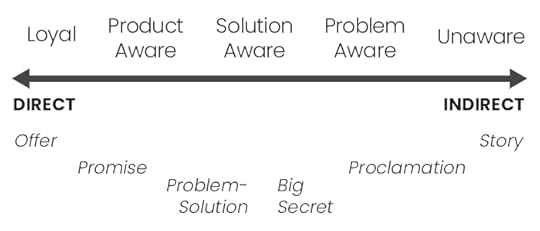
Based on where the customer falls on that scale, you can explore six types of leads that vary across a spectrum of direct to indirect.
OfferPromiseProblem-SolutionThe Big SecretThe ProclamationThe Story
Each one of these strategies is examined, describing when and where they are best applied. The book also provides historical examples and demonstrates the potential pitfalls that could occur if you don’t utilize them correctly.
The #1 Takeaway
Establishing a level of trust with a customer is of the utmost importance. Once someone relates to the brand and message, they are open to becoming a consumer. You need to tap into the consumer’s thought process, which will then allow you to persuade them on how your product will benefit their life.
How to Apply to Your Daily Routine
I now consume advertising from a “behind the curtain” perspective. Before, I understood that an ad was attempting to sell something to me. To a certain degree, I knew they were trying to relate to the potential consumer.
However, with this knowledge at my disposal, I can evaluate their effectiveness in using various techniques.
Furthermore, now I can take a step back to disengage when I read, see, or hear an advertisement.
You can apply these techniques and strategies to your copywriting, and they also translate to other areas of persuasive communication.
Favorite Quotes
What marketers sell is hope.
Those who tell the stories rule the world.
It is the hook that makes a great package – if you involve them there, your chances of success improve incalculably. The more you involve, the more you succeed.
The post Great Leads: The Six Easiest Ways to Start Any Sales Message appeared first on Website Profit Course.
September 10, 2019
The ONE Thing: The Surprisingly Simple Truth Behind Extraordinary Results
Author
Gary Keller with Jay Papasan
Quick Summary
The One Thing lays out a path for professional and personal success. It does this by finding the flaws (The Lies) in conventional thinking and your work process and presenting alternatives (The Truth) which will lead to productivity and growth (Extraordinary Results).
Rather than spreading yourself out too thin by treating all tasks as if they are of equal importance (multitasking), the author recommends that you narrow your focus.
Instead, prioritize by answering a single question:
What’s the one thing you can do, such that by doing it, everything else will become easier or unnecessary?
You can apply this focusing question across a spectrum of goal-oriented fields such as career, finance, fitness, personal relationships, etc. The process involves harnessing your desires daily, building momentum via the sustained success of crossing the finish line, rather than inching toward an unseeable destination that remains in the distance.
The #1 Takeaway
Set achievable incremental goals across daily, weekly, monthly, and yearly timeframes. Make these goals your top priority, eliminate distractions, and set the domino effect in motion to compound your effort.
How to Apply to Your Daily Routine
One thing which I had fallen victim to was the myth of multitasking. Since reading the book, I’ve attempted to minimize this mistake, and in the future hope to eliminate it.
The concept of making small progress across a variety of fields seems like an ideal way to break up your day without burning out. However, bouncing back and forth one wastes time due to “refocusing” each time you switch subjects.
Similarly, the explanation of willpower as a limited resource resonates and properly places a priority on accomplishing your goals from the beginning of the day when your energy and focus are at their peak levels.
The best technique for myself is to create time blocks early in my day and to work in a distraction-free setting until I reach my daily benchmark. This means avoiding:
Text messagesPhone callsSocial mediaMundane errands
Previously, I bought into the false equivalency of busyness and productivity, as if filling your day with activity was paving the road to rewards. However, I now realize that this strategy is unfocused and inefficient.
The goal shouldn’t be to wear yourself out.
Prioritize and complete the work to achieve your next short-term goal that leads to your ultimate long-term goal.
Favorite Quotes
Productivity isn’t about being a workhorse, keeping busy or burning the midnight oil… it’s more about priorities, planning, and fiercely protecting your time.
Things which matter most must never be at the mercy of things which matter least.
Focus is a matter of deciding what things you’re not going to do.
The post The ONE Thing: The Surprisingly Simple Truth Behind Extraordinary Results appeared first on Website Profit Course.
August 18, 2019
A Brief History of YouTube & Lessons You Can Apply
While listening to a podcast today interviewing Instagram’s founder, Kevin Systrom, he brought up the founding of YouTube – and it might blow your mind.
Many people who build websites know about the Wayback Machine. It’s a service that archives internet pages, allowing you to travel back in time and view them over the years.
The idea for YouTube came about roughly in 2004-2005 by 3 guys, all ex-PayPal employees.
Here’s a timeline:
February 14, 2005 – The domain name www.youtube.com was registered
Here’s the shocker that I never knew about: it started as a dating website!
April 23, 2005 – The first video on YouTube was uploaded by the co-founder
April 28, 2005 – The first capture on the Wayback Machine (see below)
June 14, 2005 – This is the first capture of YouTube operating as a generic video upload website, not a video dating website
November 1, 2005 – YouTube gets its first investment money ($3.5 million) from Sequoia Capital & the first video reaches 1 million views, a Nike ad with Ronaldinho.
March 30, 2006 – YouTube gets 2nd round of funding from Sequoia ($8 million)
October 9, 2006 – Google acquires YouTube for $1.65 billion
May 20, 2007 – This is my first video upload, a music project from college talking about one of my favorite bands, Tool. To this day, it’s still my top viewed video with 114,000.
The main takeaways from Kevin Systrom are successful entrepreneurs:
Put their idea into the world instead of thinking about itPivot fast when things aren’t working as expected
Within ONLY two months of uploading their first video, they completely changed the business model to think bigger.
My call-to-action for you is to follow their lead and start working today on that thing in your brain you cannot stop thinking about. Start the momentum now.
And you know I’m getting in one shameless YouTube plug…
Go watch my newest web design & freelancing videos to help you along!
The post A Brief History of YouTube & Lessons You Can Apply appeared first on Website Profit Course.
August 15, 2019
Website Beginners Advantage Over Tech Geeks (Like Me)

You might think having a ton of experience with computers would lend itself to freelancing with websites and online marketing.
From my perspective, this is not entirely true.
When I began, I convinced myself that money would be flowing into my bank account from the first month because of my superior technical knowledge with a Master’s degree in Electrical Engineering.
I quickly realized several facts of life they don’t teach you in school:
Business people don’t care about your credentials or degree. At all. They care about whether you can help solve their specific problem.Simply saying you can solve their problem isn’t enough. It takes a lot more effort than I anticipated to “sell” someone that you’re the best fit for them.The best way to sell them is to show the results you’ve had with a similar business.
As a tech geek, it was incredibly hard for me to connect with business owners who didn’t understand web basics. It’s like speaking French when all they know is English.
If you’ve become interested in websites within the past 12 months or so, you will likely keep the conversation simple, and by doing so, convey your message faster to an offline business owner.
FREE Video Series: Learn WordPress Basics 101
The other significant advantage of being a beginner is that since you don’t know any better, you’ll always look for the most straightforward solution to a technical problem.
In the world of WordPress, this means that while developers are researching the perfect solution or tinkering with code, you will find the “good enough” solution and implement it faster.
The longer I’ve been in business, the one thing I realize about financial success – it’s a lot less about high-end skill and much more about high-end speed to delivery.
Please take my advice, and stop worrying that you’re not good enough. You will never feel 100% ready, and the worst thing you can do is convince yourself, “well I’m busy so I’ll get to this next month.”
I’ve heard this story from friends, and 5 years later, do you know where they are? Stuck in the exact same situation.
Right now is the best time to start.
You can learn WordPress in 3 months or less. Of course, you won’t be an expert and that doesn’t matter. Trust your ability to learn the rest along the way and get paid while doing it.
Get a sneak peek inside the Business Plan membership for step-by-step training and 1-on-1 help to make money!
The post Website Beginners Advantage Over Tech Geeks (Like Me) appeared first on Website Profit Course.