
Lynn C. Tolson's Blog: Beyond the Tears: A True Survivor's Story by Lynn C. Tolson, blog, page 7
April 23, 2014
Tolson 4 TEARS* Cheers Advocate Patricia McKnight
Advocate for victims of child abuse and domestic violence, Patricia McKnight @triciagirl62 is a force of nature! She has the energy and drive to bring awareness to the topics too often ignored in our society. Tricia says "I now share my voice to help others understand they too can break free and claim their own happiness in life, feel safe, and finally feel true freedom."
As the author of My Justice she shares "the true details of the abuse that controlled 32 years of my life. The abandonment of my entire family; the neglect and sacrifice of me to keep peace within the home; the severe damage of the child abuse that set what was acceptable and trained as a pattern of life; the scars, physical damage and emotional trauma that I still carry; to the regained spirit, freedom, Safety!"
Patricia has taken her advocacy for victims and battle for justice to a higher calling: by using a variety of internet sites and public speaking venues, she is able to provide hope, healing, education and empowerment. She is an activist who expends energy and enthusiasm to offer information via her personal experience and professional knowledge from, victim advocate training to public speaking engagements.
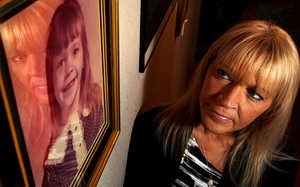 Patricia McKnight
Patricia McKnight is the host of the Butterfly Dreams Abuse Recovery Blog Talk Radio Show, where she features guests on topics of domestic violence, child abuse, trauma, and recovery. I [Lynn C. Tolson] was a live on-air guest and the discussion evolved to include the concept of THRIVES. What does it mean to THRIVE? We used a word-game to develop the many ways survivors can THRIVE without even realizing it! For example, the T in THRIVES can stand for Truth, because it is in telling our Truth that we begin to heal. In addition to the on-air show, Tricia has developed the Butterfly Dreams Abuse Recovery group on Facebook as well as the comprehensive site for survivor stories and victim resources. Tricia says: "information shared here is to help you regain some sense of positive belief in your life after abuse." Thank you to Patricia McKnight for the passion to help others, the courage to make a difference, and the mission to bring awareness.
*Tolson 4 TEARS: Telling Everyone About Rape & Suicide to comfort victims, break the silence, and challenge society, so no shed tear is wasted
Post completed by Lynn C. Tolson, author of Beyond the Tears: A True Survivor's Story
Listen to internet radio with Butterfly Dreams Abuse Recovery on BlogTalkRadio


April 20, 2014
Tolson 4 TEARS* Reviews "Beyond Survivor"
Beyond Survivor: Rising From the Ashes of Childhood Sexual Abuse
by Jan Frayne
Often it takes a lifetime to process the agonizing reality of child abuse and its long-term effects on the victim. Jan L. Frayne, a male survivor of childhood sexual abuse, has revealed his secrets in a generous effort to raise awareness of child abuse, to reduce the stigma associated with sexual abuse, and to increase hope for survivors.
Mr. Frayne has taken on this monumental task though his writing, which tell the story in prose and poetry. A reader will hear the angst of a victim as he processes the torment of abuse and the suffering of survivors. His voice speaks for the millions of other boys who cannot find the words to tell of their secret pain.
The poetry is gifted yet not esoteric; it is expressive but not graphic. The raw honesty and emotional content of Frayne's writing makes it relatable to survivors and readable to anyone interested in the plague upon our planet, which is the prevalence of pedophiles and perpetrators who prey upon children. We should all be interested in protecting our children!
Mr. Frayne offers us a perspective on the plight of male victims/survivors of child abuse. This is a necessary element in eradicating the plague so that our children can grow up with a sense of safety, and can mature to reach their full potential. Thank you Jan for having the courage to use your talent for writing in a way that is meaningful to society.
Review completed by Lynn C. Tolson, author of Beyond the Tears: A True Survivor's Story
*Tolson 4 TEARS: Telling Everyone About Rape & Suicide, so no shed tear is wasted.
You can also go to Frayne's "Wounded Warrior" blog. Twitter @Beyond_Survivor
UK Amazon
If I DiedIf I died tonight,Would you hold my handWould you stay beside meAnd walk me from this landPut your arms around meAnd never let me goShare with me your strengthFor I have none of my ownThe pain is too much to bearI can't seem to carry onMy heart now lies shatteredThe dreams are now all goneThe feelings were always buriedDeep inside my soulSlowly they destroyed meBecause I wouldn't let them showNow I lay here restingMy time on Earth is doneNothing left to fight forNo where left to runPut your hand in mineAs I take my final breathMy soul has at last found peaceThere awaiting me in Death
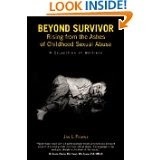

Often it takes a lifetime to process the agonizing reality of child abuse and its long-term effects on the victim. Jan L. Frayne, a male survivor of childhood sexual abuse, has revealed his secrets in a generous effort to raise awareness of child abuse, to reduce the stigma associated with sexual abuse, and to increase hope for survivors.
Mr. Frayne has taken on this monumental task though his writing, which tell the story in prose and poetry. A reader will hear the angst of a victim as he processes the torment of abuse and the suffering of survivors. His voice speaks for the millions of other boys who cannot find the words to tell of their secret pain.
The poetry is gifted yet not esoteric; it is expressive but not graphic. The raw honesty and emotional content of Frayne's writing makes it relatable to survivors and readable to anyone interested in the plague upon our planet, which is the prevalence of pedophiles and perpetrators who prey upon children. We should all be interested in protecting our children!
Mr. Frayne offers us a perspective on the plight of male victims/survivors of child abuse. This is a necessary element in eradicating the plague so that our children can grow up with a sense of safety, and can mature to reach their full potential. Thank you Jan for having the courage to use your talent for writing in a way that is meaningful to society.
Review completed by Lynn C. Tolson, author of Beyond the Tears: A True Survivor's Story
*Tolson 4 TEARS: Telling Everyone About Rape & Suicide, so no shed tear is wasted.
You can also go to Frayne's "Wounded Warrior" blog. Twitter @Beyond_Survivor
UK Amazon
If I DiedIf I died tonight,Would you hold my handWould you stay beside meAnd walk me from this landPut your arms around meAnd never let me goShare with me your strengthFor I have none of my ownThe pain is too much to bearI can't seem to carry onMy heart now lies shatteredThe dreams are now all goneThe feelings were always buriedDeep inside my soulSlowly they destroyed meBecause I wouldn't let them showNow I lay here restingMy time on Earth is doneNothing left to fight forNo where left to runPut your hand in mineAs I take my final breathMy soul has at last found peaceThere awaiting me in Death

April 18, 2014
Tolson 4 TEARS* Says "BE REAL"
What can you do if someone reveals to you that he/she has been abused? You can
BE REAL
B Believe her and believe in her*E Educate yourself; share your knowledgeR Reassure her that is was not her faultE Empower with information and resourcesA Ask what you can do and do your bestL Listen without judgment to what is said
*It is estimated that 1 in 3 women and 1 in 5 men will be abused in his/her lifetime. The female pronoun is intended to represent both genders.
Prepared by Lynn C. Tolson, author of Beyond the Tears: A True Survivor's Story *Tolson 4 TEARS: Telling Everyone About Rape & Suicide, so no shed tear is wasted

BE REAL
B Believe her and believe in her*E Educate yourself; share your knowledgeR Reassure her that is was not her faultE Empower with information and resourcesA Ask what you can do and do your bestL Listen without judgment to what is said
*It is estimated that 1 in 3 women and 1 in 5 men will be abused in his/her lifetime. The female pronoun is intended to represent both genders.
Prepared by Lynn C. Tolson, author of Beyond the Tears: A True Survivor's Story *Tolson 4 TEARS: Telling Everyone About Rape & Suicide, so no shed tear is wasted

April 17, 2014
Tolson 4 TEARS* on "How Are You Feeling?"
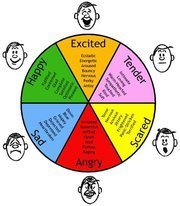
In therapy, clients talk about their feelings. Therapists ask, "How are you feeling today?"
Conversations with my therapist(s) frequently sounded like this:
“Lynn, what are you feeling?”“I don’t know.”“You must be feeling something.”“No, nothing.”“Please, tell me what it feels like.”“I don’t know.”
I shrugged my shoulders, which was not an acceptable answer to the question of “how are you feeling.” How should I know? I had no clue, no compass, and no map to lead me through the hot and sweaty tropical jungle of twisted emotional thorny vines that lay strangled with family secrets and lies.
My step-father had taught me to deny my feelings at seven years old. He said, “Whenever someone asks you how you are doing, you say, ‘Fine, thank you,’ no matter what.” He added, “Speak only when you are spoken to.” He raised me under his spell of “children should be seen and not heard.” These powerful childrearing dictates led to the cold, calculating climate of control that froze all feelings into a block of ice that could only be released when talk-therapy chipped at the surface decades later.
What I felt was numb, which is a suppression of real feelings. Talking about my experiences and emotions in therapy years later did not feel good. If/when I felt, I felt crappy. Even in the company of a therapist I sensed I was safe with, one whom I trusted and developed rapport with, I dared not enter the realm of emotion. I was afraid to unlock my heart and uncover emotions. If I felt a bona fide feeling, I would surely go insane.
I felt all alone. Loneliness envelopes my being, seals me in a tomb lacking air. I am trapped in the darkness of my heart, all alone, Choking and grasping to find tender loving care.
With that admission of feeling in the form of prose, my therapist taught me that putting words to experiences and the emotions they carry can dispel the hold they had on me. She said, “As your fears recede, courage will emerge. Love was locked inside, shielded by fear. When the darkness of fear disappears, the light of love appears. You built walls around yourself to block out bad feelings, so you also blocked out any good that could come your way. You perpetuate pain by locking up feelings.”
My therapist explained that the depression used to cover up emotions can become a permanent part of the personality. She said, “The symptoms of anxiety and depression you experience are not personality flaws but the consequence of childhood wounds. When you excavate and explore emotions, you allow the fear to fade.” Digging deep like this may alleviate the depression, and allow room for expansion of joyful feelings.
I also had to accept that emotions are transitory, universal, and can co-exist. I had to trust that feeling would not drive me crazy. I learned that feeling could lead to positive emotions, especially L-O-V-E. I understood that in my head, but I needed to feel it in my heart.
Transformation from fear to love requires more than rationalization and intellectualization. Healing transpires from fully feeling emotions, and then taking necessary action, like this: determine the cause of an emotion, identify the feeling, and acknowledge its presence. Honor an emotion in the moment; just be with it, and that is more like going sane.
My therapist and I started with where I was at: scared to death of the world at large. There was a pervasive apprehension that cast an ominous shadow on my world. Slowly, we examined the fear to make it manageable. With each exhale of fear, I could inhale the courage to face my fears, feeling compassion for myself and others. As Eleanor Roosevelt says, “You gain strength, courage, and confidence by every experience in which you really stop to look fear in the face. . . You must do the thing which you think you cannot do.” That is how we learn how to feel.
Post completed by Lynn C. Tolson, author of Beyond the Tears: A True Survivors Story
*Tolson 4 TEARS: Telling Everyone About Rape & Suicide, so no shed tear is wasted

Conversations with my therapist(s) frequently sounded like this:
“Lynn, what are you feeling?”“I don’t know.”“You must be feeling something.”“No, nothing.”“Please, tell me what it feels like.”“I don’t know.”
I shrugged my shoulders, which was not an acceptable answer to the question of “how are you feeling.” How should I know? I had no clue, no compass, and no map to lead me through the hot and sweaty tropical jungle of twisted emotional thorny vines that lay strangled with family secrets and lies.
My step-father had taught me to deny my feelings at seven years old. He said, “Whenever someone asks you how you are doing, you say, ‘Fine, thank you,’ no matter what.” He added, “Speak only when you are spoken to.” He raised me under his spell of “children should be seen and not heard.” These powerful childrearing dictates led to the cold, calculating climate of control that froze all feelings into a block of ice that could only be released when talk-therapy chipped at the surface decades later.
What I felt was numb, which is a suppression of real feelings. Talking about my experiences and emotions in therapy years later did not feel good. If/when I felt, I felt crappy. Even in the company of a therapist I sensed I was safe with, one whom I trusted and developed rapport with, I dared not enter the realm of emotion. I was afraid to unlock my heart and uncover emotions. If I felt a bona fide feeling, I would surely go insane.
I felt all alone. Loneliness envelopes my being, seals me in a tomb lacking air. I am trapped in the darkness of my heart, all alone, Choking and grasping to find tender loving care.
With that admission of feeling in the form of prose, my therapist taught me that putting words to experiences and the emotions they carry can dispel the hold they had on me. She said, “As your fears recede, courage will emerge. Love was locked inside, shielded by fear. When the darkness of fear disappears, the light of love appears. You built walls around yourself to block out bad feelings, so you also blocked out any good that could come your way. You perpetuate pain by locking up feelings.”
My therapist explained that the depression used to cover up emotions can become a permanent part of the personality. She said, “The symptoms of anxiety and depression you experience are not personality flaws but the consequence of childhood wounds. When you excavate and explore emotions, you allow the fear to fade.” Digging deep like this may alleviate the depression, and allow room for expansion of joyful feelings.
I also had to accept that emotions are transitory, universal, and can co-exist. I had to trust that feeling would not drive me crazy. I learned that feeling could lead to positive emotions, especially L-O-V-E. I understood that in my head, but I needed to feel it in my heart.
Transformation from fear to love requires more than rationalization and intellectualization. Healing transpires from fully feeling emotions, and then taking necessary action, like this: determine the cause of an emotion, identify the feeling, and acknowledge its presence. Honor an emotion in the moment; just be with it, and that is more like going sane.
My therapist and I started with where I was at: scared to death of the world at large. There was a pervasive apprehension that cast an ominous shadow on my world. Slowly, we examined the fear to make it manageable. With each exhale of fear, I could inhale the courage to face my fears, feeling compassion for myself and others. As Eleanor Roosevelt says, “You gain strength, courage, and confidence by every experience in which you really stop to look fear in the face. . . You must do the thing which you think you cannot do.” That is how we learn how to feel.

Post completed by Lynn C. Tolson, author of Beyond the Tears: A True Survivors Story
*Tolson 4 TEARS: Telling Everyone About Rape & Suicide, so no shed tear is wasted
April 16, 2014
Tolson 4 TEARS* Cheers Advocate Svava Brooks
Bravo to Svava Brooks for her devotion to prevention of child abuse and advocacy for survivors.
Svava is a survivor of child sexual abuse and speaks openly about her experience in the hopes that it will help others know they are not alone. Svava leads by example in breaking the silence on this most damaging and pervasive issue. She has dedicated her life to ending the cycle of abuse through education, awareness and supporting survivors.
Svava’s efforts are global. She is the co-founder of a child sexual abuse prevention and education organization in Iceland, Blátt áfram.
Svava also reaches out by offering online peer support for adult survivors of child sexual abuse at one health.com, which provides personalized support for survivors of childhood sexual trauma.
 Svava also maintains a web site at Educate4change, which is dedicated to ending the cycle of child sexual abuse. The blog at Speak4change offers information on how survivors can get the help they need, as well as providing education for ending child sexual abuse. Svava says, "You are not alone, together we can stop the cycle, together we can heal via awareness, education, and support." Svava knows that "we are stronger together." svava@educate4change.com Facebook page here
Svava is a Certified Instructor and Facilitator for Darkness to Light Stewards of Children, a child sexual abuse prevention program. Svava provides evidence-based training throughout California. In addition, Svava has developed programs for adults and teens to learn about the prevention of CSA.
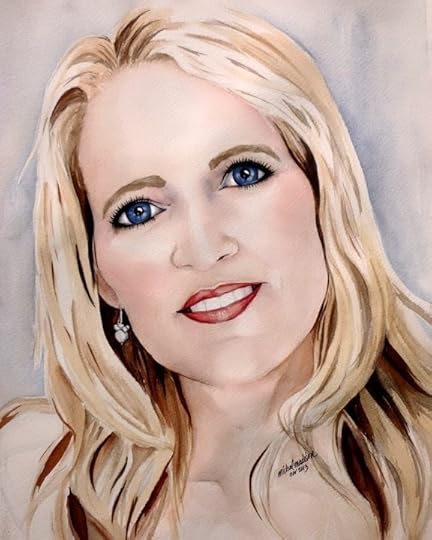 Svava Brooks, art by Michal Madison
(This portrait of Svava Brooks was painted by Michal Madison. To read more about how Michal uses art to advocate for victims of abuse, visit her site
Thank you Svava Brooks for your dedication!*Tolson 4 TEARS: Telling Everyone About Rape & Suicide, so no shed tear is wasted.Post completed by Lynn C. Tolson, author of Beyond the Tears: A True Survivor's Story

Svava is a survivor of child sexual abuse and speaks openly about her experience in the hopes that it will help others know they are not alone. Svava leads by example in breaking the silence on this most damaging and pervasive issue. She has dedicated her life to ending the cycle of abuse through education, awareness and supporting survivors.
Svava’s efforts are global. She is the co-founder of a child sexual abuse prevention and education organization in Iceland, Blátt áfram.

Svava also reaches out by offering online peer support for adult survivors of child sexual abuse at one health.com, which provides personalized support for survivors of childhood sexual trauma.
 Svava also maintains a web site at Educate4change, which is dedicated to ending the cycle of child sexual abuse. The blog at Speak4change offers information on how survivors can get the help they need, as well as providing education for ending child sexual abuse. Svava says, "You are not alone, together we can stop the cycle, together we can heal via awareness, education, and support." Svava knows that "we are stronger together." svava@educate4change.com Facebook page here
Svava is a Certified Instructor and Facilitator for Darkness to Light Stewards of Children, a child sexual abuse prevention program. Svava provides evidence-based training throughout California. In addition, Svava has developed programs for adults and teens to learn about the prevention of CSA.
 Svava Brooks, art by Michal Madison
(This portrait of Svava Brooks was painted by Michal Madison. To read more about how Michal uses art to advocate for victims of abuse, visit her site
Thank you Svava Brooks for your dedication!*Tolson 4 TEARS: Telling Everyone About Rape & Suicide, so no shed tear is wasted.Post completed by Lynn C. Tolson, author of Beyond the Tears: A True Survivor's Story
April 15, 2014
Tolson 4 TEARS* Reviews "My Justice"
My Justice
, a memoir by Patricia A. McKnight, is a harrowing story of unrelenting child abuse and life-threatening domestic violence. The author says that she initially hoped her book would open lines of communication between her and her adult children, a generation affected by the ramifications of trauma. Then, Patricia realized that abuse is an unaddressed epidemic, and her family was a microcosm of the problems that plague our society. She chose to offer a solution by making her personal story a publication that serves to educate and empower.
Even a seasoned reader of memoirs about trauma will feel the suffering of the narrator, an innocent child who experienced emotional cruelty, medical/dental neglect, and sexual abuse. Her father abandoned her, her step-father abused her, and her mother neglected her. Imagine wondering if this is the night your step-father is going to kill you, then trying to concentrate in school the next morning, then being the house-maid and nurse-maid and sex-slave when it’s time to be doing your own homework, then being chastised the next day for not having her assignments done on time. No child can be expected to carry-on like this for 12 years! Yet, no one seemed to notice the bruises, skin rashes, and tooth decay, obvious outer wounds that reflected the inner pain of a lost and alone child. Teachers ignored her and classmates harassed her. Tricia felt condemnation based on fear instead of compassion full of love. She also carried the burden of guilt and shame as well as the responsibility to keep the secrets of the disturbed and dysfunctional “family” she so desperately needed to survive because no one intervened!
McKnight uses details, descriptions, and a direct writing model to convey the terror of her childhood and young adulthood. The style seemed stream-of-consciousness, as if telling a story all in one breath. While reading, I held my breath, waiting to exhale. Sometimes the tense changed suddenly from past to present, indicating that emotions are not orderly concepts like chronological time. Sometimes a paragraph was written in 1st person with a sudden shift to “you” statements, as if the narrative was too hard for the author to relive in “I” statements. (First you live through it, then you experience it again when writing, and at different levels of consciousness.) Yet the readers’ final exhalation may be a sigh of relief; despite the torture and toxicity Tricia survived.
My Justice is not only a memoir; it is a call to action. In her own words Patricia A. McKnight implores people to “be the extended arm of help to anyone suffering from the impact of family violence or abuse.” She lives by shining example, offering words of encouragement and opportunities for enlightenment on the subjects of child abuse, rape, incest, and domestic violence. To tell a story about good versus evil, it takes courage to face fears, compassion for oneself and others, and a conviction to tell the truth. Bravo!
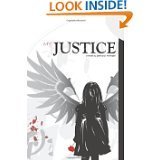
Review completed by Lynn C. Tolson, author of Beyond the Tears: A True Survivor's Story
*Tolson 4 TEARS: Telling Everyone About Rape & Suicide, so no shed tear is wasted

Even a seasoned reader of memoirs about trauma will feel the suffering of the narrator, an innocent child who experienced emotional cruelty, medical/dental neglect, and sexual abuse. Her father abandoned her, her step-father abused her, and her mother neglected her. Imagine wondering if this is the night your step-father is going to kill you, then trying to concentrate in school the next morning, then being the house-maid and nurse-maid and sex-slave when it’s time to be doing your own homework, then being chastised the next day for not having her assignments done on time. No child can be expected to carry-on like this for 12 years! Yet, no one seemed to notice the bruises, skin rashes, and tooth decay, obvious outer wounds that reflected the inner pain of a lost and alone child. Teachers ignored her and classmates harassed her. Tricia felt condemnation based on fear instead of compassion full of love. She also carried the burden of guilt and shame as well as the responsibility to keep the secrets of the disturbed and dysfunctional “family” she so desperately needed to survive because no one intervened!
McKnight uses details, descriptions, and a direct writing model to convey the terror of her childhood and young adulthood. The style seemed stream-of-consciousness, as if telling a story all in one breath. While reading, I held my breath, waiting to exhale. Sometimes the tense changed suddenly from past to present, indicating that emotions are not orderly concepts like chronological time. Sometimes a paragraph was written in 1st person with a sudden shift to “you” statements, as if the narrative was too hard for the author to relive in “I” statements. (First you live through it, then you experience it again when writing, and at different levels of consciousness.) Yet the readers’ final exhalation may be a sigh of relief; despite the torture and toxicity Tricia survived.
My Justice is not only a memoir; it is a call to action. In her own words Patricia A. McKnight implores people to “be the extended arm of help to anyone suffering from the impact of family violence or abuse.” She lives by shining example, offering words of encouragement and opportunities for enlightenment on the subjects of child abuse, rape, incest, and domestic violence. To tell a story about good versus evil, it takes courage to face fears, compassion for oneself and others, and a conviction to tell the truth. Bravo!

Review completed by Lynn C. Tolson, author of Beyond the Tears: A True Survivor's Story
*Tolson 4 TEARS: Telling Everyone About Rape & Suicide, so no shed tear is wasted
April 14, 2014
Tolson 4 TEARS* Reviews "Don't Mind Me"
Don’t Mind Me
by Judith Haire is a memoir about the deep descent into psychosis and the long struggle to find mental health in the aftermath. It is one woman’s true story of finding herself at the bottom of a well of insanity, with nothing but her own wits to get her to surface to sanity.Ms. Haire describes a history of generations of hostile family relationships, including those of her grandparents. Then, she delves into the unsatisfying marriage of her parents, which made her feel unwanted. Her father’s moods alternated from violent to withdrawn, while her mother distanced herself from emotional commitment toward her child. Ms. Haire’s painful childhood left her bereft of the nurturing children require to grow to healthy adults. As is often the case, she repeats the patterns of helplessness and hopelessness by marrying a man who used and abused her. She described herself as “mentally destroyed.” Having no support, Ms. Haire became vulnerable to a psychotic break.In
Don’t Mind Me
, Judith Haire describes the hell of psychological torment: “I imagined there was a nuclear war going on around me, I imagined my house would explode the next time I opened the front door.” How could she live a healthy life under that kind of mental pressure? The reader is taken on a journey of hallucinations that leads Ms. Haire to be as helpless as an infant in the “fetal position.”Ms. Haire’s treatment appeared to lack compassion; she was often ignored, under-medicated, over-medicated, misunderstood, and isolated. It seemed to be the commitment of the patient herself that moved her mind through psychosis. Step by step she took on challenges that lead to a healthy life with a fulfilling relationship. She’s firm in her belief that even an unborn child can take on the stressors of the parents. This theory helps Ms. Haire to have compassion for herself.Judith Haire says she found catharsis in writing
Don’t Mind Me
. She offers resources for mental health clinicians and patients alike. Most importantly, she shares a personal story that helps to reduce the stigma of mental illness by increasing the understanding society needs to protect vulnerable citizens.
Twitter @JudithHaire, and Facebook
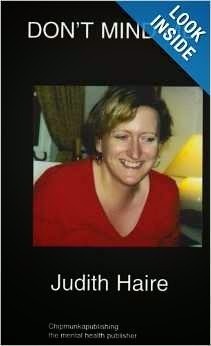
Review completed by Lynn C. Tolson, author of Beyond the Tears: A True Survivor's Story
*Tolson 4 TEARS: Telling Everyone About Rape & Suicide, so no shed tear is wasted

Twitter @JudithHaire, and Facebook

Review completed by Lynn C. Tolson, author of Beyond the Tears: A True Survivor's Story
*Tolson 4 TEARS: Telling Everyone About Rape & Suicide, so no shed tear is wasted
April 11, 2014
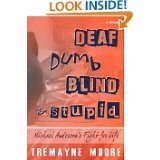
Tolson 4 TEARS* Reviews "Deaf, Dumb, Blind and Stupid"
Deaf, Dumb, Blind, and Stupid: Michael Anderson’s Fight for Life
by Tremayne Moore @Mahntre is a story about a boy suffering from child abuse. Although fictionalized, the author states that it is based on a true story. There are too few books about abuse and its life-long effects on males.
What makes this book unique is in the format: A pastor explains to the congregation the tragic history of young Michael and educates the parishioners on the topic of child abuse. Woven throughout the pastor’s speech are snippets from the boy’s personal diary, read aloud to the attendees; the journals indicate the emotional devastation of abuse and the deep despair of the victim. Thus, there is a cautionary tale within the pastor’s eulogy, one that urges readers to become aware of abuse and its ramifications.
This could be considered a coming-of-age story because it takes the reader from the main character’s childhood through adolescence. During this time, Michael explains through the journals his observations of society, such as the hypocrisy of religions, the injustice in society, and the betrayals of love. He is a sensitive boy, thinking and feeling on a mature, meaningful level; he is wise beyond his years.
Through this novel, Tremayne Moore offers to open lines of communication of social problems such as abuse and suicide. He even developed a question guide for use by an individual reader or a book club. Deaf, Dumb, Blind and Stupid provides the necessary awareness of child abuse and how it may evolve into a tragic loss of human potential.
Review completed by Lynn C. Tolson, author of Beyond the Tears: A True Survivor's Story
New Culture Internet Radio with NINA FITZHUGH WELLS on BlogTalkRadio
*Tolson 4 TEARS: Telling Everyone About Rape & Suicide, so no shed tear is wasted
What makes this book unique is in the format: A pastor explains to the congregation the tragic history of young Michael and educates the parishioners on the topic of child abuse. Woven throughout the pastor’s speech are snippets from the boy’s personal diary, read aloud to the attendees; the journals indicate the emotional devastation of abuse and the deep despair of the victim. Thus, there is a cautionary tale within the pastor’s eulogy, one that urges readers to become aware of abuse and its ramifications.
This could be considered a coming-of-age story because it takes the reader from the main character’s childhood through adolescence. During this time, Michael explains through the journals his observations of society, such as the hypocrisy of religions, the injustice in society, and the betrayals of love. He is a sensitive boy, thinking and feeling on a mature, meaningful level; he is wise beyond his years.
Through this novel, Tremayne Moore offers to open lines of communication of social problems such as abuse and suicide. He even developed a question guide for use by an individual reader or a book club. Deaf, Dumb, Blind and Stupid provides the necessary awareness of child abuse and how it may evolve into a tragic loss of human potential.
Review completed by Lynn C. Tolson, author of Beyond the Tears: A True Survivor's Story

New Culture Internet Radio with NINA FITZHUGH WELLS on BlogTalkRadio
*Tolson 4 TEARS: Telling Everyone About Rape & Suicide, so no shed tear is wasted
April 7, 2014
Tolson 4 TEARS Reviews "Those Are My Private Parts"
Those Are My Private Parts
by Diane Hansen
How do we talk to our children about sexual abuse? What can parents and caregivers say to prevent child sexual abuse? In a society that spends more funding dollars on intervention instead of prevention, Diane Hansen, author of Those Are My Private Parts , has found a simple yet ingenious way to answer those questions. Her book is illustrated with child-friendly drawings in primary colors. The text carries short rhythms with great messages. Every educator and caregiver, as well as children's advocacy centers, should have a copy of this book as a tool to empower children.
Diane Hansen was spurred to action when she heard a perpetrator of sexual abuse on The Oprah Winfrey Show. The convicted child molester revealed how he had used secret tactics and tricks to coerce children into sex acts. A child molester claimed that it is harder to manipulate children who realize the danger. And the danger does not lie solely with a stranger: 93-95% of victims know the attacker! The sting of betrayal runs deep when a child has been abused by someone he/she had initially trusted. Those Are My Private Parts clearly conveys the message to children that no one has a right to his/her body.
"Aunts, cousins, step-fathers, step-brothers, Nannies, grannies, Pa-Pas or mothers Never will anyone make me play A private parts game in any way."
Experts in the field of child abuse state that sexual abuse is a power and control issue, and sex is used as the weapon. The damaging consequences to a child who has been sexually abused are serious, including suicide attempts as well as drug and alcohol abuse. We have to protect our children! Bravo to Diane Hansen for finding a way to teach children to say, "Those are my private parts!"
(Perhaps if I had had a book like this as a child I would not have had to write a story of survival from sexual abuse.)

Review completed by Lynn C. Tolson, author of Beyond the Tears: A True Survivor's Story
How do we talk to our children about sexual abuse? What can parents and caregivers say to prevent child sexual abuse? In a society that spends more funding dollars on intervention instead of prevention, Diane Hansen, author of Those Are My Private Parts , has found a simple yet ingenious way to answer those questions. Her book is illustrated with child-friendly drawings in primary colors. The text carries short rhythms with great messages. Every educator and caregiver, as well as children's advocacy centers, should have a copy of this book as a tool to empower children.
Diane Hansen was spurred to action when she heard a perpetrator of sexual abuse on The Oprah Winfrey Show. The convicted child molester revealed how he had used secret tactics and tricks to coerce children into sex acts. A child molester claimed that it is harder to manipulate children who realize the danger. And the danger does not lie solely with a stranger: 93-95% of victims know the attacker! The sting of betrayal runs deep when a child has been abused by someone he/she had initially trusted. Those Are My Private Parts clearly conveys the message to children that no one has a right to his/her body.
"Aunts, cousins, step-fathers, step-brothers, Nannies, grannies, Pa-Pas or mothers Never will anyone make me play A private parts game in any way."
Experts in the field of child abuse state that sexual abuse is a power and control issue, and sex is used as the weapon. The damaging consequences to a child who has been sexually abused are serious, including suicide attempts as well as drug and alcohol abuse. We have to protect our children! Bravo to Diane Hansen for finding a way to teach children to say, "Those are my private parts!"
(Perhaps if I had had a book like this as a child I would not have had to write a story of survival from sexual abuse.)

Review completed by Lynn C. Tolson, author of Beyond the Tears: A True Survivor's Story
April 6, 2014
Tolson 4 TEARS Reviews "It Happens Every Day"
Review of It Happens Every Day: Inside the World of a Sex Crimes D. A. By Robin SaxRobin Sax is an expert on sex crimes against children. She was a Los Angeles County Deputy District Attorney who prosecuted offenders for the child sexual assault division. As an attorney and advocate for victims’ rights, she appears to be as passionate as she is knowledgable.
Sax says she wrote the book to illustrate what transpires when a district attorney prosecutes a child sexual assault case. Using a no-nonsense style of writing, Sax shows the reader how the criminal justice system works, or does not work, for its victims. She incorporates case studies as well as descriptions of crime scenes and victim statements to get her main point across: “child sexual assault has become a social epidemic.”The book is divided into two parts, “Behind the One-Way Mirror” and “Behind Counsel Table.” Sax shows ways in which cases are investigated, how children are treated through the process, and what happens when a perpetrator is convicted. The reader learns about the justice system without the sensationalism of TV court drama. Sax provides an extensive appendix, separates fact from fiction, and offers her expert opinions.Whether or not a victim pursues a criminal charge against a perpetrator, this is what Robin Sax knows for sure: sex crimes “will affect the victim’s outlook on life, decisions, and relationships for the rest of his or her life.”Any advocate, expert, and concerned citizen should read this book to help protect children and raise awareness because 93% of victims know their attackers. @robinsax
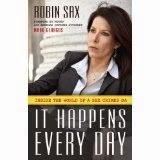
Also by Robin Sax: Predators and Child Molesters: What Every Parent Needs to Know

Review completed by Lynn C. Tolson, author of Beyond the Tears: A True Survivor's Story
Sax says she wrote the book to illustrate what transpires when a district attorney prosecutes a child sexual assault case. Using a no-nonsense style of writing, Sax shows the reader how the criminal justice system works, or does not work, for its victims. She incorporates case studies as well as descriptions of crime scenes and victim statements to get her main point across: “child sexual assault has become a social epidemic.”The book is divided into two parts, “Behind the One-Way Mirror” and “Behind Counsel Table.” Sax shows ways in which cases are investigated, how children are treated through the process, and what happens when a perpetrator is convicted. The reader learns about the justice system without the sensationalism of TV court drama. Sax provides an extensive appendix, separates fact from fiction, and offers her expert opinions.Whether or not a victim pursues a criminal charge against a perpetrator, this is what Robin Sax knows for sure: sex crimes “will affect the victim’s outlook on life, decisions, and relationships for the rest of his or her life.”Any advocate, expert, and concerned citizen should read this book to help protect children and raise awareness because 93% of victims know their attackers. @robinsax

Also by Robin Sax: Predators and Child Molesters: What Every Parent Needs to Know

Review completed by Lynn C. Tolson, author of Beyond the Tears: A True Survivor's Story
Beyond the Tears: A True Survivor's Story by Lynn C. Tolson, blog

This is the blog at goodreads for the author Lynn C. Tolson. The blog will keep readers up-to-date on her memoir Beyond the Tears: A True Survivor's Story. The blog has links to interviews, videos, po
...more
- Lynn C. Tolson's profile
- 33 followers
Lynn C. Tolson isn't a Goodreads Author
(yet),
but they
do have a blog,
so here are some recent posts imported from
their feed.

