
Lynn C. Tolson's Blog: Beyond the Tears: A True Survivor's Story by Lynn C. Tolson, blog, page 6
June 14, 2014
Beyond the Tears Receives 5 Star Review
Insights and Reflections
My first encounter with Lynn C Tolson was actually on Facebook. As I became involved in groups and pages about childhood sexual abuse, Lynn's name kept popping up everywhere. Who was this woman? My research revealed she was an author, herself once a victim of sexual abuse, and currently a social worker and speaker who gives a great deal of her time and self to helping other victims, both on and offline. I got the impression she was well-known and I felt dwarfed by her achievements. But at that point, she was still just a name with a nice Facebook photo.
Now, having read Lynn's book, if it were possible, the one thing I'd love to do is meet her in person. I want to meet this woman who at the opening of her book was on her way to commit suicide. She'd had it! She couldn't take any more. She hauled into a motel, swallowed all the pills she could find and waited for death to come. But life wasn't done with her yet because she had a mission to fulfill: to heal from her own devastating and lonely past; to conquer her drug-addicted lifestyle; to rid herself of an older husband who was using her low self-esteem to victimize her further, and ultimately to share her path to recovery with the thousands of other victims out there who might also think that taking their own lives is the only solution. Thank heaven Lynn's attempt to end it all failed or Beyond the Tears wouldn't have been written.
The one thing that stood out for me as I got further and further into Lynn's story of sexual abuse by both her schizophrenic biological father, and later, by her older brother, was her extreme isolation, even as a young child, in a family of several members. Like all victims of sexual abuse, she couldn't bring herself to tell her own mother of the abuse. Why? Because her mother was too delicate, too fragile. So to save her mother from heartache, she let her own heart ache with her ugly secret. Intimidated by her step-father, confused by her own father, ignored by her mother and scorned and berated by her abusive brother, Lynn wandered through her teens dulling her pain on street drugs. She watched a soul-mate die from an overdose and still couldn't help herself. After compounding the mess of her life by marrying a mentally and verbally abusive husband, suicide seemed the only out till fate stepped in. Lynn met Karen and with love, caring and wise counsel, Karen got Lynn to open up and tell all.
As all abuse victims come to realiize sooner or later, healing begins in finally telling someone, but it is journalling, writing, that ultimately closes the wounds. Karen encouraged Lynn to do that. Lynn took another 20 years before putting pen to paper and further heal, but it is her readers, especially those who are victims of childhood sexual abuse who benefit from her writing. Lynn not only shares her life with us in an easy to read, semi-fictional style, but she peppers her story with insights and reflections on the personalities of her family and how they contributed to her isolation, an isolation I sense she still feels today but is able to live with. Every so often, she throws in some touching poetry that is short and poignant. And by sharing Karen's words of counsel and wisdom with us, Lynn offers the reader concepts that truly help one heal.
If there's one thing I love about the internet and social networking sites like Facebook, it's that it clarifies perceptions we form of people when we only meet them in print, as in their blogs, poems or books. Read their words and you form a picture of them. Look at their photos and we see what the words don't show. Listen to their voices, as I did recently in a blog talk show with Lynn and the image sharpens. Watch a video (Lynn has one on her own blog site at http://beyondthetears.blogspot.ca, and you suddenly know a lot more about this person who till now was just a name on a book.
Getting to know Lynn C Tolson begins with reading Beyond the Tears, but don't stop there! Visit her blog, read her posts, check out her other reviews and videos at Goodreads, and come to know this strong woman who was once a victim of child sexual abuse but is today a survivor and thriver. As Karen told her: "When you lose your identity as a victim, you gain an identity as a survivor". Beyond the Tears is a guide to doing just that.

Review completed by Viga Boland, author of No Tears for my Father: A True Story of Incest


May 29, 2014
Tolson 4 TEARS* on Religion & Growing Up Catholic
My blog post illustrates how religious institutions demand blind obedience from parishioners trained from childhood to defer to the established patriarchal principles of society. Conforming to the religious standards without being able to think for oneself and form individual opinions is a set up for oppression and submission for the sake of a feeling of belongingness.
Adapted from Beyond the Tears: A True Survivor's Story © by Lynn C. TolsonLike many Americans of Italian descent, my family was of the Roman Catholic religion. My grandmother had statues of saints on her dresser, and a picture of the Pope over her bed. My mother prayed with me, on our knees, before bed: If I should die before I wake, I pray the Lord my soul to take. Our family activities were based on the religious calendar.In parochial school, Mass was mandatory on Holy Days of Obligation. Each class marched single file to the church; nuns in habits led children in plaid uniforms. I learned words such as hypocrite and contradict and excommunication, and the language of the Catholic congregation: catechism, confession, contrition, communion, confirmation, and the rituals of the Catholic church: The stations of the Cross, the Cross on the Rosary, and the Sign of the Cross: In the name of the Father, and of the Son, and of the Holy Ghost. That included all the important people, but what category did little girls fall into? There seemed to be no place for me, so whenever I was in church, I never felt right or good. I always felt guilty, because, I'd been taught, we were born with Original Sin.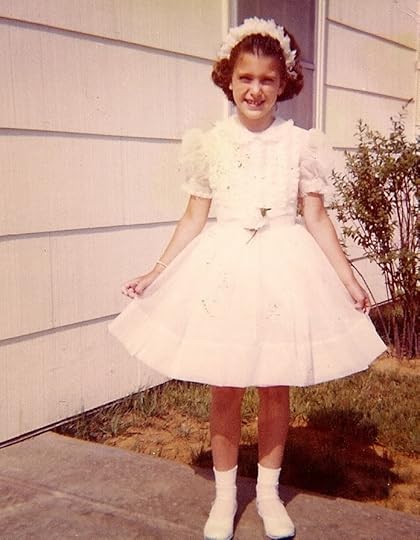 Lynn C. Tolson
First Holy CommunionConfession was a real dilemma. What sins could an eight-year-old commit? Often I did not sin at all, but since Confession was mandatory, I invented sins, such as fibbing. To perform the rites of a good Catholic, I lied to the priest about how I had fibbed to my mother. How could premeditated lies be righteous? It took the wisdom of the ages to realize the blind obedience to doctrine and dictates was a precursor for the passive and vulnerable victim personality that developed sooner rather than later. When I could decide for myself, I realized that a religious rituals were not for me. Some people feel stifled by institutions and some use church just to gain status. Religion may be a source of strength to others. The principles of religion, such as The Golden Rule or The Ten Commandments, serve to instill love. What if traditional religion had no significance to me? Would I live without love?I learned that there is a difference between religion and spirituality. The main premise of spirituality is the belief in a Higher Power. With spirituality, humans attain an awareness that acknowledges the soul because we are intrinsically spiritual beings in human form. I once thought the soul hovered above or around the body, but not quite in it. Then, I learned that the body is a vessel for the soul to inhabit. The soul is the essence of love as it manifests in the world.God’s love (your personal vision) is alive and present in your soul. Our spiritual connection is our unity with God, and the love of God in the universe. Every soul finds redemption as a child in God’s family because love is perfect and pure within all of us.
Spirituality took on a new meaning, not as a means to get to Heaven, but as a way to get through each day on earth. The love of God is not reserved for special people who perform certain acts. Love is not a matter of deserving. No list of accomplishments is needed to earn love. There is a purpose to life, which is as simple as experiencing love and extending that love to others.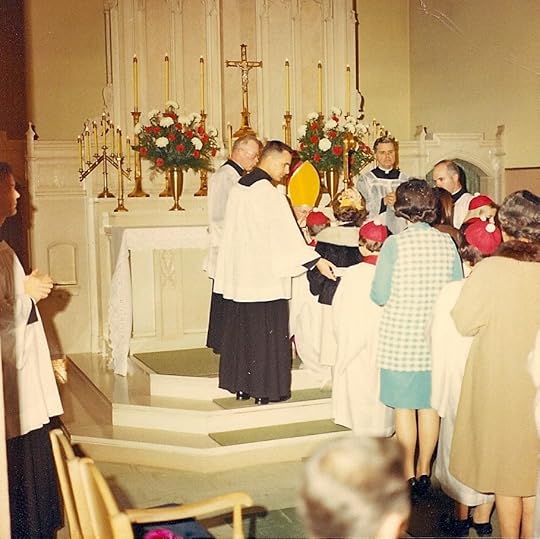 Lynn C. Tolson
Confirmation
*Tolson 4 TEARS: Telling Everyone About Rape & Suicide, so no shed tear is wasted

Adapted from Beyond the Tears: A True Survivor's Story © by Lynn C. TolsonLike many Americans of Italian descent, my family was of the Roman Catholic religion. My grandmother had statues of saints on her dresser, and a picture of the Pope over her bed. My mother prayed with me, on our knees, before bed: If I should die before I wake, I pray the Lord my soul to take. Our family activities were based on the religious calendar.In parochial school, Mass was mandatory on Holy Days of Obligation. Each class marched single file to the church; nuns in habits led children in plaid uniforms. I learned words such as hypocrite and contradict and excommunication, and the language of the Catholic congregation: catechism, confession, contrition, communion, confirmation, and the rituals of the Catholic church: The stations of the Cross, the Cross on the Rosary, and the Sign of the Cross: In the name of the Father, and of the Son, and of the Holy Ghost. That included all the important people, but what category did little girls fall into? There seemed to be no place for me, so whenever I was in church, I never felt right or good. I always felt guilty, because, I'd been taught, we were born with Original Sin.
 Lynn C. Tolson
First Holy CommunionConfession was a real dilemma. What sins could an eight-year-old commit? Often I did not sin at all, but since Confession was mandatory, I invented sins, such as fibbing. To perform the rites of a good Catholic, I lied to the priest about how I had fibbed to my mother. How could premeditated lies be righteous? It took the wisdom of the ages to realize the blind obedience to doctrine and dictates was a precursor for the passive and vulnerable victim personality that developed sooner rather than later. When I could decide for myself, I realized that a religious rituals were not for me. Some people feel stifled by institutions and some use church just to gain status. Religion may be a source of strength to others. The principles of religion, such as The Golden Rule or The Ten Commandments, serve to instill love. What if traditional religion had no significance to me? Would I live without love?I learned that there is a difference between religion and spirituality. The main premise of spirituality is the belief in a Higher Power. With spirituality, humans attain an awareness that acknowledges the soul because we are intrinsically spiritual beings in human form. I once thought the soul hovered above or around the body, but not quite in it. Then, I learned that the body is a vessel for the soul to inhabit. The soul is the essence of love as it manifests in the world.God’s love (your personal vision) is alive and present in your soul. Our spiritual connection is our unity with God, and the love of God in the universe. Every soul finds redemption as a child in God’s family because love is perfect and pure within all of us.
Spirituality took on a new meaning, not as a means to get to Heaven, but as a way to get through each day on earth. The love of God is not reserved for special people who perform certain acts. Love is not a matter of deserving. No list of accomplishments is needed to earn love. There is a purpose to life, which is as simple as experiencing love and extending that love to others.
 Lynn C. Tolson
Confirmation
*Tolson 4 TEARS: Telling Everyone About Rape & Suicide, so no shed tear is wasted
May 19, 2014
Tolson 4 TEARS* Claims "I AM" via Neil Diamond
*Tolson 4 TEARS means Telling Everyone About Rape & Suicide: to break the silence, comfort other victims, and challenge our society. It's important to note that statistics reveal that an estimated 14 percent of those who experienced sexual assault may attempt suicide. This accounts for only those who made the connection obvious. I wonder about the empty percentage of those who make no association between rape and suicide.
How could I know that my deep despair, overwhelming despondency, and desire to end my life was related to rape? After all, I trained my brain to "remember...nothing" as I had been instructed by the perpetrators.
The following is a paragraph in Beyond the Tears: A True Survivor's Story . I was 23 and had admitted myself to a psychiatric unit because I could no longer bear to live with the suicidal thoughts/activities. Something somewhere somehow was trying to help me save myself. I had taken it upon myself to finish the job rape started, obliterating my soul with lies of worthlessness.
As I sat on the bed in the psych ward a Neil Diamond song played on the tape recorder. “I am . . . I said, to no one there, and no one heard at all not even the chair.” My interpretation of the lyrics evolved into: I am a chair! I am an object! A memory formed as corporeal as that contained under the influence of truth serum: Could that really have been my big brother using me as an inanimate sex object? I am a chair! I am an object! I shoved the ambiguous memory down just as quickly as it had floated up."
However, it would take another 20 years before I could admit to my SELF that my brother had sexually assaulted me, threatened me with my life, and tried to eliminate my spirit with dead silence. To hear my voice, nourish my spirit, and claim my identity, I wrote the truth.

How could I know that my deep despair, overwhelming despondency, and desire to end my life was related to rape? After all, I trained my brain to "remember...nothing" as I had been instructed by the perpetrators.
The following is a paragraph in Beyond the Tears: A True Survivor's Story . I was 23 and had admitted myself to a psychiatric unit because I could no longer bear to live with the suicidal thoughts/activities. Something somewhere somehow was trying to help me save myself. I had taken it upon myself to finish the job rape started, obliterating my soul with lies of worthlessness.
As I sat on the bed in the psych ward a Neil Diamond song played on the tape recorder. “I am . . . I said, to no one there, and no one heard at all not even the chair.” My interpretation of the lyrics evolved into: I am a chair! I am an object! A memory formed as corporeal as that contained under the influence of truth serum: Could that really have been my big brother using me as an inanimate sex object? I am a chair! I am an object! I shoved the ambiguous memory down just as quickly as it had floated up."
However, it would take another 20 years before I could admit to my SELF that my brother had sexually assaulted me, threatened me with my life, and tried to eliminate my spirit with dead silence. To hear my voice, nourish my spirit, and claim my identity, I wrote the truth.

May 9, 2014
Tolson 4 TEARS* on 6 Elements of Change
Change is a concept that refers to making or becoming different than what came before. Change is an activity that requires deliberate steps toward transformation. We have to be conscious about changes that lead to a different way of being.I’d been allowing bits and pieces of myself to be swept away. I wanted to trek through the wasteland that was my life toward more fertile ground. I wanted to take charge of my life, to be accountable to myself and responsible toward others. I wanted to change everything, as if change is an all or nothing event.Once I thought that the only way to change my life was to cease living it. Fortunately, I had conversations with my counselor about change. These discussions started with the observation of myself as a victim. I learned that I perceived myself as a victim and I was led into circumstances that continued the victim role. Why was that? In my case, especially as it pertained to my relationships with men, I’d been around abusive men my whole life. The inner resources to defend my self were eroded by the myth that men are a force to fear. I learned that men and women are equal in the emotional and spiritual levels. I also had to learn that I deserved relationships that made me feel good, that were based on healthy common interests, and that true partners bring out the best in us. Change meant transforming from a vulnerable target to an empowered woman.This knowledge helped me to disengage from abusive relationships. But this change does not occur in a linear fashion. The activity that accompanies change happens in fits and starts, by trial and error, with failure and success. What remains constant is the
determination
to make a change, as well as the
discipline
to develop the strength and skills required to be different than before.My counselor suggested that I change my way of living by changing my way of thinking. “You can replace negative self-talk with optimistic thoughts. It is possible to change a negative perspective on life into a positive life force if you keep a sense of proportion.” Survivors of trauma are often drawn into drama by reacting without thinking. I learned that not every minor inconvenience leads to a major catastrophe. Rather, the whole of life is more about how I shaped it, day by day, by making good decisions and better choices.My counselor encouraged change but I was paralyzed with ambivalence. My
desire
to change was in conflict with the fear of change, and I resisted change even as I risked change. If only change could occur overnight, by osmosis, or at least if I could leave well enough alone. I pleaded with the universe to cooperate:Now travel, Time, no more delays, Propel me now to future days.To days of good, new days unfold. Now faster, Time, before I am old.I asked my counselor, “Why do I continually make mistakes?” Her answer was, “Your experiences were not mere mistakes, but life lessons. Human experiences pertain not just to suffering but also to personal development and soul growth.” That helped me to ease up on myself for perceived mistakes.For example, I couldn’t count on myself. I could not make up my mind or I would change my mind, or anyone could change it for me. I changed plans, habitually procrastinated, and invented excuses: a headache, a stomachache, it was too early or it was too far, or the weather was too terrible for whatever it was that I was avoiding. It was all too much because I’d been through too much.My counselor taught me the concrete steps to making a change:Be aware of the behavior needing changeExamine the reasons for developing the behavior in the first placeHave compassion for the choices made under the circumstancesFind new and healthy ways to meet your needsGet support! Ask for help!Set goals in small timeframes: one day, one week, one monthBreak down the larger goals into smaller onesGive yourself rewards along the way.Try not to minimize triumphs but appreciate the steps toward self-improvement.“What if I fail?” I asked my counselor. I realized that I failed to try anything that I could not do perfectly and all I could do perfectly was clean house. I thought about trying other things but never got around to it. I made a mental note: “To think and think and think about a thing and never to accomplish it at all.”She responded by saying, “Use failures as a learning experience and try again. It’s a waste of time to wait to do everything perfectly. In order to grow, it’s necessary to attempt new skills. Let go of the limiting controls of perfectionism! To make mistakes is to be human and everyone makes mistakes.”I began to change by using discipline to keep commitments, finish projects, and manage emotions. While I was incorporating healthy changes into my life, I was in transition, no longer the person I was and not the person I was yet to be. I had to call upon my
courage
reserves to navigate the hurdles and overcome an obstacle course of adverse circumstances. It would take courage to clear the past to find clarity for the future. Meanwhile, I kept the
commitment
to changing my life from constant chaos to inner peace.You can’t change everything at once, and some changes are noticeable only in retrospect. I can look back and know, feel, and believe how much I have changed since embarking on a healing journey. Have
confidence
in your ability to change! Confidence is based on previous accomplishments; build confidence by acknowledging the cumulative ways you have changed.The power to change is already within you, ready to be discovered. Find new methods to deal with old routines. It is up to you to make the conscious choices that bring a better future.
*Tolson 4 TEARS Telling Everyone About Rape & Suicide so no shed tear is wastedPost completed by Lynn C. Tolson, author of Beyond the Tears: A True Survivor's Story

*Tolson 4 TEARS Telling Everyone About Rape & Suicide so no shed tear is wastedPost completed by Lynn C. Tolson, author of Beyond the Tears: A True Survivor's Story
May 5, 2014
Tolson 4 TEARS* on DID, Dissociative Identity Disorder
Dissociative Identity Disorder (DID) is a psychiatric diagnosis in which a person displays multiple distinct identities or personalities (known as alter egos, parts, or alters), each with its own pattern of perceiving and interacting with the environment.
According to WebMD, "Dissociative identity disorder (previously known as multiple personality disorder) is a fairly common effect of severe trauma during early childhood, usually extreme, repetitive physical, sexual, and/or emotional abuse."
Also visit the article about a survivor with DID who uses creativity to cope, and a poem by a survivor with DID.
Post completed by Lynn C. Tolson, author of Beyond the Tears: A True Survivor's Story
*Tolson 4 TEARS Telling Everyone About Rape & Suicide, so no shed tear is wasted


May 2, 2014
Tolson 4 TEARS* Reviews "Agnes's Jacket" 4 Mental Health
Review of Agnes's Jacket: A Psychologist's Search For the Meaning of Madness by Dr. Gail Hornstein
Dr. Hornstein is a psychology professor at Mount Holyoke College. She states: “For as long as I can remember, madness has fascinated me… I had an intuitive sense that it must be possible to enter someone else’s experience and make sense of actions that from the outside might look inexplicable.” This empathic approach shows in the stories she weaves into Agnes’s Jacket.
Agnes Richter was a hospitalized German woman who stitched messages on her jacket to express herself. Dr. Hornstein uses the jacket as a focal point representation of the trap of mental illness that found a narrative escape.
Dr. Hornstein sees value in the writings of patients who provide insight into the nature of “madness." A main theme of Agnes’s Jacket supposes that recovery from “madness” can be achieved through mutual support and self-help. Dr. Hornstein states that the patients themselves are “experts by experience” who can help their peers. This peer-support approach opposes the medical model espoused by the National Alliance for the Mentally Ill which states that “mental illnesses are biologically based brain disorders.” Dr. Hornstein writes: “In the United States, psychiatry is controlled by doctors, who have a different economic interest in siding with the drug companies and preventing patients from treating themselves.”
Dr. Hornstein travelled Europe in search of the meanings of madness, attending lectures, visiting groups, and exploring theories. She shares her immense research in a writerly way that makes the book read more like a mystery than a study in psychology. She uses true stories from patients’ experiences with mental health agencies.
According to Dr. Hornstein, in Britain, Germany, and the Netherlands, social psychiatry proposes that: “Emotional distress is assumed to result from family crisis, racism, poverty, sexual abuse, war, or terrorism.” However, in the United States, psychiatrists fail to connect "madness" with previous life experiences.
Counselors and their clients may develop a greater understanding of mental illness by Dr. Rothstein’s interesting look into trauma and treatment. Patients are more than their apparent symptoms and resulting diagnosis; they are individuals with stories to tell. Society might listen to the stories to open lines of communication that will ultimately serve to enhance the mental health of its citizens.

Review completed by Lynn C. Tolson, author of Beyond the Tears: A True Survivor's Story
*Tolson 4 TEARS Telling Everyone About Rape & Suicide, so no shed tear is wasted

April 28, 2014
Tolson 4 TEARS* Reviews "Poetic Reflections"
Review of Poetic Reflections: Keep the Heart of A Child by Lori R. Lopez
Author Lori R. Lopez @LoriRLopez is known for her mystery, horror, and suspense stories. In Poetic Reflections, the reader sees her talent for writing poetry, prose, and song lyrics. What a prolific word-smith!
Poetry is often so abstract that it requires too much mental work to interpret: This is not the case with Lori's readable and understandable style. Lori R. Lopez's writing is raw yet carefully polished.
As I was reading Keep the Heart of A Child, I often felt as if Lori had been taking snap-shots of my thoughts, those elusive thoughts that come and go so quickly that they defy capture. Lori has the unique ability to contain and examine those thoughts, explore the emotions, and translate them by using words with substance. All this occurs with well-crafted twists and turns of language that convey the universal human condition of slow rises and fast falls as we ride the roller-coaster called LIFE.
Lori weaves her life story into this volume, creating textures that are not easily labeled but are readily resonating. The reader may feel as much joy from the poem “Sweet” as he/she does sorrow from a paragraph about abuse. Then, a poem like “Trust” appears, exploring the word in verse so that the reader can identify with the feeling, unlike a dry dictionary definition. She toys with words, and her clever word-play entertained me.
Each chapter has a narrative introduction that helps to organize the sheer number of words that will follow and the great span of subjects Lori R. Lopez covers. A reader cannot be disappointed; there is some thing, some word, some topic that will speak to your heart.
Review completed by Lynn C. Tolson, author of Beyond the Tears: A True Survivor's Story *Tolson 4 TEARS Telling Everyone About Rape & Suicide, so no shed tear is wasted


April 27, 2014
Tolson 4 TEARS* on Domestic Violence, Children Witnessing
What is considered violence? What do parents teach their children? John Bradshaw, author of "Homecoming" and "Creating Love " says: "I consider anything that violates a person's sense of self to be violence. Such action may not be directly physical or sexual, although it quite often is. Violence occurs when a more powerful and knowledgeable person destroys the freedom of a less powerful person for whom he or she is significant." Bradshaw also writes that "Anyone who witnesses violence is a victim of violence." Do you think children under 5 are not traumatized by seeing violence? Can a 4 year old girl really erase this scene as if it never happened? Here is an excerpt from "Beyond the Tears: A True Survivor's Story."
***My father opened a kitchen drawer and pulled out a knife. That’s the knife my mother used to cut bones from chicken. He was holding the knife over his head with the sharp blade aimed at my mother. She looked so small compared to his large body, and his rage was larger than life. My father noticed me long enough to stop killing my mother.***
Be aware that when you fight in front of your children, you are degrading their sense of self, developing their perspective of an unsafe world, and diminishing their respect for you. It takes decades of affirmations, meditations, medications, and celebrations to dry the tears of children whose parents fought while swearing to one another "one day you'll be the death of me." Whose fault is it when one of the parents commits suicide the night after a fight? Who takes on the responsiblity as surely as if it was a homicide? Children typically take on the blame for what is broken, for what they cannot fix. It takes forever and a day to undo the damage done to a child who witnesses the violence of parents who verbally, physically, mentally, and emotionally abuse each other. Be careful of what you allow children to witness, because all the time in the world does not heal all wounds.
Jerome Elam @JeromeElam is an advocate for children's rights, and writes for the Washington Times Communities. You can read his article titled Children of Domestic Violence: A black and blue fairy tale , which combines his personal experience with professional knowledge. He writes poignantly: "My father’s violent behavior seemed so unpredictable at first, a random explosion of anger that would fill the room with a fear that would suck all the oxygen from a room as I struggled to breathe." Sometimes children are waiting to exhale their entire lives.
Post completed by Lynn C. Tolson, author of Beyond the Tears: A True Survivor's Story
*Tolson 4 TEARS Telling Everyone About Rape & Suicide, so no shed tear is wasted

***My father opened a kitchen drawer and pulled out a knife. That’s the knife my mother used to cut bones from chicken. He was holding the knife over his head with the sharp blade aimed at my mother. She looked so small compared to his large body, and his rage was larger than life. My father noticed me long enough to stop killing my mother.***
Be aware that when you fight in front of your children, you are degrading their sense of self, developing their perspective of an unsafe world, and diminishing their respect for you. It takes decades of affirmations, meditations, medications, and celebrations to dry the tears of children whose parents fought while swearing to one another "one day you'll be the death of me." Whose fault is it when one of the parents commits suicide the night after a fight? Who takes on the responsiblity as surely as if it was a homicide? Children typically take on the blame for what is broken, for what they cannot fix. It takes forever and a day to undo the damage done to a child who witnesses the violence of parents who verbally, physically, mentally, and emotionally abuse each other. Be careful of what you allow children to witness, because all the time in the world does not heal all wounds.
Jerome Elam @JeromeElam is an advocate for children's rights, and writes for the Washington Times Communities. You can read his article titled Children of Domestic Violence: A black and blue fairy tale , which combines his personal experience with professional knowledge. He writes poignantly: "My father’s violent behavior seemed so unpredictable at first, a random explosion of anger that would fill the room with a fear that would suck all the oxygen from a room as I struggled to breathe." Sometimes children are waiting to exhale their entire lives.
Post completed by Lynn C. Tolson, author of Beyond the Tears: A True Survivor's Story
*Tolson 4 TEARS Telling Everyone About Rape & Suicide, so no shed tear is wasted

April 26, 2014
Tolson 4 TEARS* on Characteristics of Victim + Offender
By looking at this picture, no one would ever know that I was in a marriage fraught with
domestic violence
I was so familiar with abusive relationships that I did not know what a healthy relationship was like. In therapy sessions during my twenties, I learned that "People often seek a life partner who serves to resolve issues of the past.” The implication was that I had done so by marrying a man who preyed on my vulnerabilities, repeating what I had experienced as a child. I responded to my therapist's comment by saying that I was not looking for a mate who abused me! My therapist said, “No, not consciously. We sometimes operate on an unconscious level, which may lead to repetition of unhealthy patterns." She encouraged me to become more aware of patterns that pertained to my husband and family. "It’s not unusual to do things as we saw them done.”
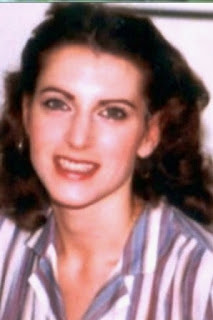 Lynn C. TolsonWhen we examine our motives, we make better choices. This illustrates why it is important to understand the dynamics of dysfunction: "If I know why I did what I did, I might do it better next time.” Realizing the characteristics of victims and offenders helps in determining whether it's an unhealthy relationship. You can't see the physical evidence of me as victim in this picture, but you can sense the traits that led me to perpetuate the roles.
(victims and offenders may have some and/or not have all of these characteristics)
VICTIM
Loyal
Socially isolated
Low self esteem
Believes traditional stereotypes
Often compliant with trivial demands
Suffers from guilt, denies terror and anger
Convinced she is responsible for the abuse
Believes all the myths about domestic violence
May have witnessed or experienced abuse as a child
Attempts to manipulate the environment to maintain safety
OFFENDER
Emotionally dependent
Abused as children (typically)
Loses temper frequently and early
Displays unusual amount of jealousy
Has weapons & threatens to use them
Contradictory, unpredictable personality
Has limited capacity for delayed gratification
Drinks alcohol excessively (and/or other substance)
Commits acts of violence against people, pets, and objects
*Tolson 4 TEARS = Telling Everyone About Rape & Suicide, so no shed tear is wasted
compiled by Lynn C. Tolson, author of Beyond the Tears: A True Survivor's Story
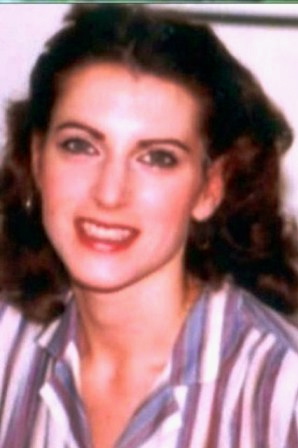 Lynn C. TolsonWhen we examine our motives, we make better choices. This illustrates why it is important to understand the dynamics of dysfunction: "If I know why I did what I did, I might do it better next time.” Realizing the characteristics of victims and offenders helps in determining whether it's an unhealthy relationship. You can't see the physical evidence of me as victim in this picture, but you can sense the traits that led me to perpetuate the roles.
 (victims and offenders may have some and/or not have all of these characteristics)
VICTIM
Loyal
Socially isolated
Low self esteem
Believes traditional stereotypes
Often compliant with trivial demands
Suffers from guilt, denies terror and anger
Convinced she is responsible for the abuse
Believes all the myths about domestic violence
May have witnessed or experienced abuse as a child
Attempts to manipulate the environment to maintain safety
OFFENDER
Emotionally dependent
Abused as children (typically)
Loses temper frequently and early
Displays unusual amount of jealousy
Has weapons & threatens to use them
Contradictory, unpredictable personality
Has limited capacity for delayed gratification
Drinks alcohol excessively (and/or other substance)
Commits acts of violence against people, pets, and objects
*Tolson 4 TEARS = Telling Everyone About Rape & Suicide, so no shed tear is wasted
compiled by Lynn C. Tolson, author of Beyond the Tears: A True Survivor's Story
April 25, 2014
Tolson 4 TEARS* Cheers Male Abuse Awareness Projects
Male Abuse Awareness is an International Program hosted by the P. Luna Foundation"Male Abuse Awareness Week as a campaign held every year from Dec 1st through 8th. The website is the extension of that program, which is dedicated to the special needs of young boys and men who have been abused. (via PLF).
You can be aware by finding statistics of boys who are abused, which is under reported at 1 in 6. How do you find understanding for the lost souls who are victims of rape, incest, and sexual assault? Perhaps a poem by male survivor Michael J. Kullick will guide you in finding compassion for victims devastated by crimes so heinous, there are no words.
There are no words todescribe my painexplain how I feelTell you I'm hurting.
There are no feelings left in my bodythey all leftThe day you hurt me.
There are no tears to be shedbecause there areNo words inside me.
No words only numbnessFeelings severed from my bodyRipped from my Soul By Your Bare Hands.
 Michael Kullick"This poem appears in an anthology for a collection of poems written by adult male survivors of childhood sexual abuse. This anthology provides the reader with a deeper and more personal understanding of the devastating impact of sexual abuse on men."

In addition to sharing his poetry, Michael J. Kullick has also shared his story on Butterfly Dreams Abuse Recovery Radio, hosted by Patricia A. Mcknight.
Blog post completed by Lynn C. Tolson, author of Beyond the Tears: A True Survivor's Story*Tolson 4 TEARS Telling Everyone About Rape & Suicide, so no shed tear is wasted.
Check Out Self Help Podcasts at Blog Talk Radio with Butterfly Dreams Abuse Recovery on BlogTalkRadio

Beyond the Tears: A True Survivor's Story by Lynn C. Tolson, blog

This is the blog at goodreads for the author Lynn C. Tolson. The blog will keep readers up-to-date on her memoir Beyond the Tears: A True Survivor's Story. The blog has links to interviews, videos, po
...more
- Lynn C. Tolson's profile
- 33 followers
Lynn C. Tolson isn't a Goodreads Author
(yet),
but they
do have a blog,
so here are some recent posts imported from
their feed.

