
Discover new books on Goodreads
Meet your next favorite book

مريم
https://www.facebook.com/profile.php?id=100052938367296
https://www.goodreads.com/mariamalriany


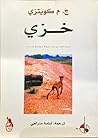


“All languages that derive fromLatin form the word 'compassion' by combining the prefix meaning 'with' (com-) and the root meaning 'suffering' (Late Latin, passio). In other languages- Czech, Polish, German, and Swedish, for instance- this word is translated by a noun formed of an equivalent prefixcombined with the word that means 'feeling' (Czech, sou-cit; Polish, wsspół-czucie; German, Mit-gefühl; Swedish, medkänsla).
In languages that derive from Latin, 'compassion' means: we cannot look on coolly as others suffer; or, we sympathize with those who suffer. Another word with approximately the same meaning, 'pity' (French, pitié; Italian, pietà; etc.), connotes a certain condescension towards the sufferer. 'To take pity on a woman' means that we are better off than she, that we stoop to her level, lower ourselves.
That is why the word 'compassion' generally inspires suspicion; it designates what is considered an inferior, second-rate sentiment that has little to do with love. To love someone out of compassion means not really to love.
In languages that form the word 'compassion' not from the root 'suffering' but from the root 'feeling', the word is used in approximately the same way, but to contend that it designates a bad or inferior sentiment is difficult. The secret strength of its etymology floods the word with another light and gives it a broader meaning: to have compassion (co-feeling) means not only to be able to live with the other's misfortune but also to feel with him any emotion- joy, anxiety, happiness, pain. This kind of compassion (in the sense of soucit, współczucie, Mitgefühl, medkänsla) therefore signifies the maximal capacity of affective imagination, the art of emotional telepathy. In the hierarchy of sentiments, then, it is supreme.
By revealing to Tomas her dream about jabbing needles under her fingernails, Tereza unwittingly revealed that she had gone through his desk. If Tereza had been any other woman, Tomas would never have spoken to her again. Aware of that, Tereza said to him, 'Throw me out!' But instead of throwing her out, he seized her and kissed the tips of her fingers, because at that moment he himself felt the pain under her fingernails as surely as if the nerves of her fingers led straight to his own brain.
Anyone who has failed to benefit from the the Devil's gift of compassion (co-feeling) will condemn Tereza coldly for her deed, because privacy is sacred and drawers containing intimate correspondence are not to be opened. But because compassion was Tomas's fate (or curse), he felt that he himself had knelt before the open desk drawer, unable to tear his eyes from Sabina's letter. He understood Tereza, and not only was he incapable of being angry with her, he loved her all the more.”
―
In languages that derive from Latin, 'compassion' means: we cannot look on coolly as others suffer; or, we sympathize with those who suffer. Another word with approximately the same meaning, 'pity' (French, pitié; Italian, pietà; etc.), connotes a certain condescension towards the sufferer. 'To take pity on a woman' means that we are better off than she, that we stoop to her level, lower ourselves.
That is why the word 'compassion' generally inspires suspicion; it designates what is considered an inferior, second-rate sentiment that has little to do with love. To love someone out of compassion means not really to love.
In languages that form the word 'compassion' not from the root 'suffering' but from the root 'feeling', the word is used in approximately the same way, but to contend that it designates a bad or inferior sentiment is difficult. The secret strength of its etymology floods the word with another light and gives it a broader meaning: to have compassion (co-feeling) means not only to be able to live with the other's misfortune but also to feel with him any emotion- joy, anxiety, happiness, pain. This kind of compassion (in the sense of soucit, współczucie, Mitgefühl, medkänsla) therefore signifies the maximal capacity of affective imagination, the art of emotional telepathy. In the hierarchy of sentiments, then, it is supreme.
By revealing to Tomas her dream about jabbing needles under her fingernails, Tereza unwittingly revealed that she had gone through his desk. If Tereza had been any other woman, Tomas would never have spoken to her again. Aware of that, Tereza said to him, 'Throw me out!' But instead of throwing her out, he seized her and kissed the tips of her fingers, because at that moment he himself felt the pain under her fingernails as surely as if the nerves of her fingers led straight to his own brain.
Anyone who has failed to benefit from the the Devil's gift of compassion (co-feeling) will condemn Tereza coldly for her deed, because privacy is sacred and drawers containing intimate correspondence are not to be opened. But because compassion was Tomas's fate (or curse), he felt that he himself had knelt before the open desk drawer, unable to tear his eyes from Sabina's letter. He understood Tereza, and not only was he incapable of being angry with her, he loved her all the more.”
―

“The natural man lives for himself; he is the unit, the whole, dependent only on himself and on his like. The citizen is but the numerator of a fraction, whose value depends on its denominator; his value depends upon the whole, that is, on the community. Good social institutions are those best fitted to make a man unnatural, to exchange his independence for dependence, to merge the unit in the group, so that he no longer regards himself as one, but as a part of the whole, and is only conscious of the common life.”
― Emile
― Emile
 قراء عرب علي جود ريدز- قراءات جيدة
— 8138 members
— last activity Jul 04, 2026 05:02PM
قراء عرب علي جود ريدز- قراءات جيدة
— 8138 members
— last activity Jul 04, 2026 05:02PM
شباب القراء العرب، فلننظم الموقع بحيث يكون لنا تواجد جيد به، ويزداد عدد الكتب العربية به والمعلومات عنها ليكون قاعدة بيانات للقارئ العربي أيضًا.. نرج ...more

مريم ’s 2025 Year in Books
Take a look at مريم ’s Year in Books, including some fun facts about their reading.

1,215 books
|
4,357 friends

7,670 books
|
4,976 friends

2,241 books
|
730 friends

2,626 books
|
4,410 friends

1,759 books
|
3,405 friends

409 books
|
4,013 friends

1,430 books
|
1,819 friends

738 books
|
798 friends
More friends…


Favorite Genres
Polls voted on by مريم
Lists liked by مريم