
Find & Share Quotes with Friends
Holodomor Quotes
Quotes tagged as "holodomor"
Showing 1-8 of 8

“Some searched for metaphors to describe what had happened. Tetiana Pavlychka remembered that her sister Tamara “had a large, swollen stomach, and her neck was long and thin like a bird’s neck. People didn’t look like people — they were more like starving ghosts.” Another survivor remembered that his mother “looked like a glass jar, filled with clear spring water. All her body that could be seen . . . was see-through and filled with water, like a plastic bag.”
A third remembered his brother lying down, “alive but completely swollen, his body shining as if it were made of glass”.”
― Red Famine: Stalin's War on Ukraine
A third remembered his brother lying down, “alive but completely swollen, his body shining as if it were made of glass”.”
― Red Famine: Stalin's War on Ukraine
“Голод став зброєю масового знищення українців, на довгі десятиліття порушив їх природний генетичний фонд, призвів до морально-психологічних змін у суспільній свідомості. Був зруйнований традиційний український устрій життя.
Внаслідок Голодомору українське суспільство, стало і значною мірою досі залишається травмованим, постгеноцидним. Десятки мільйонів людей, які пережили Голодомор, пройшли через невимовні страждання і просто не могли відкинути цього досвіду. Їхній опір було зламано, а страх повторення Голодомору залишався на довгі десятиліття та призвів до втрати впевненості й ініціативності. На свідомому та підсвідомому рівні травма Голодомору передавалася від батьків до дітей.”
― Голодомор: Комуністичний геноцид в Україні
Внаслідок Голодомору українське суспільство, стало і значною мірою досі залишається травмованим, постгеноцидним. Десятки мільйонів людей, які пережили Голодомор, пройшли через невимовні страждання і просто не могли відкинути цього досвіду. Їхній опір було зламано, а страх повторення Голодомору залишався на довгі десятиліття та призвів до втрати впевненості й ініціативності. На свідомому та підсвідомому рівні травма Голодомору передавалася від батьків до дітей.”
― Голодомор: Комуністичний геноцид в Україні
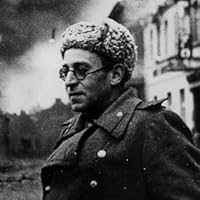
“While they were still transporting the grain, there was dust wherever you went. It was like clouds of smoke—over the village, over the fields, over the face of the moon at night. I remember one man going out of his mind. 'We're on fire!' he kept screaming. 'The sky is burning! The earth is burning!' No, it was not the sky—it was life itself that was burning.”
― Forever Flowing
― Forever Flowing

“It’s amazing how easily the youth forget the
Holodomor. Soviets not only starved us to death, but enjoyed every second of the suffering they inflicted. You’re an idealist, Jan, and idealism feels nice to live by, but all it does for you is drop you in a grave thinking the guy who put you there isn’t so bad.”
― Boom, Boom, Boom
Holodomor. Soviets not only starved us to death, but enjoyed every second of the suffering they inflicted. You’re an idealist, Jan, and idealism feels nice to live by, but all it does for you is drop you in a grave thinking the guy who put you there isn’t so bad.”
― Boom, Boom, Boom
“Faith in God turned into the destruction of churches; collectivization into the Holodomor; hope for a better future into the loss of loved ones. People sought justice, but received unjust court verdicts; they defended their homeland, only to become prisoners or victims of occupation.
— Volodymyr Shablia, Stone. Book Three (book description)
Context note:
This quote reflects the tragic fate of ordinary people in Soviet Ukraine during the 1930s–1940s, when religious persecution, forced collectivization, the Holodomor, political repression, and war shattered personal lives and destroyed hopes for justice and freedom.”
― Камінь. Біографічний роман. Книга третя. Несправджені сподівання.: Все буде Голодомор.
— Volodymyr Shablia, Stone. Book Three (book description)
Context note:
This quote reflects the tragic fate of ordinary people in Soviet Ukraine during the 1930s–1940s, when religious persecution, forced collectivization, the Holodomor, political repression, and war shattered personal lives and destroyed hopes for justice and freedom.”
― Камінь. Біографічний роман. Книга третя. Несправджені сподівання.: Все буде Голодомор.
“I took my own and Kolya’s two-day ration of bread and lard to the hospital,” the boy said, with unsettling calm beyond his years. “We must do everything we can to save him. If he dies, he won’t need food anymore.”
Danilo’s eyes filled with tears.
“Oh God, how could you let this happen?” he thought bitterly. “Is it fair to take a piece from one starving child to give it to another?”
He pulled his son’s head to his chest.
“You’re probably right,” he said quietly.
After a while, he returned from the pantry with an unusually full bucket of cornmeal and two bundles.
“Mother,” Danilo said to his mother-in-law, handing her the food, “besides the usual bread, bake a few pies with lard and pumpkin—for Kolya… and for Peter.”
— Volodymyr Shablia, Stone. Book Three
Context note:
Set during the Holodomor, this scene captures the impossible moral choices faced by families during the man-made famine in Soviet Ukraine. A child’s stark logic forces adults to confront the inhuman calculus of survival—where compassion meant redistributing hunger, and saving one life could mean endangering another.”
― Камінь. Біографічний роман. Книга третя. Несправджені сподівання.: Все буде Голодомор.
Danilo’s eyes filled with tears.
“Oh God, how could you let this happen?” he thought bitterly. “Is it fair to take a piece from one starving child to give it to another?”
He pulled his son’s head to his chest.
“You’re probably right,” he said quietly.
After a while, he returned from the pantry with an unusually full bucket of cornmeal and two bundles.
“Mother,” Danilo said to his mother-in-law, handing her the food, “besides the usual bread, bake a few pies with lard and pumpkin—for Kolya… and for Peter.”
— Volodymyr Shablia, Stone. Book Three
Context note:
Set during the Holodomor, this scene captures the impossible moral choices faced by families during the man-made famine in Soviet Ukraine. A child’s stark logic forces adults to confront the inhuman calculus of survival—where compassion meant redistributing hunger, and saving one life could mean endangering another.”
― Камінь. Біографічний роман. Книга третя. Несправджені сподівання.: Все буде Голодомор.
“Our guest—Comrade Stebletsov—is not merely speaking about rooting out class enemies from Soviet society; he is doing so in practice!” the homeroom teacher declared grandly. “He is a member of a grain requisition squad and therefore a true executor of the Bolshevik Party’s line to eliminate the kulaks as a class! And today, the best among you, children, are given the opportunity to prove your loyalty to the cause of Lenin and Stalin. Peter! Marusya! Stand up!”
The children rose from their desks in confusion.
“As top students and Young Pioneers, you are entrusted by our school collective with participation in an important state mission!” The teacher’s chest seemed to swell with pride as her chin lifted higher. “You will represent our school as public members of the grain requisition squad. Together with your senior comrades, you are assigned to uncover grain hidden by kulaks and saboteurs. Our class enemy does not sleep—he seeks to sabotage the industrialization of the USSR. He hides grain from the Soviet state, condemning the proletariat to suffering. But we will not allow the vile accomplices of the rich to rob our people! We entrust you with a responsible mission: as part of the requisition squad, you will locate and pour into the granaries of the Motherland the grain illegally concealed by the kulaks!”
— Volodymyr Shablia, Stone. Book Three
Context note:
Set during the Holodomor of 1933, this scene illustrates how Soviet schools became instruments of communist propaganda. Children were mobilized as Young Pioneers and encouraged to participate in grain confiscation campaigns against peasants branded by the regime as “kulaks.” The language of class struggle and industrialization masked the immense human cost of forced collectivization and the state-imposed famine in Ukraine and across the USSR.”
― Камінь. Біографічний роман. Книга третя. Несправджені сподівання.: Все буде Голодомор.
The children rose from their desks in confusion.
“As top students and Young Pioneers, you are entrusted by our school collective with participation in an important state mission!” The teacher’s chest seemed to swell with pride as her chin lifted higher. “You will represent our school as public members of the grain requisition squad. Together with your senior comrades, you are assigned to uncover grain hidden by kulaks and saboteurs. Our class enemy does not sleep—he seeks to sabotage the industrialization of the USSR. He hides grain from the Soviet state, condemning the proletariat to suffering. But we will not allow the vile accomplices of the rich to rob our people! We entrust you with a responsible mission: as part of the requisition squad, you will locate and pour into the granaries of the Motherland the grain illegally concealed by the kulaks!”
— Volodymyr Shablia, Stone. Book Three
Context note:
Set during the Holodomor of 1933, this scene illustrates how Soviet schools became instruments of communist propaganda. Children were mobilized as Young Pioneers and encouraged to participate in grain confiscation campaigns against peasants branded by the regime as “kulaks.” The language of class struggle and industrialization masked the immense human cost of forced collectivization and the state-imposed famine in Ukraine and across the USSR.”
― Камінь. Біографічний роман. Книга третя. Несправджені сподівання.: Все буде Голодомор.
“The doctor delivered a devastating diagnosis: a severe stroke with paralysis of the right side of her body, brought on by prolonged starvation.
In the days that followed, Irina’s condition steadily deteriorated. The family took turns caring for her, carefully following every medical instruction, yet the decline was obvious. Within days, her left leg failed as well. She could no longer speak—only stare ahead in silent resignation. Whenever one of her loved ones approached her bedside, tears streamed soundlessly down her face.
Now, sitting beside his grandmother’s pillow, Peter watched the boundless sorrow in her eyes as she looked at him.
“Grandma, everything will be all right. You’ll recover,” the boy lied with all the gentleness he was capable of. “I love you.”
He pressed his face to her chest and kissed her. Heavy tears rolled down Irina’s cheeks. A lump rose in Peter’s throat. He could not drive away the terrible thought: How could it be that only yesterday someone so alive, loving, and active—though ill—could so suddenly become a helpless ruin? It felt unnatural. It felt unjust.
With each passing day, life faded from Irina. A week after the stroke, she died quietly in her sleep.
At his grandmother’s funeral, Peter wept as he never had before—and never would again. He did not hide his tears. He kept kissing her cold lips, cheeks, and forehead. But each kiss only made the grief heavier.
— Volodymyr Shablia, Stone. Book Three
Context note:
Set during the Holodomor of 1933 in Ukraine, this scene portrays one of the famine’s most tragic realities: the rapid decline and death of the elderly and the sick often among the first victims of starvation. Malnutrition weakened the body’s ability to survive illness, and strokes, infections, and organ failure became fatal in a society stripped of food and medical resources. Behind the statistics of millions dead were intimate family tragedies like this one.”
― Камінь. Біографічний роман. Книга третя. Несправджені сподівання.: Все буде Голодомор.
In the days that followed, Irina’s condition steadily deteriorated. The family took turns caring for her, carefully following every medical instruction, yet the decline was obvious. Within days, her left leg failed as well. She could no longer speak—only stare ahead in silent resignation. Whenever one of her loved ones approached her bedside, tears streamed soundlessly down her face.
Now, sitting beside his grandmother’s pillow, Peter watched the boundless sorrow in her eyes as she looked at him.
“Grandma, everything will be all right. You’ll recover,” the boy lied with all the gentleness he was capable of. “I love you.”
He pressed his face to her chest and kissed her. Heavy tears rolled down Irina’s cheeks. A lump rose in Peter’s throat. He could not drive away the terrible thought: How could it be that only yesterday someone so alive, loving, and active—though ill—could so suddenly become a helpless ruin? It felt unnatural. It felt unjust.
With each passing day, life faded from Irina. A week after the stroke, she died quietly in her sleep.
At his grandmother’s funeral, Peter wept as he never had before—and never would again. He did not hide his tears. He kept kissing her cold lips, cheeks, and forehead. But each kiss only made the grief heavier.
— Volodymyr Shablia, Stone. Book Three
Context note:
Set during the Holodomor of 1933 in Ukraine, this scene portrays one of the famine’s most tragic realities: the rapid decline and death of the elderly and the sick often among the first victims of starvation. Malnutrition weakened the body’s ability to survive illness, and strokes, infections, and organ failure became fatal in a society stripped of food and medical resources. Behind the statistics of millions dead were intimate family tragedies like this one.”
― Камінь. Біографічний роман. Книга третя. Несправджені сподівання.: Все буде Голодомор.
All Quotes
|
My Quotes
|
Add A Quote
Browse By Tag
- Love Quotes 102k
- Life Quotes 80.5k
- Inspirational Quotes 77k
- Humor Quotes 45k
- Philosophy Quotes 31.5k
- Inspirational Quotes Quotes 28.5k
- God Quotes 27k
- Wisdom Quotes 25k
- Romance Quotes 25k
- Truth Quotes 25k
- Poetry Quotes 24k
- Life Lessons Quotes 23k
- Quotes Quotes 21.5k
- Death Quotes 21k
- Happiness Quotes 19k
- Hope Quotes 19k
- Faith Quotes 18.5k
- Inspiration Quotes 18k
- Motivational Quotes 16k
- Spirituality Quotes 16k
- Relationships Quotes 16k
- Religion Quotes 15.5k
- Life Quotes Quotes 15.5k
- Writing Quotes 15k
- Love Quotes Quotes 15k
- Success Quotes 14k
- Motivation Quotes 14k
- Time Quotes 13k
- Science Quotes 12.5k
- Motivational Quotes Quotes 12k