
 Sign in with Facebook

Doris Kearns Goodwin Examines Presidential Leadership

In Pulitzer Prize-winning historian and author Doris Kearns Goodwin's latest book, Leadership: In Turbulent Times, she draws upon the four U.S. presidents she has studied most closely—Abraham Lincoln, Theodore Roosevelt, Franklin D. Roosevelt, and Lyndon B. Johnson—to show how they recognized leadership qualities within themselves and were recognized as leaders by others. Goodwin told Goodreads that a student's question inspired her to write about the quality of leadership, as well as what books would be in her "starter kit" of American history.
Goodreads: Tell us how you became both a writer and a presidential historian.

Doris Kearns Goodwin: I became a historian first, and then a writer. In graduate school, I was working on my thesis on Supreme Court history when I was selected to join the White House Fellows, one of America’s most prestigious programs for leadership and public service. At the White House celebration of the newly chosen Fellows, President Johnson asked me to dance—not that peculiar, as there were only a few women in the program. He told me he wanted me to be assigned directly to him, but it was not to be that simple.
For like many young people, I had been active in the anti-Vietnam War movement and had co-authored an article that called for the removal of LBJ, published in the New Republic several days after the White House dance. Despite this, LBJ said: “Bring her down here for a year, and if I can’t win her over, no one can.” I worked with LBJ in the White House and later assisted him in the writing of his memoirs. I will forever be grateful to him because there’s no question that my experience working for him shaped my desire to become a presidential historian.
On becoming a writer, credit goes to my husband, Richard Goodwin. I was a wife, mother, professor at Harvard, and a writer—trying to do it all. I realized that there wasn’t enough time in the day, and it was my husband’s confidence in me and my writing that helped me realize that I could become a full-time writer and give up the teaching. It was a very hard decision because I loved teaching, too, but I’m so happy that it turned out this way because it’s been a great adventure the last 50 years!
Goodreads: Tell us about your research and writing process for Leadership: In Turbulent Times.
DKG: I was inspired, in part, to write this book after a student asked me, “How can I be like the giants you write about? Could I recognize whether I will be a leader?” So I started thinking about my guys, as I like to call them—Abraham Lincoln, Theodore Roosevelt, Franklin Roosevelt, and Lyndon Johnson—when they were young and unsure of their skills, ambition, and goals ahead. And instead of focusing on my guys separately, as I had for my other books, I began researching them through the exclusive lens of leadership.
My research draws from history, literature, biography, philosophy, political science, and business to deal with this mysterious and fascinating subject of leadership. This concentrated approach allowed me to dig deeper into the particular leadership strengths of each of the men. By following my guys as they grew into their leadership positions through loss, self-reflection, and experience, I got to know them more intimately than ever before—and I hope the reader feels the same. I sought to make these presidents human and accessible, so that we could truly see ourselves in their places and learn from the trajectory of their leadership. All told, it was a great challenge and a stretch in the way I think.
Goodreads: In your new book you analyze the leadership style of four U.S. presidents: Abraham Lincoln, Theodore Roosevelt, Franklin D. Roosevelt, and Lyndon B. Johnson. Why did you select these four men?
DKG: These four presidents—Lincoln, the two Roosevelts, and Johnson—form a family tree, a lineage of leadership that spans the entirety of our country’s history. Lyndon Johnson’s hero was Franklin Roosevelt; Franklin Roosevelt’s hero was Theodore Roosevelt; Theodore Roosevelt’s hero was Abraham Lincoln; and the closest Lincoln found to an ideal was George Washington. These guys are also the ones I know best. They were wonderful to “live with” over the course of my career, and it was fascinating to go back and look at them exclusively through the lens of leadership.
Goodreads: Although you say there is no common thread in the leadership trajectory of these presidents, did you find some similar traits that made them successful leaders?
DKG: Correct. I found no common pattern that describes the trajectory of successful leadership. Although set apart in background, abilities, and temperament, Lincoln, the Roosevelts, and LBJ shared a fierce ambition and a deep-seated resilience that enabled them to surmount uncommon adversity. At their best, all four were guided by a sense of moral purpose. At moments of great challenge, they were able to summon their talents to enlarge the opportunities and lives of others.
Goodreads: Why should leaders read history?

For like many young people, I had been active in the anti-Vietnam War movement and had co-authored an article that called for the removal of LBJ, published in the New Republic several days after the White House dance. Despite this, LBJ said: “Bring her down here for a year, and if I can’t win her over, no one can.” I worked with LBJ in the White House and later assisted him in the writing of his memoirs. I will forever be grateful to him because there’s no question that my experience working for him shaped my desire to become a presidential historian.
On becoming a writer, credit goes to my husband, Richard Goodwin. I was a wife, mother, professor at Harvard, and a writer—trying to do it all. I realized that there wasn’t enough time in the day, and it was my husband’s confidence in me and my writing that helped me realize that I could become a full-time writer and give up the teaching. It was a very hard decision because I loved teaching, too, but I’m so happy that it turned out this way because it’s been a great adventure the last 50 years!
Goodreads: Tell us about your research and writing process for Leadership: In Turbulent Times.
DKG: I was inspired, in part, to write this book after a student asked me, “How can I be like the giants you write about? Could I recognize whether I will be a leader?” So I started thinking about my guys, as I like to call them—Abraham Lincoln, Theodore Roosevelt, Franklin Roosevelt, and Lyndon Johnson—when they were young and unsure of their skills, ambition, and goals ahead. And instead of focusing on my guys separately, as I had for my other books, I began researching them through the exclusive lens of leadership.
Goodreads: In your new book you analyze the leadership style of four U.S. presidents: Abraham Lincoln, Theodore Roosevelt, Franklin D. Roosevelt, and Lyndon B. Johnson. Why did you select these four men?
DKG: These four presidents—Lincoln, the two Roosevelts, and Johnson—form a family tree, a lineage of leadership that spans the entirety of our country’s history. Lyndon Johnson’s hero was Franklin Roosevelt; Franklin Roosevelt’s hero was Theodore Roosevelt; Theodore Roosevelt’s hero was Abraham Lincoln; and the closest Lincoln found to an ideal was George Washington. These guys are also the ones I know best. They were wonderful to “live with” over the course of my career, and it was fascinating to go back and look at them exclusively through the lens of leadership.
Goodreads: Although you say there is no common thread in the leadership trajectory of these presidents, did you find some similar traits that made them successful leaders?
DKG: Correct. I found no common pattern that describes the trajectory of successful leadership. Although set apart in background, abilities, and temperament, Lincoln, the Roosevelts, and LBJ shared a fierce ambition and a deep-seated resilience that enabled them to surmount uncommon adversity. At their best, all four were guided by a sense of moral purpose. At moments of great challenge, they were able to summon their talents to enlarge the opportunities and lives of others.
Goodreads: Why should leaders read history?
DKG: The study and stories of Abraham Lincoln, Theodore Roosevelt, Franklin Roosevelt, and Lyndon Johnson set forth a template of shared purpose, collaboration, compromise, and civility—the best of our collective identity in times of trouble. We ignore history at our peril, for without heartening examples of leadership from the past, we fall prey to accepting our current climate of uncivil, frenetic polarization as the norm. The great protection for our democratic system, Lincoln counseled, was to “read of and recount” the stories of our country’s history, to rededicate ourselves to the ideals of our founding fathers. Through Leadership: In Turbulent Times, I hope I’ve provided a touchstone, a road map, for leaders and citizens alike.
Goodreads: What other history books would you recommend for people who wish to learn about leadership?
DKG: The Art of War by Sun Tzu and Leadership by James MacGregor Burns.
Goodreads: What books would you recommend for someone who has just recently become interested in American political history (what books would be in your starter kit on U.S. political history)?
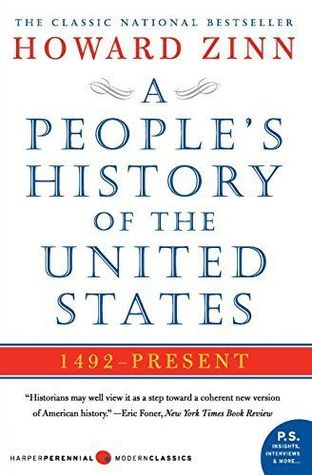
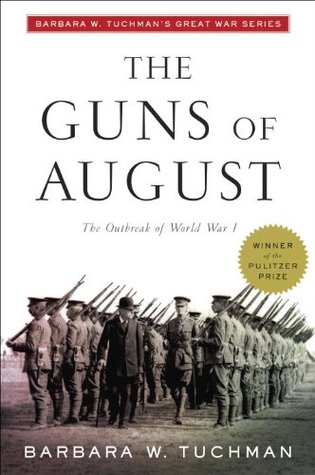
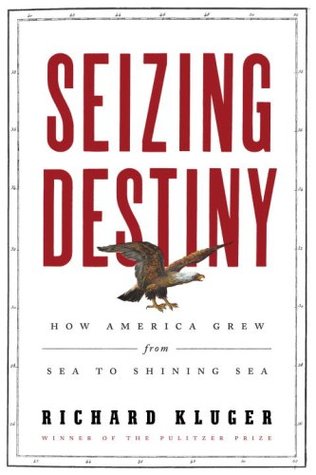
DKG: My starter kit on U.S. political history would include: A People's History of the United States by Howard Zinn, The Guns of August by Barbara W. Tuchman, Battle Cry of Freedom by James M. McPherson, Seizing Destiny: How America Grew from Sea to Shining Sea by Richard Kluger, and any book by Arthur M. Schlesinger Jr.
Goodreads: What are you currently reading, and what books are you recommending to your friends?
DKG: I’ve learned from the presidents I have studied how important it is to make time to relax and unwind as the day comes to an end. Just as Abraham Lincoln went to the theater more than 100 times during the Civil War to surrender his mind into “other channels of thought,” so I curl up in bed at night with a great mystery that transports me into a fictional world where there are puzzles to solve, absorbing characters to follow, and big surprises to experience.
Some of my recent favorites are: Camino Island by John Grisham, I’ve Got My Eyes on You by Mary Higgins Clark, The Hellfire Club by Jake Tapper, and The President Is Missing by James Patterson and Bill Clinton.
Goodreads: What other history books would you recommend for people who wish to learn about leadership?
DKG: The Art of War by Sun Tzu and Leadership by James MacGregor Burns.
Goodreads: What books would you recommend for someone who has just recently become interested in American political history (what books would be in your starter kit on U.S. political history)?
DKG: My starter kit on U.S. political history would include: A People's History of the United States by Howard Zinn, The Guns of August by Barbara W. Tuchman, Battle Cry of Freedom by James M. McPherson, Seizing Destiny: How America Grew from Sea to Shining Sea by Richard Kluger, and any book by Arthur M. Schlesinger Jr.
Goodreads: What are you currently reading, and what books are you recommending to your friends?
DKG: I’ve learned from the presidents I have studied how important it is to make time to relax and unwind as the day comes to an end. Just as Abraham Lincoln went to the theater more than 100 times during the Civil War to surrender his mind into “other channels of thought,” so I curl up in bed at night with a great mystery that transports me into a fictional world where there are puzzles to solve, absorbing characters to follow, and big surprises to experience.
Some of my recent favorites are: Camino Island by John Grisham, I’ve Got My Eyes on You by Mary Higgins Clark, The Hellfire Club by Jake Tapper, and The President Is Missing by James Patterson and Bill Clinton.
Doris Kearns Goodwin's Leadership: In Turbulent Times is in stores on September 18. Be sure to add it to your Want to Read shelf.
Check out more recent blogs:
Top Fictional Faustian Bargains
The Big Books of Fall
The Creators of 'Saga' Recommend Books for Their Fans
Check out more recent blogs:
Top Fictional Faustian Bargains
The Big Books of Fall
The Creators of 'Saga' Recommend Books for Their Fans
Comments Showing 1-50 of 53 (53 new)

 Happy to see such an erudite writer enjoys genre fiction
 Excellent interview. My favorite quote from the interview: "At moments of great challenge, they were able to summon their talents to enlarge the opportunities and lives of others." If only our current President would heed the call to: "...enlarge the opportunities and lives of others" instead of getting sucked into the vortex of hate, bigotry and chaos.
 What a terrific interview. Ms. Kearns Goodwin shares the openness and honesty in her interview that I feel in her books.
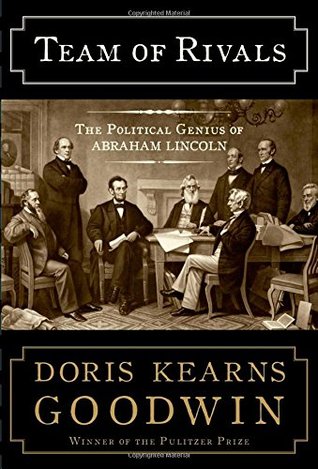
 I found it interesting that she had written an article disparaging LBJ yet he took an interest in her in spite of it. That was kind of the theme for Team of Rivals. DKG has always been a favorite of mine.
 Ms. Goodwin is one of my all-time favorite authors. She is a national treasure!
 Great interview. I have read all her books and will order a copy today.
 She lost me when she recommended a Howard Zinn book. Next she’ll be suggesting we get our news from CNN!
 Great interview, Goodreads. Today’s crazed, topsy-turvy leardership in both America and Britain could learn a lot from her work. Unlikely though, to the great detriment of us all.
Robin wrote: "She lost me when she recommended a Howard Zinn book. Next she’ll be suggesting we get our news from CNN!"
Great interview, Goodreads. Today’s crazed, topsy-turvy leardership in both America and Britain could learn a lot from her work. Unlikely though, to the great detriment of us all.
Robin wrote: "She lost me when she recommended a Howard Zinn book. Next she’ll be suggesting we get our news from CNN!"Yes, like Trump, we should all get our news from FOX - dishonest distortion for 8 year olds.
 I had to smile when I saw this. I found out about her latest book this morning and had to double check my calendar to see how long I had to wait.
 DKG is one of my favorite biographers (although I sometimes feel as if her biographies can be more of apologetics).

 Fascinating. Insightful. “I found no common pattern that describes the trajectory of successful leadership. Although set apart in background, abilities, and temperament, Lincoln, the Roosevelts, and LBJ shared a fierce ambition and a deep-seated resilience that enabled them to surmount uncommon adversity.” Coupled with a strong moral compass...there ain’t nothing these United States can’t do. Boy do we need this reminder in these days and times.
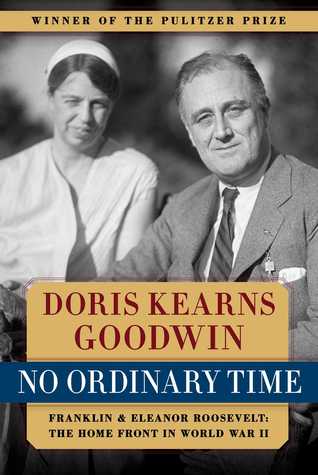
 The last book of hers I read was "an Ordinary Time". I loved that book so much, I felt like I was living in the book! I was so immersed that when I was finished I was empty and tried to find more about the Roosevelts to fill that void but alas they were all less than equal. Even Joe Lash was lacking and he was there! Deloris's writing is supreme!!
 I would like to recommend William McKinley presidency also-hope there is a book on it-since its on US presidents will stick to
 Those mentioned thanks-☺
 I agree that DKG is a national treasure! Thanks to Goodreads for setting this up and thanks for the heads-up so I didn't miss it. Interesting perspective. I'd advocate for more of these short interviews, particularly with some of our more senior historians (David McCullough and the like).
 Very nice interview. I appreciate the heads up to it. I am so thankful that we have DKG to help us relive the history that is the backbone of our future. I certainly look forward to this book.
Miss Goodwin will you ever write about mrs.lincoln and other wives of the presidents.?
Very nice interview. I appreciate the heads up to it. I am so thankful that we have DKG to help us relive the history that is the backbone of our future. I certainly look forward to this book.
Miss Goodwin will you ever write about mrs.lincoln and other wives of the presidents.?
 It will be so refreshing and reassuring to have a President who reads books. Let’s hope the next Commander in Chief reads Doris Kearns Goodwin.
 A thorough interview to be sure! Wish I had known such programs such as the White House Fellowship existed. High school counselors, yes, are busy, have a great number of students, but helpful things such as this would/could help motivate students to work towards such things. I own three of Ms Goodwin's works thus would get a fourth. They're all helpful works to those of us who are amateur historians.
 DKG is an example of a good leader, and never did give up her teaching career. She now speaks to a wider audience of students .
 I a big fan of DKG and have the book on preorder. Great interview.
Surprised that DKG didn’t include David McCullough in her history starter kit. Am looking forward to her newest book.
I a big fan of DKG and have the book on preorder. Great interview.
Surprised that DKG didn’t include David McCullough in her history starter kit. Am looking forward to her newest book.
 It will be interesting to compare Goodwin's new book with Jon Meacham's "The Soul of America." He also drew heavily from the same four Presidents.
 Great interview of one of my favorite historians!
 I loved "Team of Rivals" and look forward to reading this new one, but "Camino Island"? Really? I hope the others she mentioned are better than that.
 Excellent interview...”we ignore history at our peril” is a warning that needs to be echoed in our classrooms and by our leaders. Always have enjoyed DKG’s work plus she is a baseball fan!
“dishonest distortion for 8 year old“#CNN... moronic fake tripe that luckily more and more Americans are waking up to.
Bill wrote: "I loved "Team of Rivals" and look forward to reading this new one, but "Camino Island"? Really? I hope the others she mentioned are better than that."
Excellent interview...”we ignore history at our peril” is a warning that needs to be echoed in our classrooms and by our leaders. Always have enjoyed DKG’s work plus she is a baseball fan!
“dishonest distortion for 8 year old“#CNN... moronic fake tripe that luckily more and more Americans are waking up to.
Bill wrote: "I loved "Team of Rivals" and look forward to reading this new one, but "Camino Island"? Really? I hope the others she mentioned are better than that."I agree. I thought her "mystery" writers were greatly lacking! I don't like ANY of her choices -- and don't deem them "mysteries" as I prefer the British-style cozy. I would recommend she try Tony Hillerman and Louise Penny though. And of course the Great Brits!
Jeff wrote: "It will be interesting to compare Goodwin's new book with Jon Meacham's "The Soul of America." He also drew heavily from the same four Presidents."I do read Meacham and Brinkley and Beschloss and liked Bill Bennett's US History vols 1 and 2 (not 3). But DKG is my favorite historian writing today!
Robin wrote: "She lost me when she recommended a Howard Zinn book. Next she’ll be suggesting we get our news from CNN!"I wondered about that too but she may be trying to give us all a broader perspective so I've put it on my To Read list (where I NEVER would have before). (Sometimes you do need to tune into Fox for a few minutes.... just don't linger or believe.)
 None of David McCullough's books? John Adams was a wonderful book. Also No Stephen Ambrose? The story of Lewis and Clark's journey was pretty amazing. (Undaunted Courage). They are both very good writers of history. I liked the information and I loved the story of how she came to be a presidential writer. And I definitely agree that women cannot do it all. She is a terrific writer and speaker who is very knowledgable. I will look forward to reading her new book.
 Cynthia wrote: "None of David McCullough's books? John Adams was a wonderful book. Also No Stephen Ambrose? The story of Lewis and Clark's journey was pretty amazing. (Undaunted Courage). They are both very good w..."
David McCullough's "1776" is also a very interesting book. It shows how many different times the American Revolution could have failed during that year but survived due to audacity, outside-the-box thinking, and good luck.
 Well, this is a first, an GR author interview that convinced me to read the featured book. Usually these things come across as just more marketing with predictable fluff Q&A. Good questions and thoughtful, real answers here. (Although each time I hear a story about Johnson lately, he seems creepier and creepier to me.)
 While the specific books on her personal reading list aren't my thing, I LOVE that she admits to reading genre fiction for entertainment. Her bedtime reading list sounds genuine and entertaining, not like some lists I've seen that seem curated to impress others with one's literary gravitas.
When I opened this thread, I had a bet going that it would deteriorate into divisive political posturing within 25 replies. Looks like I was off by only a couple. Give it a rest. It's become such a knee jerk thing to make everything about polarization, and it's not just tedious, it's destructive.
I do love history, though I will not read any more of the left-winger revisionist "historian, or others of his ick, or their followers.
Suzanne wrote: "But DKG is my favorite historian writing today! "I like DKG, but Elizabeth Varon is mine---although her subject matter may be a little more narrow.
I wondered about that too but she may be trying to give us all a broader perspective so I've put it on my To Read list (where I NEVER would have before). (Sometimes you do need to tune into Fox for a few minutes.... just don't linger or believe.)
Ditto... I got it as an audio book as a result of this interview. I have to say that a few hours into the audio book and I am REALLY questioning it being on a starter kit.
Don't get me wrong, it's an interesting perspective, but when I think of starter kits I'm thinking of books that will give you a solid understanding of the history from a traditional point of view. Books that give you a basis upon which you can talk to others familiar (but not experts in) the subject. Books that you might recommend to somebody with ZERO familiarity of the subject---perhaps a person from another country who might be planning a trip to the US or somebody preparing for a Citizenship test.
This book DOES NOT fit that mold. It provides American history from a perspective that most Americans have not contemplated it. It might be a book worth mentioning and if the question was "What are the 4 most history books to read?" I MIGHT be able to get behind, but this would be like reading Emory Thomas' book The Confederate Nation: 1861-1865 without understanding the context of the Civil War or American History first.
 Thank you for this interview! I loved "Team of Rivals" and will definitely be reading your new book on leadership.
I loved the book "Team of Rivals." It showed the ability and leadership of a President who was willing to surround himself with people of varying political opinions different from his own so that he could learn from them and pick the best course. He was strong enough and competent enough to gain wisdom and understanding from others and within himself he found the courage to direct a course through a difficult part of America's history.
Great interview. I have the opportunity to attend "an evening with Doris Kearns Goodwin" in Portland, OR. I am such a fan of hers and have been for years. I have read her books and just got her latest. I appreciate her book recommendations mentioned in the above interview and will definitely be getting some/all of those books and reading them! Thanks so much Goodreads for the great interview and thanks Doris Kearns Goodwin for your great work and for all that you do for our country!
Love her books, and enjoy seeing and hearing her on TV.
Thank you for this interview! I loved "Team of Rivals" and will definitely be reading your new book on leadership.
I loved the book "Team of Rivals." It showed the ability and leadership of a President who was willing to surround himself with people of varying political opinions different from his own so that he could learn from them and pick the best course. He was strong enough and competent enough to gain wisdom and understanding from others and within himself he found the courage to direct a course through a difficult part of America's history.
Great interview. I have the opportunity to attend "an evening with Doris Kearns Goodwin" in Portland, OR. I am such a fan of hers and have been for years. I have read her books and just got her latest. I appreciate her book recommendations mentioned in the above interview and will definitely be getting some/all of those books and reading them! Thanks so much Goodreads for the great interview and thanks Doris Kearns Goodwin for your great work and for all that you do for our country!
Love her books, and enjoy seeing and hearing her on TV.
 "We ignore history at our peril, for without heartening examples of leadership from the past, we fall prey to accepting our current climate of uncivil, frenetic polarization as the norm. "
This quote from the interview says it all. I think unless we major in American History in college, or take it upon ourselves to study our leaders, we learn very little other than the anecdotal information or simple dates. We have an amazing history of strong leaders with passionate vision. Ms Kearns Goodwin gives us the benefit of her research in such a compelling and readable manner. Hats' off, ma'am!
 Enjoyed this interview. DKG is one of my favorite writers--I have read all of her books except the one about LBJ. We have this book and my husband grabbed it first, so I will read shortly. Thank you!
 "History would be a wonderful thing - if it were only true.", Leo Tolstoy
Nevertheless, I was glad to see Tuchman is on her list.
 I enjoyed this interview with DKG. Last week she was also interviewed on PBS news. I also enjoyed reading two of her books : Team of Rivals
The Bully Pulpit- Theodore Roosevelt, William Howard Taft and the golden age of Journalism
 We thoroughly enjoy her research & writing and have read most of her books. We heard her speak about LEADERSHIP @ The Portsmouth Music Hall. Cannot wait to enjoy this book! Great interview, btw!!
I appreciate GoodReads' inclusion. I always find Goodwin interesting for her combination of relatively conservative upbringing as a youth, and more liberal landing in LBJ's presence and Harvard's teaching tradition. That she left the classroom she loved in order to write is revlational, especially to college professors like me, and perhaps other teachers at all levels. I do find her history writing more compellling than her life story writing (Brooklyn and the Dodgers); this new one seems somewhere in between, but her suggested history readings come with no second guessing at all.
We thoroughly enjoy her research & writing and have read most of her books. We heard her speak about LEADERSHIP @ The Portsmouth Music Hall. Cannot wait to enjoy this book! Great interview, btw!!
I appreciate GoodReads' inclusion. I always find Goodwin interesting for her combination of relatively conservative upbringing as a youth, and more liberal landing in LBJ's presence and Harvard's teaching tradition. That she left the classroom she loved in order to write is revlational, especially to college professors like me, and perhaps other teachers at all levels. I do find her history writing more compellling than her life story writing (Brooklyn and the Dodgers); this new one seems somewhere in between, but her suggested history readings come with no second guessing at all.

"Lyndon Johnson’s hero was Franklin Roosevelt; Franklin Roosevelt’s hero was Theodore Roosevelt; Theodore Roosevelt’s hero was Abraham Lincoln; and the closest Lincoln found to an ideal was George Washington."
The above is my favourite part of the interview as a good note that none felt so self-important they couldn't look to those who'd held the office for lessons and touchstones. A very humanizing trait.
Lastly, she's now convinced me to read Jake Tapper's The Hellfire Club.