Jim Baumer's Blog, page 47
April 3, 2015
Some ‘Splainin to Do
I’ve been putting up regular content here at the JBE since 2012 when I first launched this site. The primary purpose of creating this WordPress platform (my first time designing my own website, btw) was launching my personal brand. At the time, given what was happening—basically, getting down-sized—plus, I was reading Seth Godin, Daniel Pink, and others; personal branding seemed to be the proper exit ramp to free agent nation.
The most important aspect of the JBE now looks like it’s been centralizing where I blog. That’s one reason why I chose to include one as part of the website in the first place. At the time, my plan was to write about reinvention and other things central to my personal brand.
With all that’s transpired over the past three years, the blog remains the primary reason I keep the site up and running. My efforts the past year to reinvigorate my own freelance writing is the reason why I also maintain another site where I post my freelance writing clips and keep my online portfolio up-to-date—something that seems like it would be a requisite for a free agent writer these days. The personal brand thing—I’m not as bullish on that anymore.
Apparently some of the topics that I blog about, either regularly or semi-regularly, are confusing and even inconsistent. At least that’s according to a reader who emailed me not long ago. I always appreciate hearing from readers, so let me take a few minutes to see if I can offer some additional clarity about my blogging and the things I choose to write about.
He had concerns that my regular digs at the laziness of others in ferreting out information seemed to be inconsistent with my calls to find ways for people to come together and invest time personally and in face-to-face interaction (rather than via their smartphone screens). Personally, I didn’t see these as mutually exclusive of one another, but let me see if I can bring some additional context to those two topics.
Ten years ago, I decided to empower myself by investing in my own education in an autodidactic fashion—not by enrolling in some cookie-cutter academic program designed to stamp out another little conformist robot—but by reading 30-60 books a year. I can understand that my occasional intimations that Americans resemble lemmings in their need to rush along with the rest of the pack or herd towards their own doom, might seem overly harsh on the surface. Then, again, not choosing to cheerlead for the techno-utopian solution to all of our problems, and my recent carping about Google, and their attempts to make us dumber than we already were as a cohort, by spending too much time checking our screens for the latest new thing someone was doing on Facebook or Twitter, this seems to fit nicely alongside my other posts promoting community and rebuilding real-life social networks were contradictory.
Here’s the thing—not wanting to be one of the sheeple led around by a ring in the end of my nose isn’t always a walk in the park, and often, it’s solitary work. Not only does it require the commitment to learn each and every day—there’s also the unlearning that is part of deprogramming—leading to relearning. But, I’m not complaining.
You see, here’s something I’ve finally learned, and it only took me about half my life to get there. Pretty much everything about how I expected the world to work and be has changed for me, most of it over the past decade of reinvention via self-education. Of course, this also introduced dissonance into my life. But, I now recognize dissonance as a good thing, not something to run away from, or paper over with happy talk and malarkey, which is what I was taught to do growing up by the designated liars facilitating my co-option in school and later, the work place, which might be where the most effective psychological manipulation takes place.
In the past, lacking answers, I tilted from one ideology to another. Over time, I started to figure out that being aware of a whole range of different things and frames upon which to evaluate what I was experiencing as my own personal reality was helpful. Opening myself up to varying ideas and alternative narratives, I found some that were more effective than others in explaining the world that I was living in and experiencing.
Here are just a few names of people that I obtained useful information from, by reading their writing, or spending time at their websites/blogs this week:
James Howard Kunstler/Clusterfuck Nation
Morris Berman/Dark Ages America
Stephen Jenkinson
Catherine Tumber (I’m reading Small, Gritty, and Green right now; I’ll have more to say about it in the next few weeks)
David Graeber (always good for skewering a few sacred cows)
The Baffler Blog
The American Conservative/Rod Dreher
The Celtics Blog
Of course, one can spend too many waking hours on the interwebs these days. It’s nice to have interactions with real people, too, face-to-face.
My sister (who also has a darn good blog that I read religiously) and I will have our weekly salon over coffee and cake on Saturday. My wife, Mary, who puts up with my intensity and also knows when to say, “Mr. B, that’s enough; let’s go for a run, a bike ride, or a walk on the beach.” And my son, who I don’t get to see as often as I’d like to. We got to hang out in Boston and see the Celtics play their worst game of the year Sunday night. He also calls me to let me know he’s fine and I don’t need to worry when things happen in his neck of the woods that might cause me to be concerned. Just hearing him say, “Dad, just called to say I’m okay,” sets me at ease and allows me to go tilting forward with a bit less stress.
Other than that, my phone doesn’t ring too much these days.
Oh, and that title? It’s from the “I Love Lucy” show, one of my favorite classic television shows.

Lucy dishes classic comedy.


March 31, 2015
One Hand Clapping
Are we still “a nation of joiners” as Arthur Schlesinger posited in an article for The American Historical Review in 1944? Maybe if joining Facebook counts.

The National Grange.
Once, we were a nation of associations and fraternal organizations. These included labor unions, like the old Knights of Labor and then later, the American Federation of Labor. Workers banded together against attempts to pay them less than they thought they were worth, and other exploitive tactics of Big Business. The farmers did the same thing, countering Big Business attempts to divide and conquer. These agrarian organizations were the “Patrons of Husbandry or the Grangers.”
If we’re slowly but surely becoming a nation of free agents, ala, Daniel Pink, does that mean that Whitey TM now has the upper hand? Where do we gather our strength and solidarity from these days?
Just this bit of cursory research for a short blog post demonstrates how much our social connectivity has diminished, all but disappearing over the past 10-15 years. I attribute this to the false sense that our social media platforms can usurp face-to-face volunteerism and engagement. Techno-utopians also find a way to spin digital engagement to show that liking on Facebook is the equivalent of building a playground, or serving at a soup kitchen.
Railing and raging against the machine is all fine and good, but a solitary voice of one is ineffective against the aligned forces of corporate personhood. Apps are equally ineffective in that area.
An article from a year ago by John Summers, editor of The Baffler, riffing on Thorstein Veblen, describes well our current cult of business ascendancy—not necessarily all business—but the profit-at-all-costs model of corporate veneration that is now firmly entrenched in America, which is back-to-the-future reminiscent of Veblen’s time in the early 19th century.
Lo, I must admit my own propensity to join and be part of a team is on the wane. I’m no longer part of a local baseball team, or serving a stint on a local, nonprofit board these days. I am part of an umpiring board, but other than the two hours spent on the field with a partner, there isn’t much solidarity happening there.
Part of it is the nature of being a freelancer. One day, I’m working on an article for a major regional daily. Other times, I’m selling my services to some other bidder. It’s not Monday through Friday in the sense that it used to be. I rarely see the same people on two successive days.
As the world changes and many of the former fraternal relationships have fragmented, how do we re-establish our former connectivity and is it even possible now that we’re so Balkanized?
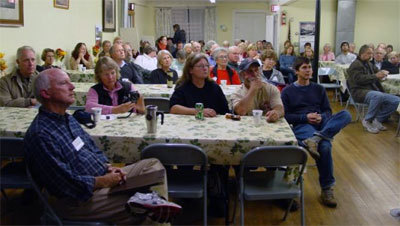
Halcyon Grange #345, Blue Hill Maine.
March 27, 2015
Savoir-faire
I would never try to usurp or upstage my sister’s quest to be the French-speaking sibling in my family of origin. I’m happy to concede that status to her.
One interesting fallout from her interest in Francophone culture is that I’ve started noticing (paying attention?) to how often French words, or derivatives of the language, pepper our own. Take for instance my recent obsession with the band Pavement, detailed three weeks ago here at the JBE, and their song, Embassy Row. I mean, is there a more clever mid-90s slacker songwriter than Stephen Malkmus? Literate, witty, and if you pay attention, you pick up interesting tidbits, including a French word, or two.
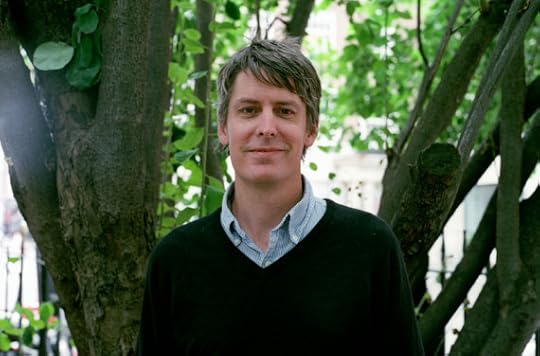
The debonaire Stephen Malkmus.
The song begins with a slow intro and then, these three lines:
Where is the savoir? Where is the savoir? (savior?)
He’s not here right now
Where is the savoir? Where is the savoir-faire?
I forgive readers if you’re a bit rusty regarding your high school French—we’re in similar boats—because so am I. Okay? Now on to today’s French lesson.
Savoir-faire connotes the “ability to say or do the appropriate or graceful thing in social situations.” Someone with savoir-faire in spades might even be considered “debonaire,” or possibly, urbane.
In ruminating about that word and its meaning, I remember the effort and energy I put into exhibiting a combination of savoir-faire, cut with a homespun folksiness that once played well in places like Maine. From what I’ve been observing these days, it appears that whether it’s boorish politicians, or the overly-important Twitterati dispensing their tweet “vomit,” savoir-faire is now out of favor. In fact, being crude, crass, even moronic is what it takes to curry cache in these Google-infected days.
Oh, and one other caveat about my previous thoughts on the matter—be sure that what you espouse is “bien pensant” (right thinking), and you’ll never fall out of favor with those that feel it’s their place to police the speech and thoughts of others.

Le dictionnaire
March 24, 2015
Season to Season
One of these days, it’s going to start feeling like the season called spring that began last Friday. Not only hasn’t it been very warm over the past few days, the winds of March have made it feel like we’re still in the grip of winter’s icy claws. Of course, this stretch of March has some checkered history.
Actually, Saturday wasn’t too bad. Compared to Sunday’s wind-tunnel-of-a-day, the upper 30s made my run in the morning quite pleasant. Miss Mary actually coaxed me out for a 5-miler. Knock on wood, my leg and hip issues from last year at this time seem to be in my rearview mirror.
I’m sure it won’t be long before I can put away my heavy field coat, ax, and not spend part of each day chopping and lugging firewood to fill the wood box. I’ll be able put my fire-building skills away, too—save for an occasional fire in the ole’ fire pit this summer.

April showers will give way to May flowers.
Mainers welcome spring because the season signifies the end of winter and its bone-chilling cold. Actually, in my book, spring’s the season most like the girl in high school that was the biggest tease. I much prefer early-to-mid fall myself. I’ll also take those summer days when it’s about 85 and the humidity is barely present.
Regardless of whether it’s 24 at Noon (like it was yesterday), or 80 and sunny, I’m trying to appreciate each and every day, trying to find its best qualities because our days don’t last forever. In fact, according to this Christian Science Monitor article, spring’s about 30 seconds shorter this year and getting shorter each successive one, so take advantage of it!
March 20, 2015
Trip Planning
Back in the day, before Google siphoned all the fun out of planning that special vacation journey, travelers had to rely on non-Internet tools to route their vacations. Some of these old-school accouterments were things like maps, gazetteers, and a handy-dandy atlas.
Now, all you have to do is ask Google (or Siri), “what’s the way to San Jose?” and before you can say “Swiss cheese for brains,” you’ll be routed on your way.
Growing up, I remember the year our family took a vacation trip to Burlington, Vermont. I think I was 13, or maybe even 14-years-old. My sister was two years younger. I still fondly remember that first trip to Burlington, a vibrant college town, nestled alongside Lake Champlain.
Of course, traveling with the ‘rents sometimes meant that Dad, Herman, or Winter Carnival King of ’51, required quadrants so he’d know his bearings along the way. If he didn’t get them from Saint Helen of Immaculata, he might get a bit cranky, and of course, it might become hell on wheels between the two of them. I think I get some of my driving impatience from my dad when I’m logging time behind the wheel on a trip, and I get lost somewhere between points A and B. Maybe it’s just a male thing. Can I even publicly state that men and women are different? I sure hope so.

Hitting the open road!
When our young family started taking vacations, AAA offered their members (which we were) something they called a TripTik®. This was custom-designed specifically for you and wherever you happened to be going in your automobile. Included were detailed maps and guides offering up local and regional information.
Like the Carnival King, not knowing where I was going could make the JBE cranky, and Miss Mary was never extraordinary with a map. In fact, often, I’d yell across to my harried navigator for bearings from the map, and she might be looking at it upside-down. Ah, the good ole’ days.
Of course, Julie-Ann and I didn’t care that we’d missed that turn in New Hampshire and were now traveling east when we should have been going west. It was the same way with our son, Mark. While Mary and I were quarreling about map directions, he was taking in the scenery, or reading a book in the back seat.
It’s funny how we call not knowing exactly where we are as being “lost.” On our trip to Burlington, we may not have known exactly where we were in relation to Route 302, or whether we were even on 302 (Herman used to say that New Hampshire had lousy road signage), but we knew we were in the car, on our way to Vermont, and at that point, were still in the Granite State.
Mary and I learned that our friends at AAA could take some of the stress out of traveling. Their step-by-step directions allowed us to get to where we were going with a minimal amount of conflict and arguing about whether to turn right or left.
In life, everyone has a journey they were meant to embark upon. Sometimes, we start out without clear directions. Of course, technology is supposed to solve all our ills and usher in a golden age. Technology even allows others to know exactly where we are (even if we’re still not quite sure). Apparently some enjoy the “freedom” of not having to make decisions, or knowing how to read a map.
My journey is likely different than yours. That doesn’t matter.
Figure out where you need to be, and start heading in the general direction. And it really doesn’t matter whether you’re traveling with a map, a navigator reading from a TripTik®, or a GPS device speaking directions from your smartphone. What matters is that you are on your way to where you need to go.
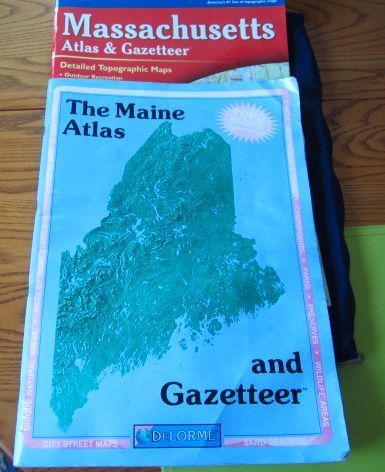
All you need is a map.
March 17, 2015
Progressive Revelation
To value truth in a world that demonstrates at every turn that lies and false narratives are preferred, leaves seekers with a steady diet of dissonance.
Last week, I visited the Sabbathday Lake Shaker community in New Gloucester, a mere 20 miles from my home. This was the first time I’d ever ventured on the grounds. My experience (and subsequent return visit) was much different than I expected.
Like many things in this world, when you make time to push past surface information and often, a false understanding, you are sometimes rewarded. Rather than relying on only the internet and Google for my “Shaker 101” brief, I’ve been reading materials acquired at my local library, as well as information provided by the accommodating staff.
Shakers believe in something called “progressive revelation.” In reading about this concept—the idea that there is a constantly spinning center at the very core of their faith—allowing them to reshape their beliefs when necessary, I was struck by how similar this is to my own current way of seeing the world and the ongoing education and I’d even say—deprogramming—that I’m engaged in, as I attempt to break free from the lies and disinformation stream offered up by traditional sources.
Is the truth out there?
There’s a deep-rooted national dysfunction, in my opinion. It’s related to requirements that every story must be tied up in a neat, binary package—good and evil, black and white, liberal or conservative—and anything that doesn’t package it up with a nice, pretty bow causes people’s heads to explode. Or, they lob pejoratives back at you like “kook” or “conspiracy theorist” if you dare to trot out alternative narratives rooted in research and fact. And don’t you dare to question the status quo or tip over any sacred cows!
A few weeks ago, I crossed paths with investigative journalist, Russ Baker. He’s the author of Family of Secrets: The Bush Dynasty, the Powerful Forces That Put It in the White House, and What Their Influence Means for America. I pride myself on being well-informed, so I’m ashamed to admit that I knew next to nothing about WhoWhatWhy, the website for the investigative media nonprofit founded by Baker. Granted, it’s web-based, but offers long-form journalism and a “slow user experience.” If you’re a member of the binary cult, this isn’t a place where you’ll find the kind of cookie-cutter journalism that validates your preconceived notions of the world. However, if you’re tired of the same warmed-over pablum, and want something willing to dig a little deeper, then this WhoWhatWhy article is a good starting point. The article highlights why the New York Times thinks you’re nuts if you diverge from their corporate viewpoints on the news that they deem fit to print—any other sources are, well, you get the point…

Back to the Future: Another Bush/Clinton election!
Since we seem to be time-traveling backwards in American politics, with it being 1992 once again, with the possibility of yet another (Jeb) Bush /(Hillary) Clinton faceoff, Baker’s book is a reminder of Jesse Jackson’s adage to “Stay out the Bushes,” and while you’re at it, run from the warmed over neoliberalism of the Clintons, too.
March 13, 2015
Crumbling Down
It’s tempting to look at the world, at least the world as it gets filtered through our digital imagery, and feel like the globe we’re sitting atop is spinning out of control. I’m sure part of this is by design—people in the midst of fear—rational or irrational—are much easier to corral and control.
At the same time, there is a corresponding tendency on the part of 21st century humans to believe (irrationally, I would add) that technology, that amorphous term that gets tossed around willy-nilly at every turn, will bail us out of every single one of our problem patches. I’m a contrarian when it comes to this technological salvation app.
America’s infrastructure and the upkeep required to maintain it is trending in the wrong direction—to borrow a term from a popular series that curried favor with the Tee Vee watchers out there—it’s “breaking bad” and has been for decades. When the American Society of Civil Engineers released their report card on the condition of the nation’s infrastructure, the overall grade was a D+. This was relative to our roads, bridges, dams, waste water facilities, airports, and includes the electrical grid.
This report card, issued every four years, indicates that since 1998, the grades have remained consistently near failing. Getting Ds in school was never a positive indicator of future success—getting near-failing grades on public infrastructure is even more problematic. One simple, but profound takeaway from reading the report card is that these grades across all categories are essentially due to delayed maintenance and underinvestment. Where investments are being made, they are in new construction—more roads, bridges, etc. that eventually become affected by insufficient and deferred maintenance.
Everything Americans require for their existence is contingent on our infrastructure, and infrastructure that is becoming obsolete, or in some cases, is failing altogether. The I-35 bridge collapse illustrates the latter. Our food is primarily trucked in over our U.S. highway system. The hype around farm-to-table is great for foodies, but local farmers and food won’t produce enough food to feed the entire U.S. population.
In order to avoid a longer blog post than this is already becoming, let me focus on something that happened to me this week. I’ll take that experience and link it to my points about infrastructure, while also hitting on some of my previous blog themes over the past few weeks.
On Tuesday, I attended the CEI Annual Meeting, held on the campus of Bowdoin College in Brunswick. The dining hall where the meeting took place accommodated a turnout of probably 350 people.
I respect the work that CEI does. In a previous incarnation, I partnered with several of their project managers and they were capable and willing collaborators. For the purposes of self-disclosure, I received their Partnership Award in 2011. So, to be clear, I’m not a critic of their work by any means.
However, their choice of Jeremy Rifken to deliver this year’s keynote was one that made me arch an eyebrow when I first read about it. I also wondered how his kind of techno evangelism would be made relevant to Maine and New England. Interestingly, I also noted that the talk was going to be delivered by technological means, as Rifken is in Germany and would be unable to attend in-person.
Rifken is someone who holds considerable cache in certain circles. Some have even described him as one of the “thought leaders of our time.” He certainly is prolific as a writer, cranking out over 20 titles over the past 35 years, and I respect that.
A kind description might be that Rifken is a futurist. I’ve always lumped him in with the Alvin Toffler crowd. If I were being less charitable, I might characterize him as someone who runs with the techno-utopian crowd. What do I mean by that term? Basically, this group of writers and thinkers believe that technology holds the key to societal transcendence, and if we just embrace technology with greater vigor and enthusiasm, while investing as much public capital in a variety of Ponzi schemes, all the troubles facing America and the world—like crumbling infrastructure—will suddenly disappear. While I’m being a bit facetious, I’m fine with what I’ve written. Americans are holding out a false hope in technology that borders on the magical, not based in intelligence, experience, or even science.
For brevity’s sake, Rifken riffed on the themes found in his new book, The Zero Marginal Cost Society: The Internet of Things, The Collaborative Commons, and the Eclipse of Capitalism. The book was on sale at the breakfast/meeting and I picked up a copy. I’ve been reading through portions of it the past few days, matching the details with my notes from Tuesday’s address.

Jeremy Rifken: Techno-Utopian
I don’t know how to say it kindly, or any other way. What Rifken was selling on Tuesday was pure, unadulterated bunkum. It’s the kind of techno-babble that always overlooks basic realities based in science and certain non-negotiable scientific precepts. That never stops tech evangelists like Rifkin from bamboozling people that rarely if ever question any premise related to technology’s promise of unbridled progress.
I’ll summarize Rifken’s talk for you quickly.
We’re about to enter what he calls the “Third Industrial Revolution,” which conveniently is also the title of his 2011 book. Rifken believes that we’re entering a period when what he terms, “the Communications Internet, the Energy Internet, and the Logistics Internet” will converge and create a “global neural network” connecting everything and everyone. This will be the “Internet of Things.”
This new paradigm will create a new economy that will supplant consumer capitalism. Rifken detailed a world of self-driving cars, 3D printers manufacturing whatever we need, and we’ll all have personal power plants running off green energy, which will be fueled by renewables such as solar and wind. Talk about having your cake and eating it too!
Rifken is a rock star in Europe and I believe he has a consulting gig with the European Union. He holds Germany up as the prototype of all things progressive and holy. According to him, the cost of generating solar has dropped from $76 (per kilowatt?) to $.36. There are now countless energy cooperatives being set up across the EU. Everything is coming up diamonds in good ole’ Europe. No mention about certain marauders from the 7th century raining terror down on the heads of French citizens and other members of the G7 across the pond, however.
Furthermore, in the gospel according to Rifken, conventional elements of economic scarcity are giving way to the realities of abundance, all part of this magical paradigm shift.
Most of what forms the foundation for this shift and Rifken’s “Third Industrial Revolution” can be found at his Wikipedia page. I’ll post a summary for contextual purposes:
1) Shifting to renewable energy 2) Transformation of the building stock of every continent into green micro-power plants collecting renewable energies on-site (you and I will have a little power plant on our properties, making our own power); 3) Integrating hydrogen and other storage technologies in every building throughout our infrastructure to store intermittent energies; 4) Using the Internet and its technology to transform our power grid and every power grid on every continent into an “energy Internets; 5) and then, the transitioning of our vehicle fleet to electric-powered Google cars.
Rifken offered nothing in the way of how we transition from our current 20th century infrastructure, to his “new way,” 21st century world of self-driving cars, 3D printers, and personal power plants. Perhaps he forgot about geopolitics, resource allocation, neoliberalism and austerity, and a host of other issues. Perhaps, due the poor sound quality, he did offer a plan and I missed it, given the garbled, tin-can-connected-by-wrapping-twine satellite feed.
Long story, short; I wasn’t as taken with Rifken as the other 349 people in the room at Jewett Hall. In fact, after leaving the campus, I stopped at Curtis Memorial Library and I had a book waiting for me that I’d requested from their inter-library loan program.
It was the perfect antidote to the irrational technological exuberance of the Rifkens of the world, and the kind of “greenwashing” common from those true believers positing that technology can save us from ourselves.
I’ll share just a tidbit from Disrupted Cities: When Infrastructure Fails, edited by Stephen Graham, who also happens to reside in the EU, in England.
While Rifken was trumpeting technology’s sustainable salvation, he never once mentioned that technology and the “Internet of Things” he envisions actually requires massive amounts of electricity to power it. This rarely gets acknowledged in any article about the magical jelly beans of technology. He also offered no thoughts on how we make this transition to a post-carbon energy model, other than offering up intermittent sources like solar and wind as a panacea to our energy dilemma.
Here’s just one short clip from Disrupted Cities:
Google’s recently built server farms on the banks of the Columbia River in the state of Oregon are an excellent example here. These have been specifically located to benefit from huge amounts of cheap power necessary to keep them and their air conditioning running (for every watt of electricity used for data processing, such servers require half a watt in cooling). This server center alone–one of dozens in Google’s booming global network–requires 103 megawatts of electricity–enough to power a city of 82,000 homes. With Yahoo, Microsoft, and Ask.com also building major data centers on the Columbia River, major new electrical generating stations are being built to cope with the demand–at great public expense.
There are other “contrarians” offering a different perspective on technology and its potential to create the kind of utopia that snake oil peddlers like Rifkin are selling, including whether or not renewables will ever adequately replace oil in being able to power the world’s economy and meet our ever-increasing energy requirements. This interview with Richard Heinberg is a good place to start.
Maine faces a myriad of challenges as a state. Our aging infrastructure and crumbling road surfaces is just one of them. We are the oldest state in the country and getting older by the day. Our current workforce is shrinking, meaning we’re running out of workers. Instead of investing in efforts to attract young transplants to Maine’s down towns, like Biddeford, the current administration offers up tired, ideological quick fixes, like gutting local municipalities, going against the long-standing traditions of local control. If you haven’t read Colin Woodard’s essay on the topic, I urge you to do so.
Those are just a few of the issues facing Maine over the next decade and beyond. None of them will be solved by a slice of the pie-in-the-sky techno-utopianism of the variety served up by Rifkin.
March 10, 2015
Being Present
I’ve been cycling through a variety of topics that are personal to me. I’ve touched on journalism, technology (several times) and its effect on our lives, weather and our rugged winter of 2014-15, and even, Harry Potter/Richard Nixon. Oh, and last Friday, I worked in one of my infrequent blasts about music, at least the indie rock variety that has been a touchstone of my life over much of the past 3 decades.
While this topical list might seem somewhat random, I think there are threads that gather together its seeming disjointed-ness. One of them is being present—as in the here and now. To me, this means trying to live, as much as possible, in the moment. This is harder than it seems, at least it has been for me.
When I was in my teens and even my 20s, wishing away time was common, as in “I wish I had a million dollars” kind of wishes—the dreams without any foundation wishes. Being young, this isn’t an issue at all, at least you don’t sense time’s limiting qualities. Age and being finite are out there, somewhere on the horizon. As a result, we spend time wishing for things that may, or may not be in our best interests.
One day, you wake up and you’re in your 40s and eventually, you hit the magical half century mark, and you start thinking about whether what you’ve been doing for the past five decades has any staying power. There’s another element, and I’m not sure if it’s our culture, or not. We begin pulling back, lessening exposure to the day-to-day realities. Or, we find other escape mechanisms. We create distance for ourselves via entertainment, and as I’ve been touching on over the past six weeks—social media and technology platforms like Facebook. Inhabiting the virtual world can feel more comfortable and even safer than confronting the realities of the real world. This conservative approach and mitigation of risk accelerates aging. Have you ever been with a seasoned citizen that was still full of piss and vinegar and living life to the fullest? What do we say? “He/she seems so young,” right?
There are people that read my criticism of technology and Facebook and think, “who the fuck does he think that he is?” Honestly, I don’t think I’m better than anyone else. I just have come to realize that life is worth engaging with. Relationships and conversations across a table, over coffee and cake, are worth maintaining and cultivating. I’m not interested in turning over my life to Google’s algorithms, or vomiting out tweets every 12 minutes. I want to live my life on my own terms, as much as this is still possible, here in the 21st century. And yet, this is becoming increasingly difficult to do, or it takes being intentional to be successful.
Last January and February, I felt like the walls were closing in on me. It wasn’t a fun period. While I managed to make it to March, and my winter blues eventually dissipated, I was determined to experience winter differently this year.
While it’s been a bear of a winter, at least over the past seven weeks, surprisingly, I’ve enjoyed elements of my recent work routine. There’s been shoveling, gathering wood, feeding the chickadees and nuthatches, and chasing away the squirrels (who have just started showing up the past week, or so). At the same time, part of me is starting to become weary about building wood fires with the remaining green wood in my wood pile, and over the past week, I’ve been bitching and complaining a bit—just ask Miss Mary about that.
Life lived in the real world is much messier than the virtual version. 2015 seems to be some kind of watershed year for me. I’m not sure what’s ahead, but I plan to spend as much of it as I can planted in the day-to-day realities, in touch with my surroundings, and limiting the artificial elements that others seem to be so taken with.
A writer that I’ve followed in the past, Morris Berman, wrote about becoming a New Monastic Individual (NMI). There are aspects of swimming against the tide and going against the grain that Berman highlighted that I find appealing.
Is it even possible to remain human in our 21st century world of increasing fragmentation and alienation? Will I ultimately win the battle and not become a slave to machines, or is Google and its tech cohorts too powerful to fend off?
Riffing off the almighty Flipper once again, “Life is the only thing worth living for.”
March 6, 2015
Rattled by the Rush
I try not to get too nostalgic for the past. Lately, though, I’ve been thinking of a time—back before Google, and their quest to turn our brains into a hunk of Swiss cheese. Was it a better time? I don’t know. There were certainly positives. Oh, I know—thou shalt not speak evil of any technology! And believe it or not, there was life and a social scene before Facebook—arguably a richer one.
A reminder of that time came the other morning, listening to WMBR’s “Boomerang” program, sliding back into some 90s post-punk that I know and love. Erik Morrison is a DJ who once a week (on Tuesday mornings) spends an hour time-traveling back to the days before MP3 players,iTunes, and nearly everyone who is under the age of 25, walking around with earbuds jammed in their ears, oblivious to the world around them. Track lists mattered and artists cared about things like the sequence of 10 or more songs, crafted to fit alongside each other on an album. Granted, we’d transitioned from tapes to CDs, but indie rock still meant independent of corporate control. Obviously, that’s long gone and we’re not in Kansas (or Columbia, Missouri) anymore.
This week, Morrison featured Pavement for the full hour. If you followed “alternative rock” during the early to mid-1990s, most likely you were reading Spin, and you knew about the enigmatic suburban slackers from Stockton, California.
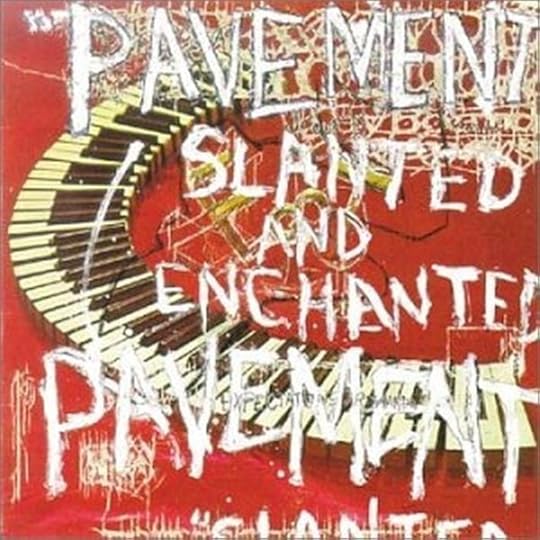
“Slanted and Enchanted” by Pavement
Pavement’s “Slanted and Enchanted” was my soundtrack during the summer of ’92, tooling around in my orange CMP truck, collecting the Green Manilishi, or disconnecting deadbeats from Tom Edison’s juice box. This was pre-Nirvana, before Whitey TM vacuumed up every promising, flannel clad white boy with greasy hair that could play three chords and mumbled his lyrics, flooding the airwaves with Kurt Cobain knock-offs. No interwebs back then,smartphones, or Facebook, either. Just me, a crappy AM/FM radio w/ Kraco speakers wedged behind my seat, and a stack of work orders each day.
While I was still a decade from figuring out that I wanted to make something happen with words, my DIY was still being cultivated that summer and over the subsequent years of that decade. I was also doing a weekly radio show on WBOR, which I’ve written about before.
I’m not sure why hearing Pavement tracks like “Box Elder,” “Stereo,” and “You’re Killing Me” hit me like they did on Tuesday, affecting me for the rest of the week, but something about that particular band (and that period of time) still resonates with me.
Stephen Malkmus has found musical success on his own terms post-Pavement, fronting the Jicks. He is still making relevant music, but the landscape is so much different these days than it was 23 years ago.
March 3, 2015
Longer Days and a Longer View
The days are getting longer. Some snow actually melted, and a patch of grass showed up over the weekend. Hooray!

The grass is back!
My week’s off to a patchwork start. Some cool stuff in the works that will end up appearing under my byline in a week or two. Something else that I’ve been pushing for years (yes, years!!) will making an appearance later in 2015, too.
What I’m learning about most of the stuff in my life is that taking a longer view is required. That’s hard because it’s not in my nature and hasn’t always been my experience to wait on things.
And let me close with a bit of a non sequitur.
Nearly every Monday afternoon when I’m working at home during the winter months, I try to catch DJ Ben and his WMPG show, Hip Hop is Alive. Often, I crank up the volume and do a session downstairs on my bike trainer. I’m late to the game on hip hop and rap and I learn something new every week listening to a DJ who truly cares about the kind of show he delivers every week, from 3 to 5. The genre is also deeper than I was led to believe by the anti-rap element and PMRC-types like Tipper Gore, and others, back when I was doing my post-punk thing in the 1990s.
Yesterday, he had Brzowski, a Portland-based hip-hop artist, along with Bruce King, talking about the connections between late 1990s/early 2000s punk/skate/hardcore and hip hop culture. The show was incredible. King also dropped some knowledge about his experience behind bars, and the prison-industrial complex.
It’s rare these days to tune into anything that’s deep, literate, and far-reaching in scope. Monday’s two-hour slot was amazing, and I don’t use that word lightly.
I’m anxious to catch Brzowski live at some point when he plays again in Portland. I’m also intrigued by some of the content I briefed of King’s on his website, Incarca.