Jim Baumer's Blog, page 49
January 27, 2015
Another Weather Event
Monday was so peaceful—the proverbial “calm before the storm.” Actually, the weather puppets were fear-fogging first thing, but since I was out the door at 4:30 am to go swimming, I paid them no mind.
In our age of social media, things like snow events, major storms, and certainly, blizzards of “historic proportions,” all have a tendency to go viral. I tried to steer clear of Twitter and Facebook, but I couldn’t help taking a peak at the Twitterverse late in the day, as I was wrapping up my workday from home.
Posting about snow and snowstorms is something I’ve done on several occasions. During Snowpocalype 2013, I actually took the JBE on the road and provided live storm reports out in the elements. I won’t be doing that during this storm. Being out on the roads with people who have no sense about how to drive in snow, with whiteout conditions, which are likely to occur, isn’t worth the trouble.
January is considered one of the winter months in Northern New England. It snows in the winter. And sometimes it snows more than a few inches.
According to my new online, go-to, meteorological guide, WEATHER without the hype., at least the snow will be light and fluffy. That’s good, because shoveling 20+ inches of snow makes my back, hips, and knees cranky.
What always baffles me with these weather events is, beyond the initial “okay, we’re going to have a major snowstorm and here are the details” news coverage, is the incessant over-reporting—people standing out in snow drifts with rulers, measuring two inches of snow; the ubiquitous shot of a reporter standing somewhere near a turnpike exit, showing us it’s snowing, telling drivers to stay off the roads; hour-after-hour of sweater-clad talking heads, saying nothing new, for 12, 18, up to 24 hours, and even beyond.
I did make sure to fill the wood box, so I won’t have to dig my fuel out during the blizzard. I have milk and bread, along with other foods, too!
Stay safe, and stay sane!
Updates:
7:57 am
Wind is howling. Took my first shift behind my snow scoop. Already 5-6 inches on the ground, of fluffy, drifting snow. Of course, 5 minutes after coming in the house, the path is already filling in with new snow, along with the drifting variety.

First shift shoveling.
9:00 am
Snow drifting up against our deck door and winds are picking up. I found this story interesting re: NYC and their less than predicted snow amounts. A meme is developing via social media, “blaming” meteorologists for getting forecast wrong. This why much of the rest of the country hates you, the narcissism and arrogance that is wrapped up in your “it’s not bad here, and we don’t care about you” attitude. Here in New England, it appears to be exactly as forecast.


January 23, 2015
Journalism Takes a Hit
After just eight issues, Portland’s newest alt-weekly, DigPortland, is no more. For the purposes of self-disclosure, I did write one article for the fledgling publication, and my name is listed as a contributor.
There’s always a curve and an evolution with any new publication, especially one that publishes under the alt-news banner. Each issue seemed to be building off the previous one, and it felt to me like there was a definite transition from prior issues (and prior publications) covered in town, like #Ferguson and race (the Samuel James feature, in what was the “old” Phoenix was stellar and one of my favorites), dumpster-diving, and I even got to take umbrage with an event masquerading as an energy panel that was simply promoting the build-out of natural gas, tied to fracking. Where else could a freelancer have that opportunity save for an alt-weekly that was tacking a course that allowed reporting with an edge.
I had a relationship with DigPortland editor, Nick Schroeder, from his days at the “old” Portland Phoenix (not to be confused, with the “new” Phoenix, which is a totally different publication), where he had also served as that publication’s editor. My longest bylined article of 2014, “What’s the Plan,” about economic development in Portland, benefitted from Nick’s guidance and edits back in the fall, when there was no inkling (at least for me) of major changes ahead concerning the city’s alternative publications like the Portland Phoenix. I had hopes of doing a few more of these longer-form type stories about similar subjects warranting coverage.
Weeks after my economic development article hit the streets, rumors began circulating, and then stories were reported by the daily media outlets that the Portland Phoenix was looking for a buyer. I won’t rehash the details—Seth Koenig’s article in the Bangor Daily News gives the rundown.
I’m also not interested in focusing on the immediate concerns and fall-out from yet another important publication with a purpose, crashing and burning. It’s not that they don’t matter—because they do. Instead, I thought I’d cast a little wider for the sake of this post, with a look at some of Maine’s history concerning other publications falling under the “alternative” banner.
The Dig/Phoenix fiasco had me pulling down my copy of the late Peter Cox’s Journalism Matters off the bookshelf. Cox was the co-founder of arguably, Maine’s most notorious alternative publication, Maine Times, and certainly one of the state’s most important ones.
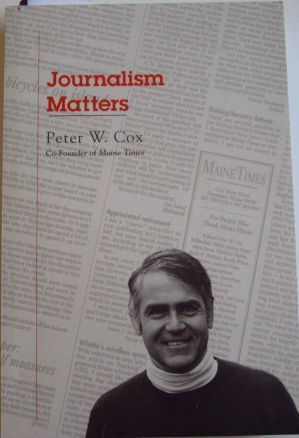
Old school journalism, Peter Cox-style.
I never got to know Cox, but when I moved back to Maine in 1987 from away, I made a point of picking up copies of the paper at the newsstands. Like Casco Bay Weekly, Maine Times (a statewide pub) offered a counterpoint to the staid, business-cozy news offered by the Portland Press Herald, Lewiston Sun-Journal, and Bangor Daily News, the three major dailies at that time. This was also back when most households still subscribed to one of those three, or their counterparts, the Kennebec Journal and Morning Sentinel, in mid-Maine.
Cox was honest about the mistakes he made, especially getting out of the gate. Along with co-founder, John Cole, Cox was often flying by the seat of his journalistic pants, trying to piece together a news operation on a shoestring. At the same time, there were enough people who believed in what Cox and Cole were doing (Cole eventually left) and provided seed funding for their venture, and were willing to overlook the human tendency to be less than perfect. I have often wondered if there are those kinds of people left in Maine, willing to make investments in media and journalists willing to hold politicians and businesses accountable.
To his credit, Cox had a deep-seated belief and commitment to covering issues, like the environment, social issues, and yes, Maine politics. The Maine Times published stories about education, as well as digging into what were deplorable conditions at Pineland Center, in New Gloucester, with their stark cover and blaring headline, “Maine’s snakepit,” during a time when increasing scrutiny was being directed at institutions warehousing people with disabilities in the state. Pineland was one of the worst, and Cox and Co. hammered state leaders, officials with Maine’s Department of Mental Retardation (that’s what it was called back in the 1970s and 1980s). Significant changes were brought to bear, and the Maine Times had a hand in making them happen. Journalism done with integrity and a purpose can do that.
The crusading weekly managed to stay ahead of its creditors, keep enough circulation and newsstand sales going to make it to 2002, a 34-year run. Looking back, especially in these days of truncated twaddle and 140-character tweets, I find it amazing and a tribute to dogged determination on the part of Cox and his successors.
I managed to dredge up an old news story from 2002, written by Edward Murphy of the Press Herald, on the announced shuttering of the paper. These two quotes say it all for me and where we’re in these days.
The first is from longtime Maine writer, Edgar Allen Beem, a regular Maine Times contributor.
“The Maine Times was a ‘radical departure and an alternative,’ but mainstream papers have been doing a better job of producing issues-oriented stories; there are more outlets for news and people have greater demands on their time”
“The Maine Times might have been too good at rabble-rousing,” he added. “A paper like the Maine Times by its very nature, alienates its readers as it goes along,” Beem said. “It might have initially attracted environmentalists and liberals, but ‘all those groups’ have been trashed by the Maine Times at one time or another.”
And then John Morton, a newspaper analyst from Maryland mentioned the uniqueness of Maine Times—it was a statewide paper, not a citywide publication. He noted that this was an “oddity” in the alternative press, because it (Maine Times) wasn’t free and it circulated in Maine’s rural areas, too, not just in the hipster-haven of Portland.
“Almost all of them are focused on a specific market, an urban market,” he said.
Never known for his timidity, Cole told the story of being approached on the street by a man who accused the Maine Times of printing slanted journalism. “You’re f—–g right it’s slanted journalism,” he crowed. “What else is there?”
When the Casco Bay Weekly folded, the mantle of issue-oriented, even muckraking journalism, fell to the Portland Phoenix. Jeff Inglis was editor for a number of years. Colin Woodard was a regular contributor, prior to sliding over the Portland Press Herald; so was Lance Tapley, where he wrote with passion and knowledge about Maine’s prison/industrial complex. Inglis’ successor, longtime Phoenix columnist, Deirdre Fulton, continued in that tradition, albeit, for much too short a tenure. She left and is a staff writer at Common Dreams these days.
Schroeder followed Fulton. As editor, he wrote less often than he had as a Phoenix staffer. His investigative work on higher ed and USM was journalism of the highest order. I hope he finds a way to get back at this issue. It looks doubtful that some of the most talented journalists will have opportunities at the new version of the Phoenix, however, unless I’m mistaken.
Of course, there’s still Chris Busby and The Bollard, albeit monthly, rather than weekly. I’m sure Al Diamon has something to say about all of this, and eagerly await his next Media Mutt column in Busby’s paper.
I’ll miss not having a place to pitch a story that takes a hard look at something the governor is doing, or more sprawl development—both topics that rarely get adequate and critical coverage on pages of the state’s mainstream news outlets.
And let me just say that I don’t buy all the “aw shucks” platitudes offered by Dan MacLeod, in his assessment of the DigPortland/Phoenix blowout. You mention feeling bad for Nick and Caroline (O’Connor), editor and DigPortland staffer—and one place where you are right—you’ve helped create disillusionment among writers that had a byline and now they don’t. Sadly, many of them had been writing on the alt-weekly side for years and even a decade, like Shay Stewart-Boulay, aka, Black Girl in Maine. I can’t pick up a paper this week and read what they have to say about things that you’ll never find the Portland Press Herald talking about. And I’m sorry—I’m not interested in reading a warmed over rehash of the Portland Daily Sun, masquerading as an alt-weekly, costumed over in Portland Phoenix garb.
Wow! I said it. I wasn’t planning to, but after thinking about things, letting them percolate all week, and then, going to the DigPortland website and finding that it directed me to your pub’s site really ticked me off. Now, my feelings are out there and I’ll let the chips fall wherever they may land. Thanks to you, two articles I’m proud of—one that I worked harder for to land and pull off than anything previous—aren’t even available online via links (although, thankfully, I archive all of my published clips on my own site). I’m sure other writers who busted their asses to file their stories and columns are just as pleased as I am.
What’s the future for Portland and journalism that is bold and fearless? Busby, a Maine media veteran whom I respect, wrote about the mess between DigPortland and the Phoenix. It was his opinion that Portland can’t (or perhaps, won’t) support more than one alt-weekly.
I hope he’s not right about that.
January 20, 2015
Facebook Isn’t Real
When I had a 9 to 5, Monday through Friday job, it was a given that I’d see the same people on a regular basis. For most of us older than 40, being at work for the better part of your waking hours has been the norm.
As the world changes, and work as many of us know it continues evolving, our time toiling for the man doesn’t necessarily mean that we’ll have this same kind of face-to-face interaction. While many of us are freelancing these days, many others are telecommuting and working from home. You have interactions with people via telephone, email, and even social media, but rarely do you spend significant amounts of time in the presence of other human beings. It’s possible to do work for others and never once meet them in-person.

Preferring our phones over other people.
I don’t know what this means for society in the future. Since I don’t have a crystal ball, I have no way of knowing whether or not this will turn out well, or badly.
For the past few months, I’ve grown disenchanted with most the social media platforms I’ve been using, especially Facebook. As I like to say to the few humans I see and interact with in the flesh, “Facebook isn’t real.”
Monday was a national holiday and once more, I wasn’t invited to any MLK breakfasts, I spent my day at home, alone, putting things in place for the coming week. I also spent time reading on the interwebs, looking for articles and posts about Facebook.
This one, from two years ago was really interesting. It also was related to some of the things I’ve been thinking about regarding social media and its personal lack of value for me.
It appears that the more “connected” technology permits us to be, the more alienated from one another we become. This article from two years ago indicates that we have become a nation of lonely people. I may not have a crystal ball, but alienation and feeling disconnected doesn’t bode well for things like democracy and what remains of the social glue holding Americans together.
When I began blogging in 2003, I want to have a place to write. There was always an excitement to posting a brand new blog offering.
As a writer,you hone your craft by writing. For more than a decade, I’ve been regular as a blogger. However, as much as I like to write and post my regular Tuesday and Friday posts, I’ve seen traffic to my blog plummet. I’m guessing that Facebook has something to do with that.
Facebook makes us lonely—it also makes us lazy. It’s too easy to “like” something. Click a button, and feel good about doing nothing.
I’m planning to spend less time in 2015 on social media, and more connecting with real people, not profiles on a screen.
January 16, 2015
Back It Up
I try to spend one day each week doing research at a local library, either for an article I’m working on, or for potential ones. As a freelancer, research helps in generating new ideas and keeping stories in the pipeline. I also get to read what others are talking/writing about.
The internet certainly allows you to do your research from home. There is a downside to that method, however. I also find corresponding value in getting out into the real world occasionally. Working at home is great and all, but at some point, the walls begin closing in, especially during January and February. I even think my weekly research trips spur creativity and productivity. An added plus is that going to a physical repository of books and information—i.e. a library—gets me away from my screens for a bit.
Currently, in January 2015, there are still places where you can find dozens of print publications; magazines and newspapers from around the country and even the world available to look through. This is a pleasure of mine dating back to my days of sitting in the Folger Library Reading Room, when I was a student at the University of Maine. Of course, back in the early 1980s, smoking was allowed, and I’d be reading my newspapers while sitting in a haze of second hand cigarette smoke. No smoking these days at Curtis Memorial Library in Brunswick, or Portland Public Library, in downtown Portland.
On Wednesday, the Wall Street Journal had a front page (below the fold) story about U.S. manufacturing and companies bringing their production back from China and other places offshore. The article, written by James R. Hagerty and Magnier, was a worthwhile read. There was one thing in particular that bothered me in the piece. It was the following line: No one expects the U.S. to again make most of the electronic gadgets, tools, toys, furniture, lighting, and other household products that tally more than $500 billion a year in imports. My first question was, “why?”

U.S. manufacturing isn’t what it used to be.
I find this happens often in articles I’m reading. The reporter/journalist makes this kind of definitive statement without offering any support for his/her opinion. Or, it might not even be couched as an opinion—it could be written in 3rd person journalist speak. The assumption is that the reader will take it on face value–and I’m sure many do.
Believe me, I’m all for opinionated writing—I prefer it to the usual he said she said drivel that’s all too common—however, you can’t throw out a statement like the one cited about American-made products without offering a bit more to back-up your premise.
These two journalists didn’t do that. “But they’re writing for the Wall Street Journal, and you’re not.” Touché!
The story of American-made products and U.S. manufacturing is just one of several I’m quite interested in. I’ll be looking for more of these kinds of stories in publications like the Wall Street Journal, and others, and I’ll report back to you occasionally about them.
January 13, 2015
RichardHarryNixonPotter
Red and blue, black vs. white, rich against poor, America is a divided country and has been for the past 50 years. Our politics reflect that and politicians, both conservative and liberal have used this to their advantage in seeking support from voters.
I am a child of the 1960s. I have lived my life during a period of turbulence and decay. I have spent time on both sides of the ideological divide. Something has always seen “off,” even though like other American schoolchildren, I was peppered with the same public school indoctrination into American exceptionalism, being taught that we live in a “land of opportunity,” and that equal access to the “American Dream” is our birthright.
The first presidential campaign that I vaguely remember was the one taking place in 1968. I was six years old and just beginning school. The Republican nominee that year was Richard Nixon. He had been vice president under Dwight D. Eisenhower. He had also been the Republican nominee in 1960, losing to Kennedy. Pundits considered Nixon, one and done.
In 1964, the GOP was hijacked by the right-wing political fringe, nominating Barry Goldwater. Conservatives saw Johnson’s Great Society and acquiescence on civil rights as volleys in a war, an engagement for the survival of civilization. Johnson and liberals were their enemies.
This was still a period when most Americans didn’t take well to the far-right, cynical vision offered by Goldwater and Republicans. The dominant narrative then was moderation, which was the antithesis of what the GOP was selling. Goldwater was trounced by Lyndon Johnson in the biggest election landslide since FDR’s in 1936.
When Johnson won in 1964, he was universally liked (except by conservatives). Democrats were in control of the House and Senate, and Johnson saw this as an opportunity to pass legislation that hadn’t been possible since the New Deal—like federal funding for education. Next came Medicare. In 1965 was the Voting Rights Act of 1964, following on the heels of the Civil Rights Act of 1964.
[Note: Make sure you get out and see Selma while it’s playing in a movie house near you. Not only is it a likely favorite for movie of the year, it’s also an important period piece that ties in well to Johnson’s initial success as president, civil rights, and then, the rise of Nixon in 1968.-jb]
A radical shift occurred in America between 1964 and Johnson’s landslide—which seemed to herald a permanent liberal consensus in the United States, and 1968, when a “new” Nixon was elected as America’s 37th president.
Rick Perlstein’s Nixonland: The Rise of a President and the Fracturing of America, is an epic kind of book. He makes the case that Nixon’s election in 1968, and re-election in 1972, was part of what he calls “a second civil war” that took place over those 9 years between 1965, when Watts, Newark, Detroit, and other cities went up in flames. This was a key contributor in ushering in a dramatic cultural shift. Also, the nature of American politics changed, introducing the era that we are still living through.
A new and improved Nixon—a candidate left for dead in 1960—was unveiled to voters in 1968, and they liked what they saw.
Rick Perlstein’s epic book about Richard Nixon.
Back to civil rights for a moment because this is important in understanding Nixon’s reinvention. By drawing public attention to the plight of African Americans in the South, civil rights activists forced the Democratic Party to choose between its southern white and northern African American constituencies. With nightly newscasts during the period featuring peaceful civil rights protesters being hauled off, rounded up, and otherwise brutalized by racist southern lawmen (like in Selma), support for civil rights grew among whites outside the South.
This and the increasing numbers of African American voters, eventually led the Democratic Party to cast its lot with African Americans and their northern allies. It also alienated those who had been traditionally loyal to the party—white southerners.
With Democrats in disarray about Vietnam, and Johnson opting not to run for re-election, a host of contenders slugged it out on their way to Chicago. Nixon was able to exploit and stoke white backlash successfully, and ride it to victory in 1968. This was a key strategy for him, as he would need the South in order to win the election.
Nixon deftly walked a tightrope—managing to maintain distance from candidates like George Wallace, while exploiting the fears, anxieties, and even the anger that southern whites felt in being betrayed by Democrats.
Because of Nixon, the Democratic South is now overwhelmingly Republican. Nixon was able to parlay a socially conservative and racially coded message into a political realignment, which others besides Perlstein have written about, most notably, Kevin Phillips, a Nixon strategist in 1968, who wrote a book about this, The Emerging Republican Majority.
Perlstein offers up a Nixon vastly different than the caricatured figure we’re now left with some 40 years later, forced to depart the White House, disgraced by Watergate. His meticulous research and an eminently readable narrative (albeit, a long one, clocking in at close to 900 pages, notes, bibliography, and all) offers serious readers of history a key to understanding our current polarized politics of left and right.
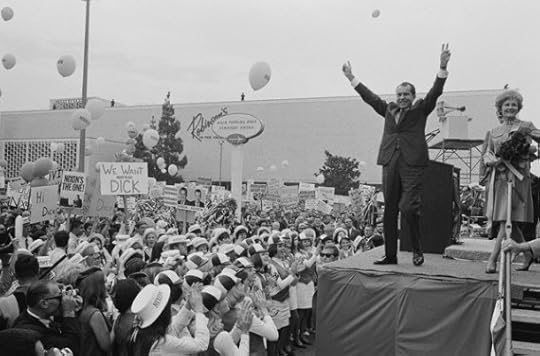
Nixon and his wife, Pat, on the campaign trail in 1968.
Much like George Packer’s The Unwinding: An Inner History of the New America, another book I detailed with some depth here on the blog, Perlstein’s book offers the kind of context and foundation that is most often lacking in the fulminations of Tea Party types, and even sycophantic liberal Obama apologists. If the devil’s in the details, then Americans have a phobia about ole’ Satan, because their explanation for almost anything—economics, education, politics, culture—is sadly lacking. Better, it’s infused with “truthiness,” as Stephen Colbert would characterize it—knowing that something is true because you know intuitively “from the gut” or because it “feels right”—to hell with evidence, logic, or facts.
History is an ongoing story, and today’s Tea Party is the spawn of the John Birch Society conspiracy types of the 1960s who flocked to Goldwater. Nothing’s new, it’s all just recycled, and we have Dick Nixon to thank for much of the mess we’re going through today. However, Perlstein never bashes Nixon and at times, his treatment borders on the sympathetic.
Perlstein writes about the two American identities, unable to find common territory, instead, “staring at each other from behind a common divide,” both convinced of their inherent “righteousness.” They also consider the other, “less American.”
That legacy of Nixon is still very much present today. Nixonland lives on!
****
Millennials as a group get criticized with regularity. The demographic that was born sometime between 1980 and 2000, depending on who is cutting the demographic pie, gets blamed for being a “me, me, me” generation, “entitled,’ and they themselves think that others, like Baby Boomers, have dumped all the world’s problems in their lap to deal with.
From a White House report, we know that Millennials are the largest, most diverse generation in the U.S. It’s a given that they are enamored with technology—they grew up with the Internet and computers in school. There are a host of other things that I could say and factually represent about Millennials, but that’s not what I want to do with the rest of my time devoted to today’s bifurcated blog post.
While I was scouting for books about politics during the late 1960s and early 1970, which led me to Perlstein’s, just as 2014 rolled into 2015, I happened upon a short little book co-written by Anthony Gierzynski and Kathryn Eddy. The book, Harry Potter and the Millennials: Research Methods and the Politics of the Muggle Generation, is one of those “bonus” books I often discover due to regularly trawling for new reading material.
Harry Potter has influenced an entire generation.
The basic premise of Gierzynski’s and Eddy’s book is that many Millennials have been shaped in a powerful way by the Harry Potter series of books authored by J.K. Rowling. Millions of them grew up reading the books, along with embracing the entire culture surrounding Harry Potter—things like dressing up in costume for midnight release parties, playing Quidditch, and watching all the Potter movies.
Interestingly, while the generation that grew up voting for Nixon (and Johnson) is enamored with authority and craves law and order, Millennials that are fans of Harry Potter are less authoritarian. Why is this?
The authors gathered their research from a broad cross-section of college students. Those sampled were from the Northeast, South, Midwest, and West. The schools included a community college, an elite southern school, an elite New England university, and large state schools.
What was fascinating reading this book, which took me most of one Saturday, is that Potter fans are readers, by and large, because of the series. This is important, due to what reading helps facilitate in learning and socialization.
Reading had been on the decline in America. Fiction, poetry, and even nonfiction was being read at significantly lower rates, declining since 1978.
As the authors detail, reading for pleasure promotes higher grades in school, as well as higher reading-comprehension and writing scores. Readers also have an enhanced cognitive capacity, allowing them to deal with greater complexity. Readers also will be less likely to develop a predisposition toward authoritarianism.
The Harry Potter books have had a profound influence on the reading habits of Millennials. The authors make the point that due to data on reading, book sales, and general talk about the series, they are convinced that many more Millennials are readers because of Rowling’s books.
Summarizing the book, we learn that evidence gathered demonstrates that Harry Potter fans are more open to diversity and are more politically tolerant than nonfans. They are also less likely to support the use of deadly force and torture. They also happen to be more engaged and politically active.
There are values inherent in Rowling’s narrative. While the authors don’t believe this was intentional on the part of the best-selling to influence readers towards a certain worldview, it’s obvious that they are there.
For instance, the lesson of accepting those different than ourselves is present throughout. Tolerance and equality are also emphasized, along with others.
Perhaps Millennials, and in particular, those influenced by Harry Potter, will be the ones who make the changes that America so desperately needs. Their more liberal tendencies and openness also put them at crossroads with older, Traditionals, hence the backlash directed towards them.
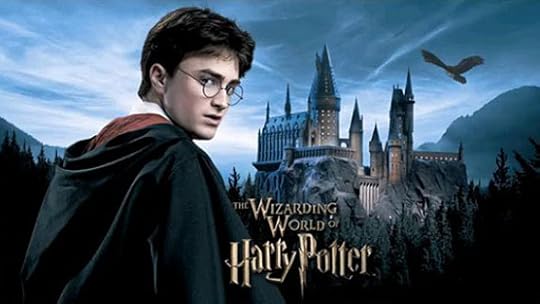
For many Millennials, Harry Potter is a key influence.
While the book doesn’t purport to offer an end all be all analysis of everyone of our national issues, it offers an interesting portrait that moves away from the usual demonizing of and even caricaturing of younger Americans, a group transitioning into roles where they can might be agents of change. Hopefully they won’t be just another generation perpetuating the status quo.
January 9, 2015
Happy for Dr. Oz
When you’re a freelancer, whiling away your hours as a solitary figure, trying to collect a few shekels and interest an editor (or three) in your work, it helps to have a few online resources in your corner. Mediabistro is a new (old) friend of this sort.
Mediabistro offers resources for freelancers and other media professionals. They publish blogs analyzing the mass media industry, like FishbowlNY. They offer a host of other benefits too that provide far more value to me than let’s say, Maine Writers and Publishers.
I decided to re-up with Mediabistro a month ago, and I’m already reaping benefits, not the least is that FBNY (their tagline is, “Turning the Page For New York Media) offers up daily blogging prompts, if I want them. Like yesterday—if not for this FBNY post extracted from the core of America’s elite media center, the Big Apple—I never would have known that old “friend” Dr. Oz had a good year in 2014. I am so happy for the good doctor and exemplar of America’s hustling culture. Oh, and so happy for him that Oprah gave him his big chance. It’s a given that if Oprah deems you important, then you most certainly are. She’s one of America’s king (and queen) makers that’s for sure.

Dr. Oz, practicing good hygiene, while toasting Oprah.
Two years ago, I wrote a well-trafficked blog post about Dr. Oz. I merely wanted to make a case that you don’t need Dr. Oz (or Seth Godin), just your own personalized blueprint for reinvention. I offered a few tips that would also save you money—since God knows Dr. Oz doesn’t need your cash. Here’s what I offered for a prescription via that Feb. 2013 blog post, free of charge to my readers, btw:
I hate to come across as harsh and burst anyone’s bubble, but there’s no easy way out when you are hip-deep in the Slough of Despond , or in the midst of a bad situation. Here are a few tips that, unlike Dr. Oz’s brand of self-help, won’t cost you anything other than effort.
1) If you’re heavier than you would like to be, then you need to cut your calories and ramp up your activity.
2) If you can’t find a way forward making $8.00/hour, the stars aren’t aligned against you—you’ve got some skill deficits and need to figure out how to minimize them, or get some additional training.
Of course, celebrities like Dr. Oz, for whatever reason, feel the need to exploit and manipulate their followers. In fact, the more they do, the more followers they seem to attract. It’s all really quite pathetic, in my opinion.
3) Save your money, or better, take the cash you were going to send to Dr. Oz for green coffee extract or red palm oil, or some other supplement or quack cure, and invest it in a $10/month gym membership at a robo gym like Planet Fitness .
It’s worked wonders for me, when I originally lost nearly 60 pounds in 2009. I’m back there, as I’d put on a few pounds and now, I’m back doing what works. Oh, and I’m down 13 pounds this month and I’ll be running a 5K on February 16 and my first sprint triathlon in June.
I actually admire guys like Dr. Oz. Not only does he have a great head of hair and a fat bank account, but he’s not encumbered by conscience like those of us who worry about screwing over our fellow Americans. Banksters, politicians, and some members of the media industry aren’t burdened by any outdated sense of right-or-wrong, either.
Of course, we know how this story will continue playing out, don’t we? Ever-gullible Americans will continue to hand over shekels to hucksters like the Oz-man, Tony Robbins, and others. It’s easier than doing the necessary work and taking the risk of going it your own way.
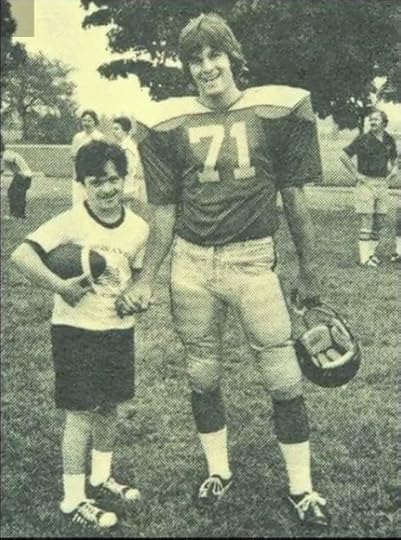
Most people don’t know that Dr. Oz chose medicine over the NFL.
January 6, 2015
Hunkering Down
January is the longest month of the year. By “longest,” I mean it’s cold, dark, and 31 days (compared to February’s 28, or 29 during leap years).
For active types, remaining engaged becomes a challenge. Running outside, biking on the frozen roadways, and other outdoor activities conducive to warmer temperatures get put on hold.
It is true that you can substitute cross-country skiing and snowshoeing for running, which is great when the snow begins piling up.
January is also a good month for hunkering down.

Peddling, but not going anywhere.
I’ve put my road bike on the indoor trainer in the basement. The beer fridge is well-stocked, and I’ll be making comfort foods like homemade granola, and an ethnic favorite of mine, sauerkraut.
It’s also a good month for getting a jump start on 2015’s reading.
A couple more random tidbits about January:
The month’s zodiac signs are Capricorn (December 22 – January 19) and Aquarius (January 20 – February 18), which happens to be mine.
Thomas Paine’s Common Sense was published on January 10, 1776 (the colonists waited for warmer weather before acting on Paine’s prescription, however).
January is also National Soup Month, which seems fitting.
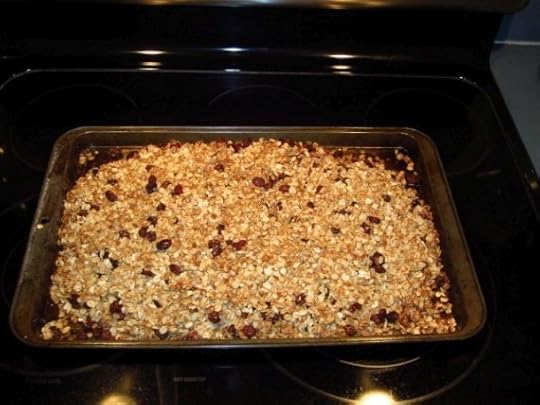
January is for comfort foods, like granola.
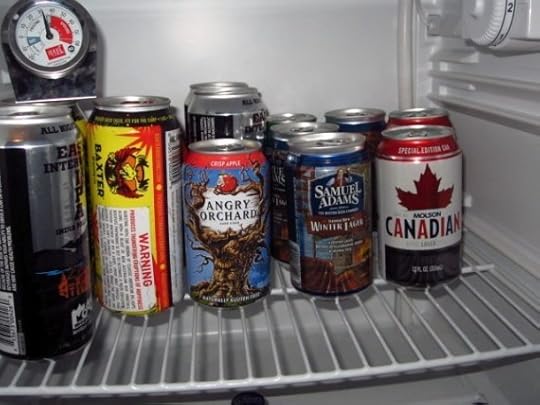
…and a well-stocked beer cooler, too!
January 2, 2015
Music by Year
Another 12 months have passed. I recapped my reading during that period on Tuesday with my list of books. As I mentioned in that post, 2014 was a decent year for me as a writer with a new book, and host of bylined articles for a variety of publications.
When I’m writing, I like to listen to music—not always—but more often than not. What I enjoy listening to remains eclectic. I’m not sure I could assign a category to all of it. However, I’ve stayed true to a musical genre that I first latched onto following leaving behind theological structures that weren’t working for me. This was back in 1984. Then, my radio oasis was a commercial station in Chicago, WXRT, that played a pretty wide selection of music and bands. I first heard Husker Dü on their station, along with fellow Minneapolis rockers, the Replacements. Their late-night Friday night program, “The Big Beat,” opened me up to all kinds of new music with dissident elements, including Billy Bragg.
Walking away from religious autocrats leaves an empty space and a void. Music helped to fill part of that emptiness. From then until now, music has remained a passion of mine.
As 2014 closed out its yearly chapter, the first few days of the dawning new year have been filled with some of my favorite DJs from 2014 sharing their own best-of lists from the past year.
One station that I stream regularly is MIT’s WMBR. While considered a “college station,” I gather that most of their DJs are actually people from the community in Boston and surrounding suburbs. On most mornings, I’m apt to be listening to their “Breakfast of Champions” programming. Each one of these morning hosts rotate daily. After listening for more than a year now, there are certain ones that I’ve grown fond of because of the music they play.
Listening to WMBR helps me stay current with some of what’s being churned out under the banner of indie rock.
Wednesday morning’s BOCs segment with Becca Smith delivered a couple of new bands/artists I am looking forward to checking out in 2014.
Then, this morning, Jon Bernhardt’s show offered up another batch of best-of from 2014, some of these artists being ones that have been around for awhile.
Music, just like writing, has seen delivery methods change, and the structure of releasing albums and new material change due to technology’s forward march. However, as long as there are old skool tools like radio (delivered via the interwebs, now), I’ll continue to attempt to keep up with what’s new and not become stuck in the rut of the past.

Ty Segall’s “Manipulator,” one of my personal faves from 2014.
Some “new” bands/artists for me in 2014, in no particular order:
–Purling Hiss (on old fave, Drag City)
–Ty Segall
–Faces on Film
–Cough Cough
–Robert Scott (not new, as I’ve been a fan of Scott’s bands, like The Clean, for a long time, but nice to see Scott still churning out new material on the Flying Nun label)
–Tunabunny
–Wussy (another band that’s been around for a few years and still cranking out new stuff)
–Ex Hex (former Helium guitar goddess, Mary Timony’s new band)
–Grmln
December 30, 2014
Another Year and a Bunch of Books
Nothing says “Happy New Year,” looking out with hope and expectation towards a brand-spanking-new calendar of virgin reading territory than my end-of-the-year book wrap. It’s become a JBE blogging tradition.
In past years, I’ve summarized the previous 12 months and the books I’ve read. This year, I’m opting to hit the highlights rather than reviewing every single book simply, because in 2014, I ended up reading 65 66 books! (You can see the complete list, here.)
This year-end synopsis offers me a chance to reflect back over the previous 12 months of reading. I also get to take note of the books I enjoyed and found benefit in reading, and offer a few of the ones that were disappointing. Keep in mind that reading and what I like to read is highly subjective.
I don’t begin my reading year with any grand plan. However, I do set a goal to end the year on the plus side of 30 books. Having done this now for more than 15 years (with many of these coming pre-blogging), it’s not unreasonable to expect to read 3-4 books per month. In fact, that’s generally been my output at the end of the year when the numbers have been tallied.
More often than not, my selections often end up being ones that I “fall into,” depending on what I’m thinking about and contemplating. Yes, there are books I hear about, or read reviews of that I’ll jot down in a notebook and consider reading over the course of the next 12 months. And as often happens, come January 1, I’m usually reading my way through a new book I’ve begun around Christmas or just after. More often than not, my choices are nonfiction, with an orientation towards the sociological/historical.
Last January, I was writing two final pieces and working on getting out my own book of essays, finalizing the seven that were included and wrapping up the one about Lisbon Falls, “Goin’ Back.” I was thinking about Thomas Wolfe at the time, so I decided to read through You Can’t Go Home Again, which ended up framing the intro to that essay.
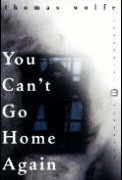
You Can’t Go Home Again-TWolfe
Wolfe is the type of American writer—certainly worthy of inclusion in the pantheon of great American writers—but unfortunately, one who has become a member of an ever-growing cavalcade of those overlooked during the early decades of the 21st century, aka, “the age of Twitter.” The urge for immediacy and writers fitting the category of “the flavor of the month,” have rendered Wolfe as one writer who has fallen out of favor with most readers.
I’m glad I read his classic novel about the passage of time and returning to a place where roots run deep. It’s also interesting how my own essay ruffled the feathers of some of the locals, as happens with Wolfe’s protagonist, George Webber, upon returning to his hometown of Libya Hill, and writing about the place and its people.
I also invested time in Elizabeth Evans’ excellent book on Wolfe, offering background and a deeper understanding of what Wolfe was getting at in his novel and themes running through his other work.
So you can see, 2014 began as a reading year glancing back through time.
I picked up another classic read in January, this one being Joseph Conrad’s Heart of Darkness. Had I read it in school? I don’t recall. My son was reading it (his reading list is more impressive than mine), so I decided to work my way through a fairly short tome that was a worthwhile one.
Last December, I was hired by one of Maine’s area agencies on aging to manage a grant focused on seniors and allowing them to remain in their homes. I decided to make grassroots organizing and community-building my focus in two rural Maine communities. While I have ample experience doing this kind of work, I’m always about improving and getting better at what I do.
The book by John Kretzmann and John L. McKnight, Building Communities From the Inside Out: A Path Toward Finding and Mobilizing A Community’s Assets, is considered “the Bible” when it comes to asset-based community development. It was a worthwhile read and I consider the success that followed partly attributable to investing time in reading and absorbing the wisdom of Kretzmann and McKnight.
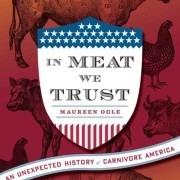
Maureen Ogle’s book about meat in America.
My interest in beer—especially understanding why there are so few lagers being brewed by craft brewers comparative to ales, led me to Maureen Ogle’s Ambitious Brew: The Story of American Beer. Ogle’s an excellent writer and I ended up reading her equally thorough work about meat in America, In Meat We Trust: An Unexpected History of Carnivore America. I read the latter one in March.
Ogle takes a subject and broadens our understanding. It pulls us away from simple treatments and myths, which often shroud what we know about a topic. I appreciated getting to know her through her writing.
Beer and booze were recurring themes for me in 2014. In addition to Ogle, Maine beer blogger/writer Josh Christie’s Maine Beer: Brewing in Vacationland, is a kick-ass book for anyone looking to boost their knowledge about Maine’s beers and brewing (I read it in April). Later in the year, I’d end up with copies of Crafty Bastards: Beer In New England from the Mayflower To Modern Day, with Lauren Clark bringing the history to brewing and beer in a regional setting. Then, Stephanie Schorow offered new twist on the Hub with Drinking Boston: A History of the City and Its Spirits.
The demise of the American Empire continues to fascinate (and haunt) me. The economic and social maladies of the present have their roots in the past. In fact, I’d argue that the period of the late 1960s and early 1970s is worth reflecting back upon if you want to understand where we are in America right now.
Charlie LeDuff’s thorough profile of Detroit, one of the great American cities, and the municipality’s fall from its grandeur as one of our great manufacturing hubs was one of the more intriguing reads of mine in 2014. Detroit—along with other manufacturing centers like Gary, Indiana and Youngstown, Ohio among others—have been hollowed out by neoliberal economics, and are examples of death spirals that few Americans understand. This lack of awareness results from allowing others to connect the dots for them, especially via mainstream news, and right-wing talk radio. What I appreciate the most about reading, and reading widely, is that books get me to consider issues in an entirely new light, with much greater depth. If books are selected wisely, it also allows readers to break free of the limits inherent in binary thinking—one of the scourges of a dumbed down America.
This spring, I made my return to the umpiring fraternity. Of course, I blogged about it. Bruce Weber’s book, As They See ‘Em: A Fan’s Travels in the Land of Umpires, offered understanding and his own experiences as an amateur umpire who spent time at one of the schools for professional umpires, served the purpose of being guidepost and tour guide for me.
In order to read 65 66 books, you can’t tolerate many months where you only read two. That was my May as a reader. I’m not sure why I read as lightly as I did. Maybe it was the busyness of umpiring, finishing my manuscript and readying it for the printer, while also being wrapped up in prepping for my first triathlon of the season in June. Whatever the reason, May was my low water mark for reading in 2014.
June was a great bounce-back month, however, as I banged out seven books over 30 days (a similar number of books read in March, June, and September). Several of my reading choices allowed me to turn my reading into cash and reviews that I pitched as a freelance
I wrote a review of Sally Lerman’s Lobster Rolls of New England: Seeking Sweet Summer Delight, for the Boston Globe. Lerman’s book was a great read for someone like me, who along with Mrs. B, thoroughly enjoy our lobster rolls. Lerman’s book is the best of a host of books highlighting the finest shacks and roadside stands that New England offers when it comes to one of summer’s highlights—lobster roll season.
Two more books I turned into reviews were Maine-based books by Maine outdoor writer, George Smith, and Portland-based writer/blogger, Kate McCarty. I wrote a review for the Portland Phoenix highlighting both for their Summer Guide issue in June.
As I noted in my review, Portland has been a “city in search of a food history.” McCarty’s book put an end to that. It’s a terrific read about the city and its evolution as a foodie Mecca. McCarty, who published it with the History Press, is an excellent researcher and she’s written a terrific book on the city. She also has an interesting blog, The Blueberry Files, which I recommend checking out if food, and writing about food, is your thing.
I wish I could say that every book I tackled last year linked to Maine and Maine writers was as rewarding as McCarty’s, or Christie’s book about local beer (read in April) were. They were not.
I didn’t enjoy Susan Conley’s memoir, The Foremost Good Fortune, at all. It was too “whiny” for my tastes and I’ll leave it at that. Another book by a writer from Portland’s literati that I decided to pick up and read was Lily King’s award-winning, Euphoria. I read it on my bus ride to the Boston Book Festival in October mainly because of the award and wanting to get a sense about the hype surrounding the book was all about. It was awful, at least that’s how it read for me. However, October was an amazing month of reading overall, as I read 9 books (that’s 2+ per week)! That’s a lot of reading, but when you cut your television watching, like Mary and I did during this two month stretch (beginning Labor Day weekend), it frees up even more time for books.

I read a little bit of fiction, too.
As I mentioned earlier and is clearly evident from my list of books for the year (and from previous reading seasons), most of my reading is nonfiction. However, I had some very positive fiction experiences over the past 12 months. Jennifer Egan’s A Visit form the Goon Squad (February), Mark LaFlamme’s Worumbo (March), and Ron Currie’s Everything Matters! (April) represented a fiction “binge” for me and were all novels I enjoyed and would recommend to others. King’s was cloying and one I wish I hadn’t invested the time it took to plow through it.
Zadie Smith’s name often shows up in discussions of the late David Foster Wallace. Like Wallace, she moves back and forth between fiction and nonfiction (mainly essays) with ease. For that reason, I decided to tackle Summer Teeth, her first novel, and the one that got her on everyone’s list of great writers.
The book was a slog for me and it wasn’t a short one, either. At just shy of 500 pages, it took discipline to make it to the final page.
Maybe I have an issue with women writers, or their voices, I don’t know. I followed Smith’s book with the classic, The Catcher in the Rye, by J.D. Salinger.
I read Salinger in school. Like similar “required reading” and books like Animal Farm, Moby Dick, and a few others, coming back to these books with some life under my belt has been rewarding. Maybe at 16 or 17, there’s too much going on hormonally to comprehend, or we just lack the wisdom to grasp what the author was trying to get across to us.
After having lunch with my former boss from my LWIB days who was teaching the book at UMA’s Senior College, I decided to re-read the Salinger novel that ends up on every list of banned books. I loved Salinger’s anti-hero, Holden Caulfield. And yes Holden, there are a wealth of phonies littering our path through life.
Knowing that I didn’t know enough about Salinger, and intrigued by our discussion about Salinger, I picked up Salinger, co-authored by David Shields & Shane Salerno. I learned more than I wanted to know about the reclusive author during my December reading of the book.
Another book I reread was Howard Zinn’s, A People’s History of the United States (1492-Present). This came after reading David D. Joyce’s biography of Zinn, Howard Zinn, A Radical American Vision. If there’s one thing America needs is a radical vision. That vision believes that our current economic, political, and social structure is so irredeemably flawed that it has to be replaced with a more equitable system. The second pass through Zinn’s tour-de-force was even better than the first one. Joyce’s book helped me to have an even greater appreciation for what Zinn stood for throughout his life and work.
I know this year’s reading summary bounces around. For whatever reason, I didn’t feel like doing the linear book list in review kind of post. There are a couple of books I want to mention before I wrap this thing up and move on to my reading for 2015.
Steve Almond is a writer that I really dig. He writes with a voice that is all his own and he tackles topics that aren’t covered to death (like candy). When he does take on a popular subject—like football—he offers a viewpoint and a treatment that is at variance with the masses.
His Against Football: One Fan’s Reluctant Manifesto, is a shorter read than normal for me. It’s also one that I’d recommend for football fans. I recognize (and so does Almond) that it’s likely to piss off the football junkies out there. However, in the age of the concussion, it’s worth considering and keeping in the back of your mind when you’re watching football each and every Sunday.
2014 was the year I got back to bylining articles as a freelance writer. I began late in 2013 doing some wiritng for the financial website, The Motley Fool. I parlayed those clips into additional work for a host of publications. Some of that writing had a journalistic bent, like the stuff I published in the Phoenix, The Baffler, and the new alt-weekly in town, DigPortland. We’re also at the start of another horse race for The White House, so I thought it appropriate to close out 2014 with some reading about politics and some horse races from the past.
There are few writers/journalists these days like the late Hunter S. Thompson. His Fear and Loathing: On the Campaign Trail ’72 makes almost every top 10 or 20 list of books about elections/politics worth their salt. They label what Thompson did, “gonzo journalism,” which diminishes it in my estimation.
Thompson’s gotten the Hollywood treatment and over the last few decades, his writing has been forgotten in the service of all the myth-building taking place relative to his name and legacy. Like I often do, I prefer to get back to the original words and ideas, rather than relying on the made-for-the-movie, Cliff Notes version.
The reason Thompson’s writing matters is because he was a damn good writer, had a nose for what mattered, and he worked his ass off (when he was still at the top of his game)—all qualities that make for great investigative journalism. And by the way—we’re woefully lacking in that capacity at the moment and I’m not sure why that is
As 2014 fades into twilight, my reading finds me looking back in order to understand the road ahead. After Thompson’s look back at 1972, I referenced another iconic America writer who dabbled in writing about politics—Norman Mailer. The year is 1968 and Mailer was in Miami and Chicago, looking at our two-party duopoly through his own journalistic sensibilities.
Much like Thomas Wolfe did for me at the start of 2014, Thompson, Mailer, and the book I just began by Rick Perlstein, Nixonland: The Rise of a President and the Fracturing of America (which will end up on next year’s wrap), are helping me frame the present and near future by considering what was happening at the beginning of my own journey as an American.
A handful of other books, with a short blurb–these resonated with me in 2014:
Grace Lee Boggs – The Next American Revolution: Sustainable Activism for the Twenty-First Century
95-year-old activist reflects back on her experiences and efficacy of grassroots activism. An amazing woman who has flown under the radar and not gotten the attention she deserves for her work.
Michael Shuman – Local Dollars, Local Sense: How to Shift Your Money from Wall Street to Main Street and Achieve Real Prosperity
Shuman’s book offers a way forward for local economies and those who realize it’s time to build local economic models instead of dumping money down Wall Street’s rat hole.
John Taylor Gatto – The Underground History of American Education: A Schoolteacher’s Intimate Investigation Into The Problem of Modern Schooling
Do yourself a favor—before you listen to one more argument about “reforming schools,” invest a week with Gatto’s book and learn the rotten foundation that sits under public education. You’ll never see public schools the same way ever again.
Meg Wheatley – Leadership and the New Science: Discovering Order in a Chaotic World
I appreciate those in my life that recommend books that matter. My friend Emily is one of those people. She recommended Edwin Friedman in 2013 when I needed it for dealing with a bunch of assholes at the time. This year, Meg Wheatley was another writer with a book that I connected with. We live in an uncertain and chaotic world. We need guides and seers to help us navigate the real estate of place—Wheatley is a writer worth reading and then adopting some of her tools for adapting.
Sasha Abramsky – American Furies: Crime, Punishment, and Vengeance in the Age of Mass Imprisonment
This one really surprised me. I say, “surprised,” because I expected another “wonky” argument against mass incarceration and the prison/industrial complex. Instead, I got one of the most evenly and forcefully argued treatise on prisons and why they don’t work. Another book that transcends the usual binary BS.
To more books and a deeper understanding in 2015.
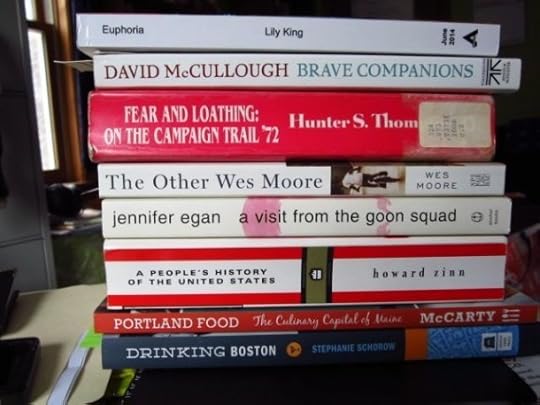
Just a few of the 65 in 2014.
December 24, 2014
Holiday Break
Today is the day before Christmas. It’s also Wednesday, the day after my usual Tuesday posting day on the blog. If you noticed, I didn’t have anything new up by midnight.
I’m taking a short blogging holiday.
I won’t be back with anything fresh ‘til next Tuesday—that’s when I’ll be coming at you with my end-of-the-year reading wrap. There are a boatload of books to talk about. In fact, some of my time over the next few days of downtime will be spent reading, padding my book total.
I’m thoroughly enjoying my current read, which offers a look back at those crazy days back in 1972—more to come on that front.
To readers and those just stumbling upon my site, I wish you a Merry Christmas and the Happiest of Holidays.

Merry Christmas from the Nixons–1972