Jim Baumer's Blog, page 51
November 21, 2014
This Is Not a Blog About Paul LePage
As tempting as it is to keep writing about issues and politics, I just don’t feel like taking on immigration this morning. I know the president gave a speech about it last night. I’m sure that half the country is aflame with hate and spewing vitriol this AM, but I just don’t have the heart or the energy to do the usual binary shuffle this early in the day. Although……
Speaking of vitriol, me and the newly re-elected governor rarely see eye-to-eye on any issue—that being said, three of my best five days for blog stats in 2014 involved posts centered on good ole’ Paul LePage—like this one on NASCAR and economic boondoggling. The next four years should be good ones for anyone buying stock in the LePage Blogging Industrial Complex.
Actually, today I’m going to throw a bone to the aspiring book writers out there. Having taught a course in writing a book in 8 weeks (when in reality, it takes about 8 months), I know that the topic of writing and publishing a book is one that many are interested in.
I found this link on Twitter, courtesy of a tweet by Tabitha Reimer (@WordsbyTabitha), and it prompted me to craft today’s short post. Reimer’s link got me thinking about the “break the project down into bite-sized pieces” philosophy, especially as applied to writing a nonfiction book, via Nina Amir.
The10 tips highlighted by Amir, founder of National Nonfiction Writing Month, also known as the Write Nonfiction in November Challenge, are terrific. In fact, #10 is the process I utilized—motivated by the students I was trying to inspire—in getting The Perfect Number: Essays & Stories Vol. 1 out the door.
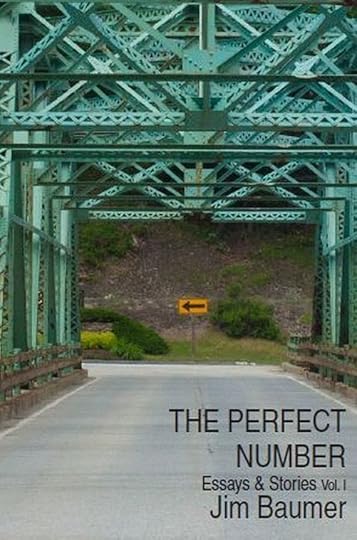
Essays are great for attempting a short(er) book project.
Amir’s short books format as proposed could certainly allow someone with some writing skill (and who is used to writing regularly) to crank out a manuscript that might become a book, in one month—and she’s chosen November as her month to promote that very thing. Of course, the challenge becomes, what to do with the manuscript once it’s done. That’s where Publishing 101 comes in, an area I know a little bit about. There’s my version of it, which draws on my own experience of more than a decade, and then there are other excellent ones out there, too, like Guy Kawasaki’s (along with Shawn Welch), and what they call, “artisanal publishing.”
I also think Amir is spot-on about why blogging is important for anyone aspiring to write a book, or two (or four). Sounds counter-intuitive, but it’s not. Take it from someone who uses blogging to keep the words flowing.
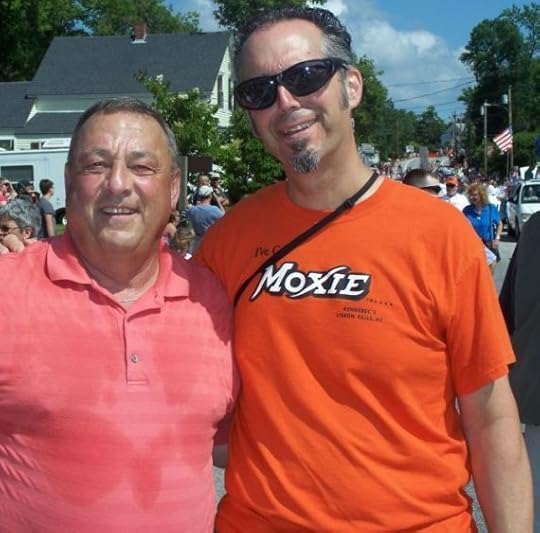
The governor and me getting our Moxie on.


November 18, 2014
Luck Makes the Man
His story isn’t new. However, it’s one that’s been embellished. Sometimes it’s important to shine a little truth around, to at least temper some of the misinformation.
I find it telling that Governor Paul LePage, the recipient of largesse from benefactors when he was in his teens, continues to further his own twisted ideology and war on the poor, this time on the backs of 19 and 20-year-olds. In essence that’s what he attempted to do, except that a federal appeals court ruled that it was illegal, on Monday.
In Colin Woodard’s lengthy, two-part profile on LePage back in January 2012, “The Making of Paul LePage, for the pre-Portland Sun, Portland Phoenix, we learn that the governor nearing his high school graduation at 18, had “poor grades.” He’s also admitted that “his verbal score on the Scholastic Aptitude Test (SAT) was just 300. He had been involved in no extra-curricular activities. A high-school guidance counselor advised him to become a painter, like his father.” There’s nothing there to indicate that the young LePage had much going for him. He certainly wasn’t “job-ready” for the jobs available to many 19 and 20-year-olds today. Back in 1966, however, there were plenty of factory jobs and others for an 18-year-old to eke out a living, doing.
Of course, we now know that fate intervened for 18-year-old Paul LePage. Instead of becoming a working stiff, he rose up through the ranks of the white collar world, ascending to the governorship of Maine.
LePage had a benefactor named Peter Snowe (the late first husband of former Senator, Olympia Snowe—Peter died in a car accident in 1973, and Olympia ran successfully to replace him in the Maine House), who had just won a seat in the state legislature. He rescued LePage from a fate that most lousy high school students with 300 SAT scores face—a life of work, if they’re lucky. They rarely become governor, and get to piss down the backs of others who weren’t as fortunate (lucky).
But back to the “story.” Snowe told LePage to “find a college that will accept you, and I will make sure your first year is paid for.”
LePage apparently applied to 50 schools, and received 50 rejection letters. Again, his “angel,” Snowe, intervened. He advocated on LePage’s behalf with the founder of Husson College in Bangor, Chesley Husson, to “grant his lanky young mentee an interview. “
Husson met with LePage and agreed to bend the rules, allowing him to take an aptitude test in French. According to Woodard’s article, LePage indicates, “I did very well and they accepted me,” LePage noted that he was placed on academic probation “so they could bounce me if I didn’t live up to the grade.”
From LePage’s own lips, he admitted to a Tea Party gathering in January, 2010 that “If it wasn’t for Peter Snowe, seriously, I would still be in generational poverty. I would still be on the streets and I would still be on welfare.”
The reality for most of the 19 to 20-year-olds that the governor wants to yank the safety net out from under, they are far from being “job-ready” (a term Mary Mayhew and other LePage lackeys like to throw around).
This would simply relegate them fates like homelessness, and certainly not a successful future like he was offered through the largesse of people like Peter Snowe and others. That’s far from the norm, and was an example of lady luck smiling down on the governor.
Of course, now that he’s been successful and benefited from good luck, he prefers to deny others the basics, who aren’t quite as lucky. What does that say about a man like Paul LePage, and all those who applaud his heartlessness?
November 14, 2014
Elimination
We all have a finite period of time here on planet earth. No one knows if there’s an encore, or not. I’m betting there isn’t.
Given that our days, breaths, and narrative arc runs up against “the end” at some point, why do we piss away so much of our productivity and creativity? That’s the kind of existential question that warrants a much longer treatise than I’m going to give it today.
Richard Ford has a new book. It’s another meditation on the life of one Frank Bascombe. I haven’t devoted much time to Ford’s writing, but based upon Wednesday night’s intriguing interview with Fresh Air’s Terry Gross, I’m likely to read the new novel.
Bascombe on aging.
Ford’s book and protagonist are up against the awareness that he’s 68 and that he isn’t going to be around forever—whether his remaining time is 10 years, 10 days, or 10 hours. As a result, he begins pairing down elements in his life and being much more intentional about what’s important, and what’s a monumental waste of time.
How did Ford’s latest meditation on Bascombe end up in the realm of aging, or “aging in place,” as the professionals like to say? Here’s Ford, speaking to Gross.
“I sort of went through life thinking that when you got to be in your 60s that basically you weren’t good for much,” Ford tells Fresh Air ‘s Terry Gross. “That’s a younger man’s view. I know that the AARP phones are ringing when I say that, but now I’m 70 and I don’t think that anymore, OK?”
As an aside here, can I just say that our new crisis about “aging in place” is far too focused on trying to compensate for a lifetime of selfish decisions, poor choices, and like so much in America at this juncture—trying to mitigate cause and effect. Whether your 18 or 68 (or 88), there’s more to life than just you. Find something you can be passionate about, and get at it. Life without passion isn’t worth living—it’s just about being a placeholder.
Bascombe begins eliminating words and people. There are words that I’d be happy to cut from common usage—today’s word is “absolutely.” I hate that hackneyed response. There are also plenty of assholes that are content to suck the life out of you and cut into your creativity.
Moving on from words and people, the possibilities are endless.
November 11, 2014
Culturally Clueless
We’ve just stumbled through yet another mid-term election. As if the weeks of candidate commercials and political advertorials weren’t enough—we’ve now had to endure a week’s worth of hand-wringing and Monday morning quarterbacking coming from the pundit class.

What happened?
If you aren’t Republican (I am not), then waking up Wednesday morning left most of us lefties scratching our heads. Some were even depressed about the results, talking about moving somewhere else. While progressive issues like raising the minimum wage, legalizing pot, and rejecting the passage of personhood won out in many states, this was a minor palliative for non-conservatives, with the counterpoint being that a Republican wave washed across the national landscape. Is this a sign that voters still have some progressive inclination? Better, it might demonstrate the schizophrenic nature of those going out to vote.
In my home state, Governor Paul LePage won re-election in a three-man race, increasing his vote total four years after winning with only 38 percent of the vote (in 2014, he upped that number to 48 percent).
A good friend from high school put it all in perspective on Saturday when he said that “mid-term elections are always wacky—look at 1994 and Newt Gingrich.” He had a point.
I think Republicans have a few things going for them, beyond their apparent appeal to low-information voters. One of them is the cultural cluelessness of Democrats.
In the great electoral state of Iowa, farming country USA, the Democrat, Bruce Braley, launched his campaign by subsequently alienating the farmers of his state.
Braley, the Democrat who had the support of the Democratic elites, like Bill and Hillary Clinton, had the following to say to Iowa farmers, touting his bona fides to fundraisers in Texas back in January.
“If you help me win this race you may have someone with your background, your experience, your voice, someone who’s been literally fighting tort reform for thirty years, in a visible or public way, on the Senate Judiciary Committee. Or, you might have a farmer from Iowa who never went to law school, never practiced law, serving as the next chair of the Senate Judiciary Committee,”
Granted, he wasn’t speaking directly to his potential constituents, but someone as “smart” as Braley should have figured out what pissing down the backs of Iowa farmers would mean for him down the road, namely that he’d lose to an attractive woman, who packs heat, and has a history castrating hogs.
I could make the case that our president is pretty tone deaf, too, especially when he’s not speaking to voters on both the left and right coasts that make up blue state America. This also applies to how progressives feel about Obama, too. I don’t think of him as “one of us.”
This kind of cultural misstep is all too common, especially in nonprofit work in rural communities. Time and time again, I’ve seen organizations with a longstanding history in a place and a region, have no clue whatsoever about what was happening on the ground. It’s like what they thought they knew from sitting in their offices and going to meetings was the exact opposite of what I learned after showing up and taking the temperature of locals. It’s amazing what happens when you actually talk to people, ask a few questions and listen.
For the past year, I’ve experienced this yet again, working in two places in rural Franklin County. I have a host of partner organizations that are staffed with good people (I guess), but when it comes to engaging the people who live in the two zip codes I’ve been working to build support in, they’ve consistently been befuddled.
I can’t recite a litany of quantitative data about why this is. I have my own qualitative ideas based on the experiential in this case, and in previous situations. Perhaps I’ll unpack all of this at a later date, when I’m not quite as close to all of it, like I am right now.
People that have worked with me have heard me say the following on numerous occasions; “You can get everything right with a project, but not get the local culture correct (in understanding it), and you’ll fall flat on your face. On the other hand, you can get a lot of things wrong (and not have all of your quantitative I’s dotted and t’s crossed), but truly understand the culture of the place, and have lots of success.”
I stand by that adage.
It’s one reason why Paul LePage is Maine’s governor for another four years. It’s also why candidates like Joni Ernst are going to Washington, DC, instead of elitists like Bruce Braley.
I know that’s a bit overly simplistic, and one reason why I’d never be a very good political pundit. Plus, I don’t like doling out bullshit on a consistent basis, which is what pundits do.
November 7, 2014
Hat Season
Back in 2009 when I lost nearly 60 pounds and went from being the typically overweight white guy approaching middle age, to a slimmer version of that guy, I’ve become “cold-blooded.” When I say, “cold-blooded,” I don’t mean in a Truman Capote, killer sort of way, either. I mean that when the weather turns cold—like it has in the last week—I’m always freezing.
I guess those 60 pounds of blubber helping me fend off the chill of winter in ways that being not quite svelte, but by no means a fatty, no provide me with that buffer. Last weekend’s falling back an hour and subsequent early snow was a premonition of what’s just around the bend. Thursday’s dampness and temperatures hovering all day in the low 40s forced me to face the inevitable—it’s time to break out the hat collection. For the next five months, I’ll be rocking a winter hat for most of my waking hours.
When I was a teenager and concerned about what the opposite sex thought of me, I didn’t like wearing hats. Mainly this was because it matted my dark locks. This, despite being told by old-timers that most of one’s body heat exits through the top of their head (this is not true, apparently, so go figure—I’d dispute the experts on this).
Now that I don’t have as much hair, and no longer care how I look donning headgear, it’s that time of the year for me—what I now call, “hat season.”

Hat season begins Nov. 6 this year.
Like most things that I own, I’m just as likely to leave behind one of my hats, or misplace it, as to keep track of it. I’ve owned my share of hats that have disappeared, or subsequently walked off under their own power perhaps. These days, I’m not worried about being stylish or fancy. I rotate my series of fanboy knit hats I’ve picked up, with logos ranging across Boston’s various seasonal sporting favorites. One day, I’m donning the black Celtics’ hat pulled down low on my melon, warding off the chill. The next day, it’s either the Bruins or Red Sox logo affixed to my forehead.
Yesterday, I finally broke down and lit the wood stove. Once I start that first fire, my primary duty once I roll out of the sack every morning from November ‘til March becomes building a wood fire. After I get my fire box burning brightly, then I get to enjoy that first cup of coffee for the day.

Taking away the chill.
I’ve pondered what it might be like to live in a sub-tropical paradise year-round instead of being marooned off in the northeastern hinterlands like I am. Life during the winter months feels like I’m functioning on half-power. How would it feel to experience warm sunshine and roam beaches that aren’t cursed with ocean water temperatures that drop into the 30s from November to April? Perhaps my fortunes will change and I’ll win the lottery and get to move closer to the equator—I guess I’d have to buy a ticket to win, right?
But alas, hats, log carriers, and snow shovels will be my constant companions for the next few months.
November 4, 2014
If 6 Was 9
Most mornings, I’m up and at my laptop working at 5:00 am. Being a notoriously light sleeper, I find the best time to work for me, and when my energy is at its peak, is between then and around 2:00 or 3:00 pm. So, in order to leverage my strengths, that’s how I usually structure my days, at least when I don’t have outside responsibilities or appointments that prevent me from doing so. That’s how I roll as a free agent.
When I’m working, I enjoy listening to music, usually on headphones or through ear buds. It’s a habit I’ve developed so I don’t disturb Miss Mary when she’s down below, working in her office area, before she’s out and about making sales calls.
My music sources of choice are usually radio stations (rather than music services like Pandora, although I’m not averse to Pandora) that also stream their content. One of my favorites is WMBR, which is the MIT campus radio station. I think I’ve come to appreciate WMBR more than prior defaults like WFMU and KEXP, is that their early morning Breakfast of Champions and Late Risers Club slots during the weekday provide a mix of punk, post-punk, and current indie pop and rock that jives with my eclectic tastes and the desire to stay as current with the rock genre as I can now that I’m post-50 and no longer young.
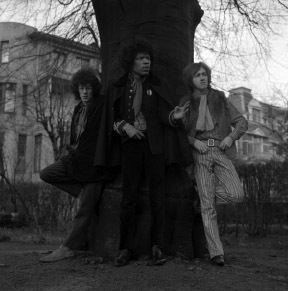
The Jimi Hendrix-Hamburg, Germany, 1967.
The title of today’s blog post actually comes from an early morning show that runs on Tuesday mornings on WMBR, taken from the song title of the Jimi Hendrix Experience song that was released in 1967, on Axis: Bold as Love. Hendrix and his band, along with that record, were significant for me and my band of brothers, as we were coming up, coping with the mediocrity and conformity being imposed upon us by our masters in school, church, and within our families of origin.
The name of this website/blog was a play on the band name, the Jimi Hendrix Experience. I actually wanted to change the spelling of my name in high school to Jimi—my mother, I’m guessing, was opposed to it.
Since today is Election Day, and plenty of others are weighing in on who you should vote for and why, I’ll refrain from that. Voting may, or may not matter, depending on your perspective on things and the state of the world.
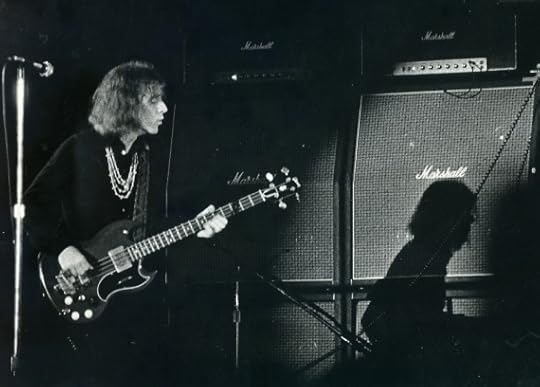
The late Jack Bruce during his days with Cream (circa 1968).
The DJ who spins the discs (I can use that term, because I’m sure Rick Biskit Roth plays plenty of vinyl) is on his second week of highlighting the music of Jack Bruce, former Cream bassist and prominent rock musician from mainly the 60s and 70s, who passed away on October 25. This week, he’s been playing some Jack Bruce solo stuff, but right now, Cream is wailing away on “N.S.U.”, with Bruce prominently occupying the lowest register on this tune.
Most of the younger crowd have no idea who Jack Bruce was. Even members of my generation, unless they were into the musical influences just prior to our period of popular culture, may not have known the genius that was Bruce. I found this tribute that was different than most of the others in an interesting alt-news publication originating in Indianapolis of all place. The writer, someone named David Hoppe, obviously a Bruce fan, nailed it for me with this, about the late 60s musical genius and someone who never conformed to having his music shaped by corporate more and trends.
By refusing to be pinned down or corporately categorized, Jack Bruce reminded us of that the ‘60s was ultimately more personal than political, a cultural moment in which an extraordinary opening was made for creative acts of reinvention. Jack didn’t just theorize about this. He lived it.
Hendrix, Bruce, Jorma Kaukonen, and a host of others with roots firmly planted in the 1960s, figured prominently in pointing me down a path that framed the world differently than how it was presented to me by most of those around me when I was in high school. Of course, those in authority never want any of us varying from the status quo and their culture of greed, violence, and lies that they feed us from multiple sources and platforms. Every time I’ve attempted to push back, it caused dissonance with those who I granted authority over me.
Yes, the masters are still trying to manipulate and control me (and all of us) to live our lives a certain way that benefits a small minority, rather than the masses—that’s fine. I’m aware of what they’re doing, however, and as Hendrix sang in the song that I’m taking today’s title from,
Hah, hah
Falling mountains just don’t fall on me
Point on mister Buisnessman,
You can’t dress like me.
Nobody know what I’m talking about
I’ve got my own life to live
I’m the one that’s gonna have to die
when it’s time for me to die
So let me live my life the way I want to.
I’m trying to live my life the way I want to, at least fight for that right to swim against the current, as difficult as that continues to be in our culture of corporate conformity.
October 31, 2014
Fear and Hatred
Thirty years ago, I thought I had all the answers. At 21, life seemed simple in some ways. Economically, things sucked—I was working at a job that paid 25 cents above minimum wage and I had a newborn son and wife to take care of. I was 1,500 miles from my family and support system in a post-industrial part of the country where the unemployment rate was hovering around 15 percent. But I was okay because I was in the center of God’s will.
It’s interesting when you believe that the answers to life’s questions are contained in a book that was written by men who lived 2,000 years ago. Whenever things didn’t go right for Mary and me, the solution offered by our spiritual leaders was to pray, give more money to Jack Hyles, and drag a few more converts down the aisle to get baptized at First Baptist Church of Hammond.
When I reflect back on those years in Indiana, I wonder, “what the heck was I thinking?” Actually, I wasn’t. I was relying on a prescriptive way of living my life, letting others decide for me what was wrong and right, dictating to me about how I should order my existence. To do otherwise was to self-identify as a follower of the Devil.

Cranking the spigot on fear.
A black and white worldview provides comfort. In my case, it also put me under the power and sway of a demagogue, and it made life difficult for my young family.
Eventually, lights began going on for me. It’s likely that one of the catalysts that launched my questioning of the order of Jack Hyles was when me and my friend, as well as bus visitation partner, Doug, were told we couldn’t bring the 10 black children back to church with us the following week by our bus captain—this was definitely a red flag for me. These flags continued popping up and eventually, I mustered the courage to say to the powers that be at Hyles-Anderson College and First Baptist Church that this was racist and wrong. Later, I’d have to give an answer to many students that I’d see almost daily in my job at Westville Correctional Center. At first, I tried to be polite and accommodating. Finally, I started telling these Holy Joes not to talk about Hyles-Anderson ever again in my med room.
Just an aside; back in 1983, when I began making my way free of fundamentalist Xianity, I had to deal with people face-to-face. I had to stand up for what I believed, even though it was extremely tough for me as a young man in my early 20s. I couldn’t hide behind my cell phone, or social media moniker, either.
If you would like to know more about the detail of that period in my life and how I’ve gotten to this place, from there, I devote an entire essay to that subject in my new book, The Perfect Number: Essays & Stories Vol. 1. For the purposes of brevity, I will tell you that it was a particularly difficult thing to do, when you are young, and those in power are gifted at manipulation. It also isn’t reassuring when you are struggling to make ends meet, and you realize that you probably can’t go back home, at least in the near future.
Another thing I learned during my time in fundamentalist Xianity, was how much fear and even hatred was fueling this aberrant brand of theology. Sadly, at least from my current perspective, my friend Doug, never made it out. He’s now a pastor in Fort Wayne, perpetuating a religion that devalues women, people of color, Democrats, and anyone else that aren’t God’s “chosen people.”
Perhaps because of this experience during a formative time in my life, my antennae go up whenever I come within a few yards of similar ideologies riven with anger and that depersonalize other human beings. I’m also pretty sure my quest to educate myself in my own, DIY way, has a lot to do with eventually breaking free from following demagogues and false prophets.
Curing my propensity for seeking simple answers to complex questions came to me in the summer of 1997. I had walked away from a dead-end job that required me to work 70 hours a week, while being paid for 40. I often began my day at 2:00 or 2:30 in the morning and didn’t return home until after dinner and Mark and Mary’s day was winding down. I’d often be so exhausted that I couldn’t appreciate being at home. This period of wage slavery nearly destroyed what’s become a really great marriage.
For three months, I took up gardening and re-educating myself. In some ways, I was deprogramming myself through the books I found in the public library by writers like Lewis Mumford, Neil Postman, Jacques Ellul, and other thinkers and intellectuals. I dug out books that I had packed away (and fortunately didn’t get rid of) during the dark years of fundamentalism from my high school period of rebellion—these were by radicals like Noam Chomsky and Howard Zinn.
No matter how hard you work at learning, unlearning, and relearning, the crap that gets forced into your head at the family dinner table and through other avenues designed to enforce conformity aren’t easy to completely rid yourself of. Sometimes, even when you think you are on your way to the intellectual promised land, some weird synaptic abnormality causes you to succumb to fear and the rule of the mob.
For me, 9-11 was when I rid myself of that last vestige of intellectual baggage from my past and familial training. One last brief foray through another branch of the American, evangelical tree, this time with the Vineyard denomination—they with their contemporary music and casual church vibe—couldn’t mask the American exceptionalism residing just beneath the spiritual veneer. When the pastor got up one Sunday morning and preached a sermon about the war in Iraq being a just war, offering that bombing civilians in Iraq as the will of Jesus, the Prince of Peace, I looked at Mary and knew we were done with this kind of bullshit once and for all. I haven’t looked back over the past 12 years.
It’s interesting how “finding myself” and embracing reinvention began just after walking out of the Vineyard building off Route 196 in Lewiston. Free thinking and openness is a more fertile soil for perpetuating growth, not to mention the freedom that comes from throwing off the chains of control that demagogues always try to shackle you with.
On Wednesday night, I had the chance to see an old friend and have a few beers in Portland before heading back to the suburban hinterlands. We spent our time reflecting on the state of things politically, and the societal backlash against certain people, especially people who dare to stand up for themselves. I mentioned that the common thread in America uniting many seems to be fear and hate. He didn’t disagree.
When I read the comments on Facebook and see the irrational fear about Ebola, I’m reminded of that dark period in my life. Fear often emanates from ignorance. Ignorance gets perpetuated and acquires power from a lack of information. Often, this is willful. People choose to be willfully ignorant because if offers them false security. This security often engenders a smugness and a sense of moral superiority. Most demagogues, whether they’re religious or secular, try to control, or better—qualify information as either good or bad. If your leader is Paul LePage, then calling someone a liberal discredits whatever information they are offering.
Kaci Hickox is not a villain. While I don’t know her, her actions and courage speak loudly to me. You can only call her names and lob other vitriol at her because you lack the backbone and courage to make a difference in the lives of others. As I mentioned earlier—it’s so easy to demonize others behind the veil that technology affords all of us via the Internet. I admire Hickox. She left the safety of privilege here in America, to go to West Africa, where Ebola rages and is killing thousands. It’s an epidemic that warrants resources from the U.S. and other first world countries like ours. However, we would rather politicize the epidemic and demonize health care workers like Hickox. We hide behind our ideologies, ignorance, and yes, our keyboards. It’s easy being brave when you have anonymity, or at least, you don’t have to face those whom you are hating on.

Branding others as heretics is too easy.
It’s been nearly seven months since the Ebola outbreak was originally confirmed in Guinea. Doctors Without Borders—the organization that Hickox was working with—has been pleading for the world to act. They were the first and one of the only organizations on the ground in West Africa through the initial outbreak and subsequent epidemic. Until recently, their calls for help went largely unanswered by countries like the United States, and others.
On Thursday, Democracy Now had a segment on the Hickox story, as well as quarantining health care professionals like her. Amy Goodman had as one of her guest, Lawrence Gostin, university professor and faculty director at the O’Neill Institute for National and Global Health Law at Georgetown University. Gostin is also the director of the World Health Organization Collaborating Center on Public Health Law. He’s an expert on issues related to science, health, and what’s necessary concerning the Ebola virus. It was interesting to hear him citing liberty and confining individuals like Hickox, who’ve committed no crimes (except in the court of public opinion, on social media).
Gostin said that “the Supreme Court has said that if you confine somebody who has committed no crime, it’s, quote, ‘a massive deprivation of liberty.’ [It’s interesting that all the so-called libertarians seemed to have changed their tune. Why is this? Did Sean Hannity or Rush Limbaugh tell you that liberty doesn’t apply to outspoken women willing to stand for what’s right like Kaci Hickox?--jb]
Gostin went on to say that “It’s (confining individuals who haven’t committed a crime) not a trivial thing. We have to make sure that we balance civil liberties with public health. In this case, all the public health experts are telling us that it’s unnecessary—the CDC, the World Health Organization. There’s no organization that I know of that believes it’s right to quarantine for three weeks somebody that really is, as President Obama said, ‘is a hero.’ [But of course, for the deluded rubes who receive all their news and information from sources that aren’t motivated by journalism but ideology, you don’t consider Obama your president.--jb] They’ve sacrificed. They’ve done things that most of us wouldn’t do. They’ve put themselves at risk, gone in a compassionate way. And I do think we need to treat them better than we are. This is self-defeating. We think that we’re actually decreasing our risk by quarantining her, but actually we’re increasing it, because if we impede people from going to the region, then the epidemic there will spin out of control, and that is where our risk lies.” [Do you understand what Gostin just said? Quarantining Hickox and others is actually increasing the risk that Ebola could become a problem here in America. Again, this doesn’t jibe with your pet demagogue, whoever it is that’s leading you around by the ring through your nose.--jb]
Ebola continues raging and claiming lives, spreading to new countries. All most Americans can do is point fingers, engage in behavior reminiscent of the Salem Witch Trials, and leave us to wonder if Ebola could have been contained if it was addressed by heeding the warning of the medical professionals instead of the politicians.
October 26, 2014
Boston and Book Streaks
For six years now, I’ve traveled to Boston to spend an October Saturday in Copley Square. The occasion has always been centered on books, writers, and publishers. There’s also a “streak thing” going on, too.

Books galore in Copley Square (#BBF2014).
I attended the inaugural Boston Book Festival in 2009, and each subsequent one. I always meet up with my son, Mark, and we spend the day listening to authors, perusing book tables, talking about writing (along with sports and politics), and scouting out the best offerings of the myriad of publishers who set up shop in one of the Boston’s celebrated public squares, a patch of real estate hearkening back to the city’s storied past.
The last few years, I’ve decided to leave the car behind in Portland, trading it in for a backpack and bus ticket. Concord Trailways the carrier of the MegaBus service making round trip travel to Boston possible for $10!! I couldn’t even park for that.
Mark and I meet up at South Station (he comes up from Providence where he lives, via commuter rail), walk across town to Copley. It’s always an enjoyable walk as we talk about what’s been going on in our lives, while passing through Boston’s Chinatown, and along the Boston Commons, as we make our way up Boylston.
In the past, we’ve always tried to cram too many events into too short a period. This year, I wanted to hear Steve Almond. Mark was down with that, too. We missed out on Nicholas Carr’s talk on technology, which was another one I’d circled on the #BBF2014 event schedule when it came out.
Almond talked about his latest book, Against Football: A Reluctant Manifesto. He also discussed publishing (albeit, briefly), and writers getting paid for their writing. Right on, brother!! Why should writers write for free?
As writers go, Almond’s never boring to hear speak, and as in times past, eminently quotable, with a few zingers like these:
“The publisher called it a ‘manifesto’ to sell fucking books.” (on the title of the new book)
“Football is bigger than religion in America.” (on the popularity of the NFL)
“The Football Industrial Complex exists because we (the fans, of whom Almond admits he is one) gave them (the NFL) that power.” (Almond’s own complicity in the FIC)
“Our allegiances are the truest expressions of ourselves.” (know thyself)
Mark and I were then off for a great lunch at The Salty Pig, an eatery that was a combination of Frontier and Nosh, back in Maine. Loved that the SP also had a Czech-style pilsner on tap, Notch Session Pils, from Ipswich craft brewer, Notch Brewing.
While on the topic of beer and New England, I picked up a copy of Lauren Clark’s new book, Crafty Bastards: Beer In New England from the Mayflower To Modern Day, about beer in New England, especially the craft variety. Readers of the JBE know of my interest in Moxie (of course!), but also craft beer, lagers, and the history of brewing. I’ve already begun reading Clark’s book and it’s wonderful!
Union Park Press, an indie small press based in the Granite State, is the publisher of Clark’s book about beer. They had a table, which is where I picked up my copy, along with another book about New England (Boston) and drinking, aptly titled, Drinking Boston: A History of the City and its Spirits. The author, Stephanie Schorow was at the Union Park table, signing copies. Schorow was personable and warm, and we had a nice chat and then I was off to meet up with my book shopping son, Mark.
We had time for one more event and I suggested the “Another Country” panel, featuring Maine’s own award-winning author, Lily King, along with Joseph O’Neil, and Rupert Thomson. I just happened to notice this panel in passing. I’d actually packed King’s book, Euphoria, for my bus ride. This was mainly to find out what all the hoopla surrounding this book was about. I read most of it on the way down. Contrary to just about every other review out there (and of course, going against the Kirkus grain), I found the novel tedious, but I plowed through it, finishing it at South Station waiting for my 7:15 bus.

Is Fiction a State of Mind?
Sycophants (like the pew full of female readers next to me at the Church of the Covenant, where the panel was held) will most likely accuse me of being a “bitter man” and a nobody as a writer compared to King. That’s too simple a default, I’m afraid. Her characters were too shallow, all anthropologists (the book is based upon the life of Margaret Mead), and weren’t anyone I cared to invest time and interest in. For me when I choose to read fiction, I prefer dense and complex characters, not wooden, overly predictable cutouts. If I don’t like the primary cast, I can’t get into the book.
Another point I’d like to make as an aside—Maine’s A-list writing community seems to be a bit too incestuous for my tastes—as evidenced by this excerpt, written by yet another writer from away landing in Portland’s smaller pond, and making a bigger splash than they deserve (IMHO). A frame of reference is often dependent on whether you’re on the inside, viewing it from the cool kids table in high school, or not. I think I just channeled a little Steve Almond right there.
The panel King was on was facilitated by the New Yorker’s book critic, James Woods. It was a tedious hour I’ll never get back, as none of the three writers had much insight about how they came to their topics, or craft. In fact, it was the equivalent of the “being visited by a muse” school of writing.
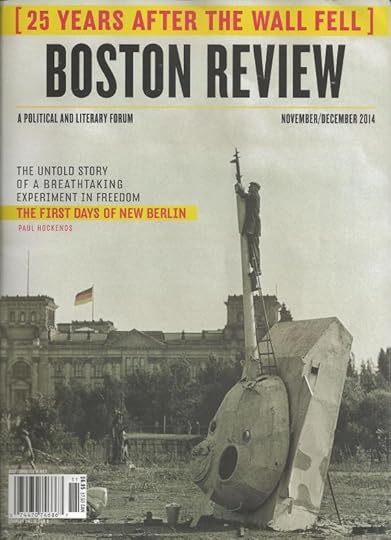
Perhaps the surprise discovery of the day was the copy of Boston Review that Mark picked up at their table and handed me waiting for the King/Woods affair. Having it allowed me to get through our final BBF2014 event, and provided some spectacular reading with coffee this morning. In fact, there are five nonfiction titles touched on in the latest issue that I’m adding to my ever-growing list of books to read.
Boston Review seems to me to be a publication that’s slanted in the vein of The Baffler, which was also on display, at the MIT Press table.
Another festival’s been put away and is now in the books. Happy to have one of this magnitude so close and accessible.
October 24, 2014
So What?
I’ve been thinking about this phrase since yesterday when I heard news that affected me and some of the things that I hold dear. If I were to voice my thoughts this morning—when everything seems a jumble and so uncertain—most readers (mainly the drive-by types) would just utter, “so what?”.
Most of the time, the things that matter to me don’t seem to affect others. It’s that “out of the mainstream” orientation that I’ve held for most of my life. I’m not a fan of the status quo because in most cases, it rarely gets to the core of the matter.
Because the past six months have been a blur, chasing deadlines, organizing grant-related events, and generally, just doing the usual year-end hustling that free agency requires, I haven’t been able to devote much time to padding my word count in this particular space. That will likely change next week. I’m planning to write a fairly long post tying together all the variant threads that have been running around my brain the past two months or so.
Stay tuned!
October 21, 2014
Exploring
For six months, I’ve been writing a monthly feature story called Explore for the Lewiston Sun-Journal. Once a month, I spend a few hours in a particular locale and dig beneath the obvious to capture elements of the town that I’m writing about.
Each time I’ve done this, I came away with a much richer appreciation of the community I was profiling. Several times, I’ve featured towns that I regularly drove through, but from the high-speed highways that often whisk us through these places, I knew little or nothing about the town other than what the typical roadside detritus that most communities are afflicted by during our era of Happy Motoring, offered. Discovery always occurs when we slow down, take a look around, and real exploring begins on foot. At least that’s been my experience.

Exploring another Maine town.
Once again, I spent Friday afternoon nosing around another place, knowing I had a deadline looming on Monday. This particular place is only two towns over from where I live and it’s a place I buzz through regularly on busy Route 196, one of those ribbons of blacktop built primarily for shuffling auto travelers through places, with little concern about esthetics, or scenery worth commending.
2014 has been the kind of year that starts out very slow, but picks up momentum as it progresses. When I decided last fall that I probably ought to update my writing clips, my hope was that I’d have some success getting bylined, which would fit nicely alongside the other things I was doing as a free agent to make a living. Little did I know that I’d end up having such a successful first year back freelancing as a writer.
You can read my Explore feature in this Sunday’s Lewiston Sun-Journal in their b-section.