This Is Not a Blog About Paul LePage
As tempting as it is to keep writing about issues and politics, I just don’t feel like taking on immigration this morning. I know the president gave a speech about it last night. I’m sure that half the country is aflame with hate and spewing vitriol this AM, but I just don’t have the heart or the energy to do the usual binary shuffle this early in the day. Although……
Speaking of vitriol, me and the newly re-elected governor rarely see eye-to-eye on any issue—that being said, three of my best five days for blog stats in 2014 involved posts centered on good ole’ Paul LePage—like this one on NASCAR and economic boondoggling. The next four years should be good ones for anyone buying stock in the LePage Blogging Industrial Complex.
Actually, today I’m going to throw a bone to the aspiring book writers out there. Having taught a course in writing a book in 8 weeks (when in reality, it takes about 8 months), I know that the topic of writing and publishing a book is one that many are interested in.
I found this link on Twitter, courtesy of a tweet by Tabitha Reimer (@WordsbyTabitha), and it prompted me to craft today’s short post. Reimer’s link got me thinking about the “break the project down into bite-sized pieces” philosophy, especially as applied to writing a nonfiction book, via Nina Amir.
The10 tips highlighted by Amir, founder of National Nonfiction Writing Month, also known as the Write Nonfiction in November Challenge, are terrific. In fact, #10 is the process I utilized—motivated by the students I was trying to inspire—in getting The Perfect Number: Essays & Stories Vol. 1 out the door.

Essays are great for attempting a short(er) book project.
Amir’s short books format as proposed could certainly allow someone with some writing skill (and who is used to writing regularly) to crank out a manuscript that might become a book, in one month—and she’s chosen November as her month to promote that very thing. Of course, the challenge becomes, what to do with the manuscript once it’s done. That’s where Publishing 101 comes in, an area I know a little bit about. There’s my version of it, which draws on my own experience of more than a decade, and then there are other excellent ones out there, too, like Guy Kawasaki’s (along with Shawn Welch), and what they call, “artisanal publishing.”
I also think Amir is spot-on about why blogging is important for anyone aspiring to write a book, or two (or four). Sounds counter-intuitive, but it’s not. Take it from someone who uses blogging to keep the words flowing.
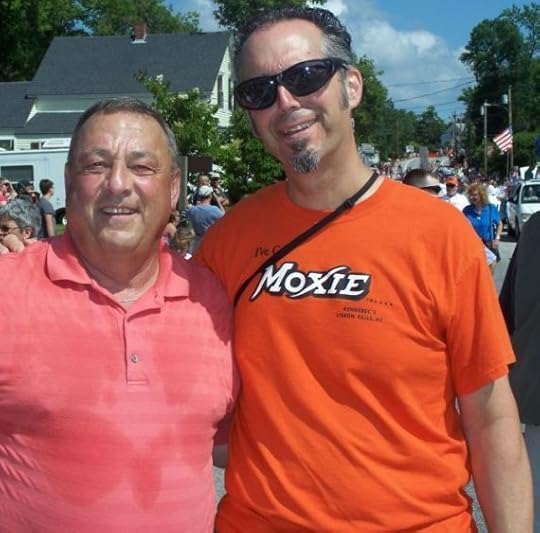
The governor and me getting our Moxie on.