
Greg Ross's Blog, page 16
August 1, 2025
First Things First
The ancients who wished to illustrate illustrious virtue throughout the kingdom, first ordered well their own states. Wishing to order well their states, they first regulated their families. Wishing to regulate their families, they first cultivated their persons. Wishing to cultivate their persons, they first rectified their hearts. Wishing to rectify their hearts, they first sought to be sincere in their thoughts. Wishing to be sincere in their thoughts, they first extended to the utmost their knowledge. Such extension of knowledge lay in the investigation of things.
Things being investigated, knowledge became complete. Their knowledge being complete, their thoughts were sincere. Their thoughts being sincere, their hearts were then rectified. Their hearts being rectified, their persons were cultivated. Their persons being cultivated, their families were regulated. Their families being regulated, their states were rightly governed. Their states being rightly governed, the whole kingdom was made tranquil and happy.
— Confucius, The Great Learning, 500 B.C.E


Nowhere
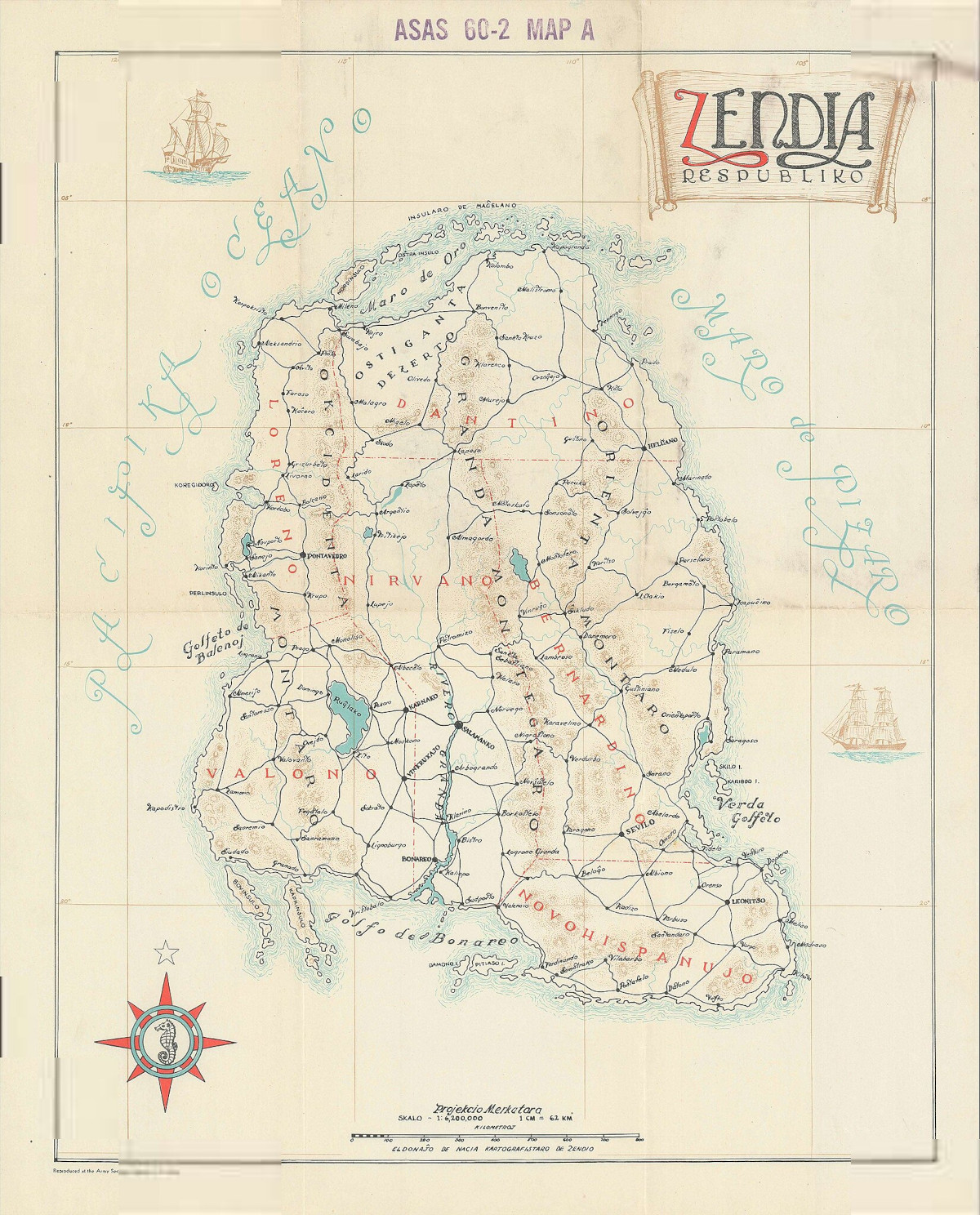
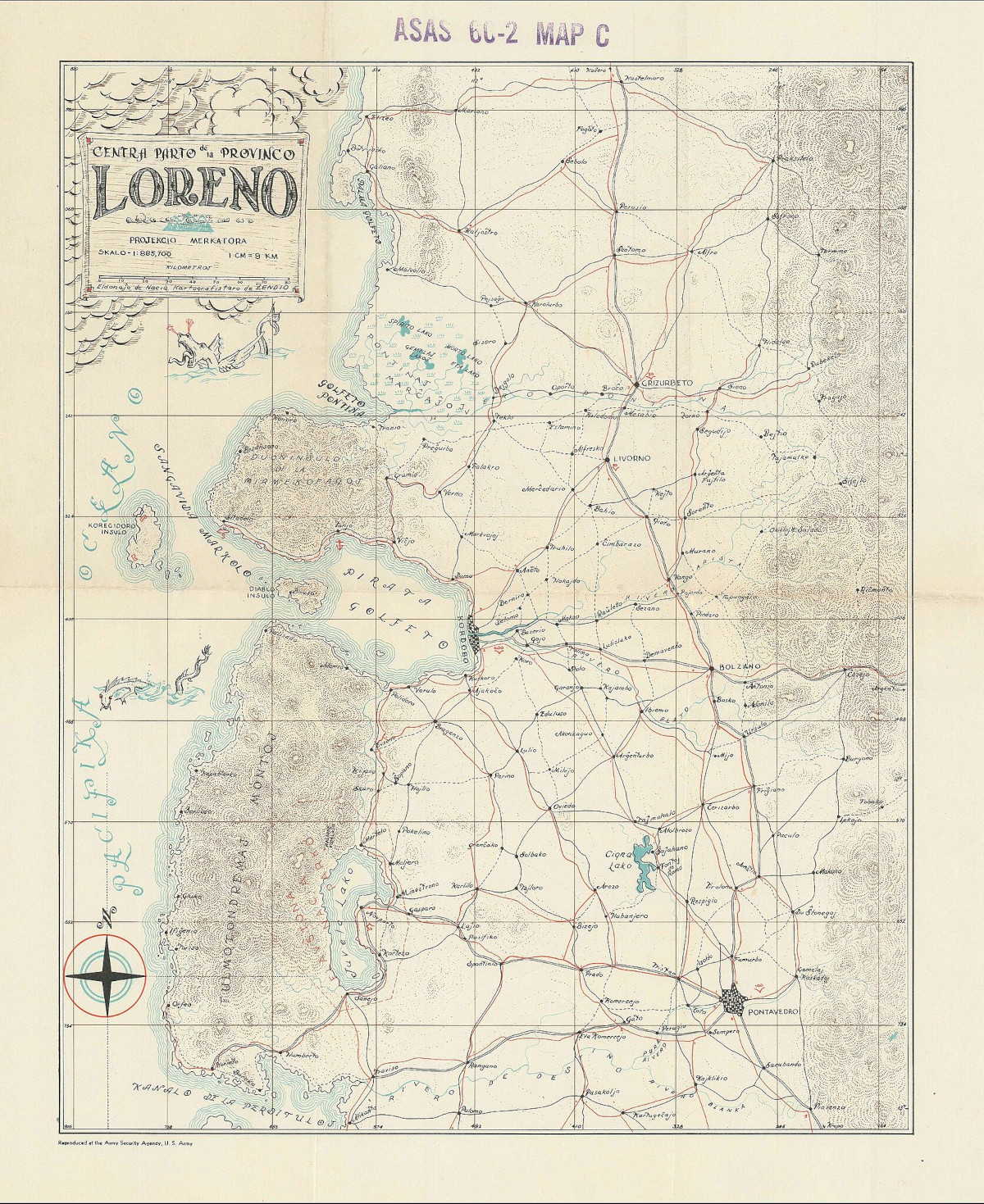
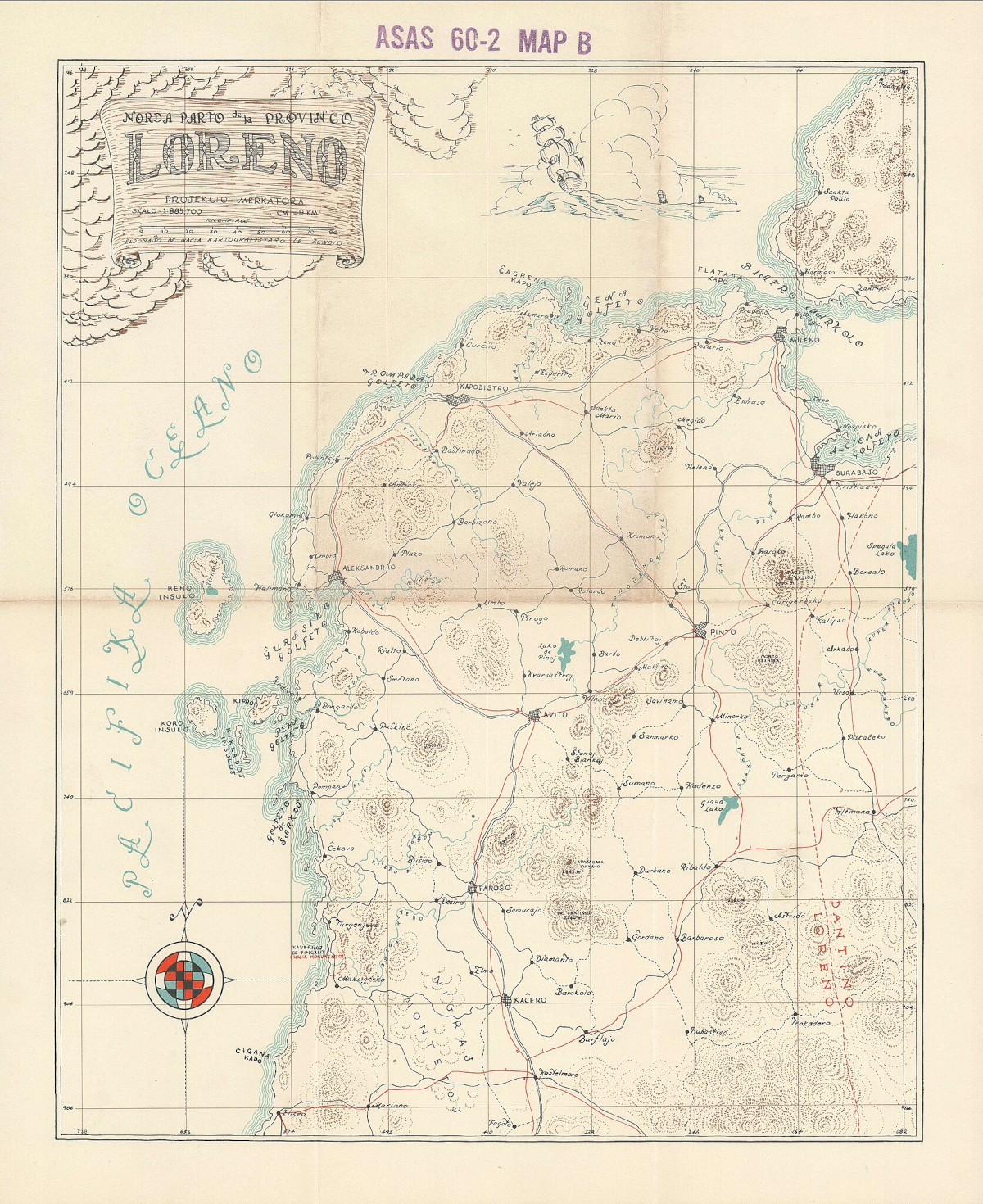
This is charming somehow: a detailed portrait of a place that doesn’t exist. During the Cold War, U.S Army cryptologist Lambros D. Callimahos devised a “Republic of Zendia” to use in a wargame for codebreakers simulating the invasion of Cuba. (Callimahos’ maps of the Zendian province of Loreno are below; click to enlarge.)
The Zendia map now hangs on the wall of the library at the National Cryptologic Museum. The “Zendian problem,” in which cryptanalysts students were asked to interpret intercepted Zendian radio messages, formed part of an advanced course that Callimahos taught to NSA cryptanalysts in the 1950s. Graduates of the course were admitted to the “Dundee Society,” named for an empty marmalade jar in which Callimahos kept his pencils.
July 31, 2025
The Mahler Hammer
The last movement of Mahler’s sixth symphony calls for the sound of a hammer, which the composer indicated should be “brief and mighty, but dull in resonance and with a non-metallic character (like the fall of an axe).” (The two blows represent the death of Mahler’s daughter Maria and the diagnosis of his heart condition.)
Because no recognized instrument exists to fulfill this function, symphonies have had to devise their own solutions, often striking a wooden box or bass drum with a mallet or sledgehammer. Houston Symphony percussionist Brian Del Signore built a 22-pound custom hammer and a wooden box to receive the blow.
In a Word
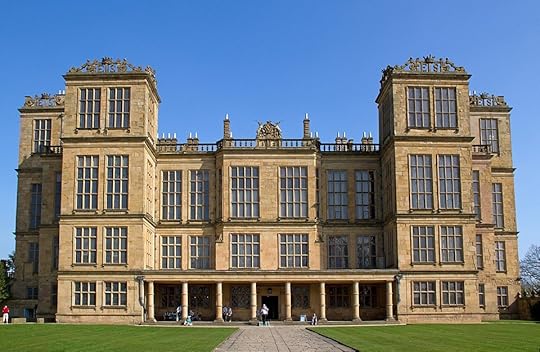 Image: Wikimedia Commons
scattergood
n. a person who spends money wastefully
Built in the 16th century to flaunt its owner’s wealth, Hardwick Hall, in Derbyshire, boasted large windows when glass was a luxury. Children called it “Hardwick Hall, more glass than wall.”
Unfortunately, writes Stephen Eskilson in The Age of Glass (2018), “a cold day saw the chimneys of Hardwick Hall drawing cold air through the drafty windows and circulating it again to the outside,” “a sui generis example of thermal inefficiency.”
July 30, 2025
Marchetti’s Constant
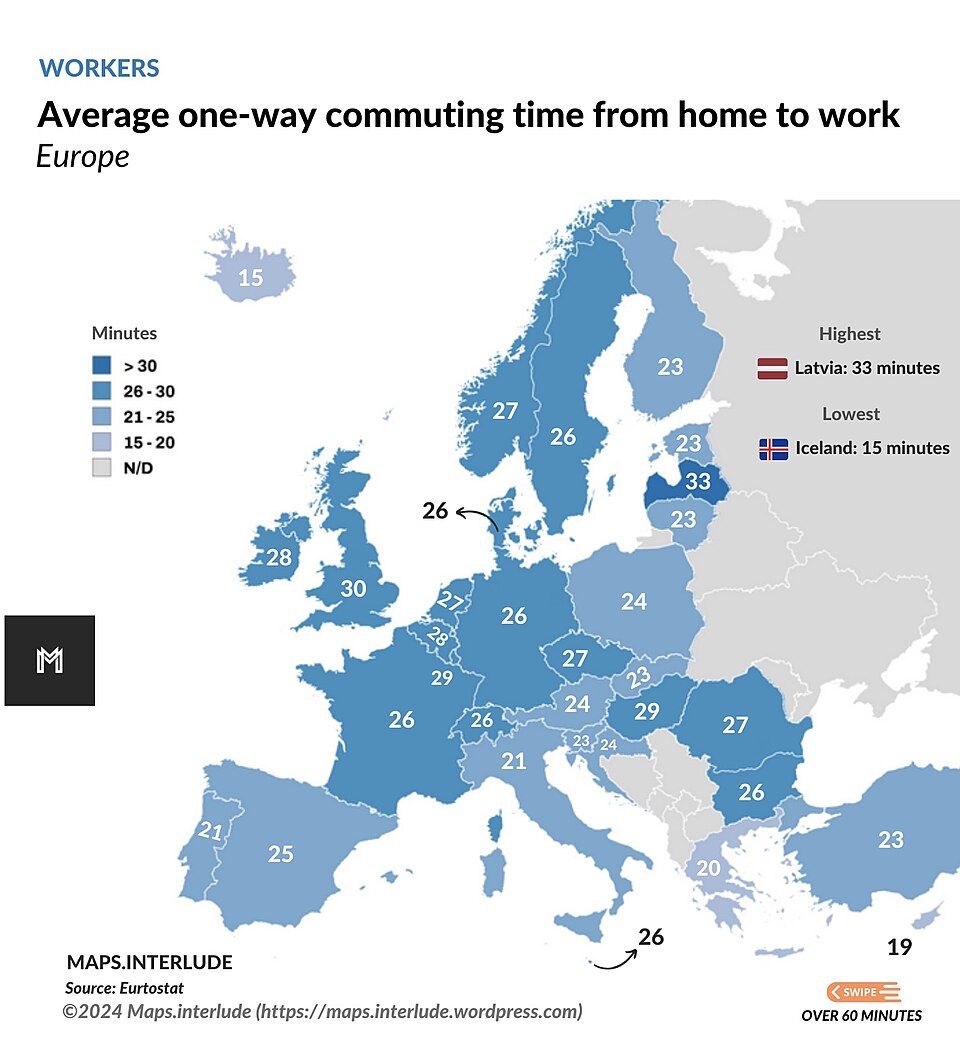 Image: Wikimedia Commons
Here’s a depressing idea: In 1994, Italian physicist Cesare Marchetti suggested that people have always endured commutes of an hour a day, half an hour each way, on average. Improvements in urban planning and transportation haven’t shortened our travel time; they’ve just permitted us to live further afield. In 1934 Lewis Mumford had written:
Mr. Bertrand Russell has noted that each improvement in locomotion has increased the area over which people are compelled to move: so that a person who would have had to spend half an hour to walk to work a century ago must still spend half an hour to reach his destination, because the contrivance that would have enabled him to save time had he remained in his original situation now — by driving him to a more distant residential area — effectually cancels out the gain.
Marchetti attributed the idea to World Bank transportation analyst Yacov Zahavi. He found that the one-hour rule extends over the world and throughout the year; even the mean radius of villages in ancient Greece, he said, corresponds to this estimate, assuming a walking speed of 5 km/hr. As technology permitted greater speeds, cities grew correspondingly.
(Cesare Marchetti, “Anthropological Invariants in Travel Behavior,” Technological Forecasting and Social Change 47:1 [September 1994], 75-88.)
Spring Fever
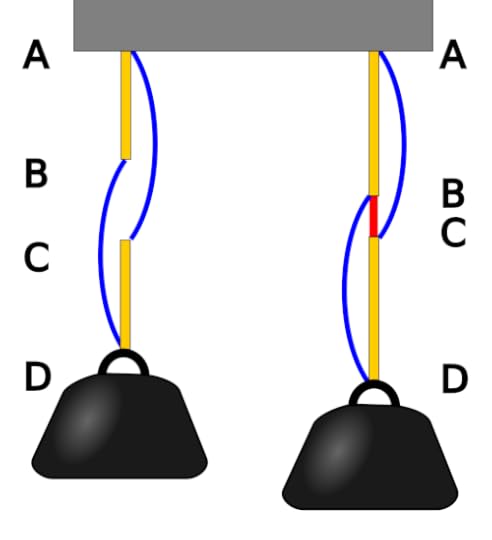 Image: Wikimedia Commons
Here’s an oddity: In the figure on the right, a weight is suspended by two springs (AB and CD) connected by a short length of inelastic rope (BC). The blue curves are lengths of string, which are slack here.
Surprisingly, when the rope is cut, the weight rises (left). Why? In the initial state the springs were arranged “in series,” one above the other. When the rope is cut, the blue strings go taut, and now the two springs are arranged “in parallel,” working together and thus more effective in resisting the weight’s pull.
July 29, 2025
Two for One
3 and 5 are “twin primes”: They’re two prime numbers that differ by 2. Further such pairs are 5 and 7, and 11 and 13. These pairs get sparser as you travel out the number line, but no one knows whether they eventually cease appearing altogether.
University of Alberta mathematician Leo Moser saw an opportunity in this pattern — if a prime magic square can be fashioned from the smaller partners in these pairs:
29 1061 179 227 269 137 1019 711049 101 239 107149 197 59 1091… then it immediately suggests a second prime square produced from the larger:
31 1063 181 229 271 139 1021 731051 103 241 109 151 199 61 1093(“Strictly for Squares,” Recreational Mathematics Magazine 1:5 [October 1961].)
Miquel’s Pentagram Theorem
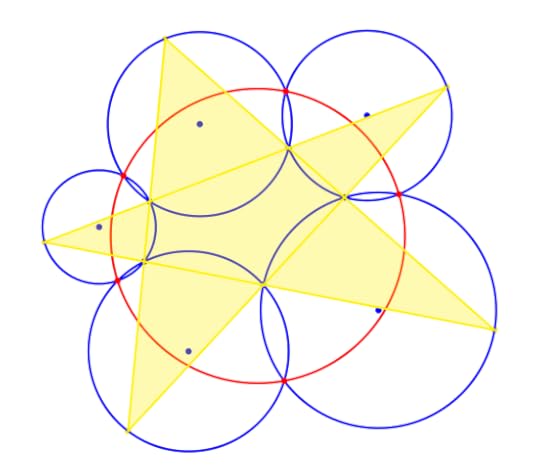 Image: Wikimedia Commons
Draw a pentagram and enclose its arms in circles as shown. Each pair of adjoining circles will intersect at two points, one at a juncture of the pentagram’s arms. The second points of intersection will lie on a circle.
The converse is true if the centers of the five circles lie on that implied (red) circle (below): The lines connecting the second intersection points of neighboring circles will describe a pentagram whose outer vertices fall on the circles.
Discovered by Auguste Miquel.
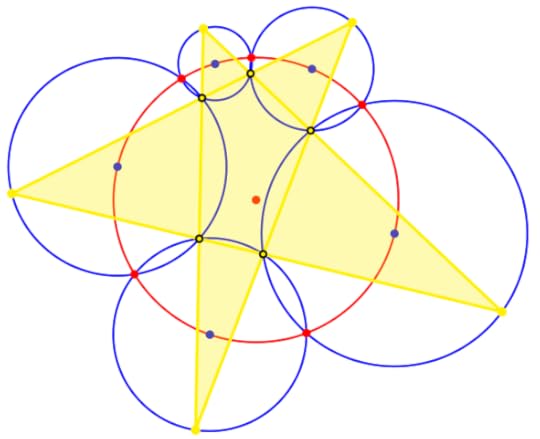 Image: Wikimedia Commons
July 28, 2025
Family Plan
Given names of the 11 children of Mr. and Mrs. Ernest Russell of Vinton, Ohio, 1972:
Noel LeonNovel LevonNorwood DoowronNerol LorenLeron NorelNoble ElbonLledo OdellLaur RualLoneva AvenolLebanna AnnabelLeah Hael“Mother did it, but I don’t know why,” Laur told UPI. “She would take names from the Bible and other books and compare them until they came out that way.”
Bonus palindrome item: Volume 1, Issue 5 of Alan Moore’s graphic novel Watchmen, titled “Fearful Symmetry,” is a deliberately contrived visual palindrome, not just in structure but often within individual panels (designed by artist Dave Gibbons). Pedro Ribeiro shows the correspondences here.
Hematology
[T]o the human mind there is more to blood than its mere chemical content. … For example, blood must essentially be thicker than water, impossible to get out of stones, indelible in its staining. … When apparent on heads, it should leave them unbowed; and should have the capacities to combine formidably with toil, tears and sweat and to attain boiling-point when its host faces frustration.
— Patrick Ryan, in New Scientist



.jpg)


