Jennifer Bohnhoff's Blog, page 42
June 6, 2016
Roosevelt, D-Day Hero
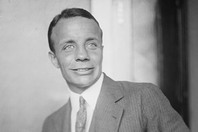 June 6th marks the 72nd anniversary of D-Day, the day when America and its allies invaded the beaches of Normandy, France, and began to push Hitler’s forces out of Western Europe.
Four men earned the Medal of Honor during the D-Day invasion. Many people feel that one of them, Theodore Roosevelt, Jr., shouldn’t have been there in the first place.
The eldest son of President Theodore Roosevelt and First Lady Edith Roosevelt, Theodore Jr. was 57 years old and disabled at the time of D-Day. He walked with a cane because he had been shot in the kneecap during World War I, and his heart and lungs had been weakened from a poison gas attack. A Brigadier General, Roosevelt’s two requests to accompany the leading assault elements, were denied. His third request, a written one, was approved, allowing him to be the only general who landed in the first wave of troops. Roosevelt asserted that his presence within the 16th Infantry, 1st Infantry Division would encourage the troops, who would be emboldened and comforted by seeing an older man who walked with the assistance of a cane among them. He said: “They’ll figure that if a general is going in, it can’t be that rough.”
When he discovered that the landing craft had drifted and his troops were a mile from the planned site of the invasion on Utah Beach, Roosevelt Jr. is said to have said, "We'll start the war from right here."
General Omar Bradley described Roosevelt’s actions as the “single greatest act of courage” he witnessed in the entire war.
His citation, for gallantry and intrepidity at the risk of his life above and beyond the call of duty, states “He repeatedly led groups from the beach, over the seawall and established them inland. His valor, courage, and presence in the very front of the attack and his complete unconcern at being under heavy fire inspired the troops to heights of enthusiasm and self-sacrifice. Although the enemy had the beach under constant direct fire, Brig. Gen. Roosevelt moved from one locality to another, rallying men around him, directed and personally led them against the enemy. Under his seasoned, precise, calm, and unfaltering leadership, assault troops reduced beach strong points and rapidly moved inland with minimum casualties. He thus contributed substantially to the successful establishment of the beachhead in France.”
Roosevelt Jr. died of a heart attack on July 12, 1944, shortly after the D-Day invasion. He was buried in Sainte-Laurent-sur-Mer, near Normandy. In the 1962 movie The Longest Day he is portrayed by the actor Henry Fonda.
To read more about General Roosevelt and the other three medal of honor recipients, click here.
Jennifer Bohnhoff has written several historical novels suitable for ages 11 and up. For more about Code: Elephants on the Moon, her novel about a French girl’s involvement in D-Day, click here.


May 29, 2016
A Tune for Remembering
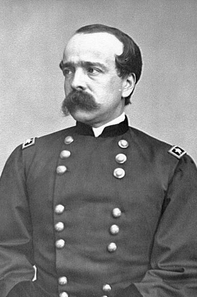 Brigadier General Daniel Butterfield USGov-Military-Army, Public Domain Taps is a tune that most people associate with military funerals, but it wasn't always so. The taps we know today is a variation of an 1835 bugle call known as the "Scott Tattoo," after Major General Winfield Scott. The word "tattoo" and the name "taps" come from a Dutch phrase, doe den tap toe, which means "turn off the taps". The Scott Tattoo told soldiers that the time for evening drinking was over, and it was time to return to their garrisons.
In 1862, while resting at Harrison's Landing, Virginia, after the close of the Seven Days Battle, Brigadier General Daniel Butterfield rewrote the Scott Tattoo with the intention of using it to replace the French bugle call "To Extinguish Lights" that was used to signal "lights out," when soldiers had to extinguish all lights and go to bed. That new tune was called "Butterfield's Lullaby, or "Taps," and within months was used by both Union and Confederate forces. It became an officially recognized bugle call in 1874.
Taps began to be played at funerals late in the war, replacing the traditional three gun salute at officer's burials so that troops wouldn't confuse the salvos for enemy gunfire.
This Memorial Day, remember to raise your glass in salute to those who will never be able to turn on the taps again.
A Tune for Remembering��
Brigadier General Daniel Butterfield USGov-Military-Army, Public Domain Taps is a tune that most people associate with military funerals, but it wasn't always so. The taps we know today is a variation of an 1835 bugle call known as the "Scott Tattoo," after Major General Winfield Scott. The word "tattoo" and the name "taps" come from a Dutch phrase, doe den tap toe, which means "turn off the taps". The Scott Tattoo told soldiers that the time for evening drinking was over, and it was time to return to their garrisons.In 1862, while resting at Harrison's Landing, Virginia, after the close of the Seven Days Battle, Brigadier General Daniel Butterfield rewrote the Scott Tattoo with the intention of using it to replace the French bugle call "To Extinguish Lights" that was used to signal "lights out," when soldiers had to extinguish all lights and go to bed. That new tune was called "Butterfield's Lullaby, or "Taps," and within months was used by both Union and Confederate forces. It became an officially recognized bugle call in 1874.
Taps began to be played at funerals late in the war, replacing the traditional three gun salute at officer's burials so that troops wouldn't confuse the salvos for enemy gunfire.
This Memorial Day, remember to raise your glass in salute to those who will never be able to turn on the taps again.
May 5, 2016
Reading About d-day
The invasion of Normandy, commonly known as D-Day, happened on June 6, 1944. Next month we commemorate the 72nd anniversary of a battle in which 160,000 Allied troops landed along a 50-mile stretch of heavily-fortified French coastline, to fight Nazi Germany.
Here are five suggested books to help middle school students understand this important historical event. Two are nonfiction, and three are historical fiction. Remember D-Day: The Plan, the Invasion, Survivor Stories
This award-winning book was written in 2004 to honor the 60th anniversary of D-Day. Authored by Ronald Drez and published by National Geographic, it includes lots of photos and maps and a good discussion on the strategy used, the intelligence it was based upon, and the deceptions that led up this turning point in the war.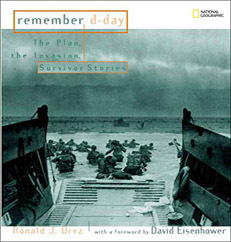 D-DAY:The Invasion of Normandy, 1944 [The Young Readers Adaptation]
The Guns at Last Light was the third book in Rick Atkinson’s #1 New York Times–bestselling adult trilogy about World War II. Here is a portion of it, adapted for young readers. This volume includes tons of period photos and does a good job of capturing the events and the spirit of the day that led to the liberation of western Europe from Nazi Germany's control. This is a great introduction to the battle, and will give students the prior knowledge they will need to understand the context of historical novels set in the period. Nonfiction books are great “birds-eye views” of D-Day. But historical fiction is better at giving readers a “boots on the ground” view of how it felt to be in the middle of the action.
Scholastic Press published a series of historical novels for older boys called My Name Is America that did an excellent job on this. Each book was written in the form of a journal of a fictional young man's life during an important event or time period in American history. The series was discontinued in 2004 but the books are still enjoyed by middle school boys.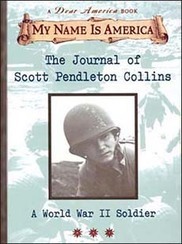 The Journal of Scott Pendleton Collins: A World War II Soldier, by renowned, award-winning author Walter Dean Myers is the book in this series that focuses on the events leading up to and during D-Day.
The main character, Private Scott Collins, is a seventeen-year-old soldier from central Virginia. As his regiment takes part in the D-Day invasion of Normandy and subsequent battles to liberate France, he records his experiences in a journal. By the end of the book he is no longer the naive young man who volunteered for war. The hardships and horror of battle have forever changed him.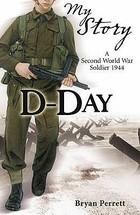 On a budget? Like e-books? Search the web for free downloads of D-Day: A Second World War Soldier 1944, by Bryan Perrett. Part of the million-selling MY STORY series that gives the past a human touch, D-DAY tells the story of Lieutenant Andy Pope who finds himself in command when every other officer in his company is injured while trying to cut off the Germans' line of retreat. This book is historically accurate and filled with the kinds of details that make for Vivid images, readers should love this first-hand account of danger and peril.
 But what was it like for those living in Normandy when the allies invaded? To answer this question, I humbly suggest my own middle grade historical novel, Code: Elephants on the Moon. This novel follows Eponine Lambaol, a Breton girl living in a village in Normandy not for from the beaches. She despises the Nazis who occupy her town and longs for the days before severe food rationing. As rumors of an allied invasion swirl around her, Eponine begins to understand that nothing and no one is what it seems, and that the phrase ‘The moon is full of elephants,’ which she hears on the radio, is really a code for members of the underground resistance who are preparing for the invasion.
Code: Elephants on the Moon will be a featured Kindle Countdown Deal from May 5-12. Get your copy here for only .99.
For free CCSS teaching materials for this book, go here.
Here are five suggested books to help middle school students understand this important historical event. Two are nonfiction, and three are historical fiction.
Remember D-Day: The Plan, the Invasion, Survivor StoriesThis award-winning book was written in 2004 to honor the 60th anniversary of D-Day. Authored by Ronald Drez and published by National Geographic, it includes lots of photos and maps and a good discussion on the strategy used, the intelligence it was based upon, and the deceptions that led up this turning point in the war.
D-DAY:The Invasion of Normandy, 1944 [The Young Readers Adaptation]The Guns at Last Light was the third book in Rick Atkinson’s #1 New York Times–bestselling adult trilogy about World War II. Here is a portion of it, adapted for young readers. This volume includes tons of period photos and does a good job of capturing the events and the spirit of the day that led to the liberation of western Europe from Nazi Germany's control. This is a great introduction to the battle, and will give students the prior knowledge they will need to understand the context of historical novels set in the period. Nonfiction books are great “birds-eye views” of D-Day. But historical fiction is better at giving readers a “boots on the ground” view of how it felt to be in the middle of the action.
Scholastic Press published a series of historical novels for older boys called My Name Is America that did an excellent job on this. Each book was written in the form of a journal of a fictional young man's life during an important event or time period in American history. The series was discontinued in 2004 but the books are still enjoyed by middle school boys.
The Journal of Scott Pendleton Collins: A World War II Soldier, by renowned, award-winning author Walter Dean Myers is the book in this series that focuses on the events leading up to and during D-Day.The main character, Private Scott Collins, is a seventeen-year-old soldier from central Virginia. As his regiment takes part in the D-Day invasion of Normandy and subsequent battles to liberate France, he records his experiences in a journal. By the end of the book he is no longer the naive young man who volunteered for war. The hardships and horror of battle have forever changed him.
On a budget? Like e-books? Search the web for free downloads of D-Day: A Second World War Soldier 1944, by Bryan Perrett. Part of the million-selling MY STORY series that gives the past a human touch, D-DAY tells the story of Lieutenant Andy Pope who finds himself in command when every other officer in his company is injured while trying to cut off the Germans' line of retreat. This book is historically accurate and filled with the kinds of details that make for Vivid images, readers should love this first-hand account of danger and peril.
But what was it like for those living in Normandy when the allies invaded? To answer this question, I humbly suggest my own middle grade historical novel, Code: Elephants on the Moon. This novel follows Eponine Lambaol, a Breton girl living in a village in Normandy not for from the beaches. She despises the Nazis who occupy her town and longs for the days before severe food rationing. As rumors of an allied invasion swirl around her, Eponine begins to understand that nothing and no one is what it seems, and that the phrase ‘The moon is full of elephants,’ which she hears on the radio, is really a code for members of the underground resistance who are preparing for the invasion.Code: Elephants on the Moon will be a featured Kindle Countdown Deal from May 5-12. Get your copy here for only .99.
For free CCSS teaching materials for this book, go here.
May 2, 2016
A good experience at a bad craft show
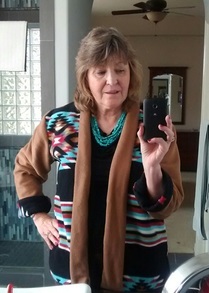 Two weekends ago I sold my books at a craft show.
Well, actually, I tried to sell books at a craft show, but when there's no one to sell to, you don't sell much.
It was the slowest, least-attended show I've ever been to. I managed to sell enough books to cover the cost of having a table, but not much else.
But I got a great new jacket and a wonderful experience out of what otherwise would have been a pretty bad day. Here's the story:
The booth next to mine was manned by Holly Woelber, whose business, m-g designs, creates beautiful blanket-jackets. They were colorful, looked warm and comfortable, and very, very southwestern. (Indians have been making jackets out of their blankets for a long time.)
I told Holly that I was writing a Civil War book set in New Mexico and would like one of her jackets to wear while talking about it, but I would have to sell some books before I could buy one. A little later, Holly (whose sales were no better than mine, for the same reason) bought The Bent Reed from me and began to read.
A little later she walked over and told me she hated the mother in my book. Towards the end, she came back again. This time, there were tears in her eyes. She told me she understood why the mother was the way she was, and that she loved the book. She then asked me which jacket I was planning to buy, and when I picked one, she gave it to me, and encouraged me to keep writing.
I will be forever grateful to Holly, not only for the beautiful jacket, but for her encouragement.

Holly and I will both be at the La Cueva Craft Show next weekend. Come see us!
April 29, 2016
Real Characters
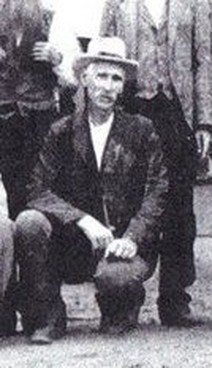 Frederick Wade in his later years Valverde, the Civil War Novel set in New Mexico Territory that I’m working on now, is populated with a mix of fictitious and real people. All of the important events and dates are historical, the information gleaned from diaries, newspaper and internet accounts, and secondary sources. If I could have found real people who were always in the middle of the action, I would have made them my main characters. Since I couldn’t, I created Jemmy and Raul. The small, personal scenes depicting their family life are entirely made up. When my sources described a scene I wanted to include in my novel, I often added the writer of the account into my novel.
Some of the real people whose diaries, letters and sources I used proved to be real characters, with wonderful stories of their own. One of these is Frederick S. Wade, who left the teaching profession to enlist as a private in the Army of New Mexico, the force Major General Henry Hopkins Sibley organized in Texas for the purpose of taking New Mexico Territory for the Confederacy.
Wade’s obituary, in the June 27, 1925 edition of the San Antonio Express, says that he was the one who told Abraham Lincoln that Texas would secede from the Union. Born in Ontario, Canada, Wade was raised in Illinois, then moved to Texas in 1857. In 1860, he was visiting his parents in Illinois when Lincoln asked him about Texan opinion. The obituary states that Lincoln tried to get Wade to tour Texas and urge it to remain with the Union. Wade declined, and Texas joined the Confederacy. Wade then joined the brigade being formed by Tom Green. He continued to serve under Green until taken prisoner in 1862.
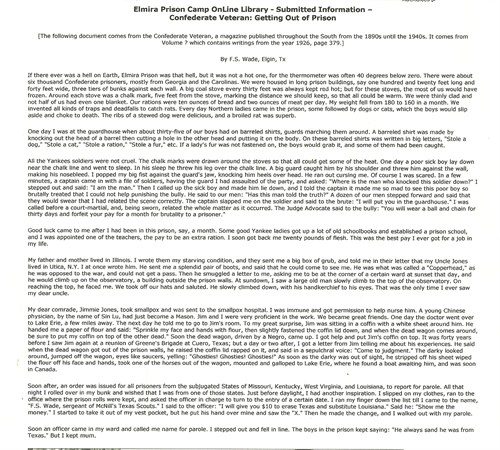
While in prison camp, Wade helped a friend escape. His friend had contracted smallpox and was in the hospital. One day, Wade found him sitting in a coffin with a white sheet around him. Wade sprinkled the man’s face and hands with flour, then sealed the coffin and made sure it was loaded on the top of the other coffins in the dead wagon. After the wagon had left the prison, the man raised the lid of the coffin and called “Come to judgement” in his spookiest voice. The frightened driver ran away yelling “Ghosties! Ghosties!” Wade’s friend then stole one of the horses and escaped to Canada. You can read this story, plus some other remembrances here.
Who needs to make up characters when people like this already exist?
April 10, 2016
Mission completed
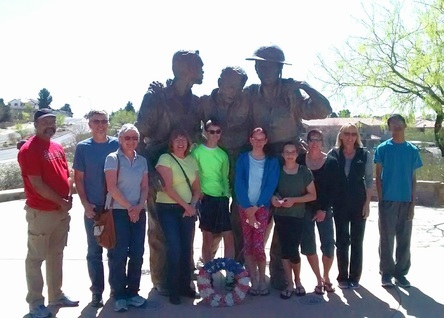 Last month I met ten friends and some of their family members at the Bataan Sculpture in Veteran's Park, Las Cruces, New Mexico. We wanted to see these larger-than-life veterans on the day before we paid tribute to the men they represent: the men involved in the Bataan Death March, which I've recently talked about in another blogpost.
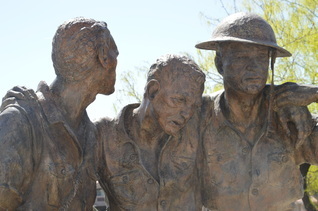 The three figures in the sculpture look in three different directions. One looks back to what they have already endured. One looks down, as if considering where they presently are. The third looks forward, to their future. We had looked forward to the Bataan Memorial Death March for a long time. Our own journey began when one of the students on my track team heard from an Educational Assistant that I'd done it before. He asked if it was hard, and I answered that yes, it was, but it was possible for anyone who put in enough training. "So," he said, "when are we going to start training?"
 How could I say no?
We began hiking right after Thanksgiving. We hiked three to five miles on Mondays and Wednesdays after school, with longer hikes on Saturdays, eventually building up to twenty miles.
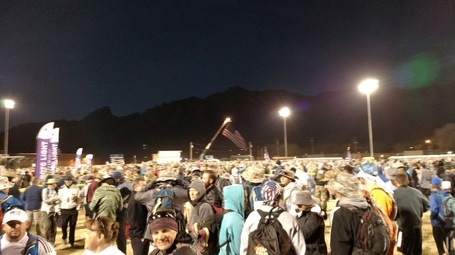 On the day of the march we gathered in the pre-dawn hours. After a stirring ceremonial and a chance to thank the few remaining survivors, we were off on our adventure.
 Some of us did the short course, which was a little over 14 miles, while others in our group completed the full 26.2 mile marathon. The course had a mix of dirt roads and pavement through the dry high desert of White Sands Missile Range, in southern New Mexico.
 The portion of the route known as the Sand Pit was the hardest for most. Located in the last third, when we were already good and tired, the Sand Pit went right up a sandy arroyo. It was like walking on a beach.
A majority of the people who do The Bataan Memorial Death March are military and in uniform, so we were always surrounded by strong and supportive people. This is one of the things that makes this marathon very different from any other marathon: rather than being a competition, it is a day-long commemoration of the fighting spirit of our troops. We march to remember, and to challenge ourselves to be as tough as we can be.
 Despite the arid conditions, the desert is not without its beauty. The California poppies were in bloom and the beautiful Organ Mountains stood sentinel over our west flank.

 Many thanks to Barbara Leiber- Klotz, who took the majority of these pictures. I am proud to report that everyone finished strong, and with good times. Some have even started to talk about "next year."
 Mission Accomplished.
April 5, 2016
Spinach, New Mexican Style
 When most people think of vegetables and side dishes in New Mexican cooking, they think about pinto beans and rice, and maybe a garnish of chopped lettuce and tomatoes.
Authentic New Mexican cooking offers more than a bit of chopped up salad.
Spinach is a wonderful spring tonic because it grows early, before the soil warms up, and more tender plants are still endangered by the Southwest's late freezes. Because of its hardiness, spinach is a needed dose of fresh greens after the long, hard winter.
I recently went to The Church Street Cafe, a wonderful restaurant tucked into a side street behind San Felipe Church in Albuquerque's Old Town. The cafe is in Casa de Ruiz, on property that has been in the Ruiz family since Albuquerque's founding in 1706. If you want an historical New Mexican experience, you can't get much more authentic than the food here, which includes quelites, Spanish for spinach, calabacitas, a wonderful medley of summer squash and corn, and old fashioned chili rellenos, which I've had in private homes but haven't seen offered in any other restaurant.
When my novel set in New Mexico during the Civil War comes out, I plan to also offer a small cookbook with recipes from the period. The cookbook will have New Mexican recipes, plus some from the Gettysburg area to tie in with The Bent Reed. This one will be in that cookbook, but I'm offering it to you now, when we could all use a touch of spring tonic. Espero que te guste.
QUELITES (New Mexican Spinach)
Yield: 4-6 servings
Cooking Time: Approximately 15 minutes
Ingredients:
1 1/2 pounds washed fresh spinach
1/4 teaspoon chile flakes (the kind you sprinkle on pizza)
1 tablespoon shortening
3 tablespoons chopped onion
1 tsp salt
2 slices of bacon
Directions:
1. Wash spinach and remove stem ends.
2. Place spinach in a medium-sized saucepan and steam for 10 minutes at medium heat.
3. Drain and chop spinach. Set aside.
4. Sauté onion and bacon in a medium-sized saucepan at medium heat. Add spinach and remaining ingredients to onion, bacon and cook for an additional 5 minutes.
6. Sprinkle with chile flakes.
March 30, 2016
An interview with Stacy Barnett Mozer
Know any athletic girls, ages 8-14 who want a good role model and a source of inspiration? I urge you to buy them copies of The Sweet Spot, by Stacy Mozer.
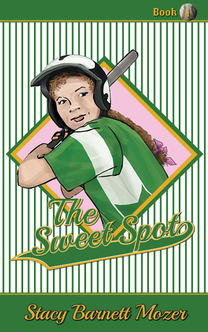 When thirteen-year-old Sam Barrette’s baseball coach tells her that her attitude's holding her back, she wants to hit him in the head with a line drive. Why shouldn’t she have an attitude? As the only girl playing in the 13U league, she’s had to listen to boys and people in the stands screaming things like “Go play softball,” all season, just because she’s a girl. Her coach barely lets her play, even though she’s one of the best hitters on the team.All stakes now rest on Sam’s performance at baseball training camp. But the moment she arrives, miscommunication sets the week up for potential disaster. Placed at the bottom with the weaker players, she will have to work her way up to A league, not just to show Coach that she can be the best team player possible, but to prove to herself that she can hold a bat with the All-Star boys.
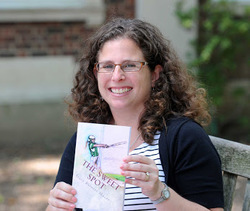 photo courtesy The Greenwich Time I caught up with author Stacy Mozer recently and got to ask her about The Sweet Spot, her book recently published by Spellbound River Press.
Stacy is a third grade teacher and a mom. She started writing books when a class of students told her that there was no way that a real author who wrote real books could possibly revise their work as much as she asked them to revise. She proved them wrong and has been revising her own work ever since.
Me: Why does your main character want to play baseball? Why not softball?
Stacy: Sam plays baseball because I grew up as a Mets fan and a baseball lover. My favorite movie growing up was Blue Skies Again, a story about a girl who gets on to a minor league team. Softball is a great sport, but it isn’t the same as baseball. The pitching is different, the fielding is different. And just because you are good at one sport it, doesn’t mean that you are good at the other. When I was doing research I played around with the idea that Sam was at a camp and forced to play softball so she convinced a bunch of girls to form their own baseball team. The expert that I spoke to said it would never work because when she was in high school she convinced a number of her softball friends to try out for baseball. She was the only one who made the team.
Me: Is Sam’s character based on a real person, a composite of people, or is she completely fictitious?
Stacy: Sam is a composite of girls I’ve had in my class over the years who have fought their way on the playing field with the boys at recess. She also has some of me in her too. Her snarkiness is definitely me.
Me: Have you got another book in the pipeline?
Stacy: Book 2 will be coming out from Spellbound River this time next year. It’s call The Perfect Trip and it tells the story of the rest of Sam’s summer and new obstacles she will face in her baseball career.
When thirteen-year-old Sam Barrette’s baseball coach tells her that her attitude's holding her back, she wants to hit him in the head with a line drive. Why shouldn’t she have an attitude? As the only girl playing in the 13U league, she’s had to listen to boys and people in the stands screaming things like “Go play softball,” all season, just because she’s a girl. Her coach barely lets her play, even though she’s one of the best hitters on the team.All stakes now rest on Sam’s performance at baseball training camp. But the moment she arrives, miscommunication sets the week up for potential disaster. Placed at the bottom with the weaker players, she will have to work her way up to A league, not just to show Coach that she can be the best team player possible, but to prove to herself that she can hold a bat with the All-Star boys.
photo courtesy The Greenwich Time I caught up with author Stacy Mozer recently and got to ask her about The Sweet Spot, her book recently published by Spellbound River Press.Stacy is a third grade teacher and a mom. She started writing books when a class of students told her that there was no way that a real author who wrote real books could possibly revise their work as much as she asked them to revise. She proved them wrong and has been revising her own work ever since.
Me: Why does your main character want to play baseball? Why not softball?
Stacy: Sam plays baseball because I grew up as a Mets fan and a baseball lover. My favorite movie growing up was Blue Skies Again, a story about a girl who gets on to a minor league team. Softball is a great sport, but it isn’t the same as baseball. The pitching is different, the fielding is different. And just because you are good at one sport it, doesn’t mean that you are good at the other. When I was doing research I played around with the idea that Sam was at a camp and forced to play softball so she convinced a bunch of girls to form their own baseball team. The expert that I spoke to said it would never work because when she was in high school she convinced a number of her softball friends to try out for baseball. She was the only one who made the team.
Me: Is Sam’s character based on a real person, a composite of people, or is she completely fictitious?
Stacy: Sam is a composite of girls I’ve had in my class over the years who have fought their way on the playing field with the boys at recess. She also has some of me in her too. Her snarkiness is definitely me.
Me: Have you got another book in the pipeline?
Stacy: Book 2 will be coming out from Spellbound River this time next year. It’s call The Perfect Trip and it tells the story of the rest of Sam’s summer and new obstacles she will face in her baseball career.
March 25, 2016
Play ball, girls!
Not all girls want to play the sports usually reserved for them. Unfortunately, girls face a lot of resistance breaking into sports that are traditionally in the males' domain. While this resistance might not be fun for girls who face it, it makes for great middle grade reading.
Spring is here, and the metallic ping of aluminum bats hitting baseballs rings through the land. Most of those bats are swung by boys, but there are some girls who'd rather hit a hard ball than a softball.
 The Sweet Spot
, Stacy Barnett Mozer, is a great book for athletic middle school and upper elementary girls. Thirteen-year-old Sam Barrette’s baseball coach tells her that her attitude's holding her back, but how can she not have an attitude when she has to listen to boys and people in the stands screaming things like “Go play softball,” all season, just because she's the only girl playing in the 13U league. Lovely and sensitive, this book will help guide girls through the difficulties of asserting themselves and becoming leaders in a man's world.
The Sweet Spot
, Stacy Barnett Mozer, is a great book for athletic middle school and upper elementary girls. Thirteen-year-old Sam Barrette’s baseball coach tells her that her attitude's holding her back, but how can she not have an attitude when she has to listen to boys and people in the stands screaming things like “Go play softball,” all season, just because she's the only girl playing in the 13U league. Lovely and sensitive, this book will help guide girls through the difficulties of asserting themselves and becoming leaders in a man's world.
The Sweet Spot comes out in a new edition published by Spellbound River today. I'll be interviewing the author on this blog next week. If this book appeals to you, enter a giveaway at Rafflecopter.
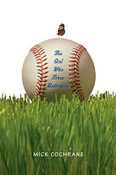 The Girl Who Threw Butterflies, by Mick Cochrane, is another book about a girl trying to play baseball. After her father's death in a car accident, eighth grader, Molly Williams decides to join the baseball team and show off the knuckleball her father taught her how to throw. Although the author does a little more telling than showing, this book also gives a fair picture of a girl overcoming hardships, both on the field and in her personal life.
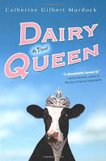 And, just because not every girl wants to play baseball, I'm including Dairy Queen by Catherine Gilbert Murdock. This novel tells the story of fifteen-year-old D. J. Schwenk, the only daughter of a farmer in Red Bend, Wisconsin who loves football so much that he names his cows after football players. D.J. knows a lot about football because of her brothers, but when she decides that she wants to join the team, the opposition nearly sacks her courage
Let us hope that the opposition to girls in male dominated sports truly becomes an historical issue soon.
Spring is here, and the metallic ping of aluminum bats hitting baseballs rings through the land. Most of those bats are swung by boys, but there are some girls who'd rather hit a hard ball than a softball.
The Sweet Spot
, Stacy Barnett Mozer, is a great book for athletic middle school and upper elementary girls. Thirteen-year-old Sam Barrette’s baseball coach tells her that her attitude's holding her back, but how can she not have an attitude when she has to listen to boys and people in the stands screaming things like “Go play softball,” all season, just because she's the only girl playing in the 13U league. Lovely and sensitive, this book will help guide girls through the difficulties of asserting themselves and becoming leaders in a man's world.The Sweet Spot comes out in a new edition published by Spellbound River today. I'll be interviewing the author on this blog next week. If this book appeals to you, enter a giveaway at Rafflecopter.
The Girl Who Threw Butterflies, by Mick Cochrane, is another book about a girl trying to play baseball. After her father's death in a car accident, eighth grader, Molly Williams decides to join the baseball team and show off the knuckleball her father taught her how to throw. Although the author does a little more telling than showing, this book also gives a fair picture of a girl overcoming hardships, both on the field and in her personal life. And, just because not every girl wants to play baseball, I'm including Dairy Queen by Catherine Gilbert Murdock. This novel tells the story of fifteen-year-old D. J. Schwenk, the only daughter of a farmer in Red Bend, Wisconsin who loves football so much that he names his cows after football players. D.J. knows a lot about football because of her brothers, but when she decides that she wants to join the team, the opposition nearly sacks her courageLet us hope that the opposition to girls in male dominated sports truly becomes an historical issue soon.