Kern Carter's Blog, page 175
January 4, 2019
My Failures as a Father
The guilt and shame that comes with being a teenage parent.

These thoughts have been weighing on my heart and lately, I can’t escape them. As close as my daughter and I are now, as much as we’ve been through together and as much as I know she’s genuinely happy, there’s this constant feeling of guilt and shame that still haunts me.
The guilt comes from so many different places. Guilty that I had her as a teenager and didn’t know what the heck I was doing. She endured years of moving from one place to the next, us living with my cousin, back and forth from my mom’s, me working these low paying part-time jobs and barely affording any kind of life past the necessities. I hate even thinking about those times. It makes my heart ache.
I feel guilty that I left her for four years and accepted a university scholarship hundreds of miles away from home. She was only one. I’d see her for a couple weeks over the summer and listen to her mumble into the phone every week from my dorm room, but I didn’t even feel like a parent. That guilt still rattles me because I could’ve been home helping her live a better life. Even at the toddler stage, she was asked to be resilient.
Guilty now that she’s 16 and I’ve only in the past few years become somewhat financially stable. Guilty because I’m still pursuing my dreams instead of already living them out. I should be further ahead by now. I shouldn’t be in this small apartment even though it’s in a wonderful neighbourhood. We should be in a townhome where there’s actually some separation between the kitchen and the living room.
She deserves more.And that’s where the shame comes in. Because it doesn’t matter what I do, I can’t go back in time. She happened. When I was still in high school, still naive, immature and over-confident, thinking that raising a child in a maybe 350-foot basement seemed logical.
I’m ashamed I had to borrow money to buy her birthday gifts. Ashamed when for some reason my mother walked my daughter into my job at a discount shoe store. My daughter thought it was so cool seeing her dad at work. I nearly cried and then blasted my mom for thinking that was OK.
I lie about how long ago I’ve opened her college fund and now I’m frantically depositing every dollar I could spare to spare myself the shame of not being able to support her education.
I’ve always known my potential. That’s what makes this even worse. I knew that I’d get to where I am right now. But there’s this thing eating away at me, telling me that it’s too late. Everything’s too late. She’ll be off to university in a year and a half and I can’t help but think what have I really done for her? What advantage have I given her so she could be more successful than the next person?
But I had to put myself first. That’s the ultimate guilt and shame combined. I wasn’t completely selfless. To this day, I feel strange spending thousands of dollars to go to a writing conference in New York, or thousands of dollars to fly to L.A or hundreds of dollars on marketing all when my daughter’s at the age where she could use some of that monetary investment.
And yes, I have enough money now to put her in weekly sewing class and send her to fashion camp in California, but trying to justify chasing my own dream while watching her figure out her own is part humbling and part upsetting. Humbling to see the young woman she’s becoming and upsetting that she’s still looking at a work in progress.
I guess I’ll always be a work in progress. There shouldn’t be any shame in that. And in my more positive moments, I tell myself she’s better for having gone through all of that chaos in the early years. We’re better. We’re certainly closer, especially now that I’m the only parent she’s got. There’s guilt around that too, but I’m not ready to go there yet.
I’m not sure why this guilt and shame is popping up so often now. I don’t know what’s triggering it, especially since, as I mentioned, we’re both in a great place. But expressing it helps. Writing this has lightened some of the weight. It’s also pushing me to find the trigger and squash it.
SelfishThese feelings also feel selfish. I actually don’t know how my daughter feels about her upbringing. We make off-handed comments about some of the things she witnessed or been through but never dive deep into how it affected her. All of this guilt stems from my own assumptions.
What I should do is sit with my daughter and find out how she interpreted her early life. I should ask her what it felt like then and what it feels like now that it’s just the two of us. Seems simple enough, but teenagers aren’t exactly the most forthcoming with their emotions. Plus, I’m not sure I’m prepared to hear what she has to say.
I’m happy that right now she’s happy. For now, I’ll live with that while I try to quiet my failures as a father.
C R Y

My Failures as a Father was originally published in C.R.Y on Medium, where people are continuing the conversation by highlighting and responding to this story.


December 27, 2018
I Can’t Sleep
The life of a writer.

How can I sleep? How can I ever sleep?
I don’t deserve to sleep. She just signed with an agent. I saw the announcement on Twitter full of happy-face and heart emojis.
I don’t deserve to sleep. She just signed a new book deal and according to some of the comments, it’s in the six-figure range.
I’m on 80 rejections and counting. I can’t sleep.
Something’s not right. I did everything that article said to do. Wrote my query and made it personal. Built my brand and gained a following.
Post after post after post after post after post, now I’ve finally found my voice. Still nothing.
But that can’t be right. Are all these readers nothing? All these views and claps and comments and praise and criticism and hate from thousands of readers mean nothing?
How can I sleep?
There’s still a world of readers out there I haven’t touched. There’s still a world of readers out there that haven’t felt my work. Haven’t read a single word. Don’t even know I exist.
How can I possibly sleep?
When I don’t feel acknowledged. When I don’t feel heard. When I don’t feel special…enough.
The world owes me nothing. Words are my life. How can I sleep?
C R Y

I Can’t Sleep was originally published in C.R.Y on Medium, where people are continuing the conversation by highlighting and responding to this story.
December 22, 2018
WAKE UP, CREATIVES
IT’S YOUR TIME.
Don’t
Let
It
Pass
You
By
C R Y

WAKE UP, CREATIVES was originally published in C.R.Y on Medium, where people are continuing the conversation by highlighting and responding to this story.
December 20, 2018
First Draft Feelings
Writers, we need to get over it.
 Image by Steve Johnson
“What was I thinking?”
“Why would I write that?”
“This makes no sense.”
“It’s official, I suck at writing.”
First draft feelings. All of us writers go through it. My first draft of my first novella was 200 pages single spaced on Microsoft Word. Six years and seven or eight drafts later, Thoughts of a Fractured Soul was finally completed.
Yeah. It goes like that sometimes. Actually, it goes like that all the time. Maybe not six years long, but first drafts are supposed to be messy. They’re supposed to be frustrating and beautiful and aggravating all at once.
Instinct Over IntellectI know with writing my first drafts, all I’m really doing is getting my thoughts out. I’m writing more by instinct than by any kind of well thought out narrative. And that’s fine.
I’m not too worried about if my character’s action on page 80 makes sense with what I wrote on page 13. I don’t care if I deleted the first 10,000 words because only God knows where the heck I was going with all that and it took me that long to find the real story.
Sorry, Not Sorry — Forgive Yourself and Move OnBefore starting my first draft, I apologize to myself. I say, “self, you’re gonna spend a lot of time working on this. At least four hours a day, 6 days a week for at least a couple months. I just want to apologize to you now, self, because I probably won’t use half of what we write.”
I actually don’t talk to myself, but I do prepare myself mentally. I forgive myself in advance for the words I’m about to write. I know they won’t be the best, but I also know without that first draft, there is no story. Without me being brave enough to put those words on the page, I’d never be able to eventually make them magical.
Editing IS WritingI’m one of those writers who edits while they write. It’s an annoying habit, but one I don’t care to break. Even while I’m editing my work throughout, I know the real edits start after that first draft is completed. Writing isn’t something you get in one take. Did you get that?
Writing isn’t something you get in one take.
It takes reading and rereading what you’ve written. It takes you stepping away for some period of time to gain perspective on what you’ve written. Then it takes getting an opinion from someone else on what you’ve written. All of this is part of the writing process. Make peace with that right now and save yourself the pity party when you’re six months in and don’t have a completed manuscript.
And while I’m mostly alluding to the book writing process, this goes for any kind of writing. Short stories, articles, essays, ads, web copy, all of these will require a degree of editing if you hope to create the best work possible.
You’re in Good CompanyDonna Tart is infamous for taking years to finish her manuscripts. It took her 11 years to finish her Pulitzer winning novel, The Goldfinch. She says she scrapped the first EIGHT MONTHS of writing to arrive at what is now considered a must-read in contemporary literature. More recently, author Susan Orlean confessed her most recent novel, The Library Book, took six years to complete. How do you think her first draft went?
If those two examples don’t make you feel good, then maybe you should rethink this writing thing.
C R Y

First Draft Feelings was originally published in C.R.Y on Medium, where people are continuing the conversation by highlighting and responding to this story.
December 14, 2018
I’m Not Networking, I’m Community Building
Your peers are your first real fans.

Someone used the “N” word on me. When I told them of all the literary events I’ve been attending, they asked me if I’m networking. My initial reaction was to post their comment on Twitter and let the social justice warriors bash them for ever using the “N” word, but then I thought I could put that energy to better use.
What’s the differenceTo me, there’s a clear difference between networking and community building. With networking, you’re thinking about what you can get out of that person or community. There’s something they have that you want to take. With community building, my only consideration is what I can add. I’m observing these readings, learning new perspectives, meeting new people and trying to discern how I can add my voice to the fray.
When I’m out at literary events — book launches, magazine launches, readings, open mics, conferences — I feel like I’m part of something. I see the same faces at different events, I see people stand up and read for the first time, I feel the excitement of a new project finally going out into the world and can’t help but submit to the reality that I’m just a small part of something far more meaningful.
Your peers are your first real fansI’ve said before that I write for two reasons — to inspire and to impress. The people I’m most trying to impress are other writers. They’re the ones whose opinion on my style, my syntax, and the way I transition in and out of sentences matter. To earn their support is one of my #goals.
Because of this, and because most writers are obsessive readers, they’re essentially your first true fans. I say true because your family and friends, bless their souls, can’t not be biased. So when someone from your literary tribe says they appreciate your work, there’s a different tingle in your heart and a more meaningful sense of accomplishment.
Real life still mattersI was taken back when I discovered the large majority of my audience is from outside of my own city (and country, for that matter). Part of me felt encouraged that my writing is stretching beyond my local borders, but the other part felt a bit disappointed I’m not deeply connecting with readers from my own backyard.
I had no one to blame for this but myself. I’ve been so concerned about my online presence that I forgot about real life. I wasn’t taking the time to put in the groundwork it takes to be known locally, and that was a mistake. More importantly, I wasn’t taking the time to discover local writers. None of their names or their work was familiar to me and that just felt wrong.
I’ve learned so much since dedicating myself to being present in real life. The face-to-face interaction with other writers, observing the creative ways they go about launching their work, reading new stories and engaging in conversations fills me with a whole new sense of appreciation for the culture. It also informs how my perspective can be valuable and add to this thread of great writing.
In the end, we support each other. It’s not about asking for favours, it’s about finding your place in the community and figuring out how you can contribute. And when everyone takes that mindset, we all benefit in some way. Of course some writing will stand out more than others, but that’s part of the beauty of being part of a community. If and when you’re ever lifted among the crowds, you know you’ve earned the right to be celebrated and your peers couldn’t be happier.
C R Y

I’m Not Networking, I’m Community Building was originally published in C.R.Y on Medium, where people are continuing the conversation by highlighting and responding to this story.
December 7, 2018
To Make Money Writing, You Have to Make Concessions
Prepare to write things you don’t want to write.
 Image by Marcus Spiske
You want to live the dream, right? Wake up every morning with nothing else to do except open your laptop and let the words flow through your fingers? Well, take it from someone who does that for a living, be very careful what you ask for because it’s not what you think it is. At least not in the beginning, or even the middle, and who knows where you’ll end off.
The truth is if you want to make money writing, you’ll need to make some concessions. What I mean is that you’ll have to write things you genuinely don’t give a shit about, and you’ll have to write those pieces well. There’s virtually no escaping this.
Why would you ever write something you don’t like?It’s very simple, actually. To make money. I can give a more convoluted answer, but this is the reality of what it means to be a financially independent writer. It means taking on projects that you’re not passionate about in the name of making a living. It means saying yes to gigs that may pay crappy in order to build relationships. It means periodically letting go of your pride to earn some dollars.
Still sound like a dream?
Let me back off, a bit. I write full-time. What I write depends on the day and the number of contracts I’m on. I can be writing a post like this in the morning, marketing copy for a product launch in the afternoon, and ghostwriting a self-help book in the evening (that’s literally how many of my days go).
A few years ago, I was pushing out at least four articles a day for around a dozen different clients throughout the month. The pieces varied from press releases to blog posts in industries as vastly apart as wine wrack installations to men’s and women’s health. I’d say I had zero interest in half the articles I was writing, but never once got any complaints from my clients.
I did what I had to do to get paid.And I’m damn proud of the work I did. Are they as satisfying as the creative energy and passion that goes into my novels or even these blog posts? No way. But it’s getting paid off those other writing opportunities that allow me to write exactly what I want in these posts and in my books. The money gives me patience, peace of mind, and the freedom to craft the kind of writing that excites me. That’s the tradeoff.
Now, this does change. I’d say I’m about 80/20 right now, with 80 being the percentage of things I write that I actually care about. And I’m working every day to get as close to 100% as possible. That’s my dream and I know it’ll happen one day. In the meantime, I’m not going to turn my nose at the other stuff that’s currently funding my lifestyle.
You have to decide if you’re ready to do the same. Then you have to build and diversify your writing skills so you’re prepared to do the same. I’ve done RFPs, interviews, blogging, product copy, copy editing, content strategy, ad copy, and pretty much anything that has words involved. There’s nothing anyone can throw at me that I wouldn’t be comfortable with and that’s by design.
I took on those roles throughout my career to become a more complete writer and to earn a better income. And now my income is thanking me! Kidding, but jokes aside, making money as a writer in this day and age takes making some concessions. Wrap your mind around that and you’ll be much better off.
C R Y

To Make Money Writing, You Have to Make Concessions was originally published in C.R.Y on Medium, where people are continuing the conversation by highlighting and responding to this story.
December 3, 2018
Looking for “Traditional” Holiday Stories
I put traditional in quotations because I want to challenge what that word means. Did you follow a tradition over the holidays growing up? Has that tradition changed as you’ve moved into adulthood? Have you started your own tradition? We do a lot of things in our lives to honour tradition, so please get in touch with me if you’re willing to share your holiday stories.

Looking for “Traditional” Holiday Stories was originally published in C.R.Y on Medium, where people are continuing the conversation by highlighting and responding to this story.
December 1, 2018
Dear Creator
Do
you
have
it
in
you?
C R Y

Dear Creator was originally published in C.R.Y on Medium, where people are continuing the conversation by highlighting and responding to this story.
November 28, 2018
TO BE POPULAR
Isn’t that what we’re all after?
 Image by Anthony Tran
“I just wanna be popular.”
I blurted it out without even thinking. The group of creatives I was with that morning laughed and even I chuckled a bit, but it was an honest answer. Popularity is a goal.
Maybe that sounds vain. Maybe I really don’t care how it sounds. The unfiltered truth is that to reach the goals I set for myself as a writer takes a level of popularity. It takes more than my immediate network knowing who I am.
Popularity has this high school, Mean Girls rep to it and hearing someone express their desire to be popular gets the exact same reaction I did. It’s like this absurd, childish fantasy that should never be uttered past the age of 10. Not if you hope to glean any sense of dignity.
But for creatives, this shouldn’t be a bad word. Being popular shouldn’t be something we raise our noses at. It should motivate us. It should be something we strive for and, to be honest, it’s already what we’re striving for. Every time we make our work public, nothing would make us happier than more views, more likes, more claps, more attention. Am I right?
Popular is a relative termI know we immediately go to Hollywood and think of our favourite celebrities and how obscene their lives must be, but that’s just one form of popularity.
Editor in Chief of UPPERCASE Magazine, Janine Vangool, has 5,000 paying subscribers. That may not be Vogue numbers but she’s certainly popular enough to make a living off of her art. Would we laugh at her 10 years ago when she set out to turn her love for design and craft into a career? She’s made it. She’s popular.
She’s also inspiring. We all should be so lucky as to have thousands of people who like our art enough to pay for it. That’s the dream, isn’t it? And if your answer is yes, then why the aversion to popularity?
Sell out syndrome and false modestyThese are the two worst enemies of any artist. The idea that creating pieces that appeal to a mass audience somehow makes you a sellout is just dumb. It’s a mindset that tries to box our potential or dim our light. Don’t self-inflict those kinds of wounds into your thoughts. Push for more people to like your work. Push to become more popular.
And when you’re pushing, be proud of it. As more and more people acknowledge the brilliance of your work, don’t pretend your work isn’t brilliant. Accept the praise. Encourage those people to tell more people. Our ability to survive as artists depend on this.
Is it you or is it your art?I think this is the point of contention for many artists. Some creators are good at what they do but great at promoting who they are. They understand that art is a packaged deal — art and artist — and whichever one people buy into is fine.
Some artists just aren’t OK with this. They want the art to sell itself and aren’t willing to sell themselves. And if they are willing, often they’re not comfortable. They want their route to popularity to be lead by the merit of their work, not the makeup of their personality.
Unfortunately, that’s not the game. Especially today. Intimacy and exposure are forms of currency. The more you let people in, the more you expose not just about your work, but about yourself, the more popular you’re likely to become.
Back to realityThis is the reality. You have more platforms than ever to be popular. Use them. You’re an artist. Don’t worry about what people might say about you promoting what you do. The only thing you should worry about is maintaining your integrity. Don’t lose yourself, use yourself.
C R Y

TO BE POPULAR was originally published in C.R.Y on Medium, where people are continuing the conversation by highlighting and responding to this story.
November 21, 2018
Black Men Are Privileged — Just Ask Black Women
Learning to acknowledge my own privilege.

“We are socialized to accept less.”
This is part of a quote from my friend, Angelina, as we were having a discussion on relationships. She went on to say that as a black woman, she has to give allowances to black men for our bad behaviour. She made it clear that she isn’t the exception, either. That most black women share this mindset.
Where do I even start with this? First, disappointment. Deep disappointment. How have we black men let it get to the point that our women are OK with accepting less? They’re OK with letting us be less than our best selves simply so we don’t feel insufficient.
And as we dug deeper into the conversation, I learned we aren’t even giving them our less than best. We’re giving them straight trash. We’re not stepping up to give them the commitment they need. We’re not reassuring them through our actions that their investment in our lives means something. We’re lying and cheating and telling our women to be OK with it because we’re “good” men and promise some kind of light at the end of the tunnel that makes this mistreatment all worth it.
My question to women is why?Why put up with us? If we aren’t living up to your expectations, then why stick around? When did this become OK? Listening to some of the responses from my conversation with Angelina, this is a mindset that’s been ingrained in black women for a long time. It’s behaviour passed down from generations of black women having to “mother” their black men.
Now that mothering has turned into a “ride or die” mentality that black women are expected to buy into. It’s a goal and if you aren’t a ride or die b#@ch then you’re somehow not a good woman.
But I feel you have a choice, black woman. You have the choice to say “NO.” You have the choice to tell us that it’s really not your job to accept all our bullshit. You have the choice to tell us we need to be better and if we aren’t then you’re out.
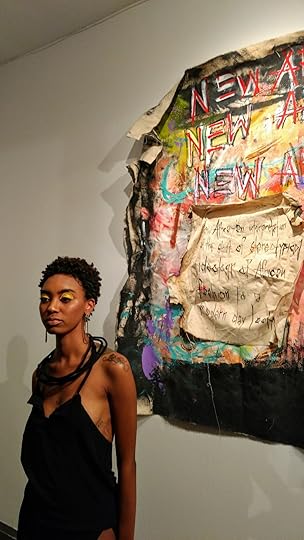 Black men have a choice, too
We have a choice, too, guys. We can stop pushing this makeshift archetype of the perfect woman being someone who sticks with us no matter what. We can step up and be the man who honours our women like they deserve to be honoured. Guess what else we can do? Just be honest. With ourselves and with our partners. If it’s not working for us, it’s not working. Don’t let the person you’re with hang on to some false hope in supporting your ass when you know it’s just not working for you.
I say black men are privileged because we’re blessed to have these women support us through far more than they should. We are privileged to have this unwavering foundation of love and strength despite us not returning the same gestures. We’re privileged to know we’re part of a culture that preaches a “better together” mentality.
Obviously, I’m not speaking to all black men so please don’t say “not me.” Not having it be part of your direct experience doesn’t mean it’s not a problem deserving of complete attention. I’d like to thank my friend Angelina for giving me this insight. Sometimes, a conversation is all it takes to move someone to action.
C R Y

Black Men Are Privileged — Just Ask Black Women was originally published in C.R.Y on Medium, where people are continuing the conversation by highlighting and responding to this story.