Heather Weidner's Blog, page 106
October 25, 2015
Forensic and Technology Tips for Authors
I had the pleasure of attending a forensic and technology panel at Bouchercon 2015 with Neal Griffin, Kathy Reichs, Anne Hillerman, Ryan Quinn, and Alex Letrau. Here are some of the tips they offered to help writers make their mysteries and thrillers more plausible.
1. Even with all the science and technology, you still need the dogged persistence of a good investigator. Make your detective strong with good instincts.
2. The creation of databases for forensic information has been an extremely effective tool for crime solvers. These vast databases provide samples for comparison for investigators. Without the comparison, the technology isn't viable.
3. Weaponizing contagions is not as easy as it is portrayed on TV and in movies. It is very difficult and expensive, and most portrayals are more fantasy/science fiction rather than reality.
4. If you are writing about the world of espionage, the WikiLeaks, Chelsea Manning, and Edward Snowden information provide a lot of critical details about the spyworld. And all the information is available on the Internet.
5. Make your stories plausible. You need to get the facts right for your readers to believe in your work.
6. Do your research, but you do not need to put every little, scientific detail in your writing. Keep it fun and interesting.
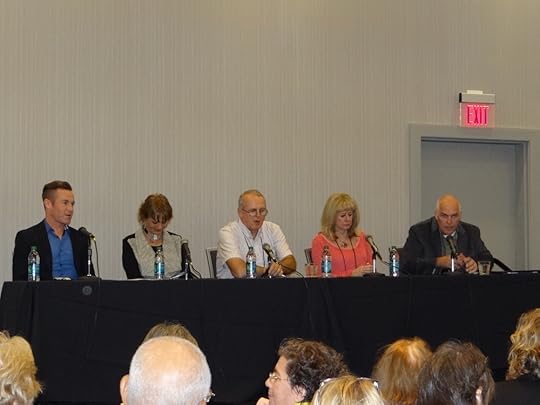
l-r: Ryan Quinn, Anne Hillerman, Alex Letrau, Kathy Reichs, and Neal Griffin


October 18, 2015
9 Things I Learned about Search Dogs and Their Training
I had the pleasure of attending "What the Dog Knows" at Bouchercon 2015 with Cat Warren, Kate Flora, and representatives from the Durham Sheriff's Office. Cat Warren and Kate Flora are a wealth of information. I love dogs, and it was fun to watch Dreyfus the dog in action.
Here's what I learned...
1. Dogs with energy and drive make the best search dog candidates. Dreyfus is a black Lab.
2. Cadaver dogs can tell the difference between human and animal bones.
3. Many government and police agencies have dogs with training in several areas (search/rescue, cadaver, water rescue, etc.). Dreyfus, from Durham, is trained in cadaver searches and water rescues.
4. The toy/game and the collar/harness clue the dog into the type of work that needs to be done. Dreyfus has a different collar for water rescue than he does for cadaver searches.
5. The scent has to be available for the dog to find it. It often takes two weeks for the scent to rise up from a buried body.
6. These types of searches always require a team. It's usually the handler, dog, and other trained staff.
7. Missing person and searches for human remains are complicated. Searchers can go for days without a lead.
8. Dogs are often used in bedbug searches.
9. Watch the teamwork between the handler and the dog. If you're going to have a search dog in your writing, you need to observe a team in action.
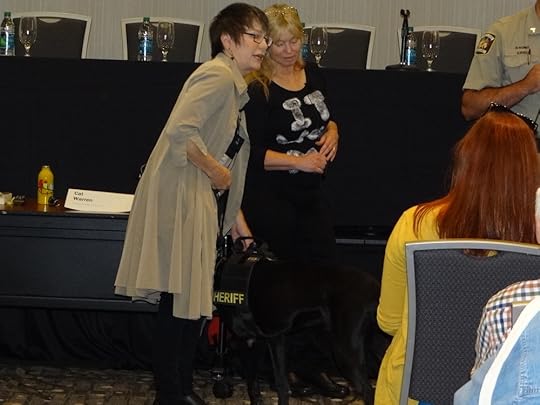
l-r: Cat Warren, Kate Flora, and Dreyfus
October 11, 2015
What I Learned about Social Media from "Tweet This"
I attended Bouchercon 2015 in Raleigh, North Carolina recently. "Tweet This" by Deborah Lacy, Maddee James, Janet Rudolph, Cara Brookins, and DruAnn Love provided some great social media tips for writers. Here's my quick summary of fifteen key points.
1. You don't have to do all platforms. You will get overwhelmed and frustrated if you try.
2. Know the target audience of the platformyou choose. The demographics will help you decide if its the same audience for the type of books you write.
3. Social media is about building relationships.
4. All of your posts and tweets shouldn't be "buy my book."
5. Have fun. Don't take yourself too seriously.
6. Make your posts easy to share.
7. Use hashtags. If your audience is over 35, limit your hashtags to two. If your target audience is younger, don't worry about the number of hashtags.
8. Don't put the exact same information on all your platforms at the same time. Mix it up. Fans don't want to read the same post on four different sites.
9. Pinterest has a lot of options for authors. People like to see pictures of what you're writing about.
10. Don't forget to post videos from time to time.
11. Band together with other writers to promote each others' work. Your reach grows with each share.
12. Have discussions. Network and interact with people.
13. Share interesting things (e.g. hobbies, funny pictures, hints, and pictures). People love dog and cat pictures.
14. Build your brand on all your platforms. Your book covers should be on all your banners.
15. Social media can be a "weapon of mass distraction" (Cara Brookins' term). Don't get sucked into spending too much time online.
Social media sites are powerful (and low cost) marketing tools for authors. Step in and try them. Start small and build your networks.

October 4, 2015
In a Rut? Ten Ways to Recharge Your Writing
Every once in a while, I get too comfortable in my routine or life is just crazy, and I don't feel very creative or I take a break from writing. Here's my list of ten things to do to give you a jumpstart.
1. Mix it up. Vary your routine. Change the setting on your shower. Wear something you won't normally be seen in. Try a different route to work or eat something out of the ordinary. Have breakfast for dinner to shake up the routine.
2. Try a different hair style. Change your makeup or paint your nails.
3. Journal or do stream of consciousness writing. Sit down and just write. Nothing is off limits. Don't edit or proofread. Just write. You may be surprised at the results.
4. Find a book or website with writing prompts. Do one or two to get you started. They may turn into an interesting blog post.
5. Do a project. Try a new recipe, paint, sew, refinish furniture, make a scrapbook, or knit a scarf. Creativity expression comes in thousands of different forms.
6. Exercise or go for a walk. It'll clear your head and change your perspective.
7. Visit somewhere different. Take a vacation, go to a museum, or visit your city. The time away is a good break.
8. Learn something new. Take a class, watch a YouTube how-to video. There are plenty of free or online classes.
9. Volunteer. Donate some time to a worthwhile cause and meet some new people with different experiences. You'll get as much as you give.
10. Go for a drive. I commute about two hours a day, and I do my best plotting in the car.
What else would you add to the list?

September 20, 2015
Mustangs and Rearview Mirrors
My husband asked me to help him bleed the brake lines in his '69 Mustang convertible this weekend. Pumping and releasing the brakes several hundred times gave me a moment to observe and ponder. I had a '74 Mustang as my first real car in the 80s, and the technology of his convertible was close to my yuck yellow one with the avocado-colored top. (I saved my money from my part-time job to have it painted red.)
I drive a 2015 Mustang now, so looking at the gears and switches was a trip down memory lane. The '69 has slides for the defroster and heat (no air conditioning), a cylinder on the floor for the high beams, a cassette player, metal slide seatbelts, windows that wind down, a hard plastic steering wheel with a mental arc for the horn, and a square key for the ignition and a round one for the trunk. It also has an ashtray and cigarette lighter.
Juxtaposed to my '15, I don't have to take the key out to open the doors or start the engine as long as it's in my purse. I can even start the engine remotely if I want to warm the car up. And the kickin' sound system, phone, and climate controls are changed on the touchscreen in the dash, or I can use voice commands. I can get music through AM, FM, satellite, my phone, or a host of other devices. And I can enjoy my tunes from space in my heated or cooled seats.
This week is all about memories. My high school reunion is coming up soon, and I'm looking forward to seeing friends who've known me since kindergarten and the old high school. We're going to the homecoming game on Friday. At some point, we're the same people from back then, but in other ways, we're not. We've changed (on all levels), and had a lot of experiences outside of those school walls we shared for twelve years.
We've come a long way. I love the nostalgia of the reunion and the classic cars. It's fun for a summer cruise with the top down, but for every day life, I like my airbags, computer-controlled engine, anti-lock brakes, power steering, and padded steering wheel.
I love visiting the past. The nostalgia and memories are great. But like with the cars, I've adapted to the technology and ways of today. And, there's a reason that the rearview mirror was designed to be a lot smaller than the windshield.
Enjoy the memories and where we've come from, but celebrate the present and where you're going. Every decade has its own surprises.
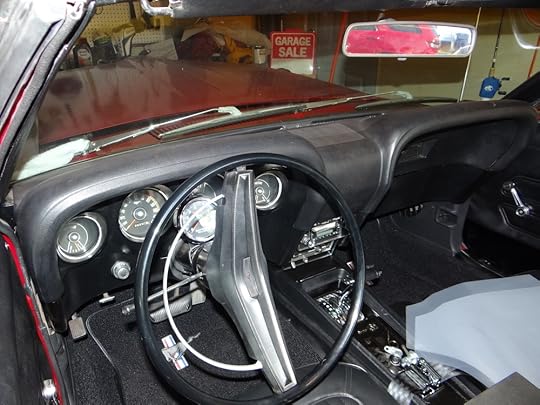
The '69 Mustang's dashboard
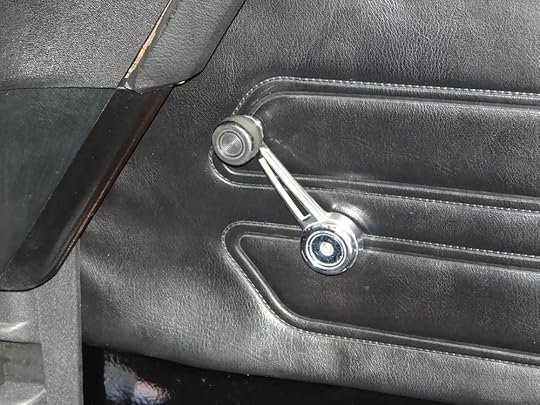
This is where roll down the window comes from...
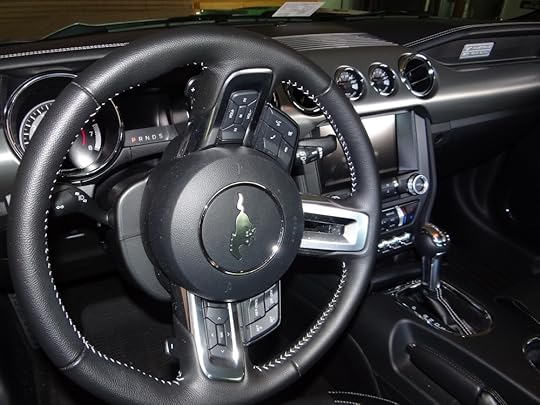
My 2015 Mustang
September 12, 2015
What I Learned from Publicist, Joan Schulhafer
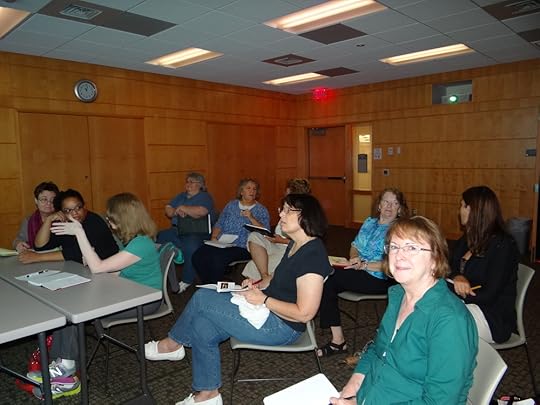
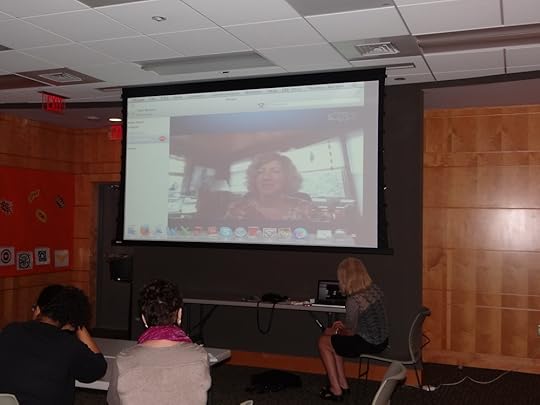
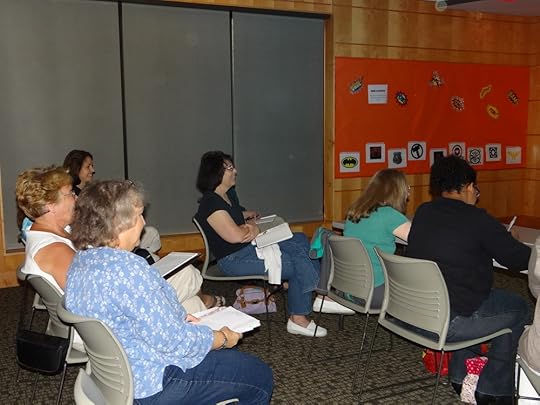
Joan Schulhafer skyped with our Sisters in Crime - Central Virginia chapter recently and provided great information about publicizing yourself as a writer and your book. Here are nine things I learned from her presentation:
1. Authors need to balance their online and in-person presences. You need a mix of both.
2. You can't do everything, but get out and get involved.
3. Attend conferences and network with everyone.
4. Build your email list. It's valuable for authors.
5. Blogging is important. It's a way to keep your website fresh. Blog posts do not have to be deep, witty, or perfect.
6. Pictures are important. Take lots of pictures. Post pictures with your content.
7. Make sure that your biographies and other information are current on all the social media sites where you have accounts.
8. Authors needs to be on Facebook, Twitter, YouTube, Google+, Instagram, and Pinterest. If your readers are younger, you need to be on Snap Chat.
9. Be polite on social media. Don't forget to thank those who help you.
September 4, 2015
Murder at the Library - October 30
I've had so much fun this summer working with Maggie King, Fiona Quinn, Margaret Howard, Thaddeus Huff, and Ginger Gutting on the planning and plotting for the "Murder at the Library" on October 30. It's a fundraiser for the Clover Hill Friends of the Library. We wrote the murder mystery for the Friends. There will also be a silent auction, a panel discussion about publishing mysteries, and book signings. Join us for some fun on Halloween weekend!
Sisters in Crime authors Fiona Quinn, Mary Miley, Rosemary Shomaker, Vivian Lawry, Mary Burton, Tina Glasneck, Kristin Kisska, LynDee Walker, and I will be there. Come and see us!

August 30, 2015
Tweet! Tweet! Why Twitter is Important to Writers
Twitter is a powerful resource. It connects you with others and helps build relationships. When I was first introduced to it, I felt like I was posting to the wind. Luckily for me, I found Krista Davis on Guppies (an online chapter of Sisters in Crime) who ran a workshop to help newbies understand what this was all about. At the time, I had twelve followers and had posted ten tweets. She set up an online chat and we asked questions, retweeted each other, and became accustomed to the platform and its conventions.
I also found Debbie Ridpath Ohi's website on tweeting for writers. This is an excellent resource for beginners or experienced tweeters. The Help file in Twitter also has a lot of good FAQs.
You need to find folks with similar interests. If you're trying to build followers, search for your interests. You can search for general or specific topics (e. g. writing, mysteries, agents, or dogs). If you put a hashtag (#) in front of your search, you will get tweets others have tagged to that subject. Many conferences, fundraisers, and events create their own hashtags. For example, if you're looking for tweets and information about the Bouchercon conference in Raleigh, NC in October, search #Bouchercon. You'll see official information and what others are saying. There are quite a few literary agents who participate in Twitter pitches. It's a great way to connect with readers, writers, agents, and librarians.
You can include hashtags in your tweets, so that others searching for that topic can find you easily. Be careful not to use too many. Two is about right.
If you're trying to build followers, look at who followed you. Click Followers and select someone. You can see who they follow and who followed them. There may be people you want to add to your account.
I use Twitter to drive traffic to my blog. When I create a new post, I use TweetDeck to schedule a few nightly tweets for the upcoming week. I have noticed a huge difference in my website/blog traffic since I started this. I use Bitly to shorten my blog post URLs. It also has a click tracker, so I see what posts are getting the most attention.
I use Tweepi to clean up my follower list. Sometimes I follow folks who never follow back or don't tweet. "Zombie" accounts that people create to sell followers end up in my list occasionally. And once in a while, you'll get a bunch of followers who drop you after you follow them. I open Tweepi about once a month and unfollow these.
Look at your Twitter presence. Make sure that you have a picture. (If you don't have a photo, you get an egg.) Also make sure that you include a link to your website and have a good bio. Update these as things change.
Be yourself. Twitter is a social media platform, and you should use it to build relationships and find kindred spirits. Share (retweet) good information. If you're a writer, follow the 80/20 rule. Only 20% of your posts should be "buy my book" tweets. People are looking for conversations and interesting information. If you only deliver a sales pitch, you'll get ignored.
I also build lists in Twitter to keep up with groups of followers. When you add people to a list, you can click on it and see a feed from just the members. I am part of several groups, and I want to keep up with the members' tweets. Lists help me stay organized.
I hope to see you in the Twitterverse. Make sure you follow...
August 26, 2015
It's National Dog Day!
Happy National Dog Day from Disney and Riley!
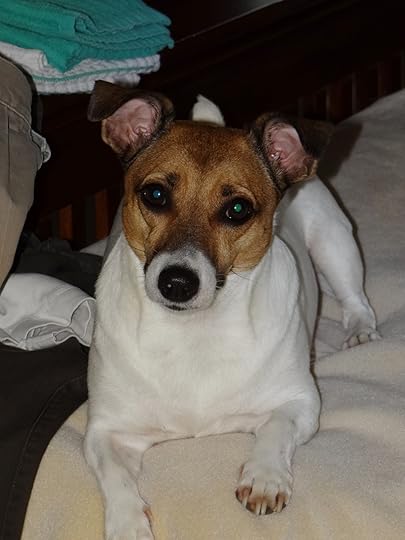
Disney Dog
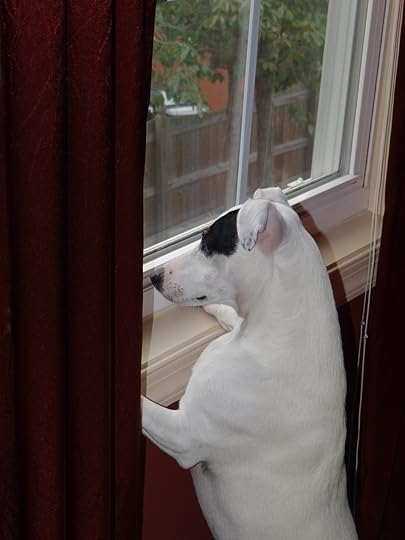
Riley on Squirrel Watch
August 23, 2015
The Edits Came Today...
The edits for Virginia is for More Mysteries arrived today. We are getting closer to having book two in print.
We also had a wonderful day yesterday at the Suffolk Mystery Authors Festival. The group signed lots of books and presented two workshops to standing room only crowds.
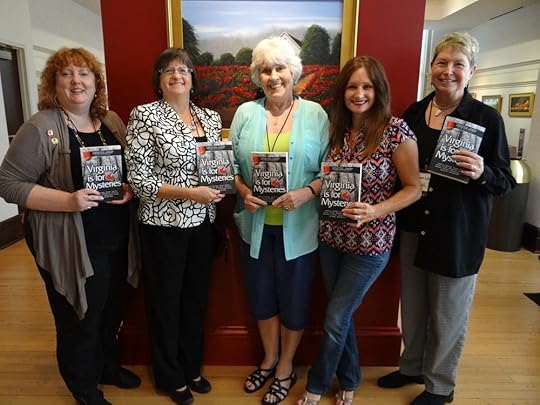
l-r: Heather Weidner, Jayne Ormerod, Maria Hudgins, Teresa Inge, and Vivian Lawry