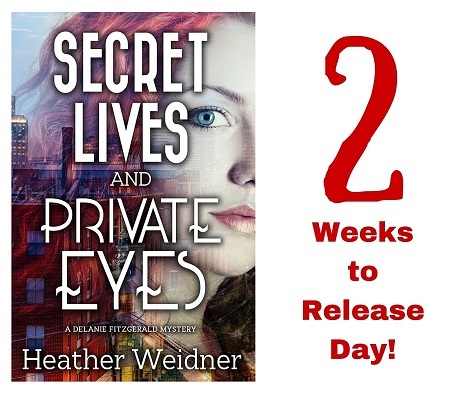
Heather Weidner's Blog, page 102
June 10, 2016
My Six Favorite Tools for Book Marketing

I've found some interesting tools and websites to help authors with their social media and book marketing. Here are six of my favorites...
Social Media
Sometimes, my Twitter follows/unfollows gets out of hand. I have a paid subscription to Tweepi to help me clean up. I used to use the free version, but they altered their "unfollow" feature. I upgraded to the paid version, and it helps me keep all of my accounts in order.
I use the free version of Crowdfire to manage my Instagram follows/unfollows. It also manages Twitter. I may try that and consolidate my tools to one.
I use Rank Forest to see my daily Amazon ranking. The free version allows me to track one book. It's good to see where you are over time, but I try not to obsess over numbers. Don't make yourself crazy.
Website/Blog
I use Squarespace for my website and for another that I created for a group of authors. It is easy to use, and it provides detailed analytics. Previously, I used GoDaddy, but they dropped their blog option.
Marketing
I use VistaPrint for my business cards. They offer frequent discounts, and the quality is good.
I've had a lot of success from Next Day Flyers for my bookmarks. I've also used them for invitations for book launches.



June 4, 2016
How to Market When It's Not in Your Nature

When I dreamed of being an author, I envisioned working at my computer and writing brilliant books. I never realized how much marketing and promotion was involved. These days, writers are expected to promote their books. It's in my contract.
Writing is a business, and marketing is a key part of that. The hard part is that it's often trial and error to see what works for you. I schedule my marketing campaigns, and then I track the analytics (e.g. sales numbers, blog hits, ad metrics, and costs) to see if there were positive results. Use your analytics on your website, blog, Facebook, and Twitter. There's a lot of good information there. I created a spreadsheet to track this information. I'll have details when I get ready to run the next campaign. Make sure all your hard work is paying off.
It feels weird to post about myself all the time. There are people who are uncomfortable with it. Try to balance your posts. The 80/20 rule is a good guideline. Twenty percent of your posts should be "buy my book." The others should be about other interesting things. Post recipes, pet pictures, hobbies, or other interesting things you do. And make sure you share others' content.
There needs to be a balance. Look at your newsfeed and see what your last twenty posts look like. When I'm cruising my Facebook newsfeed, I tend to hide or ignore the noise. I pay attention to sales (but not the ones that run every week). We have a furniture store here in Virginia that has a SALE!!!!! every week. The joke at my house is, "Oh, look. They're having another sale." I pay attention to contests too, but the "Hey, I got another 5 Star review" posts get mixed up in the noise of the newsfeed.
There are a lot of Facebook groups and sites to post your book information. Be careful if you do your posting all at the same time. People will see a string of the same post to different sites. Spread out or schedule your posts. I would also mix the content up too because a lot of readers visit the same sites too.
It also helps if you can find a group of writers to assist you. I'm in several groups for writers and bloggers, and we comment, post, and share each others' information. This helps get the word out without you having to do all the "Hey, look at me" posts.
It is definitely a challenge to get the word out and to keep your book in front of people. And sometimes, what works once, doesn't work a second time. Best wishes with your promotions. Drop me a note and let me know what works for you.
May 27, 2016
My Mustang Playlist...
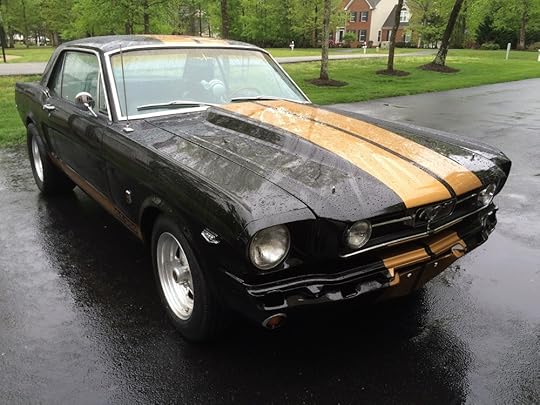
I am a beach girl at heart, and Memorial Day weekend is the official kickoff to summer. My sleuth, Delanie Fitzgerald also drives a Ford Mustang. So put the top down, grab your flip flops, and turn up the tunes. Here's my Mustang playlist.
Bad English – “Rocking Horse”Blues Traveler – “Last Night I Dreamed”Chuck Berry – “My Ford Mustang”David Bowie – “Young Americans”Dick Dale and the Del-Tones – “Wild, Wild Mustang”Eminem – “Echo”Five for Fighting – “’65 Mustang”Jack Ingram – “Mustang Burn”Jan and Dean – “Move out Little Mustang”Jason Aldean – “Tattoos on This Town”Keith Urban – “Sweet Thing”Leah Turner – “Take the Keys”Martha and the Vandellas - “Nowhere to Run”Megan Nichole – “Summer Forever”Power Supply – “My 5.0”Rip Chords – “Hey, Little Cobra”The Chesterfield Kings – “Shelby GT 356”The Zip Codes – “Run, Little Mustang”Toby Keith – "Whisky Girl"Vanilla Ice – “Rollin’ in my 5.0”White Zombie – “Black Sunshine”Wilson Pickett – “Mustang Sally”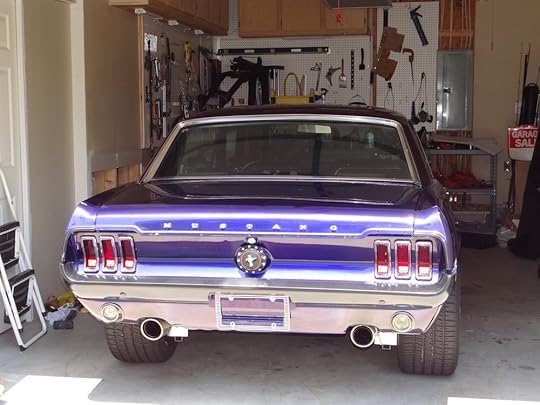


How to Avoid Too Much Backstory...

Backstory is the history or what happened to your characters in the past. When I listen to my critique group's discussion on all the manuscripts, they comment frequently that writers often include too much of the past in their mysteries. It's hard if you write a series. Not all of your readers will start with the first book and read in the order that they were published. You have to have some linkage to the previous works. And if key parts of the story affect your characters' lives, then you need to mention it.
The key is to sprinkle in the backstory. It should be a line or two - not paragraphs. When you do the latter, it causes the reader to move away from the story's momentum. If the plot jumps back in time for an extended period, it breaks the action and the forward progress. You will lose people if there is too much historical detail.
I like to know all about my characters, and sometimes, I include too much in my drafts. To help me avoid this, I created a document. It's nothing fancy. It's a table in Microsoft Word with a column for each book. I list each character and where they appear. At the character's first appearance, I include a short biography where I list everything that I can possibly think of (e.g. favorite colors, middle names, colleges, etc.). Most of this stuff never makes it to the book, but I have it in case I need to add it for some reason. I found that by writing these mini-bios, it cures me of wanting to overly describe each character. It also helps me keep the details like color of someone's car, eye color, and wardrobe preferences straight. I also have entries in my table for the key settings in the stories. I've described furniture in my sleuth's home and office, and I want to make sure that they are consistent from book to book.
History and details are good when used sparingly. Sprinkle them in, and it will help round out your characters. Happy writing!

May 21, 2016
Professionalism Goes A Long Way...

I thought when I became an author that I would sit at my desk and write one brilliant book after another. I had no idea how much marketing and publicity were involved. Then there are royalties, contracts, tax implications, and sales tax that make your head spin. I quickly learned that as much as I loved books and writing, this was a business, and I needed to treat it as such.
1. Know when to consult lawyers, CPAs, and tax professionals. Make sure you know about your tax bracket, deductions, business licenses, and sales tax rules.
2. Get a professional headshot. It's an investment, but it shows that you are serious about your writing.
3. Get an author website. Make sure that it has your biography, photo, link to your books, and a way to contact you.
4. Be prompt when responding to emails and phone calls. Publishers, publicists, agents, and book store owners expect to be dealing with professionals.
5. Always meet your deadlines and commitments. This goes for volunteer work too.
6. Thank people who help you, provide good reviews, and share your social media.
7. When you contact booksellers, reporters, agents, publishers, etc., be prepared. Make sure you have a polished biography, synopsis, and links to your social media sites.
8. If you're going to create a blog, website, or social media sites, make sure that you post regularly. If the content isn't fresh, visitors won't come back, or they'll drop you.
9. Proofread your stuff. Make sure that your sites, emails, and marketing materials are organized, easy to read, and current. You really only do get one shot at making a first impression.
Best wishes with your writing. It's a lot of work, but it's worth it.
May 13, 2016
Should You Join a Blog or Other Online Support Group?

Over the years, I've been part of several online blog support groups. I think the advantages outweigh the negatives, and I've connected with a lot of interesting writers. But, before you join, you need to decide if it is worth the investment of your time and energy.
Promotion - A support network is a great way to promote your blog and writing projects. But you do need to make the time commitment to read and support the other members. It does take time, depending on the size and frequency of the events in your group.
I'm in one group with over 7,000 members. If you comment or post, expect a lot of email. It's a great way to find other writers and see what they're doing with their social media sites. But your inbox will be flooded when everyone comments or posts.
Social Media - This is a great way to increase your social media followers. I like the ones that make following others optional. You tend to get more true followers who stick around. It's disappointing when you get a boost and then a spike in unfollows quickly behind it. That happened to me once, and I learned my lesson.
Feedback and Support - I like to support other authors on their writing journeys, so I enjoy seeing what other bloggers are up to. I also appreciate the hints and suggestions that they make about marketing, social media, and blog content.
How Do You Find a Group? - Search Twitter or Facebook for "Blog Groups." There are a lot of them out there with different rules for membership and engagement. Visit a while before you join to make sure that your work fits. My goal was to increase traffic to my blog, so I chose several that were not book- or author-centric.
If you're willing to commit the time to spend on social media and your blog, then these groups are a good (free) way to promote yourself. If blogging isn't your cup of tea, there are also plenty of Facebook and Twitter groups to promote your books.
Best wishes with your writing projects!
May 8, 2016
What Happens When You Get off Track with Your Writing?
I try to write each day, but sometimes, life gets in the way. What happens when you get off track? Here are some tips and ideas to get you going again:
1. I find when I get off track that I need to make time and just write. It's easy to get off schedule. And the more that I stay away, the harder it is to back into the rhythm.
2. Blogging keeps me on a schedule. I've committed to at least one post a week, so I know I have a weekly deadline. I also post regularly with several other groups of writers. Those deadlines help too.
3. I joined a critique group. We have a monthly deadline for our short stories and WIPs (Works in Progress). This gives me another deadline to work towards.
4. If I get stuck and that leads to procrastination, I write blog posts or find a writing prompt and do a writing exercise or two. That usually gets me back in writer mode.
5. I count editing, proofreading, and revising as writing time. Rewrites and tweaks take time. I probably spend more time editing and rewriting than I do putting the first draft together.
6. I also bounce between projects. Sometimes, I'm working on my mystery series. I also write short stories. I like writing both. The short stories are compact with fewer characters, and I can experiment with different locations and themes.
7. Don't be too hard on yourself if you don't write regularly. Sometimes, you need a short break. But make sure that it's short and you're back to being productive. Make sure that you don't miss deadlines or commitments.
8. I tend to get involved in marketing, book signings, writing groups, and social media works, and that cuts into my writing time. I have to make sure that writing gets its fair share of time. It's all work that needs to be done, but you need time to write your next work.

April 30, 2016
Writers, Don't Forget the Social Part...
Sometimes, writers get so wrapped up in their WIPs (works in progress) or their marketing that they forget the social part of social media. It takes some time and effort to grow and keep your audiences. As you plan your writing time, you need to block some time for the care and feeding of your social media sites.
1. Make sure that your photos and bios are current. Check your links and verify that your contact information is correct. You want to make sure you receive messages from others.
2. Make sure that your content is fresh. You'll lose folks if the content isn't new, or you haven't posted in a while. I try to post at least one thing a day. It's hard some days. You may want to look at scheduling posts. It does save time.
3. Share others' content. It can't be all about you and your book.
4. Comment on others' posts. Likes are nice, but comments usually start conversations and build activity.
5. Use your social media site to build relationships. I create lists of groups that I follow, so that I can quickly access and share their content.
6. My Facebook posts are set to post automatically to Twitter. I have two different audiences on the two sites, but that ensures that I have fresh tweets throughout the day.
7. Make sure that you thank those who help you, share your material, or review your books.
8. Recognize others. It's nice to cite others' accomplishments.
9. Make sure that you're responsive to comments and conversations. It's not much of a conversation if you don't answer.
Social media platforms are powerful tools for rapidly spreading your message. You'll have much more success if you're part of the conversation and an active participant, rather than just someone who announces his/her next book or sale.
Best wishes with your posts. Let's connect on social media.

April 23, 2016
Ways to Recharge Your Creativity

Are you stuck in a writing rut? Do you need to recharge your creativity? Here are some ways to jar you out of the mundane...
1. Exercise - Take a long walk, dance, run, or stretch. It gets the blood flowing and the endorphins flying.
2. Try another creative project like cooking, baking, painting, crafting, gardening, or sewing. It causes you to think differently.
3. Find some writing prompts and write for 10-15 minutes a day. There are a lot of books and free online sites with great ideas. You may be surprised at what you discover. This will also help you with your "write every day" goal.
4. Go on a photography adventure. Take lots of pictures. Make it a day trip and share it with someone. I use a lot of these photos in my blog or on social media.
5. Read a book. Pick one in another genre and read for fun.
6. Go on a writing retreat. There are low cost ways to make it happen. Combine this with a vacation or go camping. Or plan your own writer's retreat at home. Find a new, quiet place and write. Coffee shops and libraries also work for a change of scenery.
7. Mix up your writing location for a day. Go outside or change rooms. Go somewhere different.
8. Go somewhere and people-watch. Take notes on what you observe. Write down snippets of dialogue. You never know what'll be useful in a future story.
9. Take a class. Learn something new. Many colleges, libraries, and art centers offer low-cost course. Our local school system offers a variety of technical and fun courses. There are also many free or low-cost online courses.
10. Volunteer. There are a lot of worthwhile groups that need assistance. You have skills and talents they can use.
April 15, 2016
Who are Your Favorite Detectives and Sleuths?

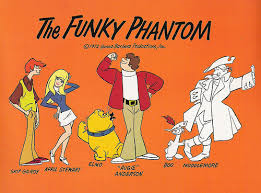
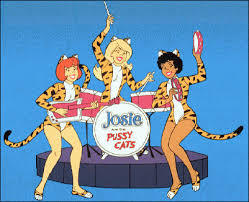
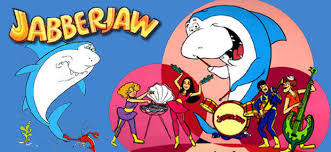
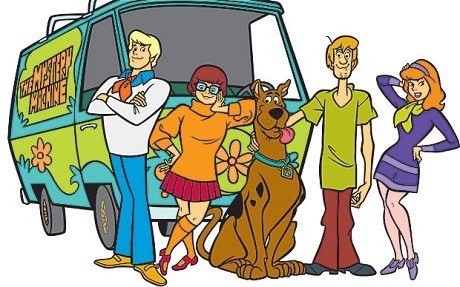
I have loved mysteries since Scooby Doo, Josie and the Pussy Cats, Jabber Jaw, Speed Buggy, Hong Kong Phooey, and the Funky Phantom. Seventies cartoons were full of sleuths and capers. In elementary school, I started reading the classic Nancy Drews and raced to finish the Hardy Boys. Then I moved on to Agatha Christie, Alfred Hitchcock, and One-minute Mysteries. Now, I read anything from cozy to thriller.
Here are my top detectives...
C. Auguste DupinCagney and LaceyDick TracyElvis ColeFrank and Joe HardyHercule PoirotJim RockfordMike HammerMiss MarpleNancy DrewNero WolfePhilip MarloweQuincySam SpadeSherlock Holmes (in all forms)Steve McGarrettThomas MagnumAnd of course, Scooby Doo!Who would you add to the list?