Heather Weidner's Blog, page 100
October 21, 2016
My Fan Girl Moment - I Met Nikki Giovanni
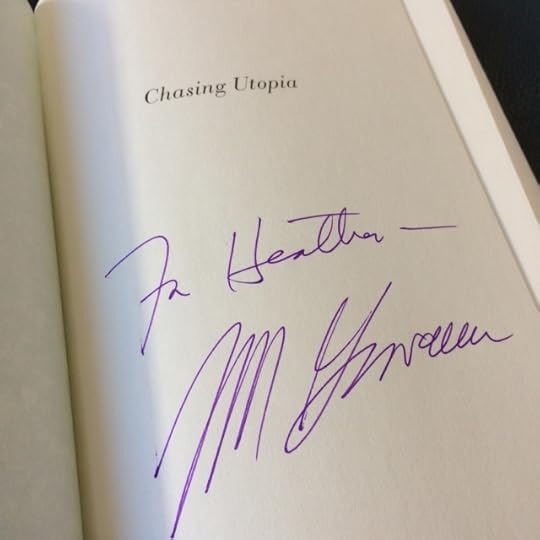
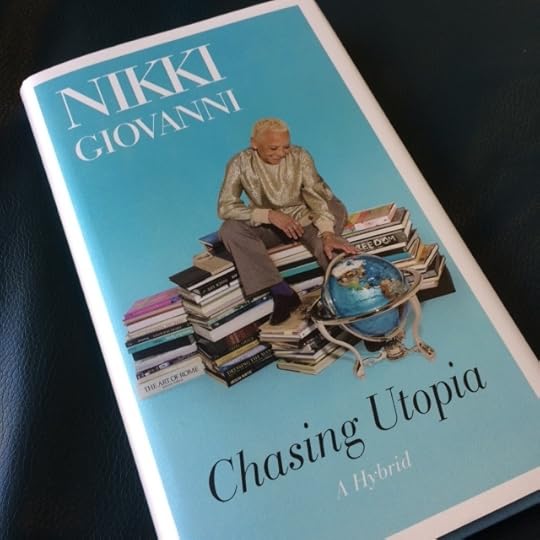
I had the pleasure this month to meet and hear Nikki Giovanni speak at the Library of Virginia's Literary Awards Luncheon. She received the well deserved Lifetime Achievement Award.
Nikki Giovanni is a Virginia and national treasure. Here's what I learned from her discussion.
We all get old. Otherwise, we die young.Don't hold things in.Build a community. Relationships are important.She decided as a young girl to be happy. She controlled her outlook.She was friends with Toni Morrison and Maya Angelou. And her stories of friendship were priceless.She talked about her speeding tickets on I-81.Read something every day. (She likes the comic strip "Pickles.")You have to let people know you love them while you can.Keep writing!You have to write your story.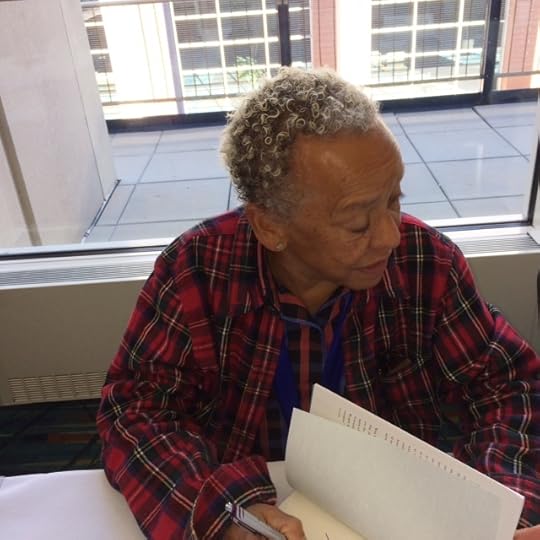


October 13, 2016
25 Things about My Sleuth - Delanie Fitzgerald of Falcon Investigations
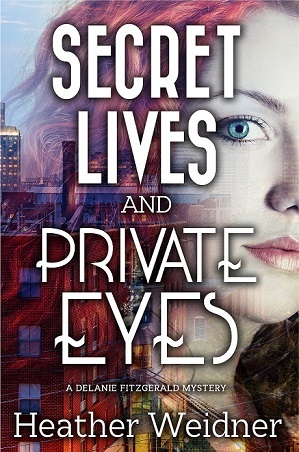
Secret Lives and Private Eyes is the first in my Delanie Fitzgerald mystery series. She is a private investigator who lives in Central Virginia. And I’m often asked about what my protagonist is really like. Here’s my top-twenty-five list about my spunky sleuth.
Delanie is a redhead like 1-2% of the human population (and me). She has determination, grit, and a spunky spirit.She drives a Mustang, and she calls it “Black Beauty.” My private investigator graduated from VCU (Virginia Commonwealth University) with a degree in business.She lives in a Sears catalog home from 1939. Back then, people ordered kits from the catalog, and all of the pieces arrived by rail, ready to assemble. Hers is the Yates model. Many of the boards in her bungalow still have the Sears catalog number stamped on them.Delanie's bungalow has an upstairs. Her bedroom and living space are on the first floor. She may have a remodeling project in her future.Her partner is computer guru (and hacker), Duncan Reynolds.She shares her office space with Duncan and his English bulldog Margaret.One of Delanie’s guilty pleasures is her junk food habit. She also orders a lot of take-out from the nearby restaurants.When she’s not sleuthing or trailing a suspect, she likes to stay home in her comfy jammies and watch reality TV.Growing up, Delanie had a major crush on ‘80s rock star, Johnny Velvet from The Vibes.Her middle name is Lynn.Delanie has two older brothers. Steve is a Chesterfield County police lieutenant, and Robbie is a bouncer at a club in downtown Richmond.She used her share of the money from her father’s estate to open Falcon Investigations.Delanie chose the name for her company in honor of Dashiell Hammett’s The Maltese Falcon.Her client, Chaz Wellington Smith, owns a strip club in the downtown area near where Edgar Allan Poe worked in Richmond.Delanie had never seen an alpaca up close until she encountered Myrtle on John Bailey’s farm in Amelia County.Delanie’s best friend from school is hair stylist, Paisley Ford.Though she prefers the comfort of jeans and T-shirts, Delanie has a wardrobe full of outfits and shoes to create just the right look when she’s sleuthing.Her favorite drink is iced coffee, and her go-to treat is always chocolate.Delanie and Duncan usually investigate cheating spouses. She is thrilled when she lands an assignment from tell-all author, Tish Taylor, to track down leads on rocker Johnny Velvet, who purportedly died in a fiery car crash in the ‘80s.While the story is fiction, many of the locales that Delanie visits are real. Some of these include: Amelia County, Belle Island, Byrd Park, Church Hill, The Diamond (Home of the Richmond Flying Squirrels), Kanawha Canal, Library of Virginia, Main Street Station, Shockoe Slip, Tredegar Iron Works, and Virginia Museum of Fine Arts. Readers who have been to Central Virginia will recognize some of the street and place names. Delanie got her first name from my niece's friend, and her last name is in honor of F. Scott Fitzgerald, one of my favorite writers.Delanie's home and office are in Chesterfield County, Virginia. I liked the location because it's close to the city and rural parts of the state. It's also within driving distance to the beach, mountains, and Washington, D.C. She loves a variety of music, but rock 'n' roll is her favorite. A great escape is to blast the radio with the windows down.While she has enough culinary skills to survive, cooking is not her forte, and she often forgets to keep the pantry and fridge stocked.
October 8, 2016
9 Things That Helped Me Improve My Writing
I've been writing for a while, but I'm still considered a debut author. I've had three short stories and a novel published, and I'm working on the second in my Delanie Fitzgerald mystery series. For me, the writing part of the project is easy. The time-consuming part is the editing and revising. Here are nine things I learned to help me with my writing.
1. I joined a critique group. It was important for me to have other mystery/thriller writers and readers review and comment on my drafts. I have learned so much from this group. It is extremely helpful to have a group of beta readers provide commentary before you try to acquire an agent or publisher. You will be surprised at what you missed in your self-edits.
2. I stopped reading "how to write" books and started writing. I tended to get bogged down in the books, and I never got around to writing with a purpose. I had a stack of "how to write," "how to publish," and "how to plot" books. The only book about writing that I really learned a lot from was Stephen King's On Writing. That reference needs to be on every writer's shelf.
3. Publishing is a business. I hired a private copy editor to review what I think is my final draft before I submit it to my publisher and his editors. It is an added expense, but the feedback I get is well worth it.
4. When you're writing it is important to be consistent with terms and usage. Is it Internet/internet; a.m./AM, tv/TV? I keep a style sheet and use the search feature on my word processor.
5. It's also important to keep your descriptions and facts straight, especially when you're writing a series. I keep a table of all of my characters (mini-biographies) and locations. I add a column for each book, so I can track who is in what book. I write down all the details (e.g. eye color, hair color, likes, etc.), and this helps me round out the picture, even with minor characters.
6. When I'm revising, I look at the size of each chapter. If some are too long or short, I try to balance them out.
7. I also look at the last paragraph of each chapter when I'm revising. Do they compel or encourage the reader to keep reading? If you end a chapter with a character going to sleep, it slows down the action, and your reader may see it as a good stopping point. You want them to keep reading.
8. When I'm writing, I tend to overuse some words and phrases. I keep a list of words to watch for. When I'm ready to revise, I search for these and rewrite where I can. Beta readers are another great way to find these terms. They will tell you if you tend to repeat things. (My worst offenders are "just," "only," "that," and "in a few minutes.")
9. Pay attention to your dialog attributions (e.g. he said/she said). Readers tend to skim over "said," and the repetition doesn't bother them. It stands out to readers when you try to be creative and avoid using "said" (e.g. replied, retorted, noted, stated, etc.). Use synonyms sparingly, and stick to "said" most of the time. Also, if you have two characters talking, you don't have to use "said" each time one speaks.
I hope these help you on your writing journey. Drop me a note or a comment and let me know what works for you.

September 30, 2016
Tips for Making Time for Social Media
I never imagined how much time is involved in book marketing and building (and maintaining) your author platform. I work full-time and write part-time. Life gets in the way sometimes, but I make sure I build in time for the care and feeding of my social media sites. Here are my ideas for writers.
Social is the key word. You need to have a presence, and you need to be active on the sites you choose. But, you can't do everything, and all platforms may not work for you and your books. Decide what sites you and your readers like. And know the demographics of each site. The Pew Research Center has a good overview of each of major players. For my readership, I focus on Facebook, Twitter, Google+, Instagram, Pinterest, and Goodreads. I occasionally post on LinkedIn, but that's usually about my IT life.
Lists in Facebook (Interests) and Twitter are a big time-saver. This helps me stay organized. The list gives me a newsfeed of just the accounts I select. There are a lot of posts out there. This helps me see just what I'm interested in.
Create a daily schedule for your social media time. I get up at 5:00 AM, so I check my sites during breakfast. I often check on them at lunch. In the evening while watching TV, I spend time catching up on posts. You need to respond to comments and participate in conversations. Social media doesn't work if you don't post or if all your posts are "buy my book."
Schedule Facebook posts (author page) and tweets to happen when you're not usually active (during the work day or in the wee hours of the morning). I've picked up followers from different time zones this way. I'm an early bird, but a lot of readers are night owls.
Look for blog/social media support groups. There are also quite a few hashtags that encourage support for writers and bloggers. I have joined several online groups, and we share each others' content and engage with posts.
For your social media to work for you, you can't just be a poster or a reposter of others' content. That's a good start, but you need to comment, like, and share. The interaction is what increases your reach.
These are the things that work for me. How do you manage your social media?

September 23, 2016
How Working Full-time Helps My Writing Journey
I am IT manager by day, and writer the rest of the time. My dream is to one day retire and write full time. While work gets in the way of writing more than one book a year for me, and it sometimes wears me out to the point that I don't want to look at a computer screen any more that day, it does play a role in my writing journey.
Work limits my writing/free time, so I am more apt to use my available time to its fullest. My work day is regimented, and I tend to structure my writing time out of habit. (When I'm off for holidays or vacations and I have multiple days to write, I'm less structured.) Most of my days start at 5:00 AM.
I get some great ideas, character traits, and quotes from my co-workers. I have even been known to name characters after some of my co-workers.
When I'm home working when I have more than one day off in a row, I'm usually sequestered with just the pair of Jacks. Working keeps me plugged in to trends, discussions, and other social interactions. I think the solitude and the social parts of a writer's life need to be balanced. I'm an extravert, and I get my energy by interacting with other people. I know that when I do decide to write full-time, I'm going to have to include other social activities in my week for balance.
[image error]
September 16, 2016
Playlist: Songs about Writing
Music is a big part of my writing journey (and life). I always have some sort of music playing while I write, edit, or work. And the organizer in me always wants to make lists, so here's my big playlist of songs about books, writers, and writing.
"Dancing in the Dark" Bruce Springsteen"Everyday I Write the Book" Elvis Costello"Eyes Without a Face" Billy Idol"I Am A Rock" Simon and Garfunkel"I Be Bound to Write You" Muddy Waters"I Write the Songs" Barry Manilow"Lady Writer" Dire Straits"Losing It" Rush"Mr. Writer" Stereophonics"Open Book" Cake"Oxford Comma" Vampire Weekend"Paperback Writer" The Beatles"Piano Man" Billy Joel"Rewrite" Paul Simon"The Book I Read" Talking Heads"The Book I'm Not Reading" Patty Larkin"The Book of Love" The Monotones"The Book of My Life" Sting"The Empty Page" Sonic Youth"Unwritten" Natasha Bedingfield"When I Write the Book" Nick Lowe"Write Your Own Songs" Willie Nelson"Writer's Block" Just JackHere are some about specific books and authors.
"1984" David Bowie"Feed my Frankenstein" Alice Cooper"Goodbye Yellow Brick Road" Elton John"Hemingway's Whiskey" Kenny Chesney"Hey, Jack Kerouac" 10,000 Maniacs"Romeo and Juliet" Dire Straits"Sylvia Plath" Ryan Adams"The House on Pooh Corner" Kenny Loggins"Walt Whitman's Niece" Billy Bragg and Wilco"Tom Sawyer" Rush"Virginia Woolf" Indigo Girls"White Rabbit" Jefferson Airplane"Wuthering Heights" Kate BushAnd don't forget about the band, American Authors.

September 11, 2016
My Dogs and My Writing Journey

I have two crazy Jack Russell Terriers (Riley and Disney). They are from the same litter, and everything is a game to them It's like having twin three year olds running through the house at 60 mph (all the time).
But they are great companions, and they listen when I want to plot scenes or read through dialogue. Here are some of the things that they've taught me about my writing journey.
1. Live in the moment. Enjoy what you're doing. The Jacks aren't concerned with yesterday or tomorrow. They focus on the here and now.
2. Don't work all the time. Make sure to build in some fun time. When I'm writing at home, they let me know when we've been still too long.
3. Everything is a game to the pair of Jacks. They think tying shoes, folding clothes, and unloading the dishwasher are part of playtime. And if the task isn't fun, they'll go find a ball and make it more interesting. I need to work on making my tedious tasks fun.
4. Reward yourself occasionally. The Jacks can hear a cheese wrapper or the treat box 100 yards away. Walks and car rides are two of their other favorite treats.
5. Be a good listener. They're my audience when I plot or read dialogue aloud.
6. Make new friends and foster relationships. The Jacks love people, and they always want to stop and greet everyone they meet. Everyone is someone new to play ball with.
7. Wag more and bark less. That's always good advice.
I hope your writing projects are going well. The Jacks and I are getting ready to start another round of editing on the second book in the Delanie Fitzgerald series.
September 4, 2016
Writers, Is It Time to Review Your Social Media Strategy?

Do you plan your posts and have a vision of what you share on your social media sites, or do you just post when time allows? If you're posting regularly, it may be time to look at your overall plan. Here are seven tips that helped me figure out what was getting attention. I changed my posts to match those that were getting the most attention.
1. Look at your posts. Only 20% (maybe 10-15%) should be "buy my book" posts. You need to make sure that you share others' materials and post/share interesting and useful information to your followers. Make sure to tag people. It boosts the coverage of your post.
2. Look at your analytics on the sites that you use regularly. Are your posts being viewed, commented on, or shared? Look at your top performing posts. You need to do more of those and less of the ones that are being ignored.
3. Also look at the day and time of your posts. My tweets that get the most attention are after 11:00 PM on week nights. Since I'm not usually up then, I tend to schedule more tweets during that timeframe. After a month or so of data, you'll start to see a pattern of when you get the most traffic.
4. Make sure that your social media sites drive traffic to your website/blog. I schedule 5-6 tweets each day for my current and older blog posts. I also put my new blog posts on Google+, Goodreads, my Amazon author site, and my author Facebook page. Look at your analytics to see what is being viewed. That should help you target your content. I also use Bitly to shorten URLs, and this has a click counter, another good measure of what is being opened.
Your blog should be on or linked to your website, so that visitors can also see your events, give-aways, and books.
5. Make sure that you use hashtags that apply to your post. They do help people find topics of interest in a sea of information. This is key for Instagram and Twitter.
6. Autoposting is great and it saves a lot of time. Just be careful that not everything is linked. You don't always want the same post to appear the same way on each site. For example, if you autotweet your Facebook posts, the image appears as a link and your content is also truncated. In the Twitter world, that may not attract viewers. Hashtags work on most social media sites, but tags often don't. You probably want to customize posts for different social media platforms.
7. Look at the content of your posts. These are social media sites. If people are engaging you in conversation and you don't respond, you're losing opportunities to build relationships and contacts.
Best wishes for your writing and postings. Here are my links. Stop in for a visit.
Twitter: https://twitter.com/HeatherWeidner1
Facebook: https://www.facebook.com/HeatherWeidnerAuthor
Instagram: https://www.instagram.com/heather_mystery_writer/
Goodreads: https://www.goodreads.com/author/show/8121854.Heather_Weidner
Pinterest: https://www.pinterest.com/HeatherBWeidner/

August 28, 2016
7 Ways to Help Your Friendly Neighborhood Author
After my short stories and novel were published, I was a little surprised at how much marketing is involved in the writing journey. If you like a book, here are some quick ways you can help spread the news (and helpout your friendly neighborhood writer).
1. Leave a review on Amazon, Barnes and Noble, Goodreads, or other book sites. It doesn't have to be a long, detailed literary analysis. It can be a couple of sentences. Book retailers use the number of reviews for ad placement, author ranking, and marketing.
2. Tell your friends about the book and the author. Word of mouth is the best endorsement.
3. Share the link to the book or a book review on your social media sites.
4. Request that your local library purchase the book.
5. If you're in a book club, nominate it as a future read. Many authors will visit or Skype with book groups.
6. If you blog, post about your favorite books and authors.
7. Buy the book for yourself or for a friend. Books make great gifts. My author friend supports other authors by buying the book and then doing a give-away on her site. I love this idea.
Authors are small business owners, and they always appreciate recommendations, referrals, and social media shout outs. Happy reading!

August 19, 2016
How Much Research Goes into Fiction Writing?

Fiction is made up, right? Surprisingly, I do quite a bit of research for my mysteries (novels and short stories). I want the story to be plausible and as accurate as possible. Even though it's fiction, readers notice when the writer doesn't get it right.
My sassy Private Investigator, Delanie Fitzgerald, gets herself into all kinds of adventures. I do a lot of research for that series. In Secret Lives and Private Eyes, my PI lives in a Sears Catalog house from 1939. The houses were ordered and shipped by rail for assembly. I found great information on the Sears Catalog homes that have been preserved through the years. In the first book in the series, she attends her first ComiCon and investigates a theft at an art museum. In the second book, she learns all about LARPing (Live-action Role Playing) and roller derby as she investigates a serial murder in central Virginia. I did some interviews and online research to get my background information on her activities.
Here's are some good research links for writers.
I use Google Maps and Google Street View to scope out locations, look for place and street names, and to check the surroundings of real places. I never have a murder take place at a real location. I make up those place names, but my characters frequently visit real places and tourist spots. Google is great for finding place names and great places to hide bodies.I use baby name lists from past years (just Google popular baby names by year) and decades to make sure that the names fit the age of the character. Certain names were popular in specific decades.My dad is a retired police officer. He's my police procedural resource. He's used to my, "Hey, Dad, what does a meth lap smell like" or "Can I kill someone with a guitar string" kinds of questions. Our dinner conversations are always interesting. If you don't have professional resources. Check around your community. Many have police/fire/safety presentations where you can make contacts. Twitter is also a great place to find answers and subject matter experts.I am a member of Sisters and Crime. Our chapter has a lot of programs, and the speakers are willing to answer all kinds of questions. It's a great place to get ideas and to network with real-world professionals. In the last year, we've had campus police chiefs, a K9 rescue dog trainer, and a mortician talk to our writers.The Writer's Police Academy is also a wonderful opportunity to get hands on experience with police/fire/rescue techniques.My talented writer friend, Fiona Quinn, has a great blog that teaches writers how to write it right. I find a lot of good information in her posts. Check out her site and tweets.Research isn't just for non-fiction. What other sites would you add to my list?