Heather Weidner's Blog, page 107
August 21, 2015
What's Your Social Media Strategy?
You are your brand. Your author presence on social media should have a strategy, plan, and purpose. You want a unified look.
Drive Traffic to Your Blog or Website - One of your primary goals should be to drive traffic to your blog or website. Tweet links of your blog posts (new and recycled). Schedule them with a tool like TweetDeck or Hootsuite to post during hours you don't normally tweet. I schedule tweets at night or while I'm at work, and I've picked up new readers from different time zones. Schedule sparingly though. If someone follows you on different sites or views lists, you don't want hourly tweets of the same thing.
Analyze Your Content - Look at your posts and tweets. Are you getting likes, favorites, retweets, and shares? If not, consider rewriting your content. Make sure that you include videos or pictures. Also use hashtags (no more than two) to get noticed by like-minded readers.
Diversity is Key - Make sure your social media use focuses on the "social" part. You should join conversations, share others' materials, and thank those who share your stuff. People tend toignore you if all your posts are "buy my book." If you use hashtags regularly, make sure that you share others' postings from that list. You don't want to be a lurker.
Use Analytics - Facebook, Google, your website, and other sites have analytics. There is a lot of good information there about who's coming to your site and when. If you notice you have higher traffic on certain days, plan your posts then. Likes, shares, and retweets expand your reach.
Learn What Your Readers Use - Use the social media sites that your readers frequent. I learned this from Rachel Thompson of Bad Redhead Media. Google social media demographics. There is a lot of free information out there. Target your social media platform to what works for your audience. (The majority of Facebook users are women over forty.)
Be Adventurous - Be willing to try new social media sites and techniques. Try it and check your analytics. If it doesn't give you the results you want, modify it or try something else.
Look carefully at all of your social media sites. The colors, look, and writing style should be the same or similar. Themes are good. Your pictures and name should be the same on all sites. Make sure that you cross-pollinate your sites. List your website and blog in all of your biographies. Make sure that all of your links work.
I never knew how much marketing was involved with writing books. Best wishes for your writing and promotional projects!



August 16, 2015
Subtle Ways to Promote Your Book
There are a lots of ways to get the word out about your new book without bombarding friends and fans with "buy my book" posts. Here's my list of some underutilized resources.
Alumni Newsletters - Most alumni groups have a section for graduate news. Make sure to submit your acceptances and awards. Many clubs, sororities, and fraternal organizations groups also have space for this in their newsletters. Make sure that you word your announcement as news and not a sales plug.
Professional and Service Organizations - When my professional organizations or my company's annual giving campaign have service projects as fundraisers, I donate a themed basket with my books and swag.
Volunteer - Our writers' group gets calls from local libraries and book groups for speakers. They want authors for workshops and special events. These usually come with opportunities to sign books. Plus it's a great way to build relationships and meet readers.
Join Forces - Partner with other writers to share book and content information. I've also seen similar writers host contests and online events. Your reach grows exponentially when there is a bunch of you.
Expand Your Platform - Use social media to expand your reach. Build Pinterest boards for your books. Add your book events and speaking engagements to your LinkedIn profile. Post photos of events and your book signings on Instagram.
Writers' Groups - Join a professional writing group for your genre. They have lots of resources for promoting your work. Mine has a tweet network for retweeting and sharing author information.
Take Pictures - Take photos of things you do, at writing events, at others' events, and at your book signings. People like to see themselves, and pictures generate discussion and shares on social media.
Happy writing!

August 7, 2015
9 Cool Sites for Writers
These days you have to be writer, publicist, and marketer. I am always looking for interesting tools and sites for marketing my writing. Here are nine sites every writer needs to know about...
Canva lets you create graphics and memes for your social media posts. It's an easy-to-use online design tool.
Spoken.ly helps you create and share memes and quotes.
TweetDeck helps you organize and schedule your tweets. I use the free version as my Twitter scheduler.
Fiverr is a site where you can commission work or projects for five dollars or a nominal fee. You can get inexpensive artwork, cartoons, voiceovers, and videos here.
Ping-o-matic allows you to enter your blog's URL, and it will ping a variety of search engines to make sure they're aware of your site. This helps with search engine optimization.
GotPrint is a great site for ordering all kinds of print materials.
Next Day Flyers is another site for all kinds of print materials. They have a quick turnaround on orders.
Etsy is a great site for unique gifts. I order book and mystery-related items for gift baskets and reader give aways.
Bitly allows you to create shortened or customized links for social media posts. You can also use it to track clicks on your links.
What other sites would you recommend for writers?

August 1, 2015
What's on Your Writing Playlist?
This week is the 34th anniversary of MTV, which debuted in 1981 with "Video Killed the Radio Star" by the Buggles. We didn't have cable, so I had to get my fill of videos at friends' houses after the channel became available in markets outside of New York and New Jersey.
In honor of the music channel's birthday, here's a sample of my writing playlists. I have to have music on in the background for writing and editing tasks.
Play it Loud..."We're Not Gonna Take It" - Twisted Sister"Cum on Feel the Noise" - Quiet Riot"Let's Go Crazy" - Prince"Run, Run Away" - Slade"Jump" - Van Halen"Red, Red Wine" - UB40"Viva Las Vegas" - Elvis"Born Free" - Kid RockHappy Songs..."19 Something" - Mark Wills"All Shook Up" - Elvis"Happy" Pharrell Williams (Who Also Hails from Virginia Beach)"Cheeseburger in Paradise" - Jimmy Buffett"Fun, Fun, Fun" - The Beach Boys"Brighter Than the Sun" - Colbie Caillat"Crocodile Rock" - Elton John"Friday, I'm in Love" - The Cure80s Favs..."I Melt with You" - Modern English"Mony Mony" - Billy Idol"Goody Two Shoes" - Adam Ant"Love Shack" - The B52s"Manic Monday" - The Bangles"Dancing in the Dark" - Bruce Springsteen"99 Red Balloons" - Nena"Rio" - Duran Duran"Faith" - George Michael"Authority Song" - John Mellencamp"Little Red Corvette" - PrinceNewer Favs..."Save Me, San Francisco" - Train"On Top of the World" - Imagine Dragons"Uptown Funk" - Mark Ronson with Bruno Mars"Dance with Me Tonight" - Olly Murs"Everybody Talks" - Neon Trees"Lips are Movin'" - Meghan Trainor"We are Young" - Fun."The Edge of Glory" - Lady Gaga"I'm in a Hurry" - Florida Georgia LineIt's time to turn up the tunes and get back to editing my work in progress. What's on your playlist?

July 24, 2015
Does Your Brand Need Polishing?
As a writer, you are your brand. Every few months, you need to look at your social media presence and make sure that it's polished.
1. Make sure your name is consistent across your sites. If you use pen names, be sure to have a place where you note the other names you use. People need to be able to identify you. It gets confusing if you use different forms of the name (e.g. Tom, Thomas, Tommy, T).
2. Your picture should be similar or the same on your sites. Readers need to be able to recognize that it's you. (I do have different pictures on my personal and author Facebook accounts. It makes it easier to tell which account I'm using to post.) Update your photos every year or two.
3. Your color schemes and artwork should be similar. You need a theme that appears on all of your sites.
4. Check the blurbs that describe you on each site. They should be consistent. Don't overwhelm them with hashtags. Make sure to include your latest book. Update these every few months.
5. Update your email auto-signature to include your social media and web links.
6. Update your content frequently. People don't return to sites where the content never changes. Remove all outdated information. Nobody wants to see a list of your book signings from 2013.
7. Follow the 80/20 rule for content. Eighty percent of your author content should be informational, fun, and conversational. The goal is to build relationships. Only about twenty percent of your content should be "buy my book." Readers tune out noise after a while.
8. When followers comment, retweet, post, or share your content, make sure that you notice and thank them.
9. Check all links on your sites to make sure they're working. If you have a "contact me" section, make sure it works too. You don't want to miss something because of a broken link.
10. Mix up your content. If people follow you on several sites, they don't want to see the same post four times.

July 18, 2015
Finding and Scheduling Book Signings
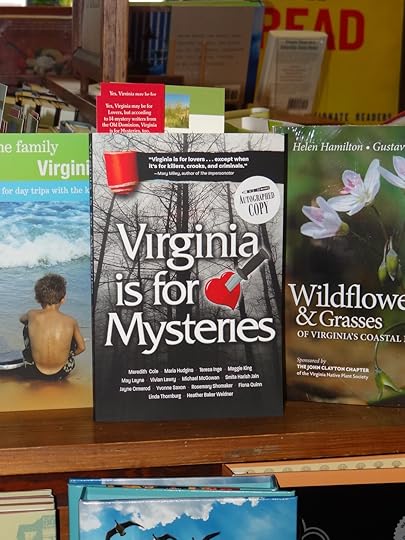
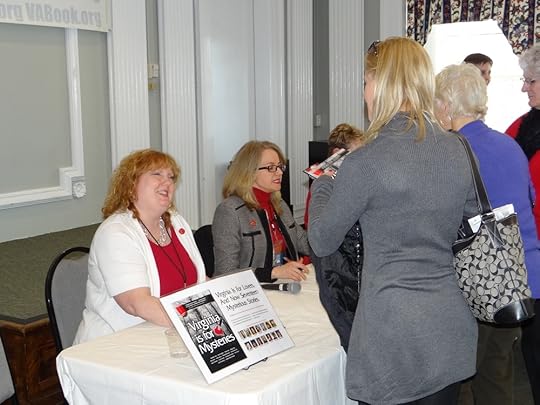
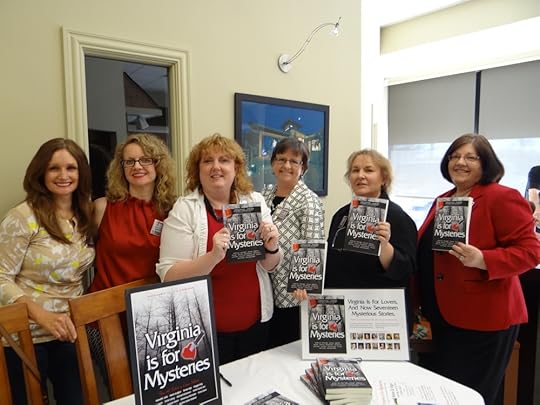
I am part of the team marketing the anthology, Virginia is for Mysteries. Since January 2014, we have had over 43 signings and events and more are scheduled for this summer and fall. We are fortunate that there are 14 authors involved in the project (and 19 for the next version), so we can have lots of signings in lots of places.
Here are some tips for finding and booking signings...
1. Always ask about the logistics when planning an event. I scheduled one in January and didn't think to ask about where we would be sitting. It was outside under a tent. Brrrrrrrr!
2. Many book stores will only order books that can be returned. If yours do not come through a distributor, you may have to ask if the seller will accept books on consignment. It is also a good practice to call the book store a week or so before the event to confirm all details.
3. Have a book signing bag for the event. Bring everything you'll need: pens, book stands, tape, scissors, and bookmarks.
4. Always have candy at your table. Chocolate is a hit.
5. Don't sign by yourself. It can be lonely. Partner with several other authors. With 14 of us, it's a party wherever we go.
6. Always keep a box or two of books in the car. We have sold out at several events.
7. Don't depend on the venue to market the event. If they do, make sure you tweet, share, and post it. You need to send invitations to your fans, friends, and family.
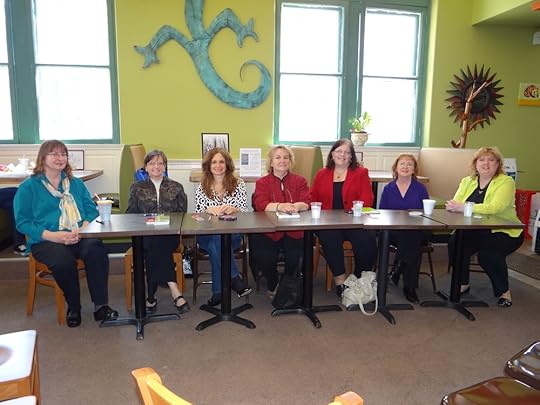
8. Be creative with locations. We have had signings at art galleries, museums, gift shops, libraries, and restaurants. We have also hosted countless panels and workshops for the opportunity to sell books.
9. Take lots of pictures and post them after the event.
10. Always send a thank you note or email to the host.
11. Every book signing is good. Don't be disappointed if you didn't sell as many books as you wanted. You get to meet people and share what you love to do. (But you do need to be practical. Try venues once. If they don't work, avoid scheduling any follow up events there.)
July 13, 2015
Embrace Your Geekness
Happy "Embrace Your Geekness" Day. How will you celebrate?
July 12, 2015
9 Things I Learned from Critique Group
I am very fortunate to have a wonderful critique group, made up of a variety of talented writers (editors, proofreaders, and readers). They write novels, short stories, flash fiction, and blogs, but our common theme is the mystery genre.
Here are my top nine bits of wisdom...
1. I learn as much from the discussion of everyone else's work as I do from the discussions about my submission. It's a great place to brainstorm ideas.
2. Whenever I think I am done with a set of drafts, I find I am not. I am too close to it, and I don't see some of the points that others do.
3. Cut the adverbs. Make a list of the words you use too frequently, and use "search" to target them.
4. Cut the fluff. If it doesn't move the action forward, you don't need it.
5. Cut the back story. Avoid huge dumps of information. Sprinkle in what the reader needs to know.
6. There is a difference between having a lot of activity and action in your story. You want the latter.
7. If you're bored with a section in your work, your reader will be too.
8. Critiques are not personal. They are to help you improve your writing. So suck it up, buttercup, and fix the weak points. If you are too sensitive about having your work reviewed, you are going to have a hard time when your readers start making comments.
9. Writing is hard work, and very few people get it right or polished in the first few drafts.
July 11, 2015
Slurpee Day
It's National Slurpee Day! It wouldn't be summer without a Slurpee!

July 3, 2015
11 Things I Learned about Verbal Judo
George J. Thompson and Jerry B. Jenkins' Verbal Judo: The Gentle Art of Persuasion was originally written for police officers who have to deal with difficult and deadly situations, but its lessons work for all careers, especially writers who encounter their share of criticism. Hey, there's a chapter entitled, "Taking Crap with Dignity...and Style."
Here are my key take-aways for writers/bloggers:
1. Empathy is the "single most powerful concept in the English language" (53).
2. "Your presence and your words when skillfully combined are knowledge and power in action" (93).
3. "Your first goal should be to win the person over" (130).
4. When you deal will difficult situations, apply LEAPS - Listen, Empathize, Ask, Paraphrase, and Summarize (153).
5. "If you disagree with the criticism, hold your tongue for the time being" (178). The authors also recommend that you ignore your inner voice in tense situations because it is usually negative.
6. "Anything decided in the moment will likely be counterproductive" (181). "Use adrenaline; never be ruled by it" (197).
7. "Train yourself to do the opposite of what you feel. If you feel like shouting, whisper" (182).
8. "Always maintain your professional face" (195).
9. "Always treat the other person as you would want to be treated" (195). It's the Golden Rule.
10. "Flexibility requires strength; rigidity equals weakness" (197).
11. "Use positive feedback when you least feel like it" (198).
If you deal with people face-to-face or in the digital world, you'll come across criticism or disputes. Thompson and Jenkins' book offers some good advice and techniques for taking the high road.
Happy reading!