Michael Patrick Hicks's Blog, page 41
June 18, 2016
Review: Consequences by John Quick
Review: 


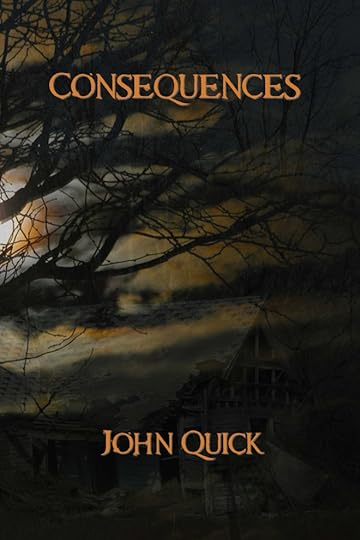
Consequences, by John Quick, is a pretty solid debut and one that hints at good things to come as Quick’s career progresses (note: Consequences is independently published, but he’s recently signed with Sinister Grin Press, so I think it’s safe to say Quick is in this for the long haul, or at least I hope he is).
What we have here is a serial killer horror story, based on an urban legend in Quick’s real-life neck of the woods in Tennessee. Back in the 70s, Crazy Freddy killed his entire family – hung them with barbed wire and skinned them alive. Flash forward to the present-day, where a group of teens have just graduated from high school are all set to have a party in the abandoned house. Guess who used to live there? Booze is drank, drugs smoked, sex had, and an accidental fire started – all of which upsets the crazed killer lurking in the dark, and off we go on a bloody tear.
The character work here is pretty impressive, particularly for a first-time novelist. I liked these kids, and found myself a bit dismayed at their inevitable ends as I was rooting for more than a few of them to pull through. But alas… Quick goes to some deliriously dark places and pulls off his scenes of torture and violence rather well. He switches up the kills enough to keep us wondering how, exactly, his next victim will suffer, keeping us on our toes even if some of the inevitable demises feel a little too inevitable.
My main complaint with Consequences is that we really never know what makes our nutty slasher tick. The Big Bad presented here is entirely human, with no supernatural gimmicks, and fans of slasher flicks or thriller novels will know where The Big Reveal is headed way before Quick announces it. The really big questions go unresolved, though. Our killer is not presented as a force of nature, but one with a backstory that I really wish I had been privy to as a reader. There’s history lurking in these pages, and I wanted to know about it. Without a deeper examination of the killer’s motives, and some sort of look at Nature vs. Nurture, the why’s behind his murder spree feels flimsy.
While I had a couple other issues with this book — the middle part gets bogged down while the teens try to figure out who’s after them, and the finale feels way too rushed — I enjoyed the read overall. This is a slasher story that wears its influences on its sleeve, and although it doesn’t break any new ground, it’s at least largely entertaining in its delivery.
[Note: This book was provided for review by Hook of a Book Media and Publicity.]
Original post:
MichaelPatrickHicks.booklikes.com/post/1421344/review-consequences-by-john-quick








June 17, 2016
Review: The Last Weekend by Nick Mamatas (Audiobook)
Review:
My original The Last Weekend audiobook review and many others can be found at Audiobook Reviewer.
The Last Weekend, by Nick Mamatas, is billed as a novel of “zombies, booze, and power tools,” which may be the truthiest bit of truth in advertising that ever was. This sucker is chock full of all three, and each are at the core of Billy Kostopolos’s world and, to a degree, his identity.
The Last Weekend is told in first-person, so we get to know Billy pretty well (whether we like it or not). Billy is a haughty writer and alcoholic who hides his many insecurities behind choice phrases he has memorized from literature, lobbing out quotes from Shakespeare and Charles Bukowski in an effort to impress and/or alienate those around him. To put it simply, Billy’s pretty much a jackass. After being scorned by his girlfriend, he’s fled west to San Francisco without much in the way of advanced planning beyond drinking himself to death. He just so happens to wake up hungover one morning in the midst of the zombie apocalypse and decides to become a particular brand of city employee known as a driller. With supplies short, drillers are equipped with, naturally enough, power drills to destroy the brains of the infected. Even though he’s mostly waiting to die, Billy is still a writer first-and-foremost, and he chases experiences in order to give his words weight, and there’s not much weightier in the world anymore than running a drill bit through some old lady’s brain pan.
Like all really good zombie stories, this book is not about the zombies per se. True, the zombies provide plenty of impetus for action and reaction, but they’re largely set dressing to gussy up the plot. The real story here is Billy and the society he lives in, as people are forced to reconnect and survive in a post-apocalyptic world of sorts (America, we learn early on, is the only country affected by this plague of the undead). Mamatas has lots to say about the nature and struggles of being a writer, as well as alcoholism and depression. This all gets wrapped up in a dark sheen of cynical, black humor, occasional bouts of wicked violence, and an interesting detour through the history of the 49ers gold rush, SanFran cemeteries and burial rites.
Narrator Kevin T. Collins delivers a terrific performance with his narration, hitting all the right alternating beats of insecure and sanctimonious to bring Billy to life. Billy may not always be the ideal protagonist to spend eight hours with, but Collins makes this an easily enjoyable listen and serves Mamatas’s material quite well. The production quality is top-notch, and the audio is clean.
The Last Weekend is an easy book to recommend for horror fans looking for a more literary ride through zombie-town, or maybe just for those who thought Leaving Las Vegas needed a good dose of the undead and power tools. I suspect, though, that if there are any other authors giving this a listen, some of the material may hit uncomfortably close. Now, if you’ll excuse me, after having spent a few days in the company of one Billy Kostopolos, I think I need a drink.
[Audiobook provided for review by the audiobookreviewer.com]
Buy The Last Weekend At Amazon
Original post:
MichaelPatrickHicks.booklikes.com/post/1420985/review-the-last-weekend-by-nick-mamatas-audiobook







June 15, 2016
Review: Burnt Offerings by Robert Marasco (Audiobook)
Review:
My original Burnt Offerings audiobook review and many others can be found at Audiobook Reviewer.
Burnt Offerings by Robert Marasco is a slow-burn of a horror novel, one that I have to admit I struggled with. For a book that’s around only 8 hours of listening time, it felt twice as long thanks to Marasco’s lethargic pacing and subtle scares.
At it’s core, Burnt Offerings is a haunted house story. Ben and Marian Rolfe, along with their son, Dave, escape the city for the summer and rent an opulent, lakeside mansion on the cheap. There’s a catch, of course, beyond the minor price-tag and the oddities of the Allardyce’s they are renting from, and Marian soon finds herself the caretaker of an unseen old woman who lives upstairs. The premise is sound, but the execution left me wanting far more than Marasco provided. See, I prefer quicker, deeper, faster cuts in my horror fiction and too much of the horror elements here revolved around a woman’s hair turning prematurely gray as she methodically cleans house. Too much of the book is even less intriguing than this. There are occasional, and well done, moments of creepiness, as well as forays into violence and madness, to interrupt the otherwise languid narrative before slipping back into a frustratingly slow story, until the last hour or so when things finally get kicked up a notch for an unsettling finale.
Burnt Offerings is a mixed bag of a book. I didn’t care much for the characters or Marasco’s plodding pace, but there is a richly developed theme about the curse of consumerism and desiring what others have. Much of the book revolves around Marian’s base need to possess what is beyond her, until she, and those she loves, is threatened by the very thing she wishes to consume. It’s a great element in the book, but one that I wish were amplified to a stronger degree in the characters. I wanted more psychological scares, more mania, more horror. I know Burnt Offerings was a notable influence on Stephen King’s The Shining, but frankly I’ll take that King book over this any day.
A part of me thinks that RC Bray, though, is a better narrator than this book needed. He has such a rich, deep voice and switches up character voices with ease and a lack of fuss. His delivery is spot-on, particularly during the rare frenetic scenes where he provides a suitable amount of gusto to bring the horror to life. In terms of production quality, there’s nothing to complain about – audio levels and clarity are consistently good throughout the run-time, and I like the little snippet of musical score that accompanied the opening and ending of this title.
While I found myself occasionally disturbed by some of the events depicted in Marasco’s book, I ultimately felt more disappointed and, too often, bored.
[Audiobook provided for review by the audiobookreviewer.com]
Original post:
MichaelPatrickHicks.booklikes.com/post/1420229/review-burnt-offerings-by-robert-marasco-audiobook







June 13, 2016
Review: Lights Out by Nate Southard
Review:
There’s something inherently, and perhaps deceptively, simple in Nate Southard’s premise that, like 30 Days of Night previously, makes you wonder why it hasn’t been done before. Whereas the Steve Niles/Ben Templesmith comic book series took the brilliant premise of vampires attacking an Alaskan town during the winter where the sun doesn’t shine for a month, Southard sets his vampire story in a prison, an equally inhospitable killing ground for these bloodsuckers to roam wildly and violently satisfy their cravings.
The result is a ridiculously fun read with a few disparate wheels that Southard keeps turning in a way that looks easy. Yes, there are vampires, but we also get a good deal of atmosphere from the prison itself and its inhabitants. There’s gang warfare, corrupt guards, the prison administration that doesn’t want to believe the growing crisis is the result of the supernatural, and the prison’s priest who realizes what’s happening and wants to stop the growing spate of murders.
While the vampires are interesting creatures in their own right – and blessedly ugly, non-sparkling, vicious underground killing machines – there’s enough human drama to occupy the daylight hours and keep the interest level high. Some of the prisoners are downright awful, others less so, and a couple that even earn a begrudging nod of respect and who are fun characters. While they fit certain prison archetypes (the Sicilian mafia boss, the Latin and black gang members, and the hardcore racist Aryan Nation trash), Southard fleshes out these characters well enough that they each, mostly, possess various shades of gray rather than being merely stereotypical cutouts and stand-ins to idle the time in between vampire attacks.
But, this is a vampire novel, straight-up, and one other thing Southard does very well is violence. There’s plenty of gore to go around, from brutal shivings to throat-ripping nastiness that culminate into a wild finale. Fun stuff!
If you’re looking for a dark, gruesome vampire story, this book needs to be on your reading list – it’s good – damn good – and one of the most flat-out enjoyable books I’ve read thus far in 2016.
[Note: This review is based on an advanced copy provided by Sinister Grin Press via Hook of a Book Media and Publicity.]
Original post:
MichaelPatrickHicks.booklikes.com/post/1418689/review-lights-out-by-nate-southard







June 10, 2016
Review: The X-Files – Trust No One (Audiobook)
Review:
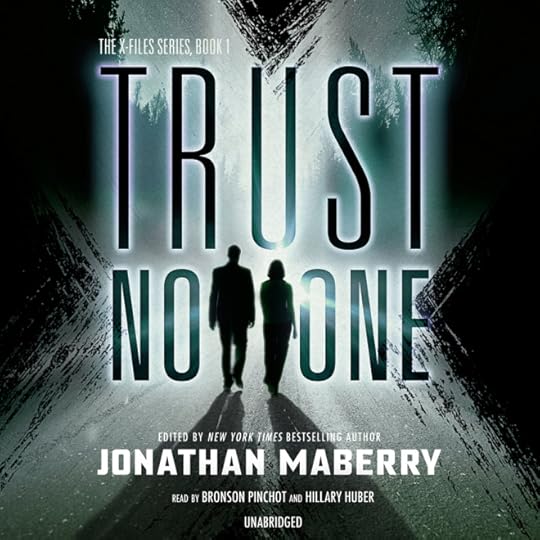
My original The X-Files – Trust No One audiobook review and many others can be found at Audiobook Reviewer.
I’ve been a fan of The X-Files since it premiered on FOX way back in 1993. I remember, quite fondly, watching the premiere with my mother and then, later, with friends as a trio of us creeped-out teens went for a walk around the neighborhood in the dark following the initial airing (and only airing on FOX) of the episode “Home.” Wandering the quiet, moonlit streets had not felt like the best of ideas so soon after meeting the Peacock family. The X-Files was one of the few shows I found myself religiously tracking on then-young America Online message boards, and then, many years later, I found myself tweeting #XFiles3 along with many other fans, begging 20th Century Fox for a third movie to wrap things up and properly celebrate the show’s twentieth anniversary. A third movie never happened, but the TV show did get a small reboot on-air, with the promise of more to come. I found myself in a rare spot for a man schooled by The X-Files and Agents Mulder and Scully, as we appeared to be recapturing the cultural zeitgeist that gave rise to the series and suddenly had new material featuring the intrepid agents in the form of comic books from IDW, a fresh batch of TV episodes, and, now, this first book in a series of anthologies – I found myself believing and trusting that The X-Files was alive once again.
Trust No One, edited by Jonathan Maberry, presents fifteen short stories from various authors, each opening up a new X-Files case that finds our intrepid FBI’s Most Unwanted chasing after, or being on the run from, paranormal activity and black-suited government agents of ill repute, some of whom leave behind the strong odor of cigarette smoke. Tim Lebbon starts the book off in strong fashion with “Catatonia,” about a group of missing teens who have returned and are catatonic. My favorite, though, was Brian Keene’s “Non Gratum Anus Rodentum,” a Skinner-centric story that involves were-rats and his history in Vietnam. Like most other anthologies, Trust No One is a mixed bag. I didn’t love every story here, but there are a number of truly worthwhile X-Files investigations that deserve exploration. Other standouts includes “Paranormal Quest” by Ray Garton and “The House on Hickory Hill” by Max Allan Collins, a pair of haunted house stories with a welcome twist in each. Kevin J. Anderson, who wrote a number of The X-Files books back in the day, is a welcome and familiar voice to the anthology with his story “Statues.”
Tackling these stories are narrators Bronson Pinchot and Hillary Huber, whose duties are divided between Mulder’s and Scully’s points-of-view. Pinchot carries the bulk of this book’s fifteen-plus hours run-time, but the two narrators occasionally work together on a single story that shifts between Mulder and Scully, and Huber narrates the handful of Scully-centric stories solo. Both Pinchot and Huber deliver a solid enough narration, with Pinchot showing a dynamic range in character voices and regional accents. And while Pinchot handles Mulder’s deadpan dialogue well enough, it does take some time getting used to new, different actors inhabiting the roles that Gillian Anderson, David Duchovny, and supporting cast members like Mitch Pillegi and William B. Davis, have made so iconic and familiar. On the production end of things, I have no complaints. The sound quality is fine, and the audio is crisp and clean, making for an easy listen.
Trust No One may not completely capture the glory days of The X-Files, but it does provide a number of intriguing avenues for investigation. The best stories here were a delightful reminder of why I fell in love with this series and these characters way back when, and perfectly capture the tone of the series, balancing the agents’ quirkiness and skepticism, and humor and horror. Those stories alone make this worth the price of entry.
Buy The X-Files: Trust No One At Amazon
Original post:
MichaelPatrickHicks.booklikes.com/post/1417674/review-the-x-files-trust-no-one-audiobook







June 9, 2016
Review: Return of Souls by Andy Remic
Review:
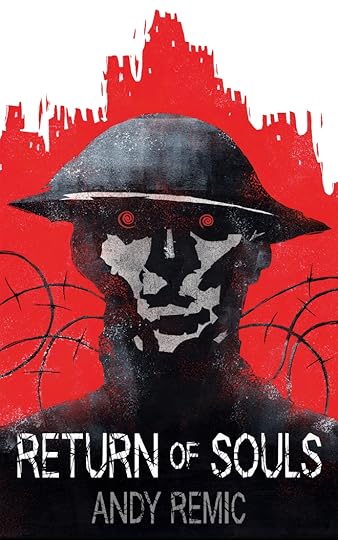
We are now two books into Andy Remic’s ongoing A Song For No Man’s Land series, and I have to admit that I’ll be taking a pass on the rest. I’m just simply not connecting to the material and will have to chalk it up to the old ‘it’s not you, Mr. Remic, it’s me’ excuse.
You see, I’m not much for traditional fantasy. I slogged my way through Tolkein’s Lord of the Ring series and felt rather unrewarded (the movies are better, as far as I’m concerned), and forced myself to make it through Steven Erikson’s Gardens of the Moon because of all the praise that Malazan series has garnered. There are exceptions of course – I’m a giddy sucker for George R.R. Martin’s A Song of Ice and Fire, and am always on the lookout for new R. Scott Bakker books. I have a much easier time with urban fantasy series, like Chuck Wendig’s Miriam Black novels.
All of this is a long-winded way of my trying to explain that I thought Andy Remic’s latest novellas would be up my alley, with their heavy on World War I and light on fantasy elements approach. Alas, it’s not meant to be…
Although Return of Souls, and it’s predecessor, A Song For No Man’s Land, are novella length stories, I’ve felt they were both too long and unnecessarily plodding. Each book has been divided into four parts, with the first 3/4 devoted to Jones and his time on the frontlines fighting German soldiers and beastly creatures known as walriders. The last quarter, though, is when Remic decides to take a sharp and sudden turn, introducing new characters to eat up the page count, hopping back and forth in his narrative between newbie cast and the old-hands, in order to set up the next book. This is a pet peeve of mine.
When I finished the prior entry in this series, I was curious to see where the story would go. Unfortunately, I found myself hitting a wall before the half-way mark into this latest entry and was ready to move onto some other book instead. Remic introduces a new love interest for Jones to pine after, and it mostly serves to grind an already slow narrative to a near halt. I finished it, merely because these are short books (even if they subjectively feel much longer to me), but can’t muster up the enthusiasm to rate it any higher than a 3-star read – it’s an OK story, and while I certainly didn’t hate it, Return of Souls failed to connect with me in any way past a bit of a time killer.
Fantasy fiends may have a better time with it, or those who don’t mind a war story with rather languid pacing. This book, and this series taken as a whole thus far, just isn’t for me.
[Note: I received an advanced review copy of this book from the publisher via NetGalley.]
Original post:
MichaelPatrickHicks.booklikes.com/post/1417276/review-return-of-souls-by-andy-remic







June 3, 2016
Review: A Song For No Man’s Land by Andy Remic
Review:
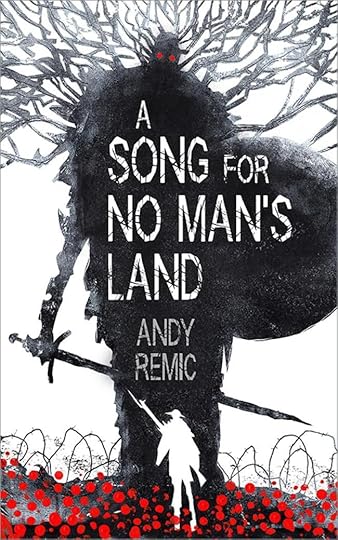
I’ve spent a while trying to gather my thoughts on this book and what to say about, but I can’t help but surmise that it’s a story with more pages than content. Quite a lot of it feels like a song stuck on repeat, but one that occasionally and magically teases you with bits of other important and interesting notes before returning to the same-old, same-old.
Set during World War I, we get plenty of combat scenes as our lead protagonist, Robert Jones, fights in the trenches, alongside his friend and fellow soldier, a big man with a big personality named Bainbridge. They have an easy friendship that becomes strained as the war goes on, each man seeing their share of injuries and…other things. Strange things. Monstrous thing. There’s…something…lurking in the woods and haunting the battlefields, although too often this feels like a minor footnote in Remic’s narrative until the big finale and a resolution that leads neatly into the larger auspices of this series.
While there are plenty of great depictions of life on the front-lines of The Great War, I couldn’t help but feel like there was something missing. The focus on the battles, too, began to feel a bit stale by book’s end, and I can’t hep but wonder if Remic was stalling a bit to fill a word count requirement.
That said, the final chapter provides a nice bit of illumination and meat to the mythological structure underpinning the nature of the war in Remic’s hands, and sets the stage for the next book. A Song For No Man’s Land, in its resolution, feels more like an appetizer for Return of Souls, which I’ll be diving into shortly. I suspect there’s a promising series to be had here, but at the moment I’m enjoying the ideas (dark but intermittent bits of fantasy set against the front-lines of WWI) more than the execution.
Buy A Song For No Man’s Land At Amazon
Original post:
MichaelPatrickHicks.booklikes.com/post/1414678/review-a-song-for-no-man-s-land-by-andy-remic







June 1, 2016
May 2016 Read & Reviewed Roundup
May 2016 saw me cross the 50 Books Consumed mark for the year, so here’s a look back at the month that was. (Small caveat – some of the audiobooks listed here were actually “read” in April, but the reviews were not posted until May. I’m including them here based on their date of publication, and because I’ve already done an April 2016 Reading Roundup. Bloggers prerogative and all that…)

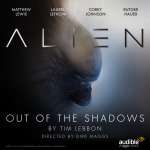
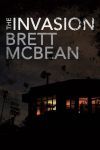
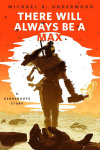
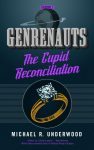
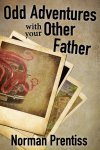

Alien: Out of the Shadows (audiobook) by Tim Lebbon
A Head Full of Ghosts by Paul Tremblay
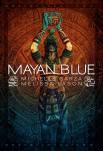
Mayan Blue by Michelle Garza and Melissa Lason
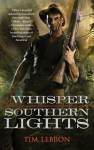
A Whisper of Southern Lights by Tim Lebbon
Strike (HIT #2) by Delilah S. Dawson (audiobook)
The Invasion by Brett McBean
There Will Always Be A Max (A Genrenauts Story) by Michael R. Underwood
The Cupid Reconciliation (Genrenauts, Episode 3) by Michael R. Underwood
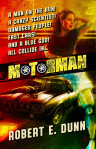
Motorman by Robert E. Dunn
Odd Adventures With Your Other Father by Norman Prentiss
The Adventures of Tom Stranger, Interdimensional Insurance Agent by Larry Correia (audiobook)
Company Town by Madeline Ashby
Beyond The Ice Limit by Douglas Preston and Lincoln Child







May 31, 2016
Review: Beyond The Ice Limit by Douglas Preston and Lincoln Child
Review:
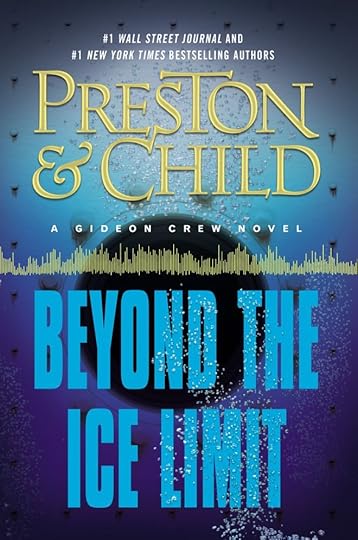
The Ice Limit was one of my earliest and fondest-remembered books from Douglas Preston an Lincoln Child, so when I learned of the sequel, Beyond The Ice Limit, I was on this sucker like white on rice. As it happens, Beyond The Ice Limit also acts as Book #4 in their Gideon Crew series. I’ve not read any of the previous Crew books, but still felt at home in this novel.
I will admit, though, that it took me a little bit of time to warm up to Beyond The Ice Limit. The first twenty percent or so of the book is devoted to getting the plot up and running, acclimating the crew to life on board the research vessel Batavia, and shoehorning in a romance between Gideon and Alex, one of the ship’s rare female members. Romance, it should be noted, is not the biggest strength of Lincoln and Child, but you know it’s love at first sight for Gideon and Alex because of the way her breasts press against the ship’s railing when she leans out the deck to enjoy a drink and watch icebergs, and the way Gideon’s eyes linger on her ass and breasts in virtually every time they cross paths. Gideon is apparently also a magician – a throwaway trait that Lincoln and Child exploit for exactly one whole scene before dropping it like a concrete block into the ocean – and, lo and behold!, so is Alex! So see – romance!
But no faster can you start humming the theme from The Love Boat, and certainly no faster than Alex can swear she won’t be involved in a shipboard romance only to drop trou with Gideon a few pages later, and just in time to prevent Lincoln and Child from having to figure out some method of pesky character development, it’s time to contend with the alien menace they’ve all been recruited for and the authors can finally get down to telling the kind of story they are actually good at and quite well known for. And the nature of the alien threat is?! … a tree.
It turns out that the meteorite at the center of The Ice Limit was less a meteor and more of a seed, and it has taken root in the Antarctic seabed. And this sucker is pretty massive, which means certain doom for a particular planet we’re all fairly attached to.
Snark aside, I actually found myself enjoying this book quite a bit. Granted, I spent roughly the first quarter of it wishing I were instead reading Warren Ellis’s comic book series TREES, but it’s around that post-quarter-mark that Lincoln and Child stop mucking about and get their act together, finally figuring out the story they want to tell, and that many readers have demanded since finishing The Ice Limit years ago.
This is a story that hits a large number of my particular sweet spots – we’ve got a confined and claustrophobic setting (the RV Batavia) in the midst of a desolate area (Antarctic waters), an alien menace, smart people getting outsmarted by more primal forces and then recovering their wits enough to strike back, and a continual escalation of threats with some wonderfully gory and unsettling “oh crap!” moments. There’s plenty of scientific posturing going on and plausible-enough sounding threats that serve to take the alien threat to the next level. I dug it all this stuff quite a lot.
But still, Beyond The Ice Limit has a few particular problems. Most of those problems are front-weighted, so if you can wade through the first quarter of the book you’re pretty golden. I’m not terribly thrilled at the author’s choice of fridging their most prominent female character in order to compel their male lead into action – quite frankly, this is a tiresome, worn-out staple that we (particularly we male authors) should be moving away from. The big finale, the one the authors spent several hundred pages leading up to, is sadly anticlimactic, to the point that Lincoln and Child spend much of their epilogue telling us about it when they really should have been showing us a chapter or two previously.
Could this book have been better? Yeah, I think so. Does it make me want to check out all those Gideon Crew books I missed? No, not really. I was not so captivated by this character that I’m dying to know what else he’s been up to, or what comes next for him, but I’m sure I’ll get to them one of these days when I’ve nothing else more immediately interesting in my TBR pile and I’ve gotten caught up on all those Pendergast books I’ve missed along the way. Thankfully they’re not required reading, and although this title ties into that character’s on-going series, this book is pretty much a stand-alone title. Did I at least have fun? Oh yeah. Quite a lot. A surprising amount in fact!
And it’s because I had so much fun that I’m willing to overlook some of the weaknesses I encountered here. I can overlook a lot when I’m enjoying the ride, and although I harped on this book for having a pretty mundane and craptasticly rocky start, there’s roughly 75% of a really good sci-fi horror book right here. Plus, I’m a sucker for high-seas horror, particularly when that horror is set in the more extreme regions of Earth. I got to read about a crazy alien invasion in the Antarctic with some awesome gory scenes that, in turn, reminded me a little bit of The Thing and Invasion of the Body Snatchers. That’s pretty cool.
[Note: I received a copy of this title for review from the publisher via NetGalley.]
Buy Beyond The Ice Limit At Amazon
Original post:
MichaelPatrickHicks.booklikes.com/post/1407721/review-beyond-the-ice-limit-by-douglas-preston-and-lincoln-child







May 25, 2016
Review: Company Town by Madeline Ashby
Review:
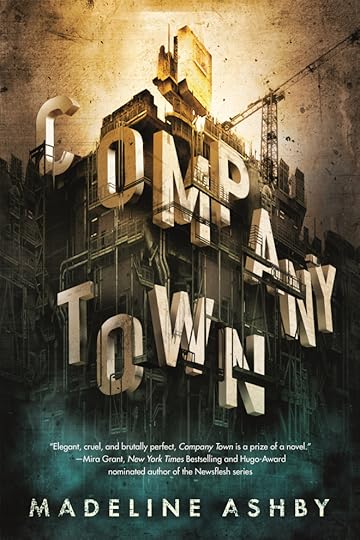
…and just like that, Madeline Ashby has instantly made it onto my list of must-read authors.
Company Town has all the trimmings of things I love. There’s a good dash of sci-fi with some near-future razzle dazzle cybernetic augmentation, genetic engineering, Singularity conspiracy, and a nice heaping of serial killer mayhem to round it all off. The setting is wonderfully impressive (and forms the basis of that kick-ass cover!) – the titular Company Town is a city-sized oil rig off Newfoundland that has just been bought by the Lynch Corporation.
Hwa, a body-guard for the city’s sex workers, has been brought on board to protect the youngest of the Lynch heirs after a series of death threats are made toward the boy. Hwa is a wonderful character in her own right, and deeply layered. Afflicted with Sturge-Weber, half her body is stained red; this genetic abnormality perfectly reflects and informs her personality. She’s an outsider in Company Town both because of her physical imperfections and her choices. She’s one of the ultra-rare denizens of Company Town to have absolutely no genetic modifications or cybernetic upgrades, which makes her an outcast. Her employment with Lynch only serves to further separate her from those she was once close to. She refers to her physical affliction as a stain, but it’s a stain that runs bone-deep and straight up into her psyche as she struggles against being an outcast and fighting to remain at arm’s length from the world around her. In Ashby’s hands, Hwa is perfectly defined, as interesting and she is engaging.
Company Town is a great read, but primarily because of the characters. There’s plenty of great ideas on display here, and plenty of room for future installments should Ashby be planning a series of this, but it’s the cast and their relationships to one another that, first and foremost, make this book truly compelling.
[Note: I received an ARC of this title from the publisher via NetGalley.]
Original post:
MichaelPatrickHicks.booklikes.com/post/1405895/review-company-town-by-madeline-ashby