Michael Patrick Hicks's Blog, page 40
July 22, 2016
Review: A Time of Torment by John Connolly
Review: 

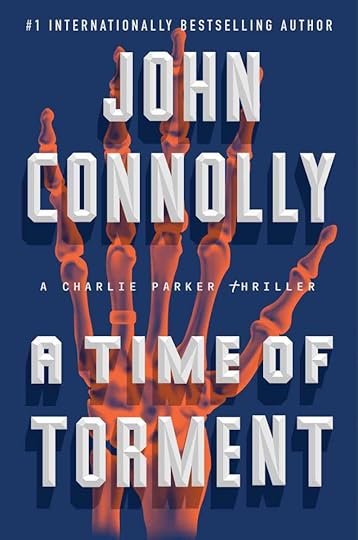
There are a few authors whose novels are my own personal equivalent to comfort food. Stephen King is one; John Connolly is another. Every time I sit down with one of their stories, I know I’m in good hands, and their words bring a certain warmth to my soul. Connolly’s Charlie Parker series, in particular, is like a big bowl of beef stew or mac & cheese eaten beside the fireplace and in the company of good friends. Over the course of fourteen novels, I consider Parker, Angel, and Louis very good friends, indeed. And, jeez, do I ever eat up these stories!
Connolly is a superb storyteller, first and foremost. His prose is both simple and elegantly constructed, and although he sometimes wanders off into tangents of both local and personal history for his settings and characters, I certainly don’t mind reading those words even if I wonder at the necessity of their inclusion. Would A Time of Torment be better if some tangential segments were shortened? I suspect it wouldn’t be by much, frankly, and, for me, it’s a bit of the charm Connolly brings to the table. You can tell this man does his research, and he’s eager to share what he’s learned. And when you tell a story as well as Connolly, well…the more the better, in my opinion. He’s a craftsman, and one of the best in the business as far I’m concerned.
As far as A Time of Torment is concerned, I feel a bit of sympathy for readers encountering this author and these characters here for the very first time. This is not a book for the inexperienced, and the Parker novels are very much a Read In Order series. This particular volume builds off the events, story, and character threads established in the prior three Parker thrillers, which themselves are shaped by the supernatural mythology of the preceding volumes. Characters like The Collector and Parker’s daughter, Sam, who make brief appearances here will likely leave the uninitiated scratching their head as to their importance. Those who have been around since the beginning, though, will be much more appreciative of their roles in the overarching mythology of the series as a whole. My advice, as always, to anyone who hasn’t read Connolly yet is to start from the very beginning with Every Dead Thing.
Plot-wise, Parker is hired by a recently released prisoner, who quickly goes missing. Parker’s subsequent investigation brings to his attention a small cult-like community known as The Cut, and their religious idol, The Dead King.
There’s echoes of Prosperous, the community featured in The Wolf In Winter, but not so much that it feels like a total retread. There’s enough differences in The Cut’s actions, history, and characters to differentiate them from Prosperous, and, in some ways, make them a dark mirror reflection of an already nasty bunch. They’re darker, and, to a degree, one might even say more primitive. Then again, so, too, is Charlie Parker. It’s the events of that prior novel that have helped shape the subtle alterations in Parker’s persona and methods. The detective has become a more aggressive hunter, very much so a wolf in his own right. And the Cut is certainly worthy of his particular brand of attention.
A Time of Torment is a bit slower paced than previous installments, but not detrimentally so. If anything, for me, it just means it takes a bit more time to savor and enjoy, and I was left feeling perfectly satiated. Now begins the wait, once more, for the next book…
[Note: I received an advanced copy of this title for review from the publisher via NetGalley.]
Buy A Time of Torment At Amazon
Original post:
MichaelPatrickHicks.booklikes.com/post/1438660/review-a-time-of-torment-by-john-connolly








July 18, 2016
Crazy Freddy: The Legend Behind Consequences by John Quick
Today, I’ve got a guest article from a new up-and-coming horror author, John Quick. John made his debut earlier this year with his slasher movie-inspired horror novel, Consequences (you can read my review here). One of the elements of Consequences that I greatly enjoyed involved a character named Crazy Freddy, who, in the 1970s, murdered his family in such grisly fashion that he was then cemented in local history as an urban legend. Watch out, or Crazy Freddy will getcha!
Well, it turns out that Crazy Freddy is, indeed, a real-life urban legend and the inspiration for John’s novel. Read on, and check out John’s photos of Crazy Freddy’s stomping ground below. (Thanks for making the drive out there, John – I’m glad you made it back in one piece!)
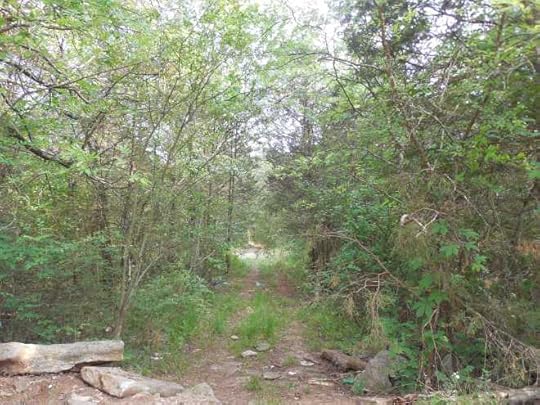
I was in high school when I first heard about Crazy Freddy. I can’t remember the conversation up to that point, but—as in the book—I think it was part of a discussion about where to have a party that weekend. Someone mentioned “heading out to Crazy Freddy’s”, and was shot down. I asked one of my friends where that was, and was told it was a place out by the lake where a guy went nuts back in the fifties and killed his family. He’d hung them up with barbed wire and skinned them alive, it seemed, and his ghost was supposed to still be wandering around out there, doomed because of what he’d done.
Like I said, I was in high school, and since I was a teenager and knew everything, my immediate reaction was to laugh it off. After all, this was the first time I’d ever heard of such a thing, and I’d lived in this area my entire life. Couldn’t possibly be real. Right?
My friend insisted it was, and I kept denying, and eventually we moved on to other things. He never retracted his story, and I never fully believed it, and so we settled into a routine with it.
The place he talked about did actually exist. Since it was pretty far off the main roads, people would occasionally dump things out there, so whenever we would have a party that required a bonfire, a trip to Crazy Freddy’s was in order to collect things to burn. Tires worked the best, and I shudder to think how many nights I was partying next to burning rubber, inhaling those probably toxic fumes. Might explain some things, though….
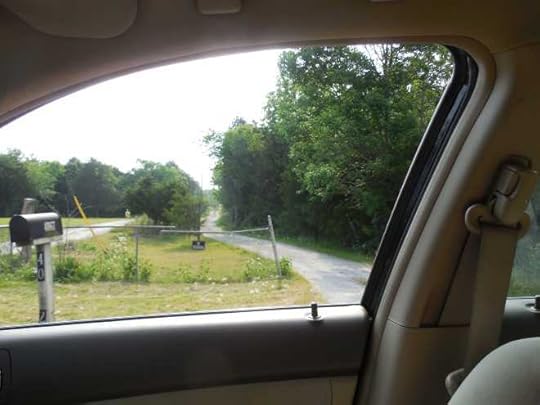
Other things about the story as it eventually appeared in my mind were real as well: namely the old man who lived at the turn-off onto the gravel road that led back to the place. If there were lights on at that house, you never went down to Freddy’s. If you did, you were lucky if all that happened was he called the cops on you. If you weren’t so lucky and he was feeling especially brave, he would come down and run you off with a shotgun in his hands. But if you were careful, you could get down there and out again without being seen.
This even got mentioned in the book itself:
“It is,” Austin confirmed. “But we came up with a better idea. We’re going out to Crazy Freddy’s.”
Christopher stopped walking and turned to face Austin. “Tell me you’re kidding.”
Austin smiled. “What, you scared or something?”
“Of that old legend? No. Of getting shot by that nutcase that lives at the end of the street? Yeah, a little.”
…
The shack was still there; Christopher had even seen it on occasion when he was younger and they would head out there on a dare or something. He’d never seen any ghost though. What he had seen was the old man who lived at the corner of the main road and the gravel road that led to that shack. He supposed the old coot was tired of kids mucking around in his back yard, chasing ghost stories. The last time Christopher and a couple of his buddies had taken a freshman out there to scare the shit out of him, the old man chased them off with a shotgun. That had been two years ago, and he had no desire to repeat the experience.
I never saw Freddy’s ghost, but that doesn’t mean the place wasn’t strange. The creek behind the house that I mentioned in the book is there, and on bright nights, the moon would reflect off the water and create strange shapes on the trees, which might be where all the talk of a ghost came from. Back then, the woods would almost close in on you as you got closer to the end of the gravel road, giving the place a claustrophobic feel. And without fail, if you made it down to Freddy’s and back, once you turned onto the semi-main road you could look behind you and see what looked like the headlights of an old truck following you. After a mile or so, they’d disappear. Note I didn’t say “the truck turned off” or anything like that; they were just there one second and not there the next. Logically, it could have been the old man trying to get the license number of the vehicle you were in, but when you’re a teenager going somewhere you shouldn’t, where does logic fit into the picture?
The last time I ever went there as a teenager, I was lucky and it was the cops that came to run me off. They asked what I was doing, and I told them I’d heard the legend of Crazy Freddy, and was curious if it was true or not. By this point, I’d seen the “ghost lights” after all, so in a way it was true. That wasn’t the only reason I was there, but you can fill in the blanks for why a teenager might be in a secluded area without my prompting, I’m sure. The cops were actually pretty cool about it, and while they never confirmed or denied the legend (adding to the mystery in my head, naturally), they did inform me that I was on private property and the guy at the end of the road didn’t appreciate kids ignoring that fact. They watched as I turned around and left, and I stayed away for over twenty years.
Let’s fast-forward.
That legend stayed with me as I grew to adulthood, got married, and had kids of my own. I would pull it out on occasion while we were camping as a “real-life” ghost story, always embellishing to make it scarier. I think some unconscious part of me realized it would make a good book, but I never thought too much about it.
Then I read The Dark Ones by Bryan Smith. Some of the things he mentioned seemed extremely familiar to me, so I reached out to him and discovered that he’d grown up not far from me, and had actually lived very close to where Crazy Freddy’s was. I asked if that legend had played a part in The Dark Ones, and he said it must have been after his time. The pieces clicked; the story was still waiting to be told.
My next vacation from the day job, I sat down with my laptop and a bottle of Bushmill’s and started writing the opening scene, where Judy comes home to discover something wrong. For a writer who drinks while they write, there’s a magic point where the alcohol has lubricated the words and helped them flow. I went a couple drinks beyond that. When I read what I’d written the next day, I discovered I’d spent five pages describing the front door. Needless to say, I deleted it, and shelved the idea.
But it never went away. When I decided I was going to be serious about writing more recently, it was the first idea that came to me. I sat down and tried again, on another vacation, and this time, it worked.
I did things differently beyond keeping the whiskey on the shelf, though. Namely, I researched it. Surprise, surprise, but as best I could tell, there was no real “Crazy Freddy” in this town. I’d been right to disbelieve. That just meant I could do whatever I wanted with it. The result is Consequences.
And in case you’re curious, yes, Crazy Freddy’s is still around. The legend hasn’t been told in a long, long time—at least not to my knowledge—but that winding gravel road is right where it’s always been, untouched by modern development. The old man is long gone, too, though I doubt he met the same fate that I gave him.
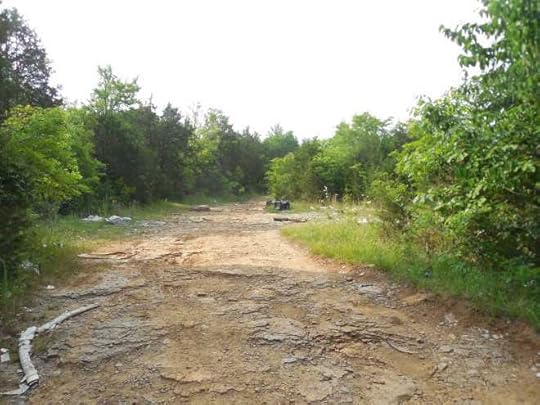
My wife asked about the place as I was gearing up to release the book, not realizing it was real, and since we didn’t have anything in particular to do that day, I took her out there. It’s changed over the years, in many ways for the worse (I wouldn’t recommend attempting the trip without a four-wheel drive), but driving back out there was like going back in time despite the changes. One thing that didn’t change? It’s still creepy as hell, especially as winter nears its end, as it was when we went back. There’s no shack, but then, there never was one, at least not that I ever saw. Who knows? Maybe a bunch of kids accidentally burned it to the ground. Maybe Crazy Freddy was watching.
And maybe I never heard about it because he got to them first.
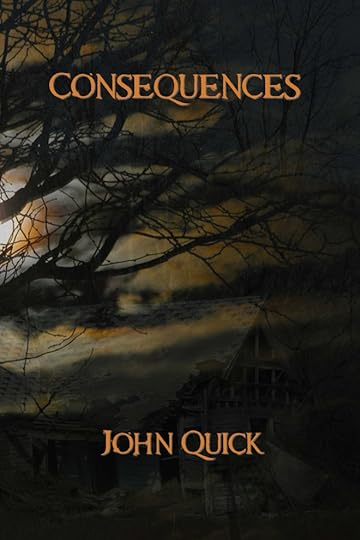
About Consequences
It was a summer of blood and terror…
For seven friends, graduation night was supposed to be a time to celebrate the end of their high school careers and the start of their real lives.
But when an accident while partying at the local haunted house results in tragedy, they find themselves being hunted by a maniac for whom the stakes are decidedly personal.
Thirty years ago, Crazy Freddy hung his family up with barbed wire and skinned them alive. Now, the survivors can only hope for such a kindness as they are forced to accept that for everything they do, there will be CONSEQUENCES.
About the Author
 John Quick has been reading and writing scary and disturbing stuff for as long as he can remember, and has only recently begun releasing some of his creations upon the world.
His debut novel, Consequences is available now as a paperback or digital eBook. Watch for his next novel to come from Sinister Grin Press in 2017. He lives in Middle Tennessee with his wife, two kids, and three dogs that think they’re kids.
When he’s not hard at work on his next novel, you can find him online at http://johnquickauthor.blogspot.com/ or on Facebook and Twitter.
To learn more about John Quick and his novel, Consequences, follow along on his blog tour with the hashtags: #Consequences #summerofterror #crazyfreddy. And be sure to check out the publicity page from Hook of a Book Media and Publicity for more news and updates.







July 13, 2016
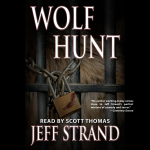
Review: Wolf Hunt by Jeff Strand (audiobook)
Review: 
My original WOLF HUNT audiobook review and many others can be found at Audiobook Reviewer.
I imagine Jeff Strand’s elevator pitch for Wolf Hunt being along the lines of ‘The Sopranos Meet The Wolfman.’ If this intrigues you, then it’s really about all that needs to be said of Strand’s funny, bloody werewolf romp. Frankly, it’s all I would have needed to be hooked straightaway. If this does not intrigue you, then I’m afraid I can’t help you.
George and Lou are not exactly made guys, and deny even being mobsters at all, but they are clearly some well-connected thugs who have little problem breaking thumbs over debts owed to their bosses. They’re tasked with transporting a bad dude named Ivan across Florida to a crime lord, with Ivan locked in a cage. Strand sets up his story in a fun way, with a lot of dispute over Ivan’s credentials as a werewolf and plenty of is-he or isn’t-he back and forth (George and Lou aren’t buying it, and Ivan has fun stringing them along). Things quickly go south, and after saving and accidentally kidnapping Michelle, the thugs are in a race to stop Ivan before he can wreak all kinds of carnage across the Sunshine State.
Strand does a beautiful job balancing wit with werewolf violence, and one early scene in particular stands out as being a gruesomely effective showcase to Ivan’s psychopathy, while also solidifying the bloody courtship between he and George. Although Wolf Hunt has a number of gory instances, there’s a certain lightness to the work as a whole thanks to a lot of humorous banter and a handful of characters that are actually fun to spend seven hours with.
Besides Stand’s quirkiness, a lot of this fun is owed to narrator Scott Thomas, who seems to be enjoying himself quite a bit and effortlessly brings the material to life. He provides each character with a distinct voice and speech pattern, which makes it easy to discern who is saying what during stretches of dialogue, and keeps the listen fresh throughout. Thomas hits all the right notes and delivers an excellent performance. The production values are fine, too, and Thomas’ work comes through without a hitch.
If you’re looking for a genuinely fun and comedic horror listen, Wolf Hunt definitely stands out from the pack.
[Audiobook provided for review by the audiobookreviewer.com]
Original post:
MichaelPatrickHicks.booklikes.com/post/1434609/review-wolf-hunt-by-jeff-strand-audiobook







July 12, 2016
Review: Hell Divers by Nicholas Sansbury Smith
Review:
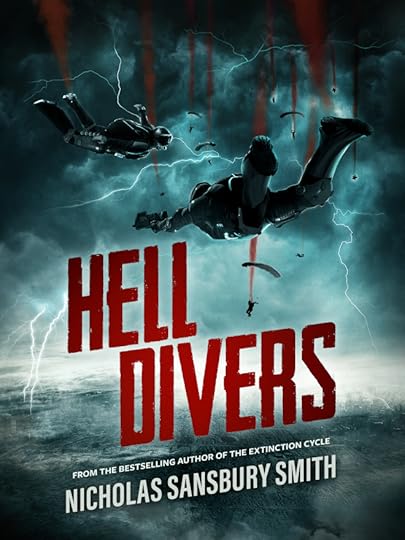
After five Extinction Cycle novels (and a sixth on the way!), Hell Divers, the first installment in a brand-new series from Nicholas Sansbury Smith, is a refreshing change of pace. While it has all the hallmarks of Smith’s usual brand of brimstone and bullets, its premise goes a long way in making this a distinct entry in this author’s oeuvre.
In both the Orbs and Extinction Cycle books, Smith approaches his doomsday scenarios as fresh threats to humanity on the brink of destruction with The End Of The World As We Know It just right around the corner or rapidly in progress. In Hell Divers, the apocalypse has already happened and, two hundred years after Trump’s presidency later, mankind has been reduced to roughly a thousand souls spread out across two airships, the Ares and the Hive. The Earth below them is a radioactive wasteland, the skies treacherous with the constant threat of electrical storms. After Ares crashes, the Hell Divers (think futuristic paratroopers with wildly short lifespans) aboard the Hive are sent on a rescue mission. Soon enough, they find out the ground is not as lifeless as they thought, as marauding bands of vicious creatures they dub Sirens are out to get them.
One thing Smith does exceptionally well are action scenes, and there’s plenty of those to go around here as Xavier Rodriguez (otherwise known as X) and his team do battle across frozen wastelands, and the shipboard Militia stave off homegrown threats, as well as more elemental troubles. When the Divers do their diving, there’s some legitimate excitement to the sequences and Smith does a terrific job describing this horrific adrenaline rush. Ground combat is equally fierce, although the Sirens could use a little more oomph. As a fan of the Extinction Cycle series, I didn’t find these mutant killers quite as intriguing as the Variants. However, with two more books on the way, Smith certainly has plenty of space left to flesh out the concepts introduced here.
On the character front, X is the strong dashing male hero, and Captain Ash is the strong-willed woman in charge of the Hive – both are great characters, and get their own moments to shine. I’m definitely looking forward to reading more about these characters, as well as their lives aboard ship, and the ten-year-old Tin has all the makings of a heroic prodigy if he survives all the threats life in the skies brings.
There’s a lot about Hell Divers that feels comfortably familiar, but Smith freshens it up with a new coat of paint and shakes up the formula of his previous series enough to avoid feeling derivative of his other apocalyptic military thrillers. I think he’s on to the start of something that could be pretty bold here, and I’m excited to see what he has in store for the Hive, and readers, with future installments. Onward and upward!
[Note: I received an advanced copy of this title for review from the publisher via NetGalley.]
Original post:
MichaelPatrickHicks.booklikes.com/post/1434426/review-hell-divers-by-nicholas-sansbury-smith







July 9, 2016
Mortality
This is a pretty long and personal post. It’s really just a way for me to organize my thoughts and try to cope with some recent tragedy. Writing is what I do and it helps me process things, and I’m in serious need of some hardcore mental processing at the moment. I lost my mother yesterday, and this post is an effort to try and grapple with that loss.
A little past 8:30 Friday morning, my father called. Mom had stopped breathing and was being rushed by ambulance to the hospital. I called my wife, who was at a doctor’s appointment, and we agreed to meet at home to pack up whatever we might need for us and our nine-month-old. Mom and Dad lived north of us, a roughly five-hour drive, and we were finally able to hit the road at 12:00 p.m.
Mom died around 12:30. I had hoped to be able to see her one last time before she passed. I’m trying to steel myself for when I see her next at the funeral home. Sitting now in my parent’s living room, her absence is notable, even as my son’s laughter fills the silence as he bounces around in his jumper.
The week Benjamin was born, Mom broke her hip. She missed his birth, and we made tentative plans for Christmas, thinking she’d be mobile enough that her and Dad could come downstate and finally see their grandson in person for the first time. Her physical therapy was going slower than expected. She was recovering and doing well, but she wasn’t physically ready for such a long car ride. Then there were complications with the hip replacement that resulted in her needing a second surgery to replace the replacement. Physical therapy started over again, and somewhere along the line a nerve in her leg was damaged leaving it largely immobile.
Mom was a tough woman. She would never admit when she had a health problem. Anytime she was noticeably sick, she passed it off as being her allergies. When she fell and broke her hip, she refused to go directly to the hospital because she was, in typical Mom fashion, “fine.” She just needed to lay down for a little bit, nothing more. On the few occasions that Dad did have to force her to go to the hospital, she was a massive brat. He’d never hear the end of it, and she’d be snotty with the medical staff. It was always very, very clear that she did not want to be bothered with a hospital stay and that she was being forced to do something clearly against her will. After three days of being laid up in bed with a broken hip, she finally caved and admitted maybe something might be wrong.
For whatever reason, she never admitted, on her last day with us, that maybe something might be wrong again. Her heart stopped Friday morning due to sepsis from a perforation in her bowels (I’m unclear on the cause, but this may have been from a stomach ulcer). According to the doctor, she should have been in quite a bit of pain. If she was, she never admitted it. Instead, she kept it hidden and dealt with it, or simply flat-out denied it to herself and everyone around her.
She was resuscitated long enough to be placed on a ventilator. Her heart was stopped and restarted four times over the course of the early morning. Surgery to repair the perforation was not an option; she was too weak and too unstable to survive it. If she survived, though, it would likely be with brain damage. A few hours later, a massive heart attack struck. She was gone.
I have a few consolations in all this. She didn’t suffer, for one (at least according to the doctors, and as far as we know…but really, the only who knows that can no longer tell us. We can only guess or presume). She wouldn’t go on with a reduced capacity in life, or live with brain damage, or be hooked up to a ventilator long-term in a vegetative state. These are not things she would have wanted, I don’t think, given her stubbornness and strong-willed nature. And, a few months ago, she was able to meet her grandson, which I’ll be forever grateful for.
Still unable to travel, we made the trip to them on Easter. Mom got to meet Benny, and he was finally able to put a face to the voice he’d heard over the telephone. He’ll never remember it, of course; he was far too young at only six months for that to stick. But I’ll remember it. And I’ll remember the smile on both their faces, and the laughter they shared.
As it turns out, that was also the last time I got to see Mom. She was frail, weakened, thinner than I’d ever seen her. The hip damage and surgeries had taken a lot out of her. Even as a woman in her seventies, she somehow looked older. Physically, it was a reminder that there were less and less days ahead, and as her problems with her hip progressed I couldn’t help but wonder how many more surgeries she could survive.
To say I was ready for that Friday morning phone call, though, would be wildly incorrect. I was deeply shaken by it, and after I hung up with Dad I had about a hundred thoughts swirling through my head, an odd balance of panic, terror, and knowing that I had to be strong enough to take care of more than a few things at once.
Now, roughly twenty-four hours after her passing, I’m not quite sure what exactly I should be feeling. Sadness, sure. There’s plenty of that, and I’ve had a few crying fits already. But there’s also this void. I feel somewhat caught in limbo, waiting for something more to happen. Her dying while I was still several hours away has me wondering if I missed any chance for closure. Do I have to wait for that moment of finality when I see her at the funeral home? Is there any closure at all, or will it merely be the passage of time that eases this ache? I wish I knew.
As a public school teacher, Mom touched a lot of lives. I hope that she at least made an impact on a few of those students, and maybe even inspired them, as much as she did me. I miss her. I wish I could have seen her one last time. And I’m glad my son had a chance to meet her at all, or rather that I at least got to see them meet. Like me, though, he’s going to grow up never having known his grandmother (I never knew any of my grandparents at all; Benny, though, will have both his grandmother and grandfather on his mother’s side for the foreseeable future).
Mom also had a large impact on my friend, also named Mike, the closest I’ve ever gotten to having a brother. She was like a second mom to him, and every time he came over she had a meal ready for him, anything from steak to bean dip to some pie. It was those meals, I think, that really helped define us all as a family. And it’s in some of those recipes of hers that she’ll live on. I can’t imagine making her particular steak marinade, a few of her casserole dishes, or her spaghetti pie, and not thinking of her. And I know those dishes won’t be quite the same; she added something to them that goes beyond whatever she’s scratched down on some notepad sheets stuffed into her cookbooks that is impossible to replicate. Still, there’s a sort of physical legacy in those dishes, a way to keep her near despite the absence, and something that I can pass down.
Now begins the hard part. The really hard stuff. The funeral and figuring out all that stuff. The financial stuff. Finding her will. Helping Dad deal with all of this as we help each other. Thankfully my wife is awesome and is already putting her Google-Fu to work trying to figure out what we need to do and how we do it. Right now, that all feels like more heartache than anything else. We’re not ready for it, not yet, but we’ll have to be soon.
First, though, is a much-needed change of scenery. Although my parent’s house is on the lake shore, I think we’re due to get out of the house for a bit. We’re going to head downtown for a little while, and I’m going to enjoy the company of my wife and son.
[Edit: We found a new place in downtown Traverse City called Taproot Cider House, which, as you may surmise from the title, is a cider house! They’ve got all kinds of tasty hard cider concoctions. I was able to clear my head a bit with the El Chavo, a hard apple cider blended with habanero pepper and mango. Walking along the bay for a bit helped, too. Fresh air really does wonders.]
Yesterday, before we left the house to travel north, I held Benny close and told him, “I love you.” And then my nine-month old boy said those words back to me. I can’t even begin to explain how badly I needed that, and, even if it was just simply mimicry, it felt good to hear. I needed to hear it then, and I wouldn’t mind hearing it again now. I lost my mother, but thankfully I still have my family and they’re doing more for me than I can properly express.




July 5, 2016
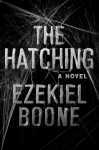
Review: The Hatching by Ezekiel Boone
Review:
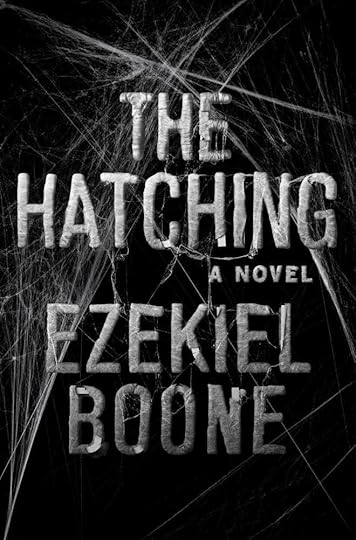
I have two large phobias – acrophobia (fear of heights) and arachnophobia (fear of spiders). My fear of heights is, at times, crippling. I’m OK in enclosed spaces like inside a tall building, but going more than two steps up a ladder is grounds for a panic attack. Coming in at a distant second is my fear of spiders. I don’t know of any horror fiction that has tackled acrophobia (please feel free to shout out some examples if you know of any!), but arachnophobia certainly lays the groundwork for a healthy number of tales of terror. I suspect that part of my ability to overcome my primordial fear of spiders just long enough to smack them with a rolled up magazine is due to the sheer number of horror depictions in popular media and my willingness to expose myself to such works. However, Ezekiel Boone’s debut novel, The Hatching, does little to endear me much further to these eight legged creeps.
Rather than giving us grotesque, mutated spiders or radioactive scares, Boone keeps the core of his spider horror thriller fairly plausible (maybe a little too plausible, which certainly helps bump up the fright factor), which makes the more extraordinary aspects easier to digest. The Hatching is basically a global alien invasion story, but with spiders and a multitude of egg sacs and unsuspecting hosts instead of little green men and UFOs.
Boone wastes no time going bonkers, as massive outbreaks of man-eating spiders are unleashed upon China and India, before finally making their way to the good ol’ US of A. The cast of characters confronting this nightmare is equally sprawling, and at times feels a bit too cumbersome and shallow. While the characters are drawn in the “good enough” approach, they’re not really the main focus here so I’m willing to give Boone a pass on this. This isn’t the type of fare one turns to for in-depth depictions of the human soul, and there’s not much in the way of sweeping character arcs (for instance, one man’s arc involves getting over his ex-wife, which he’s able to do once he realizes he wants to bone the female scientist studying this outbreak). There’s also way more characters than can comfortably serve the narrative of a single book, which I’m also willing to give a pass on since The Hatching is the first in a series (Skitter is due out next year).
But look. This is a spider horror story first and foremost. I’m not here for meditations on the human condition. I’m here because I want to read about spiders destroying civilization. I’m OK with some mediocre character development and protracted payoff as long as the scenario is fresh enough to keep me invested and the scares deliver. And those scares…for an arachnaphobe like me? Boy, do they deliver.
The Hatching reminds me why I’m afraid of spiders by tapping into that highly implausible yet all too prevalent nature of what if? Yes, I can (mostly) kill a common house spider pretty effectively. But…what if?What if they team up, or bite me and then burrow their way into the wound and take up residence inside my freaking body, or start wrapping me up in a silky cocoon while I’m sleeping? There’s a myth that you eat about eight spiders a year in your sleep. Thankfully, it’s a myth. But, jeez, what if you eat even just one? And that one is carrying some eggs that get webbed inside your throat or something? You ever wake up with a scratchy throat? Are you really, 100% positive beyond a shadow of a doubt that it’s not an egg sac and that it won’t be hatching and that you’ll be gagging up a bunch of spiders before your first cup of coffee? That’s the type of fear-mongering Boone plays around with here and it’s a little too close for comfort at times. All of my fears about spiders and their potential for harm (yes, I know it’s irrational. Mostly, anyway.) play out in some wonderfully disastrous scenarios in this book, and occasionally in exquisitely morbid details. There’s a few images I’m afraid won’t be dislodging themselves from my brain anytime soon.
If you’re seriously arachnophobic, The Hatching probably won’t do you any favors. However, if you’re looking for some solid, B-movie horror invasion on a big budget Hollywood movie scale this book certainly delivers. If anything, being afraid of spiders might even make this book’s particular brand of crazy better and more intimate, and how many stories can you say that about?
[Note: This reviewed is based on an ARC provided by the publisher via NetGalley.]
Original post:
MichaelPatrickHicks.booklikes.com/post/1431692/review-the-hatching-by-ezekiel-boone







July 1, 2016
June 2016 Read & Reviewed Round-Up
I can’t believe it’s already July! The year is half-over, my son will become a one-year-old in a few more months, and the radio will start playing Christmas song way too fucking early. So, let’s take a quick look back at the month that was, shall we?
In June, I read and reviewed the following:
A Song For No Man’s Land by Andy Remic
Return of Souls by Andy Remic
The X-Files: Trust No One edited by Jonathan Maberry (audiobook)
Lights Out by Nate Southard
Burnt Offerings by Robert Marasco (audiobook)
The Last Weekend by Nick Mamatas (audiobook)
Consequences by John Quick
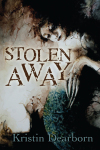
Stolen Away by Kristin Dearborn
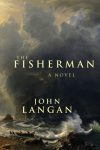
The Fisherman by John Langan
Thanks to the magic of the Internets, you can click on those blue links and be magically transported to my reviews! Hurrah!
At the moment, I am currently listening to the audiobook edition of Wolf Hunt by Jeff Strand. Let me tell you, this one is a lot of fun – and funny, too. I’ll be starting The Hatching by Ezekiel Boone shortly, which sounds fantastic (spider horror! Which, I know, is a bit redundant, but still…) and has gotten some great advanced reviews. I’ll have my thoughts posted soon enough, but in the meantime go check out Char’s review at Horror After Dark.







June 30, 2016
Review: The Fisherman by John Langan
Review:
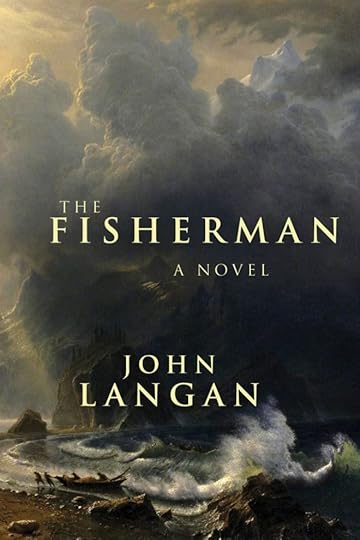
John Langan’s The Fisherman is a slow-burn tale of cosmic horror told on two fronts. This is the story of two widowers, Abe and Dan, who find solace in their shared hobby of fishing and plan on sinking their lines into Dutchman’s Creek, a hard to find locale unless you know exactly where to look. Beyond being hard to find, there’s rumors about this creek…rumors and stories. Dutchman’s Creek has a lot of history, and Langan focuses on this for the bulk of his narrative.
I have to admit, when Abe began relaying the story of Dutchman’s Creek, as told to him by a cook at a diner they stop at before embarking on their trip, who heard it from a priest who heard it from somebody else, I was worried that this book would be reduced to a game of Telephone. I was also a bit jarred by, after having spent several long chapters with Abe and getting lost in his narrative and intonations of their ill-fated trip to Dutchman’s Creek, I was suddenly in the midst of a historical story 100 years prior.
Thankfully, the history Langan presents is rich and highly interesting, and filled with several intriguing characters. Once the horror elements begin to weave their way into the account, the story really kicks into high gear with some wonderful imagery and fantastical scenarios. I flat-out loved the mythology Langan explores here, exploiting the watery elements in both theme and object to deliver an excellent bit of cosmic horror. Langan invests us in these characters (both past and present) suitably well, and the sense of creeping dread is completely engrossing.
The biggest risk in presenting a narrative with the story-within-a-story approach is that there are effectively two endings. I found the climax to the historical segment to be much more satisfying than the present-day events, although once Abe and Dan’s stories reach their finish the moody atmosphere was scintillating enough that even though I’d finished reading this on a sunny evening I’d swear the sky was filled with dark, rain-laden clouds.
The Fisherman was the first book I’ve read by Langan, and you can mark me as suitably impressed. His writing style is very comfortable, and within a matter of pages I felt like I was right there with Abe, listening to a long fisherman’s story on the river’s shores. And while this is a densely written story, it is a compulsively readable one. Through Abe, Langan sinks his hooks in deep enough to catch you by surprise, and then you just wait for him to reel you in. Once he does, it is so very worth it.
[Note: I received a copy of this title from the publisher in exchange for an honest review.]
Original post:
MichaelPatrickHicks.booklikes.com/post/1429079/review-the-fisherman-by-john-langan







June 24, 2016
Review: Stolen Away by Kristin Dearborn
Review:
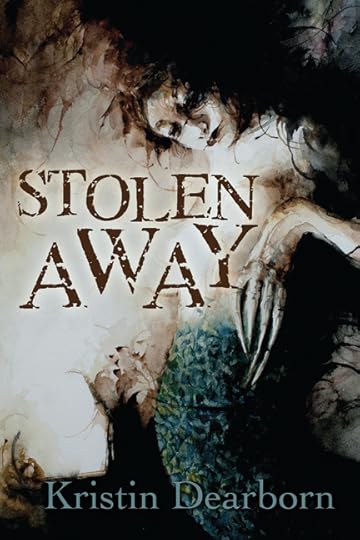
Kristin Dearborn first came to my attention earlier this year with the DarkFuse release, Woman In White. I liked that one well enough, but noted in my review that, “I could have gone for some deeper character explorations…and I could have used way more of the supernatural aspect.” Apparently, Stolen Away was the Dearborn title I was looking for!
Trisha is a recovering addict and single-mother to Kourtney. Her and the ex, a tattoo artist named Joel, aren’t on the best of terms, but after her son is kidnapped, the two find themselves reunited to protect their daughter and find her missing boy. Unfortunately, this abduction has a few wrinkles to it, not the least of which is that Brayden’s father is a demon. Like, a literal demon. You know, from Hell. In his human form, he even has a tattoo on his back in big bold letters that say DEMON. So, yeah.
Dearborn delivers the goods with the supernatural aspect here, keeping the nasty stuff front and center. There’s a lot of great demonic stuff happening herein, from possession and exorcisms, to our tattooed body-modder anti-heroes learning the ropes on all-things underworld, along with some half-demon ass-kickers and a scene or two that pay lovely homage to John Carpenter’s The Thing.
Dearborn brings the action front and center, but also gives us a reason to care for Trisha and Joel beyond their positions as beleaguered parents. Both have a history with one another, and are in various stages of recovery from their drug-fueled past and questionable decisions. These aren’t spit-shined do-gooders, but damaged goods that have been in rough spots and are still trying to do right by themselves and those around them, and not always succeeding.
I also really dug the subtle layers of feminism that Dearborn wove into her tale. This is a story about loss, but it also has strong elements of female empowerment, bodily autonomy, and combating rape culture and harassment (sometimes directly and violently). It’s really awesome stuff, and, in my view, helped raise the narrative to a higher place thematically, putting it up above more pedestrian demon-hunting stories. I hesitate to call it “message fiction,” since Dearborn keeps these things on the down-low, and because fiction with any kind of a message, either overt or not, apparently makes some sensitive readers sad and squeamish. Stolen Away, though, does have some vital commentary on the role of women in society, and it’s refreshing to read demonic horror fiction where women aren’t reduced to mere sexpots ripe for exploitation or in need of saving by either the big strong man or religious righteousness. Again, it’s subtly (and suitably) handled but well-worth noting, and Dearborn incorporates it beautifully in order to serve the story and highlight the particular, and multiple, brands of horrors she’s working with here.
[Note: This book was provided for review by Hook of a Book Media and Publicity.]
Original post:
MichaelPatrickHicks.booklikes.com/post/1424631/review-stolen-away-by-kristin-dearborn







June 20, 2016
Writing Through the Unknown
About a month ago, my wife dropped a bombshell on me regarding our finances. The projected costs of daycare for our son next year will be roughly equivalent to what I bring home from the day job, which leaves me in a bit of a tough spot. Although nothing has yet been decided one way or the other, at the moment it is looking like I have two options. I can continue working so we can break even on the budget, or I can become a stay at home dad with zero income.
While I would love to stay at home and spend time with my son, this latter option would force me to change the way I write and publish. The day job, you see, is how I pay for editing and cover design. Without the day job, I have no income for publishing. But with the day, going into next year’s round of tuition hikes, I’m working just to pay that bills and still having no income for publishing aside from whatever revenue I can generate from selling those titles currently available.
And that income? … Well, it ain’t much at all, really.
As you might expect, this news has thrown me for a bit of a loop. I’ve spent much of this month trying to recalibrate and plan ahead for a bit, and try to get a grip on the shape of the rest of this year.
I’ve also been submitting to several different markets in the hopes that something lands. The recently released CLONES: The Anthology was a good, but brief, bit of exposure. For a few hours, I was even in the Top 100 of all science fiction authors on Amazon. That did not last long, but it was fun momentarily, until it was time to get back to work.
I haven’t submitted to any markets in more than two years now. I shopped Convergence around for a bit after hitting the quarter finals and scoring an insanely positive review from Publisher’s Weekly in the Amazon Breakthrough Novel Award 2013 contest. I didn’t get any takers (or even any responses to inquiries), and self-published it to pretty solid reviews (it’s currently sitting at 4.4 star rating, so if you’ve read this book, or any of my other works, please leave a brief review), and was quite content to carry on as an independent author-publisher.
Now I find myself potentially facing a pretty massive change. I don’t foresee abandoning writing anytime soon, but I may have to alter how my work gets published and distributed. If it’s to get published and distributed at all.
I do still have some tentative plans to release a few standalone titles later in the year, the bulk of which will be publishing several short stories that appeared in various anthologies recently. An audiobook of Revolver will be starting production soon, and I’ve got a terrific narrator on tap to bring Cara Stone to life. This is going to be a really exciting project to direct and produce, and I’m hoping to share more on this in the coming months.
In the meantime, I’m submitting. I’ve gotten some feelers out there with various publishers of science fiction and horror. I’m about half-way through a sci-fi novella and staring down the end of an open-door submission period that I may not be able to make, but we’ll see what happens. I’m keeping my fingers crossed. In the meantime, I’ve got a short story in review for a magazine, and a horror novella submitted to another publisher. It would be stupid of me to pin all my hopes and dreams on being accepted to any of these, let alone all of them, so I’m keeping my hopes firmly in check.
I’m also writing. Writing, writing, writing. That’s the only thing I can do. Maybe these works will get published, maybe they won’t. All I can do is work, and, hopefully, be able to keep working, even if at a reduced capacity next year. Worst-case scenario, I suppose, is that I get plenty of trunk novels saved up until I can make my grand re-entry.
Or, you know, maybe my books suddenly take off like wildfire and I build up a nice cushion of savings to keep on publishing (hint hint).
But, again, nothing has been decided one way or another yet, and it will take a few more discussions with my better half before we figure out the logistics and what will work best for us as a family. Of course, I certainly hope and want to continue releasing my work and am planning as such until I know otherwise. So, this is not goodbye. This is merely me venting something I’ve been thinking about for a while now.
In the meantime, keep an eye out for news on that Revolver audiobook and future short story releases later in the year. And plenty more book reviews are on the way!