Elizabeth Ellen Carter's Blog, page 12
March 30, 2017
What Happens in Baiae, Stays In Baiae… sort of
Dark Heart, my Roman-era romantic suspense will be published on April 28 through Dragonblade Publishing. Unlike a lot of other stories of this time period, I didn’t want to to just set the story in Rome, as magnificent though that city is – there are other important cities too – Antium, Capri, Interamna, Lireneas.
This week, as a follow up to last week’s post on the Oracle of the Dead, I want to look at the ancient world’s Vegas, a resort town called Baiae.
Those Romans weren’t all work, you know. They rather liked their summer holidays – although the transportation wasn’t as comfortable as a first class airline seat or even a 1960s double-decker London bus…
Unlike today where people flock to the beach on hideously hot day to swelter on the eye-searing white sand (can you guess, I’m not a real fan of the beach?), wealthy Romans took their seaside “va-cays” in a much more civilised spring season, then retreated to the cool of the mountains in the height of summer.
Mind you, being in Rome without modern sanitation would not have been pleasant. Pe-ew!
Actually, travelling to your destination wouldn’t have been much fun either.
Today a jaunt from Rome to Naples is 255 kilometres away and would take a leisurely two and a half hours on the E45. According to ORBIS, the Google Maps for the ancient world developed by Standford University, the same journey in ancient times would have taken six days.
Romans would travel in a raeda, a carriage with four noisy iron-shod wheels, many wooden benches inside for the passengers, a clothed top (or no top at all) and drawn by up to four horses or mules. The raeda was the equivalent of the bus today and Roman law limited the amount of luggage it could carry to 1,000 libra (or approximately 300 kilograms).
One of the most popular resort cities for the rich and famous was Baiae, on the Bay of Naples (now called Baia) . The little resort by the sea was renowned for its spas, brothels and gambling houses.
Now, if the name sound familiar, I should point out that infamous Emperor Caligula was quite a fan and in one of his piques of madness ordered pontoon be built across the Bay of Naples at Baiae. For what purpose?
Caligula’s bridge procession drew on imagery from both the Greco-Persian wars tradition and the Alexandri imitatio. The competing ideologies that these traditions sustained then clashed, to deleterious effect, within the confines of a single event. The emperor’s pageant simultaneously told two different stories with two different morals. The result, as I demonstrate, was the sort of spectacle that emerges from the ancient sources: bombastic, devoid of clear meaning, and the work of a ruler who was slowly slipping into madness.
Seneca The Younger, the ancient Roman philosopher wasn’t a fan, although he was prepared to put up with it… sort of:
Every man does the best he can, my dear Lucilius! You over there have Etna, that lofty and most celebrated mountain of Sicily; (although I cannot make out why Messala, – or was it Valgius? for I have been reading in both, – has called it “unique,” inasmuch as many regions belch forth fire, not merely the lofty ones where the phenomenon is more frequent, – presumably because fire rises to the greatest possible height, – but low-lying places also.)
As for myself, I do the best I can; I have had to be satisfied with Baiae; and I left it the day after I reached it; for Baiae is a place to be avoided, because, though it has certain natural advantages, luxury has claimed it for her own exclusive resort. “What then,” you say, “should any place be singled out as an object of aversion?”
Not at all. But just as, to the wise and upright man, one style of clothing is more suitable than another, without his having an aversion for any particular colour, but because he thinks that some colours do not befit one who has adopted the simple life; so there are places also, which the wise man or he who is on the way toward wisdom will avoid as foreign to good morals. Therefore, if he is contemplating withdrawal from the world, he will not select Canopus (although Canopus does not keep any man from living simply), nor Baiae either; for both places have begun to be resorts of vice.
At Canopus luxury pampers itself to the utmost degree; at Baiae it is even more lax, as if the place itself demanded a certain amount of licence.
Sadly there is very little to see of this historic resort town today. Much of Baiae has slid into the sea as a result of landslips and earthquakes and what remains are ruins. The good news for today’s divers is a Baiae makes a fascinating underwater adventure with plenty of statues and mosaics preserved by the sea.
For Dark Heart I imagined Baiae looked a lot like the Amalfi coast with terraced buildings and streets, so I’m afraid I’ve taken a bit of artistic licence when it comes to describing the town, which I’ve done based on photographs and historic maps (But 19th century watercolours are much more fanciful and fun).
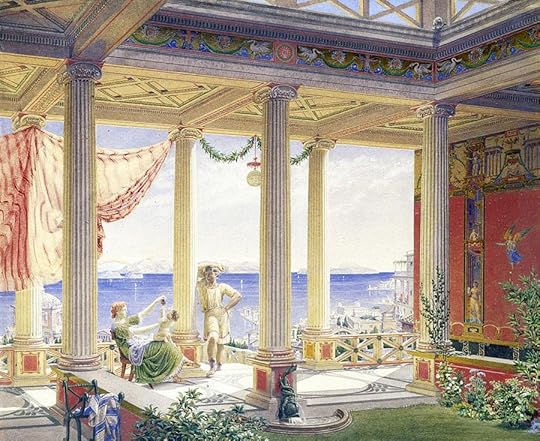
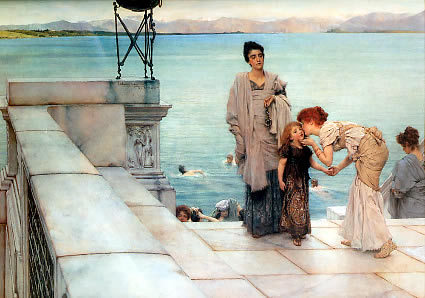
Frederick Pepys Cockerell, 1833-1878 At Baiae

Created for book lovers
Join Elizabeth’s Library Book Club today for free reads, exclusive excerpts, competitions and more!
Join Now!
Share!


The post What Happens in Baiae, Stays In Baiae… sort of appeared first on EE Carter.


March 27, 2017
Tuesday Book Club: Alexa Aston’s Code of Honor
A big welcome to Alexa Aston, my guest on this week’s Tuesday Book Club.
As you might know by now (and I’m certainly not tired of saying it), my Roman-era romantic suspense Dark Heart is soon to be published by Dragonblade and I’m thrilled to introduce one of my stablemates Alexa Aston who writes the most swoon-worthy Medieval romances.
Her latest title Code of Honor released today (28 March).
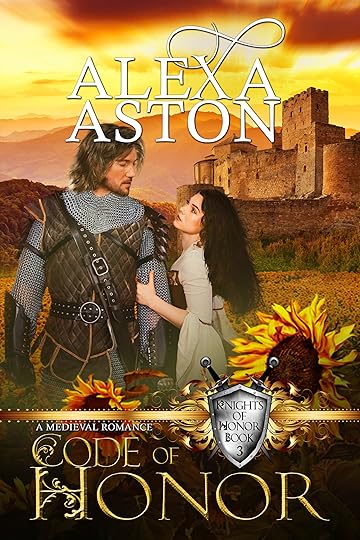
The beautiful cover of Code of Honor by my new Dragonblade Publisher stablemate Alexa Aston
What were you like at school?
I was always a good student, but I had a tendency to talk too much!
What inspired you to write?
I don’t remember a time that I didn’t want to write. I think I came out of the womb wanting to tell stories. I used to gather my stuffed animals and dolls before I could even read or write and have them act out stories I made up.
Which writers inspire you?
I love to emulate writers who tell strong stories and having complex characters. Some of my favorites include Mary Balogh, Amanda Quick, Kathryn Le Veque, Steve Berry, and David Baldacci.
What inspired you to write this story?
This is the 3rd book in my Knights of Honor series. All the books can be read as standalone medieval romances. I wanted to tell the story of a boy who was a little bit of a misfit when he was younger, but thanks to the time two older boys (Geoffrey and Raynor, the adult heroes in Books 1&2) spent helping him reach his potential, this young boy grew into a talented, dedicated knight. Michael had to grow up very quickly and learn to be brave and stand on his own at a young age.
How much research do you do?
It depends upon the book I’m writing. For this series, I have researched the reign of Edward III thoroughly. For this particular book, I had to become familiar and comfortable with how horses give birth. Elysande, my heroine, loves horses more than she does people. In this book, Michael will meet Elysande for the first time when he helps her deliver a foal. The research proved quite interesting for this romance!
Can you give us a blurb to let us know what the story is about?
1365 A.D. – After the Earl of Sandbourne banishes his supposedly unfaithful wife to a convent, his young son Michael swears never to set foot on the family’s estate until after his father’s death. Michael will then claim his title as the new earl and restore his beloved mother to a place of honor.
Fifteen years pass, and the now-knighted Sir Michael Devereux serves Lord Geoffrey de Montfort at Kinwick Castle. He accompanies the nobleman and his family to a wedding, where Michael unknowingly falls in love with the bride before he even knows her identity.
Lady Elysande Le Cler is angry that her usually indulgent father went against her wishes and betrothed her to a stranger prior to his death. Now as her wedding day approaches, dread fills her—until she meets a dashing stranger who helps her deliver a foal. Elysande loses her heart to this knight, frustrated that they can never be together.
Join Michael and Elysande as they find fate has other plans in store for them.
Give us an insight into your main character. What does he/she do that is so special?
Michael has been on his own since he was eight years old, a boy who never had his father’s love and was someone who feared horses—and life. When he bonds with Elysande as they help her favorite mare give birth to a foal, he believes he’s found a chance for love—and conquered his fears.
What books are you reading at present?
I’m reading the 2nd in Mary Balogh’s “Someone” series, Someone to Hold. I also recently met Eloisa James and picked up her latest, Seven Minutes in Heaven. I loved visiting briefly with her and getting an autographed copy of her newest release.
What writing project are you working on next?
I am deep into writing my Knights of Honor series, which features different members of the de Montfort family. Books 4 & 5 come out in June and October of 2017, and the remaining 5 books will be out in 2018.
Tell us something unique about you that they wouldn’t guess from just looking at your photograph?
I taught high school for many years and am crazy about Game of Thrones, dark chocolate, and sports—watching them—not playing. I don’t have an athletic bone in my body!
What is your favourite book and why?
I read To Kill a Mockingbird every year. I think the descriptions are some of the loveliest ever written.
What is your favourite quote?
Especially being a writer, I can relate to Lao Tzu’s, “The journey of a thousand miles begins with one step.” Each new book is terrifying to start, but getting that first word, first sentence, and first chapter down on paper begins the magic each time.
How can readers discover more about you and you work?
Website:https://alexaaston.wordpress.com/
Blog:http://www.embracingromance.com
Facebook:https://www.facebook.com/authoralexaaston/
Twitter:https://twitter.com/AlexaAston
Amazon Author Page:https://www.amazon.com/author/alexaaston
Newsletter Sign-Up: http://madmimi.com/signups/422152/join
Book Links for Code of Honor:
Amazon UK Amazon US Amazon Canada
Goodreads:https://www.goodreads.com/author/show/15846438.Alexa_Aston
Would you like to share an excerpt from your book?
Yes – This is Michael & Elysande’s first kiss:
Michael’s touch sent a shock through her. A low humming seemed to vibrate between them.
“I know you feel what’s between us,” he said, his voice low, the yearning unmistakable.
“Aye,” she replied, her breath shallow and rapid.
He gave her a crooked smile. “We are but strangers, yet I feel I’ve known you for a lifetime.”
Elysande’s eyes welled with tears. “But we have no future, Michael.”
His hands tightened on her elbows. “I don’t know how I’ll live through each day to come not having you by my side.” His hands slid up her arms to her shoulders. His fingers caressed her neck.
Elysande boldly told him, “I’ve never been kissed, Michael. ‘Twould be my fondest wish for you to be the first man to do so. I would like to hold that memory in my heart for all time.”
He hesitated. She knew if he were a knight of her uncle’s that he must be the most honorable of men. He wouldn’t act in an unchivalrous manner.
But she wanted him. Here. Now. If she did not have his kiss, she might wither and die.
So Elysande took charge like a knight riding into battle.
Their lips met. Hot desire, something she’d never known, raced through her limbs, dissolving her bones. Michael’s arms enfolded her, drawing her near. His tongue slid along the seam of her lips, teasing her, opening them for an adventure she had yet to experience. Then his tongue thrust into her mouth, dancing with hers, dueling, possessing her with a heat that spread throughout her body. Every sense came alive.
Elysande’s fingers pushed deeper into his hair as his hands roamed her back and slipped to her buttocks. He squeezed them, pulling her against him. She felt his manhood, hard against her, frightening her and yet bringing a sense of wonderment. She aroused these feelings in him. He caused her to burn with want of him.
Again and again his kisses branded her. His lips moved to her throat, burning a hot trail to the swell of her breast. His stubble scraped the tender flesh as his hand cupped her breast. It swelled, filling his palm. Elysande thought she might go up in flames and burn the stables to the ground, so great was the heat generated between them.
Suddenly, it ended. Michael’s mouth was gone. His hands fell to his side. A winter’s cold seemed to embrace her now that his warmth had fled.
“Michael?” she asked, not knowing how to form any word beyond his name.
He cradled her face, stroking his thumbs against her cheeks.
“You’re perfection, my love. My one true love. My sweet Elysande.” His last words were but a whisper.
She heard the strong emotion in them, causing his voice to go low and thick.
He kissed her once again, hard and swift, then pulled away.
“God forgive me,” he muttered and stormed from the stall.
Created for book lovers
Join Elizabeth’s Library Book Club today for free reads, exclusive excerpts, competitions and more!
Join Now!
Share!


The post Tuesday Book Club: Alexa Aston’s Code of Honor appeared first on EE Carter.
March 23, 2017
The Oracle of the Dead
Dark Heart, my Roman-era romantic suspense will be published on April 28 through Dragonblade Publishing. Unlike a lot of other stories of this time period, I didn’t want to to just set the story in Rome, as magnificent though that city is – there are other important cities too.
And, as these things go, one click leads to another on the Internet and before I knew it I’d made an ancient discovery…
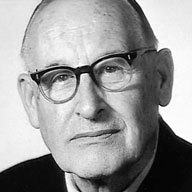
Doc Paget, a British amateur archaeologist who turned our understanding of Ancient Greek mythology on its head
Long before there was Indiana Jones, there was another enthusiastic amateur British explorer in the 1960s by the name Dr. Robert Ferrand Paget who worked at an NATO base in Italy.
He was fascinated by the ancient culture – both Greek and Roman and the interest was shared by an American naval officer Keith Jones – particularly the story of The Oracle of the Dead.
In 1932, the entrance to a hitherto unknown antrum (chamber) was discovered by an Italian archaeologist, Amedeo Maiuri. As Maiuri and his team did not continue with their exploration after penetrating the tunnel for a couple of feet, the mystery of the antrum was left alone. It was only in the 1960s that the antrum gained attention again. This time, it was a British amateur archaeologist, Robert Paget, who explored the antrum. Along with an American colleague, Keith Jones, and a small group of volunteers, Paget began a decade-long excavation of the antrum. What he discovered was a complex system of tunnels.
Based on his findings, Paget speculated that this was the legendary ‘Cave of the Sibyl’ that was described by ancient authors. The Cumaean Sibyl, meaning the prophetess, is said to be a woman named Amalthaea who lived in a cave in the Phlegraean Fields, the area where the tunnel was found. According to legend, she had the power of prophesy, and scribbled the future on oak leaves scattered at the entrance of her cave.

This is one sibyl on a mission
The Sibyl of Cumae is one of the most famous of Greco-Roman mythology thanks to this story:
In the Roman Antiquities, Dionysius of Halicarnassus recounts the story of an old woman who came to visit Lucius Tarquinius Superbus (or Tarquin the Proud), the last king of Rome. She brings with her nine books that she claims contain sibylline prophecies. She offers to sell the books for what seems like an unreasonable amount of money. The king laughs at her ridiculous price. In response, the woman burns three of the books (boy … that escalated quickly).
A while later, the woman returns with the remaining six books and offers to sell them at the same price as the original nine. Again, the king laughs at her, assuming she has lost her mind. Again, the woman leaves and burns three more of the books (this is getting out of hand … fast).
Undeterred by the king’s obstinacy, the woman returns with the remaining three books. She offers to sell the king the three books for the same price as the original nine. This time the king does not laugh.
“Tarquinius, wondering at the woman’s purpose, sent for the augurs and acquainting them with the matter, asked them what he should do. These, knowing by certain signs that he had rejected a god-sent blessing, and declaring it to be a great misfortune that he had not purchased all the books, directed him to pay the woman all the money she asked and to get the oracles that were left.” -Dionysus of Halicarnassus (Roman Antiquities)
The stories were considered myths, but Paget and Jones weren’t so convinced. They, like another amateur archaeologist, a German businessman by the name of Heinrich Schliemann, believed that myth held a kernel of truth. For Schliemann it was in discovering the lost city of Troy.
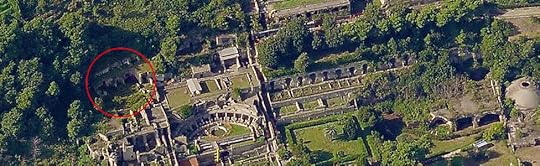
An overhead view of the resort city of Baie with the entrance into the Oracle circled in red. (Image source: OracleoftheDead.com)
Paget and Jones were convinced that the Oracle of Dead was in the ancient Roman resort town of Baiae (I’ll be blogging on it next week). They were so sure that they funded their own expedition. Why was a Greek Sibyl doing in Italy? Well, the Greek Empire controlled most of the peninsula. Greek temples can be seen all across southern Italy in particular.
Paget’s summary can be found here.
Early origins – Historically, the origins of the Greek myths surrounding notions of the Underworld are lost in the mists of time. The nurturing earth mother female principle of the Goddess Hera reigned. From the ground all life springs and to the ground it returns in death.
Various fertility rites in commemoration of these beliefs developed and are generally referred to as Chthonic.
Chthonic – kθɒnɪk – comes from the Greek word χθόνιος – chthonios which means “in, under, or beneath the earth”, from χθών – chthōn “earth”; pertaining to the Earth; earthy; subterranean.
Apart from its literal translation, its historical or interpretive definition extends to cover the deities or spirits of the underworld, especially in relation to Greek religion. Chthonic rites are equally a celebration of life that springs from under the ground.
754 BC – The very early Greek settlement of Cuma is about 4 kilometers from Baia. Cuma was traditionally founded at this date (Pithecusa – modern Ischia – had been occupied by Greeks some time earlier).
The only way to discover the truth was to go underground and what they found was amazing (although it is subject to conjecture) – they claim to have found the River Styx.
The tunnel system, the two men proposed, had been constructed by priests to mimic a visit to the Greeks’ mythical underworld. In this interpretation, the stream represented the fabled River Styx, which the dead had to cross to enter Hades; a small boat, the explorers speculated, would have been waiting at the landing stage to ferry visitors across. On the far side these initiates would have climbed the stairs to the hidden sanctuary, and it was there they would have met… who? One possibility, Paget thought, was a priestess posing as the Cumæan sibyl, and for this reason he took to calling the complex the “Antrum of Initiation.”
The Oracle of the Dead actually exists – as an elaborate piece of theatre.
Vistors are promised a meeting with the Sybil, but first they must cross the River Styx in a boat piloted by Charon.
They are led down into the bowels of the earth through an underground passage – some hand-hewn, part naturally formed by the ebb and flow of magma overtime – until they arrive at an underground river, warm and steaming from the sulphurous heat which, most likely would have fed the hot baths, the caldarium, in the spas for which Baiae was famous.
There a figure beckons them into a small boat and the visitors are rowed across. At the other side, actors complete the charade and at the end of the show, everyone follows another passage up and over the subterranean river to the exit.
There are even short cut passages within this complex to make it easier for the ‘cast’ to move unseen from location to location.
After reading about this amazing piece of amateur archaeology, I couldn’t resist, I had to include it in Dark Heart. By the time the story is set, the Oracle of the Dead had been forgotten, but not by our villains.
They’ve used it to terrify the reluctant acolytes of the cult of Elagabalus and use it to try and kill off our hero! (Spoiler alert, Dark Heart is a romance, so he does get out alive 
March 20, 2017
Tuesday Book Club: Heather Garside’s Colonial Daughter
When it comes to historicals it seems that European history and to a lesser extent, American history fills the bookshelves but not the experience of many other countries. Australian history is quite frequently overlooked despite some absolutely stellar Australian historical romance authors such as Tea Cooper, Virginia Taylor and Darry Fraser.
Now it’s my pleasure to introduce another Australian historical romance author Heather Garside. Welcome to my blog!
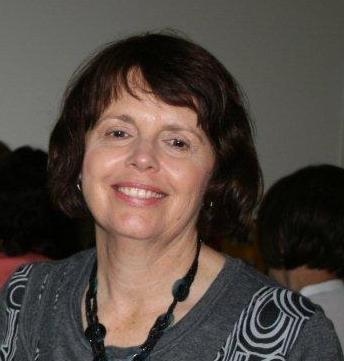
The lovely Heather Garside, another terrific Australian historical romance author to add to your bookshelves
What were you like at school?
Super quiet and a bookworm!
What inspired you to write?
Growing up on an isolated cattle property, I was reliant on reading and my imagination to entertain myself.
Which writers inspire you?
As a child, I loved Enid Blyton and later, Mary O’Hara. In my teenage years, Georgette Heyer was a big inspiration. Recently I’ve enjoyed Kimberley Freeman and Kaye Dobbie, among many others.
What inspired you to write this story?
My parents’ stories of their pioneering ancestors. The setting was inspired by a book about the history of a tiny Central Queensland town called Banana. Banana was a busy teamsters’ hub in the late 19th century and the wealth of detail in this little book fascinated me. One set of great-grandparents were pioneers in this area, so that was another link.
How much research do you do?
Lots! There is nothing more annoying than reading a poorly researched novel, whether historical or contemporary.
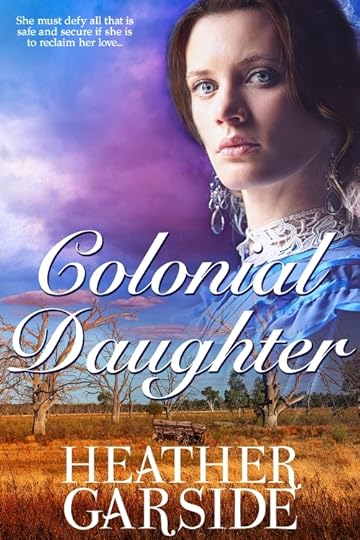 Can you give us a blurb to let us know what the story is about?
Determined not to join her wealthy parents in England, Louise Ashford finds work as a governess in the frontier settlements of Central Queensland. She falls in love with Lloyd Kavanagh, a young cattleman of convict descent. But she knows Lloyd will never be accepted by her family.
Their romance ends abruptly when her brother Charles intervenes, carrying her off to England. Charles’s lies ensure Lloyd will not try to follow her. More grief awaits her in England and a disgraced Louise seizes the chance to accompany Charles back to Australia. She must defy all that is safe and secure if she is to reclaim her love and rebuild the life she longs for.
Previously published as The Cornstalk.
Give us an insight into your main character. What does she do that is so special?
Louise Ashford is a wilful young lady who has grown up in a cold, uncaring, but wealthy family. During her visit to her cousin’s isolated property, she grows to appreciate both his loving, unpretentious family and the pioneering lifestyle. In order to avoid being forced to join her parents in England, she must call on all her courage and resourcefulness.
Which actor/actress would you like to see playing the lead character from your most recent book?
Aidan Turner from Poldark makes a lovely romantic hero!
What book/s are you reading at present?
Mackenzie Crossing by Kaye Dobbie.
What writing project are you working on next? The third in the series of which Colonial Daughter is the first. It is a dual time line story.
Tell us something unique about you that they wouldn’t guess from just looking at your photograph?
Until I was twelve, I had never set foot inside a classroom.
What is your favourite positive saying?
Do unto others as you would have them do unto you.
What is your favourite book and why? Georgette Heyer’s Devil’s Cub was a favourite for many years.
What is your favourite movie and why?
Can’t think of a particular one but I love the Poldark series on TV.
How can readers discover more about you and you work?
Website/Blog: www.heathergarside.com
Facebook: https://www.facebook.com/Heather-Garside-733843639971164/
Amazon Author Page: https://www.amazon.com/-/e/B00HAVP85E
Goodreads: https://www.goodreads.com/author/show/1200479.Heather_Garside
Book Links:
Amazon.com
Amazon.com.au
Amazon.co.uk
iTunes
Would you like to share an excerpt from your book?
Certainly!
She gave herself a mental shake, wondering why she was even looking at him. Strapping he may be, in his striped Crimean shirt and stockman’s moleskins, but the gulf that separated them was wider than she could begin to imagine. He wasn’t the sort of company she was accustomed to keeping. She would do well to remember that.
In spite of this resolution she found by the end of the meal that they were talking companionably, mostly about cattle and horses. Louise commented on the condition of the herd and Kavanagh nodded, taking a pipe from his pocket and tamping tobacco into the bowl.
‘They were better than I expected, seeing how dry it is around Springsure. And I’ve nursed them along pretty well.’ He held a burning stick from the fire to his pipe and puffed vigorously, looking at her through narrowed eyes. ‘Talking of Springsure, who were you governess for there?’
The question took Louise off balance. She paused a moment to gather her wits before improvising hastily. ‘A Mr and Mrs Jones. Do you know them?’
‘What’s his first name?’
‘George.’ Heavens, these names were imaginative.
‘No, don’t think I’ve met him. Where do they live?’
‘In the main street.’ This had to be safe enough, since there had to be a main street, although she knew nothing of Springsure. ‘Next to the hotel.’
He looked askance at her. ‘There’s three hotels, you know.’
His tone was indulgent, as if he thought her a little stupid. She flushed, stung into recklessness. ‘I’m talking about the Grand,’ she retorted defiantly. With any luck there could be a Grand Hotel–there seemed to be one in almost every town in the colony. If not, that was just too bad. Who did he think he was, asking so many questions?
He was staring at her with a strange expression on his face. ‘There are three hotels in Springsure,’ he repeated softly. ‘The Commercial, the Springsure and the Shearer’s Arms.’ He paused, watching her keenly as he drew on his pipe. ‘I don’t think you’ve ever been there in your life!’
Created for book lovers
Join Elizabeth’s Library Book Club today for free reads, exclusive excerpts, competitions and more!
Join Now!
Share!


The post Tuesday Book Club: Heather Garside’s Colonial Daughter appeared first on EE Carter.
March 16, 2017
Give Us This Day, Our Daily Bread
Dark Heart, my Roman-era romantic suspense will be published soon through Dragonblade Publishing. I had a great time researching the era – particularly a period that I wasn’t readily familiar with – the post Julio-Claudian dynasty (the time after Nero).
One of the things I enjoy doing is bringing these historical worlds to life and that means discovering something about how people lives – including what they ate!
Sometimes we in the 21st century world with instant access to information, electricity, food and water tend to take all of our technological advances
for granted.
By the same token, if we recognise that we have all these advantages we seem to imagine that people of earlier times were backwards because of their lack.
CS Lewis describes this thinking as ‘the snobbery of chronology‘ and it would be a foolish snob indeed to underestimate the Romans.
While many of us are familiar with the sophistication of their architecture, the robustness of their road networks, the precision of their aquaduct networks, less known is the mass production of food required to run an Empire (and its army).

Roman bread. The army ran on it and so did the rest of the populous.
Well, not only did those ingenious Romans manage to transport water vast distances, they also managed to harness that water to grind a phenomenal amount of grain.
We’re not talking about bucolic millhouses with one water wheel, we’re
talking water mills with a dozen or as many as 16 water wheels in the one
complex. This is flour milling on an industrial scale.
Water mills are powered in one of three ways. Overshot which means water flows over the top of the wheel. Undershot means the water flows beneath the
wheel. Breastshot means water is forced down, then under the wheel.
At the peak of production it was estimated that these huge mills could produce 4.5 tonnes of flour a day (which roughly equates to enough flour to bake 10,000 loaves of bread each day (one 720g loaf uses 423g of flour).)
Sadly today we are only aware of two sites where these giants of industry existed. But where there are two, there had to be more. Archaeologists and
historians all agree that every major Roman town and city will have had one
of these massive complexes.
The site that offers us the awesome scale is in Barbegal, France.
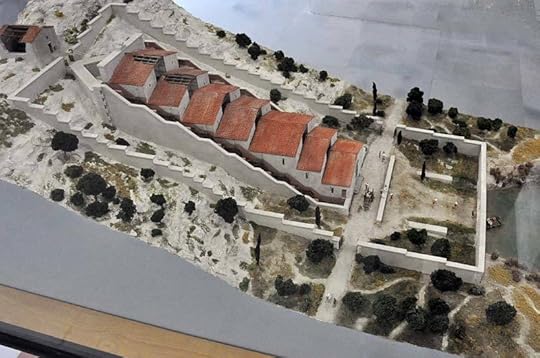
A model of the Barbegal aqueduct and industrial mill in France
Of course Rome itself will have had one of these powerhouses and indeed it did
on top of Janiculum Hill to the west of the city. These mills are believed powered by an undershot mill race.
In 270 AD Aurielus extended the Severan walls to protect the city against attack and of course, protecting the food and water supply. However, they
were not enough to overcome the invading Goths who disrupted the water
supply in 290AD.
I loved reading about the ingenuity, so I just had to use it in Dark Heart but it was for a sad occasion – the discovery of a body of a boy ritually sacrificed by the evil cult of Elagabalus.
Excerpt Dark Heart
He steered the horse off the riverbank and passed under a huge arch of an aqueduct. The Janiculum Hill rose in front of them. The horse changed gait to keep pace up the hill at Marcus’s urging. From here, Kyna had an unimpeded view of their destination.
The millrace, fed by the Aqua Traiana and celebrated among the city’s engineers, glittered in the moonlight.
Here, the terraced granary powered by sixteen water wheels produced the tons of flour a day needed to feed Rome’s insatiable appetite for bread.
Tonight it was also the site of a brutal murder and, like it or not, examining the child who had died was to be Kyna’s first duty as the magistrate’s personal doctor.
Marcus slowed his horse and waited for Janarius to catch up.
“Where’s the body?”
“On top of the hill itself,” Janarius replied, his answer nearly snatched away by the roar of the flowing water, louder here at the crest near the first of the massive wooden wheels.
Janarius led them several hundred yards from the mill to a protected grove. In the centre, lit by a dozen torches, was a lump covered by a soldier’s red mantle.
Marcus dismounted and helped Kyna down, offering a commiserating look as she took a few uncertain steps. He only released her when she nodded in mute assurance that she could stand on her own two feet.
As they approached the body, Kyna was conscious of Marcus’s presence at her shoulder, then, looking down at the covered shape on the ground, she was sure if she turned she would see him not looking at the body but at her. She ignored him and the other men who looked on, and knelt beside the mantle.
“Who found him?” she heard Marcus ask the onlookers. She ignored their conversation and attended to the life extinguished here. She said a prayer for the boy’s soul, regardless of what religion he practiced then, attending to his death, pulled back the fabric as far as his shoulders.
Created for book lovers
Join Elizabeth’s Library Book Club today for free reads, exclusive excerpts, competitions and more!
Join Now!
Share!


The post Give Us This Day, Our Daily Bread appeared first on EE Carter.
March 13, 2017
Tuesday Book Club: Renee Dahlia’s To Charm A Bluestocking
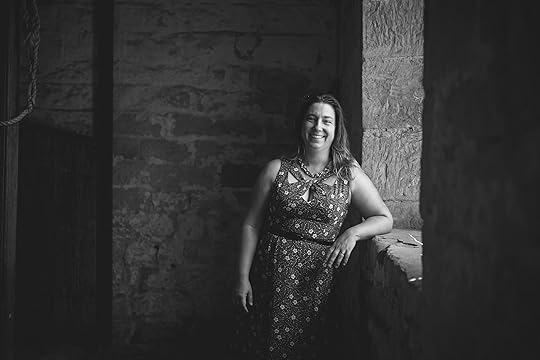
Welcome to Renee Dahlia who is my Tuesday Book Club guest
Tuesday Book Club returns with another fabulous Australian historical romance author, Renee Dahlia whose debut novel To Charm A Bluestocking has just been released by Escape.
Welcome Renee!
What were you like at school?
In primary school, I received a school report that said “If Renée wrote about something other than horses, she’d be quite good.” I’ve always found this ironic, as I’ve written (non-fiction) about horses for over a decade. My debut novel, To Charm a Bluestocking, isn’t about horses. Perhaps it’ll be “quite good.”
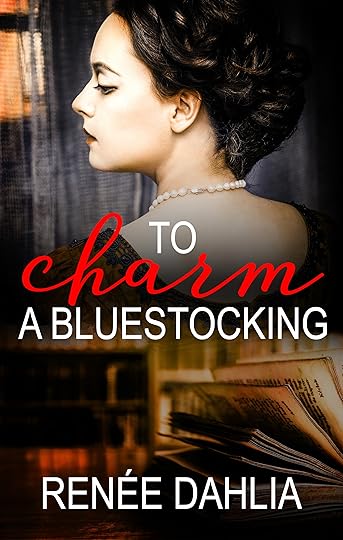
A charming cover for To Charm A Bluestocking.
What inspired you to write?
It’s a funny thing, but I had no desire to be a writer. I just fell into it, largely by chance. After 12 years of writing for magazines, I thought I’d have a crack at fiction. Mostly as a challenge to myself to see if I could. Of course, in hindsight, I wonder how I could have been so lacking in self-awareness. My entire family are storytellers, and I have plenty of natural talent for verbal story-telling. Learning the craft of putting that on paper, and the difference in style between non-fiction and fiction has been a wonderful learning curve.
Which writers inspire you?
There isn’t anyone that I could single out. I’m inspired and fascinated by people who craft stories from perspectives that are different to my own. A good friend of mine recently said “People are the most interesting thing on this planet.” There is so much depth to the human story. We are the only species that has invented airplanes, electricity, and has a culture of creativity.
What inspired you to write this story?
This story is inspired by my great-grandmother who was an early graduate of medical school in Holland. I thought about her challenges, and which of those challenges would resonate with people today.
How much research do you do?
About as much as the pile of washing in my laundry is high. Too much. It threatens to topple down and cover the project (floor) with information. I find it’s a tricky balance to understand how much of that research ends up in the story. A bit like back-story or description; too much is dull, not enough and the reader gets lost.
Can you give us a blurb to let us know what the story is about?
She wants to be one of the world’s first female doctors; romance is not in her plans.
1887: Too tall, too shy and too bookish for England, Lady Josephine moves to Holland to become one of the world’s first female doctors. With only one semester left, she has all but completed her studies when a power-hungry professor, intent on marrying her for her political connections, threatens to prevent her graduation. Together with the other Bluestockings, female comrades-in-study, she comes up with a daring, if somewhat unorthodox plan: acquire a fake fiancé to provide the protection and serenity she needs to pass her final exams.
But when her father sends her Lord Nicholas St. George, he is too much of everything: too handsome, too charming, too tall and too broad and too distracting for Josephine’s peace of mind. She needed someone to keep her professor at bay, not keep her from her work with temptations of long walks, laughing, and languorous kisses.
Just as it seems that Josephine might be able to have it all: a career as a pioneering female doctor and a true love match, everything falls apart and Josephine will find herself in danger of becoming a casualty in the battle between ambition and love.
Give us an insight into your main character. What does he/she do that is so special?
The heroine is shy, socially awkward, and yet has her eyes firmly on her goals. The hero is basically a James Bond type who meets his match.
Which actor/actress would you like to see playing the lead character from your most recent book?
You are asking someone who doesn’t have time to watch movies, and who grew up without a television. Shrugs. I have no idea.
What book/s are you reading at present?
I’m reading a bunch of non-fiction about the English in India in the 1850s written by Indian authors as research for my next hero. I have a few friends who grew up in Mumbai, so I asked them for recommendations. I want to understand that perspective before I start building the character. I also have a few romances on my To Read list written by Indian writers. I’m currently reading Beverly Jenkins’s latest series that starts with Forbidden. And another novel set in Paris in 1887; To Capture What We Cannot Keep.
What writing project are you working on next?
I’ve just finished the second book in my series, In Pursuit of a Bluestocking. It has moved into the first round of edits before it goes to my beta reader for comments. And while it is there, I will start plotting the third and final book in the series.
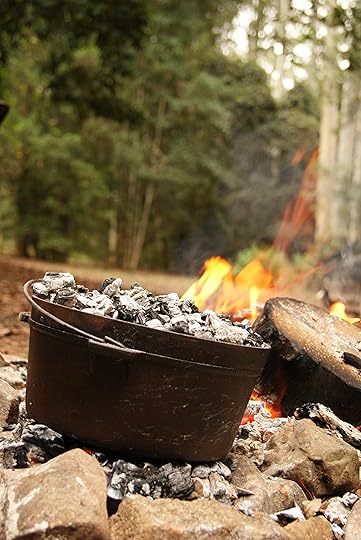
Winter camping in Australia with the family. Renee loves cooking using hot coals.
Tell us something unique about you that they wouldn’t guess from just looking at your photograph?
Every winter my family goes camping. It might sound slightly mad, but I love winter camping in Australia. It never gets that cold, and you can sit around a big fire with a book all day. I cook in the camp oven over the coals. And the kids roam the bush disconnected from modern life.
What is your favourite book and why?
I don’t have one. I have a whole shelf of favourites that I re-read depending on mood and need.
What is your favourite quote?
The problem with opportunity is that it wears overalls and looks like work.
How can readers discover more about you and your work?
Website: www.reneedahlia.com
Blog: http://www.reneedahlia.com/blog/
Facebook: https://www.facebook.com/reneedahliawriter/
Twitter: @dekabat
Book Links:
http://www.escapepublishing.com.au/product/9781489239112
Amazon AUS: https://www.amazon.com.au/s/ref=nb_sb_noss?url=search-alias%3Daps&field-keywords=9781489239112
Kobo: https://www.kobo.com/au/en/ebook/to-charm-a-bluestocking
Google: https://play.google.com/store/books/details/Renee_Dahlia_To_Charm_A_Bluestocking?id=OXkjDgAAQBAJ
Booktopia: http://www.booktopia.com.au/ebooks/to-charm-a-bluestocking-renee-dahlia/prod9781489239112.html;jsessionid=PbJmJuea0rl2r811JcqjAxZJ.undefined
iBooks: https://itunes.apple.com/au/book/to-charm-a-bluestocking/id1206676350?mt=11
Amazon US: https://www.amazon.com/Charm-Bluestocking-Renee-Dahlia-ebook/dp/B06VW7TBRP/ref=sr_1_1?ie=UTF8&qid=1487567911&sr=8-1&keywords=9781489239112
Created for book lovers
Join Elizabeth’s Library Book Club today for free reads, exclusive excerpts, competitions and more!
Join Now!
Share!


The post Tuesday Book Club: Renee Dahlia’s To Charm A Bluestocking appeared first on EE Carter.
March 9, 2017
A Sporting Chance In Rome
Dark Heart, my Roman-era romantic suspense will be published soon through Dragonblade Publishing. I had a great time researching the era – particularly a period that I wasn’t readily familiar with – the post Julio-Claudian dynasty (the time after Nero).
Dark Heart’s hero, Marcus is a Magistrate but he is a former soldier, avid swimmer and has been known to take an interest in chariot racing (as a horse owner, not a charioteer), so here are some of the interesting things I discovered in my research.

Greek wrestlers at play. The Romans loved their sport too, but they also wanted the spectators to be comfortable. Pity the people at the back trying to see the match.
The Romans loved their sport and they would as much at home attending the Superbowl, the Melbourne Cup and the FA Cup final as any sport fanatic today.
And while the let’s not forget the Olympic Games either – many of the traditional track and field sports would be familiar to them as well as pentathlon and decathlon.
If the Greeks represented the epitome of the skill of the pure amateur athlete, the Roman revival of the Olympics brought in professionalism – not only amongst the athletes themselves but also in improving the experience for spectators as well.
For the spectators, though, it was the sponsorship of the Roman period – some of it devoted to “improving” the facilities for visitors – that made the Olympic Games a much more comfortable and congenial attraction to visit. True, as Lucian attests in his story of Peregrinus, the Romans did not solve the problems of traffic congestion, but they installed vastly improved bathing facilities, and one rich sponsor laid on, for the first time, a reasonable supply of drinking water. Herodes Atticus, a Roman senator who was Athenian by birth, built a whole new conduit to carry water from the nearby hills, leading into a large fountain in the middle of the site. Predictably, perhaps, some curmudgeons thought this was spoiling the Olympic spirit.
But the Romans didn’t just enjoy sports for their own sake, there were also social and political reasons behind it too.
Some of you might be familiar with the phrase ‘bread and circuses‘ that refers to bribing or distracting the populous with food and entertainment.
The Romans ruling elite were certainly adept at using that bribe, sorry, persuasion to garner popular support.
Having established the traditional backbone of the Gladiators shows it should be noted how great men such as Julius Caesar were quick to realise the political value of the games which he made an effort to attend even if not overly interested. Both Julius Caesar and Marcus Aurelius are remembered for having presided the games and taken the salute whilst reading over state papers. This is interesting because the very same Julius Caesar in his early career had almost driven himself to financial ruin when he was Aedile: Having recognised the great political value of the popular shows he ensured he organised the best of the best at his own expense.
Hmm, thinking about it, not much has changed. Politicians of all stripes pork barrel vulnerable constituencies except they vow to use public money for that new stadium, not their own.
While the Emperor could dip into the public purse to pay for games, those up-and-coming political figures had to pay for games from their own purse.
Julius Caesar used that tactic most effectively but there were others who did complain at the cost.
Games were not just for entertainment, to create camaraderie, but also to broadcast to the largest number of people – just like the American Superbowl where advertisers spend movie-like budgets to create an advertisement.
The Roman Games were the Super Bowl Sundays of their time. They gave their ever-changing sponsors and organizers (known as editors) an enormously powerful platform to promote their views and philosophies to the widest spectrum of Romans. All of Rome came to the Games: rich and poor, men and women, children and the noble elite alike. They were all eager to witness the unique spectacles each new game promised its audience.
To the editors, the Games represented power, money and opportunity. Politicians and aspiring noblemen spent unthinkable sums on the Games they sponsored in the hopes of swaying public opinion in their favor, courting votes, and/or disposing of any person or warring faction they wanted out of the way.
Sports in Ancient Rome were religious festivals as well, paying tribute to various gods and goddesses as well as to commemorate significant historical victories.
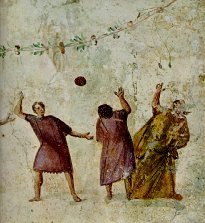
Handball and a form of soccer were keenly played in Rome
We even see a measure of that today with a drive to make sports quasi-religious events with socio-political policies.
So, what sports did the Romans like to participate in? Running, swimming, horse racing, boxing, wrestling – even ball sports such as handball and an early form of football/soccer were all played.
According to 2nd century AD Greek historian Anthenaeus:
“Harpastum, which used to be called phaininda, is the game I like most of all. Great are the exertion and fatigue attendant upon contests of ball-playing, and violent twisting and turning of the neck. Hence Antiphanes, ‘Damn it, what a pain in the neck I’ve got.’ He describes the game thus: ‘He seized the ball and passed it to a team-mate while dodging another and laughing. He pushed it out of the way of another. Another fellow player he raised to his feet. All the while the crowd resounded with shouts of Out of bounds, Too far, Right beside him, Over his head, On the ground, Up in the air, Too short, Pass it back in the scrum.'”
Sure gladiatorial sports were popular (and in truth many sports have a martial origin), but they also enjoyed watching chariot racing – the Circus Maximus was designed for that sport in mind.
Although the Circus Maximus was designed for chariot racing (ludi circenses), other events were held there, including gladiatorial combats (ludi gladiatorii) and wild animal hunts (venationes), athletic events and processions. By the time of Augustus, seventy-seven days were given over to public games during the year, and races were run on seventeen of them. There usually were ten or twelve races a day, until Caligula doubled that number and, from the end of his reign, twenty-four races became typical (Dio, LX.23.5; 27.2).
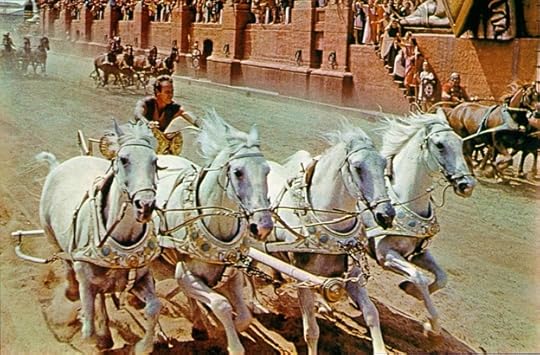
Charlton Heston as Ben Hur, literature’s most famous Roman charioteer.
A number of sports were played naked and married women were not permitted to watch. And yet unmarried women were. Perhaps husbands didn’t want competition from tall muscled men with rippling six packs and… oh wait, what was I saying? Ah yes.

Let’s see the sports here – a relay change over perhaps (the first runner obscured), discus, running, laurels and victories being awarded and a game of handball.
You might be surprised to know that in Greece, unmarried girls had their own games, the Heraea, named for Zeus’s wife, Hera. But other than that there was very little competitive women’s sports in the ancient world.
Biological reality also plays a major role – pregnancy, menstrual cycles and a lack of supportive sports bras. Following the Greek model, most male participants competed nude. I don’t know about you, but the idea of running
braless is not appealing.
Some of the best evidence we have that women played sport in Roman times – the best evidence we have is the delightful – bikini mural – found at a luxurious villa in Sicily.
As you can see the women wore bandeau bras, so I wonder how much time was
spent hitching up the garment?
Dark Heart Excerpt
The young man brushed a sweat-dampened hand over his dark blond hair either suffering in the heat or nervous at being the centre of attention. He continued.
“There is talk among the ranks that the wealthy farmers in the African provinces have threatened to withhold the taxes Maximinus Thrax is demanding to pay for the frontier wars.”
Marcus closed his eyes and breathed out slowly. “And discussed by the Senate at the home of Gaius Caelinus, a group of them planned a delegation to Carthage after the Ludi Apollinaires…”
Marcus was peripherally aware Kyna had entered the room with a tray of refreshments, a task which would have been left to a servant if not for the sensitivity of their meeting.
“I don’t understand the significance of the games,” she said.
“After the defeat at the hands of Hannibal, the early Romans consulted the Oracles of Marcius,” explained Claudius. “Solemn games were to be held and offerings made to beseech Apollo’s help to defeat Carthage.”
“North Africa is one of the Empire’s richest regions,” continued Marcus. “If they start with withhold taxes, you can be sure other provinces will soon follow. It will bring Rome to its knees.”
“Marcus Antonius Sempronianus is the governor there,” added Titus. “If the Senators are meeting with him…”
“Carthage will arise,” Marcus murmured more to himself than anyone else in the room. He pulled the map closer and stared at it, looking for landmarks of significance. “It’s clear the cult thrives on symbolism. According to the mythologies, the new and the full moon are sacred to Apollo.”
He traced a finger from Baiae to a town to the north-east called Lirenas. It made sense. He knew it in his bones. The feeling settled in his gut and wouldn’t brook secondguessing. He tapped the parchment with his index finger.
“When is the next full moon?”
“The night after tomorrow, Magistrate,” Titus answered.
Marcus took a deep breath. “Then I think I know where the boys are!”
Created for book lovers
Join Elizabeth’s Library Book Club today for free reads, exclusive excerpts, competitions and more!
Join Now!
Share!


The post A Sporting Chance In Rome appeared first on EE Carter.
Dark Heart Picked Up By Dragonblade Publishing
It’s been a long haul and given me a lot of sleepless nights and dip in confidence, but I’m delighted to announce that Dark Heart, my Roman-era romantic suspense has been picked up by Dragonblade Publishing.
Dragonblade Publishing specialises in historical romance and boy, does it have some stellar names including New York Times and USA Today Best Sellers.
I’m so delighted to be working with a publisher with such a track record with historical romance.
So… what is Dark Heart all about?
Here’s the blurb:
Rome, 235AD
A series of ritual murders of young boys recalls memories of Rome’s most wicked Emperor. Magistrate Marcus Cornelius Drusus has discovered the cult extends to the very heart of Roman society.
Despite his personal wealth and authority, Marcus is a slave to his past – conflicted by his status as an adopted son, bitterly betrayed by his wife and forced to give up his child.
Kyna knows all about betrayal. Sold into slavery by her husband to pay a gambling debt, she found herself in Rome, far from her home in Britannia. Bought by a doctor, she is taught his trade and is about to gain her freedom when her mentor is murdered by the cult.
When the same group make an attempt on her life, Kyna is forced to give up her freedom and accept Marcus’s protection. With no one to trust but each other, mutual attraction ignites into passion but how far will Marcus go for vengeance when he learns the cult’s next victim is his son?
Can the woman who is free in her heart heal the man who is a slave in his?
I’ll keep you up to date with the date!
Created for book lovers
Join Elizabeth’s Library Book Club today for free reads, exclusive excerpts, competitions and more!
Join Now!
Share!


The post Dark Heart Picked Up By Dragonblade Publishing appeared first on EE Carter.
February 21, 2017
Sense And Sensitivity
It’s reared its head again – the subject of using ‘sensitivity readers/editors’ in fiction.
This positively Orwellian term has emerged in the past couple of years to describe the pre-publishing process to prevent ‘cultural offense’ – either by accident or by design.
What an insult to you, dear reader.
Publishers are using, or considering using, these sensitivity readers to decide what you should or shouldn’t be allowed to read. Even authors are feeling under pressure to use ‘sensitivity readers’ during the writing process.
If that doesn’t fill you with dread, it should.
Novels have always been dangerous creatures.
They are the imaginings of an author who examines the human condition – with all the good, the bad and the ugly that goes with it – through the eyes and perspectives of its protagonists – the heroes, heroines, antagonists and villains.
(If you’re not sure the difference between an antagonist and villain, I have a primer for you.)
A novel is a self-contained universe, similar to, but separate from our own.
Like other art forms (a beautiful painting, an exquisitely rendered sculpture, a haunting piece of music), novels can tug at our emotions and make us feel pleasure, love, anger, hate.
However, novels do something unique from other art forms and literature. We get into the heads of the characters, we understand the fullness of their motivation and therefore the actions they take – even if those choices lead to their destruction.
First and foremost, novels are a work of fiction, that’s why it contains the disclaimer that: ‘Names, characters, businesses, places, events and incidents are either the products of the author’s imagination or used in a fictitious manner. Any resemblance to actual persons, living or dead, or actual events is purely coincidental’.
An important disclaimer, as MGM discovered to its cost in 1932.
Novels are not real. They are completely made up.
I can’t believe I even have to say that, but considering the disproportionate amount of publicity and flak Lionel Shriver received at the Brisbane Writers Festival address, I feel I must, because it seems it’s not obvious to everyone – even taxpayer funded activists.
This is not to say the writers shouldn’t do their research – absolutely they should – if only for our own self-interest. We don’t want to look like an idiot by getting something wrong which can easily be fact checked.
The operative word here is ‘fact’. Fact you can check. Something is either true or it is not – at worst it becomes a matter of conjecture and therefore ripe for speculation and interpretation.
Feelings and sensitivities are not facts. They are many, varied and entirely subjective.
Herein lies the danger of ‘sensitivity editors/readers’. What is offensive to one person is not to another.
Whose sensibilities should triumph in such a battle?
Isn’t it arrogant in the extreme that one person who identifies with a certain socio-political or ethnic group should speak for all of them?
Human experience and perspective is many and varied. I would say it is even unique.
No two people are going to think or feel the same no matter how many little identity boxes they appear to check.
This is why the issue of sensitivity editors/readers is important to you, dear reader.
You are a smart, intelligent person who knows the difference between fact and fiction
You are quite capable of reading things that challenge pre-conceptions and make a decision whether to accept or reject the author’s premise
You are also self-aware and self-assured enough to know how to close a book if you read something you would rather not continue with. This is not assigned reading at school. There is no one to make you continue if you do not wish.
Every man his own ‘sensitivity reader’ – oh wait, was that problematic? Never mind, I know you’re intelligent enough to recognise a variation on a well-known literary phrase.
It is you, dear reader, who should be the sole arbiter of what books you read, not some backroom activist who doesn’t know you.
An author has just one responsibility – tell an interesting story with compelling characters.
Everything else is propaganda.
Created for book lovers
Join Elizabeth’s Library Book Club today for free reads, exclusive excerpts, competitions and more!
Join Now!
Share!


The post Sense And Sensitivity appeared first on EE Carter.
February 13, 2017
Win A Kindle Fire & Books

Have you read my novella Nocturne? For a limited time, you can enter to win the book plus 45 fantastic Regency novels from an amazing collection of authors, PLUS a Kindle Fire
Enter the contest by clicking here: https://www.booksweeps.com/enter-win-45-regency-romances-feb-17/
When you’re done, leave a comment to let me know you’ve entered!
Created for book lovers
Join Elizabeth’s Library Book Club today for free reads, exclusive excerpts, competitions and more!
Join Now!
Share!


The post Win A Kindle Fire & Books appeared first on EE Carter.