Elizabeth Ellen Carter's Blog, page 33
November 22, 2013
Couples In Close Up: Authors Travis Sharpe and Heather M Sharpe
One of the great things about being a romance writer is the opportunity to explore the dynamic between men and women.
Men may be from Mars and women may be from Venus, but we both inhabit planet Earth together and great many of us fall in love and live happily ever after together but that doesn’t mean that we don’t have differences of opinion.
This will be the start of an occasional series where we look beyond the ‘happily ever after’ and talk about life, love and working together.
My special guests are husband and wife writers Heather and Travis Sharpe.
Heather is a stablemate from Etopia Press and author of Finding Flight, a shape-shifter romance while her husband Travis is signed with Rebel Ink Press and his latest title is Tunneling For Revenge.
Heather M. Sharpe lives on 6 acres in Central Kansas with her husband, perfect baby boy, mother-in-law, and sister-in-law. In case the house isn’t full enough, it also includes four noisy dogs, one cat who inspired For the love of a Sphynx, another who torments him, and a lizard. At night, all of them think they need room on the bed (except the lizard, thankfully).

Travis and Heather Sharpe with their gorgeous son.
How long have you both been writing?
I’ve been writing about 4 years, and Travis 3.
I’ve always loved train tagging (i meant reading, but my phone autocorrect was too funny to delete, lol!) and writing.
Travis only started enjoying reading about four years ago and writing about three.
Was writing one of the things which brought you together?
Not at all. We are high school sweethearts-the whole football player/cheerleader story. I was also a book nerd/band geek, though. After fifteen years together some habits began to rub of on each other. Now I get up early to work out and he writes!
Is writing a solitary pursuit for you both or do you collaborate on story developments?
We wrote different genres but collaborate. Before I quit to stay home with our son we drove 20 minutes to work each morning together and often talked through plot points. He’s helped me with some twists, and I gave him the idea for the antagonist for his next WIP.
Do you critique/edit each others’ work?
We did a lot in the beginning. Now that a toddler has claimed so much of our spare (ha!) time we don’t as much. We still send each other chapters or blurbs/synopsis and beta reads to look through.
What is the best thing about being married to a writer?
Being able to be together and working at the same time. It’s part of what got Travis started writing-so he’d have something to do while I was writing, and what we liked about being two college kids together. We’d study side by side and get our work done and still be together. I also like that he is understanding of a stay at home mommy that may have used nap time today to write instead of do housework.
What is the worst thing about being married to a writer?
Hmmm. It’s pretty great. I guess trying to market two people and separate genres. I love writing but marketing is a struggle for both of us.
Considering how obsessive and solitary writing can be, how do you keep the work/life balance in your relationship?
We use writing as something we can do together and talk/share what we are doing so it is actually something that brings us together. Before the toddler it was a great way to spend a winner evening when it was too dark and cold to play outside sitting together writing. Now it’s more difficult to find writing time at all, so we can take turns if need be. Usually he gets up at 4:30 or earlier and I stay up after my boys are asleep to get our writing in.
Thank you for joining us!
Tunneling for Revenge

A man with a special gift is bent on revenge. Who can stop him? Tunneling for Revenge by Travis Sharpe
Travis Sharpe
Blurb:
Fueled by revenge, guided by an intense hatred for any type of elected or appointed authority, and driven by an inherent need to worship a strong male leader, Alex sets out on a killing spree that will satisfy all three of his psychological crutches. Alex seeks to avenge and free his captured leader. He planned to do this on his own, but prior to embarking on his journey he is approached by a mysterious organization that offers to finance his entire operation. The specialized weapon system that they offer him for the job proves too much to pass up.
The CIA agents who caused the downfall of his beloved anarchist cult become aware of his murderous plot, and they engage in a deadly game of cat and mouse with Alex’s ability to defy physics as a wild card. Thanks to his newfound weapon, Alex avoids capture while paralyzing his enemies with fear. Alex’s mysterious helpers employ the assistance of a local gang whose mission is to assist Alex in finding one of his targets. In so doing, the local gang, Alex, the CIA agents, and the local police find themselves mixed up in an international gang war for control of the illegal drugs and firearms market in the United States. A colossal betrayal finds Alex working
on the side of law enforcement with him as a tool to help thwart the influx of foreign gangsters, and them as a tool to help Alex exact revenge on the very man he would have stopped at nothing to protect.
www.facebook.com/travisksharpe
www.travisksharpe.webstarts.com
Finding Flight

Can her gift help her find an everlasting love? Finding Flight by Heather M Sharpe
Heather M. Sharpe
Blurb:
As an Enforcer for a secret society of shapeshifters, Ledger Arneau is offered a chance to retrieve his wayward brother before The Council puts out a warrant for his arrest. When the trail goes cold, he is willing to try anything to pick it up again, even if it means bringing in an outsider.
Corinne Winters is able to find any missing object, except her own, by concentrating on it. She’s always dreamed of using her skills to help locate missing people. After an embarrassing setback with the local police department, she jumps on the opportunity to use her skills to help Ledger.
Corinne finds a love she didn’t know she was looking for with Ledger, and discovers a new depth to her talent when they are together. When her new love and his brother disappear back into the secret society, Corinne must stretch her talent beyond anything she ever imagined to bring them home. Unaware of the circumstances surrounding Ledger’s disappearance, Corinne races across the country on his trail. When she finally locates the brothers, she witnesses the unbelievable, and flees in terror. In order to claim the love of her life, she must find a way to accept him and his secret.
Links: www.heathermsharpe.webstarts.com
www.facebook.com/heathermsharpe
www.twitter.com/heathermsharpe
Barnes & Noble: http://www.barnesandnoble.com/w/finding-flight-heather-m-sharpe/1115091588?ean=2940016720999
Allromance ebooks: http://www.allromanceebooks.com/storeSearch.html
The post Couples In Close Up: Authors Travis Sharpe and Heather M Sharpe appeared first on EE Carter.


November 16, 2013
History On Repeat
“You have the works of Alexander Pope and Jonathan Swift by your bedside but are currently reading Burke’s Reflections on the Revolution in France, which, incidentally, you must lend me when you’ve finished. I’ve not yet managed to get a copy.”
Through the last, Selina’s sapphire-blue eyes widened. “You know what I have by my bed?”
– Moonstone Obsession
Two men. Good friends and great intellects.
Edmund Burke and Thomas Paine were two of the leading philosophers and political commentators of late 18th century.
Both were supporters of the American Revolution of 1776 which resulted in the formation of the United States of America as an independent country.
And yet both fell out over the French Revolution.
In short, the American Revolution set about to redress a specific grievance – that of lack of political representation and unfair taxation – while the French Revolution was in effect a civil war grounded in a broad grievance – redress for unjust society in which the ruling class prospered at the expense of the working class.
On this Burke and Paine were in broad agreement – socio-political reform was greatly needed – the difference lay in how to bring this change about.
Let’s compare the two of the most influential opening statements in history:
The American Declaration of Independence: “We hold these truths to be self-evident, that all men are created equal, that they are endowed by their Creator with certain unalienable Rights, that among these are Life, Liberty and the pursuit of Happiness.”
France’s Declaration of the Rights of Man and of Citizens: “Men are born and always continue to be free, and equal in respect of their rights. Civil distinctions, therefore, can be founded only on public utility.”
Superficially there seems to be little difference between the two but there is one significant distinction and one on which Paine and Burke fell out over.
Burke, being a traditionalist, did not dismiss the involvement of religion in the political sphere. If man’s inalienable rights of life, liberty and the pursuit of happiness are given to him by God, then not even the state has a right to take it away.
Paine saw man as a ‘natural being’, following Jean-Jacques Rosseau’s philosophy expounded on earlier that century that human beings were essentially good and equal in the state of nature but were corrupted by the introduction of property, agriculture, science, and commerce.
Burke, who had conservative leanings, wanted to see change that occurred slowly over time and that respected tradition. Most important, he did not want to see the state usurp the power of the individual. Thomas Paine, on the other hand, believed that monarchy was unnatural and evil, and therefore the people had the right to overthrow such an institution at any given time. Paine saw the new state as an agency which represented the people, and he unconsciously ignored the injustice of some of its actions.
Without historical context which sees men not as independent agents but ones shaped by past events and present society, Burke feared that the French Revolution would be ruthless and violent. The Reign of Terror proved him right.
“Ideology, when not tempered with a proper fear of the rights of the Creator, can only lead to the worst elements of human nature being allowed to prosper unchecked—‘all human laws are, properly speaking, only declaratory; they have no power over the substance of original justice.’”
Lady Margaret looked at Selina. “I see you side more with Edmund Burke than Thomas Paine,” she observed.
– Moonstone Obsession
What started as starry-eyed idealism, implemented with the best and most noble intentions in the world, ended up making a mockery of the fundamental tenet of Enlightment philosophy – that man is inherently good and society is corrupt so therefore provide the perfect model and social harmony is sure to follow.
Thomas Paine realised this too late. But at least he realised – many others in history did not.
The same failure to understand human nature, human history and the misguided notion of the perfectability of man through imposition of law led to the worst excesses of the 20th Century – the rise of the Third Reich, the Italian Fascists and Communism.
So let’s give the last word to Edmund Burke:
Those who don’t know history are doomed to repeat it
And to Split Enz:
The post History On Repeat appeared first on EE Carter.
November 15, 2013
EE Carter Library – Shadow Beneath The Sea by Joanna Lloyd
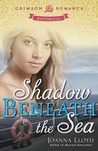 Shadow Beneath the Sea by Joanna Lloyd
My rating: 5 of 5 stars
In public consciousness the tragedy which is the sinking of the Titanic is the one the looms most readily to mind.
That’s a shame because the 1915 sinking of the Lusitania is the one which has the greatest impact on 20th century history.
Without this tragedy off the Irish Coast, the US may not have entered the European conflict we know as World War One.
Without American involvement in WWI, with the popular domestic notion of isolationism and non-intervention, odds are that they may not have entered WWII.
The repercussions of such an outcome would have profoundly affected the history of the 20th Century as we know it.
Joanna Lloyd has done a wonderful job at putting a human face behind the events of that fateful voyage via the romance of Lillian and Edward – drawn together despite their class difference by the machinations of scheming family members.
This is a novel to finish in one sitting, a lovely 5-6 hour read just made for the holidays.
Joanna’s description of shipboard life on this luxury liner and the devastation wrought by the U-Boat torpedo are vivid and exciting.
I love historical romances which are pegged to real life events and Shadow Beneath the Sea does not disappoint in any way.
I can’t wait to visit Joanna’s back catalogue.
The post EE Carter Library – Shadow Beneath The Sea by Joanna Lloyd appeared first on EE Carter.
November 13, 2013
Coffee Time Romance
 Hi everyone visiting from Coffee Time Romance!
If you love historical romance, I do hope you enjoy mine. I’m running a Facebook promotion where you can win a certified organic botanical perfume Delicious by Miessence – an infusion of Cacao, Vanilla and Honey. The details are in the graphic below.
In the mean time here’s an extract from Moonstone Obsession especially for you!
The popular country dance ended and the floor cleared, gentlemen taking a bow, ladies a quick curtsy, and lovers retreating into the shadows and out to the garden for fresh air.
Heavy lead crystals in suspended chandeliers, lit by hundreds of candles, caused prisms of light to dance on the empty parquet floor as the orchestra sounded the first few bars of a new piece, one that was all the rage on the Continent. The waltz.
A murmur ran through the crowd along with titters of amusement. Those men who had not selected partners for the next dance quickly pressed their claim with their favorites.
“Shocking! I’m surprised the Duke of Chesterfield allows such indecency,” Selina overheard an elderly dowager seated behind her harrumph to her companion. “Have you ever seen a waltz? Pressing bodies together so barely a kerchief passes between.”
Although growing in popularity at the most fashionable soirees, waltzing was highly risqué. Selina had only ever danced it with one of William’s twin boys on her hip as a dance partner. She smiled at the memory while she watched couples move out onto the dance floor.
“Do you wish to scandalize the Countess of Harrogate?” James spoke close to her ear.
She jumped, but not before a delicious shiver ran down her spine.
Selina’s first thought was to demur, but the promise she made to her sister-in-law weeks ago to flirt and enjoy asserted itself, so she gifted James with a dazzling smile.
Reacting to her changing expression with a knowing look of his own, James bowed formally, taking a proffered hand to escort her to the floor.
Selina was surprised at how smoothly she and James moved together. In contrast to the other dances this evening, with their highly rehearsed steps, the waltz simply required the couple to move in harmony.
Encircled by James’s right arm at her waist, his left hand holding her right, Selina was more than aware of his masculinity as they moved around the floor. Unlike some of the other men she had danced with this evening, men whose overly liberal scent of cologne nearly made her gag, James smelled of crisp pine and rich, fresh tobacco.
She looked up to find him regarding her equally thoughtfully. It was disconcerting, so she spoke.
“My Lord, do you feel a sharp pain in your back?”
He frowned, confused.
“I fear the daggers being cast in your direction by the Lady Abigail must surely be drawing blood.”
“Ah, so that’s what it was I felt.” He grinned before leaning in to whisper, “I thought the ill will was from the Viscount Canalissy for dancing with the most intriguing woman here.”
A sudden rush of heat bloomed through her, and with that, every coherent thought fled. If not for James’s firm hold and skilful movement, Selina was sure that she would have tripped over her own feet.
“Oh, now I know you’re having fun at my expense,” she said breathlessly.
“Are you sure?” He grinned.
She looked him full in the face and arched an eyebrow.
James’s smile broadened as Selina recovered her poise.
“You don’t believe me?”
She gave a long slow smile and shook her head in response.
Seeing the challenge, he leaned in. “Let’s go see,” he whispered, and changed direction suddenly, pulling her close so her body molded to his as he deftly pivoted midstep.

The post Coffee Time Romance appeared first on EE Carter.
No, no, Na-No
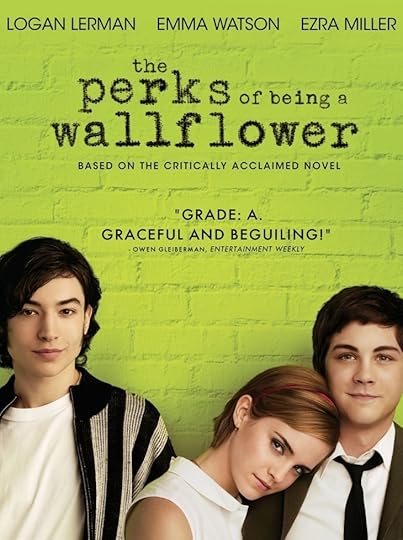
Being a wallflower isn’t all bad…
I’m a wallflower, sitting at the sidelines while other people enjoy the party.
Everyone looks like they’re having so much fun, that I’m rather ashamed of my excuses for not joining in – I’m tired, I had lots to do, I have to wash my hair, I have nothing to wear.
I’m talking about Na-No – otherwise known as Na-No-Wri-Mo – otherwise as National Novel Writing Month.
Actually the pedant in me wants to point out that should actually be In-No-Wri-Mo because this party is much bigger than any national boundaries.
I could have started something for Na-No. Really, I could have done. It’s only going to be a novella, I really could have completed it in 30 days, really I could.
But I haven’t.
But that’s okay.
I think it’s important for authors to take a break, sit out a set, shuck off the heels and watch the others on the dance floor for a moment.
A big congratulations to everyone who has put shoulder to the wheel, fingers to the keyboard.
I’m looking forward to seeing the fruits of your work. This is no small thing that you’re doing
I’m feeling revived. Moonstone Obsession is selling well. Warrior’s Surrender is in first stage of editing thanks to my darling husband and I’m just about ready to jump back into the writing again.
Right after I finish this drink.
The post No, no, Na-No appeared first on EE Carter.
November 2, 2013
Dancing With Myself
Last week I talked about historical accuracy in historical romances so before I stand in my glasshouse to throw stones, I want to talk about The Waltz.
I feature it in the opening chapter of Moonstone Obsession in 1790 and, as mentioned in the previous post, I did have a dear beta reader ask whether that was strictly historically accurate. Well, I have found a reference to the Waltz being introduced to England in 1790 and considering the great cross-pollination of culture between England and Europe, I see no reason why it might not have been danced in very fashionable events in London at the time.
One of the most popular ball room dances today, The Waltz was highly controversial, rather decadent dance that, depending on who you asked, was rather obscene.
Like twerking.

Twerking – not to be confused with the Waltz
Or perhaps not.
The waltz had its origins in Europe and dates back to the 13th Century and owes much to vivacious and informal country dances in contrast the very formal processional style of dances favoured by the aristocracy.
It can be argued that the Waltz evolved from a medieval dance step called Volta – (two steps and a leap) to become the Waltz (Walzen is the German for slide) in the 1520s.
The first tangible waltz tune appeared in 1670 in a popular song, “O du lieber Augustin.” Vienna was the first to reveal the Viennese waltz (Valse) in the Opera “Una Cosa Rara” in 1776. However, it did not become popular until 1788, when it was introduced on the Viennese stage, in an opera called “The Cosarara,” by Vincent Martin.
The waltz was said to be introduced to England in 1790 by Baron Newman (some say 1812). Later it was introduced into France from Germany by the triumphal soldiers of Napoleon I (1769-1821,) after his return from Germany, following his grand encounter at Austerlitz in which three of the greatest armies of Europe, each commanded by an Emperor, were signally defeated on December 2nd, 1805.
So what was the big deal about Waltzing? I mean it’s not like bending over and shaking one’s arse in the air or anything.

The Waltz – Not to be confused with twerking
First of all, it was a closed dance, as in the couple danced close together – close enough for body parts to touch, in fact.
While this seems innocent enough in today’s dance world, at the time it horrified many “proper” folk, such as novelist Sophie von La Roche, who described it as the “shameless, indecent whirling-dance of the Germans” that “…broke all the bounds of good breeding,” in her novel Geshichte des Fräuleins von Sternheim, written in 1771.
The dance was still being described as indecent as late as 1825, but it is clear that once it arrived in England, it quickly spread to the United States as is evidenced by this 1816 dance manual, featuring a spirited defence of the dance form in its preface.
Of course, as dancers know, there is more than one type of waltz – with most of the variations dependent on the tempo of the music. The Viennese Waltz is the fastest at a stunning 174 beats per minute.
As a comparison, Billy Idol’s 80s hit, Dancing With Myself is also 174 bpm – which is great, but can you Waltz to it?
It would be fun to try. PS Gotta love the zombies!
The post Dancing With Myself appeared first on EE Carter.
October 30, 2013
Fighting The Flab
I joined a gym yesterday.
I also have a flabby middle.
The two things aren’t necessarily related (okay, maybe a little).
The flabby middle actually relates to the concern I have with Warrior’s Surrender, my latest WIP.
You see my characters have been through the mill in the first third of the book – filled with angsty, angsty goodness that makes romance such an emotionally resonating fiction genre and they will go through plenty of drama before we get to the happily ever after, but I thought they deserved a little idyll, an eye of the cyclone, if you will, but how much is too much?
That’s what I need to go back and decide.
Perhaps I should take Nora Robert’s advice:
 Hmm, I’m not sure I want to kill any of my characters off – just yet.
Perhaps one of the characters who precipitates the action in the final third of the book should get her comeuppance early… ?
Now that’s something to ponder. Along with a couple of these great ideas.
For now the only thing to do it use my metaphor and turn it into reality – take the tension and take the energy and use it.
I’m going to the gym to exercise away my flabby middle, I need to exercerise a little more thought and to get rid of the flab in Warrior’s Surrender.
And I can’t do it alone, so that’s why I’m going to a gym and that’s why I’m going to use the support of my crit partners, including my darling husband and perhaps try some of these exercise tips:
Crunches – It should be crunch time, a decision time for my heroine. She needs to have her big revelation here.
Lunges – Lunge into some action right from a standing start. Our characters have been standing around for a little bit. They’ve had enough of a break now.
Walk, jog, run! – The reader should by now have gotten to know the characters and fallen in love with them too. Now is the time to accelerate the action.
Leg raises – Well, it is a romance after all…
The post Fighting The Flab appeared first on EE Carter.
October 25, 2013
Thoughts on Historical Accuracy

Rose of Rapture – one of the finest and most underrated historical romances set in the War of the Roses era
I have a confession to make.
I’m an author.
I make things up.
I even make stuff up about real things that actually happened.
The writer’s craft is to blend fact and fiction so skillfully that the casual reader will not know where one ends and the other starts.
A book can even play with the facts of history as long as a strong enough case has been built in its pages. A case in point is Rebecca Brandewyne’s Rose of Rapture, the starting point of my historical romance journey back in the late 1980s which revealed to me what was possible in historical romance.
Brandewyne presents Richard as a man who accepts the throne of England reluctantly and whose inherent decency made him the unwitting victim of ambitious schemes to put another on the throne.
Unlike Shakespeare’s depiction of Richard III:
“And therefore, — since I cannot prove a lover,
To entertain these fair well-spoken days, —
I am determined to prove a villain,
And hate the idle pleasures of these days.”
Although popularly condemned for the murder of his nephews (rival claimants to the throne), Richard in Rose of Rapture is not the villain but rather the blame is laid at the feet of someone else whose ambition actually went on to foster the great Tudor dynasty.
Fact or fiction? Who’s to say? The passage of time has obscured the truth and the facts remain for academics to discuss. For the rest of us, a well outlined argument is all we need to suspend our disbelief for the duration of the story.
I’m currently reading Philippa Gregory’s Other Boleyn Girl, a fascinating page turner set in the court of Henry VIII as told through the eyes on Anne Boleyn’s sister Mary, reputed to have been one of Henry ‘s lovers and mother of two illegitimate children Henry and Catherine.
Who cares whether Mary reconciled with her cuckolded husband as sweetly as portrayed in the book? Who cares whether a tennis match played by Henry resulted in a sprained ankle. It doesn’t matter to history, but it does matter to the character whose story is being told here.
Gregory’s ability to tell a story is undisputed and the way she spins the political machinations around Henry’s need for an heir at any cost is done so in an utterly plausible way.
Except…
Two things jarred with me and caused me to look up the history of Mary, Anne and their brother George for myself.

Philippa Gregory’s popular and entertaining The Other Boleyn Girl.
The first was that Anne is listed as the older sister, even thought it was Mary who was married first. That didn’t sit right. Convention dictates that the eldest girl is married first. Indeed historians believe that Anne was younger than Mary by as little as a year.
Does it matter? Not if the tale of the youngest sister manipulated by the sibling and her parents is pivotal to the story, but it is not and that break of the suspension of disbelief makes one question other things , such as George Boleyn’s homosexual pining for the unrequited love of the equally smitten fellow courtier.
This jars quite strongly considering the great deal of effort Gregory goes to hint at and later evolve the suggestion that George and Anne were incestuously involved – a conceit which makes sense in the light of the charges faced by Anne and George in 1536 and for which they were, in part, executed.
Again whether the accusations of incest were true or not are moot. The accusations themselves are a matter of fact and it is the author’s prerogative how she wishes to proceed, but that makes the introduction of George’s homosexual subplot all the more heavy handed.
But does this ruin an otherwise great read?
Perhaps not, but it does take the gloss off.
To quote Shakespeare again: “All that glisters is not gold; Often have you heard that told…”
What do you look for in historical romance? Is historical accuracy important or does a ‘good yarn’ triumph any inaccuracies or anachronisms? Let me know in comments below.
** Confession time**
During an early draft of Moonstone Obsession a beta reader challenge me on whether my characters would have danced a waltz in 1790. I will confess to a slight historical anachronism. I have seen references to 1812 but I have also seen a couple of reference to the waltz introduced to England in 1790, so I will claim that date.
The post Thoughts on Historical Accuracy appeared first on EE Carter.
October 17, 2013
Moonstone Obsession Release Day!

I’d be honoured if you bought my book on opening night!
It’s Moonstone Obsession’s release day.
Thank you to everyone for your kind words support and congratulations.
I’ll be organizing promotions when I’m back from Fiji next week. But don’t let that stop you from buying on opening night!
You can purchase Moonstone Obsession from Amazon. Direct link to come as soon as I am at a computer and not on a tablet!
The post Moonstone Obsession Release Day! appeared first on EE Carter.
October 16, 2013
Backstage With Moonstone Obsession
Well, it’s opening night.
The cast are backstage in their costumes waiting for the theatre doors to open.
It’s a quiet moment. One for reflection, about the journey, about the rehearsals, about the behind the scenes dramas – the story behind the story.
There’s excitement but there’s also the fizz of nerves that settles in the belly, of adrenaline pumped, primed and ready to be released.
There is also great expectancy… and humility.
The writer is here.
She loves her characters. From the leads to the extras, all the cast know their lines and are note perfect. The costumes are beautiful and the sets exquisite.
But she is the most nervous of them all. This is the acid test. Her soul has been laid bare.
Will they like her words or will the critics be harsh?
Will the audience find the humour where there is humour, tears where there are tears, rejoice where there is love?
The writer-director and the cast wait.
The backstage clock ticks over with agonising slowness. Opening curtain can’t come soon enough and yet it will be here all too quickly.
They wait for the theatre doors to open.
The post Backstage With Moonstone Obsession appeared first on EE Carter.