The Oracle of the Dead
Dark Heart, my Roman-era romantic suspense will be published on April 28 through Dragonblade Publishing. Unlike a lot of other stories of this time period, I didn’t want to to just set the story in Rome, as magnificent though that city is – there are other important cities too.
And, as these things go, one click leads to another on the Internet and before I knew it I’d made an ancient discovery…
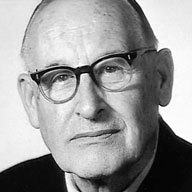
Doc Paget, a British amateur archaeologist who turned our understanding of Ancient Greek mythology on its head
Long before there was Indiana Jones, there was another enthusiastic amateur British explorer in the 1960s by the name Dr. Robert Ferrand Paget who worked at an NATO base in Italy.
He was fascinated by the ancient culture – both Greek and Roman and the interest was shared by an American naval officer Keith Jones – particularly the story of The Oracle of the Dead.
In 1932, the entrance to a hitherto unknown antrum (chamber) was discovered by an Italian archaeologist, Amedeo Maiuri. As Maiuri and his team did not continue with their exploration after penetrating the tunnel for a couple of feet, the mystery of the antrum was left alone. It was only in the 1960s that the antrum gained attention again. This time, it was a British amateur archaeologist, Robert Paget, who explored the antrum. Along with an American colleague, Keith Jones, and a small group of volunteers, Paget began a decade-long excavation of the antrum. What he discovered was a complex system of tunnels.
Based on his findings, Paget speculated that this was the legendary ‘Cave of the Sibyl’ that was described by ancient authors. The Cumaean Sibyl, meaning the prophetess, is said to be a woman named Amalthaea who lived in a cave in the Phlegraean Fields, the area where the tunnel was found. According to legend, she had the power of prophesy, and scribbled the future on oak leaves scattered at the entrance of her cave.

This is one sibyl on a mission
The Sibyl of Cumae is one of the most famous of Greco-Roman mythology thanks to this story:
In the Roman Antiquities, Dionysius of Halicarnassus recounts the story of an old woman who came to visit Lucius Tarquinius Superbus (or Tarquin the Proud), the last king of Rome. She brings with her nine books that she claims contain sibylline prophecies. She offers to sell the books for what seems like an unreasonable amount of money. The king laughs at her ridiculous price. In response, the woman burns three of the books (boy … that escalated quickly).
A while later, the woman returns with the remaining six books and offers to sell them at the same price as the original nine. Again, the king laughs at her, assuming she has lost her mind. Again, the woman leaves and burns three more of the books (this is getting out of hand … fast).
Undeterred by the king’s obstinacy, the woman returns with the remaining three books. She offers to sell the king the three books for the same price as the original nine. This time the king does not laugh.
“Tarquinius, wondering at the woman’s purpose, sent for the augurs and acquainting them with the matter, asked them what he should do. These, knowing by certain signs that he had rejected a god-sent blessing, and declaring it to be a great misfortune that he had not purchased all the books, directed him to pay the woman all the money she asked and to get the oracles that were left.” -Dionysus of Halicarnassus (Roman Antiquities)
The stories were considered myths, but Paget and Jones weren’t so convinced. They, like another amateur archaeologist, a German businessman by the name of Heinrich Schliemann, believed that myth held a kernel of truth. For Schliemann it was in discovering the lost city of Troy.
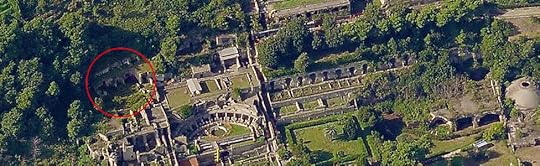
An overhead view of the resort city of Baie with the entrance into the Oracle circled in red. (Image source: OracleoftheDead.com)
Paget and Jones were convinced that the Oracle of Dead was in the ancient Roman resort town of Baiae (I’ll be blogging on it next week). They were so sure that they funded their own expedition. Why was a Greek Sibyl doing in Italy? Well, the Greek Empire controlled most of the peninsula. Greek temples can be seen all across southern Italy in particular.
Paget’s summary can be found here.
Early origins – Historically, the origins of the Greek myths surrounding notions of the Underworld are lost in the mists of time. The nurturing earth mother female principle of the Goddess Hera reigned. From the ground all life springs and to the ground it returns in death.
Various fertility rites in commemoration of these beliefs developed and are generally referred to as Chthonic.
Chthonic – kθɒnɪk – comes from the Greek word χθόνιος – chthonios which means “in, under, or beneath the earth”, from χθών – chthōn “earth”; pertaining to the Earth; earthy; subterranean.
Apart from its literal translation, its historical or interpretive definition extends to cover the deities or spirits of the underworld, especially in relation to Greek religion. Chthonic rites are equally a celebration of life that springs from under the ground.
754 BC – The very early Greek settlement of Cuma is about 4 kilometers from Baia. Cuma was traditionally founded at this date (Pithecusa – modern Ischia – had been occupied by Greeks some time earlier).
The only way to discover the truth was to go underground and what they found was amazing (although it is subject to conjecture) – they claim to have found the River Styx.
The tunnel system, the two men proposed, had been constructed by priests to mimic a visit to the Greeks’ mythical underworld. In this interpretation, the stream represented the fabled River Styx, which the dead had to cross to enter Hades; a small boat, the explorers speculated, would have been waiting at the landing stage to ferry visitors across. On the far side these initiates would have climbed the stairs to the hidden sanctuary, and it was there they would have met… who? One possibility, Paget thought, was a priestess posing as the Cumæan sibyl, and for this reason he took to calling the complex the “Antrum of Initiation.”
The Oracle of the Dead actually exists – as an elaborate piece of theatre.
Vistors are promised a meeting with the Sybil, but first they must cross the River Styx in a boat piloted by Charon.
They are led down into the bowels of the earth through an underground passage – some hand-hewn, part naturally formed by the ebb and flow of magma overtime – until they arrive at an underground river, warm and steaming from the sulphurous heat which, most likely would have fed the hot baths, the caldarium, in the spas for which Baiae was famous.
There a figure beckons them into a small boat and the visitors are rowed across. At the other side, actors complete the charade and at the end of the show, everyone follows another passage up and over the subterranean river to the exit.
There are even short cut passages within this complex to make it easier for the ‘cast’ to move unseen from location to location.
After reading about this amazing piece of amateur archaeology, I couldn’t resist, I had to include it in Dark Heart. By the time the story is set, the Oracle of the Dead had been forgotten, but not by our villains.
They’ve used it to terrify the reluctant acolytes of the cult of Elagabalus and use it to try and kill off our hero! (Spoiler alert, Dark Heart is a romance, so he does get out alive