Kay Kenyon's Blog, page 10
October 10, 2017
Women spies of the World Wars: Noor Inayat Khan
This blog series on women working undercover during the world wars highlights a few of the stories that inspired me while writing At the Table of Wolves which deals with the anti-fascist career of Kim Tavistock in the years leading up to WWII.
In the second World War the life expectancy of radio operators in occupied Europe was six weeks. Despite the danger, a number of women applied for and were accepted by the British military for missions behind enemy lines. Among them was Nancy Wake, the first subject of my blog series, and Noor Inayat Khan.
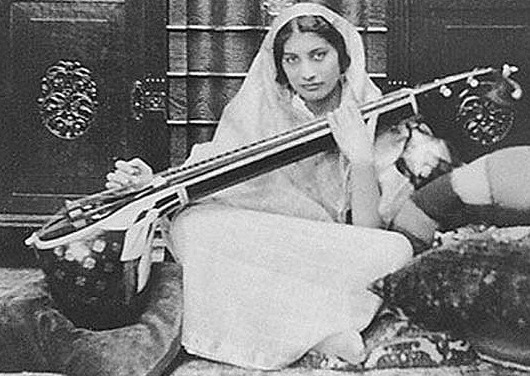 Born in 1914, Noor Inayat Khan was the daughter of an American woman and a prominent Indian father who taught Sufism. The family settled in Britain but moved to Paris in 1920 where Inayat Khan studied music at the Paris Conservatory. At the outbreak of WWII the family fled to England where Inayat Khan cared for her siblings and her widowed mother. Despite her strong pacifist beliefs, she felt she most do something to fight the Nazis and joined the Women’s Auxiliary Air Force and soon, the Special Operations Executive (SOE) for work as a radio operator where her fluent French was seen as a crucial asset.
Early in the war, women had often been used as couriers, but their role as deployed radio operators was relatively new when Inayat Khan took her training and went to occupied France. Because of her quiet demeanor and modesty, Inayat Khan was discounted as a trainee and nearly cashiered. Self confidence in secret warfare was considered essential, but in addition, prejudice against Inayat Khan’s cultural background likely influenced her handlers to mistake her self-effacing style as self-doubt.
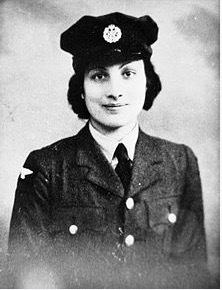 Without trained radio operators in occupied France it would have been nearly impossible to support sabotage work with supplies and military expertise. An operator could not transmit more than 20 minutes at a time since the Germans patrolled with vans listening for signals. Radio antennae were often strung up in attics or disguised as wash lines, and the operator had to constantly move to new locations to avoid detection. This Inayat Khan did with distinction.
But she did not make it to six months. After four months as a radio operator in occupied France, she was betrayed by either the sister of a French resistance operative or a SOE officer who was suspected of being a double agent of the Nazi SD, the intelligence arm of the SS. Inayat Khan was interrogated at the SD headquarters in Paris over several weeks, twice escaping only to be recaptured. She did not reveal intelligence under questioning, but her signaling notebooks were found with fatal consequences to several secret agents.
Her Nazi captors sent her to Germany and held her there in shackles for ten months before she was taken to Dachau and executed with three other women resistance fighters in November, 1944. The two French operatives held hands as they were shot, and Inayat Khan held hands with a fellow British prisoner.
Inayat Khan was posthumously awarded a French Croix de Guerre with silver star and the George Cross, Britain’s highest award for gallantry not in the face of the enemy.
Other women spies in this blog series:


October 3, 2017
Drawing Winners
Thank you to all those who entered my drawing for a chance to win a free audiobook of At the Table of Wolves!
Our four winners are: (And thanks to Sharon Shinn for conducting the drawing!)
B. Fisher, Z. Zielinski, A. Knight, H. Farmer. Congrats to the winners! (If any of the four of you didn’t receive an email from me yesterday with your promo code, please check your spam folder or contact me.)
 Giveaways are a common feature of my infrequent newsletters, so please stay tuned for more offers like this one, and if you’re an Audible fan, the book is always available here.
September 21, 2017
Writing a novel synopsis
The two-page synopsis is one of the toughest things I have to write. Yes, even harder than the chapter outline.
I mean, if I have 20 or so pages to convey my story in a detailed way, it’s kind of like writing a short story. The old line “Sorry this response is so long, but I didn’t have time to make it short,” carries a hidden truth. In many cases, long is easier than brief.
So, yes, I do think the two-page synopsis is murder. I like to start long and gradually pare down. (There are people who can pound out a synopsis in one sitting, but these people can never be my friends.)
For basics on the synopsis, you can find plenty of suggestions (such as here) from people who are smarter than I am. So I’ll skip right to:
My special tips for the two-pager
Head up the synopsis with an elevator pitch in italics. Start the elevator pitch with “What if.” Using At the Table of Wolves as an example: What if, in inter-war England, when magic has come into the world in the form of psi-abilities, a woman uses her gift for hearing the truth to uncover a Nazi plot to subdue England with a devastating power over ice and cold?
Then write the rest, focusing on plot and character, and aiming for 4-5 pages. That length takes the pressure off and helps you get past the fear and loathing stage. You gain confidence from having distilled the book down that far. Try not to fuss with wording on this pass. I know you want to, but it’s a waste of time if you’re going to cut half of it out.
Once you have this longer version, sit back and consider what’s crucial for plot, character motivation, world-building, and emotional appeal. What’s missing? Any key people/events needed for story logic?
Now start to cut. Edit out the fat, the repetition, the extraneous sequences. Aim to cut a full page.
Another pass, and start revising for a more lively style. Try out one-liners for reversals.
Set aside for a day.
Then print out what you’ve got so far and edit with a pencil, marking it up and making a mess. Use specific, vibrant nouns and verbs.
Cut to 2 pages.
Read the pages out loud, noting ideas and final tweaks as you go. Incorporate these and print it.
Set aside for a few days. With these breaks, you’re letting the work marinate and your mind recover from a natural “revision blindness”
Finish and give to a few people to critique.
Make last revisions.
I have to fight my reluctance to tell the ending of the story. If you feel this as well, get over it. Agents and editors want to know that you can pull off a memorable and believable ending.
This post, and others noted in the link below, are part of a Zombies Need Brains kickstarter.
Check out more posts on creating winning pitches here.
Zombies Need Brains is proud to present its 2017 Kickstarter, featuring three new anthology themes! Join us as we explore the thin line between being a rebel and an insurgent in military SF&F anthology THE RAZOR’S EDGE. Sharpen your blades and work up your dark magic for the sword & sorcery anthology GUILDS & GLAIVES. And travel through time with Gilgamesh in a time-traveling bar in SECOND ROUND. Help us bring these themes to life by backing our Kickstarter at tinyurl.com/insurgenturbar and find out more about the small press at www.zombiesneedbrains.com!
September 19, 2017
Pitching a Novel
How do you pitch a novel? And why lavish time on it? Is it just so that we won’t be caught flat-footed when someone asks what the story is about?
The Point of Pitching
A pitch is more than a conversational gambit. It’s true that an intriguing, quick blurb for a novel makes us look more professional–and saves us the embarrassment of stumbling through a painful and confused rendition. But a pitch also has a deep marketing purpose that goes beyond elevator encounters with editors.
A pitch for your novel positions your story amid the world of books. In that larger context, it gives instant perspective on the story, pinpointing genre, tone, and unique features.
Although we may consider our deep and carefully crafted novel impossible to boil down to a couple of sentences, publishing today depends on branding and brevity. For better or worse, we are in the world of entertainment and marketing with its thirst for audience definition.
The pitch is not just for the elevator. The novel’s “handle” will follow the book through the whole path of publication, affecting–whether explicitly or in the background–cover design, choice of titles, author blurbs, and promotion.
Pitch Patterns
To process information, people sort input into patterns. So with the pitch, we are helping people to quickly identify our novel’s pattern, making our story “known” at an instinctive level.
“Adventure novel,” “coming of age,” “family story” are all familiar patterns that begin to narrow the universe of our story. That’s a good place to start.
Taking as an example my latest book, At the Table of Wolves, I started with:
“A historical fantasy . . .”
I’m a big fan of establishing the “kind” of book immediately (historical fantasy) so that one can grab onto the most salient positioning feature. Then I needed to move on to extra information that would bring my story into sharper focus. Setting is a major feature of Wolves, so I added in:
” . . . set in 1936 England when psi-powers have come into the world . . .”
This opening quickly zeroes in on genre and sub-genre. Not just a historical fantasy, but the interwar years. Not medieval fantasy, not sword and sorcery, but psychic abilities.
But we still don’t have a grasp of who or what, so I add in:
“. . . and a young woman with a gift for hearing the truth is recruited into espionage, uncovering a Nazi plot to invade England with a mysterious power over ice and cold.”
This leaves us with “A historical fantasy set in 1936 England when psi-powers have come into the world and a young woman with a gift for hearing the truth is recruited into espionage, uncovering a Nazi plot to invade England with a mysterious power over ice and cold.”
The strengths of this pitch are clarity of genre, a hint of world-building (a gift for hearing the truth; a power over ice and cold) and the story problem (Nazi plot to invade England.) What can make it stronger: A comparison to other stories:
So we tack on: “Tinker Tailor Soldier Spy meets the X-men” – this tells us that the story deals with super powers (adventure) with an overlay of espionage (thriller). Comp titles are very effective in pitches. As in the above example, the pattern can be “____ meets ____.” Comps not only describe the work, they suggest who the audience for your book is.
Another approach using comps is to establish contrast: My book is like “A” except for “B.” Using Naomi Novik’s Uprooted as an example, “A fairy tale but with a heroine who rescues the dragon.” Further along in the pitch you might add in more titles. Again, for Uprooted: “The violence of the Brothers Grimm deepened by the friendship of two women.” You don’t need to stick to two.
Is it easy to create the perfect pitch? No, indeed. But it does help if the pitch seems effortless.
As a mentor of mine once said — and whose advice I’ve adhered to ever since: Never let ’em see you sweat!
This post, and others noted in the link below, are part of a Zombies Need Brains kickstarter.
Check out more posts on creating winning pitches here.
 Zombies Need Brains is proud to present its 2017 Kickstarter, featuring three new anthology themes! Join us as we explore the thin line between being a rebel and an insurgent in military SF&F anthology THE RAZOR’S EDGE. Sharpen your blades and work up your dark magic for the sword & sorcery anthology GUILDS & GLAIVES. And travel through time with Gilgamesh in a time-traveling bar in SECOND ROUND. Help us bring these themes to life by backing our Kickstarter at tinyurl.com/insurgenturbar and find out more about the small press at www.zombiesneedbrains.com!
September 12, 2017
Women spies of the World Wars: Nancy Wake
Many women worked undercover during the world wars, but we know the names of only a few. Like men in the secret intelligence services, many went to their graves never revealing their roles. This blog series highlights a few that inspired me while writing At the Table of Wolves.
Nancy Wake
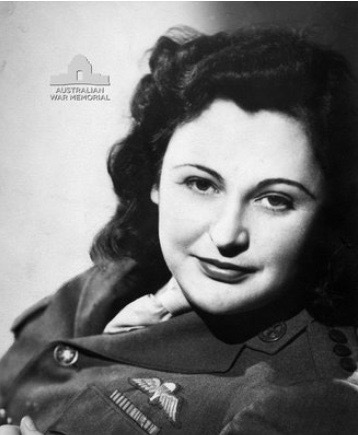 A decorated heroine of the French resistance in World War II, Nancy Wake’s life cut a meteoric path from an impoverished childhood in Australia to a high society hostess in the south of France and then, in occupied France, being responsible for saving hundreds of Allied soldiers’ lives, many of them downed paratroopers, by leading them across the Pyrenees to safety in Spain.
She said that she saw no reason why women should be limited to waving goodbye to their men and sitting at home to “knit balaclavas.”
The Gestapo noted her uncanny ability to elude capture, calling her “the White Mouse,” and putting a price of 5 million francs on her head. They subsequently tortured her French husband to death seeking to track her down. She did not shy from violence when it was called for, once killing a German soldier with her bare hands and also ordering the execution of a woman believed to be a Nazi spy. She remained unapologetic for such tactics throughout her long life saying, “I was not a very nice person, and it didn’t put me off my breakfast.”
After being captured in France she escaped and made her way to Britain where she, like so many other female 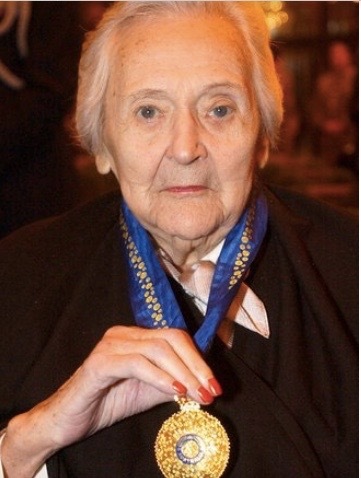 spies, became a key player in the Special Operations Executive. Soon she parachuted back to France and became deeply involved with the Marquis, the French resistance, heading up 7,000 guerilla fighters and coordinating airdrops of weapons and explosives. As well, she fought along side them after first having to prove herself as an “honorary man,” which she did by regularly drinking her comrades under the table.
After the war she was awarded so many medals that she claimed she lived for years off the proceeds of selling them. She retired in London and died at the age of 98. Her last wish was to have her ashes strewn across the Pyrenees, the site of her most dangerous operations.
Other women spies in my blog series:
September 2, 2017
Women Spies of the World Wars: Krystyna Skarbek
Many women worked undercover during the world wars, but we know the names of only a few. Like men in the secret intelligence services, many went to their graves never revealing their roles. This blog series highlights a few that inspired me while writing At the Table of Wolves.
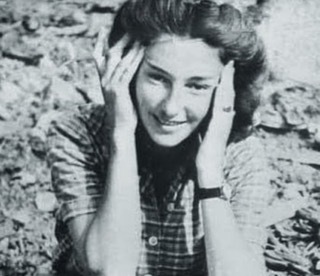 Krystyna Skarbek, alias Christine Granville, was a Polish countess and the first–and longest serving–British female spy. Her exploits were many, and yet her story, her name, and her achievements are hardly known. As just one example of an exploit which should be celebrated, she skied out of Nazi-occupied Poland with the first evidence of Operation Barbarosa, the German plan to invade Russia.
Destined to become Churchill’s “favorite spy,” she initially was turned down for service because she was a woman. The secret service changed their minds when she proposed skiing into occupied Poland to deliver British propaganda to people who desperately needed to believe that the outside world had not forgotten them.
Skarbek was doubly at risk from the Nazis because she was Jewish. But she refused to be intimidated, almost craving risk. Over and over again, she succeeded in smuggling intelligence from the resistance out of Poland, once biting her tongue bloody in an effort to simulate tuberculosis. In 1944 she parachuted into occupied France as part of a Special Operations Executive mission to prepare the way with the French resistance for the allied invasion.
She was extraordinarily persuasive and charming, and used these qualities to free lovers from German prisons, and once, acting completely alone, persuaded an entire garrison of German soldiers to abandon their post in an important Alpine pass just before the liberation of France.
[image error] 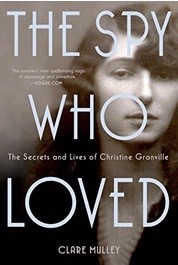 Her life and missions are recounted by Clare Mulley, who wrote Skarbek’s biography, The Spy Who Loved (2013). Mulley found it ludicrous that Skarbek had not received the honor she deserved for her contributions to the war effort, and was in fact treated abominably by British authorities after the war, denying her petition for citizenship, even though she could not return to Soviet-controlled Poland. Eventually the British relented, but this former wealthy countess was reduced to cleaning bathrooms on passenger liners. This occupation was all she could secure, although she had earned an OBE, the George Medal and the French Croix de Guerre.
Tragically, she was murdered by a rejected lover in 1952. Her legacy is remembered with a bust of Skarbek displayed at the Polish Hearth Club in London, sculpted by her husband using soil from her beloved Polish homeland.
August 8, 2017
Women Spies in the World Wars: Virginia Hall
Many women worked undercover during the world wars, but we know the names of only a few. Like men in the secret intelligence services, many went to their graves never revealing their roles. This blog series highlights a few that inspired me while writing At the Table of Wolves.
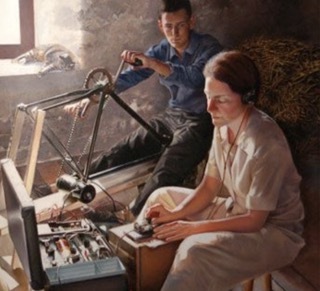
Painting displayed at the Smithsonian of Virginia Hall at work as a spy
Virginia Hall.
The Gestapo badly wanted to apprehend this American spy, sending out an order saying, “She is the most dangerous of all Allied spies. We must find and destroy her.”
Virginia Hall was infamous as “The woman with the limp,” as she had a wooden leg, the result of a hunting accident. She was one of the most heroic women in World War II, saving countless Allied lives. She worked for both the US and Great Britain and was England’s first female operative sent into occupied France.
Hall had a privileged upbringing in the US and wanted to enter the diplomatic service, but that dream faded after she lost her leg. After being recruited in 1940 by a member of England’s SOE (Special Operations Executive) she spent two years in Lyon, France helping the Resistance. Her cover was that of a reporter for the New York Post.
When the US entered the war, she had to go underground. The Gestapo relentlessly sought her, and she eluded them in France for another year and a half. Finally she was forced to flee, managing to walk across the frozen Pyrenees to Spain, despite the wooden leg. In Spain she was thrown into prison; the US embassy eventually managed her release. Unwilling to quit, she undertook training as a radio operator and returned to France, to coordinate parachute supplies of arms and supplies. As the Nazis frantically attempted to follow her radio signals, she employed an array of clever disguises to remain undetected.
England awarded her the MBE (Member of the Order of the British Empire) and the US bestowed the Distinguished Service Cross. Virginia Hall was the only civilian woman in World War II to receive such an honor. After the war she worked for the CIA until 1966 and died in Maryland in 1982.
July 30, 2017
Women Spies in the World Wars: Marika Rokk
In my research for At the Table of Wolves, I found a number of fascinating stories of women who played important roles in the world of espionage. This is one of them.
Marika Rokk
Said to be one of Hitler’s favorite actresses, Marika Rokk is likely to have had a secret life working against the Nazis for the Russians.
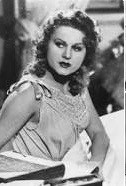 Born in Cairo to Hungarian parents and raised in Budapest, Marika Rokk got her start in show business in Paris, performing in the Moulin Rouge cabaret.
She was in the right place at the right time in 1935 when Goebbels, Hitler’s propaganda minister, decided that Germany needed its own film star who could help showcase German films and engage in the culture wars with Britain and particularly the US with its superstars like Ginger Rodgers and Rita Hayworth. Rokk was relatively well-known dancer in various European revues and was tapped by Goebbels to be a Nazi film star. Subsequently, the two had an affair, but it is believed that by 1940 she had been recruited by the KGB.
These tantalizing details were recently declassified by the German intelligence service.
One of the operations she may have worked on was the planned German invasion of the Soviet Union, code named Operation Barbarossa.
After the war she was barred from the stage for two years, but was finally rehabilitated and was able to continue her film career in West Germany. She never wrote about her espionage career nor spoke of it publicly. She died in 2004 in Austria at the age of 90.
More information in this early 2017 article in the Guardian.
July 24, 2017
How I came to write At the Table of Wolves
For a little background on how I came to write my latest novel, At the Table of Wolves, here are some frequently asked questions.
Why did you chose to set this historical fantasy in the 1930s?
The 1930s – and particularly in England – was a period overshadowed by the catastrophic losses of World War I. Every family had its losses, and the public attitude was to willfully turn a blind eye to Hitler’s arms build up. So instead of a war with steal, it became a shadow war of spies, secrets, and deception. It is such a fertile ground for fiction! The roster of characters and motivation is vast: British aristocracy fearing the loss of class privilege, fascists, pacifists, spies and those who chose to do nothing. This historical context raises an interesting question: What would you have done? How much would you have sacrificed to stop the coming war?
What inspired you to write this historical fantasy?
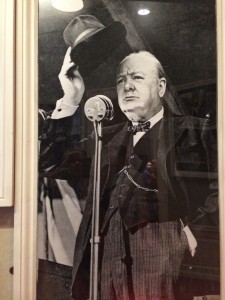 The first inspiration came from William Manchester’s biography of Winston Churchill. I’m especially interested in the World Wars (and their lead-ups)–times with amazing contrasts between self-sacrificing idealism and staggering villainy. I had previously dealt with the historical period of the 1850s in England and India for my fantasy A Thousand Perfect Things, and was looking for a different, largely unexplored, time period for my next fantasy.
What are the fantasy elements for this realistic setting?
Psi-powers are a relatively new phenomenon, but came into the world as a result of the society-wide psychological suffering of World War I. Called Talents, these powers affect perhaps one in a thousand individuals. Because psi-powers are not widespread, they engender suspicion and fear among many. My premise is that the Germans have been weaponizing Talents and are years ahead of England and the US. I wanted to explore how occult powers would change society and also open doors for women who had Talents. Some of the powers revealed in Wolves (more to come in the sequel) are: the spill, trauma view, conceptor, mesmerizing, disguise, attraction, hypercognition, precognition, darkening and hyperempathy.
How accurate is the espionage context and the examples you show of trade craft?
As accurate as I could make them after intensive research. The Secret Intelligence Service (SIS) is shown with as much actual detail as I could manage, including its political context. The chief of SIS was known as “C,” and in my story, “E.” Monkton Hall, where Talent research is carried out, was inspired by Bletchley Park. The trade craft was especially fun to research, with things like dead drops, brush passes, code names, surveillance, moles and so much more adding to the flavor of the shadow world that was (and is) espionage.
Publisher’s Weekly (Starred review) pointed to the moral ambiguities brought forward by the story. What were the main ones?
Espionage, like war, is full of horrific choices, but often they are decisions one has to make alone in the field.
What is justified in terms of harm and betrayal of the innocent?
How many lies can you tell without losing your sense of truth?
What if you start enjoying deception for it’s own sake?
How can Kim Tavistock come to terms with her Talent for “hearing the truth”? How can you use your Talent in a larger cause, when it means exploiting confidences and people’s weaknesses?
Does the evil of fascism that you depict in your story 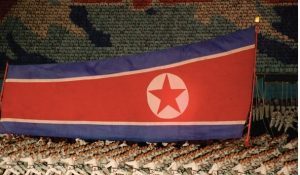 present a threat today?
We tend to think of the Nazi brutality and ideology as an aberration. We’d like to think it could never happen again. But then, how did the holocaust ever happen? Does human nature change? Looking at North Korea, we can see that the world is still capable of ideological evil, when a leader can starve his people and, yes, establish concentration camps. I believe we are forewarned by the catastrophe of Nazism. We should be aware of, and watchful for the way that people allowed it creep up on them. Most of us will never be called upon to be heroes in such a fight. But to combat a great evil, we have to stand against it close to home wherever it begins to tinge our thinking through religious intolerance and racism. We can all do that, and must.
Is this a series?
They are linked novels under the title “The Dark Talents novels.” The sequel, Serpent in the Heather, comes out in April, 2018, and continues the espionage adventures of Kim Tavistock, spy extraordinaire!
What formats will it be in?
So far: Hardcover, e-book and audio version. The latter will come out on August 15, 2017.
What books do you recommend for people interested in espionage novels and nonfiction?
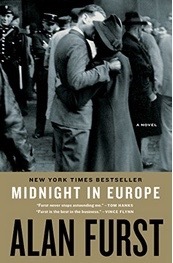 There are so many, but here are a few top ones.
Nonfiction:
A Spy Among Friends. Ben McIntyre
The Secret History of MI6. Keith Jeffery
“C” The Secret Life of Sir Stewart Menzies, Spymaster to Winston Churchill. Anthony Cave Brown
Double Cross. Ben McIntyre
Fiction:
The Night Soldier books. Alan Furst
The Spies of Warsaw. Alan Furst
Any book by John le Carre.
Istanbul Passage. Joseph Kanon.
July 23, 2017
Landscapes of Fantasy
For those who attended my presentation at PNWA, here is the book list I promised:
LANDSCAPES OF FANTASY. A presentation by Kay Kenyon
The Books
Mythic
The Buried Giant, Kazuo Ishiguro
The Last Unicorn, Peter Beagle
American Gods, Neil Gaiman
Fairy
A Green and Ancient Light, Frederic Durbin
Roses and Rot, Kat Howard
Thomas the Rhymer, Ellen Kushner
Folkloric
Uprooted, Naomi Novik
The Bear and the Nightingale, Katherine Arden
Magic Realism
Who Fears Death, Nnedi Okorafor
IQ84, Haruki Murakami
New Weird
The Vorrh, Brian Catling
Annihilation, Jeff VanderMeer
Vampire
The Accursed, Joyce Carol Oates
Anno Dracula (Bk 1), Kim Newman
Romantic
The Sharing Knife: Beguilement, Lois McMaster Bujold
The Leopard King, Ann Aguirre
Epic – classical
The Last Wish, Andrzej Sapkowski (a collection)
Kushiel’s Dart, Jacqueline Carey
Savages, K.J. Parker
Epic – Rogues and Grimdark
The Lies of Locke Lamora, Scott Lynch
The Blade Itself, Joe Abercrombie
Gardens of the Moon, Steven Erickson
Sword & Sorcery
Elric the Stealer of Souls, Michael Moorcock (collection)
Throne of the Crescent Moon, Saladin Ahmed
Military
Soldiers Live, Glen Cook
Javelin Rain, Myke Cole
Gunpowder
Thieves’ Quarry, D.B. Jackson
Crucible of Gold, Naomi Novik
Manners
Glamour in Glass, Mary Robinette Kowal
Swordpoint, Ellen Kushner
Gaslamp
Soulless, Gail Carriger
Weird West
The Native Star, M.K. Hobson
Jacaranda (novella), Cherie Priest
Silver on the Road, Laura Anne Gilman
Dieselpunk
The Mammoth Book of Dieselpunk, ed. Sean Wallace (anthology)
Hard Magic, Larry Correia
WWI & WW2
The Bloody Red Baron, Kim Newman
At the Table of Wolves, Kay Kenyon
Secondary Worlds
Troubled Waters, Sharon Shinn
The Cloud Roads, Martha Wells
Urban Fantasy
Moon Called, Patricia Briggs
Hounded, Kevin Hearne
Contemporary
The Shape of Desire, Sharon Shinn
The Bone Clocks, David Mitchell
American Elsewhere, Robert Jackson Bennett