Jose Vilson's Blog, page 21
September 2, 2016
One More Thing About Dominican Pride (Jose Vilson for Mayor)
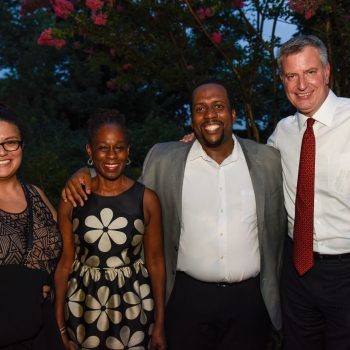
The night already felt off. Rain splashed against my living room window, and the sky couldn’t decide whether it would stick to its afternoon routine or continue to drench the passersby. It was one of the few days this summer where I felt like the routine would have to be set aside, and I’m lucky to have dancing feet.
It was Dominican Day Parade weekend, and I was invited to make my presence felt on multiple occasions.
I’ve waffled in perspective a million times over, seemingly done with the premise of nationalism six years ago as an observer. In the last couple of years, I’ve not only marched in the Dominican Day Parade twice, I also spoke at one of their scholarship events. Coincidentally, two of the recipients for this scholarship matriculated at Syracuse University. So much of the energies I felt culminated in what I’ve already felt about my Dominicanness.
Patriotism isn’t about the symbols and pageantry, but what we do with the cultural and historical gifts we’ve amassed over time and before our times. continue reading
The post One More Thing About Dominican Pride (Jose Vilson for Mayor) appeared first on The Jose Vilson.


August 30, 2016
Mr. Vilson’s #SoGoneChallenge (Chance The Rapper Has Nothing On Me)

So so so so.
I got a message from a former student. He said, “Pick three numbers.” As a joke and a nod to Fetty Wap, I said, “17, 3, and 8.” He said, “OK, so if I get 17 likes 13 comments and 18 shares, you have to do the #sogonechallenge.” I ask him, “What’s that?” He said, “Look it up on YouTube!”
Sure enough, I did!
Chance the Rapper kills this. I was aghast. Not only have I been blasting Coloring Book all summer, I also think my students overestimate my rap skills because they’ve seen me rap along to … well, everything with precision and flare. Fair enough. But just because I rap along doesn’t mean I can rap, right? That’s totally inappropriate.
Of course, my former students surpassed the numbers and laughed while doing it. I replied, “WHY ARE Y’ALL LIKE THIS?!?!” They laughed at that, too.
But of course, I needed to put my foot down. Within 48 hours, I did this:
Next time, I won’t rap so hard, promise.
The post Mr. Vilson’s #SoGoneChallenge (Chance The Rapper Has Nothing On Me) appeared first on The Jose Vilson.
August 29, 2016
Kaepernick: Standing Up By Sitting Down and How Our Kids See Patriotism
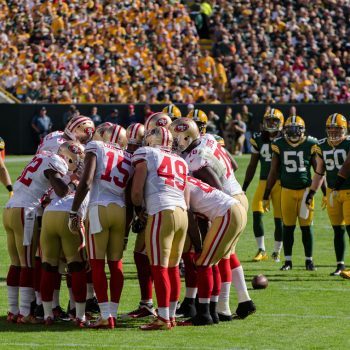
I’m shocked that I’m defending a millionaire too, but Colin Kaepernick? You did it.
In my recent post on Medium, I explored San Francisco quarterback Colin Kaepernick’s protest and what it means for our schools:
They should wonder why they’re told to wait and wait to engage in learning the depth and breadth of atrocities and victories that make our country what it is today.
They should ask themselves why so many of the people critical of a black millionaire athlete and a black President of the United States, who unironically wear Make America Great Again hats, also believe it’s unscrupulous to sit for the very America they don’t consider great anymore.Perhaps to many of its underserved and underrepresented citizens, especially the marginalized, this country’s never been great, but they do what they can. We need a new patriotism that embodies the labor and suppression that’s made the “America is great” narrative permissible.
Read more about it here.
It’s fascinating how a billion dollar non-profit like the NFL that profits from its demonstrations of patriotism would have employees and fans alike that are shocked (!) that Kaepernick would act as he does. But we also see how, despite court rulings to the contrary, children are browbeaten to do “patriotic activities.”
We gotta do better.
The post Kaepernick: Standing Up By Sitting Down and How Our Kids See Patriotism appeared first on The Jose Vilson.
August 25, 2016
A Brick In The Path (Promised Lands Are Never Promises Kept)

“Originally a biblical reference to the land of Canaan promised to the descendants of Jacob, The Promised Land represented a new physical space where the old social order would be dissolved and from which opportunity would spring. The Promised Land was geographic, political, and simultaneously corporeal and non-corporeal.”
From the beginning of the book Inequality In The Promised Land: Race, Resources, and Suburban Schooling, Professor R. L’Heureux Lewis-McCoy (Dumi Lewis, if you must) asks the reader to turn on their critical lenses and pick apart their assumptions about equity, specifically about the redeeming qualities of social class as a lever for anti-racism. He also asks us to suspend belief in a specific type of schooling and focus on the relationships between students and the various actors (and policies) that interact with the students. He asks us to use this suburban district case study as a model for any district where they ostensibly “have it figured out” but still show the same markers of inequity we see in more visible (i.e. urban) spaces.
He forgot to tell us to keep our feelings separate from the text. This book angered me, and I wish he told me sooner. continue reading
The post A Brick In The Path (Promised Lands Are Never Promises Kept) appeared first on The Jose Vilson.
August 21, 2016
Vacation Is Not Really Vacation, Pt. 1
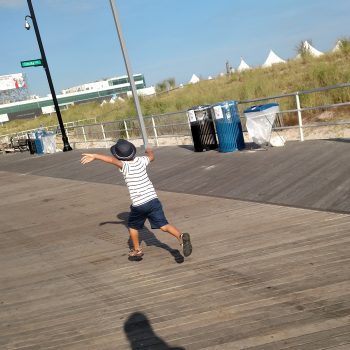
During my so-called vacation, and I call it so-called because my brain doesn’t have an off-switch when it comes to the work, I read, slept, and jumped into large bodies of water. The sun shone brightly above the Atlantic City Boardwalk, with parades, air shows, and confections for all visitors. Where some folks look forward to their yearly vacation and can turn off the switch when necessary, I had to forcibly pull the wire from the outlet for both myself and my family.
The way I explained it to ourselves was, “The world will just have to go on without us for a minute.” In reality, the world continued to rotate without us, and the work would sit there, waiting for us to get back. It ain’t that big a deal.
But even as the sand rolled into our pockets and backpacks, we still did the things educators do. We analyze current events. We read research-heavy books. We drew up odds, winning as many tickets for our son’s take-home prizes. We tracked our steps on our Fitbits and determined how many sites we’d see before we would get to 10,000 steps. While flags were waved in our faces, we picked apart the difference between who was granted automatic patriotism and who wasn’t.
We (too often and totally my fault) tested how long our son could be out in the sun before he either changed color without getting sunburnt. And the educator in me couldn’t help framing these experiences in disciplines and subject areas, either. It’s a curse, I know. continue reading
The post Vacation Is Not Really Vacation, Pt. 1 appeared first on The Jose Vilson.
August 19, 2016
Show Solidarity with Words & Actions
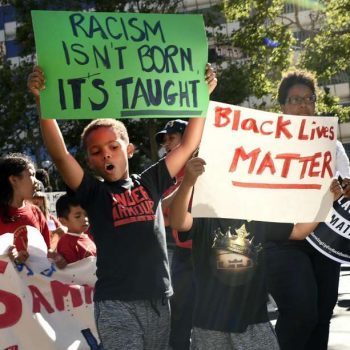
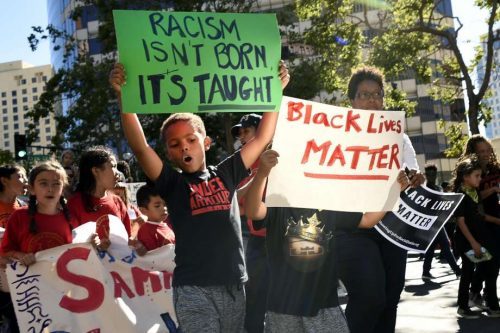
Kaden Pagani, 8, left, and his brother Kingston, 6, carry signs as they march down Broadway toward Frank Ozawa Plaza during a Black Lives Matters protest in Oakland on Thursday, July 21, 2016. Image by Michael Short.
“Your silence will not protect you”
Audre Lorde calls for our silence to be transformed into language and action in her 1977 speech. But if our silence will not protect us, then why do we hold on to it for comfort? Why do revert to silence when we witness, see and read about the injustices and cruelty of this world? Why do we let fear take over? Why do we let compliance sink in?
There are many reasons for silence. But I am not looking to hear reasons and excuses for your silence or lack of action. I am here to tell you that while educators dominate the Twitter-sphere with their skyrocketing number of tweets and followers, only a small fraction of those tweets are dedicated to discussions on racism, social justice, inequity, Islamophobia, homophobia and other systematic prejudices. Conversations are happening, but they’re a very minor, and often times you see them in spaces where people of colour have already paved the way for them, such as on #EduColor and #SoJustEdu.
Pew Research Centre published survey results on social media conversations about race. According to the survey, “two of the most used hashtags around social causes in Twitter history focus on race and criminal justice: #Ferguson and #BlackLivesMatter”.
So then why are educators so silent when it comes to race conversations?
According to Pew Research Centre’s survey, “roughly two-thirds (67%) of whites who use social media say that none of things they post or share pertain to race”. Why are Twitter’s most dominant users silent on issues that concern the very youth who are driving these conversations online? How can educators be silent on issues that concern our kids? We talk about student voice and student choice, and all the other #stuvoice trends in teaching, so how can we ignore their voices in the real world? Social media is the real world. To our youth, social media is their voice. Yet, we ignore. And ignore. And we pretend it doesn’t exist.
White educators need to break the silence. They need to call for action against racism, prejudice, Islamophobia, and inequities in the classroom, school and the education system. Melinda D. Anderson, a fellow #EduColor activist and a contributing writer at The Atlantic, recently wrote about the necessity for teacher education to include conversations on racism, culture and ethnicity. She says “Countless time, energy, and resources are spent trying to improve the field of teaching to meet the needs of a growing, diverse student populace – and no one wants to speak the words “race” or “culture” or “racism.” She goes on to explain that this isn’t a problem that needs to be unpacked by white teachers only. We all need to have these conversations together as there are hidden and learned biases and assumptions that we all need to confront.
I am not necessarily saying everyone needs to start tweeting and writing about social justice, racism and inequity in education. However, I do believe that if you’re active online, join chats, blog often, and have something of a PLN (professional learning network) then it’s important to have these conversations with your network. It’s not enough to favourite tweets or blog posts and move on. You need to be actively engaged in the conversation because it will truly make a difference. We don’t grow if we don’t try to come out of that comfort zone that we’re so used to being in. And more importantly, change does not just happen because we have good intentions, or we wish it.
Change happens with words and actions.
And why should we stand by silently watching others making change when we have the power to make it ourselves. So I challenge you today: This new year reflect on your own practice, what can you do to make a difference for marginalized students? Will you speak up next time during a faculty meeting? Will you write about how a practice or policy in your school needs to change? Will you amplify voices that are rarely heard by giving them the space, while stepping back?
Whatever action you decide to do and words you decide to use, do what feels right for you, because at the end of the day, while movements move the masses, there are individuals behind the movements, and it’s believing in our individuality and the power of our own voice that can truly make a difference.
In the spirit of love, solidarity, and justice,
~Rusul
The post Show Solidarity with Words & Actions appeared first on The Jose Vilson.
August 16, 2016
Macroaggressions: Next Level School Culture
When I go down the list of things that I have had to endure as a Black woman in the classroom as a teacher as well as in an office as an administrator I think the offenses are fairly common.
Has a parent or teacher called me a racist? Check.
Has a colleague told me my curly hair didn’t look as ‘professional’ as when it was straightened? Check.
Have I been summarily dismissed when I try to bring up race as connected to discipline or lack of representation? Check.
School culture can, however, be far more nefarious than those obvious and jarring examples. It took me a long time to notice that how we talk about work ethics and what makes a ‘good’ educator are actually damaging parts of the cog in the institutionally racist school systems. To tell that story, I have to go back a good decade.
The post Macroaggressions: Next Level School Culture appeared first on The Jose Vilson.
August 15, 2016
Microaggressions in School Culture
I’m well aware that my role as an administrator took me directly out of conversations in the teacher’s lounge. My friends, who watched me take on this new role, joked that I’d “gone to the dark side.” Teachers and administrators are often pitted against one another in the education world and it’s never to the betterment of what’s good for students. Yet, it’s a part of the culture we rarely discuss in terms of being constructive in creating collegiality and professionalism.
That’s where we get stuck with microaggressions in school culture.
The post Microaggressions in School Culture appeared first on The Jose Vilson.
August 11, 2016
What This Teacher Means By Self-Care
Confession: this is the first summer I haven’t thought about my school all summer.
Not once.
It’s been amazing. I love my students and I love my job, and I also gave them almost every ounce of me. Thus, even with all the stress I’ve had making it through July, I still see the benefits of having myself at 100%. I see them on Facebook every so often, and wonder whether they’re enjoying themselves somewhere, reaping the fruits of their youth. I’m hoping that those attending summer programs are taking full advantage of the head start they’ve gotten. I’m praying for my students who stay out too long at night, past the first question asked on the 10 o’clock news.
Do I know where my children are? No? It’ll be OK. continue reading
The post What This Teacher Means By Self-Care appeared first on The Jose Vilson.
August 9, 2016
Five Ways To Show Students You Care
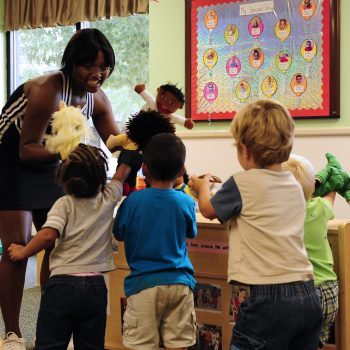
“How do you show students you care and love them?”
Someone asked me that this afternoon. And every other week. Shout-out to the other eighth grade math teacher who asked it. I’m not about the touchy-feely stuff; I prefer to discuss techniques, strategies, and content where possible. I prefer to talk about race, class, gender, and take long walks in the city. I prefer to make sarcastic comments where possible, and tweet about the sociopolitical implications of the actions and inactions of our society.
I prefer to tell you that you shouldn’t show too much emotion on the first day. But I’m lying about that last part.
Because the five ways you show students you care is really about closing the gap between the person you are outside the classroom and the person you are in the classroom. That’s why these five rules are gonna take you real far: continue reading
The post Five Ways To Show Students You Care appeared first on The Jose Vilson.