Jose Vilson's Blog, page 24
May 8, 2016
A Reflection on Raising New Voices (About These Guest Posts)

The last couple of weeks on this blog have been nothing short of amazing.
When I asked guest bloggers to contribute one piece to this little blog, I was hoping to showcase some new voices that needed to be heard. I still have a couple more to introduce everyone to. What I didn’t expect was that they’d put some of the best, most heartfelt pieces of edu-writing I’ve read this year.
What’s difficult about asking for guest posts is that I don’t get paid for writing this blog. This website, from the hosting to the web design, and all the writing (and yes, all of the typos and factual errors) are all mine. By some measures, my blog is one of the most well-read in the world. For someone who doesn’t have a machine behind them, I’m privileged to have a voice that resonates with hundreds of people across the nation.
But what good is this privilege if I’m not able to cultivate other writers to excel as well? continue reading
The post A Reflection on Raising New Voices (About These Guest Posts) appeared first on The Jose Vilson.


May 1, 2016
The Danger of Coloring Outside The Lines (Guest Post)

Our last guest post comes from someone who’s been doing “the work” for kids in Colorado, not only as an educator to Latin@ / Chican@ children, but also as a teacher leader. Please give your warmest reception to Jozette Martinez-Griffin.
I remember what happened last year when there were other targets, fragmented conversations taking place in whispered corners of the empty school library, the eye rolls shared among administrators and in-the-loop teachers when “those” teachers spoke up in meetings. The lack of support they received as they slowly unraveled in their insecure skins. It was hard to watch, like a car accident, the one that everyone always says is so hard to look away. No one is safe at times like these.
I remember distancing myself from them like they now do to me, not wanting to get too close before the inevitable fare-thee-wells. I remember feeling how they now feel; cozy in their positions, naive in their belief that it could never be them. The arrogance so blatant that they don’t even bother packing up their classrooms for the summer. They’ll be back, and in the same room to boot. I remember being that confident. continue reading
The post The Danger of Coloring Outside The Lines (Guest Post) appeared first on The Jose Vilson.
April 28, 2016
For Pale Folk by Pale Folk (A Letter from Michael Doyle) [Guest Post]
This next writer is still one of my favorite thinkers (not just in education) out there, and contributed the epigraph to my book This Is Not A Test: A New Narrative on Race, Class, and Education. Without further adieu, here’s Michael Doyle.
José has been kind enough to let me share words in his space. If you look up “José” in Wikipedia, you’ll learn that “José is a predominantly Spanish and Portuguese form of the given name Joseph.”
A few years ago I would have read that sentence as it was meant to be read by people like me written by white folk for white folk. (If you’re more comfortable substituting “dominant culture” for “white folk,” feel free. I want you to be comfortable.)
Mr. Vilson has gone done turned my eyeballs inside out, through his quiet but fierce tutoring. Jose is a predominantly Spanish form of the given name ????—turns out the original Joseph was not European after all. continue reading
The post For Pale Folk by Pale Folk (A Letter from Michael Doyle) [Guest Post] appeared first on The Jose Vilson.
April 25, 2016
Education Giveth, Education Taketh Away [Guest Post]

This next post comes from a person who I just learned about a few months ago. Kassie Benjamin is a fellow math teacher with a critical race perspective. Her views on education and her rep as a math teacher for Native American students prompted me to ask her for her views on education. (Yes, she ended up schooling me too over e-mail and she ain’t even know it.) Read promptly.
When I first started teaching, not even a full 4 years ago, I knew firsthand how much an education could transform a life and believed that is what I wanted for my students. Education can make a difference. Education can transform communities. Education is the key. These are core beliefs I had entering the teaching profession.
The only problem was that I soon began to question the sense of that word “education.” Before teaching and even few years after that, I had always believed education was getting a Diploma. Education was getting one or several Degrees. But education also meant going into school buildings and adopting school culture to make such achievements.
Slowly, I came to the belief I have today: education is assimilation. Still. continue reading
The post Education Giveth, Education Taketh Away [Guest Post] appeared first on The Jose Vilson.
April 21, 2016
Who Will Lead The Edu-Revolution? (Pulling The Race Card) [Guest Post]
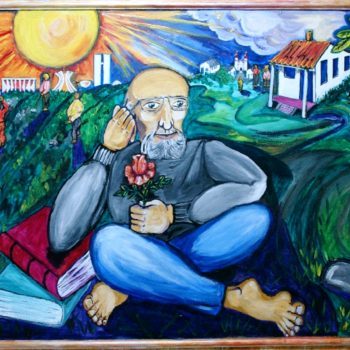
The next person I’ve asked to guest post is none other than James E. Ford, former North Carolina Teacher of the Year and someone who I’ve gotten to know on the Internets and in person as a thoughtful brother. Here, he offers his take on all things education, and who’s going to lead the next education revolution.
While speaking to a group of majority young black men at a local high school last year, I told them about the nuances of being a person of color. I talked about offsetting stereotypes and the necessity of adopting habits of success. I mentioned that for them it starts now, because they’re already under intense scrutiny. I spoke frankly and told them that across the nation they are 3.5 times more likely to be suspended than their white peers. After concluding, I dapped them all up and bid them adieu.
Before leaving though, a petite white lady who was in attendance flagged me down. She respectfully asked me why I felt the need to speak about discipline disparities and “pull the race card” in front of the students. I told her I’d be remiss to come into an urban setting with majority students of color and not talk directly about the harsh realities of our society. She went on to tell me that she doesn’t see color, tells her students they can be whatever they want if they work hard enough, and obviously isn’t racist because she works at a “school like this.” I assured her, I wasn’t passing judgment on her, but didn’t have the luxury of pretending our students won’t face significant obstacles in life purely on the basis of race and class. I concluded by telling her I had a solemn duty to prepare them for the world as it is, not as we hope.
I’ve said on several occasions that I believe teaching is a calling. continue reading
The post Who Will Lead The Edu-Revolution? (Pulling The Race Card) [Guest Post] appeared first on The Jose Vilson.
April 17, 2016
Drugs Can’t Get You High As This [Educate, Educate]

It’s been two weeks of not-real-teaching.
The first week of April was mostly dedicated to the agita of the ELA (English-Language Arts) test, from the content of the exams to the new procedures. Stripping the set times from the ELA test proved worrisome for the adults more so than the students. The latter were ecstatic that they could stuff in all the textual evidence they needed in their extended responses while the former had to actively keep students from daydreaming and napping in the middle of their tests. The solution to running out of time was giving the students as much time as they needed, but the new boredom proved to make proctors and students who were done early sore from their eye rolls.
Needless to say, pulling the students into math test prep felt amazing by contrast.
In between the exams, I asked them to do a quasi-gallery walk with remixed problems from the state-released math questions to break the monotony of “test prep” . Even though they may or may not have seen the questions before, they were still challenged by my challenge of finding the most common error. Out of the five classes I did this lesson with that day, I did it wrong four different times.
The last time was great, and that’s the way it should be. continue reading
The post Drugs Can’t Get You High As This [Educate, Educate] appeared first on The Jose Vilson.
April 14, 2016
What’s In It For Me? (On Male Teachers of Color) [Guest Post]

I usually don’t do this, but this month, I’m going to have a few special guests speak their peace. First up, Brent Nycz, a special ed teacher and shining star here in NYC public schools. Let him know that you’re feeling this piece by @’ing him on Twitter. Salute.
Last year, around this time of the year, I went into the DOE offices on Court Street, preparing for my interview to be a part of a new initiative. I was picked as one of the first 10 teacher recruiters with a specific aim in mind: use teachers to help recruit other teachers via their perspective in order to curtail the declining number of teachers applying to teach in New York City.
Before I was picked though, I remember getting one question that I still think about 12 months later:
“Why do you think there is a shortage of male teachers of color in New York City?”
I gave an answer, one that escapes me. Sure, any number of answers would “make sense” in this end, mostly your text-book responses: low-paying, poor working conditions, societal views of what a teacher is, the bureaucracy from the top down, and so on, but I feel those answers aren’t good enough because hey, I recognize those answers and I’m still here.
I received that question because I am part of that 8% of NYC teachers who are men of color. I’m a seven-year special education teacher at a school in Washington Heights and I’m a Puerto Rican man, born and raised in a Puerto Rican household, despite my Polish daddy leaving me with nothing more than a last name and a check every month until I was grown. I grew up in Paterson, NJ, home of Fetty Wap and heavy crime. My family sacrificed as much as they could to help me succeed, becoming the first four-year college graduate in the family. They taught me how to live independently.
I came into teaching because I loved working with kids and I thought becoming a teacher was the next logical step … at least after I had a horrible psychology course grade and after I was bored trying to become the next Bill Simmons at Fordham. These last seven years have been mind-numbingly difficult and the constant changes have taken its toll: Common Core, Charlotte Danielson, differentiation, data-data-data, higher-order, increase rigor, “the tests were too easy”, “the tests are too hard”, “the tests are missing pages”, Pearson, Questar, it has become an incredible track of education jargon with failed practices to dodge through constantly.
On my toughest days, my students hold me down. My colleagues hold me down. My bed holds me down and I keep trekking through, not allowing Pearson, Cuomo, Bloomberg, De Blasio, or anyone or anything else hold me down (shout out to Puff and Matthew Wilder).
But I’m 28 now. The shine of being “new” has worn off. I’m still a special education teacher in the same school, dealing with a new principal and a whole host of changes on top of the ones we as NYC teachers deal with on a daily basis. I’m in that “new chapter” zone, realizing I’m working less about survival and more about my own health, both mentally and professionally.
I can’t help but start thinking “what’s in it for me?” What is keeping me working as a NYC teacher? Yes, I have a union, I have benefits, my love of teaching hasn’t left me, and the salary is enough to allow me to send some money home to help out my abuela. However, I wonder if those “answers” are enough.
Teaching should be a respected profession within all walks of life, but the way our society treats teachers has destroyed that shine, that spark, that light and we now have numbers that reflect that effect. Some male teachers of color have expressed being pigeon-holed into being the “disciplinary” force of the school and in some elements, I get that view as well. The lack of freedom to teach in the matter that helps our students the most can be stifling. In a simplistic sense, teaching is viewed as a “fulfilling” profession, but what’s “fulfilling” about teaching test prep and enduring hours of tests I won’t even know the results of until after my students have moved on? I don’t want to be held down, but the system can make me claustrophobic.
As a young Puerto Rican male teacher, what’s in it for ME if there are all these obstacles in the way of me being able to do my job, the most important job of all: educating our kids?
Ultimately, this question that’s plaguing me is the same kind of questions recruiters, data analysts, and DOE administration deal with as they attempt to tackle this question with new initiatives. The difference between me and many of them is that I live this question day after day. Many of the 8% do as well. Heck, many of us all together do as well.
There is a host of reasons why Jose and I and many other men stay in the profession, pressing on year after year, fighting the good fight, and fighting for change in big and small ways. But 12 months later after my interview, I still don’t have a good enough answer to that question for myself.
And as my career transitions into new challenges, that question nags at me more than ever before.
Author’s Note: I was listening to “ Once in a Lifetime ” on repeat writing this piece. Same as it ever was.
continue reading
The post What’s In It For Me? (On Male Teachers of Color) [Guest Post] appeared first on The Jose Vilson.
April 11, 2016
What Does It Mean To Be A Public Intellectual In The Classroom? #AERA16
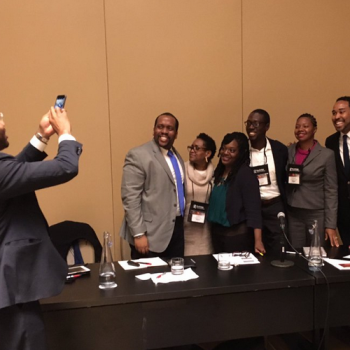
This past weekend, I spent time at the American Education Researchers Association Conference in Washington, DC, a strange position for a classroom educator to be in with the world’s top researchers along with 18,000 participants of all stripes coming together under a huge convention center. It’s the 100th anniversary of a social experiment for putting together as many edu-nerds under one space as possible and waiting for the au courant scatter plots and linguistic nomenclature to emerge from the ether. As someone who spends most of his work time in the classroom, I can understand how that environment can be unnerving.
Yet, I felt a sense of calm come over me, mainly because it feels like, in my own way, I had been doing this work for years.
More than a handful of people at the AERA16 Conference called me a public intellectual, and, while I don’t get gassed, I appreciate the nod. Too often, I felt like, while this country doesn’t generally respect education in the way it should, the idea of expertise usually falls in the realm of professors and researchers from outside the classroom. Thus, it’s always humbling when people do recognize the efforts of classroom practitioners and the work we do to uplift children in a profound way, even more so when we share this passion aloud and unapologetically.
Which brings me to this weekend.
Profs. Terrenda White and Travis Bristol invited me to AERA16 to discuss democracy around teachers of color. As I heard the rest of my fellow panelists rock the mic (and that, they did), I knew I needed to come with something different. I wanted to speak on my own, informal research on the decimation of teachers of color since former mayor Michael Bloomberg and former NYC schools chancellor Joel Klein took the reigns of the largest public school system and made visible white supremacy, but no. Instead, I decided to talk about next steps, and specifically what the people in the audience can do to help us as educators and vice versa.
At this point, one of the most important functions that we as educators (specifically of color) need from professors and researchers doing this critical race work: we need the language to read these people.
I don’t mean that we need literature. We need the actual research that helps us tell our stories better, and conversely, that helps us put words to the hogwash and absurdities that crosses our desks almost daily. If nothing else, research is really good for talking back at what’s not working for our students. The average non-edu-geek educator doesn’t have the mechanisms by which to deconstruct their own experiences, and organizing around a real edu-resistance is most necessary. Critically conscious teachers sit through too many professional development sessions, read too many articles from so-called edu-experts, and listen to too many of our own colleagues spit nonsense about accountability and standards without oases of authentic policies and pedagogies. Too often, people coming to us are “former teachers” celebrated by institutions all over for having left their communities behind.
To that end, the idea of a public intellectual is mired by our country’s reluctance to critically engage the masses, magnified when we introduce issues of race, class, and gender.
On my path to critical consciousness (because it’s never over), I got lucky enough to find the words of Imani Perry, who Dr. Cornel West mentioned as a real public intellectual when he got into a quasi-beef with author Ta-Nehisi Coates. She said the following words that hit me like a ton of bricks:
I’m not a public intellectual. Not in the way people generally mean it. I’m conceding their definition for the sake of clarity. I’m an intellectual. I’m a scholar. I’m a teacher. I like to talk to people outside of universities. I believe in justice and kindness. I believe in the freedom movement. I believe in organizing. I believe in witnessing. I believe in love.
I was floored by this, so I asked her to say more:
I have always considered the Black public intellectual tradition to have included all kinds of work scholars do outside of formal academic institutions. Like how DuBois published the Brownie Books for children or Patricia Hill Collins working for community groups, or those who teach in prisons or do adult education or do civil rights litigation or organizing as well as those who do journalism. There are legions of examples in the tradition. But folks today use the term “public intellectual” to mean television punditry, quips, cleverness and a platform for which a degree merely stands as a stamp of approval not necessarily attached to any of the areas one claims competence or knowledge to speak on. I never want to be attached to attention seeking as an ambition. Doing meaningful work for the public good and the production of knowledge are my aspirations.
We are charged to do this thing we call “the work,” but we don’t always get to name it. I’m fortunate and blessed to have a career that puts me squarely in the presence of children at one of the most critical moments of their lives. I don’t consider most of what I do a chore and would probably use any extra given time to grade and plan for my students. Even my most vexing students have a charm that comes with adolescence, which makes my job that much more enjoyable. I also recognize as one of the 3% (male teachers of color), I have an obligation to make sure the 145 students in my charge get what they need from me and make it different from what our public school system demands … or doesn’t.
My work, like so many of my K-12 colleagues (Renee Moore, Valencia Clay, Kelly Wickham, and Xian Barrett to name a few), hopes to push other educators to consider their critical consciousness in the classroom as a means of public service and as a means of subversion and resistance. The awesome workshop at #AERA16 was but one manifestation of what happens when like-minded individuals highlight institutional racism in a profound way. And, as I’ve learned from too many of my fellow scholars from pre-K through higher ed, it’s less about what happens in front of the cameras and major websites, but the interactions and relationships we have with others in the matters of uplift and liberation.
Let’s reveal that language and democratize this space henceforth.
continue reading
The post What Does It Mean To Be A Public Intellectual In The Classroom? #AERA16 appeared first on The Jose Vilson.
April 8, 2016
The #EduColor Movement Meets The National Board [Video]
I spoke about the #EduColor movement and the importance of community at the National Board of Professional Teaching Standards / Teaching and Learning Conference 2016 with a host of other awesome folks. To watch the video, click here or watch below.
Let me know what you think. And follow the movement at http://educolor.org or follow the hashtag on Twitter and Facebook with #educolor. Thank you!
continue reading
The post The #EduColor Movement Meets The National Board [Video] appeared first on The Jose Vilson.
April 3, 2016
Watch Me Tear Down The House at Rutgers University [Video]
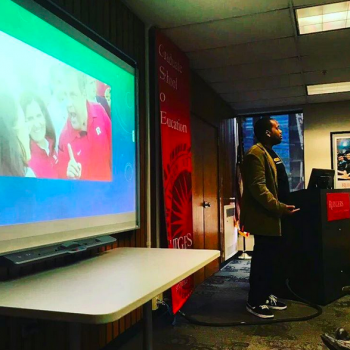
Yesterday, Prof. Eloiza Jorge (at the behest of activist and friend Stephanie Rivera) asked me to speak at the 2nd annual Urban Teaching Matters Conference at the Rutgers Graduate School of Education. Before the event, I told folks I would get kicked out of New Jersey for the things I would be saying. Thankfully, I left New Brunswick of my own volition. Here’s the speech, including Rivera’s introductory words.
Let me know what you think below.
continue reading
The post Watch Me Tear Down The House at Rutgers University [Video] appeared first on The Jose Vilson.