Jose Vilson's Blog, page 28
December 3, 2015
Through The Wire [This Is Still Not A Test]
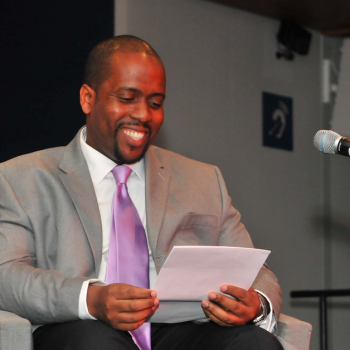
No one asked me to write This Is Not A Test, but I still felt it necessary.
About two years ago, I was in the middle of one of the weirdest weeks of my life, capped off with my father passing away and me finding out 30 minutes before class started. My shoulders buckled, my face felt pulled an inch closer to the earth, and my feet felt light. I knew there was nothing I could do about it since his body was over a thousand miles away in Florida.
When I informed Liliana Segura, my editor, that my father passed, she asked if I needed time. I said, “Nah, gimme more.”
For about a year or two prior to my father passing, I struggled with this idea of a published book. How many people back then got their Internet-based thoughts turned into an IRL cover-bound thingie? In education, the chances were slimmer. I found myself staring at the Education section of Barnes & Noble, doing my research on what publishers call the market. I didn’t know that publishers paid for book placement, and whether the covers faced the customers or the spine did. All I knew was that there were no books that truly spoke to me from a K-12 educator as a K-12 educator. continue reading
The post Through The Wire [This Is Still Not A Test] appeared first on The Jose Vilson.








November 29, 2015
Bad Teacherist [Reading Roxane Gay]
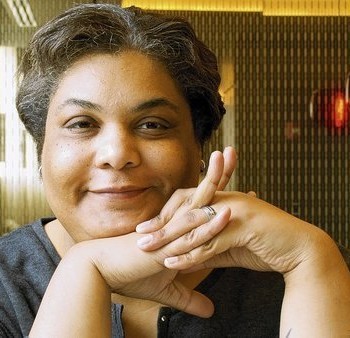
I’m not the perfect teacher.
At my best, I have a meticulously thought-out lesson plan with activities that access multiple pathways, and I can get an active discussion going even with the least engaged students in class. At my worst, I can barely put my thoughts together, and little that I set out to do translates to the students in class. I’ve been told I’m a great teacher by my former and current students, and in many cases, their parents, but I’m also not cocky enough to think that I got it together.
If I can achieve good teacher-ness 90% of the time, I’m happy, but I recognize that I haven’t even reached that peak yet. Or so I think. continue reading
The post Bad Teacherist [Reading Roxane Gay] appeared first on The Jose Vilson.



November 27, 2015
Thankful For You [Luz and Ale]
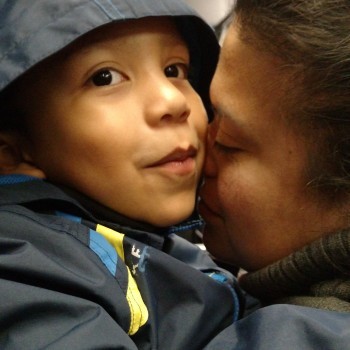
I don’t often speak about my personal life because, well, that’s not what I do. It’s weird. I teach. I speak. I write. I activate.
But I’m also a man with a family at home.
So this is a note to say that I’m thankful for my family we’ve made in Harlem. Luz and Alejandro are my life source. I do my best to not give off the impression that I have it all together. Far from. Yet, they make me want to do better for myself regularly. This past week, with her surgeries and rushes to the hospital, I’m calling myself out to do a better job of thanking them for their existences. continue reading
The post Thankful For You [Luz and Ale] appeared first on The Jose Vilson.



November 24, 2015
I’m Not Racist, But My Kid’s Not Going There [On Segregation]
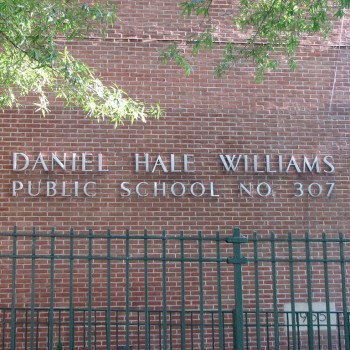
It starts the same.
“I heard what you’re saying about integration and everything, and I agree with you in general …”
“Yes?”
“And I hear you on fighting for all schools and not just mine …”
“Mmmhmmm.”
“And I’m not racist, but I don’t want to take my kids out of a well-resourced school so they can go to a school with gang violence.”
“Excuse me, what?”
“I don’t mean …”
Yes, you did.
If you’ve read any reporting from New York Times’ Kate Taylor in the last few months, any discussion around school segregation and integration in New York City has a “but I’m not racist” in it. Racism isn’t merely a set of feelings one has towards another, but also the systematic ways we view schools where the students predominantly attending are black. continue reading
The post I’m Not Racist, But My Kid’s Not Going There [On Segregation] appeared first on The Jose Vilson.



November 22, 2015
A Not-Review of More Than A Score [Edu-Activated]
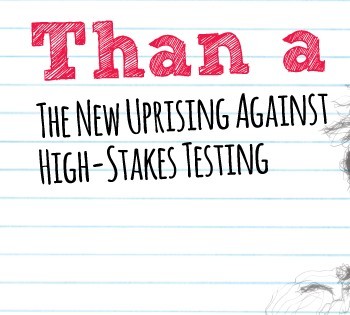
In the spring of 2014, a few books dedicated to the “Education Spring” revolt came out from various publishers, one of which was mine, and the other was More Than A Score, a collection of stories edited by Jesse Hagopian from numerous dissidents from across the nation. [Full disclosure: Haymarket Books came out with both of our books). As I consider many of them colleagues in this work (and some of them friends), I was happy that so many of them got to tell their story.
So why a review from me almost a year later? Simple. As any of the activists in this volume can tell you, these stories are still relevant to the work of moving the profession forward. continue reading
The post A Not-Review of More Than A Score [Edu-Activated] appeared first on The Jose Vilson.



November 19, 2015
How I Got Over [College Activism Is A Must]
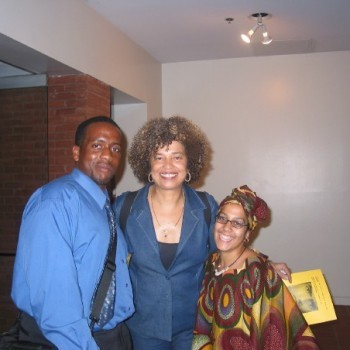
My first real foray into real college activism was on Syracuse University’s campus. It started with visiting a few tables at a college activities fair, picking up a few pamphlets and hoping to get acquainted with the Orange culture. I already predicted that my Dominican mother would say that I wasn’t there to start problems, but college activism spoke to me in ways I didn’t know that, in a couple of years, a good hundred of us would be occupying the student center during Homecoming weekend, putting racism in the front and center of the mostly-white parents, students, and other passersby. While they shared stories of the ‘Cuse of yore and contemplated the fortunes of the middling football team, this set of students, while fortunate to get into this institution of higher learning, set its sights of reminding everyone that there was more than one side of this story to tell.
Indeed, the campus had been plagued with racial incidents that rarely got addressed. On the same campus that prided racial, geographical and gender diversity and had three black student association presidents during my time on campus, we could also see rampant blackface before, during, and after Halloween, and only slightly off-campus fraternities terrorize international students who walked within five feet of their houses. The old adage was that many of our white classmates could spend most, if not all, of their formative years not interacting with black people, but the converse wasn’t true for black people. This adage manifested in ways that, if left unspoken, would have made us complicit in our own second-class scholarship.
Thus, we set up meetings, engaged in dialogue, voted people into committees and student government. And when that didn’t work (and when it did), we disrupted homecoming. We barely blinked.
What conservative folks don’t understand about the idea of “safe spaces” isn’t that people of color, specifically black people, have their feelings in a bunch, or that we’ve become tender from too much media consumption. [These critiques never seem to float for folks who were able to afford these technologies first, mind you.] It’s that, from the minute we step on campus, we’re already not afforded equal scholarship in institutions of higher learning. We already know that students of color need to show better grades than their white counterparts upon college acceptance, and that, for every affirmative action complaint, white students have legacy status. If that’s enough, students of color face sneering comments about prestige and class whenever they’re in an honors class, an engineering class, or any class that college culture didn’t already peg as the class for major sport athletes [Rocks for Jocks was a thing].
Students from unheard communities have to work twice as students: once over to handle the coursework and another to combat the immediacy of white supremacy.
That’s why I implicitly support the protesters continuing the legacy of resistance on Syracuse University’s campus, and resisters in Princeton, Mizzou, Yale, and beyond, because I’m almost literally been where they are. The idea of creating culturally competence, not simply diversity training, means we’re assuring everyone feels included in the goal of scholarship. How can you even talk about equity in schools when students already start with an expectation of inequity in their college experiences? White supremacy is such that critics can see these protests as a personal attack, as if rebutting white supremacy is a matter of cursing one specific person rather than understanding the complex nature of the institutions that, no matter how well-meaning, still keep folks of color at arms’ length.
And I’m proud I graduated from Syracuse University. I cherish the moments I had there, and the ways I learned to engage people of vastly different cultures than mine. I even had a little fun here and there between studies. But I also remember looking to my left and right during my freshman year, and doing a similar gesture during graduation, and noticing how many of my brethren of color had left from culture shock.
That’s why, at homecoming, I was so steadfast in reminding Syracuse administration of the dirt under its rugs, and all the folks who never felt welcome to dine.
continue reading
The post How I Got Over [College Activism Is A Must] appeared first on The Jose Vilson.



November 15, 2015
I Saw A Generation of Educators Destroyed By Silence In Tragedy [Howl Again]
Changing our Facebook profile overlays won’t be enough.
I’ve seen a whole generation of educators who have so much direct access to the most massive body of knowledge the world has ever seen and yet are so disconnected from the realities around them as a result. Folks with large followers elide the mere mention of race, religion, and gender in the context of power because, ultimately, it makes them culpable as well. I’m far from perfect, but, tomorrow, I plan on giving my students space to ask and speak, which leaves me open to not knowing the answers.
This means I’m not the expert, and I’ve learned to live with that, too.
As educators, we can’t wait until it’s OK for us to speak up and out about the domestic and international tragedies that plague our humanity. We can fabricate standards if we wish, but the underlying tension can’t be standardized. For those of us in schools, children generally look to those who they’re already learning from. But, from where I stand, hope is not enough. We must continue to push people to embrace each other’s full humanity and teach others to do likewise. Green Bay Packers’ Aaron Rodgers (!) offered an eloquent point that we should heed:
Rodgers with commenting at the end about the moment of silence, fan in stands who said something prejudicial. pic.twitter.com/mZJkKJf0Ii
— Matt Johnson (@MattJ_onNFL) November 15, 2015
Our children look to us for guidance. If we continue to pretend as if bigotry and hate don’t exist, we’re doing a disservice to our kids. If we don’t offer any lenses about the discrimination going on in our own borders and outside, we’ve lost a major part of our own humanity. If we hesitate to understand that justice and empathy are part and parcel to what we do, then these are the most imperfect times to be an educator. Our academic prowess is not enough anymore. We must help students create a better world than we as adults haven’t.
Tragedies in Paris, Baghdad, Japan, and Lebanon know no borders. Disasters are the perfect time to remind ourselves of the love and empathy we are most capable of, for we must dig deeper in times when all of humanity seems at its lowest. Peace is an active word.
Let’s.
continue reading
The post I Saw A Generation of Educators Destroyed By Silence In Tragedy [Howl Again] appeared first on The Jose Vilson.



November 12, 2015
Mizzou Football and Why It Matters for Schools [LinkedIn]
In my first, exclusive LinkedIn post, I discuss what leaders can learn from the University of Missouri (Mizzou) protests happening now. Here’s an excerpt:
But lots of the narrative has changed in the last couple of years. Northwestern University football team’s demand for unionization and Ed O’Bannon’s lawsuit versus the NCAA are just two big examples of the athletes seeking to wrest some power back from the multi-billion dollar industry that college athletics has become. But in recent times, we’ve also seen instances of athletes working in conjunction with the student body to ask for better collegiate conditions. Knox College basketball player Ariyana Smith recently protested the deaths of Mike Brown and Eric Garner with student activists on campus. Oklahoma athletes joined with the campus community to protest fraternity SAE’s racist viral video.
The latest protest from Missouri is icing on the cake. In the words of rapper Kendrick Lamar, “We gon’ be alright!”
To read more, check it out. Share and share alike. Thanks!
continue reading
The post Mizzou Football and Why It Matters for Schools [LinkedIn] appeared first on The Jose Vilson.



November 8, 2015
The Investment (A Message To New Jersey Teachers)

Last week, I got to address the New Jersey Education Association about a number of different issues, but I need to leave this one note here for posterity. Here’s a remixed, written-out version of the remarks I made at the NJEA Convention. The intent of the message, and many of its controversial pieces, remain intact unapologetically. There’ll be video soon, and I’ll share it a.s.a.p.
I’d like to talk about the idea of investment, and what it means to pay into the work we do as a union. The Supreme Court handed Governor Chris Christie a victory recently in asserting that the current pension structure is unenforceable, paving the way for him to restructure the pension system as he pleases. We have every right to protest unfair pension regulations, along with overemphasis on standardized testing and lack of resources. It should make anyone who pays into their pensions, specifically teachers, furious, and for that, I side with people in that struggle.
But investing in public education means more than just pensions. We as teachers make an investment in our children emotionally and academically on a daily basis. That’s why we must invest in a truly public education inclusive of any and all children that come through our doors. The last century of public education has taught us that our public education system isn’t truly that public, and charter, private, and independent schools have capitalized on that to a degree. With the Friedrich’s case looming in the minds of teachers unions, our unions can only move in two directions. Either they go hand-in-hand with those who choose to destroy unions, or they transform themselves to become more social-justice minded and inclusive in the work we do.
The post The Investment (A Message To New Jersey Teachers) appeared first on The Jose Vilson.



November 4, 2015
Who Created The Cages? [About That Teacher Life]
A few weeks ago, I had the opportunity to speak at William Paterson University in New Jersey to their college of education. Their education program definitely has the right leaders to move their future teachers forward. After I spoke at length about being a teacher, cultural competence, and teacher leadership, I was enlightened by so many students, future counselors, and faculty who wanted to push back against our current education reform agenda. They also had a keen eye on equity questions, and I was happy to elucidate wherever possible. I’m blessed to do such things because I don’t know any K-12 educators (if any) who have a similar speaking schedule while full-time teaching.
But don’t let the itineraries fool you: my first professional priority is teaching my students math. continue reading
The post Who Created The Cages? [About That Teacher Life] appeared first on The Jose Vilson.